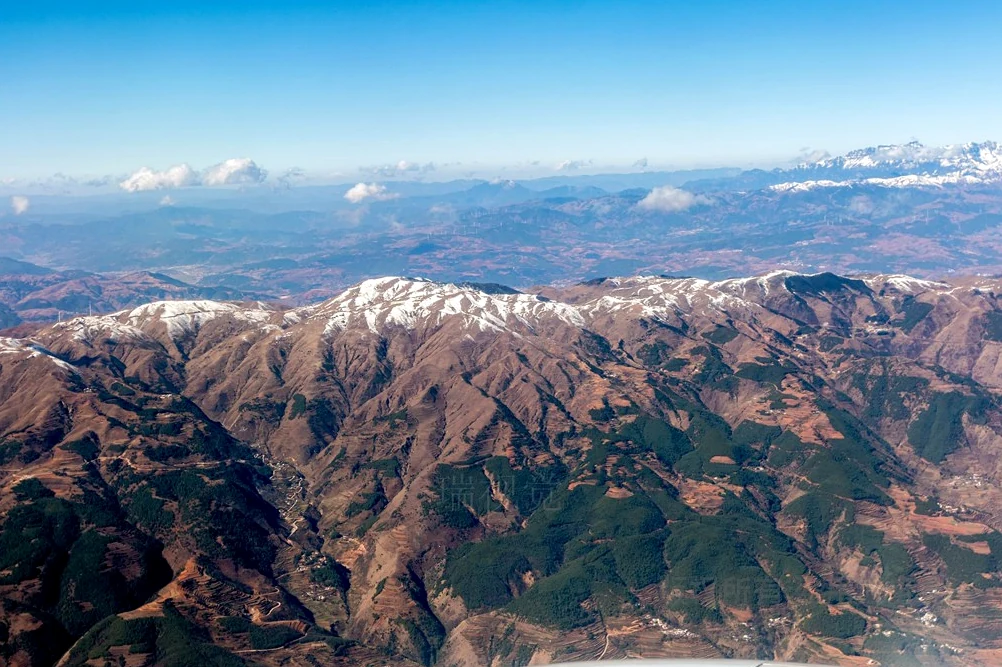
Straddling the border between Luquan County and Dongchuan District on the northern outskirts of Kunming, this towering snow-capped massif rises 4,223 meters above sea level like an icy Great Wall guarding the Yunnan-Guizhou Plateau. The name Jiaozi Snow Mountain (轿子雪山, Pinyin: Jiàozi Xuěshān) stems directly from the majestic geological profile of its main peak: sheer Paleozoic sedimentary cliffs support a gently domed summit blanketed in pristine snow year-round, strikingly resembling the ornate sedan chair of a high-ranking feudal official suspended in the azure sky. Yet long before it graced the refined writings of Han literati, this rugged sacred peak was deeply woven into the primordial worldview of the ancient Yi people. In indigenous matrilineal ballads and cosmological epics, the massif is revered as the supreme “Sacred Mountain,” an ancestral spirit sanctuary watching over valley villages, encircled by millennia-old rhododendron forests and mysterious frozen alpine wetlands.
Entering the medieval era under the Ming and Qing dynasties, the geopolitical landscape surrounding Jiaozi Snow Mountain witnessed profound shifts tied to the hereditary Tusi chieftain system. Under the historical jurisdiction of Wuding Prefecture, this treacherous mountain corridor served as one of the most critical chokepoints along the southwestern branch of the Ancient Tea Horse Road. Mule caravans heavily laden with prized Pu-erh tea cakes wound along precipitous, mist-shrouded mountain trails bound for Sichuan and onward to the Tibetan Plateau. Beneath the shadow of Jiaozi’s towering summit, the bronze bells of tea porters mingled with freezing alpine gusts, forging a vital trade artery linking the herbal medicine, rock salt, and warhorse economies between the imperial court and frontier ethnic minorities. Through centuries of warfare and the rise and fall of Yi chieftain clans, the mountain stood as a silent witness, preserving ancient cultural strata beneath layers of perpetual ice and snow.
As merchant footprints along the ancient trail gradually faded with modernization, Jiaozi Snow Mountain reached a turning point in the early 1990s through large-scale scientific field expeditions. Scientists and conservationists marveled at its unspoiled alpine plateaus, glacial lakes formed after the Last Glacial Maximum, and unique temperate flora thriving at such a low latitude. Once an inaccessible forbidden zone traversed only by the boldest hunters, the region was reimagined on the ecotourism map of Southwest China. Its distinction as the “snow mountain closest to the Tropic of Cancer in the Northern Hemisphere” sparked an ambitious vision: transforming this thousand-year frozen wonder into a safe, sustainable sanctuary for travelers and nature lovers.
That vision became reality between 2011 and 2013, when a landmark infrastructure project was executed by the Yunnan Tourism Group amid sheer terrain and year-round severe weather. This engineering feat produced a sweeping cableway spanning deep gorges, gliding visitors effortlessly above red pine canopies and billowing seas of clouds to reach near-summit observation decks without disturbing delicate alpine flora. Since commencing operations, the Jiaozi Snow Mountain Cable Car has propelled the entire scenic area to National 4A Tourist Attraction status. As a result, ascending above four thousand meters—once a life-or-death ordeal for ancient tea caravans—has become a breathtaking aerial voyage bridging the sacred heritage of the ancient Yi with modern exploration.
Located roughly 150 kilometers north of downtown Kunming at the rugged junction of Luquan County and Dongchuan District, Jiaozi Snow Mountain rises like a natural fortress guarding the northernmost frontier of the Central Yunnan Plateau. In traditional feng shui and southwestern geomancy, the massif embodies the posture of a “coiling dragon and crouching tiger,” with twin peaks rising high on either end and a gentle saddle in the center—evoking an imperial sedan chair borne aloft through the heavens, inspiring ancients to name it “Jiaozi” (Sedan Chair). The highest point of this colossal massif is Gongwang Peak, piercing the clouds at 4,223 meters above sea level and steeped in legends of ancient Yi tribal chieftains who established mountain strongholds and altars to commune with the celestial energies of sun and moon.
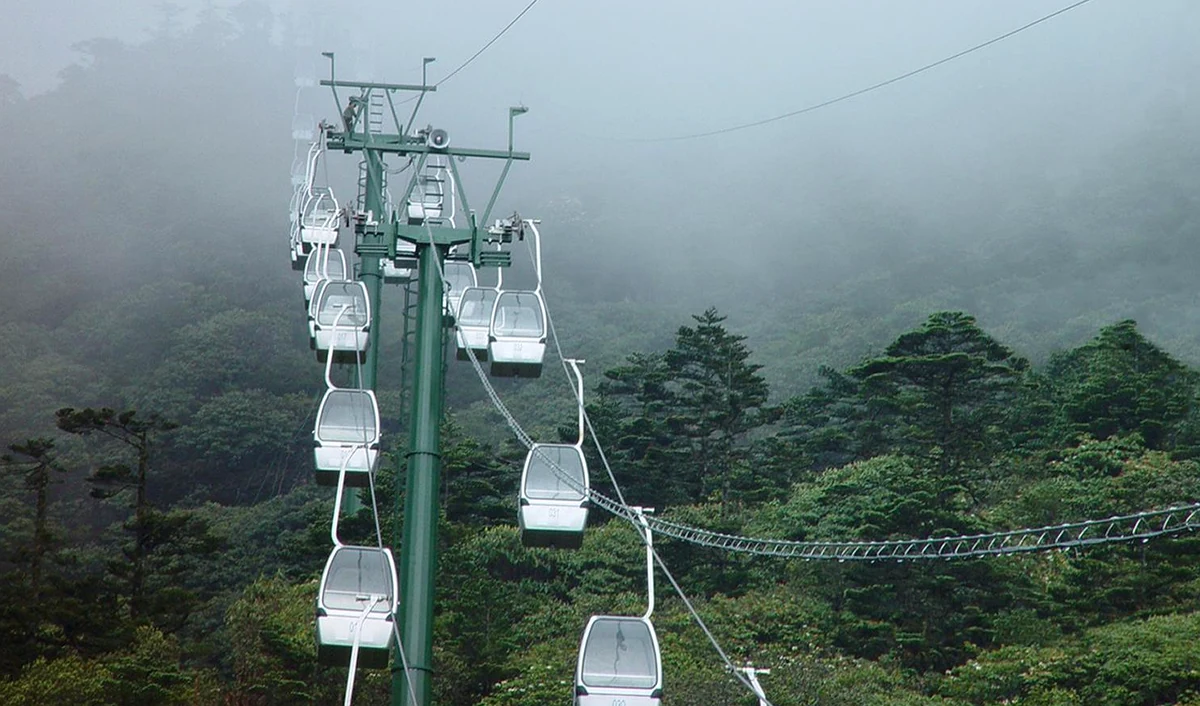
The dramatic vertical relief rising from deep river valleys along the Jinsha River basin up to Gongwang Peak creates sharply dissected geological strata that demanded pinpoint engineering precision for road and cableway planning. The Jiaozi Mountain cableway is hailed as an engineering marvel, opening an aerial corridor that carries visitors past sheer Paleozoic limestone cliffs and mist-filled abysses in minutes. Modern cabins operate under strict mechanical safety standards, seamlessly integrated with thousands of meters of elevated ecological wooden boardwalks hugging the rock faces. Strategically positioned transfer stations not only protect the fragile topsoil of this sensitive alpine environment, but also allow visitors’ bodies to acclimatize gradually to steadily dropping atmospheric pressure as they ascend from the base terminal into harsh subarctic conditions.
From a landscape ecology perspective, the elevation gradient of Jiaozi Snow Mountain reads like a living encyclopedia of botanical zonation across geological eras. At lower elevations, primeval pine and fir forests blanket the valleys before giving way to a sprawling kingdom of wild rhododendrons. Every late spring into early summer, more than thirty native rhododendron species—from golden-flowered and big-leaf varieties to vivid cinnabar-red blooms—burst into flower simultaneously, draping the mountainsides in vibrant silk ribbons that contrast starkly with the mosses and hardy cushion plants clinging to barren rock near four thousand meters.
When frigid northern winds sweep across the Hengduan Mountains, Jiaozi enters its most dramatic seasonal transformation, cloaked in pure white snow and perpetual ice. Under temperatures regularly plunging well below freezing, mountain streams and cascading waterfalls freeze mid-drop, crystallizing into colossal ice walls and thousands of translucent crystal icicles hanging over yawning chasms. From windswept Gongwang Peak, where thin air slows every breath to a meditative calm, travelers gaze out over rolling seas of clouds drifting below the summit, reflecting golden sunset hues across ancient sedimentary cliffs in a majestic portrait of untamed frontier nature.
Standing strikingly amid the rugged terrain of northernmost Kunming, the Jiaozi Snow Mountain cableway infrastructure exemplifies a harmonious dialogue between contemporary mechanical engineering and indigenous southwestern Chinese architectural aesthetics. Realized through hundreds of millions of RMB invested by the Yunnan Tourism Group, the visitor reception complex and transfer stations are thoughtfully nestled into natural slopes to minimize disruption to high-altitude flora. Serving as the gateway to this epic ascent is the base-station service complex, whose architectural vocabulary vividly echoes the traditional spatial layouts of the Yi and Bai ethnic peoples. Thick walls crafted from rough-hewn mountain stone paired with natural pine timber trusses form a sturdy, understated ensemble evoking thousand-year-old mountain villages tucked beneath snowy ridges.
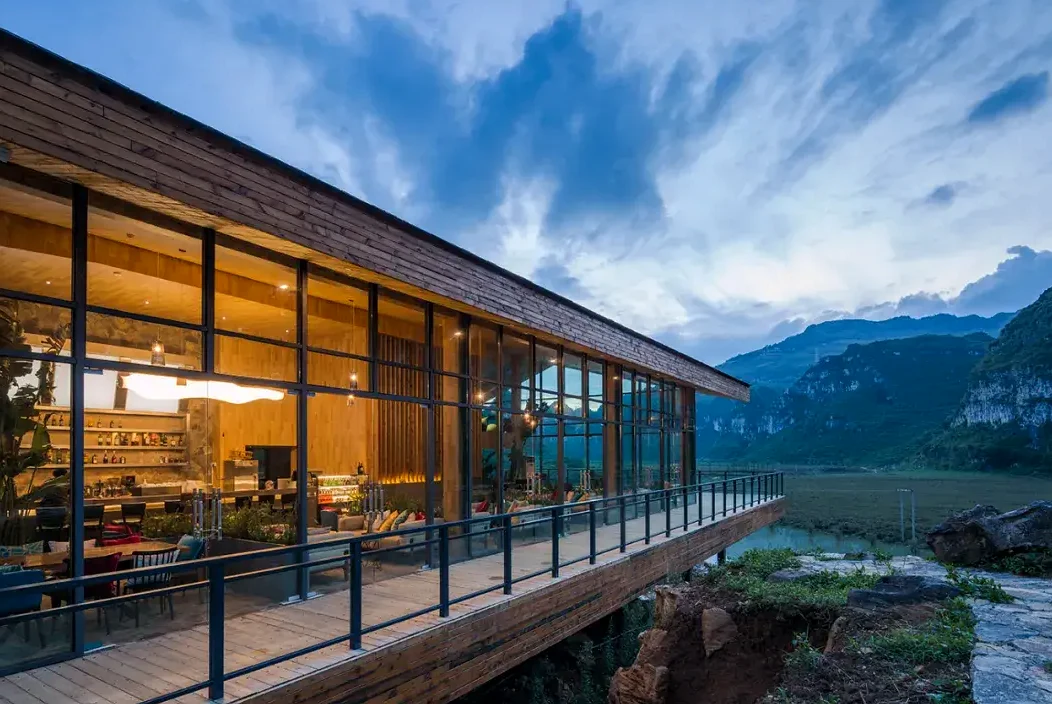
Inside the base terminal, traditional craftsmanship blends seamlessly with high-tech engineering to create optimal comfort against the harsh sub-alpine climate. The station’s sunlit facade is encased in multi-layered tempered glass engineered to block intense ultraviolet radiation, allowing guests to admire panoramic views of cloud-draped peaks while remaining shielded from fierce high-altitude solar glare. Beneath the floors, a continuous radiant heating network circulates soothing warmth against the bone-chilling mountain wind outside, providing an ideal thermal and physiological buffer before travelers embark on their ascent through the clouds.
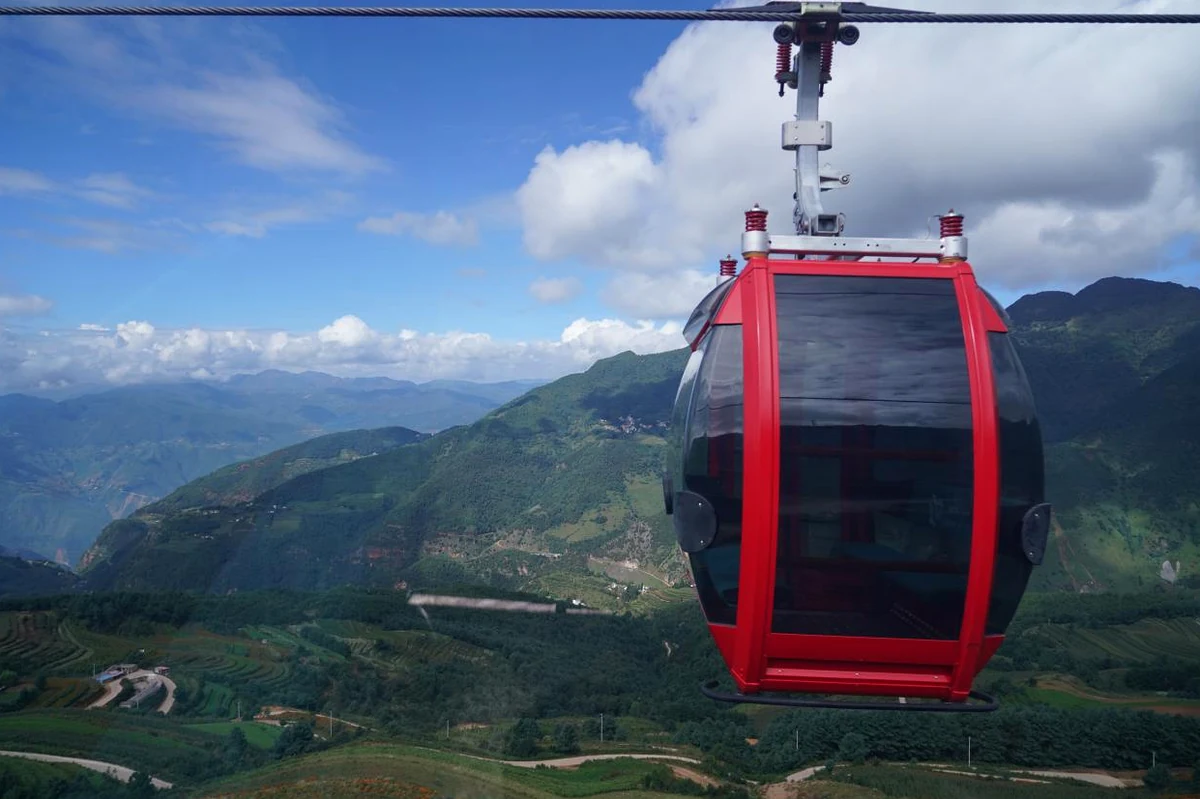
Jiaozi Snow Mountain’s aerial transport system is divided into two distinct cableway stages, each fulfilling a specific operational role and offering a unique sightseeing experience. The first stage departs from the base station using smooth, modern enclosed cabins that glide above the famed Rhododendron Valley. From a cabin suspended in mid-air, travelers can look down over dozens of ancient rhododendron species clinging to steep rocky slopes; during peak bloom, shades of magenta, violet, and crimson weave an endless tapestry beneath sturdy galvanized steel pylons. Whisper-quiet operation and 360-degree panoramic views turn this canyon crossing into a romantic, serene overture through drifting mountain mist.
Continuing the breathtaking ascent, the second stage tackles steep high-altitude terrain, carrying visitors directly past frozen cliff faces toward the sedan-chair summit marker at 4,223 meters. Designed with open chairlifts or compact agile cabins engineered to withstand fierce wind gusts and shifting air density at extreme elevation, this upper stretch delivers an exhilarating thrill. Gliding past towering moraine ice walls sculpted during the Quaternary glaciation, sturdy steel engineering suspends travelers between earth and sky. Every steel joint and heavy-duty haul rope is forged to endure sub-zero temperatures and frequent snowstorms, transforming the journey from lush green valleys to snowy wilderness into a triumph of human ingenuity amid monumental nature.
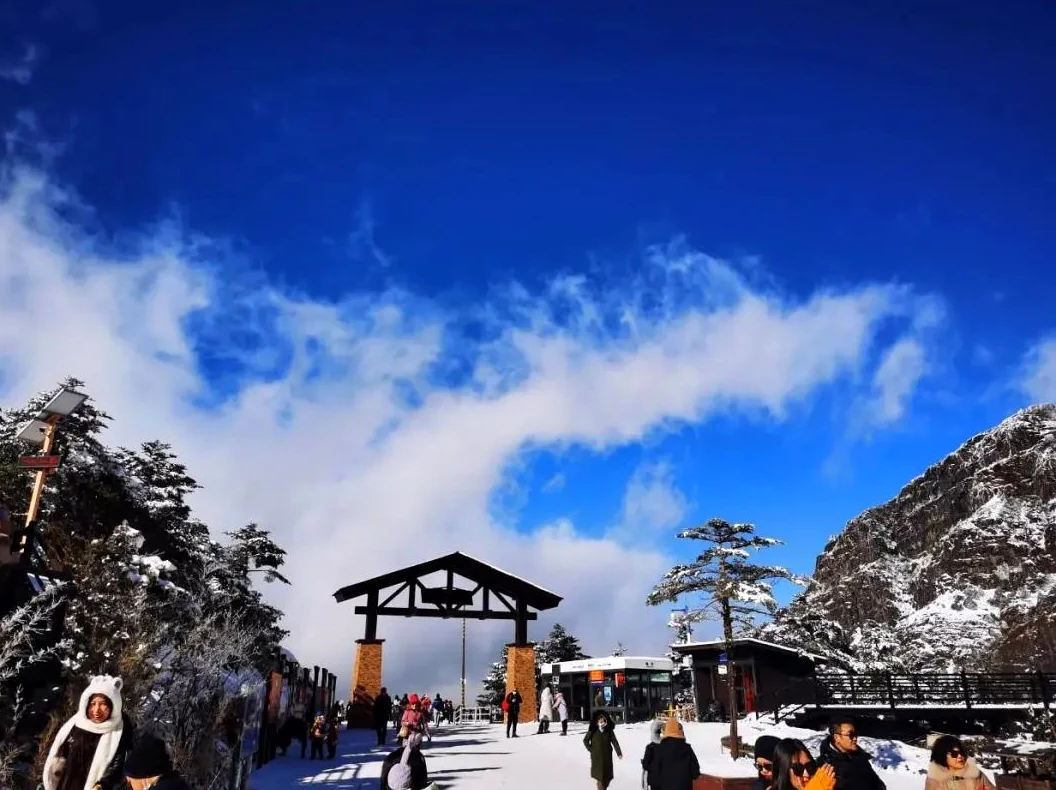
Unlike mass-market tourist complexes commercialized with neon floodlights and noisy entertainment venues, Jiaozi Snow Mountain embraces a philosophy of quietude to preserve the pristine character of its highlands. Once the final golden rays of sunset fade from the 4,223-meter lookout, nature stages a breathtaking live spectacle of its own. Free from urban light pollution, the surrounding ecological buffer zone turns the night sky over Jiaozi Mountain into a vast natural observatory. Millions of stars and the Milky Way arch across ancient snow-laden firs and towering crags, creating a mesmerizing celestial vista in the crystal-clear air of the Central Yunnan Plateau.
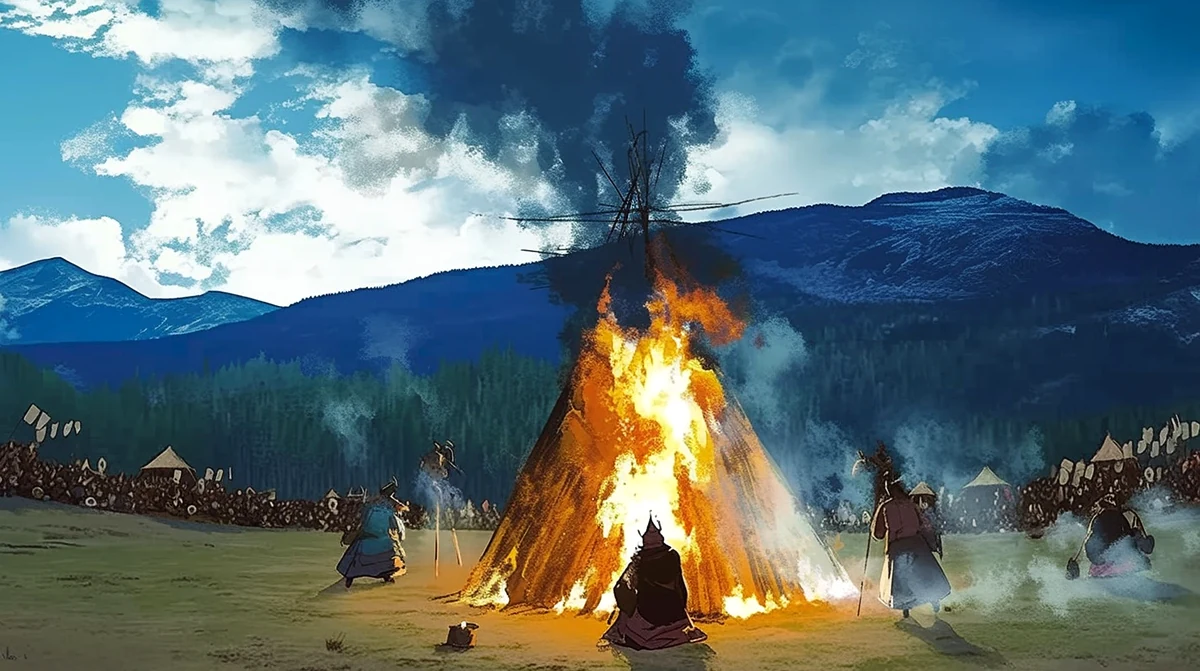
Down at the base area and nearby mountain lodges in Luquan, evening life takes on a completely different rhythm—warm, intimate, and steeped in local heritage. Timber lodges nestled against pine-covered slopes glow with welcoming golden light, dispelling the crisp chill of plateau winds. Here, illumination comes not from artificial light shows, but from crackling bonfires lit by local Yi villagers. Traditional circle dances around the fire, accompanied by the resonant strumming of the moon lute (yueqin) and age-old folk ballads, create a rustic yet deeply nostalgic cultural gathering. Guests are drawn together around steaming pots of Pu-erh tea, listening as village elders recount legends of the sacred Sedan Chair Peak and the prosperous Nanzhao Kingdom that once revered these heights as a divine domain.
The ultimate highlight of an evening in the snow-mountain region is indulging in hearty Central Yunnan cuisine, headlined by the famed wild mushroom hotpot. After a full day traversing icy cliffs and windswept boardwalks, gathering around a bubbling broth simmered from free-range mountain chicken and dozens of prized mushrooms foraged from Yunnan’s virgin forests is an unmissable culinary ritual. Fragrant matsutake, rich porcini, rare morels, and crisp termite mushrooms (jizong) are ladled into the boiling stock, infused with the numbing warmth of Sichuan peppercorns and highland black cardamom. Every piping-hot spoonful sends revitalizing warmth coursing through the body, awakening the senses and melting away fatigue after exertion in thin mountain air.
For travelers returning to central Kunming after a day on Jiaozi Mountain, the city night unfolds into an artistic showcase with Dynamic Yunnan, the acclaimed large-scale dance production choreographed by renowned dancer Yang Liping. Bringing together authentic folk dances from southwestern ethnic minorities, the performance celebrates the mystical bond between humanity, ancestral spirits, and eternal snow peaks through expressive choreography and dazzling stage lighting. After the curtain falls, a leisurely stroll along Kunming Old Street—admiring Ming- and Qing-era “one-seal” courtyard houses glowing beneath red lanterns while sipping warm osmanthus wine—brings the Jiaozi Snow Mountain journey to a deeply fulfilling close for eyes, ears, and soul alike.
Descending from the icy gusts of Jiaozi Mountain’s 4,223-meter summit cableway, a traveler’s journey feels truly complete only when awakened by Central Yunnan’s rich highland culinary heritage. Fertile soil and Kunming’s eternal spring climate have nurtured a distinctive gastronomic philosophy where crackling hearths, medicinal herbs, and wild mountain ingredients serve as natural remedies to banish cold and restore vitality to weathered travelers.
Reigning supreme at the foot of the snow mountain is Yunnan wild mushroom hotpot, a signature feast worthy of a province famed as the “Kingdom of Fungi,” home to over eight hundred edible wild mushroom species. The broth is slow-simmered for hours using indigenous black-boned mountain chicken and pork marrow bones, yielding a golden, velvety stock that is rich yet clean. Once the pot comes to a rolling boil over charcoal, chefs sequentially add prized varieties such as sweet, chicken-textured termite mushrooms, buttery yellow boletes, pine-scented matsutake, and crisp bamboo pith. A small hourglass is always placed prominently beside the table: according to strict local culinary tradition, the hotpot must boil continuously for a full twenty minutes to neutralize any trace wild toxins and unlock maximum umami depth.
Alongside wild forest delicacies stands Yunnan’s most storied cultural dish: Crossing-the-Bridge Rice Noodles (Guoqiao Mixian). Originating from a touching Qing Dynasty legend at South Lake in Mengzi County—where a devoted wife crossed a long wooden bridge carrying chicken soup insulated beneath a thick layer of golden chicken fat to keep it piping hot for her scholar husband—the dish is served today as an artful tableside ritual. Servers bring out an oversized glazed ceramic bowl brimming with boiling chicken, pork bone, and ham broth whose surface appears deceptively calm beneath its heat-sealing layer of chicken oil. Following tradition, diners slide raw ingredients—quail eggs, paper-thin pork tenderloin, Kunming lake fish slices, banana blossoms, and chives—into the scalding broth to cook instantly before adding silky, springy rice noodles made from Dianchi Lake rice.
Kunming’s culinary refinement is equally captured in freshly baked rose flower cakes, a delicate imperial pastry that enchanted Qing Dynasty emperors beginning in the Qianlong era. Drawing on the bounty of the “City of Eternal Spring,” fragrant Dianhong rose petals are hand-picked at dawn while still kissed by morning dew, then macerated with wild mountain honey and mung bean paste to create a subtly sweet floral filling. Wrapped in lard-enriched puff pastry folded into dozens of flaky layers and baked on hot stone griddles, the pastries emerge crisp and golden, releasing an intoxicating floral aroma that gently cleanses the palate after hearty savory dishes.

As night settles over the historic lanes of Guandu Old Town beneath the Jiaozi range, local street food comes alive around glowing charcoal braziers. The unmistakable aroma of Simao fermented tofu—coated in snow-white mold and blistered golden over iron grates—fills the air; torn open and dipped in fiery Sichuan peppercorn chili powder, its crispy crust gives way to a creamy, savory center. Nearby stalls sizzle with crispy fried potatoes tossed in tangy herbal chili sauce alongside velvety mashed potatoes (Laonai Yangyu) seasoned with fragrant scallions, showcasing the bold, comforting flavors of southern China’s cloud-kissed highlands.
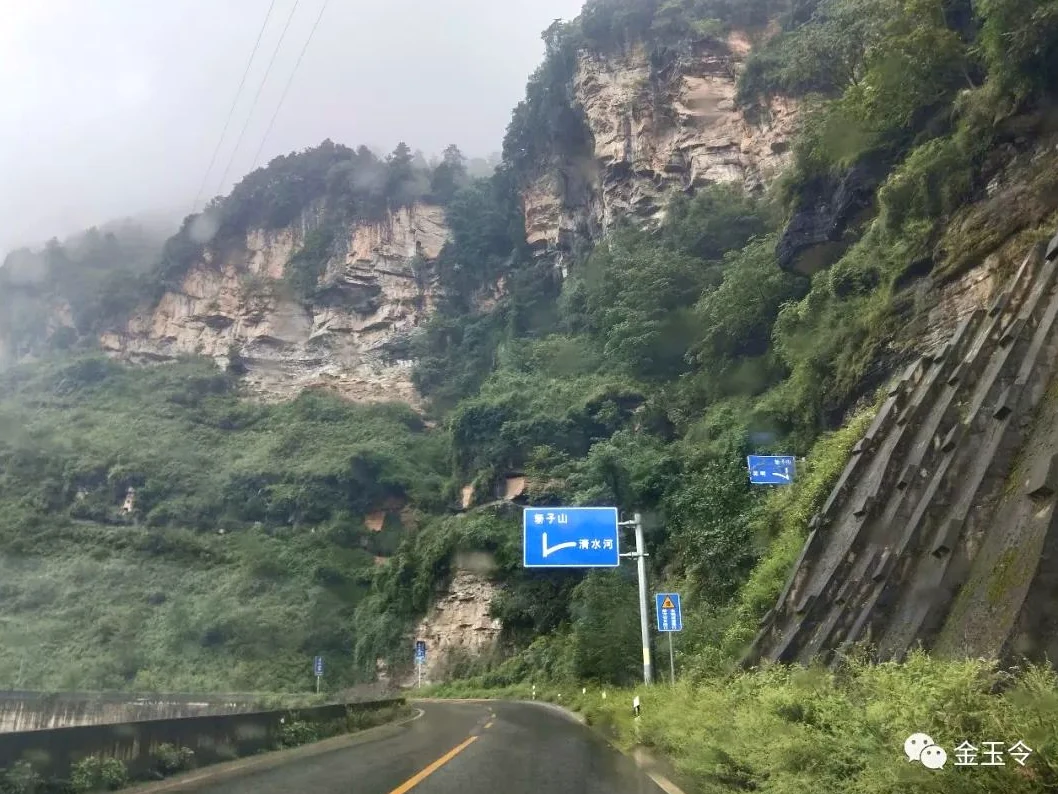
Reaching Jiaozi Snow Mountain begins in central Kunming, where travelers head north for nearly 150 kilometers along the dedicated Jiaozi Mountain Tourist Highway. Winding dramatically through Luquan County and the outskirts of Dongchuan, this scenic artery leads visitors away from the urban buzz of the “Spring City” toward the southeastern rim of the Qinghai-Tibet Plateau. The drive takes roughly 3 to 3.5 hours, showcasing a striking geological transition from Dongchuan’s vivid red basalt hills to pine forests and mist-draped limestone cliffs. Travelers can board scheduled coaches departing from Kunming North Bus Station or hire a private tour vehicle to maintain flexible timing and navigate steep mountain switchbacks safely.
The scenic area enforces strict operating hours dictated by daylight cycles and high-altitude weather conditions, typically opening at 8:00 AM and halting ticket sales and uphill cableway boarding between 3:30 PM and 4:00 PM daily. Combining aerial cableway rides with elevated wooden boardwalk treks from Sifangjing Station up to Tianlong Pool requires careful pacing; visitors must begin descending before 4:30 PM to catch the final downhill cable car at 5:30 PM, avoiding sudden temperature drops and biting winds at dusk. Any sudden weather shifts—such as heavy snowfall or high-level wind gusts—are monitored in real time by park management to adjust cableway operations and ensure absolute passenger safety.
Ascending from Kunming’s urban elevation of roughly 1,890 meters to Jiaozi’s 4,223-meter summit subjects the body to noticeable high-altitude acclimatization challenges. As atmospheric pressure drops and oxygen levels thin, the golden rule is to breathe steadily and walk at a slow, unhurried pace—never running, jumping, or overexerting yourself, which can strain the cardiovascular system. At rest stops such as Xiapingzi and cableway transfer stations, park medical posts stock portable oxygen canisters priced around 30 to 50 RMB each. Carrying a personal oxygen canister, a thermos of warm water, and a few energy bars or chocolates helps stabilize your heart rate and maintain body warmth throughout the climb.
Dressing for the “First Mountain of Central Yunnan” requires disciplined multi-layering to cope with summit temperatures that regularly hover between sub-zero and 5°C. Wear a moisture-wicking thermal base layer, an insulating fleece or wool mid-layer, and a waterproof, expedition-grade down parka paired with windproof snow pants. Protect your feet with thick wool socks and slip-resistant hiking boots with deep treads; during icy winter months, strap-on crampons or ice cleats are essential for walking safely across frozen boardwalk steps. A wool beanie covering the ears, a scarf, waterproof gloves, and UV400 sunglasses are equally indispensable to prevent snow blindness caused by intense ultraviolet radiation reflecting off pristine snowfields.
To preserve the freedom of your mountain adventure and fully soak in the breathtaking scenery of this southwestern wonderland, travelers should stay alert to “low-cost tour” or disguised “zero-dollar tour” traps. These suspiciously cheap itineraries typically cut short your time on the snow mountain to force lengthy stops at overpriced jade or herbal medicine shops, turning a majestic nature expedition into an exhausting ordeal. Choosing reputable operators committed to strict “No Shopping” itineraries ensures you keep every precious hour to glide above seas of clouds and explore safely with full logistical support. Booking a trusted, in-depth all-inclusive tour package is the golden key to conquering the 4,223-meter summit comfortably, safely, and with unforgettable memories.