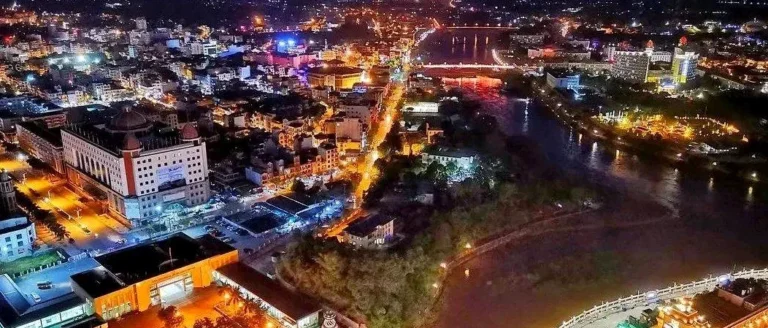
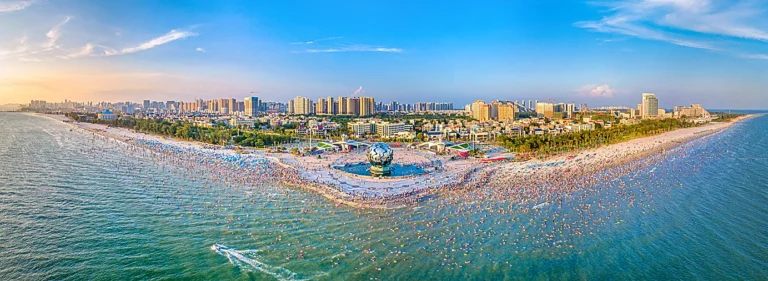
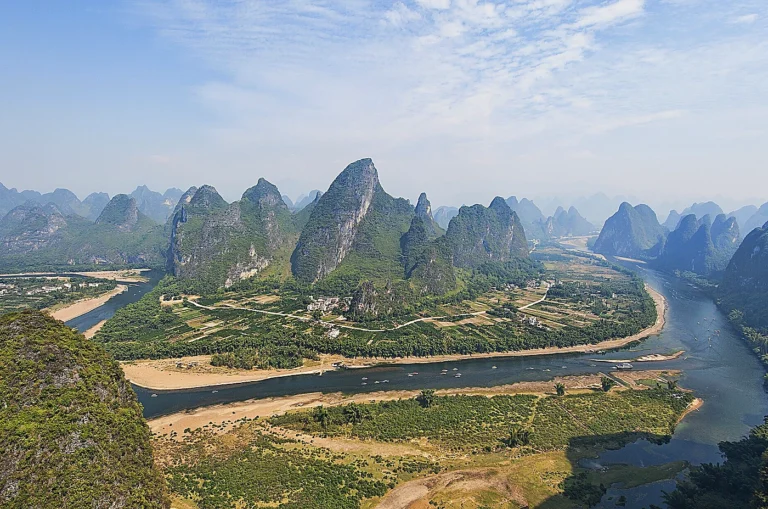
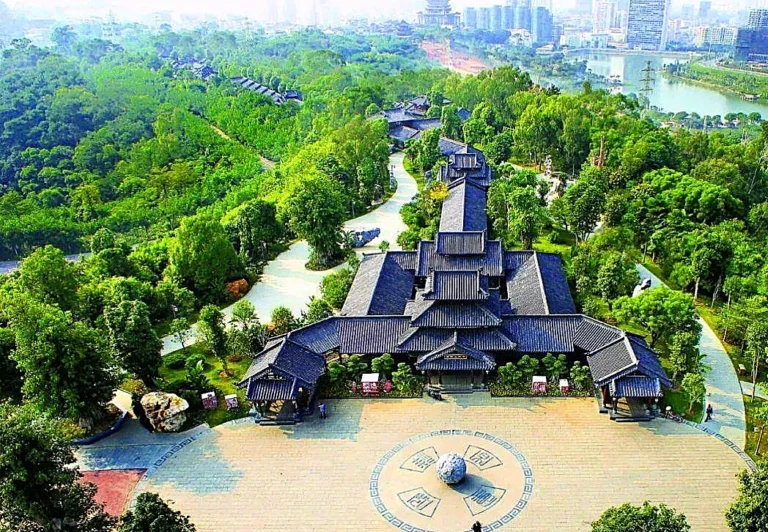
Nestled peacefully alongside the winding Beilun River that separates the two sides of the border, the city of Dongxing in the Guangxi Zhuang Autonomous Region is famed not only as a bustling commercial trading center but also as a repository of profound Eastern cultural sediments. Amidst the verdant expanse of the border trade forests, the Dongxing Wenchang Pagoda rises proudly against the deep blue sky, becoming a visual focal point and an immortal spiritual symbol for the inhabitants of this southern Chinese strip. The pagoda is far more than a structure bearing the imprints of time; it embodies profound philosophies regarding scholarship, aspirations for academic and career success, and the harmonious fusion of Confucian, Taoist, and Buddhist thoughts that have permeated indigenous survival for centuries.
Within the vibrant flow of Chinese civilization, the worship of Wenchang Dijun stems deeply from legends regarding the deity governing literary fortune, career success, and scholarly virtue. Originating during the Ming Dynasty and taking shape brilliantly under the Qing, the custom of erecting protective pagodas named Wenchang at auspicious geomantic coordinates spread across towns, prefectures, and counties from the Central Plains plains down to the Liangguang coastal region. Constructing a pagoda at each land’s Wenchang orientation was viewed as a method to revitalize local geographical energy and cultivate talents, turning remote borderlands into radiant centers of scholarship and literature. The pagoda in Dongxing represents the complete inheritance of that philosophical lineage, erected from the earnest hope that descendants across generations will remain brilliant, sailing smoothly along paths of examinations and career-building.
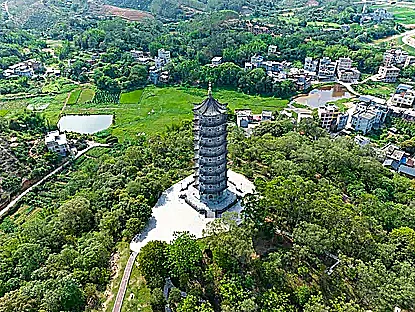
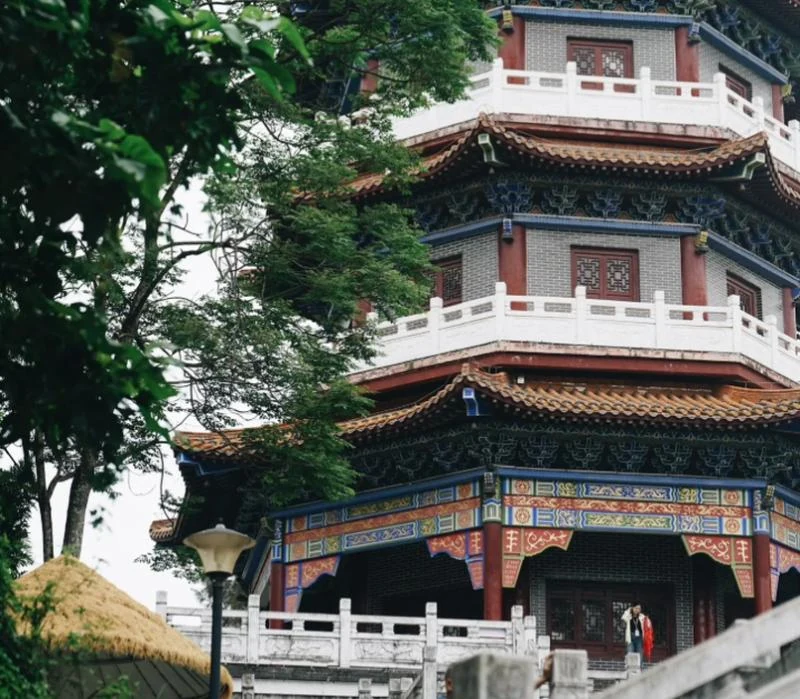
Solemnly situated within the verdant grounds of the China-Vietnam People’s Friendship Park, the Dongxing Wenchang Pagoda boasts an impressive height reaching 41 meters, comprising 7 stacked storeys in traditional octagonal architectural style. Each side of the octagon symbolizes the Eight Trigrams (Bagua) of the Book of Changes, expressing the ceaseless rotation of the universe and the harmony between humanity and heaven and earth. The tower body is crafted from ancient fired bricks combined with gray-blue stone and sturdy load-bearing frames, forging a massive structure devoid of any heavy sensation. The entire architectural mass tapers gradually from base to summit, achieving a flawless spatial golden ratio reminiscent of the transcendental beauty of millennium-old pagodas in distant northern lands.
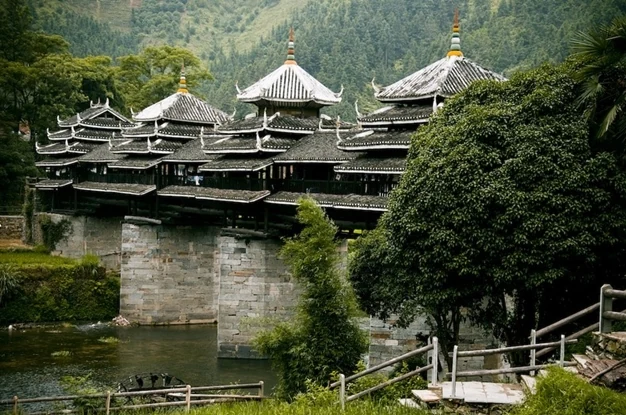
The signature upturned eaves characteristic of Ming and Qing architectural art represent one of the most breathtaking aesthetic highlights here. Each layer of dark gray glazed tile roofs covered in mossy patinas is intricately carved, with corner eaves soaring upward like phoenix wings spread wide amidst clouds and sky. Beneath each roof corner, interlocking wooden dougong bracket sets simultaneously perform functions supporting upper-layer weights while showcasing supreme wood joinery craftsmanship without requiring a single metal nail. The pagoda summit is adorned with an exquisitely cast bronze lotus bud, visually evoking a gigantic brush dipping ink to paint masterpieces across blue skies, fully demonstrating the proud appellation “Literary Brush Propping Up the Sky.”
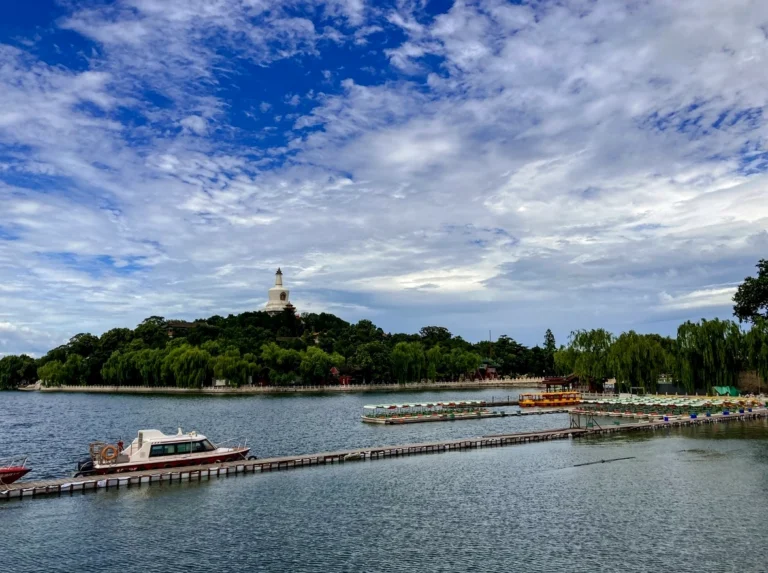
Surrounding the protective pagoda is an ecological ensemble overflowing with tropical greenery, featuring mirror-flat lakes reflecting graceful weeping willows. According to ancient geographical geomantic theory, a Wenchang Pagoda seeking to maximize its intellectual-nurturing utility must gather water and accumulate qi. The clear blue lake before the pagoda base acts as a natural inkstone, combining with the towering pagoda resembling a brush handle to form a harmonious brush-and-inkstone configuration. Strolling beneath ancient tree canopies while breathing pristine air scented with faint sandalwood and rustling leaves, visitors experience calmed minds, washing away daily urban hustle and bustle.
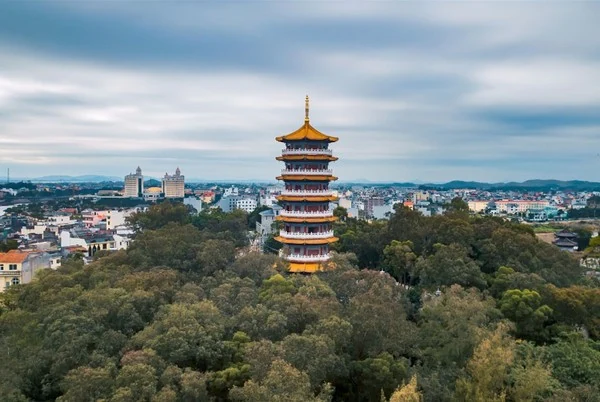
Eastern numerology concepts manifest transparently across the pagoda’s 7-storey structure. In Buddhist worldviews, the number 7 connects with the seven-level stupa, bearing meanings of boundless merit and ultimate peaceful liberation. Meanwhile, within Confucian and scholarly traditions, the number 7 represents intellectual sublimation, symbolizing scholars’ arduous self-cultivation from lower to higher tiers: investigating things, extending knowledge, sincere intentions, rectifying minds, cultivating oneself, regulating families, governing nations, and pacifying the world. Entering internal spaces, visitors encounter horizontal boards and couplets carved with masterful calligraphy, praising sage virtues and reminding descendants of filial respect, honoring teachers, and the importance of refining virtue and talent to serve society.
Today, the pagoda has become an iconic stopover unmissable across border exploration journeys. Numerous local families and distant travelers frequent this location during early spring or prior to vital examinations to pay sincere respects, praying for smooth studies and successful university admissions for their children. Furthermore, artists and creative workers view this as a sanctuary seeking artistic inspiration, listening to crisp wind chimes ringing from corner eaves whenever gentle breezes blow across the Beilun River.
To fully admire the pagoda’s grandeur, travelers’ journeys typically depart from Mong Cai City in Quang Ninh Province. Following border clearance procedures via border passes or passports through international gates, visitors spend roughly fifteen minutes riding electric vehicles deep into Dongxing’s urban center. Selecting an all-inclusive 1-day Dongxing tour program ensures smooth, convenient schedules without worrying about language barriers or border customs regulations. The ideal visiting timeframe is early morning when fragile mists linger atop trees, or at dusk casting golden glows over antique tiled roofs, reflecting sparkling light across tranquil lake waters.
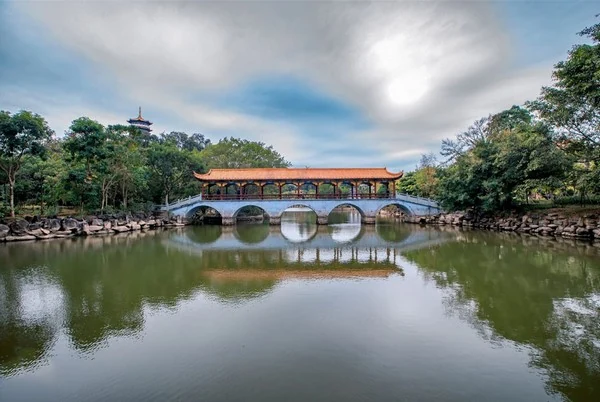
For photography enthusiasts seeking unique artistic moments, grounds surrounding Wenchang Pagoda serve as an outdoor film studio. Camera angles from opposing lakeshores capture the complete proud silhouette mirrored on blue waters, while close-up upward shots from stone steps reveal sheer grandeur and massiveness of multi-layered bracket clusters. Travelers frequently don traditional costumes or elegant ao dai while strolling stone paths shaded by ivory bamboo, forging commemorative photographs rich in nostalgic color and refined Asian aesthetics.
Pilgrimage journeys to Wenchang Pagoda gain completeness when combined with adjacent historical and cultural relics in the city. Right beside the park stands the solemn Guan Di Temple redolent of incense smoke, where locals repose beliefs in loyalty and righteousness. Nearby rests contemplative Vanchung Temple, museums displaying coastal resident artifacts, or Qingmen Ancient Street imbued with classical Chinese character. Accompanying journeys are bustling trade rhythms at Wanzhong International Market, gathering thousands of agricultural, handicraft, and traditional medicine stalls from two neighboring nations.
Following serene sightseeing hours, Dongxing street food welcomes visitors with flavorful culinary symphonies. Across bustling pedestrian streets, steaming mantou buns rise, accompanied by aromatic Guangxi-style spicy grilled chicken or tongue-piercing spicy Liuzhou snail noodles imbued with native character. Stop for celebrated rich roasted milk tea or calming jasmine tea, observing mundane border-town living rhythms to perceive wondrous fusions between ancient antiquity and vibrant modern breaths.
To ensure smooth, safe trips, travelers should prepare modest, polite clothing suitable for sacred religious spaces around the pagoda. Pre-exchange appropriate Chinese Yuan currency or activate convenient QR code international payment apps on mobile phones for personal expenses. For first-time cross-border visitors, accompanying tour organizers with professional immigration services guarantees paper procedures, transport, and history-savvy guides are comprehensively arranged.
Through historical shifts and continuous borderland transformations, Dongxing Wenchang Pagoda stands tall as an enduring cultural milestone across time. The work represents classical Eastern architectural art alongside repositories of noble dreams, studious spirits, and eternal intellectual reverence. Pausing to admire the pagoda during evening dusk, every traveler discovers inner tranquility, deeper understandings of border residents’ souls, and renewed energy for future journeys.