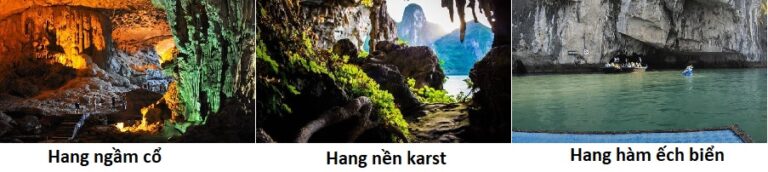
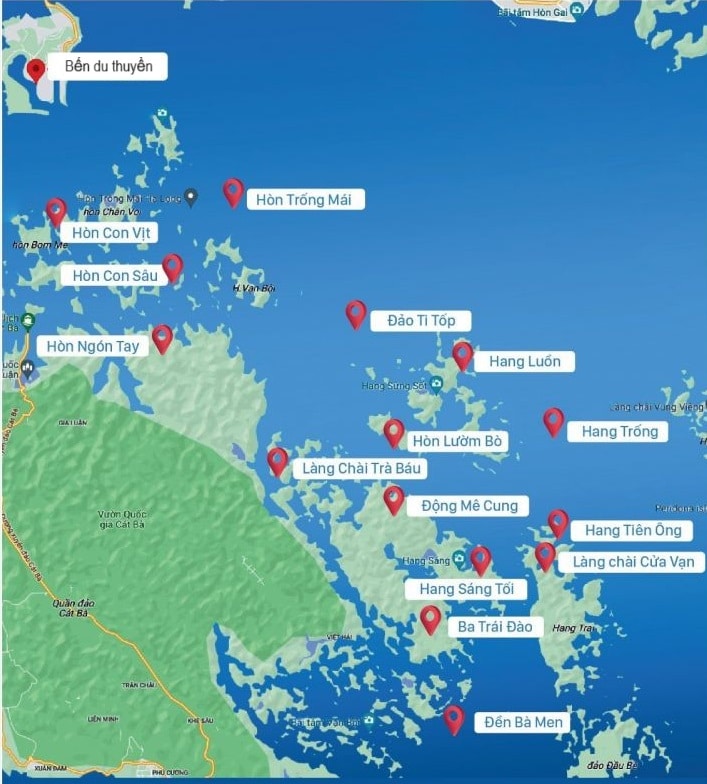
Soi Nhu culture is one of the oldest prehistoric coastal and island cultures in Southeast Asia, dating roughly from 25,000 to 6,000 years ago. It demonstrates that prehistoric inhabitants of this region had a long history of adapting to challenging coastal environments and harvesting abundant marine and riverine resources for their livelihood, while displaying notable creativity in toolmaking, pottery, ornaments, and survival strategies.
See more: Legends and Historical Formation of Ha Long Bay
What Is Soi Nhu Culture?
Soi Nhu culture is a prehistoric archaeological culture dating roughly 18,000 to 7,000 years ago (with early phases extending back to ~25,000 years), recognized among the oldest cultural traditions in Vietnam and Southeast Asia. It takes its name from the Soi Nhu archaeological site in Bai Tu Long Bay, where Vietnamese archaeologists discovered it in 1964 and conducted excavations in 1967.
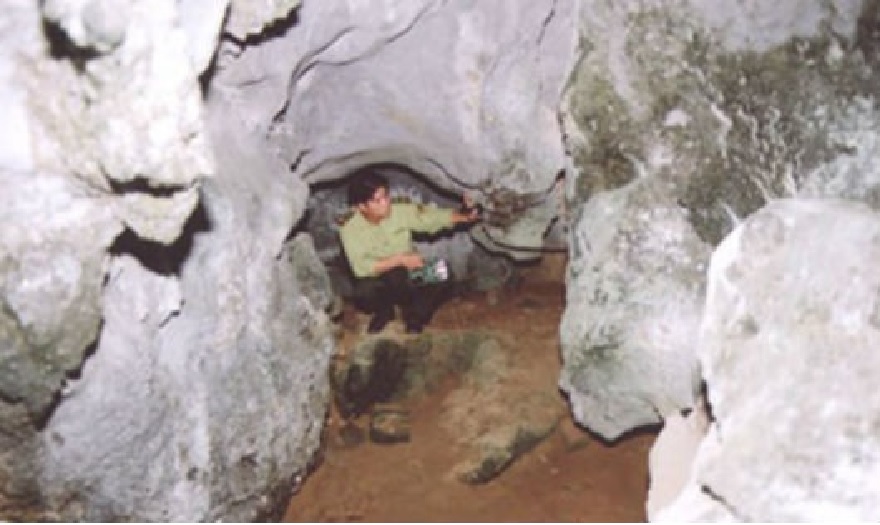
Dr. Ha Huu Nga surveying the archaeological site at Soi Nhu Cave
One of the key researchers who defined and named Soi Nhu culture is Vietnamese archaeologist Dr. Ha Huu Nga of the Institute of Archaeology under the Vietnam Academy of Social Sciences. He first proposed the concept and defining features of the culture at the 1996 conference *New Archaeological Discoveries* (Social Sciences Publishing House, Hanoi, 1997) and participated in excavating the Soi Nhu site—covering roughly 2,000 m2 on a small round-cake-shaped island in Van Yen Commune, Van Don District, Quang Ninh Province—which yielded valuable evidence of stone, bone, horn, shell, and ceramic artifacts alongside traces of daily life.
Key milestones in the discovery and excavation of the Soi Nhu archaeological site include:
- In 1964, during an expedition in Bai Tu Long Bay (Van Don District, Quang Ninh), Vietnamese archaeologists discovered a cave rich in prehistoric remains named Soi Nhu after a local plant species abundant nearby—marking the first recognition of this prehistoric cultural presence in the area and recording stone tools, pottery fragments, animal bones, and charcoal.
- In 1967, Vietnamese archaeologists carried out the first excavation inside Soi Nhu Cave across roughly 100 square meters, uncovering stone tools (both flaked tools such as scrapers, edge tools, points, and bone implements, as well as edge-ground tools and axes), dark brown or light ceramic sherds (10–20 cm), animal bones (including deer, wild boar, bears, and other mammals), charcoal indicating fire use for light, warmth, and cooking, and hearth and living traces analyzed in comparison with regional prehistoric sites.
- In 1996, Dr. Ha Huu Nga of the Institute of Archaeology formally outlined the concept and traits of Soi Nhu culture at the *New Archaeological Discoveries in 1996* conference, dividing it into three phases—early (25,000–15,000 years ago), middle (15,000–10,000 years ago), and late (10,000–6,000 years ago)—and highlighting its role as an ancestral foundation for coastal cultural traditions in Vietnam and Southeast Asia.
Conclusions of Dr. Ha Huu Nga:
Countering arguments by Australian prehistorian Peter Bellwood in *Prehistory of the Indo-Malaysian Archipelago* (1985) that traced Austronesian/Malayo-Polynesian and wet-rice agricultural dispersals solely to Yangshao and Longshan cultures in China, Dr. Ha Huu Nga argued that Cai Beo culture and Ha Long culture, descending from Soi Nhu culture, represent indigenous maritime predecessors in Vietnam and Southeast Asia linked to early Austronesian/Malayo-Polynesian seafaring networks—consistent with lower sea levels 5,000–6,000 years ago when Cai Beo culture flourished across Ha Long Bay and connected readily with island Southeast Asia, supported by archaeological and linguistic evidence.
Distinctive Features of Soi Nhu Culture Compared to Other Cultures
1. Soi Nhu culture is distributed primarily across limestone islands in Ha Long Bay—including Cat Ba Island and Bai Tu Long Bay—as well as coastal limestone caves around Cam Pha, Ha Long City, Hoanh Bo, Uong Bi, Kinh Mon (Hai Duong), and Thuy Nguyen (Hai Phong).
2. It is a cave, estuarine, and marine-terrace cultural tradition whose cultural deposits consist predominantly of mountain snail and stream snail shells alongside other freshwater mollusks and substantial mammal bone remains, with occasional marine mollusks appearing in cultural layers.
3. Unlike Hoa Binh and Bac Son cultures, Soi Nhu cultural layers contain relatively few raw river cobbles, stone tools, flakes, or pottery sherds.
4. Recovered tools lack standardized shapes, relying on simple unifacial flaking and chopping/breaking with minimal systematic retouch; many rough chopping tools were made from local limestone, making them difficult to distinguish from naturally fractured rock.
5. Compared with contemporaneous Hoa Binh and Bac Son populations, Soi Nhu inhabitants maintained closer, more direct ties to the sea, evidenced by marine foraging remains at caves such as Soi Nhu, Tien Ong, and Bo Quoc (whose precise chronology continues to be studied).
6. Between the two contemporaneous Hoa Binh and Bac Son cultures, Soi Nhu culture shared closer, more frequent interaction with Bac Son culture—reflected in Bac Son-style edge-ground axes recovered at Soi Nhu Cave and caves in Hoanh Bo and Cat Ba Island, as well as open-air sites such as Hon Ngo and Nui Hua.
Historical Phases of Soi Nhu Culture
Discovered and excavated in Bai Tu Long Bay, Soi Nhu culture spans roughly 18,000 to 7,000 years ago (with early roots extending back around 25,000 years alongside Nguom culture in Thai Nguyen Province), overlapping chronologically with Vietnam’s Hoa Binh and Bac Son cultures and divided by Dr. Ha Huu Nga into early, middle, and late phases across sites in Ha Long Bay and neighboring provinces.
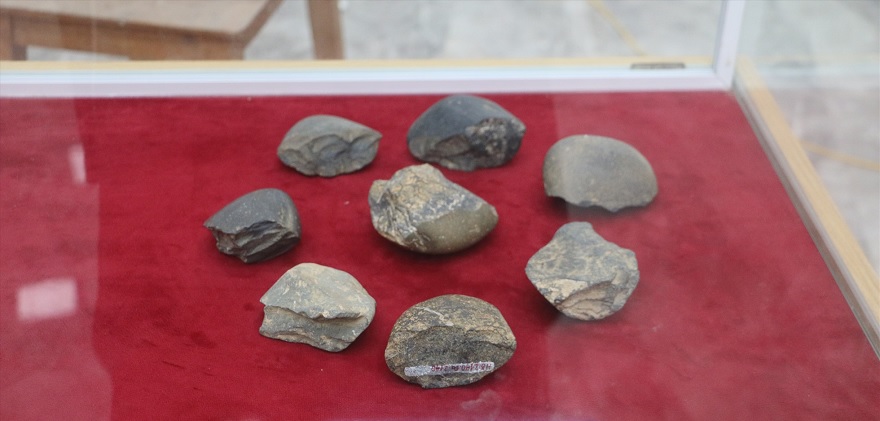
Early-phase stone tools (illustrative image)
The early phase (roughly 25,510 to 17,000 years ago) is characterized by stone tools, animal bones, and shell middens uncovered in caves such as Ang Ma, Thien Long, Me Cung, Tra Gioi, and Hang Trong. Stone implements made mainly from quartz or siliceous stone include flakes, scrapers, gravers, points, and knives, alongside bones of deer, wild boar, monkeys, turtles, fish, and snails reflecting early foraging and aquatic resource use.
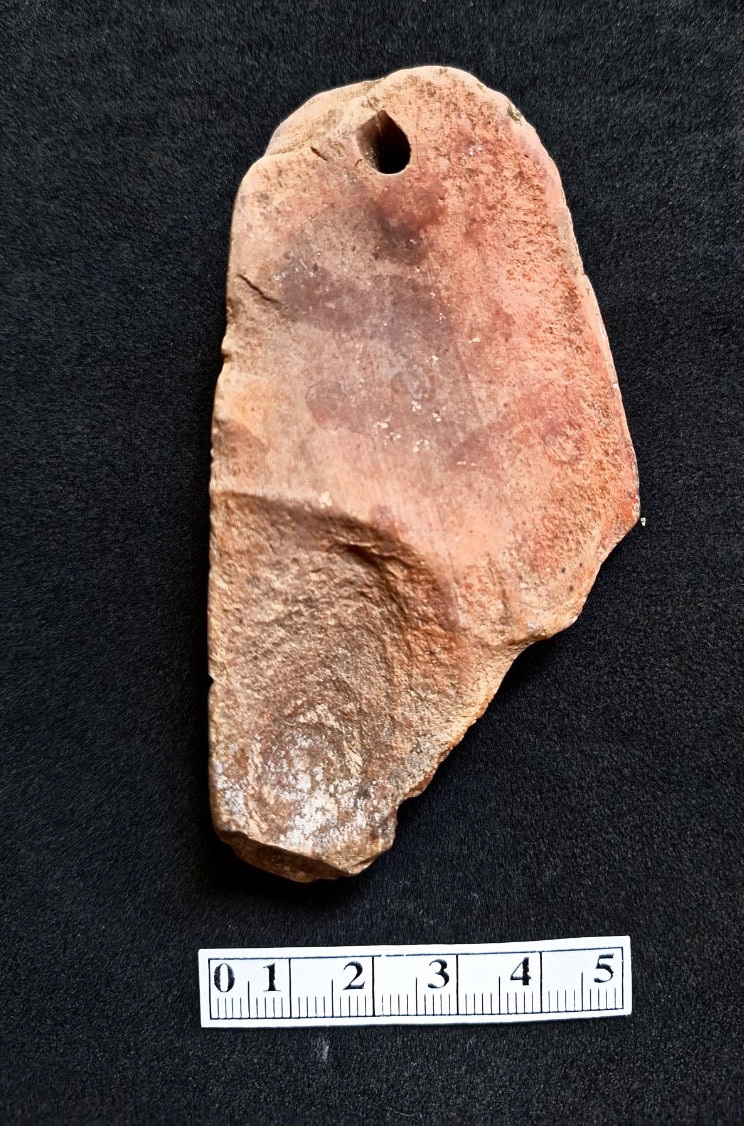
Middle-phase edge-ground stone axe (illustrative image)
The middle phase (roughly 16,000 to 9,000 years ago) is marked by pottery, edge-ground stone axes, and ornaments crafted from shells and animal teeth found at caves such as Soi Nhu, Tien Ong, and Bo Quoc—featuring plain, cord-marked, or incised pottery, oval or rectangular edge-ground axes of greenstone or basalt, and beads, pendants, rings, bracelets, and necklaces made from oyster, clam, and snail shells or deer and wild boar teeth.
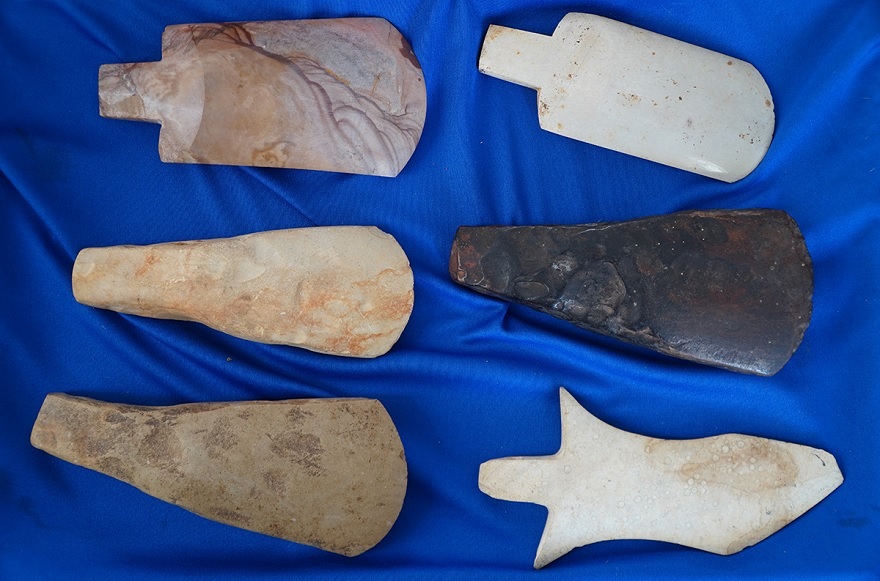
Late-phase geometric stone tools (illustrative image)
The late phase (roughly 8,000 to 6,000 years ago) is distinguished by more varied pottery styles, geometric stone implements, and early evidence of plant cultivation and animal domestication found in caves and rock shelters such as Dong Dang, Ha Lung, Hang Doi, and Phuong Nam—including red-slipped ceramics with geometric or relief decoration, geometric points, triangles, squares, discs, and sickles of quartz or siliceous stone, and plant and animal remains such as rice, millet, dogs, and pigs.
Where Can You See Soi Nhu Cultural Relics?
Beyond the Soi Nhu archaeological site in Bai Tu Long Bay, Quang Ninh Province, visitors can explore Soi Nhu cultural artifacts at major museums and research institutions in Vietnam:
- Vietnam National Museum of History (Archaeological Exhibition): Showcases artifacts and models from Vietnam’s ancient cultures, including Soi Nhu pottery, stone tools, ornaments, and charcoal collections in Gallery No. 3, located at No. 1 Trang Tien Street, Hoan Kiem District, Hanoi.
- Vietnam Institute of Archaeology: Conducts archaeological research across Vietnam including Soi Nhu studies, housing academic publications, journals, and research libraries at No. 61 Phan Chu Trinh Street, Hoan Kiem District, Hanoi.
- Quang Ninh Museum: Located at No. 165 Nguyen Van Cu Street, Ha Long City, Quang Ninh’s provincial museum features galleries on regional history, culture, geology, and ecology—displaying Soi Nhu ceramics, stone implements, ornaments, and archaeological finds in its prehistoric exhibition section.