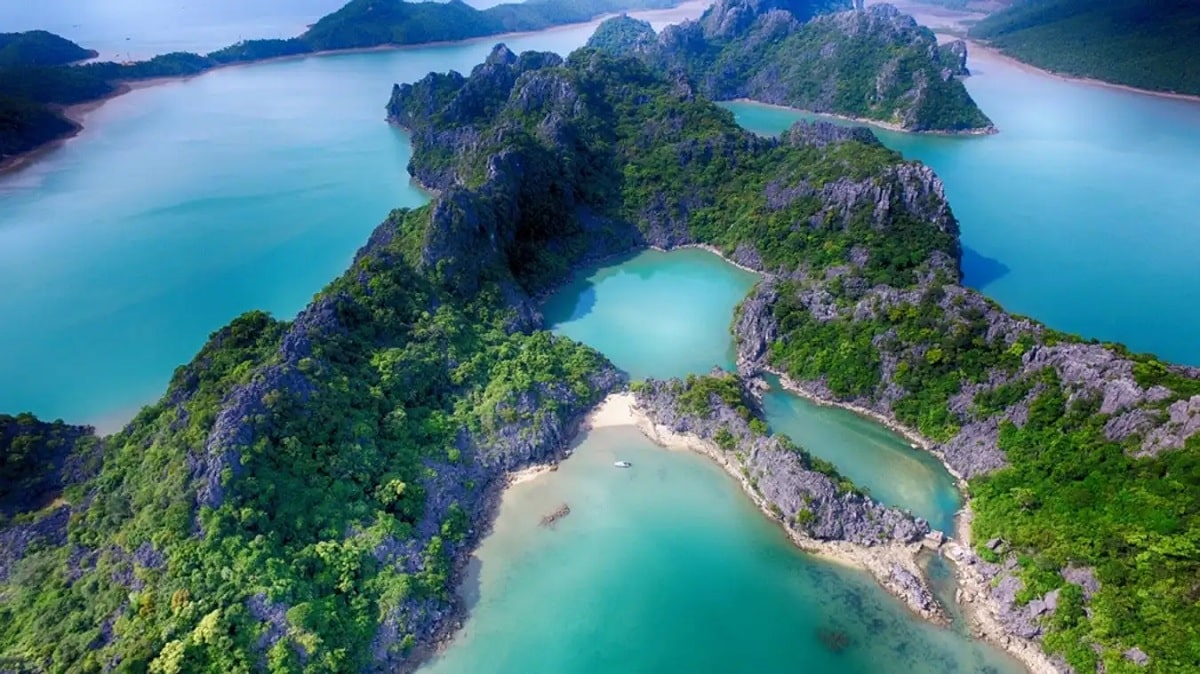
While Ha Long Bay is already familiar to travelers for its bustling energy, Bai Tu Long Bay sits right alongside it while preserving its pristine, peaceful charm. Like a breathtaking natural landscape, it encompasses hundreds of large and small islands in myriad shapes scattered across turquoise waters—creating a majestic, poetic seascape far removed from crowds and noise.
Traveling through Bai Tu Long Bay lets you breathe in fresh sea air, explore mysterious caves, kayak through rocky channels, swim along fine white-sand beaches, and experience the unhurried daily life of local fishing villages. Join VDS Travel to discover Bai Tu Long Bay—an ideal retreat for those who love tranquility and seek raw, majestic nature.
Location and Features of Bai Tu Long Bay
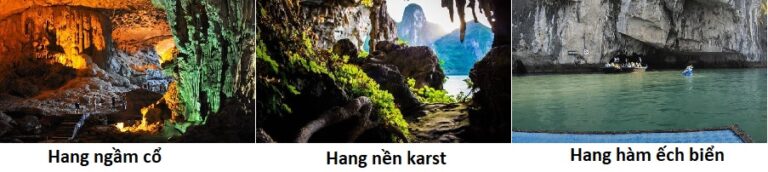
Bai Tu Long is a coastal bay within the Gulf of Tonkin in northeastern Vietnam, spanning waters off Ha Long City and Cam Pha City as well as the entire Van Don District. Covering roughly 160 km2, it borders Ha Long Bay and shares the same karst limestone and schist geology formed around 570 million years ago. Yet Bai Tu Long Bay also features earthen islands interspersed among roughly 600 islands and islets—many containing weathered caves such as Cap Ky Nhay, Cap Ky Gia, The Vang, Hon Chong cluster, and Hon Van Don—and several inhabited islands including Quan Lan, Minh Chau, and Ngoc Vung, where residents earn their livelihood through farming, livestock, fishing, and aquaculture. As a result, longstanding fishing villages thrive across the bay, notably fishing villages like Cong Dam and Vung Vieng.
Bai Tu Long Bay
Furthermore, Bai Tu Long Bay boasts stretches of white sand and distinctive karst dolines of high scenic value. Beyond stunning scenery, the bay is a rich biodiversity hub encompassing mangrove forests, coral reefs, enclosed karst lagoons (*tung* and *ang*), and tropical forests—centered on Bai Tu Long National Park, which is recognized as an ASEAN Heritage Park and holds immense ecological significance. Together, these features give Bai Tu Long Bay its unmistakable travel character.
Legends and History of Bai Tu Long Bay
In an explanation of the name “Bai Tu Long” published in *Saigon Giai Phong* on June 21, 2006, author Le Trung Hoa cited *Handbook of Vietnamese Place Names* (Education Publishing House, 2005), where authors Nguyen Duoc and Trung Hai noted a claim that Bai Tu Long came from a French place name, “Baie Tulon.” Mr. Hoa corrected this, pointing out that no such place as “Tulon” exists in France—only Toulon, capital of the Var department near the Mediterranean—suggesting “Baie” was rendered as “Bai” and “Toulon” as “Tu Long.”
According to historical geography records and antique French maps from the late 19th and early 20th centuries, Bai Tu Long Bay was recorded as *Baie du Fai Tsi Long*, distinct from *Baie d’Along* (Ha Long Bay). “Fai Tsi Long” likely reflects a French transcription of overseas Chinese pronunciation that became “Bai Tu Long” in Vietnamese.
According to folklore, in the earliest days of nation-building, the Vietnamese people faced seaborne invasions. Seeing their plight, the Jade Emperor dispatched the Mother Dragon along with a pod of Baby Dragons to help defend the land. As enemy vessels surged inward from the sea, the dragons descended to earth—breathing fire to burn invading ships and spitting pearls and jade that formed a solid stone barrier shattering the enemy fleet.
After repelling the invaders, the dragons admired the peaceful landscape, lush greenery, and hardworking people, and the Mother Dragon decided to stay with her Baby Dragons to guard Dai Viet’s people forever. Today, where the Mother Dragon landed is Ha Long Bay, and where the Baby Dragons descended is Bai Tu Long Bay.
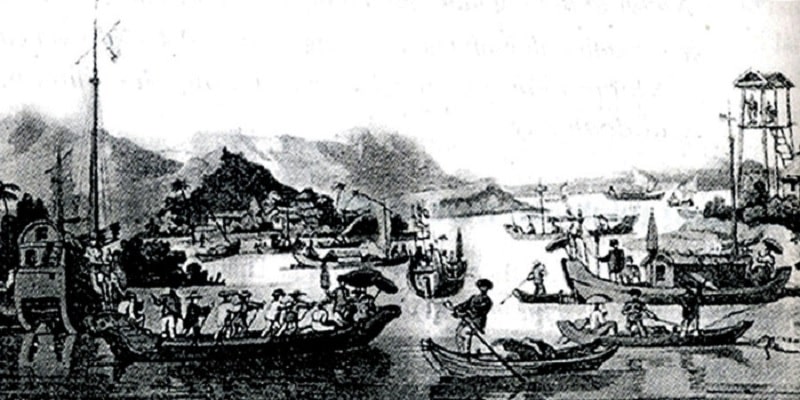
Trade and exchange at the ancient Van Don commercial port
Bai Tu Long Bay’s history is closely intertwined with Vietnam’s heritage, home to Van Don Commercial Port—Vietnam’s first international trading port. Founded in 1149 during the reign of King Ly Anh Tong with anchorages across islands in Bai Tu Long Bay spanning roughly 200 km2—including Cong Dong and Cong Tay (Thang Loi Commune), Cai Lang and Cong Cai (Quan Lan Commune), Cai Cong and Con Quy (Minh Chau Commune), and Cong Yen and Cong Hep (Ngoc Vung Commune) in modern-day Van Don District—Van Don operated for seven centuries as a bustling hub for merchant ships from China, Japan, Mongolia, the Philippines, and Europe.
Bai Tu Long also witnessed the heroic victory of Tran Khanh Du and the three Pham brothers of Quan Lan Commune, who routed Mongol-Yuan general Truong Van Ho’s grain fleet in 1288. In addition, the area features revered temples such as Cua Ong Temple—also called Suot Temple—near Cam Pha, dedicated to Hung Nhuong Vuong Tran Quoc Tang, third son of Hung Dao Vuong Tran Quoc Tuan, who played a major role in defeating Mongol-Yuan invasions.
How to Explore Bai Tu Long Bay
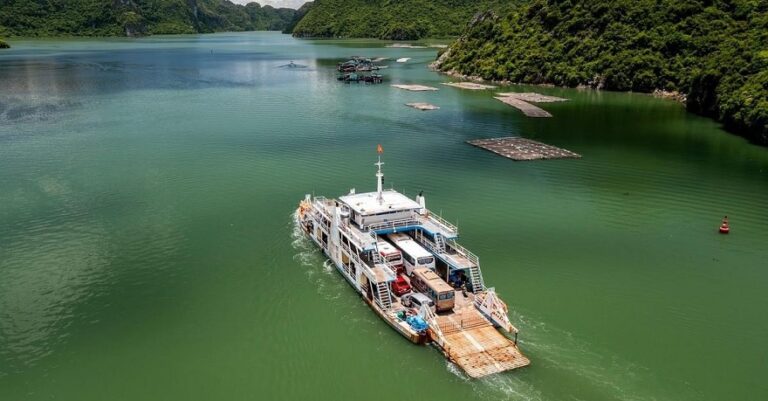
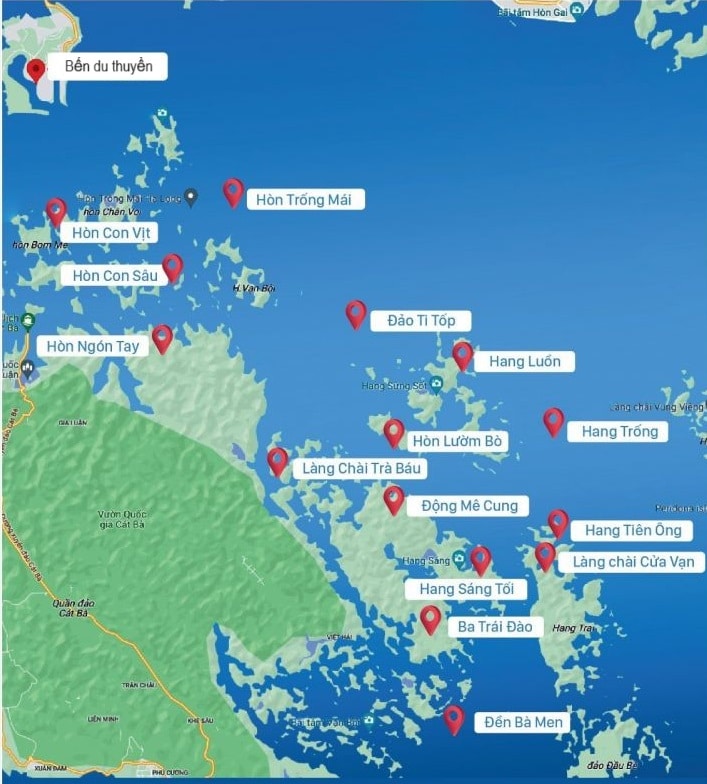
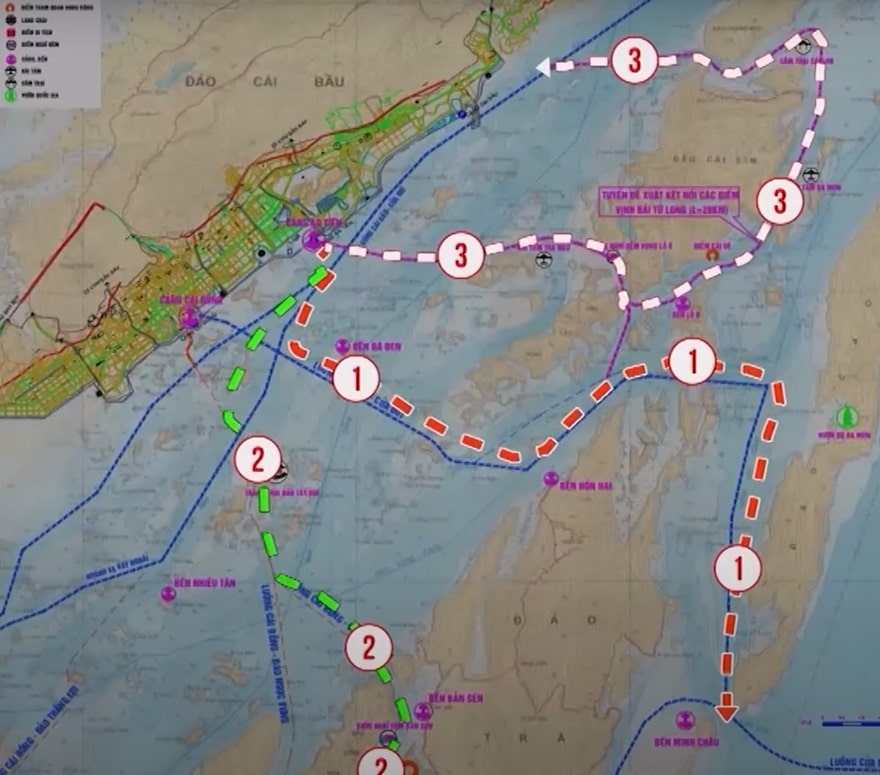
In recent years, Quang Ninh has actively promoted tourism across Bai Tu Long Bay to introduce new coastal travel experiences. With Ao Tien High-Class Marina entering operation in 2023 and the introduction of 10 new Bai Tu Long Bay sightseeing routes, exploration across the bay has gained major momentum. Below are key highlights and cruising options in Bai Tu Long Bay.
Bai Tu Long Bay sightseeing routes
| Cruise Name | Starting Price | Key Highlights |
|---|---|---|
| Signature Royal | From 3,500,000 VND/guest | – Sleek, modern luxury design.
– Infinity pool, restaurant, and bar. – Activities include kayaking, squid fishing, and cooking classes. |
| La Regina Royal | From 4,200,000 VND/guest | – Classic royal-inspired style.
– Spacious suites with private balconies. – Upscale spa and massage services. |
| Athenaspa | From 3,800,000 VND/guest | – Focused on wellness and relaxation.
– Spa treatment rooms, gym, and yoga. – Healthy menus and organic drinks. |
| Huong Hai Sealife | From 2,900,000 VND/guest | – Newer, modern, nature-friendly cruise vessel.
– Cave and fishing-village exploration. – Live music and traditional cultural performances. |
| Renea | From 3,200,000 VND/guest | – Cozy boutique design.
– Scenic cabins with private balconies. – Kayaking, fishing, and tai chi classes. |
Note: Prices above are for reference only and may vary depending on booking date, cabin category, and promotions.
See more: Bai Tu Long Bay Day Cruise & Ticket Price List
Top Attractions in Bai Tu Long Bay
Bai Tu Long Bay stands out not only for its sweeping scenery, but also for captivating destinations that leave lasting memories. Here are top spots in Bai Tu Long Bay to visit at least once:
1. Bai Tu Long National Park
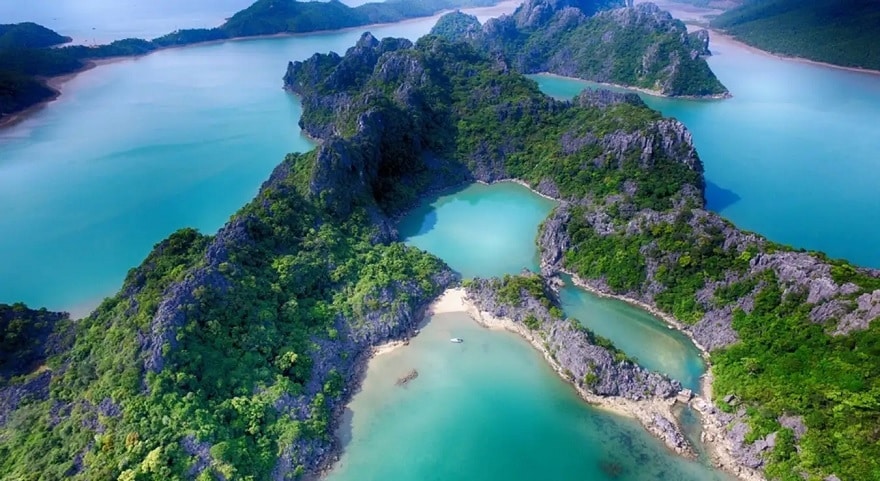
Bai Tu Long National Park’s core zone lies within three communes of Van Don island district—Minh Chau, Van Yen, and Ha Long—home to roughly 24,000 residents. Established on June 1, 2001 under Prime Ministerial Decision No. 85/2001 on the foundation of Ba Mun Nature Reserve, it spans a total natural area of 157.83 km² (260 km² including the buffer zone), comprising 61.25 km² of islands across more than 80 islands and islets and 96.58 km² of marine waters. Its geology mixes earthen islands with limestone formations—including Ba Mun, Tra Ngo Lon, Tra Ngo Nho, Sau Nam, Sau Dong, Dong Ma, Hon Chinh, Lo Ho, Mang Ha Nam, Mang Ha Bac, Di To, Chay Chay, and Da Ay—notably featuring Soi Nhu Island, home to archaeological evidence of ancient Viet inhabitants dating back roughly 14,000 years. Limestone peaks also ring broad valleys and enclosed lagoons (*tung* and *ang*), supporting rich flora and fauna.
Bai Tu Long National Park
Amid the expansive waters of Bai Tu Long Bay, Cong Do Island stands out as a mysterious scenic gem sheltering Thien Canh Son Cave—a masterwork shaped by nature. The cavern dazzles with shimmering stalactites and stalagmites hanging like soft, gleaming silk curtains.
Stepping inside Thien Canh Son Cave feels like entering a dreamscape where time stands still before nature’s artistry. High vaulted ceilings dotted with unusual rock formations spark the imagination, while soft light filtering from the entrance reflects off glistening droplets to create an enchanting scene.
3. Vung Vieng Fishing Village
Amid the grand scenery of Bai Tu Long Bay, Vung Vieng Fishing Village appears as a peaceful, rustic haven. One of the few floating fishing villages still retaining its unspoiled character, it offers authentic glimpses into coastal fishermen’s daily lives. Set among towering limestone peaks within the Vung Ha archipelago roughly 25 km from the mainland, the village is reached by boat passing through a natural stone archway acting as a unique “village gate.”
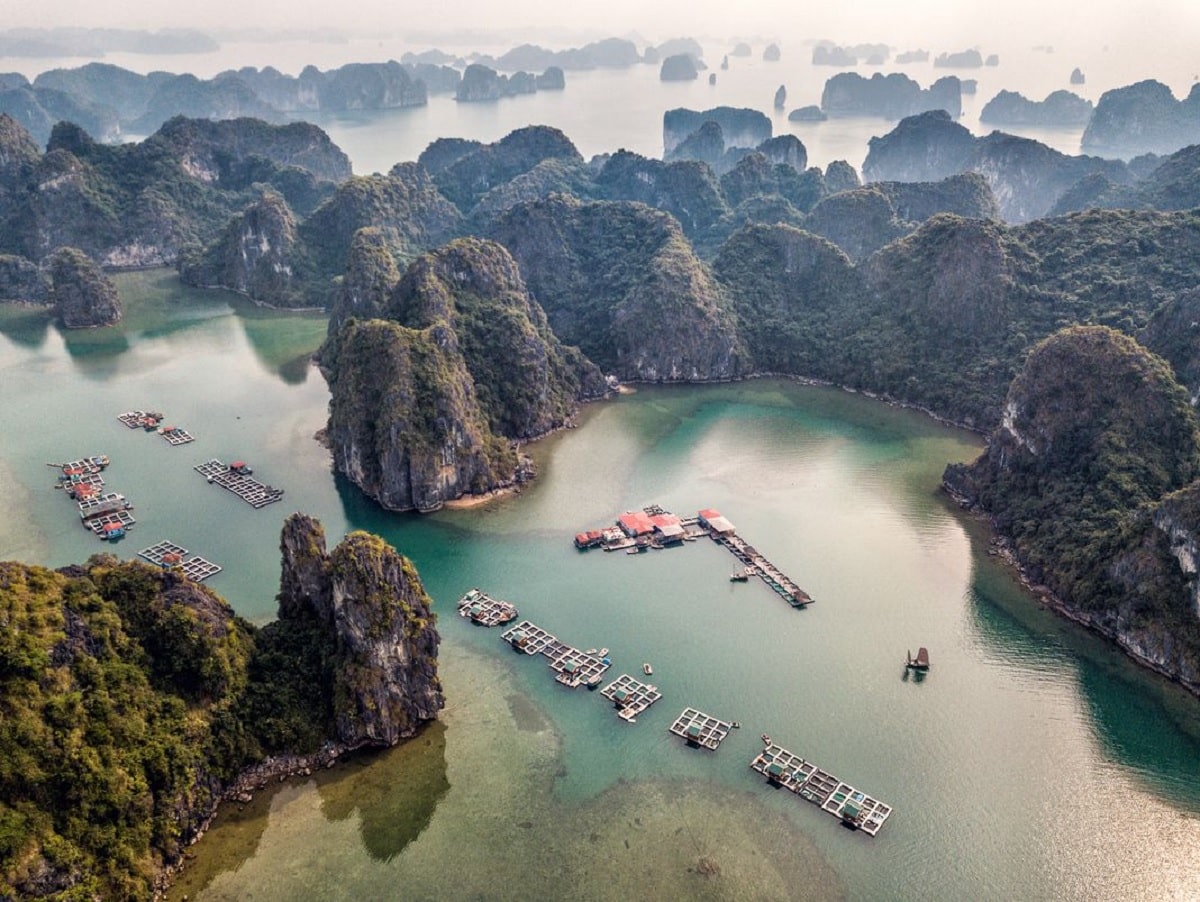
A corner of Vung Vieng
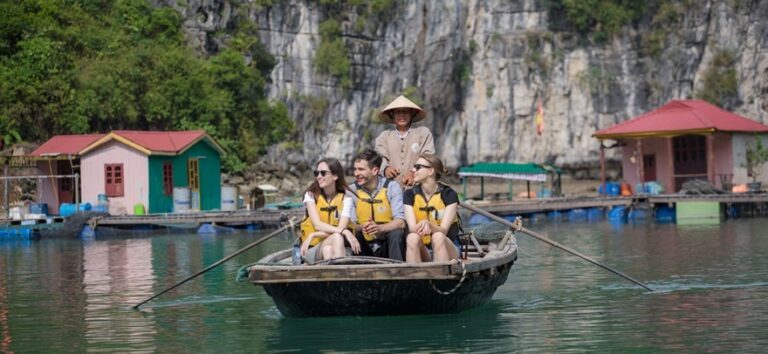
Around 50 households totaling nearly 300 residents live in Vung Vieng, making their living through fishing and aquaculture. Colorful floating houses, bamboo boats gliding gently across calm water, and friendly local smiles create a warm, peaceful atmosphere—alongside other Bai Tu Long fishing villages such as Cong Dam and Cua Van.
4. Quan Lan Island
If you are seeking a peaceful, unspoiled island with paradise-like beaches, Quan Lan Island is an ideal choice. Part of the Bai Tu Long Bay archipelago, Quan Lan captivates visitors with turquoise waters, white sand, golden sunshine, and distinctive coastal culture.
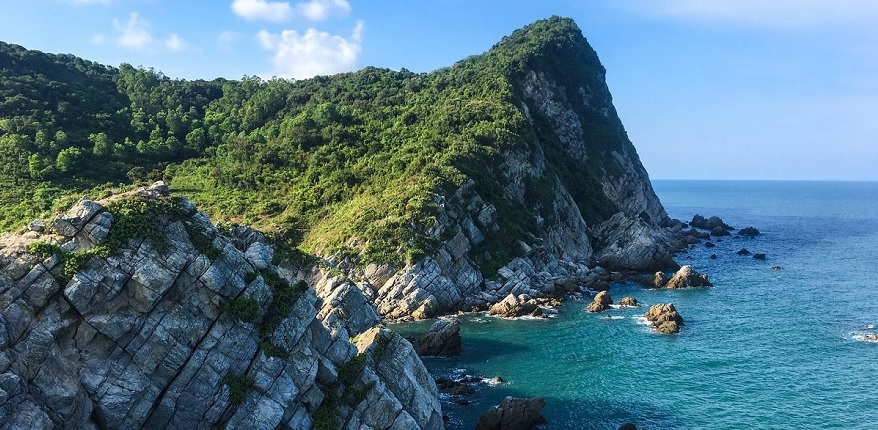
Quan Lan Island
Quan Lan is blessed with sweeping beaches of fine white sand beside jade-clear waters—most notably Quan Lan Beach, Minh Chau Beach, and Son Hao Beach, each offering its own relaxing charm. Beyond beaches, the island preserves lush primeval forest home to rare flora and fauna, inviting exploration on foot, by trek, or by bicycle.
5. Ngoc Vung Island
That covers the essential highlights of Bai Tu Long Bay—we hope this guide proves helpful. If you need to charter a boat in Ha Long Bay to visit this destination, please contact us for full details.