Archaeological Site Discoveries of Ha Long Culture
Ha Long culture is a Late Neolithic archaeological culture that flourished across Ha Long Bay and neighboring areas roughly 5,000 to 3,000 years ago. It was named after Ha Long Bay, where key archaeological sites belonging to this culture were first discovered.Ha Long culture developed as a direct continuation and evolution of Cai Beo culture, a prehistoric culture dating back 7,000 to 5,000 years BC. Cai Beo inhabitants made vital advances in marine exploitation, laying the foundation for the later emergence of Ha Long culture.The formation of Ha Long culture was also closely tied to environmental shifts, particularly fluctuations in sea levels . Around 9,000 years ago, rising seas inundated parts of the Gulf of Tonkin and the Gulf of Thailand, compelling Soi Nhu inhabitants to adapt to a coastal and island environment . This adaptation spurred shifts in tools, crafting techniques, and economic practices that helped shape Ha Long culture.
Ha Long culture progressed through two main developmental phases:
- Early phase (roughly 6,000–5,000 years ago): Affected by the Holocene marine transgression that altered Cai Beo living grounds, many residents moved toward northeastern areas or higher terrain, sustaining themselves through hunting, gathering, arboriculture, farming, marine harvesting, and stone-tool craft.
- Late phase (roughly 4,000–3,000 years ago): Following peak sea-level rise and subsequent coastal retreat, inhabitants of the early Ha Long phase resettled widely across Ha Long Bay caves, sand dunes, ancient plains, coastlines, and mountain foothills—at notable sites such as Soi Nhu Cave, Ngoc Vung Island, and Dong Trong Cave—developing a maritime lifestyle paired with refined toolmaking.
The earliest Ha Long cultural sites were uncovered in 1937–1938 by two archaeologists, M. Colani (France) and J. G. Andersson (Sweden), who termed them “Danh Do La Culture” after the French-era name for Ngoc Vung Island. The term “Ha Long culture” was later coined by Vietnamese archaeologists surveying these sites. To date, more than 40 archaeological sites of Ha Long culture have been identified right within the core of the Ha Long Bay World Natural Heritage Site, revealing rich traces of prehistoric coastal life, including:
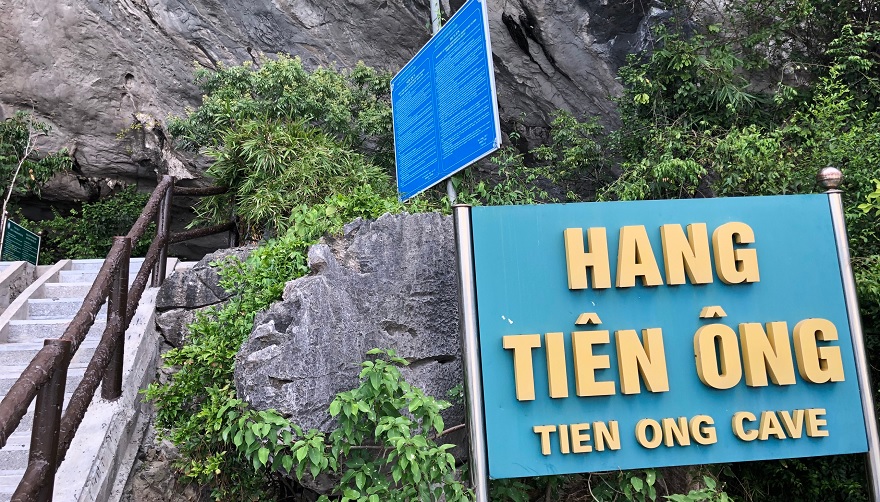
Entrance to Tien Ong Cave
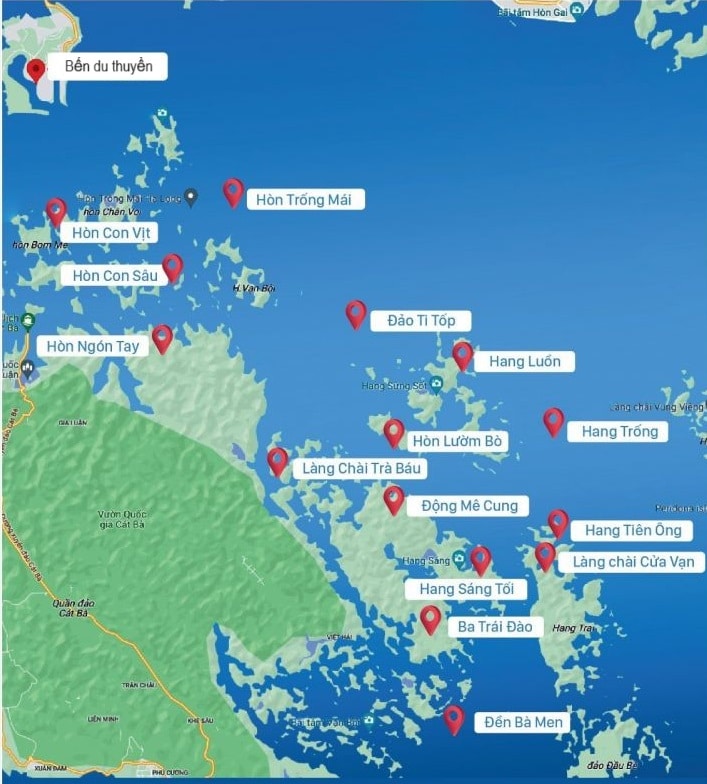
Tien Ong Cave—also known as Cai Duc Cave—sits on Cai Tai Island within the Hang Trai island cluster just behind Cua Van fishing village in Ha Long Bay. In 1938, Swedish archaeologist Andersson surveyed ancient Viet traces along the shores and islands of Ha Long and Bai Tu Long bays, discovering thick shell middens of stream snails and rudimentary pebble tools inside Tien Ong Cave. In 2007, following further excavations, archaeologists recovered stone axes, stone knives, pottery sherds, and terrestrial animal bones—confirming Tien Ong Cave as an ancient dwelling site dating back tens of thousands of years.

Me Cung Cave – Journey to explore the mysterious subterranean world
Me Cung (Maze) Cave lies about 2 km southwest of Ti Top Island on Lom Bo Islet at 25 meters above sea level. At its entrance remain dense layers of *Melania* stream-snail shells—once up to 1.2 meters thick in semi-fossilized strata outside the cave. Archaeologists identify it as an Early Neolithic pre-Ha Long site dating roughly 10,000 to 7,000 years ago.

Trong (Drum) Cave and Trinh Nu (Virgin) Cave
Beyond Tien Ong Cave and Me Cung Cave, archaeological sites have been found across much of Ha Long Bay, demonstrating the widespread, continuous, and vibrant development of an island-coastal culture. Excavations have yielded numerous ancient artifacts, primarily tools and ornaments. Notably, at Trinh Nu (Virgin) Cave, alongside traces of prehistoric Ha Long inhabitants from around 4,000 years ago, archaeologists in 2010 uncovered evidence of an ancient ceramic landing near the cave entrance containing stoneware and porcelain fragments from the Tran and Le dynasties.
Artifacts excavated from these sites are preserved at Quang Ninh Museum. In 2006, part of the collection was transferred to the Ha Long Bay Management Board for display interpreting Ha Long culture and heritage values, and following the opening of the Cua Van Floating Cultural Center, Ha Long cultural artifacts are showcased across all three venues.
Archaeological Relics of Ha Long Culture
The Ha Long people were inhabitants of a distinctive prehistoric maritime culture marked by high adaptation to coastal and island environments. Ancient fisherfolk relying primarily on fishing and marine harvesting, they also combined coastal livelihoods with traditional hunting, gathering, and later agriculture. Ha Long culture is recognized as one of Vietnam’s four most important prehistoric maritime cultures, alongside Hoa Loc culture (Thanh Hoa), Bau Tro culture (Quang Binh), and Xom Con culture (Khanh Hoa).
Quang Ninh Museum houses extensive artifacts from Ha Long culture within its prehistoric and protohistoric exhibition spaces tracing indigenous northeastern heritage—featuring collections such as stepped-shouldered adzes, Ha Long ornaments, and porous pottery characteristic of Ha Long culture.
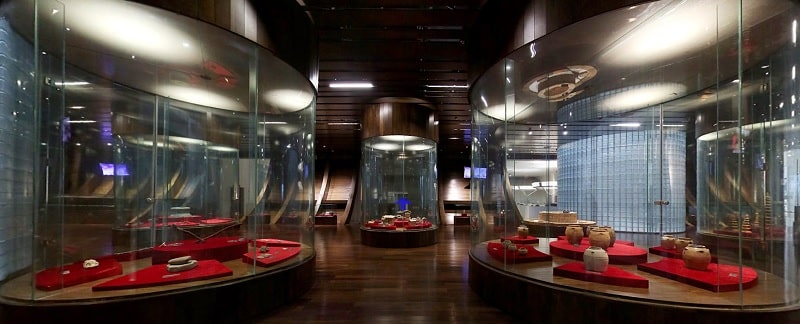
Boat-hull gallery on the 2nd floor of Quang Ninh Museum
According to Do Thanh Mai, Head of the Communications Department at Quang Ninh Museum, a core hallmark of Ha Long culture is its stone toolmaking and production craft. Producing these tools marked a major technical milestone—exemplified by the stepped-shouldered adze, which reflects sophisticated practical adaptation in daily labor and resource use. Whereas earlier stone axes were ground rather crudely, Ha Long artisans achieved notable advances in grinding and shaping for greater utility—seen clearly in adzes, asymmetrical and symmetrical shouldered adzes, and especially stepped-shouldered adzes on display, alongside sharp stone points and finely ground, keen-edged stone knives.
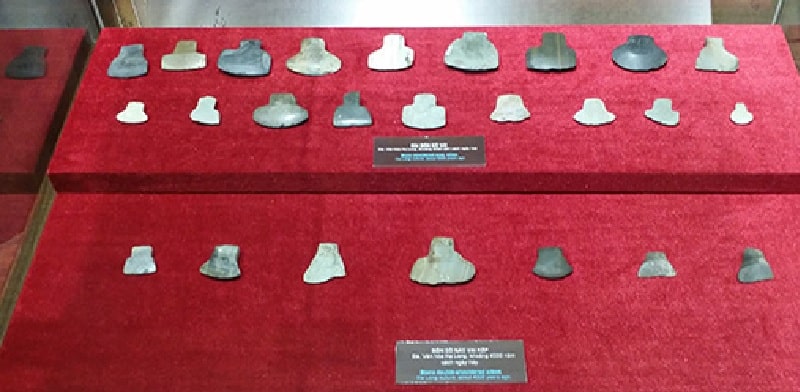
Stepped-shouldered adzes and double-shouldered adzes
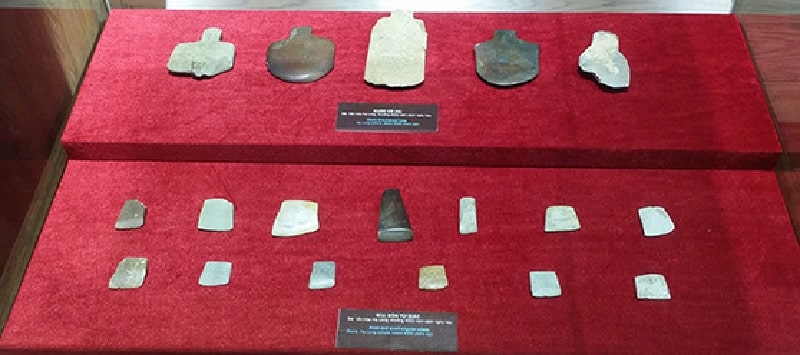
Shouldered hoes
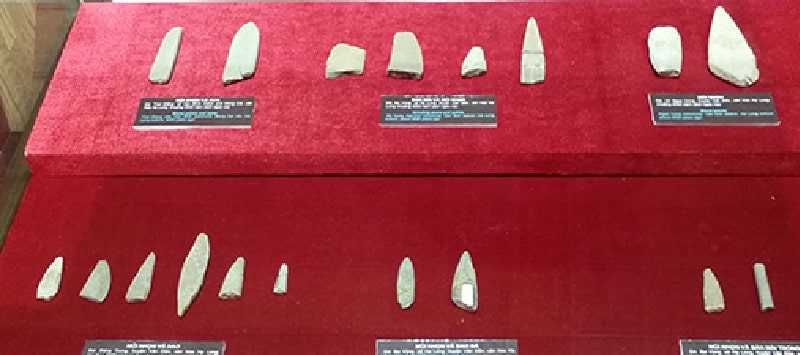
Stone points and saws
The maritime character of this culture also appears in tempering household pottery with crushed mollusk shells mixed with sand and clay to form the distinctive porous ceramics of Ha Long Bay. Decorative motifs on the pottery—beyond wave-like patterns evoking the sea—include impressions indicating that ancient coastal inhabitants cultivated fiber plants and spun cordage for fishing nets or lines.
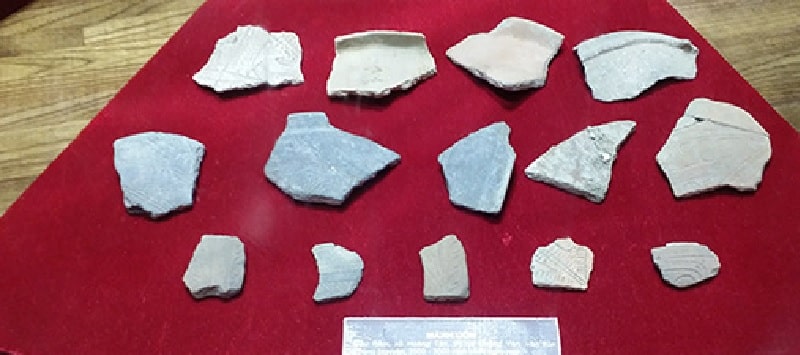
Pottery sherds dated to 3,500 years ago
Prehistoric residents also crafted ornaments from stone, fish bone, and mollusk shells for use and exchange beyond Ha Long culture. Personal adornments from this era demonstrate the craftsmanship of Quang Ninh’s maritime communities and show that personal adornment was widely practiced. Many researchers also note symbolic beliefs associated with these ornaments: traditionally, shell and mollusk ornaments worn by women were linked to good fortune in gathering, while stone or horn ornaments worn by men were associated with luck in hunting—helping explain the rich variety of ornaments from this period.
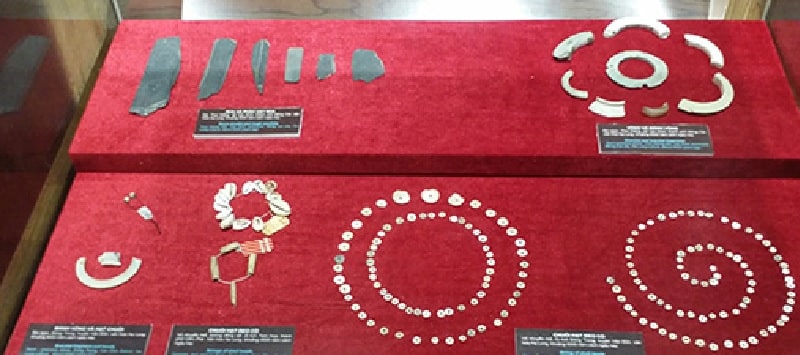
Shell or horn ornaments…
Entering the late phase of Ha Long culture around 3,500–3,000 years ago, artifact assemblages continued traditions such as stepped-shouldered adzes, stone drill points, and grinding stones while showing higher refinement in sharpness, finish, and specialization—highlighted by varied grinding stones in distinct sizes, shapes, and materials suited to specific toolmaking tasks.
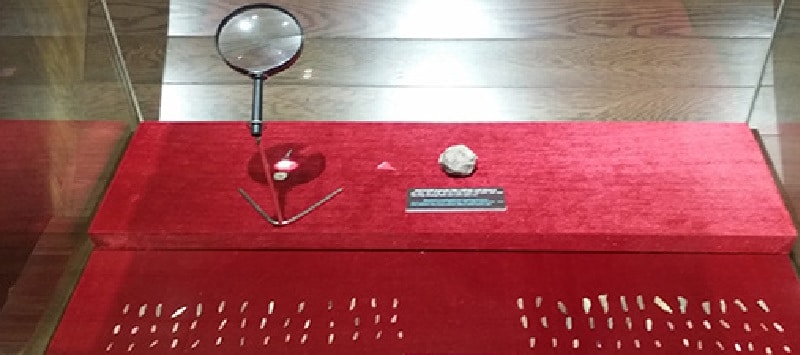
Drill points and stone cores (raw material for making drill points)
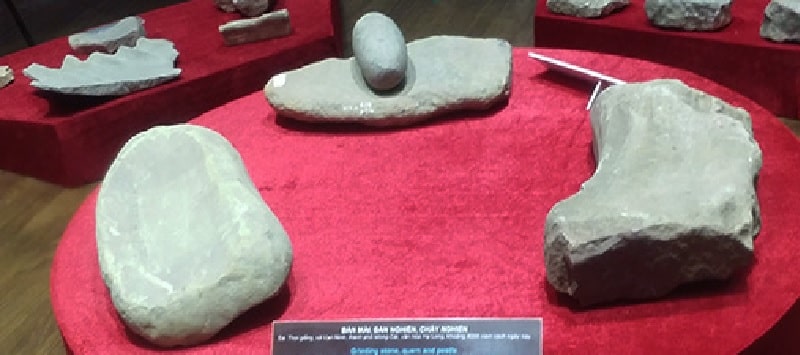 Grinding stones, beveled whetstones, and grinding pestles[/caption>
As one of the earliest known prehistoric maritime cultures in Vietnam and Southeast Asia, Ha Long culture holds a special place in ancient Vietnamese civilization and exerted broad regional influence. A lasting source of pride for communities across the northeast, deeper study of Ha Long culture alongside careful preservation of known sites and discovery of new ones helps illuminate Vietnam’s early maritime heritage.
Where Visitors Can Explore Ha Long Cultural Heritage
| Routes | Ticket Price | Sightseeing Stops |
|---|---|---|
| VHL1 | 310,000 VND/person | Thien Cung Cave – Dau Go Cave – Cho Da Islet – Ba Hang – Dinh Huong Islet – Trong Mai (Fighting Cock) Islet |
| VHL2 | 310,000 VND/person | Soi Sim Beach – Ti Top Island – Sung Sot Cave – Tung Sau Lagoon – Me Cung Cave – Bo Nau Cave – Luon Cave – Trong Cave – Trinh Nu Cave – Ho Dong Tien |
| VHL3 | 260,000 VND/person | Cua Van Floating Cultural Center – Tien Ong Cave – Ba Ham Lake – Ba Men Temple – Ang Du – Bamboo Forest |
| VHL4 | 260,000 VND/person | Co Cave (Thien Canh Son) – Thay Cave – Cap La Cave – Vung Vieng – Tung Ang Eco-Area – Cong Do Island – Hon Xep Park |
| VHL5 | 310,000 VND/person | Thien Cung Cave – Dau Go Cave – Cho Da Islet – Ba Hang – Dinh Huong Islet – Trong Mai Islet – Gia Luan Pier (Cat Ba – Hai Phong) |
| VHL6 | 150,000 VND/person/trip | Chan Voi Islet – Ba Cua Lagoon – Tung Lam Island – Cap Bai Islet (end of route bordering Gia Luan, Lan Ha Bay – Hai Phong) |
| VHL7 | 600,000 VND/person | Sightseeing across Ha Long Bay routes VHL1–2–3–4 (applicable to discovery cruises only) |
| VHL8 | 70,000 VND/person/trip | Tuan Chau International Passenger Port – Ha Long International Passenger Port – Nam Cau Trang Port |
Notable Spots to Observe Ha Long Culture:
-
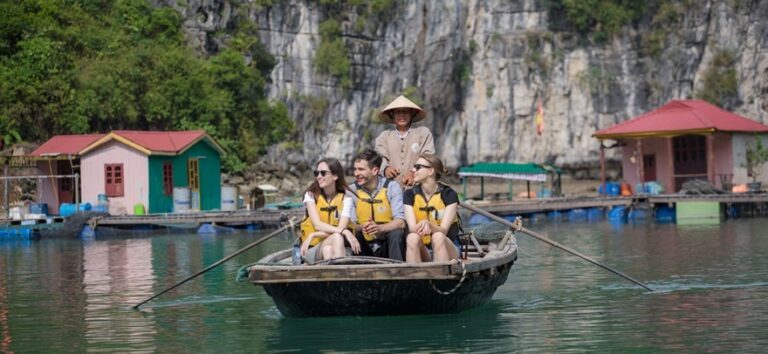
Cua Van Floating Cultural Center (VHL3, VHL7): One of the clearest places to see Ha Long residents’ everyday culture, from floating houses and boats to traditional ways of life.
-
Sung Sot Cave & Thien Cung Cave (VHL1, VHL2, VHL5, VHL7): Sites rich with dragon legends and stories of Ha Long Bay’s formation.
-
Ba Men Temple (VHL3, VHL7): Reflecting local spiritual beliefs and folk devotion.
-
Vung Vieng Fishing Village (VHL4, VHL7): Another vivid example of coastal community culture.
That covers the key highlights of Ha Long culture—we hope this article gives you helpful insights. If you need to charter a boat to visit Ha Long Bay and explore these heritage sites, please contact us for full details.