| Location: Tran Quoc Nghien Street, Hon Gai, Ha Long
Opening hours: Every day of the week (8:00 AM – 12:00 PM and 1:00 PM – 5:00 PM) Entrance fee: + Adults: 40,000 VND/person/visit; + Students and trainees: 20,000 VND/person/visit; (student ID required) + Children: 10,000 VND/person/visit. Contact phone number (reception): 02033.825.031 |
Introduction to Quang Ninh Museum
The museum was first built in 1960, then known as the Hong Quang Regional Museum of History and Revolution, located at 5B Cau Cao. The museum witnessed the historical upheavals of the country, especially during the two wars of destruction against the North by the US Air Force. Despite efforts to evacuate and protect the artifacts and documents, the building at 5B Cau Cao was completely destroyed by bombs.
Undeterred by difficulties, the museum continued its mission. In 1990, the Quang Ninh Provincial People’s Committee decided to use the headquarters of the Quang Ninh Import-Export Company at 165 Nguyen Van Cu Street (now National Highway 18A) as the new location for the museum.
Then, in a powerful revival in 2013, the Quang Ninh Museum and Library complex was born. Built to celebrate the 50th anniversary of the province’s founding (October 30, 1963 – October 30, 2013), this structure quickly became a new architectural icon of Quang Ninh, often referred to as the “Black Pearl by the Ha Long coast.” With its unique and modern design, the project was honored with the “Building of the Year” award on January 15, 2014. This is a prestigious award in the field of Vietnamese architecture, organized by the Ashui electronic information portal of the Vietnam Urban Planning and Development Association.
The complex has a total construction area of up to 24,000m², consisting of 3 main blocks: the Museum, the Library, and the Conference and Exhibition area. Uniquely, these 3 blocks are connected by a system of overhead bridges, creating an open, interconnected, and harmonious architectural space.
Not only impressive in its scale and overall design, the museum also attracts visitors with the unique architecture of each block. Designed by the talented architect Salvador Pérez Arroyo (Spanish nationality), the entire structure is inspired by the image of coal – the characteristic mineral of Quang Ninh province. Outside, the museum is covered by 14,000 m² of semi-tempered glass. This type of glass is resistant to spontaneous breakage due to temperature changes and creates a “giant mirror” reflecting the image of the Ha Long Bay World Natural Heritage site, bringing a shimmering, magical beauty.
Inside the museum, the exhibition space is scientifically and modernly arranged over 3 floors, housing and displaying more than 20,000 original and typical artifacts. Each artifact is a story, a historical witness, contributing to a realistic and vivid panorama of the history, culture, people, and nature of Quang Ninh through the ages.
Exhibition system at Quang Ninh Museum
Since its reconstruction and opening in 2013, Quang Ninh Museum has become one of the most attractive check-in spots for both domestic and international tourists visiting Ha Long. In 2023, the museum welcomed an estimated 700,000 visitors, generating over 15 billion VND in ticket revenue, and it is the first provincial-level general museum in the country to achieve financial autonomy. The exhibition area of Quang Ninh Museum is designed both indoors and outdoors, leaving a lasting impression on visitors.
1. Outdoor exhibition area
The museum features an outdoor exhibition area with many massive artifacts. Most notable is a block of Anthracite coal weighing up to 28 tons, with a volume of 22m3 and dimensions of 3.6m x 2.8m x 2.2m. It was extracted at a depth of -176m in April 2012 and holds the Guinness Vietnam record for the largest monolithic Anthracite coal block in Vietnam. The museum also displays stone sculptures, statues of coal miners, and both ancient and modern weaponry, such as missile launchers, anti-aircraft guns, cannons, missiles, and aircraft.
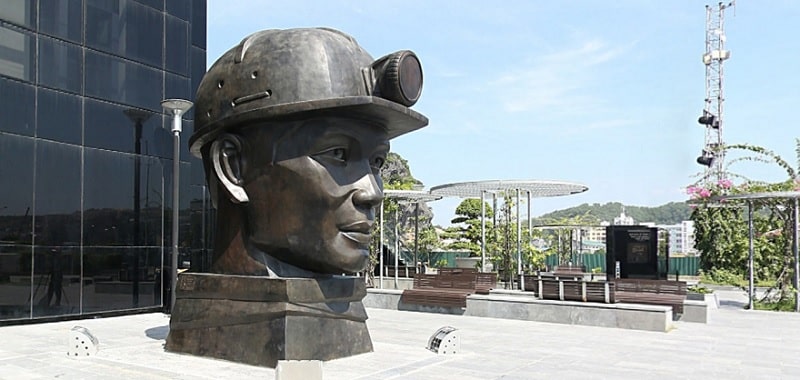
Statue of a coal miner
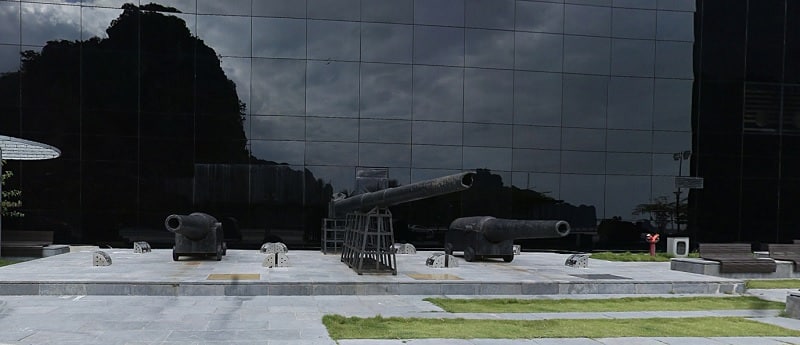
Cannon artifact
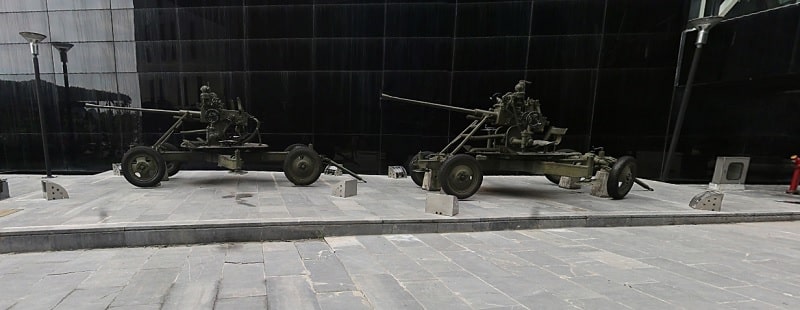
Artillery vehicle from the wars against the US and France
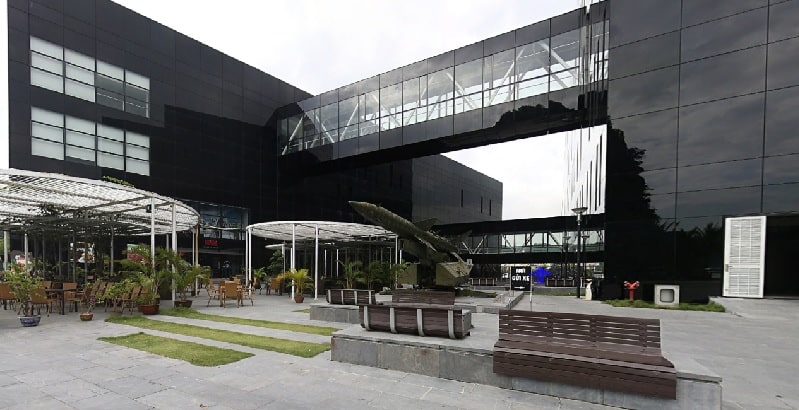
Missile artifact
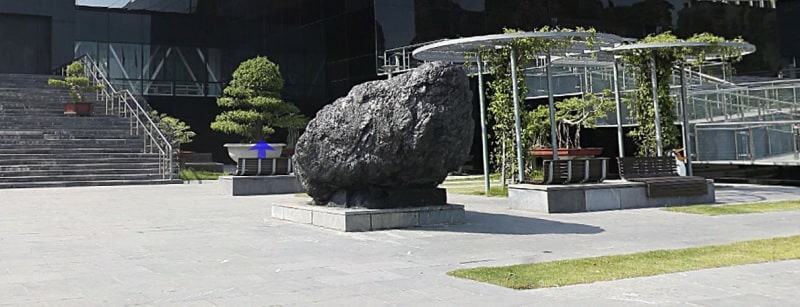
Guinness record-holding Anthracite coal block
2. Indoor exhibition area
This area consists of two main blocks: the Museum block with a three-story design, and the Conference block. It provides visitors with an overview of the land and people of Quang Ninh from the past to the present. In contrast to the mysterious black exterior, the interior of Quang Ninh Museum is a world of brilliant light, highlighting the artifacts on display. Each floor of the museum has its own theme, and the exhibits here will tell you fascinating stories about this landscape that you have never heard before.
First-floor exhibition area: Featuring two main themes: “Biodiversity and Natural Resources” and “Fishing Gear and Seafood Harvesting in Quang Ninh.”
Located in the northeast of Vietnam, Quang Ninh possesses undulating mountainous terrain, rugged coastlines, and a dense network of rivers and streams, creating a land rich in natural resources and biological diversity, which is recreated in the exhibition space on the first floor of the museum. Here, you will discover the characteristic organisms of Quang Ninh and its incredibly diverse geology through four impressively and uniquely designed mountain-shaped tubes.
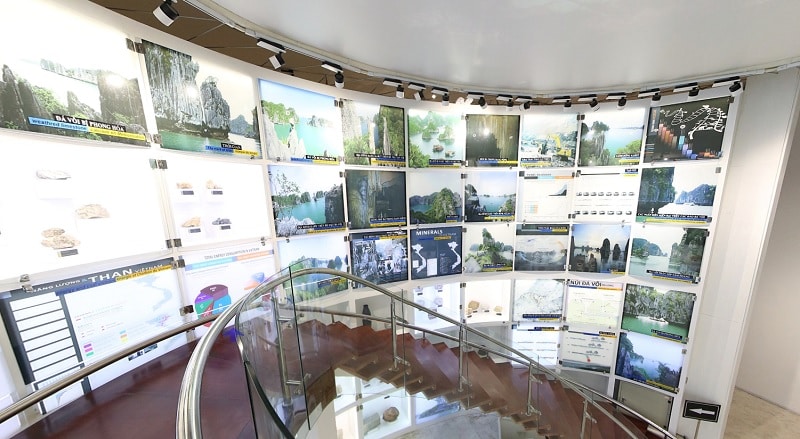
Mountain tube No. 1
Mountain tube No. 1 introduces the geology of Quang Ninh province through specimens reflecting the results of various Earth surface movements across different eras. Specimens include sediments from the Devonian, Carboniferous-Permian, Mesozoic, Triassic, and Quaternary Anthropogene periods.
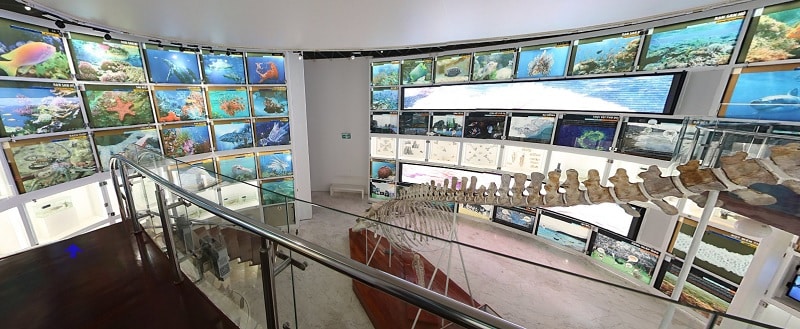
Mountain tube No. 2
Mountain tube No. 2 introduces Quang Ninh’s marine life. Quang Ninh has 250 km of coastline stretching from the northeast to the southwest. The sea of Quang Ninh is rich in seafood, with 137 species belonging to 73 families, many of which have high economic value and are rare specialties, such as: King mackerel, Threadfin, Grouper, Snapper, Red snapper, Squid, Shrimp, Pearl oyster, Sipunculus nudus (peanut worm), Sea cucumber, Abalone, etc., belonging to the deep-water ecosystem typical of the Gulf of Tonkin fauna.
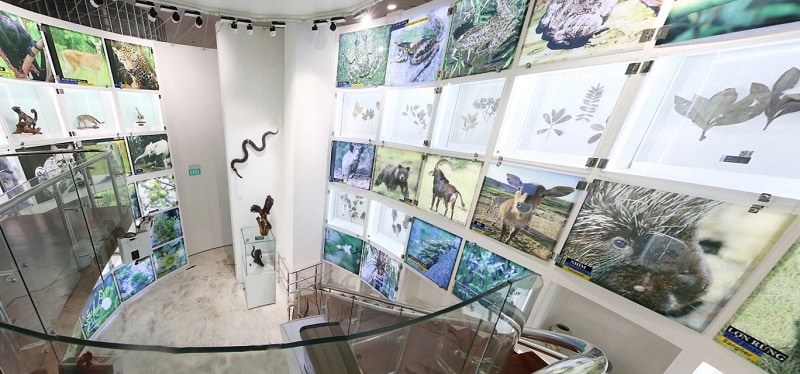
Tube No. 3
Mountain tube No. 3 introduces the flora and fauna of Quang Ninh. The plant and animal populations of Quang Ninh are extremely rich and diverse due to the composition of the terrain, soil, climate, and human impact. Each distinct ecological zone creates unique characteristics for its flora and fauna. There are 250,000 species of higher plants in Quang Ninh belonging to 800 genera. Animals include terrestrial, aquatic, and domesticated species, among which are typical animals such as: Golden monkeys, Asiatic black bears, Leopards, Jungle cats, Small Indian civets, Smooth-coated otters, etc.
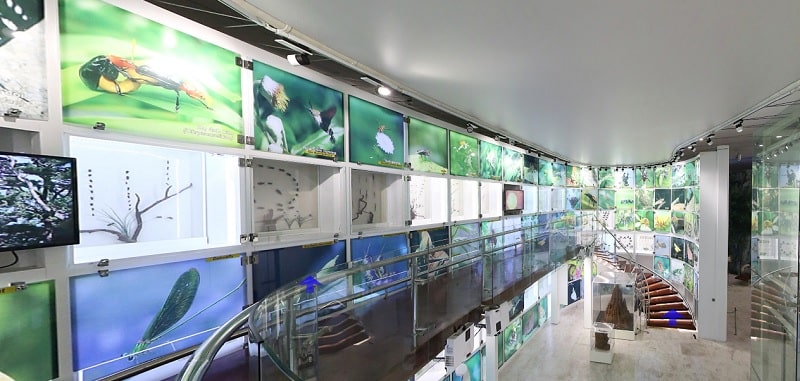
Mountain Tube No. 4
At Mountain Tube No. 4, visitors are introduced to the unique insect life of Quang Ninh province. Insects are arthropods found almost everywhere: on land, underground, underwater, and in the air. They are the most populous animals on the planet, with 900,000 known species. In every square kilometer of land, there are up to 10 billion insects living. It can be said that insects are the true masters dominating our green planet.
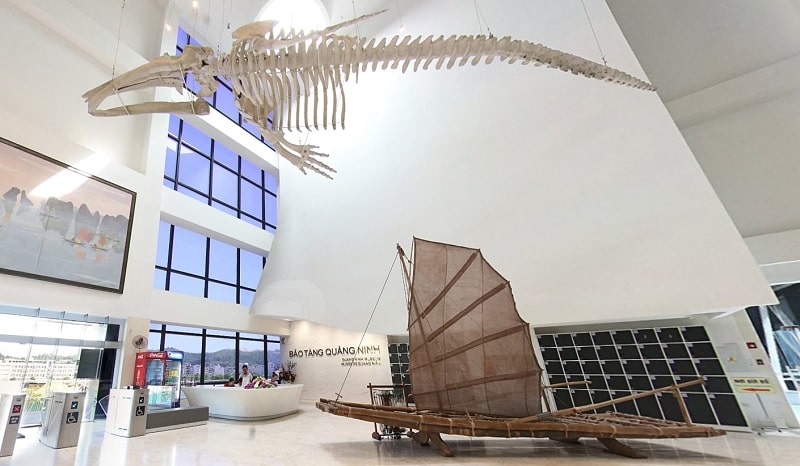
Whale skeleton and sailboat model
Additionally, the first floor features a diverse display of fishing and seafood harvesting equipment, as this has long been a traditional industry in Quang Ninh. In particular, the sailboat model and the massive whale skeleton in this exhibition area will immediately impress visitors upon entering.
- This is the skeleton of a fin whale that washed ashore on Ngoc Vung Island in October 1994. When discovered, it measured over 20 meters in length, with a diameter of nearly 3 meters and a weight of approximately 50 tons.
- This type of vessel is known as a “Ba Vat” boat with bat-wing sails, used for fishing or transporting goods along rivers and the sea. Depending on the size, these boats can carry between 5 and 15 tons.
Second-floor exhibition area: Featuring 3 main thematic zones
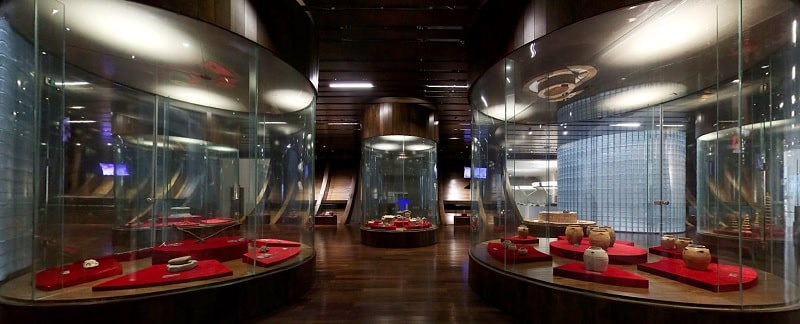
Boat-hull area on the 2nd floor of Quang Ninh Museum
Boat-hull area: Designed to resemble the hull of a boat, this area displays artifacts from prehistoric times to the Dai Viet era. These items hold immense historical and cultural value. The prehistoric space recreates and showcases the formation and vibrant development of a Northeast regional culture—the Ha Long culture. This indigenous culture is represented through collections such as shouldered stone axes, Ha Long jewelry, and pottery—a unique product of the Ha Long culture dating back approximately 5,000 years.
The Metal Age in Quang Ninh marked a breakthrough in human thought, reflecting unique creative exchanges through iconic artifacts such as the Quang Chinh bronze drum, the Hoang Tan ceramic jar, and a highly valuable collection of jade.
Entering the Dai Viet era, the people of ancient Quang Ninh established themselves as masters of this frontier land at the gateway of the nation. The exhibition features collections of ancient tombs from the 1st–3rd centuries and the Bach Dang wooden stakes, which mark the resounding victories of the Vietnamese army against the Mongol invaders, opening the illustrious Dai Viet era, as well as the ancient Van Don trading port—the first of its kind in Vietnam.
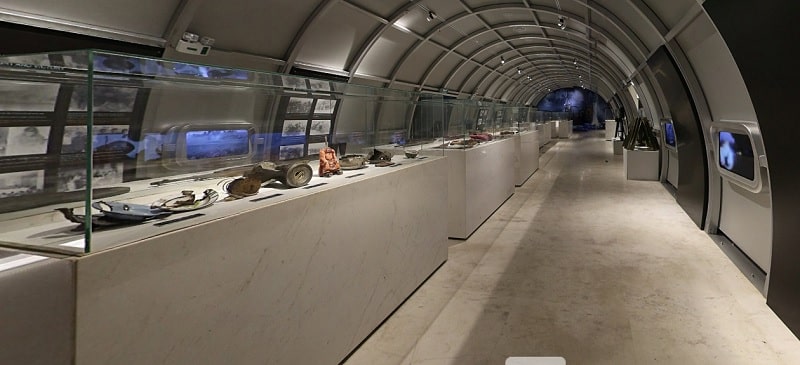
Resistance artifacts exhibition area
Resistance artifacts exhibition area: Although not large, this area is comprehensively arranged. It displays artifacts associated with the soldiers and people of Quang Ninh province during the resistance wars against French colonialism and American imperialism. Here, you can find historical evidence and symbols of the fighting spirit of Quang Ninh’s military and civilians. Notable examples include objects and images from the Dong Trieu and Tran Hung Dao war zones, established in April 1945. These were the results of the Party’s wise leadership and the unity of the working class and the masses in the Northeast region. This remains a bright spot in the revolutionary history of Quang Ninh province.
During the war against the American empire, the military and people of Quang Ninh made their mark with the event on the afternoon of August 5, 1964, at 2:14 PM. At that time, American aircraft divided into multiple squadrons to attack Hon Gai town, targeting the Cai Lan port and Vietnamese naval ships docked at Cua Luc port. The Quang Ninh military and civilians fought bravely, shooting down 3 aircraft and capturing the first American pilot in Northern Vietnam.
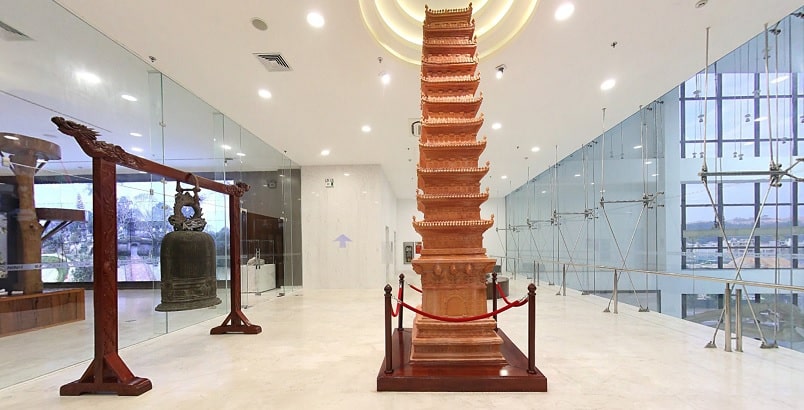
The Yen Tu exhibition area is small, containing only 3 artifacts: 1 wooden tower, 1 temple bell, and 1 stone stele base
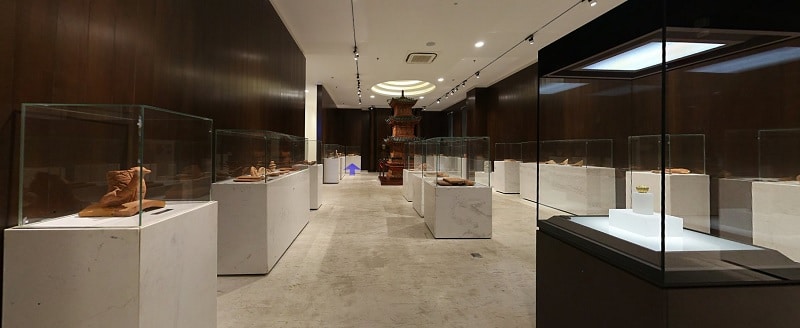
Tran Dynasty relic exhibition area: Tiles, water pipes, terracotta statues, bricks…
The Yen Tu and Tran Dynasty exhibition area consists of two spaces: Yen Tu and the Tran Dynasty. The artifacts here clearly demonstrate a brilliant period of Tran Dynasty architectural and artistic culture. It is impossible not to mention King Tran Nhan Tong and the Truc Lam Zen sect, which established Yen Tu as a major Buddhist center during the Tran Dynasty (1200–1400), expanding its influence across the Northeast region with numerous famous pagodas and towers that echo through time. The special national relic site of the Tran Dynasty in Dong Trieu has affirmed its position and is officially recognized as the ancestral homeland of the Tran family before they moved to Nam Dinh to establish their imperial reign. Consequently, the Tran Dynasty chose their ancestral land to build mausoleums for 11 of their emperors, forming the unique and distinctive spiritual culture of the Tran Dynasty.
3rd Floor Exhibition Area: Featuring 3 main themed zones
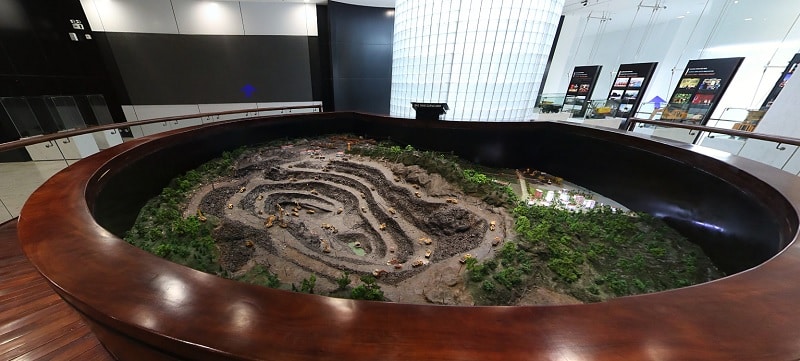
Open-pit coal mining diorama
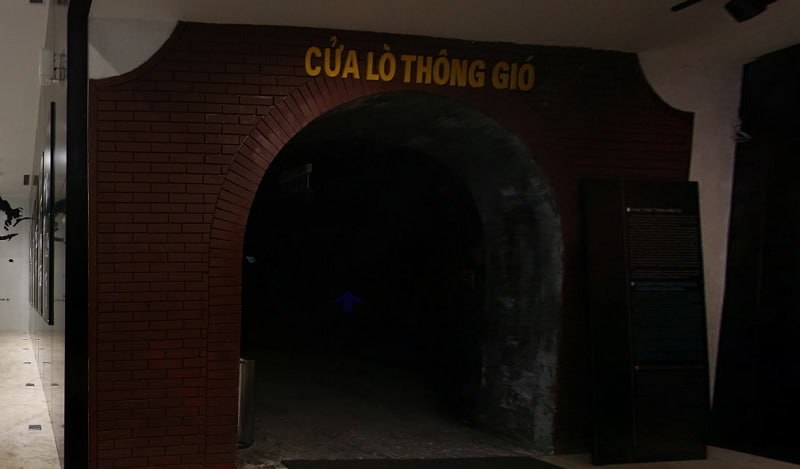
Coal mine tunnel simulation area
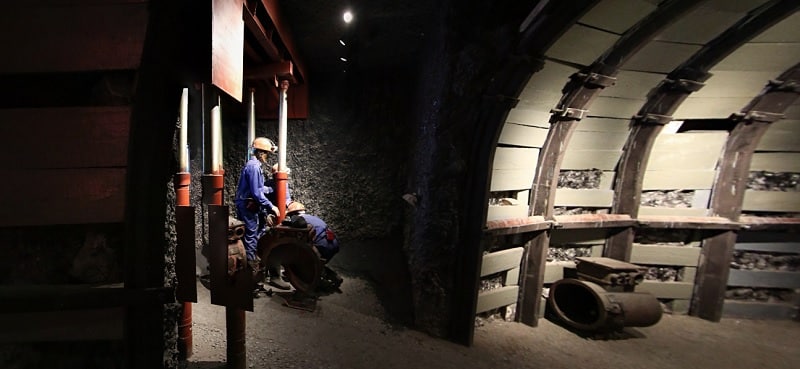
Mannequins simulating mine workers
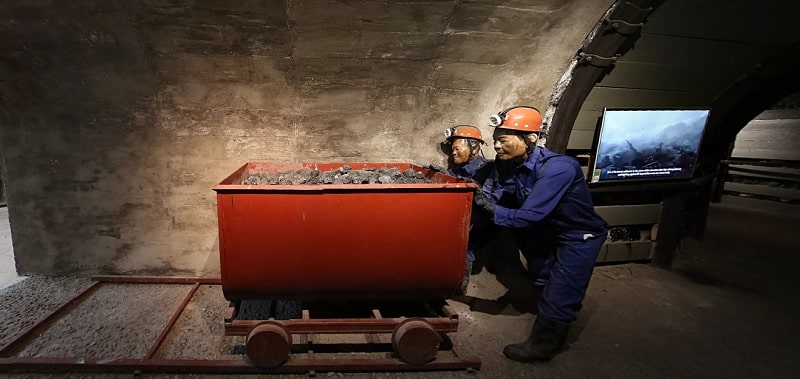
Simulation of coal transport on conveyor belts by mine workers
- The open-pit mining area highlights a diorama of open-pit coal extraction, helping visitors better understand Vietnam’s mining methods from the French colonial period to the present.
- The underground mine area is designed to simulate a section of a coal mine tunnel, featuring artifacts characteristic of underground mining methods as well as items belonging to mine workers during the revolutionary resistance period.
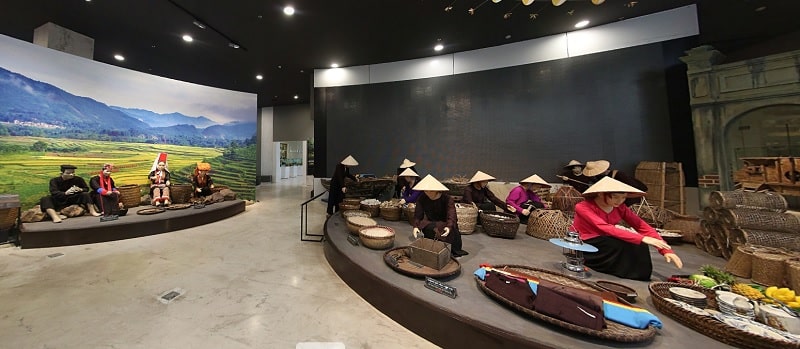
Ethnic culture exhibition area
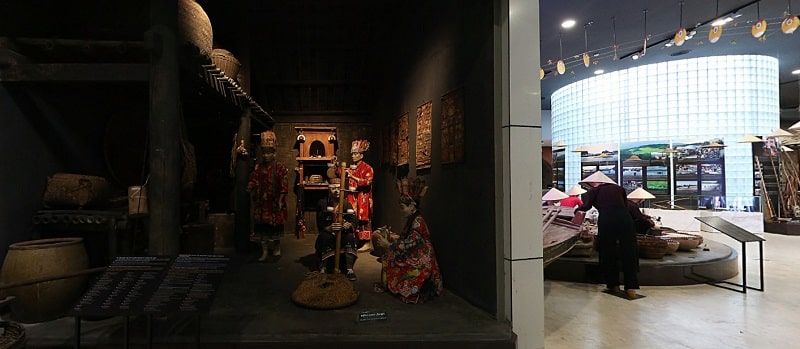
Ethnic culture exhibition area
Ethnic Culture Exhibition Area: Designed with a diverse, open-plan layout, this area features numerous small clusters showcasing the distinct cultural traits of the ethnic groups in Quang Ninh province. Here, visitors will find images and artifacts reflecting the lives, cultures, and labor methods of the Kinh, Tay, Dao, San Diu, and San Chi people, which contribute to the unique cultural identity of Vietnam’s Northeast region.
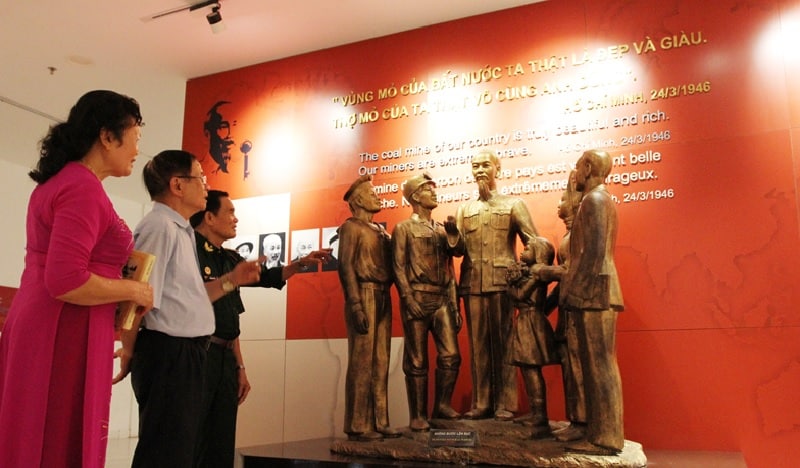
Ho Chi Minh Exhibition Area
The Ho Chi Minh Exhibition Area is adjacent to the ethnic culture display. Although small in size, it is presented in great detail, covering the entirety of Uncle Ho’s activities and leadership, as well as his memories with the people of Quang Ninh province. Between the ethnic and Ho Chi Minh exhibition spaces lies the area dedicated to the Carnaval festival – an annual event in Quang Ninh province held in April (the province’s tourism stimulus month). Each year, the Ha Long Carnaval brings domestic and international visitors new and distinct experiences, becoming a unique, signature product of Quang Ninh province with a message of convergence and spreading influence.
Tips for visiting the Quang Ninh Museum
- The Quang Ninh Museum is open daily, except for the last Monday of every month.
- You can hire a guide to accompany you throughout your exploration of the Quang Ninh Museum. Guides with basic knowledge of Ha Long’s history and culture will provide you with fascinating insights.
- If you wish to take photos or film inside the Quang Ninh Museum, you will need to pay an additional fee ranging from 100,000 VND to 500,000 VND, depending on the duration of your visit and the type of camera.
- Do not touch the artifacts inside the Quang Ninh Museum. You will be required to pay compensation if you damage any displayed objects.
- Smoking is not permitted inside the museum; please do not speak loudly or play around within the Quang Ninh Museum premises.
- Keep the environment clean; do not litter on the museum grounds.
- The Quang Ninh Museum has become one of the most important landmarks in Ha Long city in recent years. It attracts a large number of visitors not only for its educational value but also for its unique architecture. Along with Sun World Halong Park, Ocean Park, and the Dolphin Palace, the Quang Ninh Museum is a new symbol of the dynamic city of Ha Long.