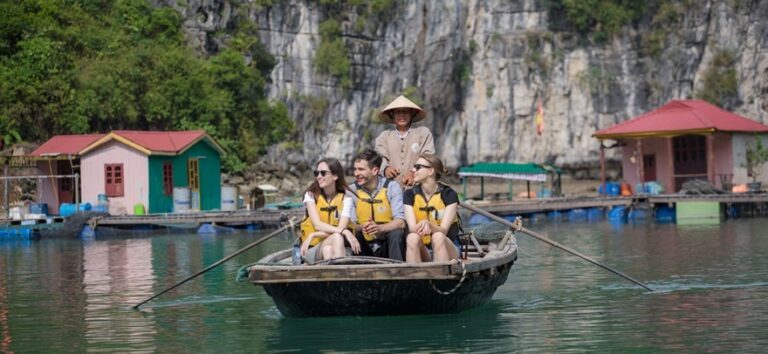
Ha Long Bay, a World Natural Wonder twice inscribed by UNESCO as a World Natural Heritage Site, encompasses over 1,900 islands and majestic caves. Among them, Tien Ong Cave stands out for its mysterious natural beauty and exceptional archaeological value. Once home to prehistoric Vietnamese inhabitants of the Soi Nhu Culture between 8,000 and 10,000 years ago, Tien Ong Cave is not only an enchanting travel destination but also a window into the rich prehistoric heritage of ancient Vietnam, offering visitors a unique and deeply meaningful experience.
Location of Tien Ong Cave
Tien Ong Cave, also known as Cai Duc Cave (formerly called Grotte du Ciseau by the French), is one of the most striking and distinctive caves in Ha Long Bay (a UNESCO World Heritage Site). It is situated on Cai Tai Island within the Hang Trai island cluster, roughly 5 km from Cat Ba Island and about 18 km from Tuan Chau Pier.
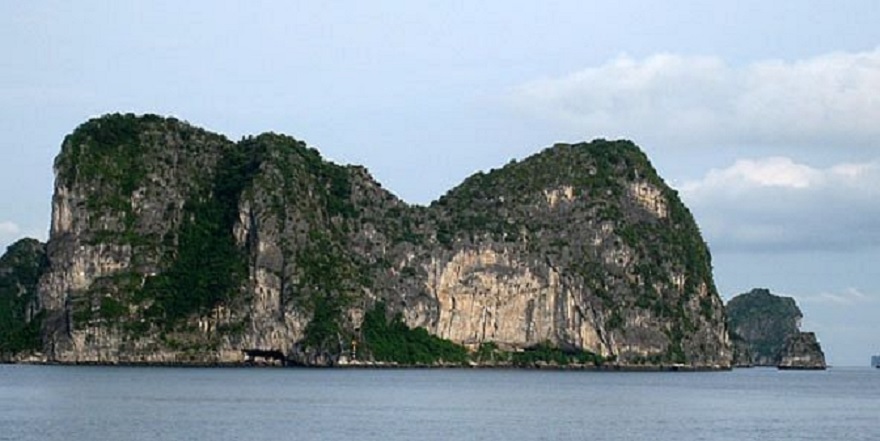
Cai Tai Islet viewed from the west
Tien Ong Cave is an important archaeological site of the Soi Nhu Culture, one of the prehistoric cultures of ancient Vietnamese people in Ha Long Bay. The site was first discovered in 1938 by Swedish geologist and archaeologist J.G. Andersson during a geological survey across Bai Tu Long Bay. Naming it Duc Cave, he opened three excavation pits—one large pit near the cave mouth and two smaller ones deeper inside—and uncovered stone tools, bone implements, and pottery shards. Most artifacts were taken back to Sweden for study, while a selection was preserved at the Louis Finot Museum (now the National Museum of Vietnamese History). Notably, Andersson documented a thick deposit of freshwater snail shells inside the cave whose origin baffled local residents, leaving a mystery waiting to be solved.
After J.G. Andersson’s departure, Tien Ong Cave went largely overlooked for more than half a century. In 1997, Quang Ninh archaeologist Ha Huu Nga returned to Tien Ong Cave to resume excavation and research. Because local place names had shifted over time, he initially did not realize that Tien Ong Cave was the very same Duc Cave excavated by Andersson decades earlier, documenting it as a newly recorded site along with its location, dimensions, and layout while uncovering additional finds such as elephant teeth, fish bones, and ceramics. Comparing artifacts from both excavations later confirmed that Tien Ong Cave and Duc Cave were one and the same site.
How to Get to Tien Ong Cave
To visit, travelers need to purchase sightseeing tickets at Ha Long International Cruise Port or Tuan Chau Pier, as Tien Ong Cave belongs to Route 3 of Ha Long Bay sightseeing tours. Because Route 3 primarily serves overnight cruises and currently has no daily shared day-boat service, visitors must either book an overnight cruise or charter a private boat for a day excursion.
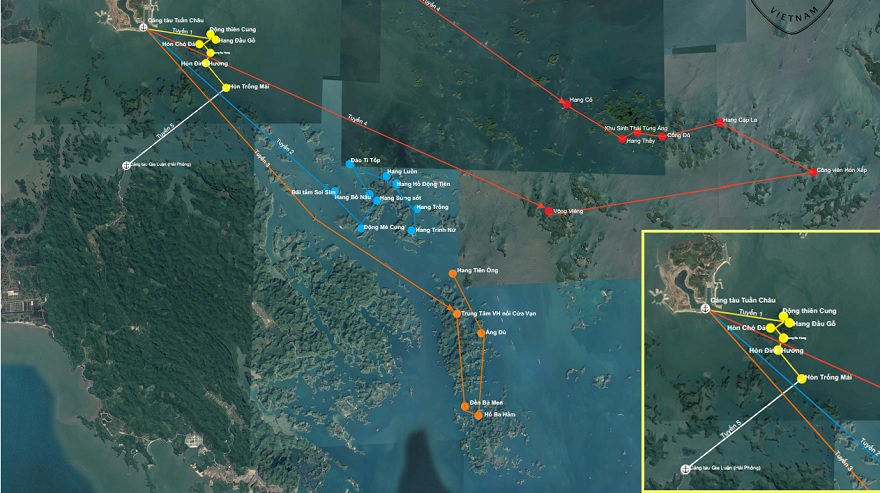
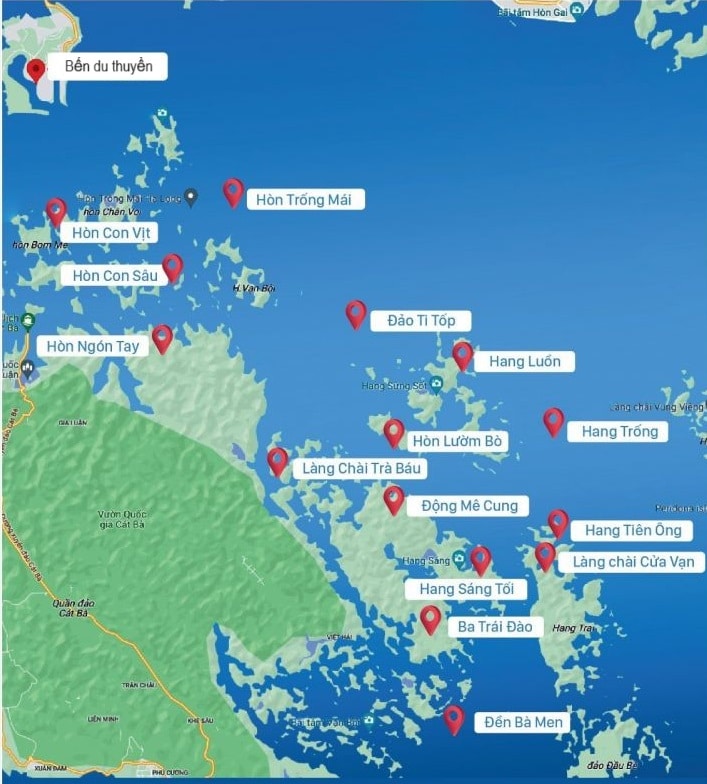
Map of Route 3 in Ha Long Bay
Private Day Boat Charter
- Cost: 4,000,000 VND per private 48-seat boat; 290,000 VND per person (sightseeing ticket)
- Route 3 Itinerary: Cua Van Floating Cultural Center (Cua Van Fishing Village) – Bamboo Forest Area – Tien Ong Cave – Ang Du – Ba Ham Lake – Ba Men Temple
Overnight Cruises
Overnight cruises in Ha Long Bay offer a wide range of scenic stops with itineraries from 2 days 1 night up to 5 days 4 nights, with pricing varying according to vessel class and onboard amenities.
| HA LONG CRUISE PRICE LIST | ||
|---|---|---|
| CRUISE SEGMENT | CHARTER RATE (1 NIGHT) | INDIVIDUAL GUEST RATE (1 NIGHT) |
| 3-star | 29,000,000 – 65,000,000 VND | 1,900,000 – 2,300,000 VND |
| 4-star | 45,000,000 – 85,000,000 VND | 2,950,000 – 3,500,000 VND |
| 5-star | 65,000,000 – 120,000,000 VND | 3,500,000 – 5,000,000 VND |
| 6-star | 120,000,000 – 200,000,000 VND | 5,000,000 – 8,000,000 VND |
See details: Ha Long Cruises
Structure of Tien Ong Cave
After traveling by private Route 3 boat or overnight cruise to the Cai Tai Island area, you will spot the entrance signpost for Tien Ong Cave—typically reached about two hours into the route after passing earlier stops.
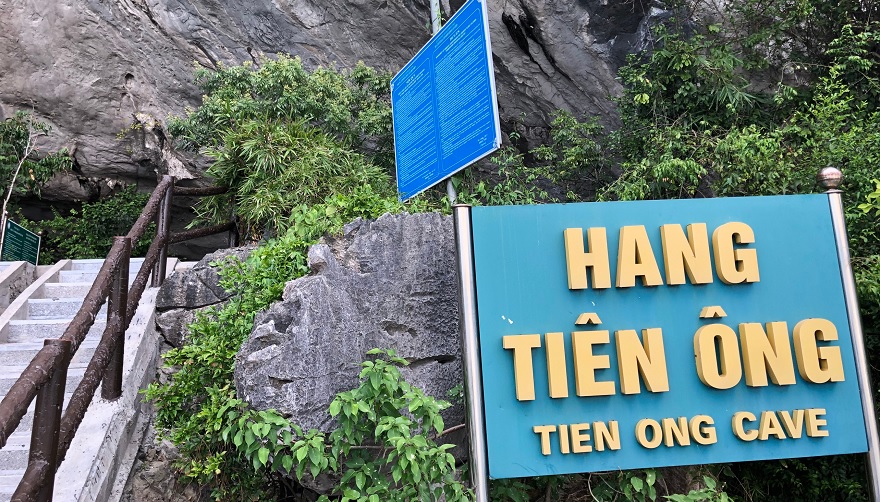
Entrance signpost at Tien Ong Cave
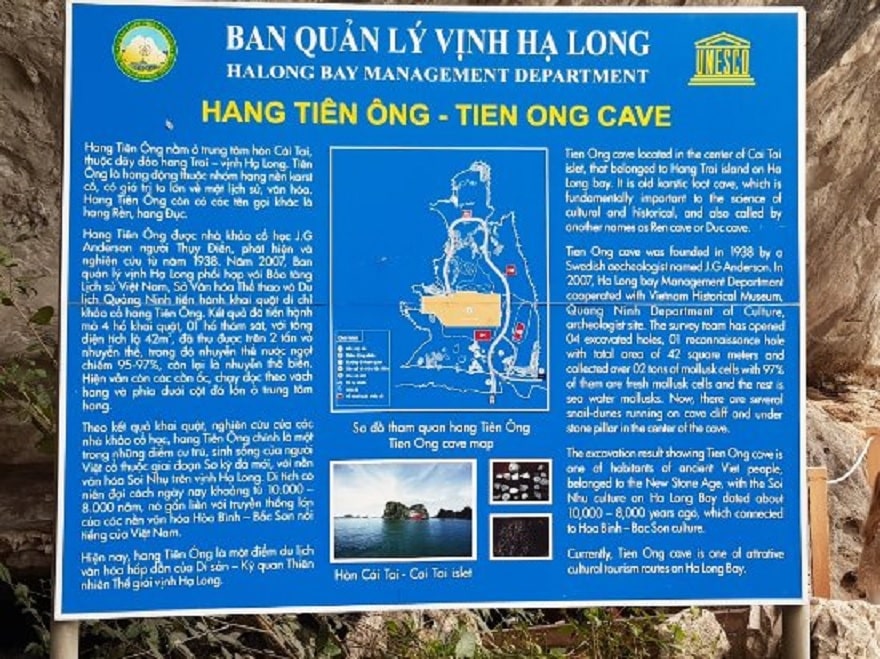
Information board and map of Tien Ong Cave
To enter the cavern, visitors climb roughly 5 meters up stone steps and pass through a wide, V-shaped entrance spanning about 70 meters like a giant frog’s mouth, carved by seawater erosion over millions of years. Outside the entrance, fallen stalactite blocks bear witness to millennia of natural geological activity.
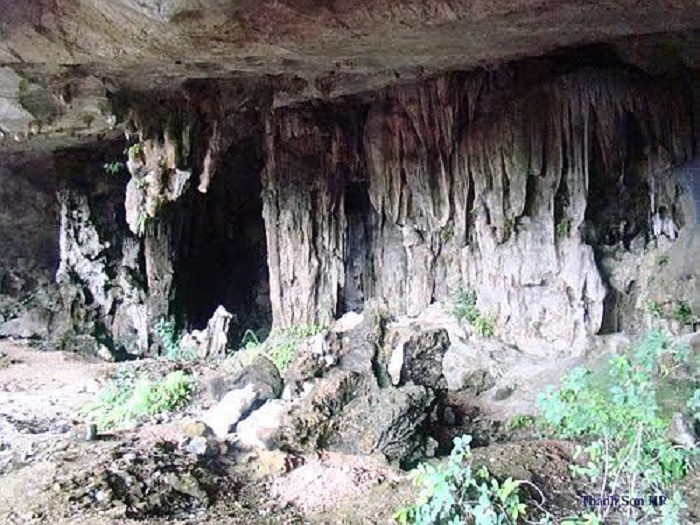
Cave mouth section containing unconsolidated mollusk shell deposits
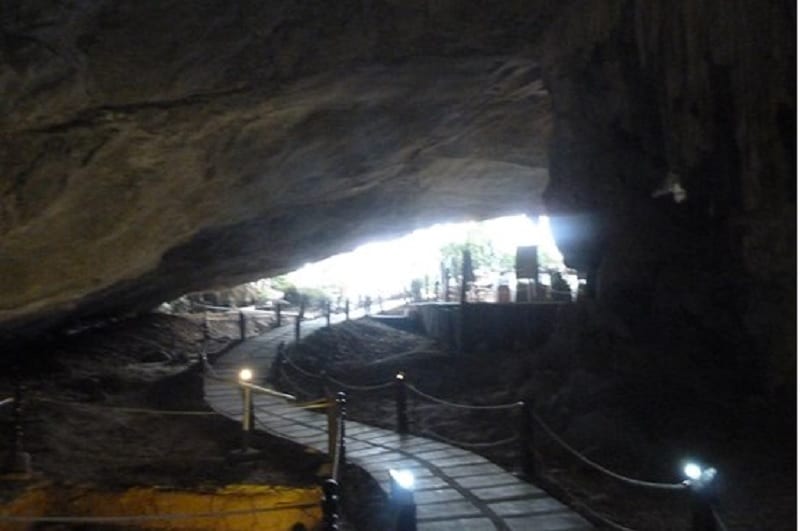
Cave mouth and pathway leading inside the cavern
Tien Ong Cave stretches roughly 156 meters in length with an interior floor area exceeding 1,000 m². Geologically divided into six chambers, it appears visually to visitors in two main sections. The front chamber measures about 50 meters long, 30 meters wide, and 10 meters high, filled with striking stalagmites and stalactites—including three stalagmites resembling three benevolent immortals with long hair and beards, inspiring locals to name the grotto “Tien Ong” (Immortal Elders). The rear chamber spans roughly 106 meters long, 40 meters wide, and 25 meters high, illuminated by natural daylight filtering through a skylight opening in the ceiling and adorned with delicate stalactites forming natural pillars and arches alongside archaeological remains of stone, bone, and pottery.
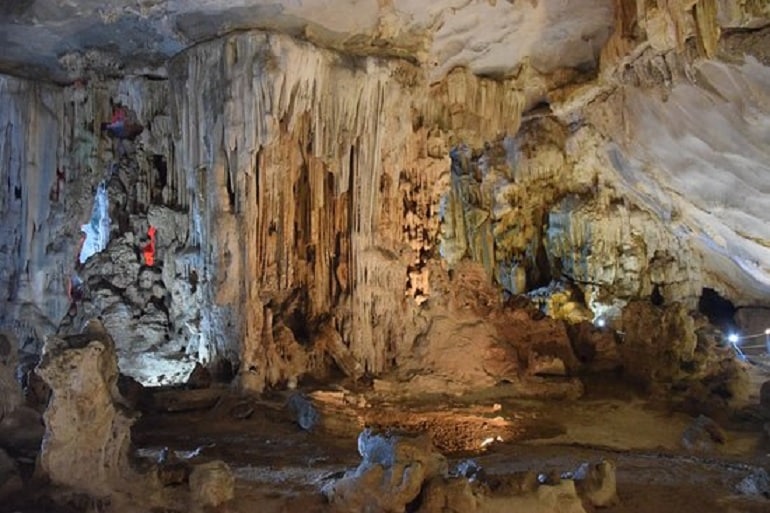
Stalactites inside Tien Ong Cave
Archaeological Relics at Tien Ong Cave
Tien Ong Cave is a major archaeological heritage site preserving remains of the Soi Nhu Culture dating back 8,000 to 10,000 years—one of the earliest prehistoric cultures of ancient Vietnamese inhabitants in Ha Long Bay, uncovered through successive excavations by Vietnamese and international researchers.
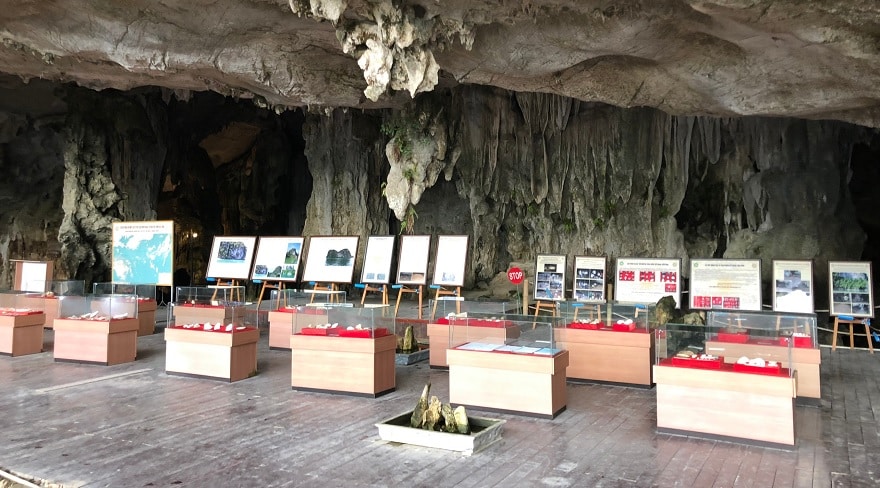
Artifact exhibition area at the entrance of Tien Ong Cave
In 1938, Swedish geologist and archaeologist J.G. Andersson excavated three pits inside the cavern: one large pit covering about 30 m² near the center of the entrance, and two smaller pits of roughly 2 m² each—one near the left wall and one beside the main pit. In his report, Andersson focused on explaining the freshwater snail-shell deposits rather than soil stratigraphy, taking most artifacts back to Sweden while leaving a small reference collection (around 20 pieces) at the Louis Finot Museum without establishing an exact radiocarbon date.
In 1997, archaeologist Ha Huu Nga recorded: “This cave lies on a rocky island matching Duc Cave in J.G. Andersson’s drawings… Its most remarkable feature is hundreds of cubic meters of accumulated freshwater Melania snail shells, though chipped stone tools are relatively scarce. I collected five archaic, rudimentary implements—including two Son Vi-style pebble tools flaked along two-thirds of the cobble on one face combined with pebble splitting, plus an anvil stone. The freshwater snails are notably large—likely the largest shell assemblage among caves in the area—with their apex tips broken off.” Ha Huu Nga subsequently listed Tien Ong Cave among 25 key archaeological sites of the Soi Nhu Culture.
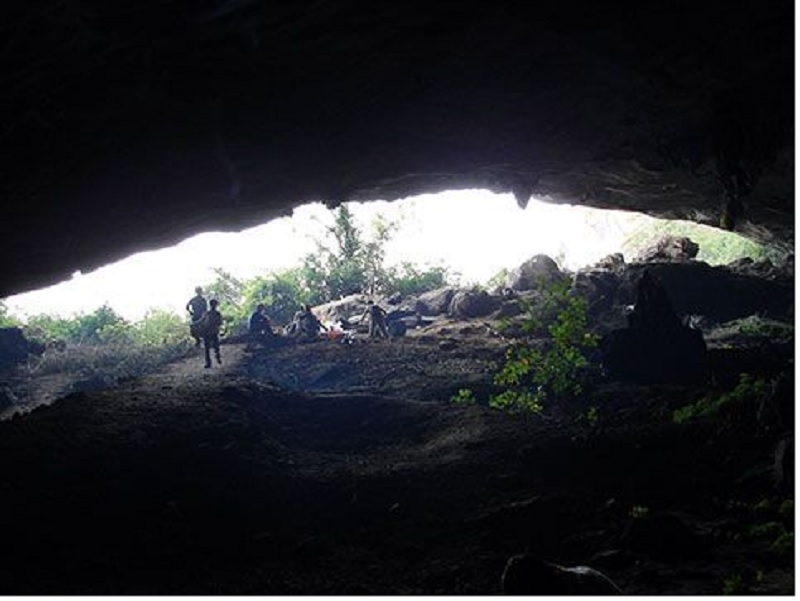
Archaeologists from the National Museum of Vietnamese History excavating at Tien Ong Cave in 2007
On November 17, 2007, archaeologists from the National Museum of Vietnamese History excavated a 60 m² area inside Tien Ong Cave following preliminary surveys, recovering primitive unifacial and bifacial stone tools such as axes and knives, pottery fragments, mammalian bones, and extensive shell deposits—97% freshwater land snails (Cyclophorus) and stream snails (Melania), with the remainder consisting of marine shellfish like barnacles and clams. Subsequent scientific reports confirmed that Tien Ong Cave served as a habitation site for ancient Ha Long inhabitants roughly 10,000–8,000 years ago, corresponding to the Soi Nhu Cave site in Bai Tu Long Bay during the early Neolithic Hoa Binh–Bac Son cultural period.
The abundance of freshwater snail shells—remnants of prehistoric meals—indicates that roughly ten millennia ago this area was still dry mainland, aligning closely with geological studies on the formation of Ha Long Bay. Like other early Neolithic inhabitants of ancient Vietnam, the people of Tien Ong Cave lived by hunting and gathering, harvesting rivers and streams while beginning to exploit coastal marine resources from their natural limestone shelter.