
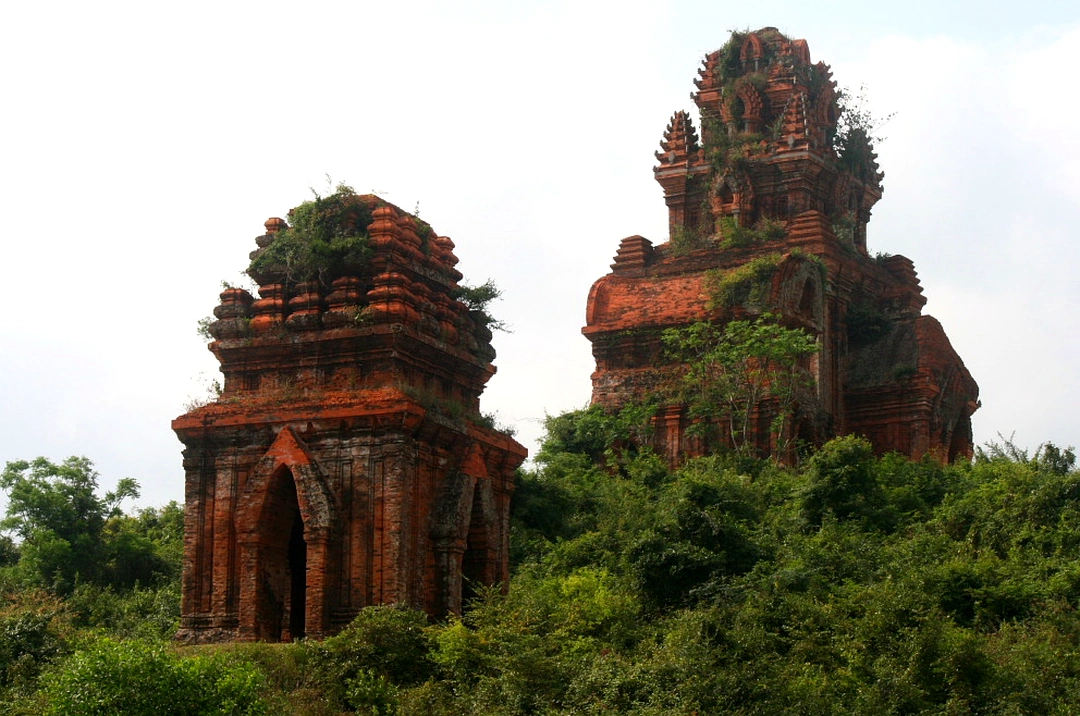
The lasting vitality of the heritage site resides not only in its architectural mastery, but also in popular memory through its rustic yet evocative name: Banh It Towers. This distinctly Vietnamese name comes from the silhouette of the main tower when viewed from a distance, resembling banh it la gai—a beloved traditional delicacy steeped in the warmth and character of Binh Dinh, Vietnam’s “land of coconuts.” This charming union of a cosmic Hindu monument with a folksy local name has turned the site into a bridge linking past and present, royal court artistry and the humble spiritual life of everyday people.
Across the shifting tides of time, the Banh It Towers have become a standout landmark on Vietnam’s heritage tourism map, widely celebrated by preservation authorities and the press as an invaluable open-air architectural museum. Every deep-red fired brick bonded through masterful techniques, and every carved motif of deities, celestial dancers, or sacred flames bears witness to the gifted hands and devout spirit of ancient Cham artisans. Stepping onto these grounds on a breezy afternoon, listening to echoes of antiquity mingle with contemporary life, travelers do more than admire an architectural marvel—they touch the deep soul of Vietnam’s history and culture.
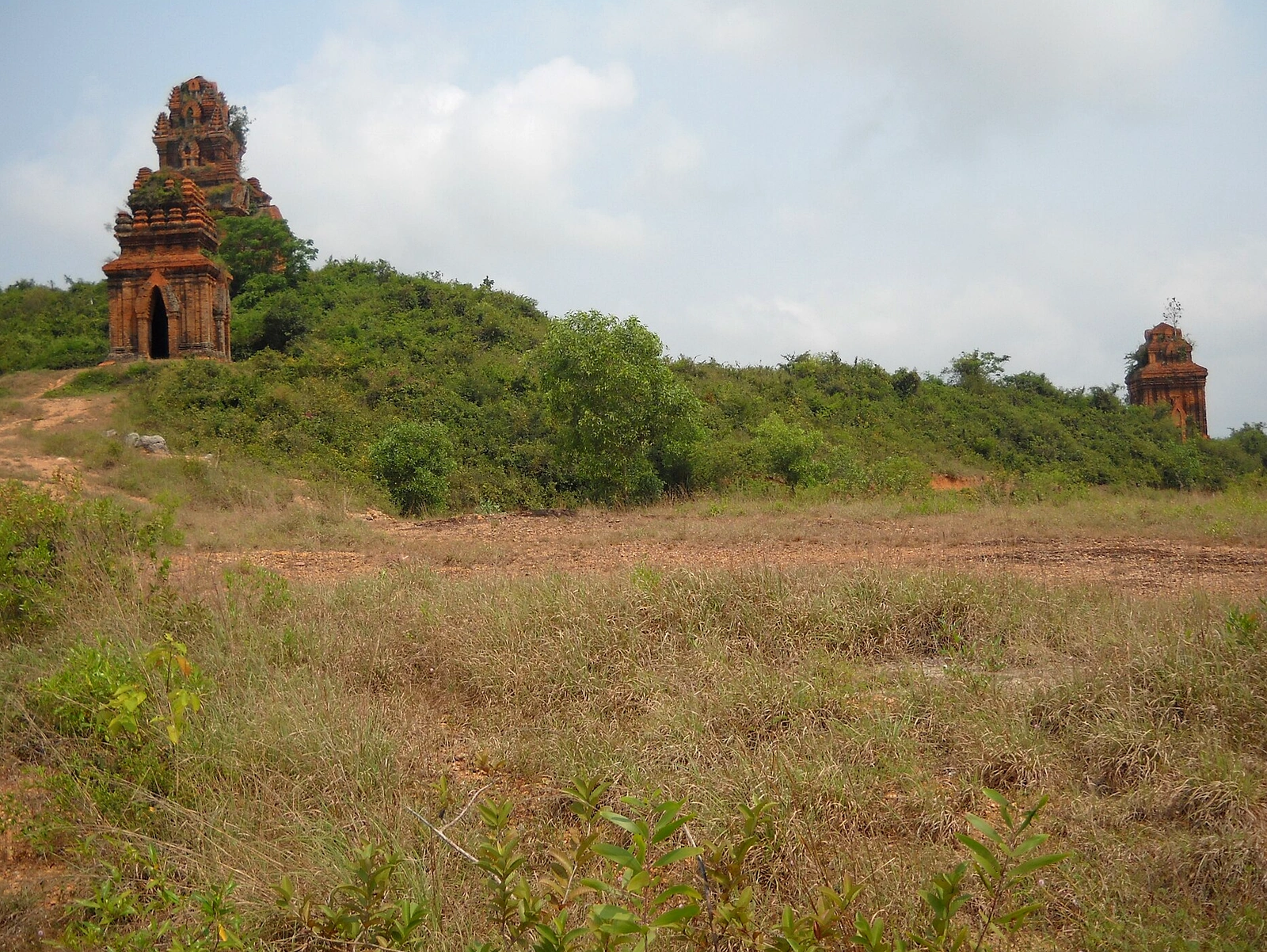
Perched atop a scenic hill in Phuoc Hiep Commune, Tuy Phuoc District, the Banh It tower complex is both a historic monument and an architectural masterpiece in seamless harmony with nature. Upon arrival, visitors are immediately captivated by its commanding setting—backing onto distant mountains while facing open waters. The hill supporting the towers rises like a natural throne above fertile plains, where the Con River winds like a soft silk ribbon embracing its base. The interplay of deep-red, time-weathered fired bricks against the azure sky and vibrant green rice paddies creates a landscape painting rich in meditative, mystical charm.
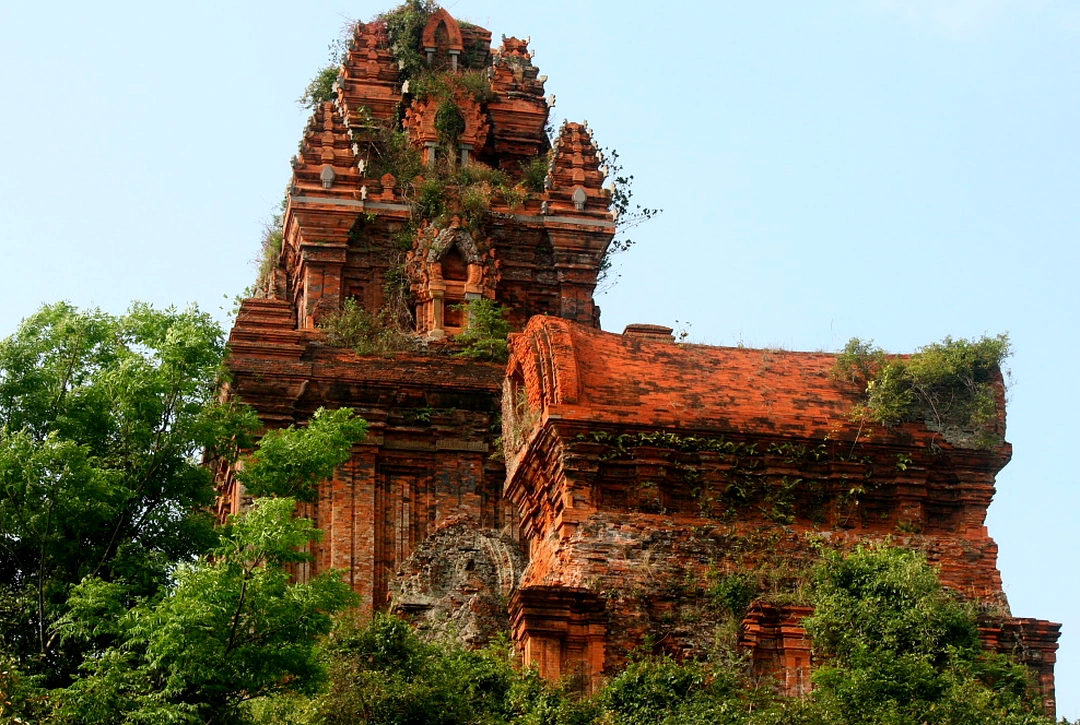
The architecture of the Banh It Towers stands as a testament to the pinnacle of Cham construction artistry during the Binh Dinh stylistic period. Unlike the slender, soaring elegance of towers from earlier eras, the structures here exhibit a sturdy, monumental presence paired with intricate carved ornamentation. A particular highlight lies in the bas-reliefs depicting Apsara dancers, deities, and mythical creatures such as Garuda and Makara sculpted directly into the brickwork. These carvings are far more than decorative; they form a sacred visual language expressing the Hindu cosmological worldview. Remarkably, the mortarless bricklaying technique—one of ancient engineering’s enduring mysteries—has allowed the towers to stand resiliently for nearly a millennium against the harsh climate of Central Vietnam.
To capture “million-view” photographs at the complex, seasoned travel photographers typically favor two classic vantage points. The first is from the base of the hill looking upward, framing all four towers in a single composition that balances monumental architecture with natural topography. The second looks outward from the main tower courtyard toward the valley below; here, stone pillars and pointed archways act as a “window through time,” lending photographs striking depth and a compelling contrast between ancient heritage and lush modern landscapes.
When it comes to timing your visit, natural light is the decisive element that brings out the rich crimson glow of the Cham bricks. Dawn is when the Banh It Towers feel most enchanting. As the first rays of morning pierce the arched doorways and illuminate the bas-reliefs, the entire complex seems to awaken from centuries of slumber, radiating a quiet, sacred beauty. Conversely, sunset evokes deep nostalgia. As the sun sinks behind distant mountain ridges, warm amber-gold light casts long shadows across the brick walls, creating a deeply poetic atmosphere where the boundary between past and present appears to dissolve—an ideal window for photography enthusiasts to capture luminous color gradients and emotionally resonant frames.
Visiting the Banh It Towers is far more than touring a historical monument; it is an encounter with enduring cultural heritage. Every step up the moss-kissed stone stairs and every gaze toward the horizon brings a profound sense of serenity, making this an unmissable stop for anyone seeking to connect history, monumental architecture, and the sweeping beauty of Binh Dinh’s land and sky.
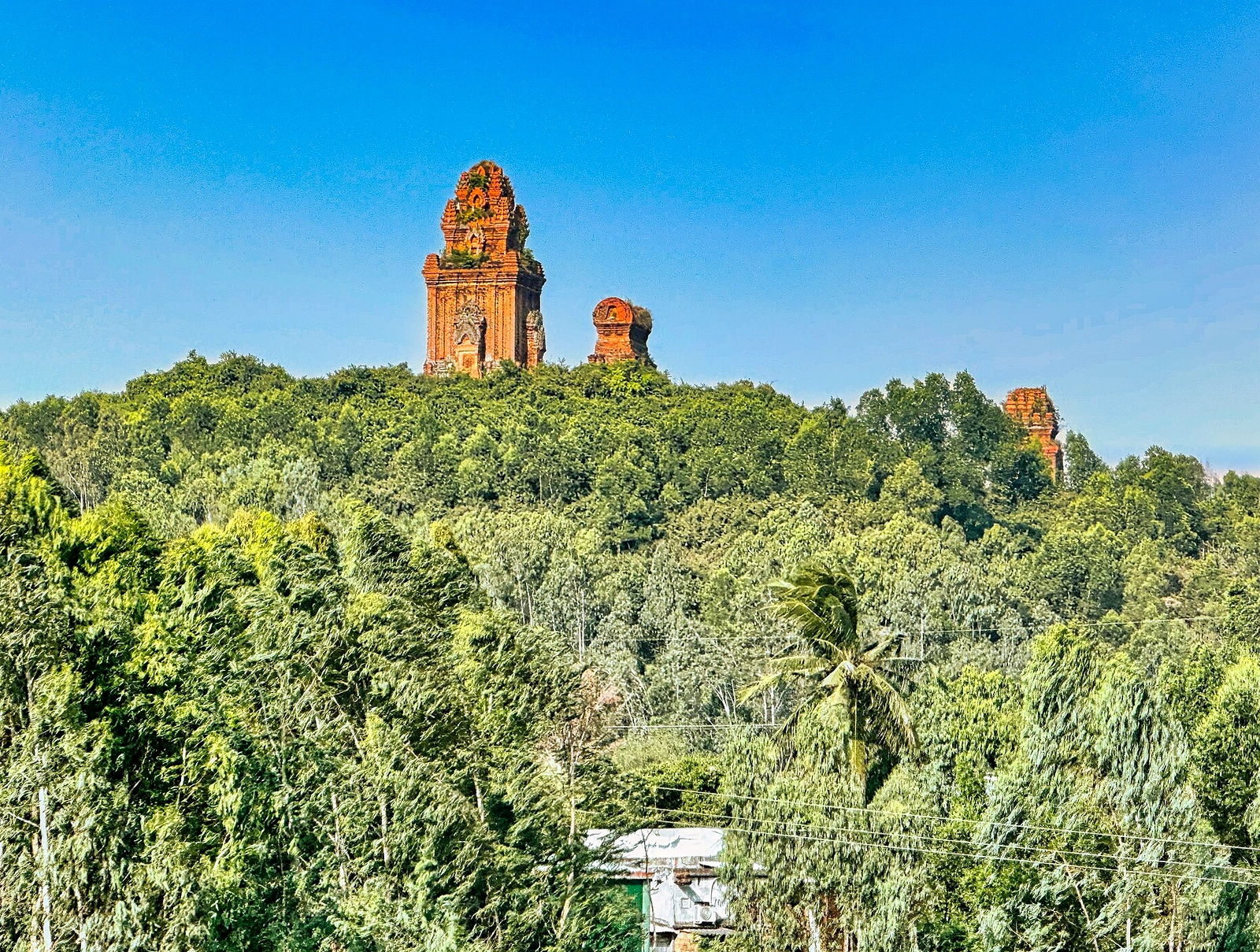
Stepping onto the grounds of the Banh It tower complex atop a breezy hill in Binh Dinh—Vietnam’s famed “land of martial arts”—turns a simple sightseeing trip into both a journey back to the glorious Champa era and a multi-sensory travel experience. From your very first steps ascending the gentle hillside path, brisk sea breezes carrying the subtle scent of Central Vietnamese flora refresh the spirit, instantly washing away the rush of everyday life.
Although the climb presents a mild physical workout, every step is rewarded as the ancient structures gradually emerge against the open sky. Standing in the sacred atmosphere of these moss-draped towers dating from the late 11th to early 12th century, visitors cannot help but marvel at their massive silhouettes and intricate carvings bearing the unmistakable hallmark of the Binh Dinh–Thap Mam style. Pausing in quiet reverence before the sanctuary as golden sunlight illuminates bricks reddened by centuries, the mind naturally settles into calm tranquility.
The most breathtaking moment arrives when you stand on the upper terrace of the complex and gaze out over the bountiful landscapes of the Nau region. Below, emerald rice fields wind alongside the gentle, meandering Con River, while peaceful villages peek through clusters of green bamboo beneath an expansive sky. Pairing your visit with a leisurely sunset boat ride along the river allows travelers to fully savor the poetic, romantic charm of a land that once served as the political and cultural capital of Vijaya.
Beyond visual and spiritual impressions, exploring the Banh It Towers is wonderfully complemented by local culinary traditions right at the foot of the hill. The name “Banh It” not only echoes the monument’s distinctive silhouette, but also ties directly to Binh Dinh’s signature delicacy, banh it la gai. Savoring a chewy glutinous rice cake infused with the earthy aroma of ramie leaves, sweet mung bean paste, and a subtle kick of fresh ginger amid this tranquil historic setting offers an authentic taste of the warmth, hospitality, and cultural soul of this sun-drenched, rain-weathered land.
To make your visit to the Banh It Tower complex smooth and rewarding, keeping a few practical details in mind is essential. The heritage site is open daily, including weekends and public holidays, with standard hours running from early morning until late afternoon—giving visitors ample flexibility to admire the towers under changing light. Admission fees are clearly posted at the entrance gate, with proceeds directly supporting ongoing conservation and restoration work, while motorbike and car parking at the base of the hill is available for a small separate fee.
In terms of getting there, the Banh It Towers sit atop a hill in Phuoc Hiep Commune, Tuy Phuoc District, roughly 15 to 20 kilometers north of downtown Quy Nhon. The most convenient way to reach the site is by motorbike or private car via National Highway 1A. From Quy Nhon city center, head straight north, cross Doi Bridge, and continue along the highway until you spot the signpost directing you to the heritage site on your left. The route is smooth, easy to navigate, and flanked by lush green paddy fields typical of Binh Dinh’s countryside, making for a scenic ride before you begin your ascent.
Because the complex sits on a hill accessed via steep stone steps, thoughtful footwear and attire are strongly recommended. Opt for lightweight, breathable clothing and wear supportive sneakers or flat shoes with good grip to navigate the ancient stone pathways safely. As this is a sacred historical and spiritual monument, visitors should also dress modestly and respectfully—avoiding overly short or revealing outfits—out of reverence for the ancient Cham worship space.
The best times of day to visit are early morning or mid-to-late afternoon, when temperatures in Binh Dinh are cooler and sunlight is softer, making the uphill walk much more comfortable. Arriving in the late afternoon is especially rewarding, as golden sunset rays wash over the terracotta-red brick towers to create an atmospheric, unforgettable glow. Be sure to bring drinking water, a sun hat, and sunscreen for outdoor exploration, and take your time appreciating the fine brickwork carvings—allowing the peaceful, open surroundings to immerse you in the legacy of a brilliant civilization that once flourished here.
To enjoy a seamless getaway and fully appreciate the beauty of the Banh It Towers without the hassle of arranging transport, admission tickets, or detailed itineraries, travelers can choose all-inclusive Binh Dinh tour packages from VDS Travel. Each itinerary is thoughtfully timed for optimal lighting and scenery, accompanied by knowledgeable local guides and top-tier hotel and dining standards.
