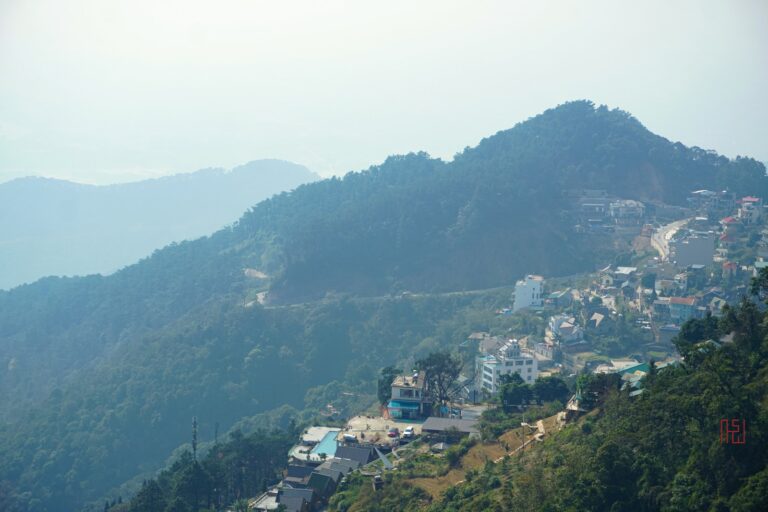
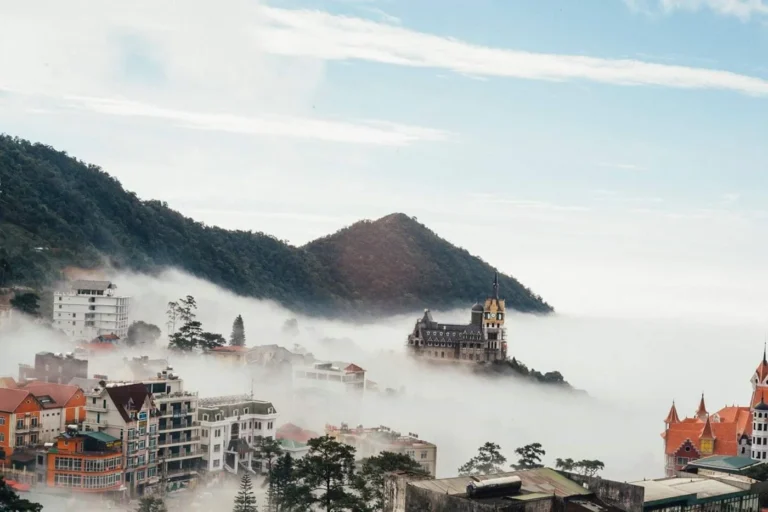
Nestled amid the drifting clouds of Vietnam’s Northwest highlands, Muong Hoa Valley emerges as a geological and cultural wonder shaped by nature and thousands of years of history. Stretching across the communes of Hau Thao, Ta Van, Ban Ho, and part of Sa Pa town in Lao Cai Province, the valley holds a unique geographical position, shielded by some of the region’s highest and most rugged mountain ranges like a formidable natural fortress. The terrain embodies traditional feng shui harmony, with the Muong Hoa Stream winding gracefully like a silver ribbon and embracing cascading tiers of terraced rice fields that climb toward the sky. This seamless interplay between majestic mountains, flowing waters, and primeval vegetation creates a distinctive cultural landscape that is at once untamed, mystical, poetic, and grand.
Through the passage of time and local memory, the name “Muong Hoa” is closely tied to the centuries-old settlements of ethnic minority communities, including the Hmong, Giay, Tay, and Dao peoples. In the local language, “Muong” denotes an inhabited land or fertile valley, while “Hoa” symbolizes the vibrant colors of wildflowers blooming year-round and the golden hues of ripe rice harvests. More than a mere living space, this valley is a cradle of enduring human heritage, where generations have lived in harmony with nature, transforming steep mountain slopes into an extraordinary high-altitude wet-rice farming system.
Viewed through the lens of historical records and archaeology, Muong Hoa is a land of rich sedimentation where layers of culture have accumulated over millennia. The valley’s prehistoric and protohistoric era is brilliantly marked by the Muong Hoa Ancient Rock Field—a monumental complex of relics first discovered in 1925 by Russian-French archaeologist Victor Goloubew under the auspices of the French School of the Far East (EFEO). Over thousands of years, hundreds of sandstone boulders carved with enigmatic symbols, human figures, maps, and intricate patterns have withstood the test of time, dated by scientists to between 2,300 and 3,000 years ago and linked to the late Dong Son or pre-Dong Son cultural periods. These carvings are regarded as the earliest stone “ciphers” left by ancient inhabitants across Vietnam.
Entering the independent feudal era of Dai Viet, Muong Hoa’s strategic importance became even more pronounced in the annals of nation-building and defense. During the Ly and Tran dynasties, the area belonged to Long Hung Circuit, Thuy Vy Prefecture, serving as a vital frontier bulwark in the Northwest tasked with safeguarding key trade routes linking Dai Viet with the north. Under the Early Le and Restored Le dynasties, historical figures such as Vu Van Mat and the chieftains of the Vu clan wrote heroic new chapters for this land. With strategic foresight and wise leadership, they pacified the borderlands, settled migrants, cleared wilderness, and established hamlets, turning remote valleys into resilient defensive belts anchored by thriving settled agriculture.
By the Nguyen Dynasty, under the reigns of Emperors Minh Mang and Thieu Tri, local administration became more structured and formalized when Muong Hoa was officially placed under Ban Ho Canton, Van Ban Prefecture, Quy Hoa Superior Prefecture, Hung Hoa Province. Surviving genealogies and sacred chronicles of prominent local families stand as vivid testaments to the contributions of generations of clan leaders and hereditary chieftains of Han, Tay, Giay, and Hmong descent—individuals appointed by the royal court to govern the region, uphold village customs, defend territorial sovereignty, and nurture a rich multi-ethnic identity. Today, backed by scientific research dossiers and official heritage recognition, Muong Hoa Valley continues to shine as a living open-air museum and an invaluable national cultural tourism treasure.
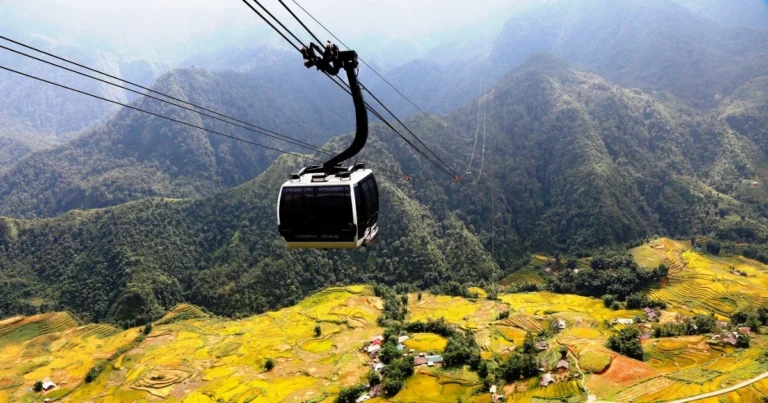
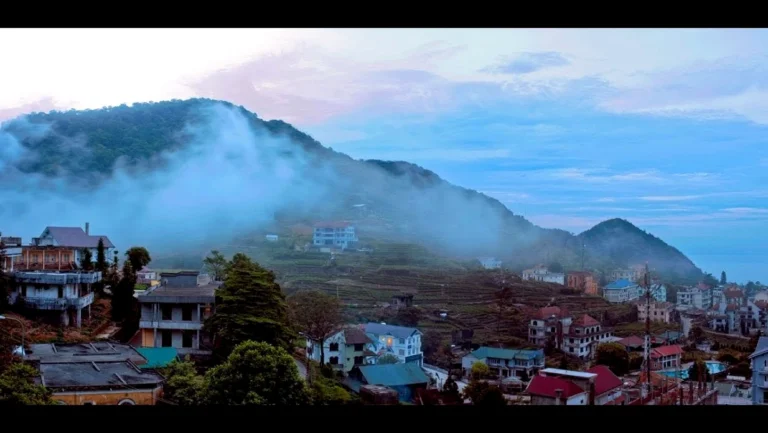
Cradled within the embrace of the majestic Hoang Lien Son mountain range, Muong Hoa Valley appears as a sculptural masterpiece crafted by nature and human hands, bringing together untamed beauty, ethereal charm, and rich highland cultural identity. Stepping into this landscape, visitors are immediately captivated by its extraordinary topography: a deep valley threaded by the gentle Muong Hoa Stream, winding like a soft silk ribbon past mist-shrouded villages. Along the mountainsides stretch endless tiers of terraced fields, rising evenly like stairways reaching toward the gates of heaven. Over generations, the Hmong, Tay, and Giay communities skillfully reclaimed the land, transforming rugged karst slopes into gracefully curving agricultural terraces that form a rare farming architectural marvel on the world stage. Every harvest season, the entire valley is draped in a brilliant golden cloak, its sweet fragrance mingling with wisps of mist drifting lazily over local thatched roofs.
Beyond its terraced rice wonders, Muong Hoa also preserves authentic traces of prehistoric stone-carving art. Hundreds of large and small boulders etched with mysterious motifs—such as human figures, staircases, ancient scripts, and miniature maps—lie scattered among lush greenery and mountain streams. These rustic yet remarkably intricate carvings offer vivid insight into the aesthetic sensibility and rich spiritual life of ancient peoples. The valley’s cultural atmosphere is further enriched by a slow, tranquil rhythm of life, seen in swaying rattan bridges spanning the stream, water-powered rice mortars thudding rhythmically day and night, and the resonant melodies of Hmong flutes echoing off rocky rapids. Together, they compose a sublime natural tableau imbued with both millennia of history and the pure beauty of the Northwest mountains.
To capture the full splendor of Muong Hoa, seasoned photographers and travel journalists often share two unmissable “million-dollar view” vantage points. The first lies at high-altitude stops along the road descending from Sa Pa town toward Ta Van village, offering a sweeping panorama of the entire valley basin. The golden hour for this spot is at sunrise (from 5:30 AM to 6:30 AM), when the first rays of daylight pierce through a sea of floating clouds, awakening each terraced field with an ethereal golden shimmer. The second spot is right around Ta Van suspension bridge beside the Muong Hoa Stream at sunset (from 5:00 PM to 6:00 PM). As twilight descends and paints the sky behind the Hoang Lien Son range a fiery crimson, the silhouettes of cypress-wood roofs veiled in evening hearth smoke reflect upon the rippling water, creating a deeply cinematic, tranquil, and nostalgic frame.
Arriving in Muong Hoa Valley—where early pioneers left their footprints clearing and settling the land centuries ago—visitors are instantly drawn into a world that feels both untouched and vibrantly alive. The first emotion upon standing before this vast expanse is breathless awe at nature’s grandeur. Gazing down from above, thousands of terraced rice fields curve gracefully like gleaming golden ribbons hugging the mountain slopes, cascading upward into the clouds. The tireless labor of ethnic communities across generations has forged a remarkable agricultural wonder, inspiring deep reverence for the seamless harmony between humanity and creation.
A journey through Muong Hoa is incomplete without immersive, invigorating outdoor experiences. Visitors can start the day trekking along winding trails shaded by ancient trees, breathing in crisp air infused with the scent of mountain forests. Then, when the tranquil Muong Hoa Stream comes into view, boarding a rustic wooden boat to drift along the cool waters offers an entirely fresh perspective. Gliding past moss-draped cliffs while listening to babbling waters mingle with the rustle of mountain winds brings a profound sense of calm, melting away every urban worry.
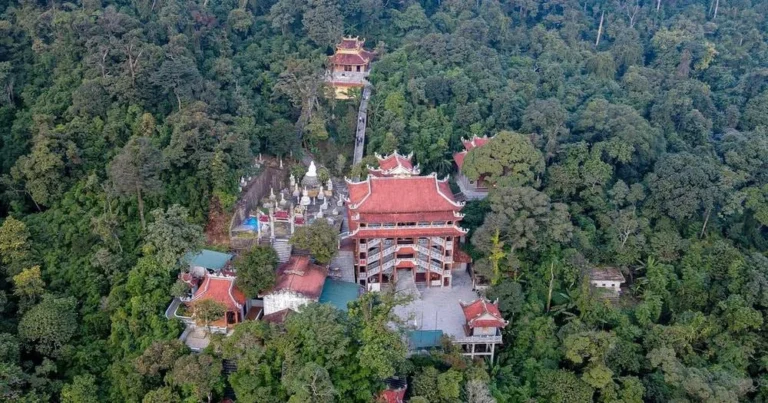
Beyond its natural scenery, Muong Hoa Valley also safeguards deep spiritual values and vibrant indigenous cultural traditions. Travelers have the opportunity to visit sacred temples and shrines tucked beneath old-growth forest canopies to pay their respects and commemorate the local chieftains and the Vu clan, who once pacified the frontier and defended the nation’s borders. Amid the quiet stillness of windswept mountain passes, lighting a stick of fragrant incense evokes a solemn sense of reflection, deeply connecting the present with the heroic legacy of ancestors.
Crowning this sensory journey is the pleasure of savoring renowned local highland cuisine. Gathering around a crackling hearth inside a wooden stilt house, visitors can feast on aromatic bamboo-tube grilled free-range pork, stream fish roasted with fragrant *mac khen* wild pepper, or a steaming bowl of *thang co* rich with the warmth of the Northwest mountains. Sipping potent corn wine in the crisp chill of Muong Hoa Valley while listening to the soulful strains of flutes and pipes played by Hmong, Tay, and Giay locals dissolves all boundaries, leaving travelers with unforgettable memories of a heroic borderland overflowing with human warmth.
Muong Hoa Valley welcomes visitors year-round, typically operating from 6:00 AM to 6:00 PM daily, offering ample flexibility to explore its natural scenery and historical relics at your own pace. Entrance tickets to the valley currently range from approximately 80,000 VND to 100,000 VND per adult, while children are generally admitted free of charge or at discounted rates depending on the tourism management board’s regulations at the time of visit.
For the most convenient journey from central Sa Pa town to Muong Hoa Valley, travelers can opt for a self-drive motorbike, rent a private car with a driver, or ride the modern Muong Hoa funicular mountain train. The most popular road route begins at the Sa Pa Stone Church, heading south along Cau May Street before turning onto the Lao Chai – Ta Van road. Although this route features steep, winding curves characteristic of Northwest highland terrain, it is well-paved and opens up sweeping panoramic views across the entire mountain landscape.
The ideal time of year to visit Muong Hoa Valley is during the golden rice harvest season (roughly September to October each year), when the terraced fields turn a dazzling shade of amber across the hillsides. Alternatively, the water-pouring season (around May to June) offers an enchanting spectacle as water-filled terraces mirror the clouds and sky like shimmering glass, pairing with the millennia-old ancient rock field to create a vivid cultural and historical tableau.
When exploring heritage sites and traditional villages in Muong Hoa, visitors should wear neat, comfortable clothing and prioritize sneakers or hiking shoes with strong traction, as the hilly terrain and ancient rock boulders can be slippery. Additionally, travelers should dress modestly and respectfully when entering spiritual sites, temples, or community living spaces of local ethnic minorities, maintain environmental cleanliness, and refrain from touching the ancient rock carvings directly in order to preserve this heritage intact for future generations.
To enjoy a seamless getaway and take in the full beauty of Muong Hoa Valley without worrying about transportation, sightseeing tickets, or itinerary planning, travelers can choose from VDS Travel’s premium all-inclusive Sapa tour packages. Every itinerary is thoughtfully timed for photo stops when the scenery is at its most radiant, accompanied by knowledgeable local guides and top-tier hotel and dining standards.