Nestled quietly along the eastern foothills of the majestic Cangshan Mountain Range, gazing gently out over the mirror-calm waters of Erhai Lake, Fengyangyi Village preserves the rich cultural sediment of a thousand-year-old relay post along western Yunnan’s legendary Ancient Tea Horse Road. Tracing its roots back to the golden age of the Nanzhao Kingdom in the eighth century, and continuing through the illustrious Dali Kingdom and the Ming and Qing dynasties, this ancient Bai ethnic village once stood as a vital artery of frontier commerce. The name “Yicun” (Relay Village) derives from its historic role as an imperial military supply depot and rest station provisioning courageous horse-and-mule caravans crossing treacherous snow-bound passes toward Tibet—where the rhythmic chime of bronze caravan bells mingled with drifting morning mist across centuries of history.
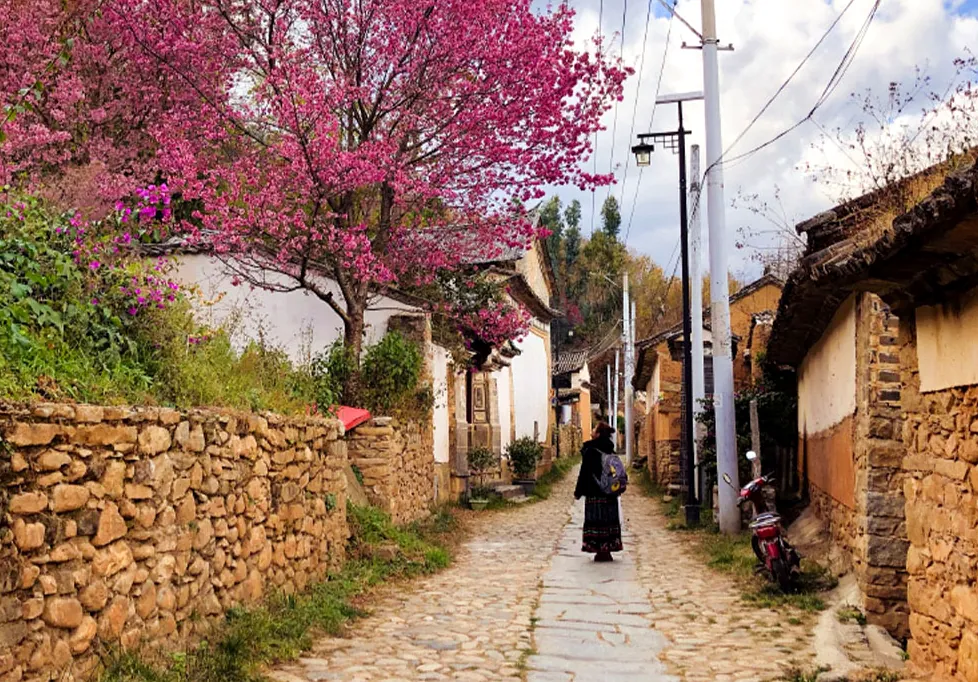
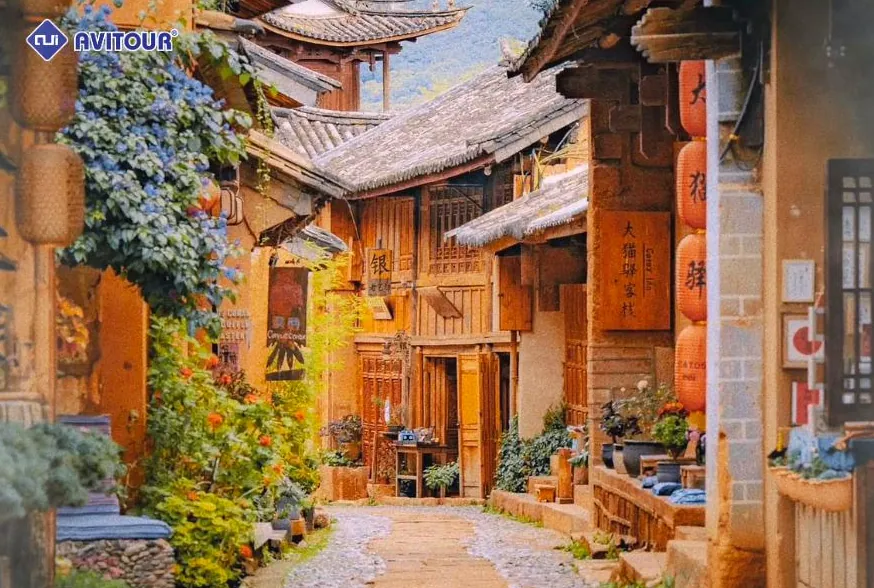
Seen up close, Fengyangyi exudes quiet antiquity along its rugged bluestone-paved thoroughfare stretching into the distance, flanked by rammed-earth walls bound with straw and moss-draped Cangshan boulders. Shafts of sunlight filter through leafy canopies, casting dappled shadows across weather-silvered wooden shutters and gently curving yin-yang tiled roofs hallmarks of traditional Bai architecture. Smooth, hoof-worn flagstones gleaming in daylight alongside finely weathered earthen walls testify not only to humble ancient building craft, but vividly capture the unhurried rhythm of a resilient relay settlement that has withstood the test of time.
Opening historical chronicles of Southwest China, records of the village’s rise appear clearly from the era when Nanzhao established its capital at neighboring Taihe City. During the Tang and Song dynasties, brisk trade exchanging hardy Tibetan plateau warhorses for prized Pu’er tea cakes from southern Yunnan turned the Cangshan corridor into the busiest overland commercial route in the south. Under the Ming Dynasty—particularly during the Hongwu and Yongle reigns—the central court tightened oversight through official postal relay networks, fortifying Fengyangyi into a self-contained stronghold. Prominent local clans such as the Dong and Yang families built traditional courtyard compounds, communal stone wells, Benzhu patron-deity temples, and spacious stables to shelter hundreds of muleteers, merchants, and pack animals on every stopover.
Yet Fengyangyi’s destiny was not spared the storms of political and social upheaval. In the mid-nineteenth century, during the Xianfeng and Tongzhi reigns of the Qing Dynasty, the fierce Du Wenxiu Rebellion in Dali severed the Tea Horse lifeline, leaving stretches of the relay corridor scarred by warfare. Entering the twentieth century, as modern highways and railways gradually replaced pack caravans across the rugged Yunnan–Tibet corridor, the old village relinquished its strategic commercial role and retreated into profound quietude. That temporary obscurity during the age of mechanization inadvertently formed a protective shield—preserving its ancient stone road, mossy stone-and-earth walls, and thousand-year Bai heritage remarkably intact.
Anchored firmly against the eastern flank of mighty Cangshan Mountain while looking out over the vast expanse of Erhai Lake, Fengyangyi enjoys a classic, auspicious geomantic posture known as “mountain-backed, water-facing.” In the millennia-old human geography of Dali’s Bai people, this orientation shelters the village from icy gales sweeping down cloud-wrapped peaks while welcoming warm morning vitality reflected off the lake. Gently sloping from west to east, the terrain shapes a natural terraced layout in which every courtyard, garden, and lane follows the contours of the mountainside—turning this historic Tea Horse Road outpost into a tranquil haven tucked amid vast nature.
Viewed from above, the village appears like a serene classical landscape painting, with a bluestone-paved lane winding gracefully past traditional dwellings in a compact, hushed heritage enclave. Rough-hewn stones stacked with practiced skill form warm earth-toned perimeter walls crowned by moss-velveted yin-yang roof tiles weathered across centuries. Punctuating quiet courtyards are spreading old shade trees sheltering humble stone steps worn smooth by tens of thousands of passing pack hooves.
Fengyangyi’s ground plan stands as an exemplary triumph of building in harmony with natural topography rather than bulldozing slopes flat. Instead of running rigidly straight, the village’s main thoroughfare curves organically along natural elevation contours, acting as a central spine linking close-knit residential clusters. Ancient builders skillfully channeled pure snowmelt streams cascading down from Foding Peak into an open network of stone-lined ditches murmuring past courtyard walls—supplying fresh household water, irrigating lush kitchen gardens, and moderating the microclimate to keep village lanes cool even on bright summer days.
Complementing its thoughtful spatial layout, native flora acts as a living ecological shield around Fengyangyi. Deep green pine forests cloaking the western mountainside merge with ancient pomegranate and pear trees and ornamental bamboo groves planted inside courtyards modeled after classic Bai layouts such as “Three Wings and One Screen Wall” and “Four Courtyards and Five Skywells.” Mineral-rich volcanic soil nourishes lush year-round greenery, blanketing stone crevices and old footpaths in emerald moss. This seamless union of Cangshan groundwater, Erhai breezes, and rustic dry-stone craft creates a pure, contemplative sanctuary where time seems to rest gently upon every weathered pebble.
Tucked along the eastern slope of towering Cangshan Mountain overlooking sapphire Erhai Lake, Fengyangyi unfolds like a living open-air museum distilling centuries of Bai architectural harmony with nature. The village’s overall layout revolves around its historic backbone: an intact, nearly two-kilometer stretch of the original Ancient Tea Horse Road. Paved with tens of thousands of irregular green sandstone slabs, this ancient highway—polished smooth by centuries of caravans hauling Pu’er tea and salt—gleams like a quiet stone mirror reflecting the patina of ages. Branching off both sides of the main road, a web of narrow alleys opens into sunlit courtyards and unexpected turns leading into traditional enclosed family compounds.
The defining signature of local vernacular architecture in Fengyangyi is its distinctive combination of rammed earth and native river stone. Rather than building entirely with kiln-fired bricks common on the Central Plains, Bai artisans gathered smooth, rounded cobbles from Cangshan mountain streams to build sturdy, moisture-resistant foundations before tamping mineral-rich red clay into thick, solid earthen walls. This technique delivers superb thermal insulation against chilly mountain winds while creating a warm, natural palette transitioning smoothly from deep earthy brown walls and ash-gray flagstones to moss-dappled roof tiles. Inside each compound, residential layouts remain faithful to two classic Bai forms: “Three Wings and One Screen Wall,” where three two-story mortise-and-tenon timber wings frame a central courtyard opposite a gleaming whitewashed screen wall reflecting afternoon sunlight indoors, and “Four Courtyards and Five Skywells,” where four intersecting wings create five light wells ensuring smooth rainwater drainage and natural cross-ventilation.
Confronted with rapid modern development, Fengyangyi was neither demolished for commercial concrete blocks nor over-commercialized, but thoughtfully revitalized through a careful micro-renovation strategy backed by local authorities and heritage preservation organizations. Tens of millions of RMB were invested in upgrading subterranean infrastructure—burying water lines, drainage pipes, and power cables discreetly beneath ancient flagstones—while painstakingly restoring sagging tiled roofs and weathered walls under strict principles of authentic preservation. Historic civic landmarks, including moss-grown twin stone wells, carved pack-horse watering troughs, local earth-god shrines, and Ming-Qing gray-brick arched village gates, were gently cleaned and structurally stabilized while preserving their original character.
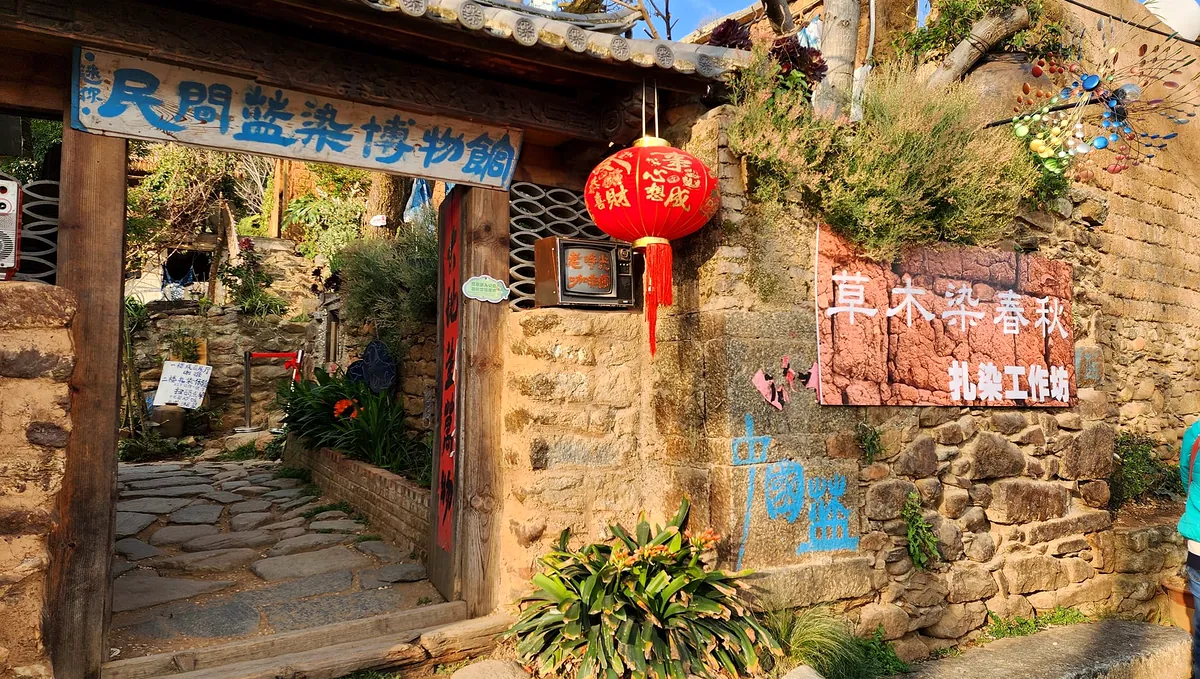
Alongside safeguarding physical heritage, revitalization efforts thoughtfully transformed abandoned historic ruins into human-centered creative spaces. Century-old wood-fired pottery kilns were revived as artisan ceramic studios where local masters continue practicing traditional ash-glazing and wood firing. Weathered three-bay timber houses were sensitively adapted by acclaimed architects into tranquil tea houses, traditional Bai tie-dye indigo workshops, and intimate boutique courtyard stays—most notably the garden compound featured as a primary filming location for the hit television drama *”Meet Yourself.”* Every contemporary intervention honors a strict requirement to preserve at least 70 percent of original structures, employing honest natural materials such as raw pine, hand-hammered brass, and hand-woven linen to unite modern comfort with a thousand-year heritage soul.
As sunset fades behind the snow-dusted peaks of Cangshan’s nineteen summits, Fengyangyi sheds its rustic daytime simplicity to enter a magical interplay of shadow and warm light. Historic lanes that once echoed with caravan hooves centuries ago awaken under soft illumination, as handmade paper lanterns and warm amber lights glow along deep bluestone alleys. Multi-layered uplighting grazes moss-velveted straw-and-earth walls and rugged basalt cobbles, casting mysterious, contemplative depth across classic Bai “Three Wings and One Screen Wall” courtyards beneath the highland night sky.
Worlds apart from noisy commercial tourist towns, evening life at this ancient relay post unfolds through quiet, evocative sensory moments bringing historic caravan days back to life. Along the central stone square and winding bends of Dali’s best-preserved kilometer-long stretch of the Ancient Tea Horse Road, bronze collar bells ring gently in cadence with the footsteps of sturdy stocky pack horses. Amid drifting wisps of smoke from traditional wood-fired pottery kilns and flickering courtyard hearths, local artisans reenact timeless caravan ballads sung by Han, Tibetan, and Bai traders who once traversed the mountain lifeline linking Tibet to southern ports.
Adding grace to these living intangible heritage displays is the lively Bawangbian (Overlord’s Whip) dance performed by Bai women in brightly embroidered traditional dress, tapping coin-inlaid bamboo rods rhythmically against shoulders and steps to the beat of gongs and drums. Antiphonal Bai folk love songs drift from late-evening teahouses, immersing listeners in the communal warmth rooted in the Nanzhao and Dali eras. Beneath ancient yin-yang tiled eaves, traditional Bai tie-dye workshops illuminate indigo-dyed silk banners suspended from high rafters—turning stone courtyards into poetic contemporary installations as soft light filters through hand-stitched butterfly and plum-blossom patterns onto dew-glistened stone.
Deep night in Fengyangyi also invites a contemplative encounter with flavor and stillness beside traditional tea tables. Visitors gather around glowing charcoal braziers in stone-walled teahouses, listening to Cangshan mountain breezes rustle through leaves while experiencing the famed Bai Three-Course Tea ceremony. The bold, smoky bitterness of the first roasted cup evokes early struggles in life; the sweet second cup infused with rock sugar, almonds, and Rushan milk fan celebrates joyful rewards; and the third cup—spiced with Sichuan pepper and fresh ginger—leaves a lingering, reflective aftertaste. Warmed by earthenware-aged quince liquor and golden lantern light filtering through lattice windows carved with birds paying homage to the phoenix, night in Fengyangyi crystallizes into an unforgettable heritage memory where time seems suspended in worn stone.
Sheltered beneath the forested flanks of Cangshan and shaped by its centuries-old role as a vital relay station along the Ancient Tea Horse Road, Fengyangyi preserves a deeply rooted local culinary heritage—unpretentious yet steeped in Bai life philosophy. Rather than elaborate imperial banquet techniques, local cooking draws its soul from windswept caravan provisions and fertile harvests along Erhai Lake. Across generations, family recipes here have retained their authentic flavor architecture, acting as an edible memory map inviting travelers into the culinary heart of China’s southwestern frontier.
The supreme emblem of Bai hospitality in Fengyangyi is the Three-Course Tea ceremony, a time-honored ritual embodying the philosophy of “first bitter, second sweet, third lingering aftertaste.” Preserving etiquette dating back to the Nanzhao Kingdom, the first course features roasted tea leaves scorched directly inside a small clay pot beside glowing charcoal, releasing an assertive bitterness and smoky aroma recalling the hardships of early pioneers traversing rugged tea routes. The second course shifts to comforting sweetness brewed with rock sugar, cane syrup, and diced Rushan cheese—symbolizing sweet fulfillment after hard work. The third and final cup leaves a complex, warming finish blended from mild pepper, crushed fresh ginger, and nutty walnuts, inviting quiet reflection on life’s journey.
Strolling down Fengyangyi’s moss-kissed stone lanes, the rich, milky fragrance of glowing charcoal leads travelers straight to grilled Rushan (milk fan). Crafted from fresh highland cow’s milk gathered from Cangshan pastures, Bai women curdle the heated milk with natural sour whey before stretching it into thin fan-shaped ribbons sun-dried on bamboo frames. Clamped onto bamboo sticks and blistered over red-hot coals until golden and crisp, then brushed generously with fragrant Cangshan rose-petal jam, grilled Rushan strikes a sublime balance between creamy richness and delicate floral sweetness.
Alongside delicate snacks comes hearty caravan fare designed to sustain hard-working muleteers of old: charcoal-grilled Erkuai rice cakes and steaming Ersi rice noodles. Hand-pounded from premium glutinous rice harvested from fertile Erhai alluvial fields, Erkuai boasts a supple, chewy elasticity no machine-made dough can match. Thick round rice cakes blister over iron grates before wrapping around smoky cured sausage, savory braised minced pork, spicy sesame paste, and crock-pickled vegetables. Sliced into ribbons as Ersi, the noodles swim in a deeply savory broth simmered from beef marrow bones and black cardamom, topped with crisp green scallions and fragrant chili oil to ward off mountain chill.
Another signature dish not to be missed is Cangshan Sour and Spicy Fish, an iconic staple of communities around the Erhai basin. Freshly caught carp is slow-simmered in clay pots with sun-dried wild mountain papaya (mugua), silky tofu, and Dali’s famous pickled chilies. The clean, bright tang of wild papaya infuses tender white fish fillets, harmonizing with purple garlic and wild mountain pepper to awaken every sense. A traditional Fengyangyi family meal concludes ideally with a warming sip of year-aged clay-jar quince wine—leaving the richness of mountain earth and genuine Bai warmth lingering on the palate.
Resting peacefully on the eastern slopes of towering Cangshan Mountain overlooking the azure waters of Erhai Lake, Fengyangyi offers a living heritage space free from admission gates or rigid turnstiles. Visitors are welcome to wander the thousand-year-old village at any hour free of public entrance fees. However, to experience daily village life at its fullest and visit traditional Bai tie-dye workshops, wood-fired pottery studios, and restored Tea Horse Road herbal teahouses, plan your visit between 9:00 AM and 6:00 PM. The quiet window from 8:00 AM to 10:00 AM is especially magical, as early morning mist from Cangshan’s peaks lifts off warm brown rammed-earth walls, revealing tranquil hoof-worn flagstones in pristine stillness.
Reaching Fengyangyi is straightforward thanks to convenient links between Xiaguan and Dali Ancient City. Located roughly seven kilometers south of Dali Ancient City just off historic National Highway 214, the village can be reached via several flexible options. Travelers can ride local city buses running along the Cangshan corridor to Guanyintang or the Fengyangyi turnoff, followed by a pleasant few-hundred-meter stroll up the stone slope to the village gate. For greater privacy and flexibility, hailing a ride-share taxi or renting an electric scooter from Dali Ancient City takes under fifteen minutes. Note that the entire Ancient Tea Horse Road running through the village is strictly preserved as a pedestrian-only stone walkway; all cars and two-wheelers must park in outer lots to safeguard the fragile thousand-year-old paving.
To prepare for a journey to northwestern Yunnan, international travelers should obtain a valid China tourist visa prior to departure, ensuring passports hold at least six months of remaining validity. Convenient entry gateways include direct flights into Kunming Changshui International Airport or overland rail connections via the Hekou–Lao Cai international border crossing. From Kunming Railway Station, sleek high-speed trains cover the roughly 300-kilometer stretch to Dali Station in just two hours. Note that mandatory accommodation registration at village courtyard homestays and boutique inns is processed electronically by hosts upon check-in, so keep your original passport and visa copy handy.
Your visit to Fengyangyi will be far smoother and safer with a few practical mountain tips. Because all village lanes are paved with Ming- and Qing-era Cangshan bluestone worn mirror-smooth over centuries—and remarkably slick during misty drizzle—supportive sneakers or walking shoes with reliable traction are essential. Respecting local Bai customs is equally important: villagers cherish quiet hospitality, so avoid stepping onto wooden thresholds when entering traditional courtyards and always ask permission before photographing elderly residents or family ancestral halls. While nearly all artisan workshops and cafes accept mobile QR payments linked to international cards, carrying small denominations of RMB cash remains handy for buying sun-dried wildflower teas or seasonal fruit from elderly villagers selling along historic porches.
For travelers who treasure weathered heritage and wish to uncover every cultural layer of this legendary overland trade route without language barriers or planning stress, choosing a thoughtfully designed itinerary makes all the difference. Explore curated Southwest China routes through an all-inclusive China tour package to prepare effortlessly for an unforgettable step back into the past.