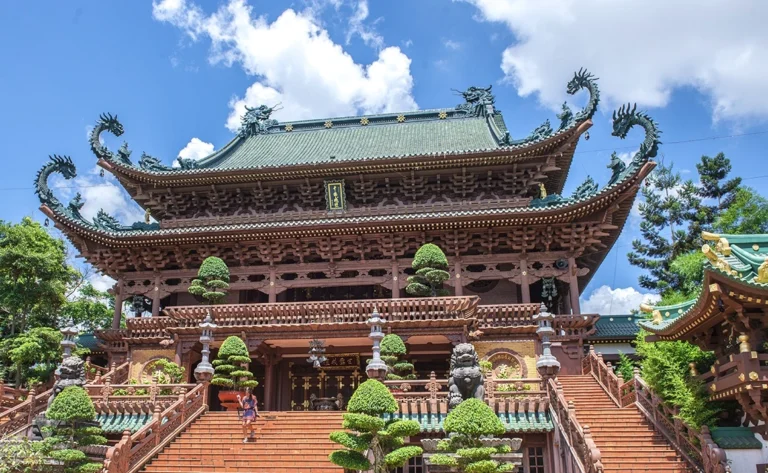
Sprawling across the strategic far western coordinates of the Dak Lak plateau and extending into a portion of Dak Nong province, Yok Don National Park emerges as a deep green rampart, converging some of Southeast Asia’s most pristine cultural and geological strata. Not only is it a world biosphere reserve featuring Vietnam’s one-of-a-kind deciduous dipterocarp forest ecosystem, but in traditional historical and geographical terms, Yok Don is a vital bend along the downstream Serepok River—a hydrological artery with a remarkably reverse current, cradling legends of cultural exchange among indigenous Austroasiatic and Austronesian-speaking ethnic groups.
Viewed from the perspective of feng shui and natural topography, Yok Don possesses a picturesque yet solemn and wild landscape. The terrain is relatively flat, interspersed with gentle low hills and expansive grass fields nourished by a dense network of streams, with the Serepok River acting as the sacred backbone. Under the lens of feudal historical records, especially the pages documented in the Dai Nam thuc luc and Dai Nam nhat thong chi by the Nguyen Dynasty’s National History Bureau, this land once belonged to the western borderlands of Bien Hoa garrison, subsequently undergoing administrative adjustments across the periods of Quy Hoa prefecture and Van Ca circuit. During the reigns of Emperors Minh Mang and Tu Duc, as the Hue court began demarcating borders, collecting taxes, and subduing local chieftains—who governed the upland regions of the Dak Rong and Serepok rivers—Yok Don was officially recognized as a frontier region of significant strategic importance.
Going back in time to earlier eras, although situated outside the direct administrative control of the central Dai Viet court during the autonomous feudal periods from the Ly, Tran, Le, and Tay Son dynasties, Yok Don remained a vibrant cultural melting pot. It was once a zone of mixed influence among indigenous principalities and a vital survival space for the intertwined alliance of Ede and M’nong villages, along with the imprints of Lao and Khmer migrants. Along both banks of the legendary Serepok River, dugout canoes and merchants shuttling back and forth to trade elephant tusks, rhinoceros horns, and agarwood wove a lively trans-Indochinese trade trail centuries ago.
Entering the 19th century and the first half of the 20th century, under the Nguyen Dynasty from the time of Gia Long onward, the loose tributary relationship between the court and the Buon Don chieftains turned this area into one of the most bustling trading hubs in the highlands. Going beyond commercial and topographical value, when history entered the fierce stage of the resistance war against foreign invaders (1945–1975), the mountainous forests of Yok Don and Buon Don took on the sacred mission of a strategic revolutionary base belonging to Region 5 Party Committee and the Dak Lak Provincial Party Committee. This land witnessed the tireless footsteps of liaison officers, sheltering vital military supply transport routes and testifying to the resilient vitality and courageous spirit of our army and people.
Today, from the perspective of heritage management agencies and the press, Yok Don National Park not only preserves the unique geological value of its characteristic dry deciduous forest type, but also stands as a living museum of cultural anthropology. Every Lagerstroemia and crape myrtle tree, every winding turn of the Serepok River whispers the story of a unique coordinate—where a heroic past and a present conservation effort blend into an enduring symbol of Vietnam’s natural heritage.
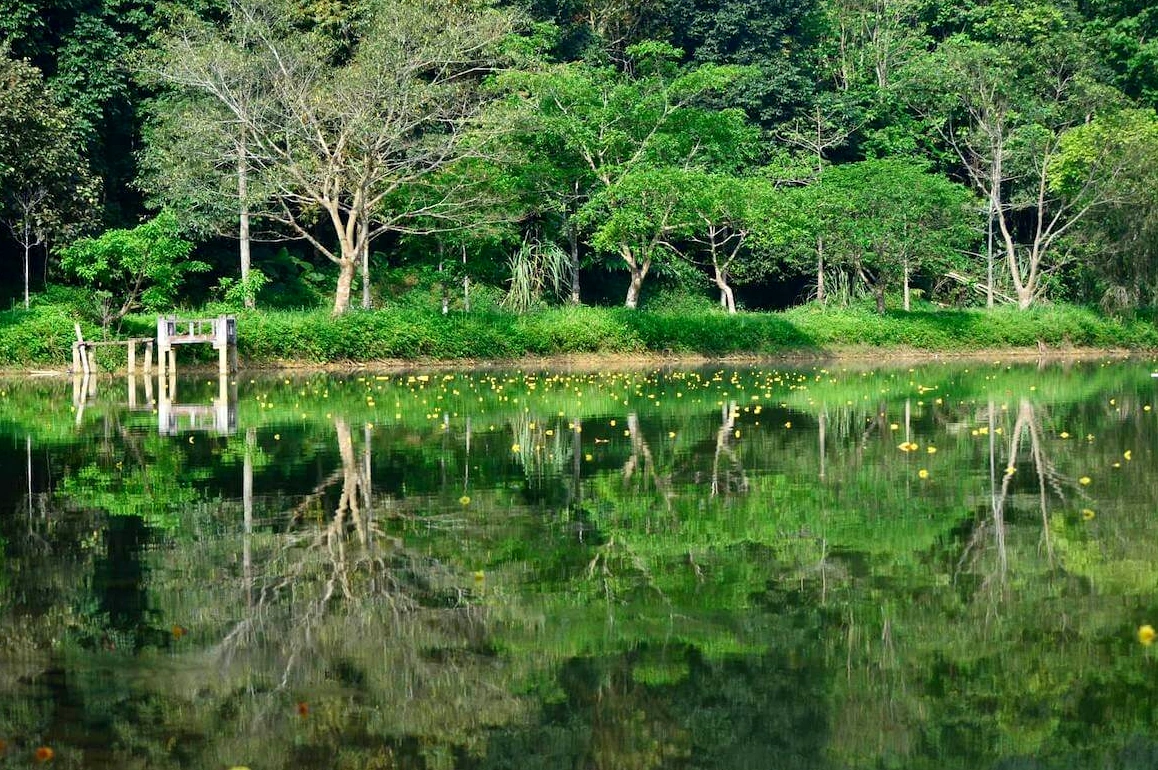
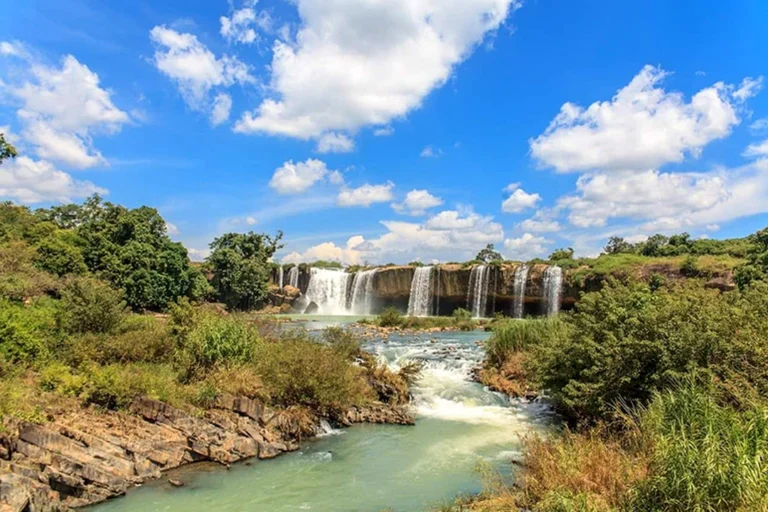
Nesting amidst the majestic Central Highlands mountains, Yok Don National Park opens up a proud, pristine natural space where Vietnam’s singular dipterocarp forest ecosystem dons a miraculous cloak of transformation through each shedding season. Completely distinct from lush green tropical rainforests, Yok Don’s dipterocarp forest carries an open, powerful, and epic beauty featuring rugged Lagerstroemia trees with gnarled trunks reaching upward and roots delving deep into ancient basaltic red soil. Beneath the sparse canopy tiers, golden sunbeams filter down onto the carpet of tall grass and ferns, creating a landscape painting that is both solemn and poetic. The highlight defining the uniqueness of the landscape here is the legendary Serepok River—the only backward-flowing river in Vietnam, winding softly around the base of Yok Don mountain, nourishing fertile floodplains and carving spectacular bends amid boundless sky and water.
Alongside its natural wonders, the indigenous cultural space in Yok Don’s buffer zone is manifested through the traditional longhouse architecture of the Ede and M’nong peoples, alongside the rustic wood-carving art of the Lao people in Buon Don. These longhouses, stretching dozens of meters like giant dugout canoes sleeping quietly by the forest edge, feature turtle-shell-curved thatched roofs and wooden staircases intricately carved with elephant tusks or mother’s milk breasts. Every architectural detail reflects the indigenous inhabitants’ profound harmonious worldview with the universe, where humans and spirits coexist under a single roof of the great forest. Local artisans continue to preserve traditional weaving techniques and grave-house statue carving, creating an invaluable material culture depth that perfectly complements the wild beauty of the national park’s ecosystem.
To capture million-view frames imbued with the soul of the Central Highlands through their lenses, veteran travel photographers and journalists often pass around two classic shooting angles. The first angle lies on a high hill slope looking down at the winding bend of the Serepok River at dawn (from 5:30 AM to 6:30 AM); at this time, a delicate mist lingers over the water surface, combining with early morning rays piercing through the forest canopy to create a deeply magical optical effect. The second angle is the riverside floodplain or expansive grassy field at sunset (from 4:30 PM to 5:30 PM), when sunlight shifts to a vibrant reddish-orange hue, casting the silhouettes of withered, slender trees against the calm water, creating a contemplative, heroic yet deeply lyrical scene that captivates any traveler passionate about photography.
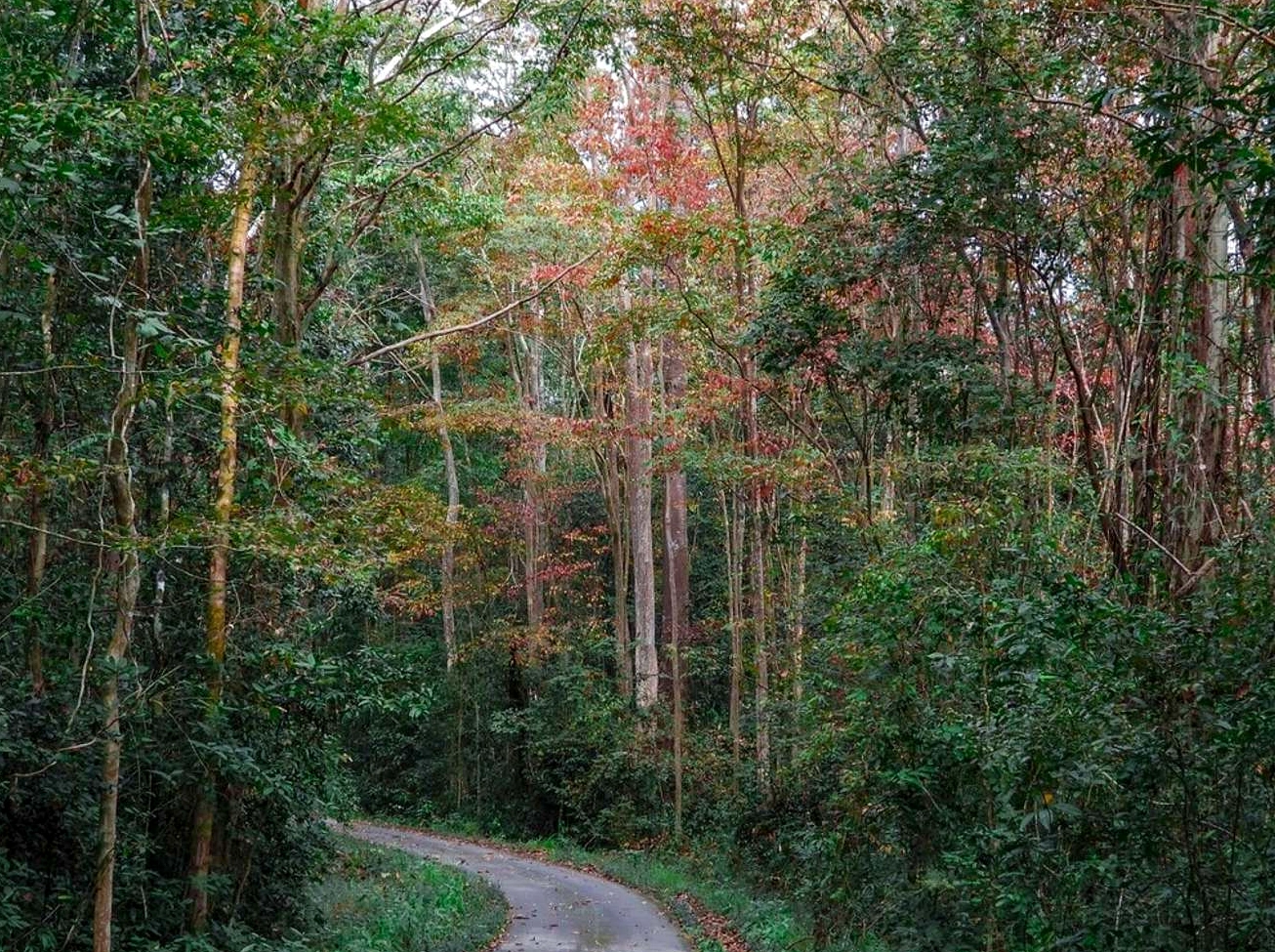
Setting foot in Yok Don National Park, travelers feel as though they have stepped into another dimension where time seems to stand still amidst the endless green of the Central Highlands. The opening experience of this exploratory journey is the mountain-climbing trek to conquer the legendary Yok Don peak. Amidst bright golden sunshine and the sound of forest winds echoing through ancient tree canopies, every step uphill challenges one’s stamina, filling the lungs with pristine air originating from millions of precious tree trunks. Fatigue suddenly vanishes when overcoming rugged trails to gaze into the distance, taking in a magnificent, boundless expanse of rolling hills and deep valleys lurking in the misty haze of dawn or the glowing red sunset of late afternoon.
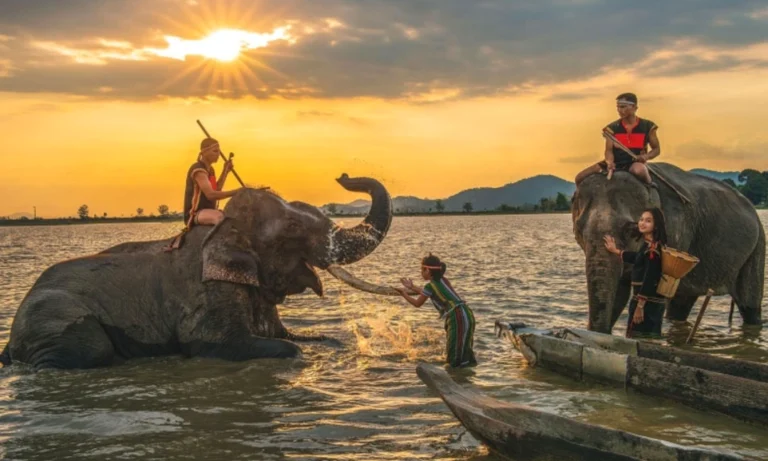
Leaving the mountain trails, the legendary Serepok River beckons travelers with a serene yet poetic experience: riding dugout canoes and gliding smoothly over the swirling waters of the remarkably backward-flowing current. Sitting on the boat to admire the scenery, listening to the sound of water lapping against the hull mingled with birds chirping in the riverside trees, visitors can fully appreciate the wild, primitive beauty of this rare wetland ecosystem. That river not only nourishes a rich biosphere but also carries heroic epic tales and legends about the bravery of generations of chieftains and indigenous ethnic communities bound flesh-and-bone to this land through the ages.
Going beyond natural landscapes, Yok Don also preserves profound spiritual and indigenous cultural values. Stopping by traditional villages around the region, visitors have the opportunity to worship in sacred spaces and learn about the animistic beliefs of the Ede, M’nong, and Lao peoples. The resounding sound of gongs echoing through the mountains, flickering pink fires beside traditional longhouses, and the whispering stories told by village elders beside aromatic jars of fermented rice wine impart an indescribable stillness in everyone’s soul. That is the moment when humans feel deeply connected with the earth, their ancestors, and the roots of traditional culture.
A complete journey exploring Yok Don would be incomplete without mentioning the renowned culinary flavors deeply infused with the essence of the great forest. Visitors can savor fragrant, chewy bamboo-tube rice roasted in fresh bamboo cylinders, grilled local chicken dipped in spicy bird’s eye chili salt, slightly bitter yet sweet-aftertaste wild bamboo shoot soup, and dishes prepared from Serepok River specialties bearing the unique flavor of the local people. Enjoying cuisine in a green, tree-shaded space amid the rustling wind and the warm, rustic hospitality of the locals leaves every visitor overwhelmed, moved, and holding unforgettable memories of an invaluable natural and cultural heritage region.
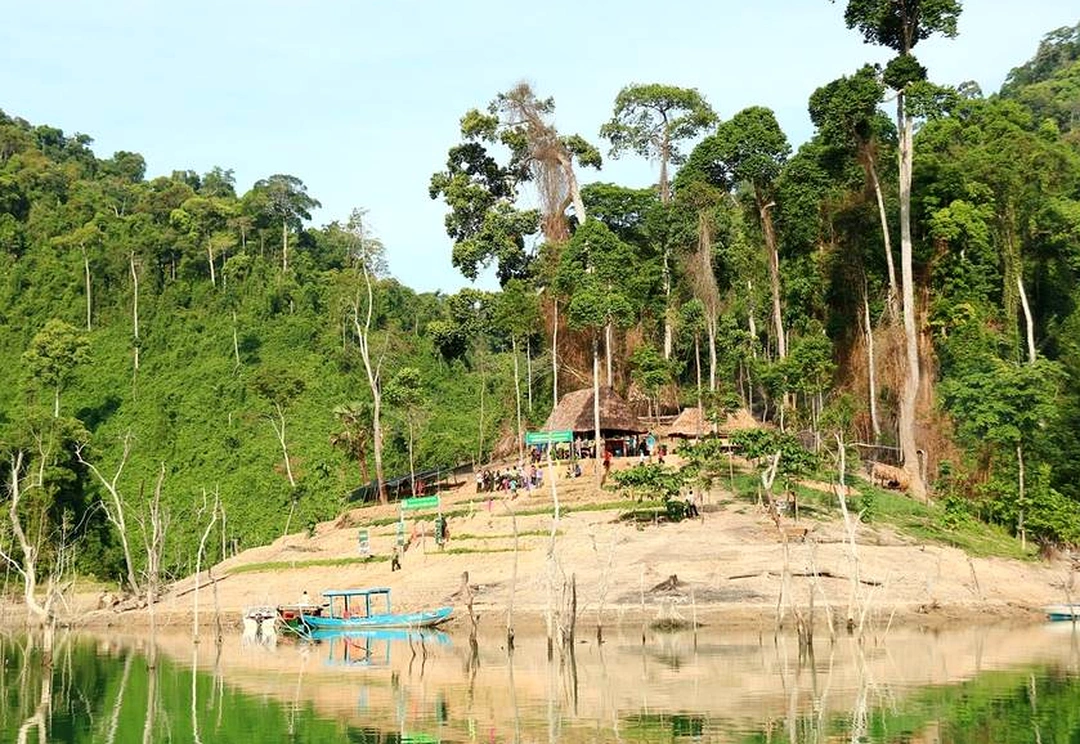
Welcome to your ultimate pocket guide when planning an exploration of Yok Don National Park, one of the country’s largest special-use forests, prominent for its unique dipterocarp forest ecosystem and indigenous culture rich in Central Highlands identity. To ensure your wildlife exploration journey goes smoothly and completely, grasping core information regarding timing, costs, travel routes, and code of conduct is essential.
Regarding the ideal time to visit, the dry season from November to April of the following year is considered the most perfect period. At this time, Central Highlands weather is dry, sunny, and bright, and forest trails are easy to navigate, favoring trekking, hiking, mountain biking, or wildlife-watching tours. Conversely, the rainy season from May to October brings a lush green appearance, swollen river and stream systems, though dirt paths can become slippery.
As for opening hours, Yok Don National Park welcomes visitors every day of the week, from early morning at 7:00 AM to late afternoon at 5:00 PM. Regarding entrance fees, the management board currently applies very affordable rates to encourage ecotourism development: basic entrance tickets range from 20,000 to 60,000 VND depending on whether visitors are adults or students; meanwhile, specialized services such as hiring local guides, riding dugout canoes on the Serepok River, renting bicycles, or joining ethical elephant observation programs have separate listed price schedules at the central operations gate.
The optimal travel route from Buon Ma Thuot city center is heading northwest along Provincial Road 1, passing Cuoi Bridge, and heading straight towards the Buon Don area for a total distance of about 45 kilometers. Visitors can easily ride motorcycles to enjoy the feeling of touring through vast cashew and pepper plantations, choose the Buon Ma Thuot to Ea Sup/Buon Don bus route, or travel by private car and taxi with a travel time of under an hour and a half.
Finally, when stepping into Yok Don’s sacred space and specialized terrain, you must note strict adherence to dress code regulations. Prioritize neat clothing with good sweat absorption, wear sneakers or hiking boots with high traction to traverse rocky slopes and leaf litter. Avoid wearing overly short or brightly colored clothing when visiting surrounding traditional villages, and always maintain general sanitation without littering to protect the pristine ecosystem of the precious Central Highlands dipterocarp forest.
To enjoy a complete vacation and fully admire the beauty of Yok Don National Park without worrying about arranging transportation, booking entrance tickets, or transit schedules, travelers can choose premium all-inclusive Dak Lak tour packages from VDS Travel. Each tour is optimized for check-in timing when landscapes are most vibrant, accompanied by a team of guides deeply knowledgeable about local culture and top-tier hotel and dining service standards.