Viewed through the lens of traditional feng shui and the urban planning principles of Ming and Qing imperial geomancers, Wangfujing Pedestrian Street occupies a vital strategic coordinate on the historical map of Beijing. Situated just east of the Forbidden City and bordering East Chang’an Avenue, this corridor was likened by the ancients to a “Golden Vein” bolstering the central dragon spine of the imperial palace. Within the capital’s geomantic layout, while the north–south ceremonial axis passing through the Forbidden City and Tiananmen symbolizes supreme, static, and solemn sovereignty, Wangfujing represents dynamic vitality—a place where thriving commercial energy converges to nourish the life of the capital. The district links closely within a harmonious cultural quadrangle formed by the majestic Forbidden City, expansive Tiananmen Square, serene Beihai Park, and bustling Wangfujing, creating a rare balance of yin and yang at the heart of a sprawling metropolis.
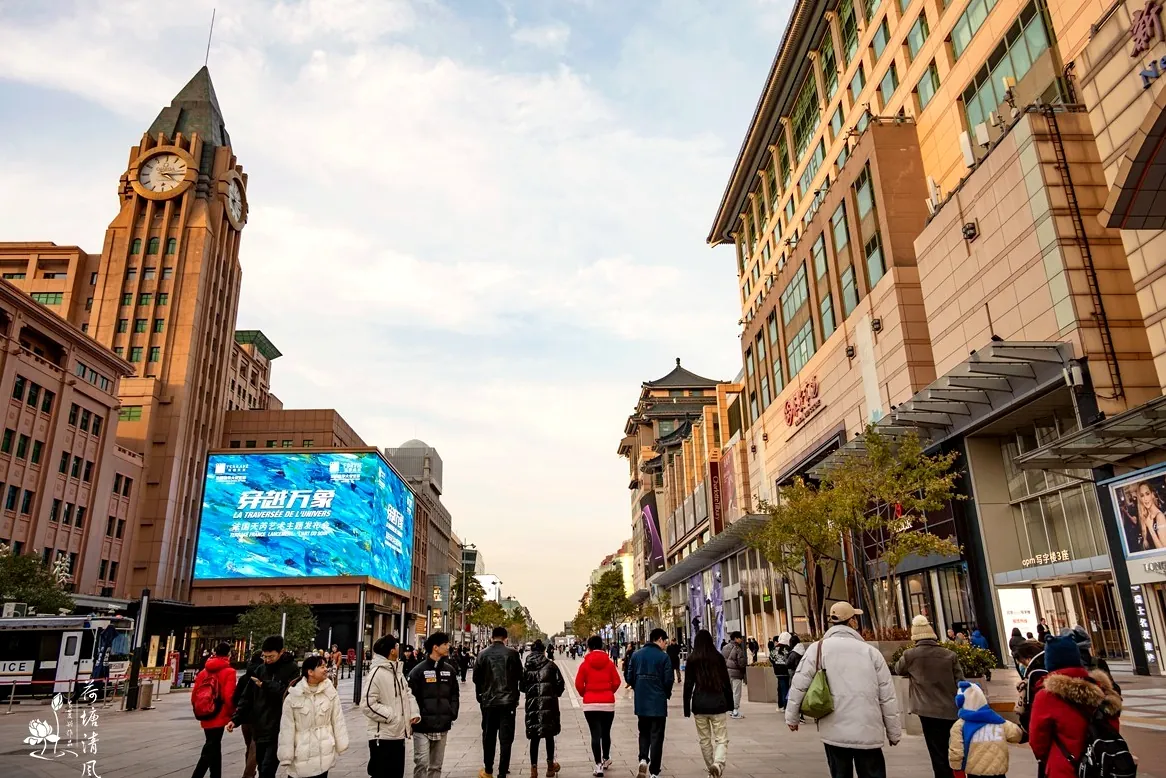
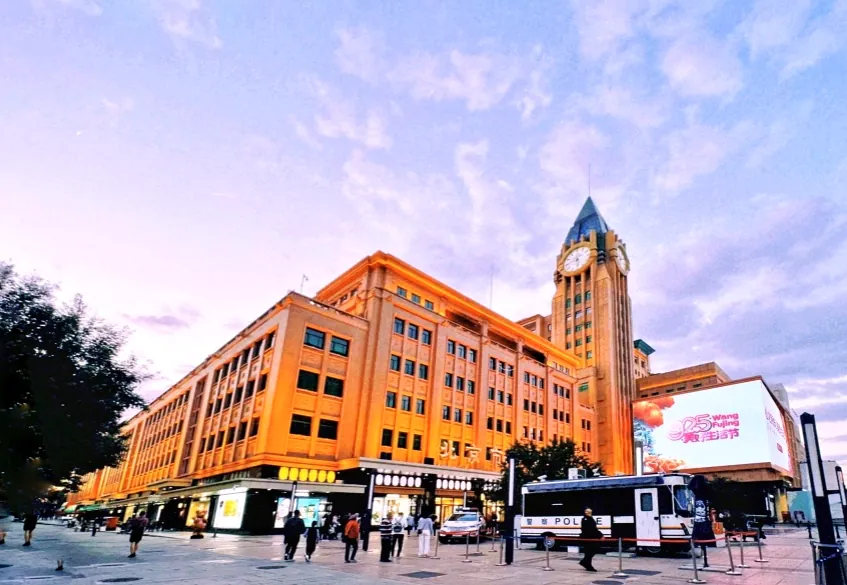
The urban pulse in central Wangfujing comes alive through a striking visual contrast between contemporary architecture and endless streams of pedestrians. Immediately catching the eye is the classic clock tower rising with crisp, angular lines against the blue sky, balanced harmoniously by massive high-tech LED screens wrapping the facades of luxury shopping malls. Smooth, expansive granite paving welcomes thousands of visitors and local residents strolling day and night, turning the avenue into an unbroken current of cultural exchange and retail energy.
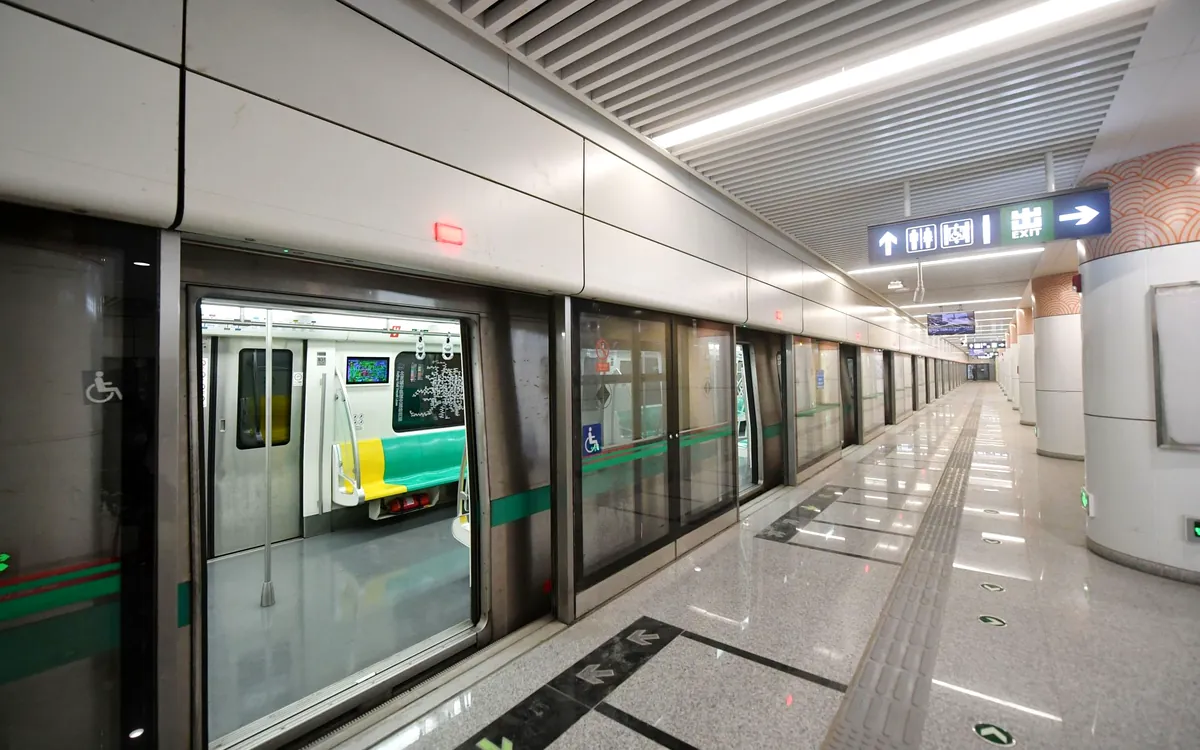
Wangfujing’s layout exemplifies the art of seamlessly integrating historic urban space with modern transit infrastructure. Stretching more than a kilometer along level ground, the pedestrian boulevard sits atop an intricate underground transit network operating with clockwork precision. Beijing Subway Line 1—China’s oldest subway line running along East Chang’an Avenue—and the modern Wangfujing Station act as a colossal funnel channeling passengers from every corner of the city directly into the heart of the district. Intersecting with intercity rail lines and high-speed rail networks radiating from Beijing’s major terminals, this transit web allows travelers to step from distant gateways straight into the vibrant center of Dongcheng District within minutes.
Despite pulsing with the energy of a premier commercial and entertainment hub, Wangfujing’s streetscape and microclimate preserve a subtle harmony with northern nature. Ancient Chinese scholar trees and rows of ginkgos lining side lanes cast cool, dappled shade during bright summer days before scattering carpets of burnished gold across dark paving stones when crisp autumn winds blow down from Beihai Lake and Jingshan Hill. In the depths of winter, warm steam drifting from traditional eateries mingles with delicate snowflakes resting along the glazed tile eaves of historic storefronts, crafting an atmosphere that is at once grand, nostalgic, and warmly inviting.
Serving as the most prosperous commercial spine of the capital, Wangfujing Pedestrian Street is designed as a wide, granite-paved open boulevard stretching north from East Chang’an Avenue to the Dengshikou intersection. Along this kilometer-long promenade, visitors immediately encounter a dramatic architectural dialogue: the solid geometric forms of mid-twentieth-century Neoclassical and Art Deco buildings stand in harmonious counterpoint to the reflective glass curtain walls and stainless-steel frames of next-generation mega-malls. More than simply accommodating vast pedestrian crowds, this open civic corridor functions as an exemplary showcase of urban design where heritage and modernity thrive side by side.
Rising prominently near the midpoint of the avenue, the facade of the Beijing Department Store commands attention with its dignified blend of Neoclassical and Art Deco lines. Its defining visual signature is the central clock tower standing tall against the northern sky, its four faces chiming steadily across decades of transformation. In front of this stately gray-brick and granite landmark opens a broad public plaza where unhurried strollers pass by, creating a lively yet grounded focal point along the iconic shopping street.
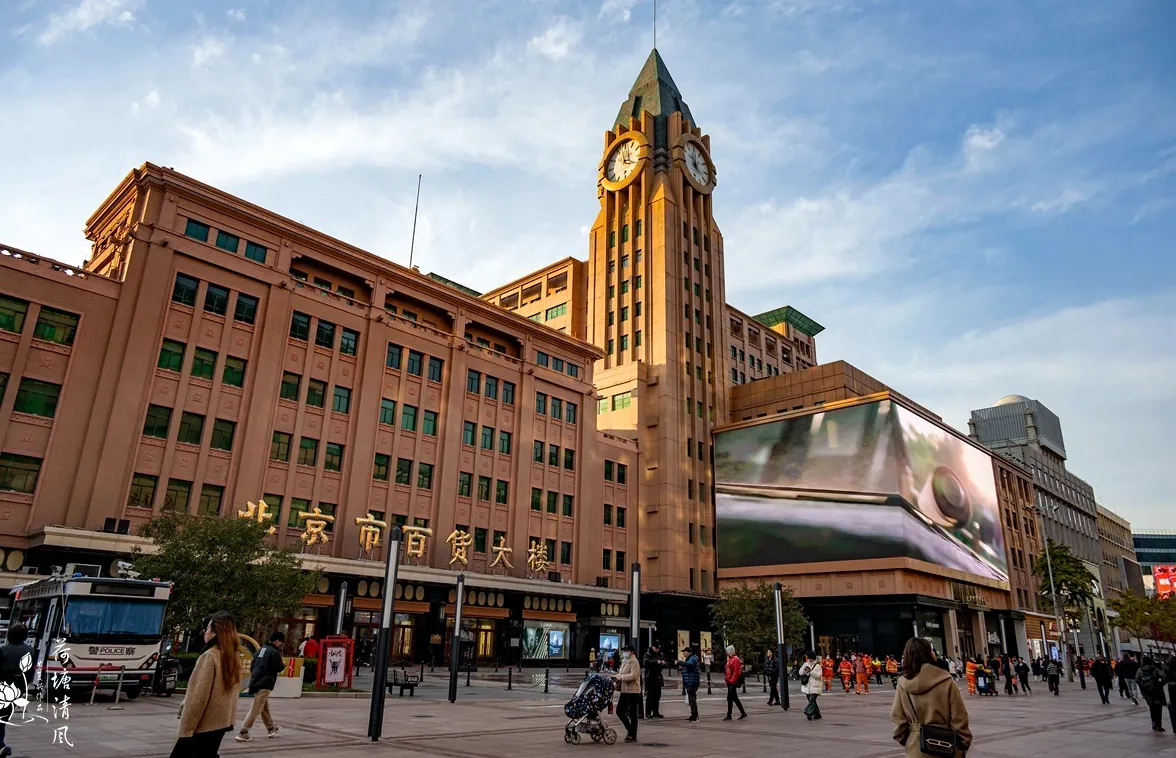
Built in the mid-twentieth century, the Beijing Department Store is celebrated as the flagship department store of the modern era in China, forever linked to legendary confectioner Zhang Binggui and his uncanny skill at weighing candies to the exact gram by hand. Yet Wangfujing’s architectural tapestry reaches back far earlier: just a few hundred meters to the north stands St. Joseph’s Church (Dongtang / East Church), a magnificent Romanesque-Baroque sanctuary originally founded during the Shunzhi reign of the Qing Dynasty and rebuilt in 1904. Distinguished by three grand Roman archways, finely carved Corinthian columns, and solemn gray stonework, the church offers a tranquil spiritual sanctuary set apart from the bustling shoppers outside.
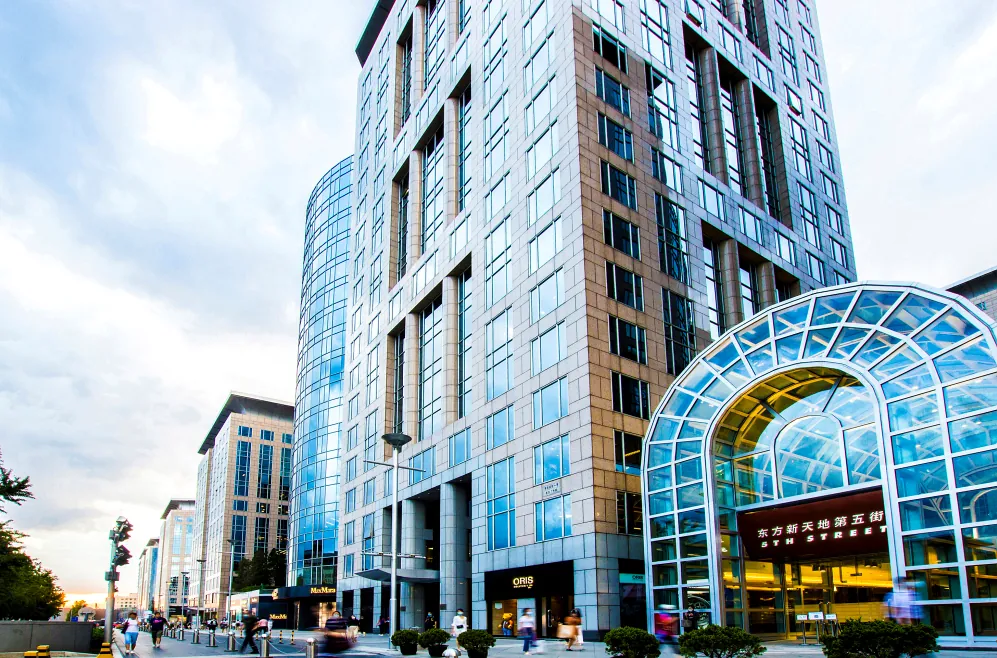
Providing a sleek counterpoint to historic landmarks is a lineup of monumental contemporary retail complexes. Anchoring the southern gateway at Chang’an Avenue is Oriental Plaza—a massive mixed-use complex spanning hundreds of thousands of square meters and ranking among Asia’s largest enclosed commercial developments. Just steps away, Beijing APM makes a bold architectural statement with expansive tempered-glass facades, daylight-flooded atriums, and multi-level express escalators tailored to the round-the-clock lifestyle of international shoppers.
This seamless transition from classic stone arches to the faceted glass facades of Beijing APM and Oriental Plaza reflects thoughtful civic curation. Freed entirely from motor vehicles, the broad avenue features natural stone seating, leafy shade trees, bronze sculptures depicting everyday scenes of old Beijing life, and intelligent recessed lighting. Wangfujing thus transcends its role as a premier retail hub to serve as a living open-air architectural museum chronicling Beijing‘s extraordinary evolution from an ancient imperial capital into a global economic powerhouse.
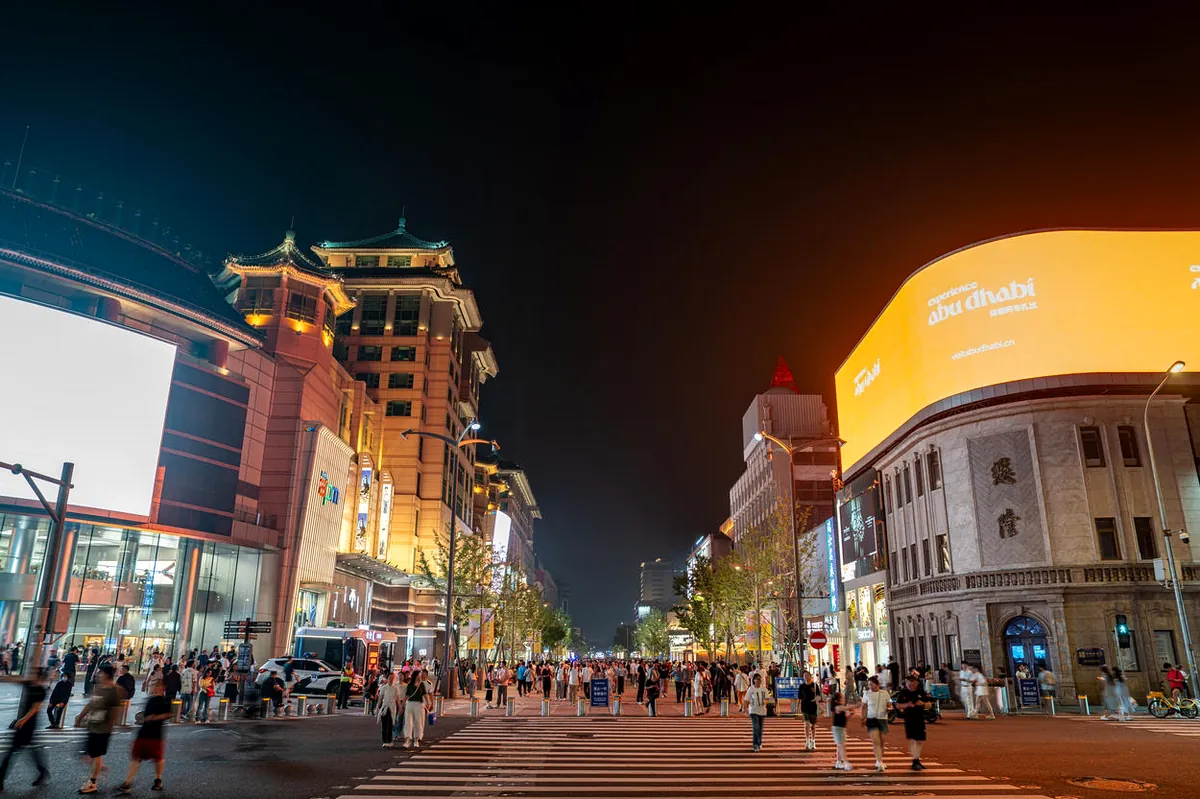
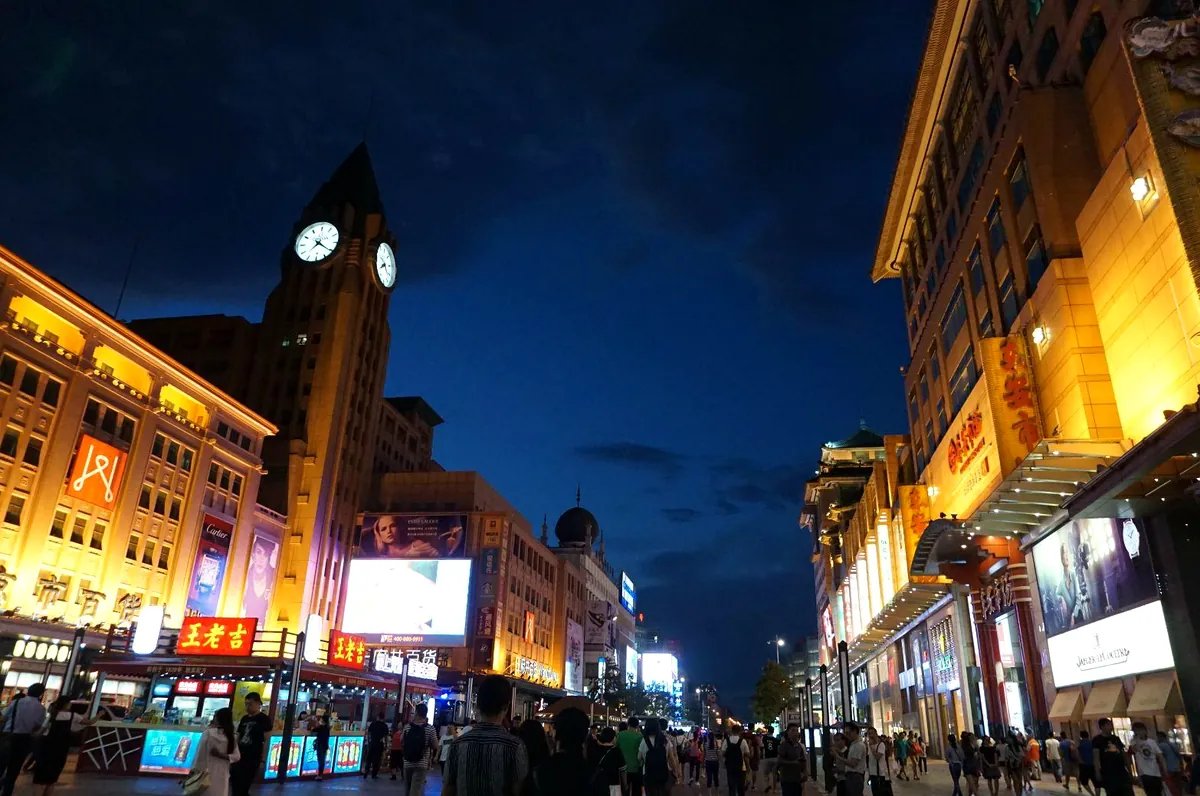
As twilight settles behind the glazed tile roofs of the Forbidden City, Wangfujing Boulevard undergoes a dazzling transformation from a busy daytime retail district into a radiant nocturnal stage of light art. Along this historic artery—which once housed ten princely mansions during the Ming Dynasty’s Yongle reign—nightfall brings not quietude, but an iconic burst of metropolitan glamour. Synchronized architectural lighting running the full length of the kilometer-long promenade turns monumental buildings into glowing sculptures. Warm golden floodlights grazing classical cornices blend with vibrant neon spectra from contemporary malls, composing a multi-layered visual spectacle that captures Beijing’s economic vitality and consumer culture.
A major highlight drawing crowds after dark is the visual artistry displayed across giant naked-eye 3D LED screens anchoring key intersections such as Beijing APM and WF Central. Here, public space doubles as an open-air digital gallery where Song-dynasty ink-wash landscapes, swirling dragons, and surreal kinetic graphics appear to leap beyond building corners into the pedestrian air above. Meanwhile, the historic facade of the mid-twentieth-century Beijing Department Store comes alive with dynamic projection mapping, recounting the evolution of Chinese commerce across eras while honoring its original architectural dignity.
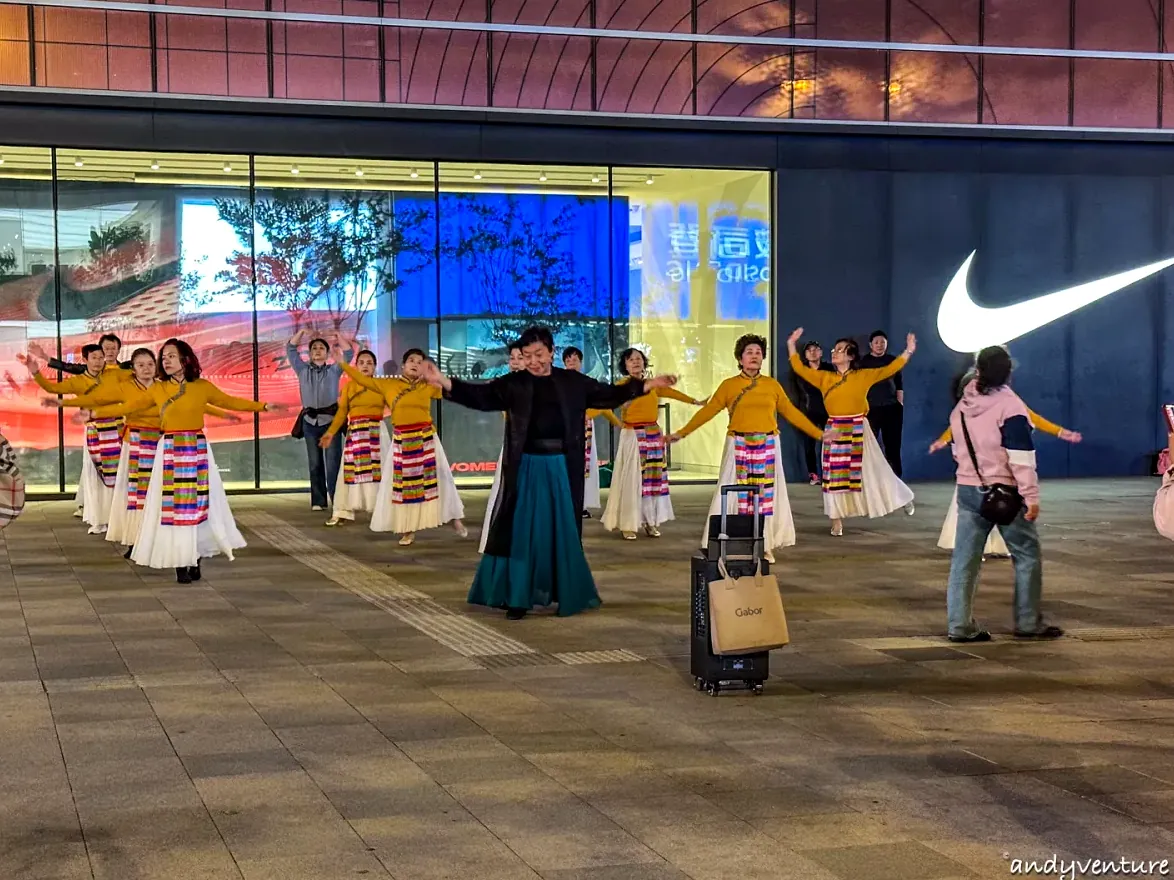
Alongside high-tech illumination, Wangfujing’s nightlife is animated by live street performances and cultural showcases. Beneath softly lit ancient scholar trees, musicians blend traditional Chinese instruments such as the *pipa* and *guzheng* with contemporary violin melodies, creating an enchanting cross-cultural soundtrack. In open courtyards within cultural complexes, visitors can also catch brief Peking Opera excerpts performed in ornate costumes by young artists, bringing classical theatrical heritage out of grand opera houses and directly into everyday street life.
After sunset, retail exploration evolves into a multi-sensory adventure thanks to virtual reality complexes and immersive art spaces. Multi-thousand-square-meter digital experience centers transport visitors back in time, recreating scenes of Qing-dynasty guards patrolling around the sweet-water well of a princely mansion or bustling Republican-era markets in 3D VR. From futuristic showrooms featuring robotic baristas to experiential cultural concept stores, Wangfujing by night demonstrates how Beijing keeps historical memory alive through contemporary rhythm and pioneering technology.
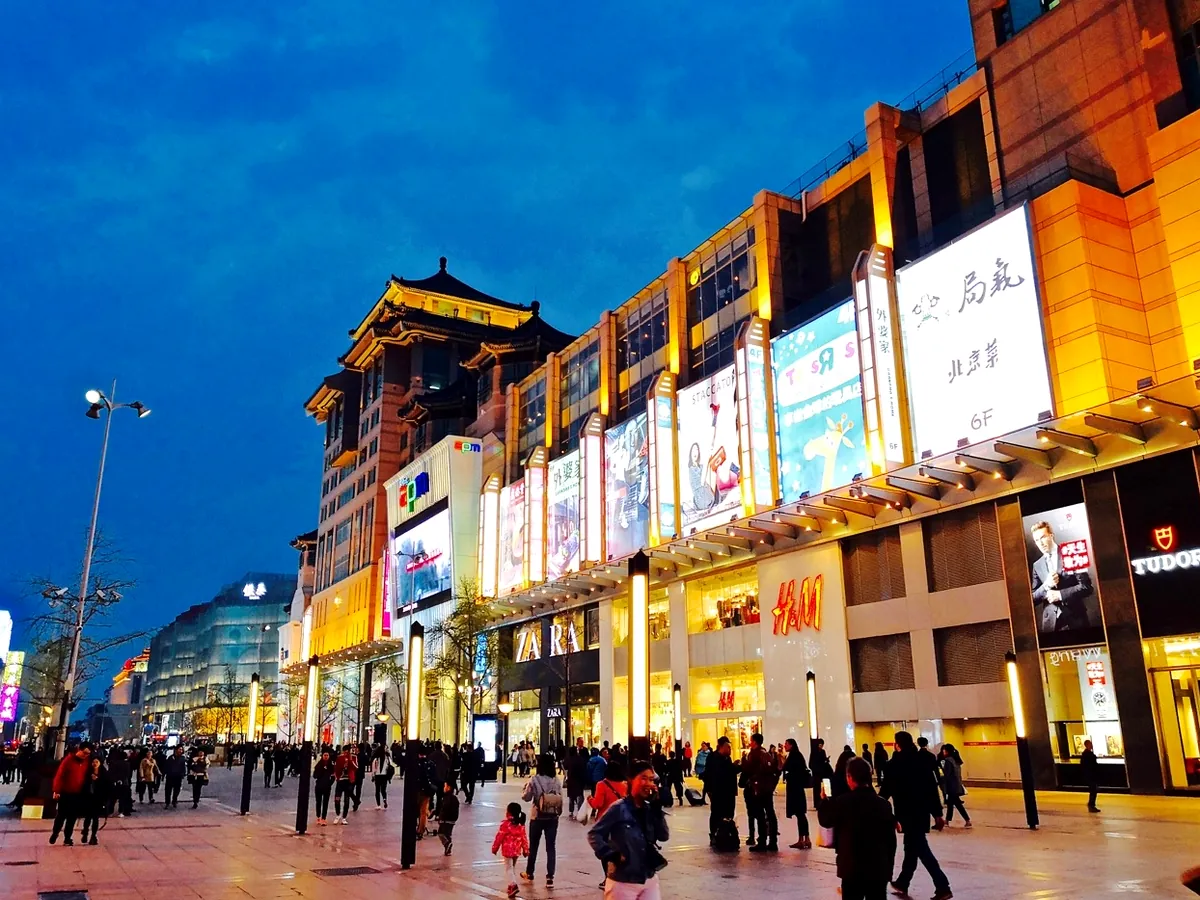
As evening deepens, Wangfujing Boulevard takes on the magnetic allure of a capital that never sleeps. Reflective glass retail facades shimmer with colorful lights alongside sloped tiled rooflines echoing imperial heritage, while illuminated storefronts of global fashion brands like Zara and H&M frame steady streams of strollers—and just beyond the modern glamour lie some of Beijing’s most celebrated culinary traditions.
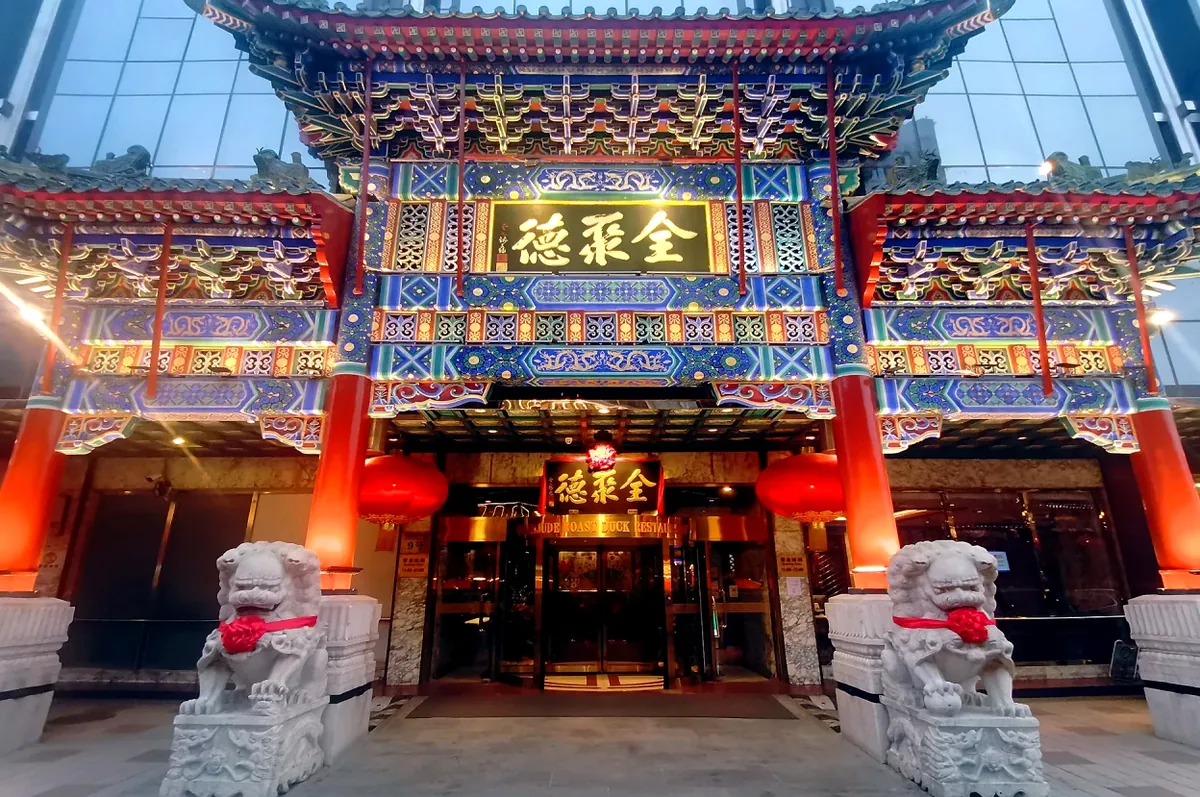
At the center of Wangfujing’s gastronomic map stands heirloom imperial cuisine, crowned by world-famous Peking Roast Duck at the historic Quanjude restaurant. Founded during the Tongzhi reign of the Qing Dynasty by Yang Quanren, this culinary institution established the gold standard of capital dining. Ducks are suspended and roasted over open flames fueled by aged jujube and pear fruitwood, imparting a glossy amber-mahogany skin that shatters crisply while rendering out subcutaneous fat. Master chefs carve paper-thin slices tableside to be wrapped inside delicate lotus-leaf pancakes with crisp white scallions, julienned cucumber, and rich, velvety sweet bean sauce.
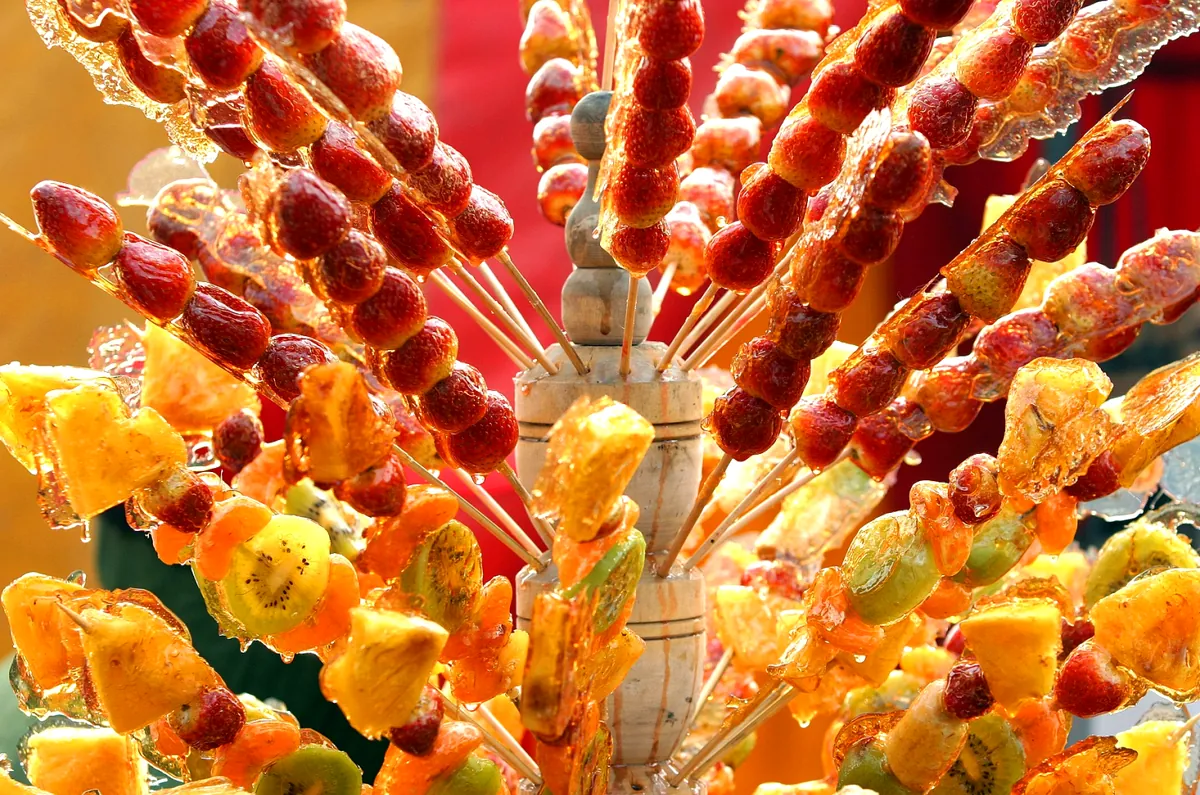
Stepping away from formal banquet halls, the avenue’s everyday culinary soul shines through beloved traditional snacks cherished across generations. Bright crimson *tanghulu* skewers—juicy hawthorn berries coated in molten, glass-crisp sugar syrup—deliver a satisfying crunch followed by bright sweet-and-tart refreshment in the crisp northern air. Nearby, rustic ceramic jars of old-Beijing yogurt sealed with white paper caps and rubber bands invite passersby to pause for a spoonful of custard-thick, clean-tasting fermented milk. Rounding out the street-food chorus is *lüdagun* (“rolling donkey”), soft glutinous rice dough rolled around smooth red bean paste and dusted generously in golden roasted soybean flour resembling dust kicked up by trotting hooves.
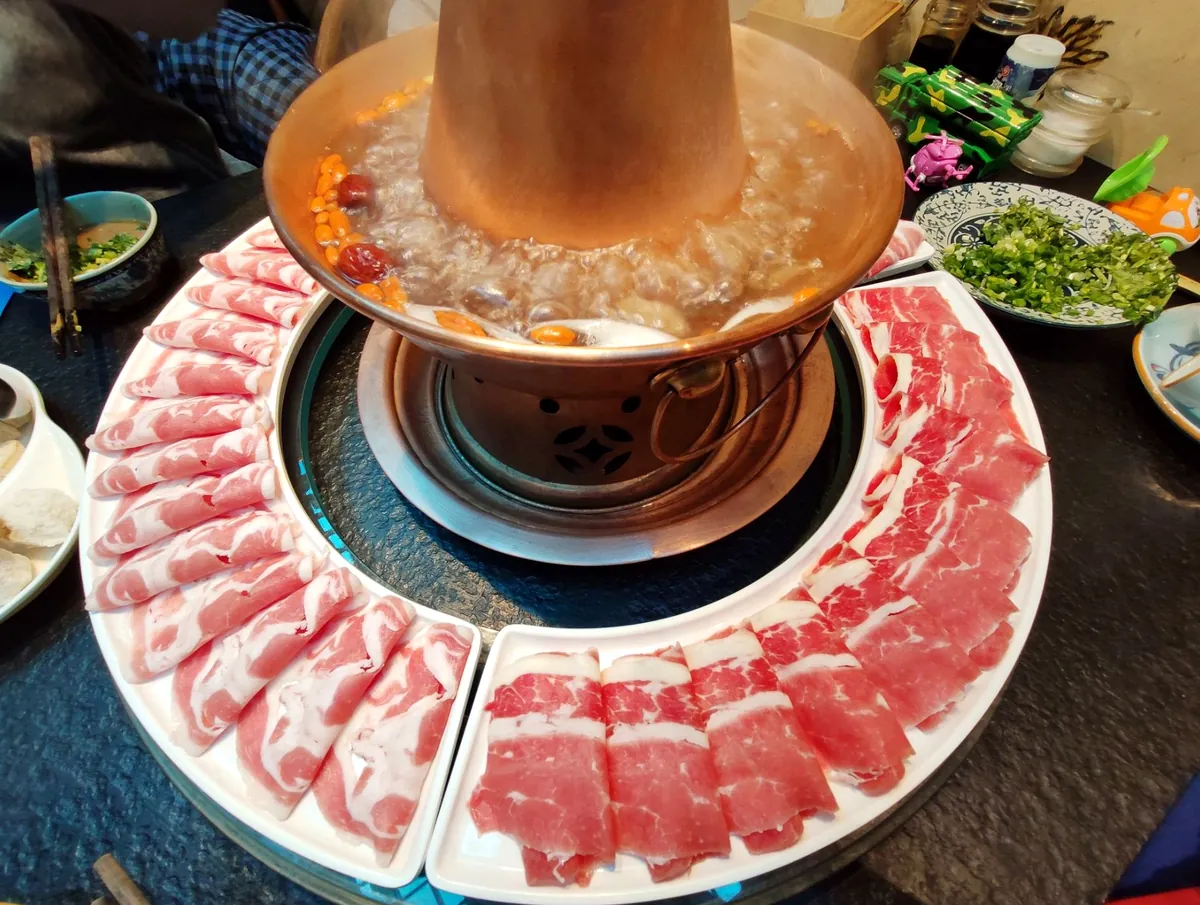
Wangfujing’s time-honored culinary heritage reaches its fullest expression when you wander into the narrow *hutong* alleys branching off the main boulevard, where family-run signs have endured for generations. Beneath moss-tinted gray tiled roofs, fragrant steam rises from classic charcoal-fired copper mutton hot pots. Paper-thin slices of fresh grassland lamb need just seconds swished through clear simmering broth before being dipped into creamy sesame paste seasoned with fresh cilantro, pickled chive flowers, and a drop of fiery chili oil. Inside these intimate courtyard lanes, Beijing’s culinary balance of yin and yang quietly endures alongside the fast-paced metropolis outside.
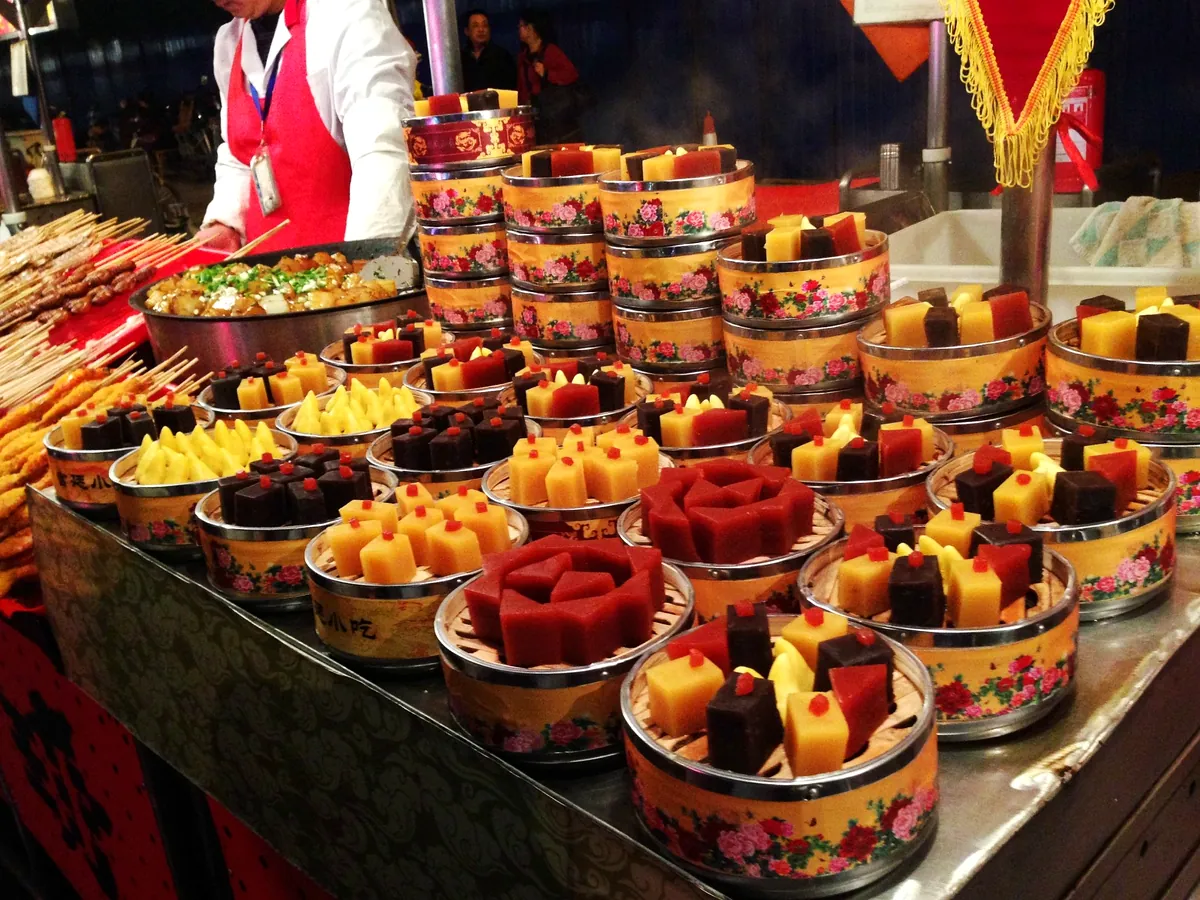
Exploring the interconnected lanes around Wangfujing’s main axis, travelers are immediately drawn to traditional dim sum stalls billowing with fragrant steam. Stacked neatly inside handcrafted bamboo steamer baskets patterned with classic weaves are delicate steamed pastries—from smooth, gently sweet red bean buns to refined, nutty mung bean cakes—evoking imperial pastry traditions shared warmly on the street.
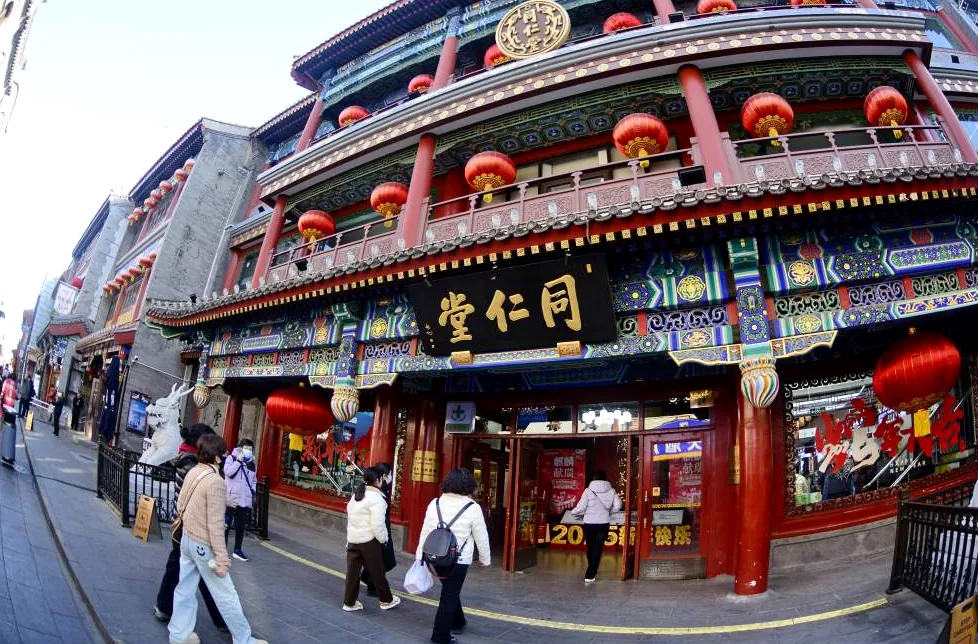
To experience the full rhythm of this famed commercial boulevard, thoughtful timing makes all the difference. While the pedestrian avenue itself remains open 24 hours a day for strolling, most department stores and historic heritage shops—such as the renowned traditional Chinese medicine pharmacy Tong Ren Tang and bespoke cloth shoe maker Neiliansheng—operate from roughly 9:30 AM to 10:00 PM. Visitors are strongly encouraged to spend at least one late afternoon through evening here, when neon reflections across polished granite paving merge with rows of glowing red lanterns to create an unforgettable metropolitan atmosphere.
Getting to Wangfujing is effortless via Beijing’s efficient subway network. Simply take Metro Line 1 or Line 8 to Wangfujing Station and follow the underground concourse exits leading directly into Oriental Plaza. One essential practical tip every visitor should prepare for is Beijing’s nearly universal cashless economy: virtually every transaction, from street-side snack stalls to famous roast duck restaurants, runs via QR code payments on Alipay or WeChat Pay, so be sure to link your international credit or debit card to these apps prior to departure.
Alongside trip preparation, understanding current entry policies unlocks valuable travel flexibility. Beijing offers a 144-hour visa-free transit policy for citizens of eligible countries arriving through Beijing Capital International Airport or Beijing Daxing International Airport—providing six full days to explore the Forbidden City, take in views from Jingshan Park, and enjoy leisurely shopping and dining along Wangfujing without applying for a standard tourist visa.
Amid the dazzling energy of a major open-air shopping center, staying mindful ensures a smooth visit. Exercise caution if approached on quieter side corners by strangers offering unverified “tea ceremony” invitations or cut-rate jade and silk deals. To maximize sightseeing time and avoid unexpected detours, choosing itineraries committed to strict shopping-free standards is always the wisest approach. To savor Beijing’s imperial flavors and cultural landmarks effortlessly without worrying about language barriers or transit logistics, explore an all-inclusive China tour package crafted for a seamless, deeply memorable journey.