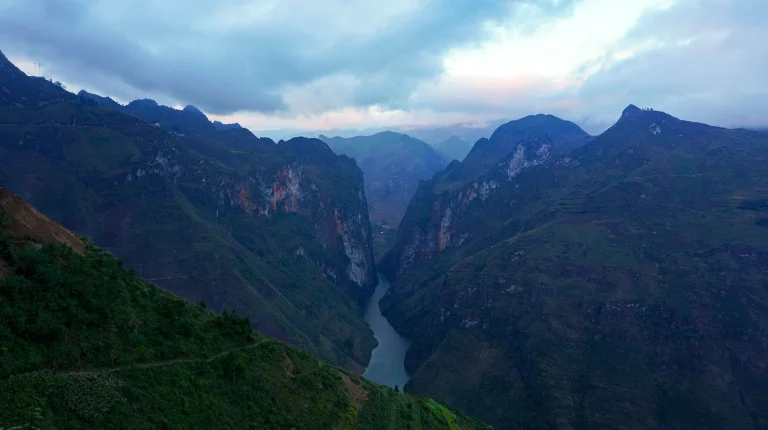
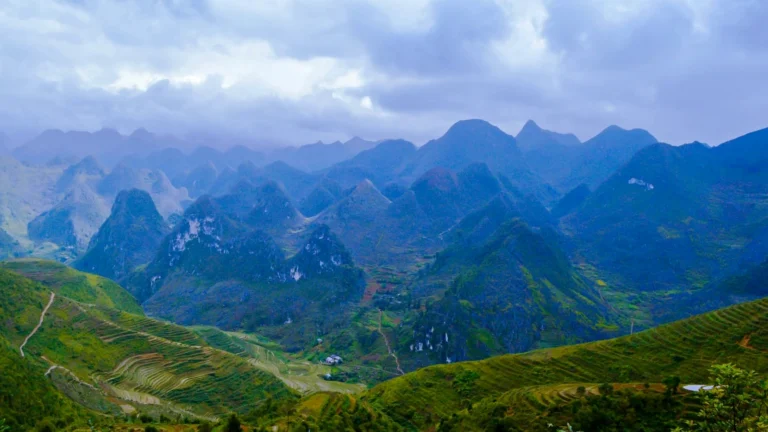
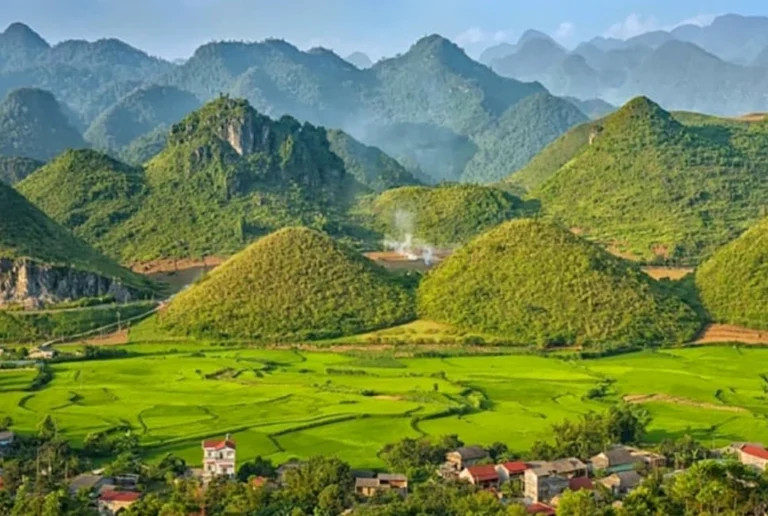
Located at the northernmost tip of Vietnam, Dong Van Old Quarter emerges as a tranquil heritage realm nestled in the heart of the Karst Plateau, seemingly shrouded in clouds on all four sides. Boasting a unique position tucked away inside a jagged limestone valley, this land was once a vast primeval seabed hundreds of millions of years ago, before dramatic tectonic shifts of the Earth’s crust elevated it into a UNESCO-recognized global geological wonder. Dong Van’s geomantic terrain bears the majestic imprint of frontier mountains and rivers: surrounded on all sides by sheer, slate-gray karst ranges standing like sturdy fortresses, embracing the winding flow of small streams that tirelessly nourish life on this arid land. This rugged yet poetic “backed by mountains, facing water” setting creates a cool microclimate year-round with drifting mist, transforming the area into one of the most bustling trading hubs from early times until the Old Quarter took clear shape in the early 20th century during the French colonial period.
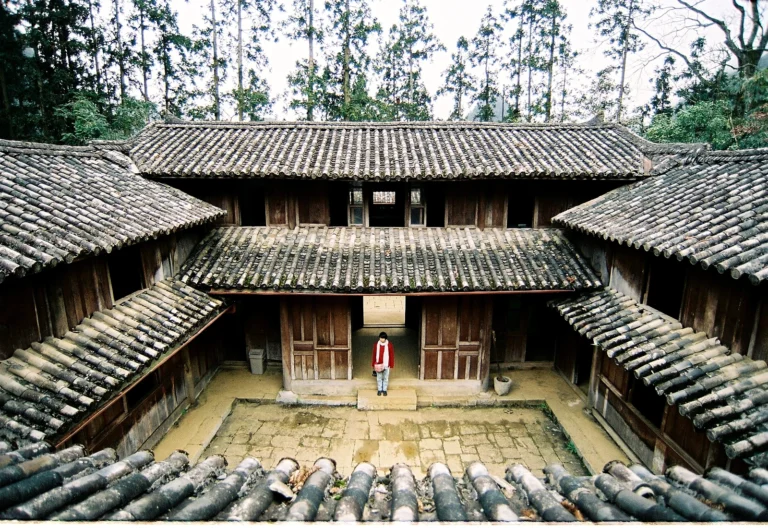
Turning through the rich historical archives of the Vietnam Institute of Heritage & Cultural History, the formation of Dong Van Old Quarter is intertwined with the long-standing cultural heritage of the Hmong, Lo Lo, Giay, and Tay ethnic groups, alongside Chinese communities migrating from Yunnan. Initially, it was merely a sparse residential cluster gathered at the foot of the mountains, where rudimentary exchanges of local produce took place. When French colonial forces established rule and recognized the exceptional military-strategic importance of this borderland, they worked alongside local authorities to replan the architectural space, forming a prosperous market town. The breath of time still lingers on every chicken-liver stone slab, every row of century-old ironwood pillars, and every moss-covered yin-yang tiled roof, bearing witness to a vibrant era of cultural exchange among the Kinh, Hmong, and Chinese people on the rocky plateau.
When speaking of Dong Van’s historical roots and cultural depth, it is impossible not to mention the historical figures who laid the foundations of authority and prosperity for this region—most notably chieftain Vuong Chinh Duc (1865–1947), revered by the Hmong people as the “Hmong King.” With strategic vision and agile diplomacy among the powers of the era, he not only consolidated autonomous regional authority but also played a pivotal role in shaping the social structure, commerce, and security of the borderlands. The legacy of the “Hmong King” and his predecessors, closely tied to the imposing Vuong Family Mansion and the bustling old quarter, has become an indispensable piece in the heroic historical tapestry of the karst plateau.
Today, through the lens of archaeological researchers and travel journalists, Dong Van Old Quarter is far more than an ordinary eco-cultural tourist stop; it is a living museum preserving priceless geological, anthropological, and indigenous architectural values. The seamless blend of the wild, majestic natural scenery of the Dong Van Karst Plateau UNESCO Global Geopark with an ancient urban space rich in ethnic identity has turned this place into a one-of-a-kind “heritage coordinate.” Preserving, conserving, and promoting the authentic values of Dong Van Old Quarter is the key to connecting a heroic past with the present, carrying the sacred spirit of the northernmost mountains and rivers far onto the map of human cultural heritage.
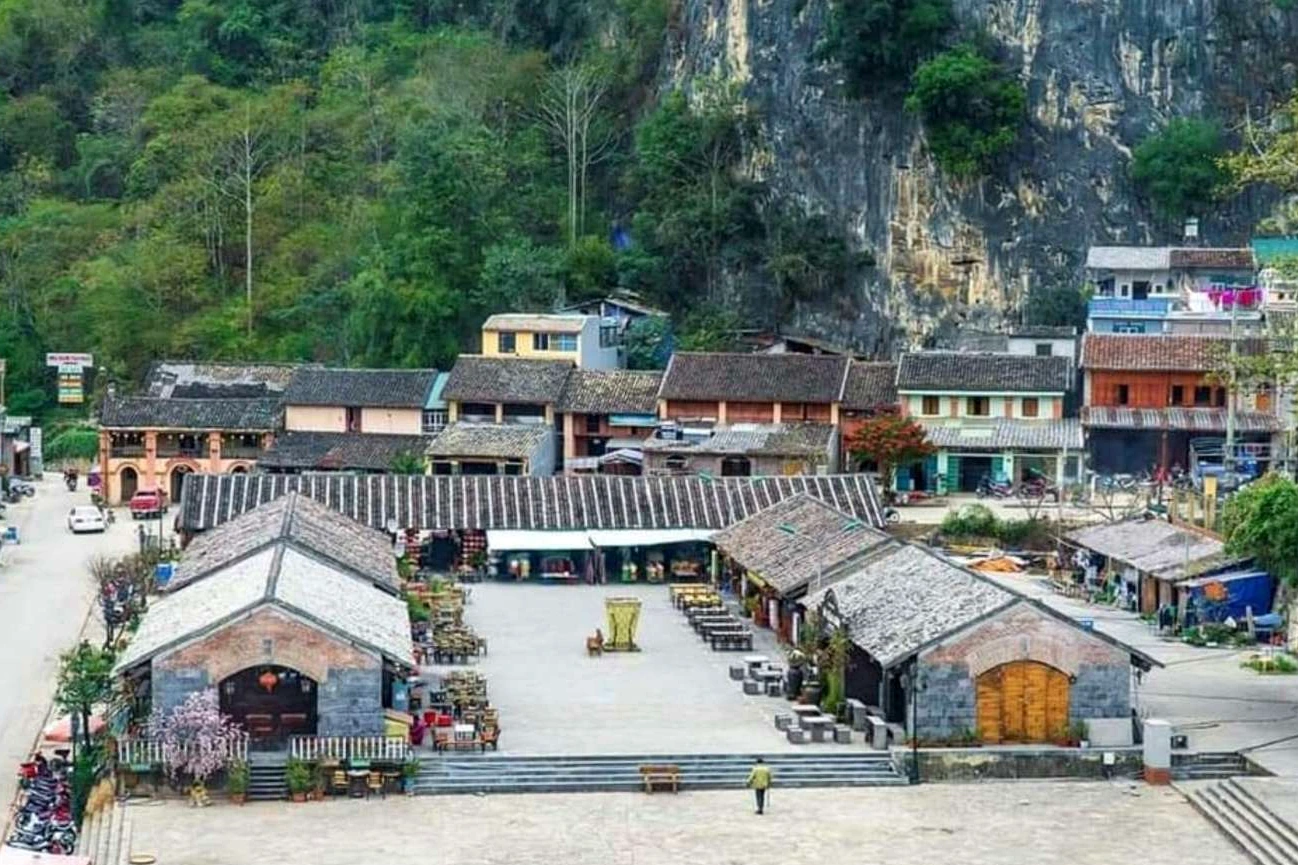
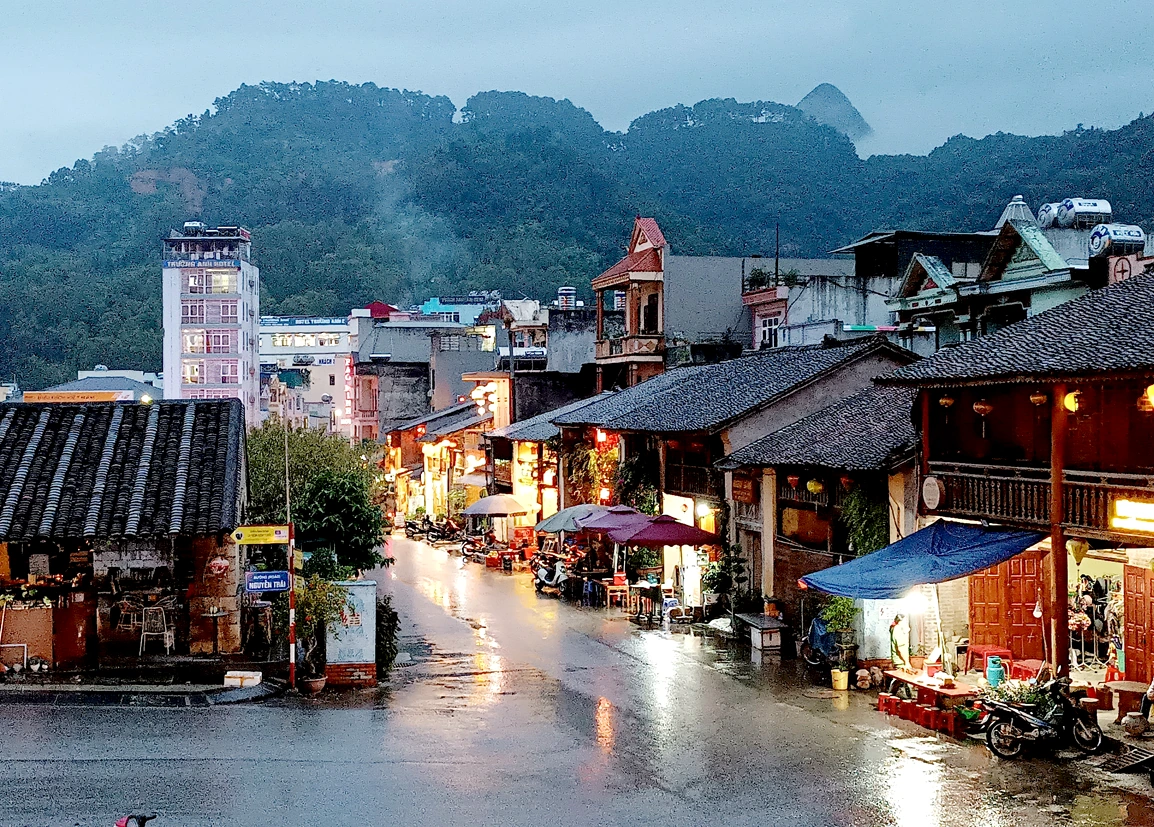
Nestled snugly inside a slate-gray karst valley of the Dong Van Karst Plateau, the old quarter appears as a quiet, dignified, yet deeply poetic brushstroke. Viewed from above, the layout of the old quarter forms a distinctive rectangle, enclosed on all four sides by towering, overlapping rocky mountain ranges that form a natural fortress sheltering this centuries-old architectural complex. The landscape here is a magnificent harmony between the harshness of primeval stone and the resilient vitality of highland people, leaving travelers awestruck from the very first glance.
Delving into every architectural detail, Dong Van Old Quarter stands as a vivid testament to the refined art of cultural fusion among three ethnic groups: Viet, Chinese, and Hmong. Rows of ancient houses stand shoulder-to-shoulder stretching several hundred meters, distinguished by thick, sturdy rammed-earth walls or rare *po mu* cypress wood construction that helps regulate the harsh night chill. The most prized visual highlight lies in the yin-yang tiled roofs blanketed in the moss of time, paired with intricately carved wooden pillars and beams. Hanging beneath each front porch are traditional red lanterns, casting a warm, muted glow that contrasts strikingly against the cold gray stone mountains surrounding the town, evoking memories of a once-thriving highland trading hub.
To capture this majestic and nostalgic beauty in full, professional photographers often share two unmissable “million-view” shooting angles. The first vantage point is from the balcony of the elevated Old Quarter Café, where your lens can take in the entire panorama of the town tucked inside the valley, framed by undulating, ancient yin-yang tiled roofs. The most ideal time here is at dawn (from 5:30 AM to 6:30 AM), when ethereal mist still drapes over the limestone peaks and gentle morning sunlight illuminates every stone slab, creating an enchanting, serene, and awe-inspiring scene.
The second highly prized shooting spot lies right in the central market square of the old quarter, beside the oldest rows of heritage houses. Sunset (from 5:00 PM to 5:45 PM) brings warm golden-orange light at day’s end, bathing the moss-covered rammed-earth walls in rosy hues and casting long shadows across bumpy cobblestone alleys. This is the perfect frame for candid, cinematic photographs capturing the slow, peaceful rhythm of ethnic minorities in the late afternoon, as hearth smoke begins curling above the ancient rooftops, evoking profound historical and indigenous cultural depth.
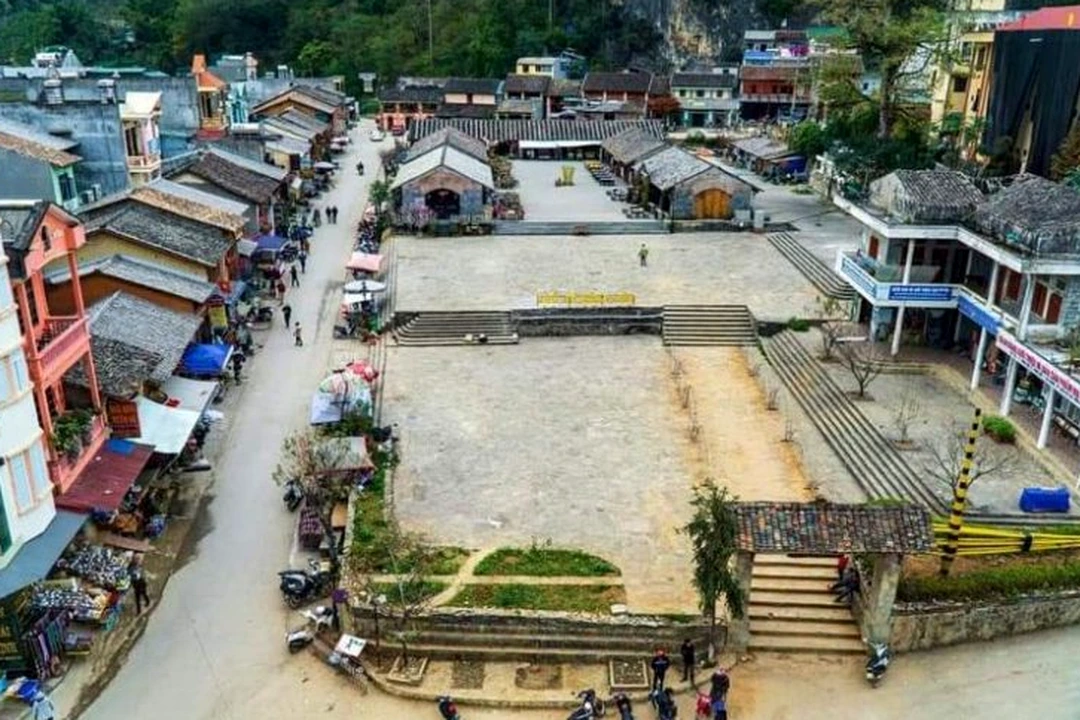
Stepping into Dong Van Old Quarter amid the thousand-year-old karst plateau, visitors are immediately drawn into a realm that is both untamed and deeply imbued with the patina of time. Initial awe soon gives way to quiet reflection as you run your hand along moss-stained rammed-earth walls and admire rows of ancient houses layered with yin-yang tiles under the pale golden light of early morning. The crisp air carries the scent of woodsmoke mingled with mountain corn, awakening every sense and carrying you far away from the hustle and bustle of city life.
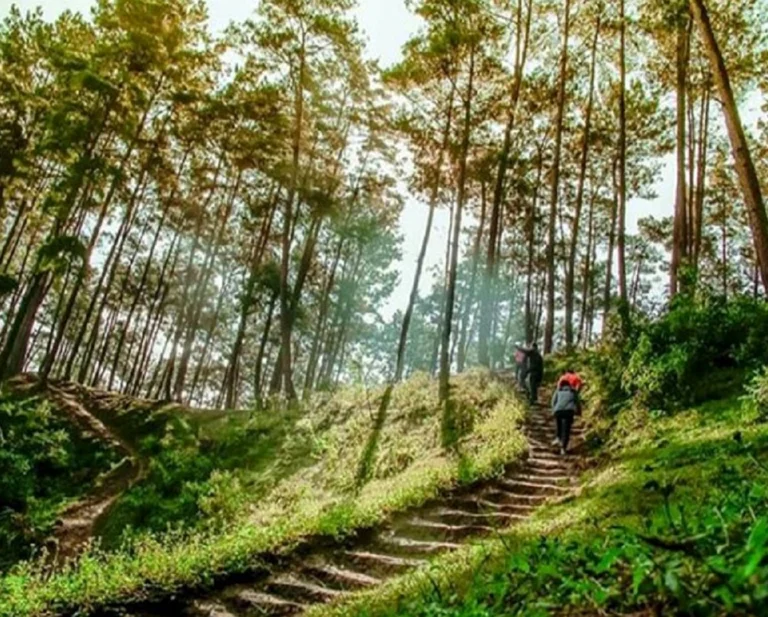
A journey exploring this destination would not be complete without challenging yet rewarding hands-on experiences. Travelers can test their endurance by climbing to the summit of Don Cao Fortress (Phon Don Mountain) or conquering winding trails to take in sweeping panoramic views of the Dong Van valley from above. Looking down, historic homes sit nestled within the embrace of sheer karst peaks, forming a breathtaking natural tableau bestowed upon Vietnam’s northernmost frontier. On misty, cloud-draped days, the scenery transforms into an ethereal, dreamlike landscape.
In addition, immersing yourself in vibrant indigenous cultural life through highland market days is an unforgettable experience. Held every Sunday, the Dong Van Market is far more than a place to trade goods—it is a colorful cultural gathering space for the Hmong, Lo Lo, Tay, and Dao communities. The melodious sound of the *khene* mouth organ calling for a sweetheart, lively chatter, and vibrant brocade attire create an animated atmosphere brimming with local identity. Visitors can also stop by sacred local temples, light a stick of incense to pray for peace, and experience the harmonious spiritual blend among neighboring ethnic groups.
Stepping out of the cultural space, your exploration of Dong Van Old Quarter continues to captivate the palate with its renowned local cuisine. Amid the biting cold of the highlands, nothing compares to gathering around a steaming pot of *thang co*, savoring its rich, distinctive mountain flavors while sipping fragrant corn wine steeped in local warmth. Alongside it, rustic specialties such as nutty *au tau* porridge, steamed rice rolls served in sweet bone broth, and fragrant steamed cornmeal (*men men*) leave an unforgettable impression on every diner. Every moment here is more than just a trip—it is an emotional journey that leaves lasting memories of a rocky land in bloom.
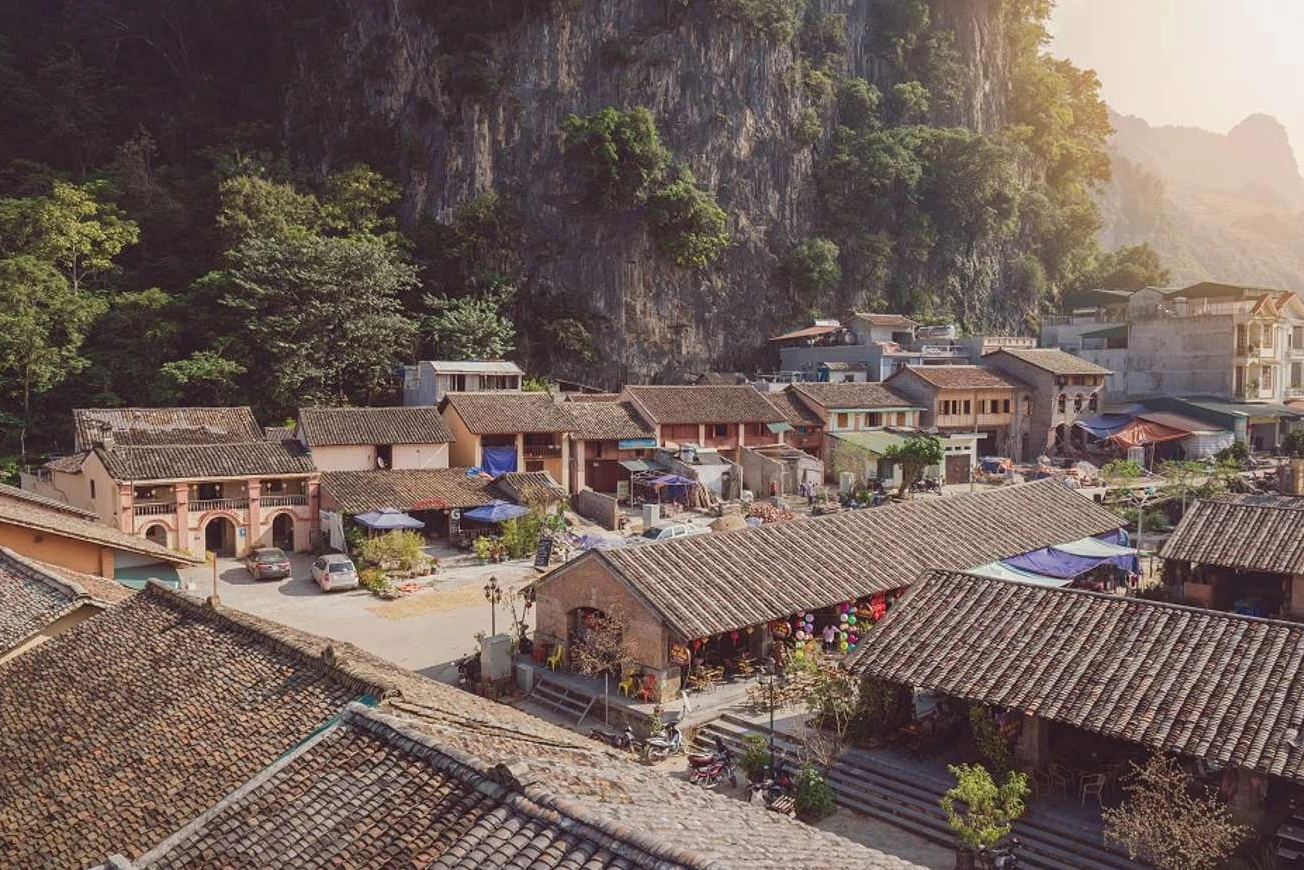
Welcome to Dong Van Old Quarter on your journey to discover the Ha Giang Karst Plateau. To ensure a seamless trip, having practical details on timing, costs, and transportation is essential. Dong Van Old Quarter is an open historical and cultural relic site that welcomes visitors freely every day of the week with completely free admission to the old quarter area. However, if you plan to combine your visit with nearby landmarks such as the Hmong King’s Palace or the Lung Cu Flagpole, take note of their general operating hours from 7:30 AM to 5:00 PM daily for convenient ticketing and sightseeing.
For the most optimal route from downtown Ha Giang City, travelers cover a distance of roughly 140 km along National Highway 4C, famously known as the “Happiness Road.” The most popular and flexible mode of transport for young travelers and adventure seekers is a motorbike (semi-automatic or manual), allowing you to stop at leisure to admire the views at Bac Sum Slope, Quan Ba Heaven Gate, or the Vuong Family Mansion. For families or larger groups, renting a pickup truck or a 7-seater tourist van with a driver familiar with the terrain is the safest option for navigating treacherous hairpin bends and late-afternoon fog.
The ideal time of year to visit Dong Van Old Quarter runs from September to March of the following year. From September to October, the karst plateau is draped in the brilliant gold of terraced rice fields during harvest season. Moving into October through December, buckwheat flowers bloom across the mountainsides, while January through March brings vibrant peach and plum blossoms framing the ancient rammed-earth houses. In particular, scheduling your itinerary over Saturday and Sunday allows you to immerse yourself in the authentic atmosphere of the Dong Van weekend market, a bustling hub of commerce and culture for local ethnic minorities.
When visiting the old quarter and local spiritual sites, temples, and shrines, travelers should take care to dress appropriately. Due to the high rocky mountain terrain and unpredictable weather, prioritize neat, comfortable clothing, a warm windbreaker in winter, and sturdy sneakers with good traction for climbing stone steps and walking along cobblestone streets. At the same time, wear polite, modest attire when entering temples and historic homes to respect local religious spaces and help preserve the cultural beauty of Vietnam’s northernmost rocky frontier.
To enjoy a seamless getaway and take in the full beauty of Dong Van Old Quarter without worrying about arranging transportation, booking entrance tickets, or planning travel itineraries, travelers can opt for VDS Travel’s premium all-inclusive Ha Giang tours. Every tour is thoughtfully designed to optimize photo check-in times when the scenery is at its most breathtaking, accompanied by experienced guides deeply knowledgeable about local culture alongside top-tier hotel and dining standards.