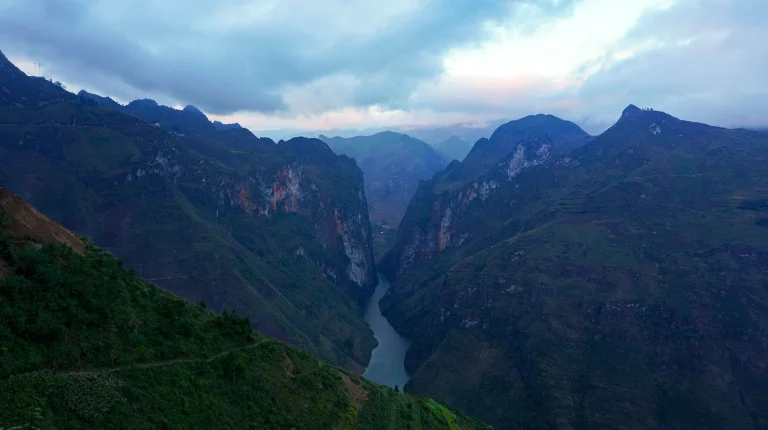
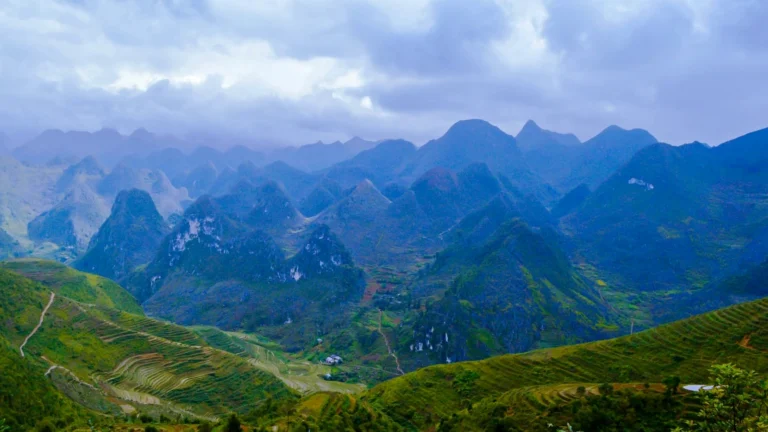
Perched precariously along the legendary National Highway 4C—a silk ribbon woven through the drifting clouds of the Karst Plateau inhabited by local ethnic communities—Tham Ma Pass (Pho Cao Commune, Dong Van District, Ha Giang Province) emerges as a rare geological marvel where the majesty of nature converges with millennia of cultural heritage. Occupying one of the most treacherous coordinates at the northernmost tip of Vietnam, this mountain pass is not merely a vital transportation artery, but a powerful symbol of the pioneering spirit and determination of the ethnic minority communities living across the rocky highlands. Viewed from above, the pass winds gracefully like giant terraced steps climbing halfway into the sky, flanked by dark, sheer cat-ear limestone peaks that create a solid, harmonious landscape where earth, sky, and humanity blend into an expansive, solemn realm.
Tracing history back through archival records at the Institute of Sino-Nom Studies and the provincial gazetteers of Ha Giang, the origins of Tham Ma Pass are deeply intertwined with the centuries-long campaign to expand and defend the northern frontier during the feudal era. Contrary to the common misconception that it was a modern infrastructure project initiated during the French colonial period, this route was originally a section of the ancient “Upper Road” or “packhorse trail” dating back to the Ly, Tran, and Le dynasties, linking Tuyen Quang Prefecture through Vi Xuyen District all the way to the border garrisons of Dong Van and Meo Vac. By the Revival Le and Nguyen dynasties—particularly under the reigns of Emperors Minh Mang and Tu Duc—the imperial court in Hue issued numerous edicts to patrol the borderlands and fortify frontier outposts to transport military provisions and oversee highland chieftains. In those days, Tham Ma Pass consisted solely of crude natural stone steps carved deep into the cliffside, where human grit and resilient packhorses were the only means of traversing the mist and gales of the deep mountains.
The name “Tham Ma” (literally “Horse Appraisal”) carries profound folklore significance tied closely to highland nomadic life and trade. According to the local language and oral traditions passed down by H’Mong elders, this steep pass once served as a proving ground to test the stamina and endurance of packhorses—the most prized livelihood for families and merchants crossing lofty passes and deep gorges. Only the horses capable of ascending all nine steep, treacherous switchbacks through thin mountain air without faltering were deemed worthy of being kept to haul agricultural goods and brocade along the border trade routes. Over time, the name came to reflect not just a practical aspect of daily life, but a deeper philosophy of resilience and triumph over adversity among the indigenous communities.
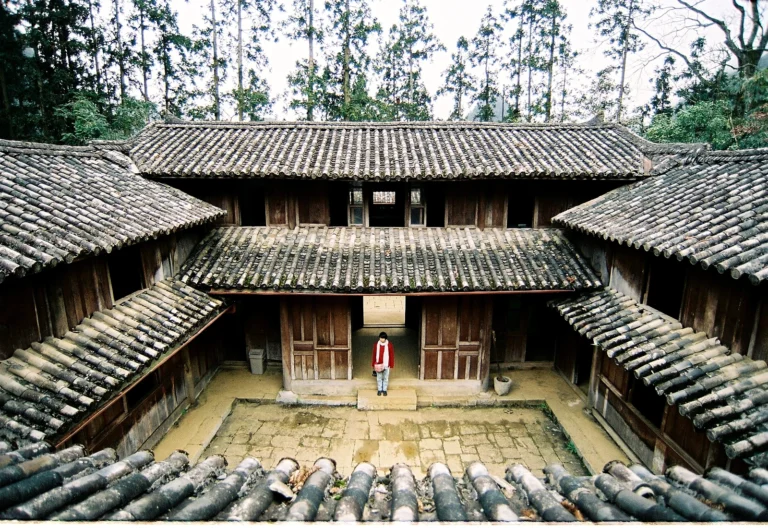
The historical legacy of Tham Ma Pass is also vividly etched through the presence of highland chieftains and H’Mong clan leaders—most notably the illustrious Vuong family (“Kings of the H’Mong”), who exercised autonomy under the protection of the feudal court and later the French colonial administration. Having weathered turbulent chapters—from French colonial road surveys in the 1920s and 1930s to the monumental construction efforts by Youth Volunteers and local H’Mong, Dao, and Lo Lo communities in the 1950s and 1960s—Tham Ma Pass has transformed into a gracefully winding paved highway. Today, it is not only a legendary stop on any journey through the UNESCO-recognized Dong Van Karst Plateau Global Geopark, widely celebrated by heritage authorities and travel media, but also a one-of-a-kind travel heritage site preserving the sacred spirit of the mountains and the indomitable grit of Vietnam’s borderland people.

Seen from above, Tham Ma Pass looks like a soft yet commanding ribbon of silk, curving snugly against the stark gray limestone slopes of the Dong Van Karst Plateau. This engineering feat is a masterpiece born from the fusion of resilient human craftsmanship and nature’s grandeur. The road forms nine tight hairpin bends stacked tier upon tier, clinging midway between sheer, towering cliffs on one side and a bottomless abyss on the other. Each curve is not just a thrilling test for even the most seasoned drivers, but also unveils a fresh perspective on the untamed, awe-inspiring geological tapestry of Vietnam’s far north. What gives this terrain its extraordinary character is the dramatic shift in scenery around every bend; each turn opens up a wider panorama where low-hanging clouds brush right against the asphalt, evoking an exhilarating blend of triumph and vertigo.
To capture the full splendor of this “masterpiece of mountain passes,” professional photographers and travel journalists frequently share two classic vantage points that should not be missed. The first spot sits right at the highest crest of the pass, where a convenient clearing allows photographers to frame the entire multi-tiered cascade of switchbacks winding down below. From this angle, the tiny scale of vehicles navigating the rugged terrain stands out against the vast expanse of mountains and forests, accentuating the monumental proportions of Tham Ma Pass. The second vantage point perches halfway down on a rocky outcrop jutting over the gorge a few hundred meters from the fourth bend, allowing lenses to catch motorbikes and cars sweeping through the dramatic hairpin curves—creating fluid, artistic lines of motion in striking contrast to the jagged, austere beauty of million-year-old cat-ear limestone formations.
When it comes to ideal lighting, photography enthusiasts agree that the golden hours from 6:00 AM to 8:00 AM (sunrise) and from 4:00 PM to 5:00 PM (sunset) offer truly magical conditions at Tham Ma Pass. At dawn, the first golden rays of sunlight pierce through the thick veil of mist lingering over Pho Cao Valley, casting diagonal beams across the tiered switchbacks and creating an ethereal, dreamlike optical effect ideal for epic, atmospheric shots. Conversely, sunset drapes Tham Ma Pass in an entirely different mood as the afternoon light deepens into fiery orange-red, bathing the sheer cliffs in a burnished bronze glow that feels nostalgic, serene, yet dazzlingly dramatic just before nightfall blankets the karst plateau.

Arriving at Tham Ma Pass amidst the drifting clouds of the Dong Van Karst Plateau, every traveler is bound to be breathless at the sight of this dramatic roadway sweeping across the mountainside like a ribbon suspended in the sky. Initial awe quickly gives way to deep admiration as your gaze takes in the entire treacherous stretch of nine tight, hair-raising switchbacks. Standing at the highest summit of the pass, an immense horizon unfolds before you—endless jagged peaks rising steeply, Pho Cao Valley peeking through the morning mist, and lush green cornfields clinging precariously to rocky slopes. In that moment, the mountain wind whispering through the ravines sounds like a grand natural symphony, filling your soul with quiet reflection—a humbling sense of smallness before the vastness of nature, paired with a surge of pride at having conquered this legendary pass.
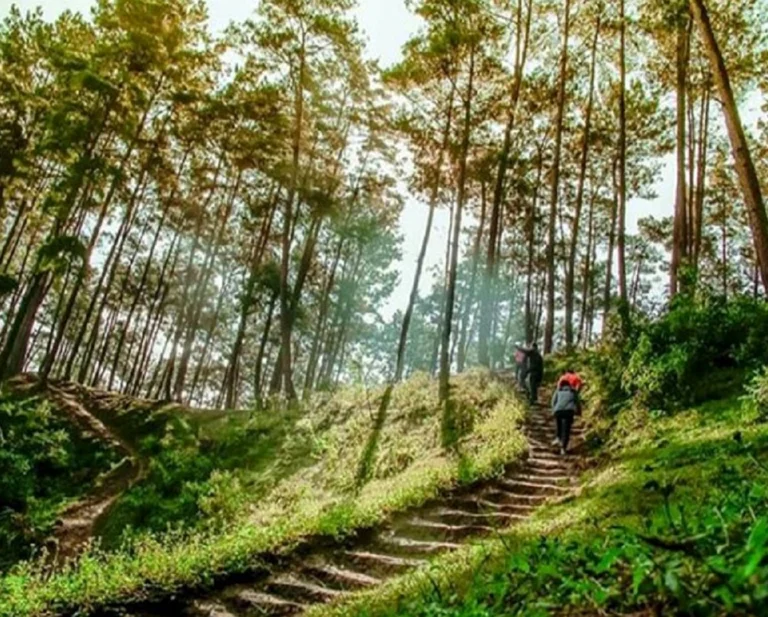
Exploring Tham Ma Pass goes far beyond admiring the view from above; it opens the door to countless rewarding hands-on experiences. For adventure seekers and active travelers, climbing the ancient stone steps and walking along remnants of the old mountain trail to trace the footsteps of ancestors is an exhilarating challenge. While the steep highland terrain does not lend itself to water activities like boating, visitors can instead embark on scenic treks across razor-sharp cat-ear limestone valleys to visit pristine ethnic villages tucked behind veils of cloud. Pairing the journey with a respectful visit to local highland spiritual sites—where ethnic communities offer prayers for peace to heaven and earth—brings moments of tranquil reflection that stay with you long after.
To round out your conquest of Tham Ma Pass, be sure to savor the celebrated culinary specialties of the ethnic minority communities living across the karst plateau. Amid the crisp chill of the borderland air, gathering around a glowing hearth to enjoy hearty dishes infused with mountain flavors is an unforgettable sensory experience. The fragrant chewiness of five-color sticky rice, the nutty richness of grilled corn cakes, and the bold, warming aroma of steaming thang co stew paired with a sip of spicy leaf-fermented corn wine will awaken all your senses. Together, these sights and flavors elevate Tham Ma Pass from a famous photo stop into a vibrant, deeply moving cultural encounter in the heart of every traveler.

Tham Ma Pass is one of the most iconic and legendary check-in landmarks you will encounter when visiting the Dong Van Karst Plateau in Ha Giang. To ensure your journey conquering these breathtaking hairpin bends goes smoothly, safely, and memorably, this handy pocket guide provides the most practical and detailed tips you need.
Regarding opening hours and admission fees, Tham Ma Pass is part of the public highway system along National Highway 4C, meaning it is completely open 24/7 with zero entrance or sightseeing fees. You are free to pull over, admire the scenery, and take photos at any hour of the day. The best times of year to visit are from October to December (when buckwheat flowers blanket the hills in bloom) or from January to March of the following year (when peach and plum blossoms burst into vibrant color). Within the day, early morning (when mist still blankets the valley) or late afternoon (as sunset paints the mountain peaks) will reward you with extraordinary photographs.
For routes and transportation, the most popular starting point is downtown Ha Giang City. The drive to the foot of Tham Ma Pass spans just over 100 kilometers along National Highway 4C (famously known as the “Happiness Road”). The optimal and most favored mode of transport among backpackers and adventure travelers is a motorbike (semi-automatic or manual), allowing you the flexibility to stop freely, lean into the curves, and take in the sweeping vistas unobstructed. If you are traveling with family or a larger group, a high-clearance SUV is a safe and comfortable choice. However, keep in mind that the road up to the karst plateau features numerous tight hairpin bends, steep gradients, and frequent fog, requiring confident driving skills, composure, and strict adherence to safe speeds.
Finally, dressing appropriately and practicing good travel etiquette are essential when visiting Tham Ma Pass. Because the terrain consists largely of sharp, steep limestone outcrops, prioritize neat, comfortable activewear and be sure to wear sneakers or hiking shoes with strong grip to prevent slipping. Additionally, this region has been home for generations to highland ethnic minority communities such as the H’Mong, Dao, and Lo Lo. Visitors should dress modestly, respect local customs, refrain from littering, and always ask for permission before photographing local residents or children.

To enjoy a seamless getaway and take in the full beauty of Tham Ma Pass without worrying about arranging transportation, booking tickets, or planning itineraries, travelers can choose from VDS Travel’s premium all-inclusive Ha Giang tour packages. Every itinerary is thoughtfully timed so you arrive at each check-in spot when the scenery is at its finest, accompanied by knowledgeable local guides and top-tier accommodation and dining standards.