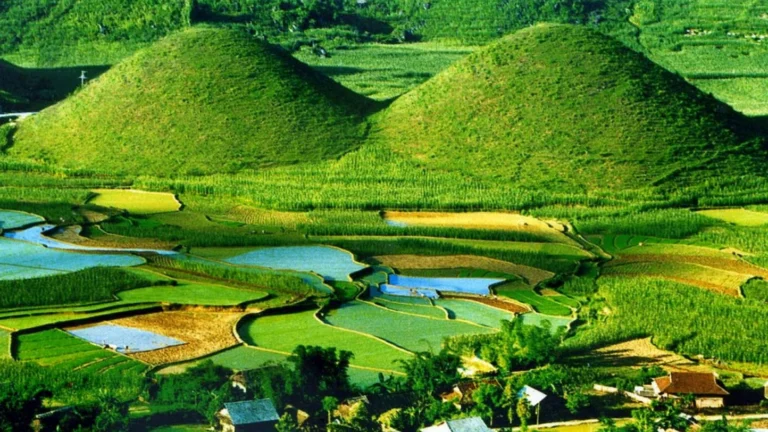
Nestled in the northeastern frontier of Vietnam, the “Fairy Bosom Mountains” (affectionately known locally as the Quan Ba Twin Mountains) emerge as a singular geological marvel in the valley of Quan Ba Commune and Tam Son Town, Quan Ba District, Ha Giang Province. Geographically, this scenic landmark stretches from $23^\circ04’$ to $23^\circ07’$ North latitude and $105^\circ01’$ to $105^\circ05’$ East longitude, sitting at an average elevation of roughly 1,000 meters above sea level. Beyond being an iconic stop along the route conquering the Dong Van Karst Plateau UNESCO Global Geopark, it serves as a sacred bridge connecting majestic physical geography with the enduring cultural consciousness of highland ethnic minority communities.
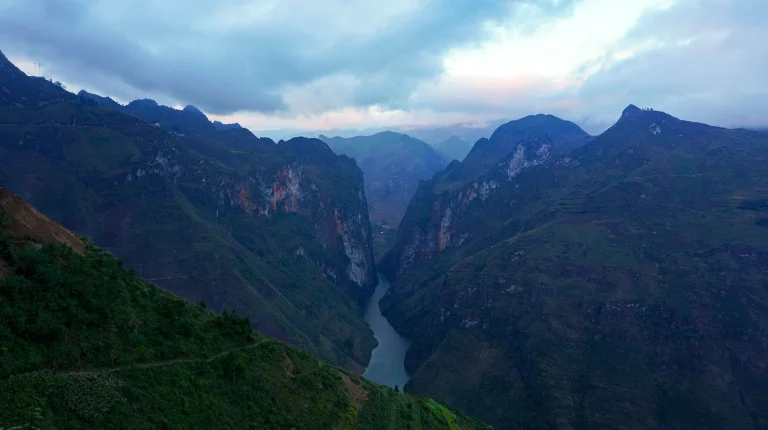
From a tectonic geomorphological perspective, the Fairy Bosom Mountains are a distinctive natural formation classified as cone karst terrain, sculpted upon limestone bedrock of the Dong Van Formation dating back hundreds of millions of years. Over millennia of chemical weathering and erosion under a high-mountain subtropical monsoon climate, the two peaks have acquired an astonishingly round, symmetrical shape, rising proudly from the flat valley floor with nearly identical slope gradients. Through the lens of Sinology and traditional feng shui, this mountain ensemble embodies the auspicious formations of the “Black Tortoise guarding the peak” and the “Bright Hall gathering waters.” Winding southward from the northern highlands, the mountain range converges into two harmonious yin-yang energy points, reminiscent of the cosmological duality that generates all life, perpetually distilling the spiritual essence of heaven and earth to bestow vitality, longevity, and prosperity upon this frontier land.
Alongside their geological and feng shui significance, the Fairy Bosom Mountains bear witness to a proud cultural history spanning multiple eras of the nation’s development. Archaeological strata uncovered at the foot of the mountains and in nearby caves reveal traces of prehistoric humans from the Son Vi culture, extending through the protohistoric era to the flourishing Dong Son civilization. Entering the period of feudal independence under the Ly, Tran, Le, and Nguyen dynasties, the land of Quan Ba was progressively affirmed within national territorial sovereignty, belonging to Tuyen Quang Province before undergoing several key historical administrative transitions. This land has seen generations of Hmong, Dao, and Tay ethnic communities cling to the rocks and forests, working side by side to reclaim land, establish settlements, and safeguard every inch of the nation’s borderland.
Intertwined with this magnificent landmark is a deeply moving legend about a beautiful fairy named Dao Hoa and a talented yet impoverished young man. According to folklore, having fallen in love with the courageous Hmong youth, the fairy descended to live in the mortal world. When the Jade Emperor grew furious and ordered her back to heaven, fearing her infant son would go hungry without milk, she hastily left her breasts behind on earth. Day and night, they transformed into two rounded, vibrant mountains, blessing Quan Ba with pure water, a temperate climate, and bountiful harvests. Out of reverence for this touching tale, generations of locals have named the peaks “Nui Doi Co Tien” (Fairy Bosom Mountains), entrusting them with aspirations for faithful love, sacred maternal devotion, and a prosperous, happy life.
Today, through scientific research and recognition from the press, media, and cultural heritage authorities, the Fairy Bosom Mountains have become an inimitable tourism icon of Ha Giang Province. The scenic site is not merely a testament to nature’s wondrous creative power, but also an invaluable repository of intangible cultural heritage preserving the soul, customs, and spirit of the karst plateau’s inhabitants. Consequently, the beauty of the Fairy Bosom Mountains transcends that of an ordinary landscape, standing as a point of pride for Vietnamese heritage tourism on the global map.
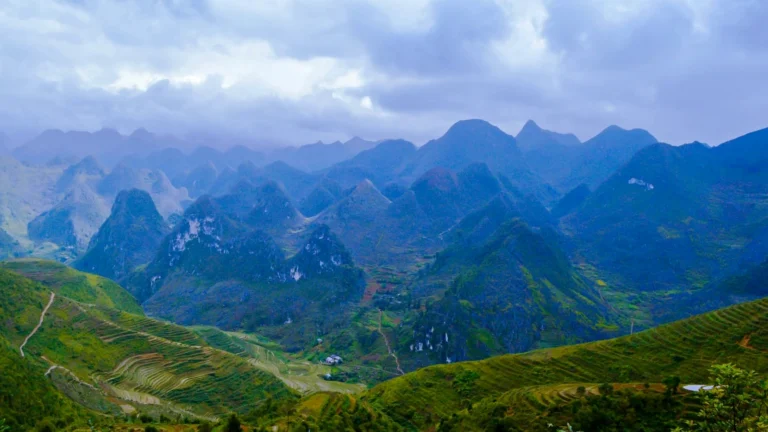
Viewed from above, the Fairy Bosom Mountains appear as a flawless masterpiece bestowed by Mother Nature upon the Ha Giang karst plateau. Departing from the jagged, razor-sharp cat-ear limestone peaks typical of the region, these two mountains boast a remarkably full, rounded, and symmetrical silhouette. Tucked right inside the tranquil Tam Son Valley, the twin peaks stand side by side with soft, graceful curves sweeping from summit to base, achieving a golden ratio in geological artistry. Their nearly identical slope gradients evoke vivid imagery of a life-giving maternal bosom or the youthful form of a sleeping fairy with flowing hair amidst a grand expanse. This harmony between the natural spherical geometry of stone and the flat expanse of the valley creates a deeply soothing, poetic visual experience.
Surrounding this scenic masterpiece is the dramatic seasonal transformation of the valley’s ecosystem throughout the year. During the ripe rice season, the valley floor dons a shimmering golden cloak, wrapping around the base of the twin peaks like a soft silk sash. When the watering season arrives, the terraced fields turn into giant mirrors reflecting the clouds and sky, accentuating the serene yet imposing beauty of this picturesque landscape. The interplay between the ancient gray of million-year-old limestone, the lush green of cornfields and paddies, and the delicate morning mist transforms this place into a breathtaking natural tableau that draws tens of thousands of travelers to admire it.
To capture the full splendor of the Fairy Bosom Mountains, professional photographers and travel journalists frequently recommend two premier vantage points. The first unmissable photo spot is the Quan Ba Heaven Gate, situated at an elevation of roughly 1,500 meters. Looking down from this perch, the entire Tam Son Valley and the exquisite symmetry of the Twin Mountains unfold in a sweeping panoramic frame, evoking awe before the vast frontier wilderness. The second vantage point lies along the winding mountain passes hugging the valley floor or at dedicated observation decks near the town center. This angle allows visitors to maximize spatial depth, capturing every harmonious detail between towering nature and the peaceful daily rhythm of ethnic minority villages below.
Regarding ideal lighting conditions, photographers advise that the golden hours for capturing “million-view” shots are at dawn (from 5:30 AM to 7:00 AM) or at dusk (from 4:30 PM to 6:00 PM). In the early morning, the first rays of sunlight from the east pierce through dense fog, illuminating the twin summits with an ethereal, mist-shrouded glow. Meanwhile, twilight ushers in warm, rich tones as the setting sun bathes the landscape in gold, draping the twin hills in a shimmering, regal, and tranquil aura. Such moments yield not only extraordinary artistic photographs, but also stir the deepest emotions in anyone fortunate enough to set foot in this sacred land.

Arriving in Quan Ba, Ha Giang, the very instant you gaze across Tam Son Valley from above, every traveler is bound to be overwhelmed by the flawless masterpiece nature has gifted the karst plateau. The Fairy Bosom Mountains rise imposing yet gentle, impossibly rounded amidst boundless clouds and mountain winds. The foremost and unmissable experience is ascending high-altitude viewpoints, most notably the Quan Ba Heaven Gate. Standing here, taking a deep breath of the crisp highland air, and listening to the primeval wind rustling through the leaves, you feel as though you are touching the boundary between earth and sky. Initial awe quickly gives way to an uncanny sense of calm and serenity as a breathtaking natural canvas fills your view: a ribbon of road hugging the mountainside and golden terraced rice fields curving gracefully beneath the majestic twin peaks.
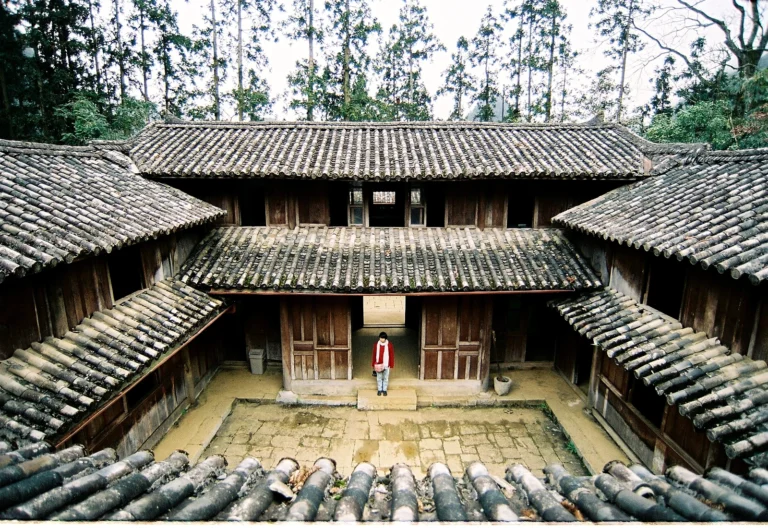
Beyond visual sightseeing, exploring the Fairy Bosom Mountains offers travelers the chance to immerse themselves in a vibrant, authentic local cultural landscape. Down in the valley, the daily life of Hmong, Dao, and Tay communities unfolds modestly through rammed-earth houses peeking through wisps of evening cooking smoke and the haunting melodies of bamboo flutes echoing across the mountains. Visitors can stroll through highland markets bursting with colorful brocade and directly experience the sincere, warm-hearted hospitality of the locals. It is this fusion of grand natural scenery and heartfelt frontier warmth that creates an irresistible allure, touching the soul of everyone who visits.
Crowning the journey of discovery, an experience at the Quan Ba Twin Mountains would be incomplete without savoring the renowned culinary specialties of the karst plateau. Amidst the biting mountain chill, nothing compares to gathering around a glowing hearth to enjoy the rich aroma of hearty *thang co* (traditional horse meat stew), chewy, smoky *thit trau gac bep* (smoked buffalo meat), nutty *men men* (steamed cornmeal) paired with sweet *cai meo* mustard green soup, or sipping a cup of fiery Quan Ba corn wine that warms the chest. Every dish and local delicacy carries the breath of earth and sky, distilled from generations of labor and culinary tradition. Together, scenery, culture, and cuisine blend seamlessly, leaving travelers with unforgettable memories of the “Fairy Bosom Mountains”—a place both majestic and sacred, yet intimate and brimming with human warmth.

When visiting the majestic Ha Giang karst plateau, the Fairy Bosom Mountains in Quan Ba District remain an essential stop on every traveler’s itinerary. To ensure a smooth and fulfilling trip, the pocket guide below provides detailed, practical information on visiting times, admission fees, and transportation tips.
As for the ideal time to visit, the Quan Ba Twin Mountains showcase captivating beauty across all four seasons. However, the period from September to March of the following year is widely considered the golden window. During these months, the frontier weather is dry with ethereal morning mist, allowing travelers to combine sightseeing with golden rice harvests in autumn or vibrant pink buckwheat blossoms blanketing the hillsides in winter.
Visitors are completely free to admire and photograph this natural masterpiece at no cost, as the Fairy Bosom Mountains observation area is open 24/7 to the public. The prime viewing spot is located right at the rest stop atop Quan Ba Pass, offering an unobstructed vantage point overlooking the poetic Tam Son Valley below.
To reach the site from central Ha Giang City, the optimal route follows National Highway 4C toward Quan Ba District, traversing the legendary Bac Sum Slope over a distance of approximately 50 kilometers. Due to the rugged mountainous terrain featuring sharp hairpin bends and winding passes, the most popular and flexible modes of transport are motorbikes for adventure-seeking young travelers, or private tourist cars to ensure safety for families.
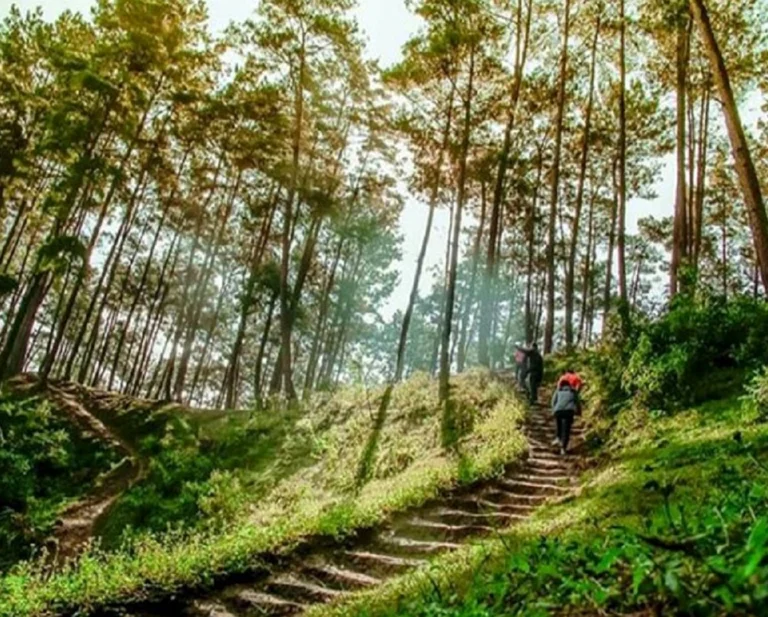
Additionally, because this natural landscape is closely tied to the distinctive cultural life of highland ethnic minority communities, travelers should opt for neat, comfortable attire—prioritizing athletic shoes with good grip for walking and climbing stairs to the viewpoints. At the same time, dressing modestly and behaving respectfully demonstrates consideration for local customs and traditions, helping preserve the pristine, sacred beauty of the Fairy Bosom Mountains.

To enjoy a seamless getaway and take in the full splendor of the Fairy Bosom Mountains without worrying about arranging transport, booking tickets, or planning itineraries, travelers can choose VDS Travel’s premium all-inclusive Ha Giang tours. Each itinerary is thoughtfully timed for photo stops when the scenery is at its most radiant, accompanied by experienced guides well-versed in local culture alongside top-tier hotel and dining standards.