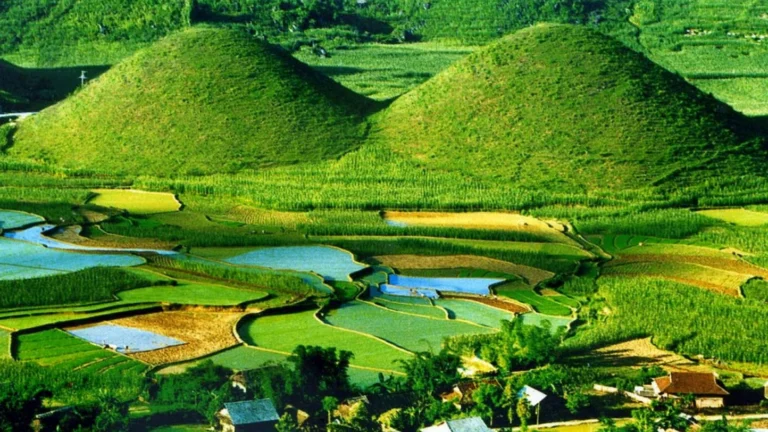
Stretching across the far northern frontier of Vietnam, the Dong Van Karst Plateau emerges as a monumental geological wonder sculpted by the boundless hands of time and nature, encompassing the pristine landscapes of four districts in Ha Giang Province: Quan Ba, Yen Minh, Dong Van, and Meo Vac. Situated in an exceptionally rugged geographical location at the very frontier of the nation, this land is ringed by jagged “cat-ear” limestone peaks rising like a forest of spears and swords, interwoven with abyssal canyons and the Nho Que River winding like a jade-green silk ribbon. In terms of cultural geomancy, it formed one of the most impregnable natural defensive bastions of ancient Dai Viet, a place where mountains and rivers converge with sacred energy to create a peerless realm—at once majestic and awe-inspiring, yet harboring priceless layers of indigenous heritage.
Looking back through historical annals and feudal chronicles—from the Ly, Tran, and Early Le dynasties to the Nguyen era—this region was designated under evocative names and administrative titles steeped in frontier character, such as the “Northern Frontier Region,” “Vi Xuyen Prefecture,” or “Tu Long Circuit.” According to records in the *Complete Annals of Dai Viet* (*Dai Viet Su Ky Toan Thu*) and the *Unified Gazetteer of Dai Nam* (*Dai Nam Nhat Thong Chi*), in the 19th century—specifically in the 16th year of Emperor Minh Mang’s reign (1835)—the Hue imperial court carried out a major administrative reform, abolishing the hereditary tribal chieftain (*tho ty*) system to formally incorporate Dong Van under the direct administration of Ha Giang Circuit. Even so, over the centuries, the rugged “cat-ear” karst terrain nurtured a culturally autonomous space for ethnic minorities such as the Hmong, Lo Lo, and Giay, forging a martial spirit and an unyielding resolve to cling to the rocks, defend the land, and guard the sacred borderlands of the Fatherland.
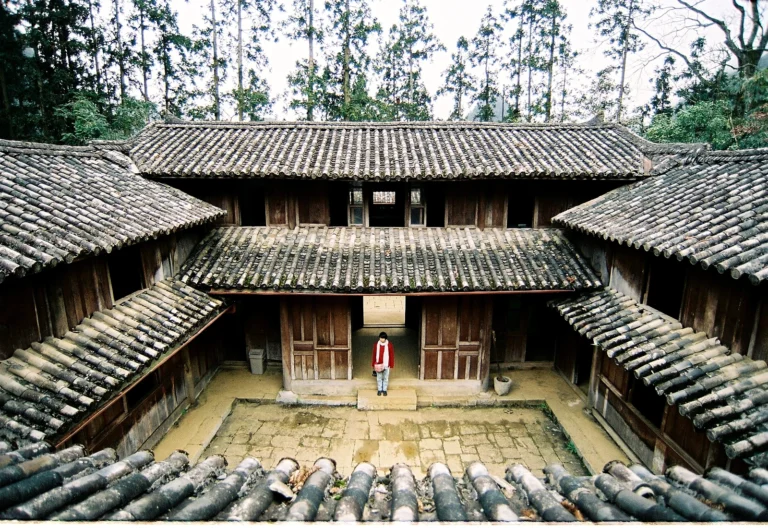
This frontier land is also deeply intertwined with legendary figures and highland heroes, most notably the chieftain Vuong Chinh Duc (1865–1947)—revered in history and among local communities as the “Hmong King.” With strategic vision and diplomatic acumen, he guided the Hmong people through sweeping historical upheavals, from the decline of feudalism to a turbulent era of transition, ultimately throwing his wholehearted support behind the revolution and earning the trust of President Ho Chi Minh, who appointed him as an advisor. Standing as a testament to the authority and stature of the Vuong clan is the Vuong Family Mansion—a unique architectural masterpiece blending Manchu Qing dynasty style, French colonial elements, and intricate Hmong craftsmanship, rising proudly like a heritage fortress in the heart of the rocky plateau.
Today, having weathered the vicissitudes of feudal history and war, the Dong Van Karst Plateau has been recognized by national authorities as well as the international press and scientific community as a UNESCO Global Geopark. The heritage value of this land lies not solely in tens of thousands of hectares of tectonic geological formations dating back hundreds of millions of years, but equally in the rich intangible living culture of its ethnic communities. Here, every rammed-earth house emerging from the mist, every vibrant morning market ablaze with brocade colors, and every plaintive call of the Hmong *khen* mouth organ echoing across the clouds unite in an immortal epic celebrating the fierce resilience of the people living at Vietnam’s sacred northernmost frontier.
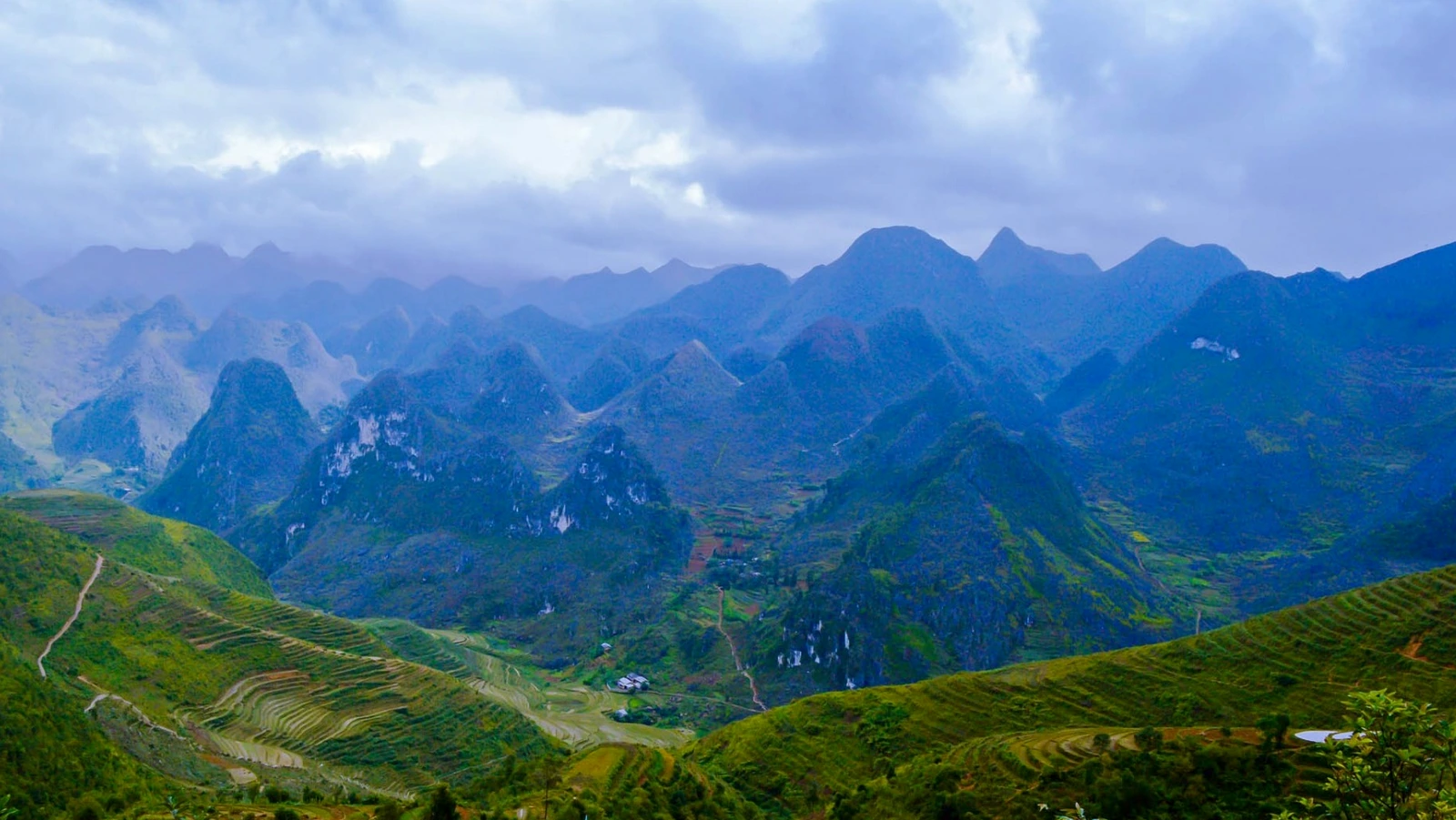
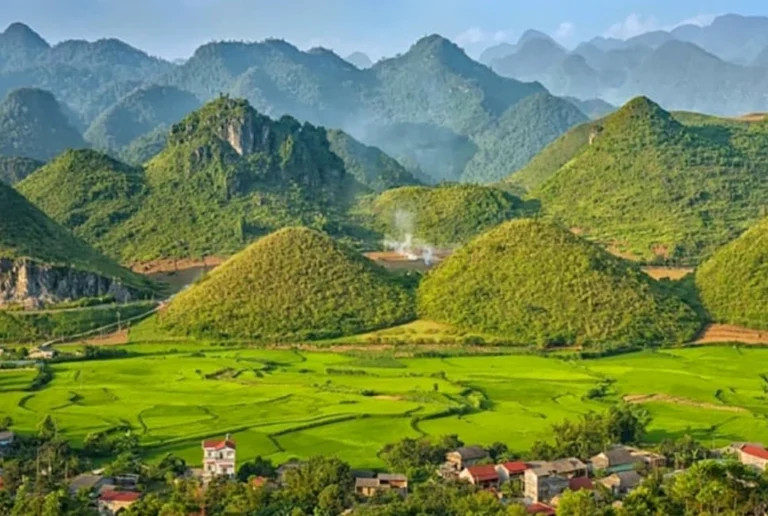
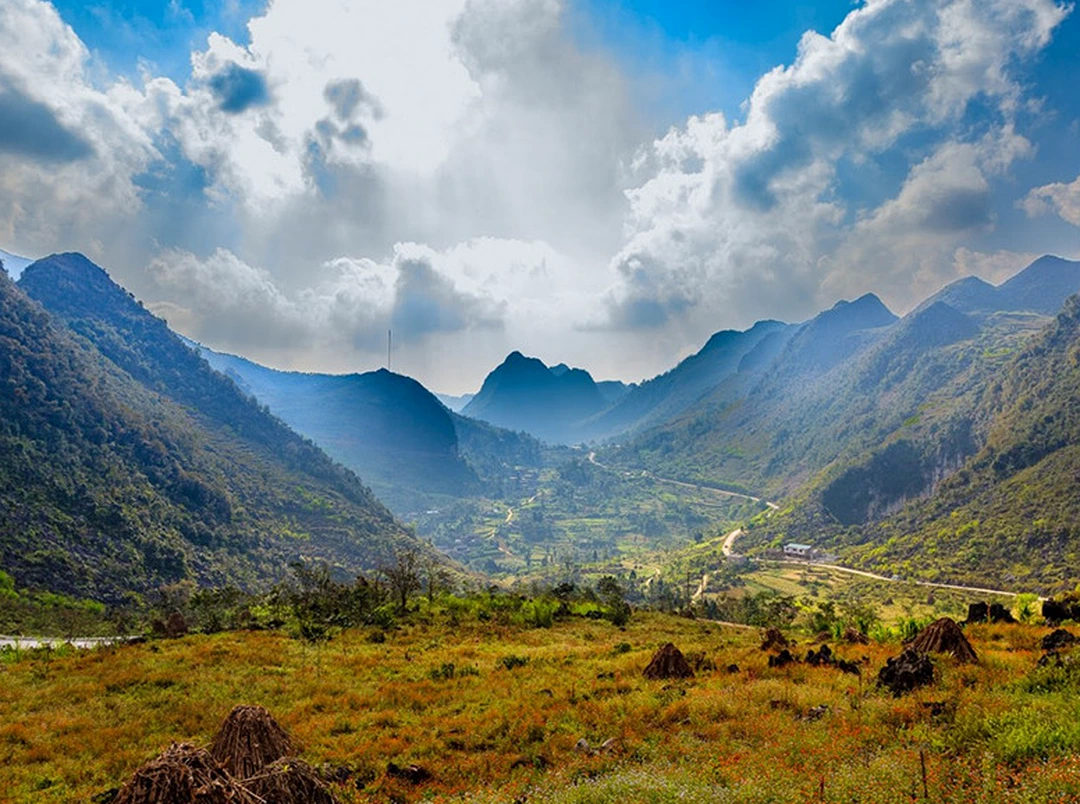
The Dong Van Karst Plateau stands as a one-of-a-kind geological marvel in Vietnam, where harsh natural forces have carved out breathtaking landscapes that captivate every traveler who sets foot here. Spanning four districts of Ha Giang Province, the scenery is dominated by slate-gray limestone ranges rising tier upon tier like a colossal forest of swords and spears piercing the sky. Amid this untamed, monumental panorama, narrow valleys nestle at the foot of the mountains, where terraced rice fields curve gracefully along the hillsides, creating an artistic contrast between the gentle beauty of indigenous agriculture and the stern, jagged grandeur of the karst terrain.
Beyond its natural wonders, the humanistic and architectural heritage of the rocky plateau is vividly reflected in its historic landmarks, foremost among them the Vuong Family Mansion in Sa Phin Commune. Built in the early 20th century by the “Hmong King” Vuong Chinh Duc, this complex is an extraordinary architectural synthesis of three distinct styles: traditional Hmong culture, Chinese Qing-dynasty courtyard architecture, and subtle French touches. The mansion occupies an auspicious site nestled upon a turtle-shell-shaped hill—symbolizing stability, longevity, and prosperity. Every carving on its precious hardwood pillars and solid bluestone blocks—meticulously chiseled into motifs of opium poppies, dragon heads, and bats—speaks to the power, wealth, and consummate artistry of master craftsmen working under the guidance of Chinese architects.
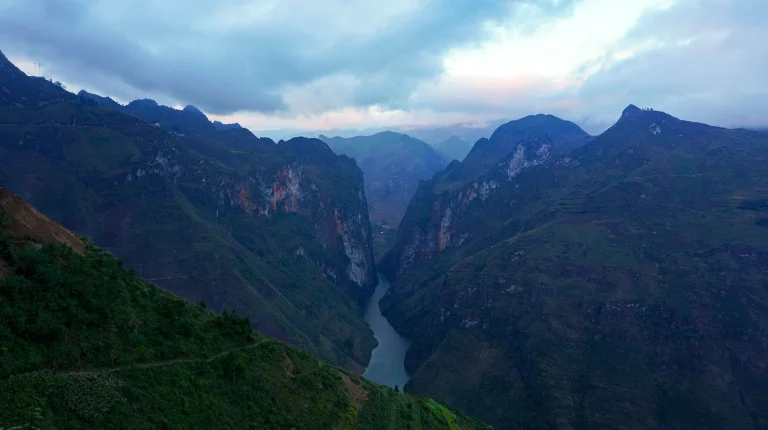
To capture the most iconic moments in this heritage region, professional photographers and travel journalists frequently share two classic vantage points not to be missed. The first is the summit of Ma Pi Leng Pass at sunset, when the late-afternoon sun casts a golden glow down into the abyssal Tu San Canyon and over the emerald-green Nho Que River winding gracefully like a ribbon of silk. The golden window to capture this scene is from 4:30 PM to 5:30 PM, when slanting rays slice across the cliff faces, creating extraordinary depth and an ethereal, majestic atmosphere. The second vantage point is an elevated view overlooking the Vuong Family Mansion at dawn (around 6:00 AM to 7:00 AM). As the first sunbeams pierce the morning mist and fall directly upon the moss-covered yin-yang tiled roofs and sturdy laterite stone walls, the entire heritage complex appears both ancient and contemplative yet deeply epic, offering unforgettable, viral-worthy photo angles for anyone passionate about history and photography.
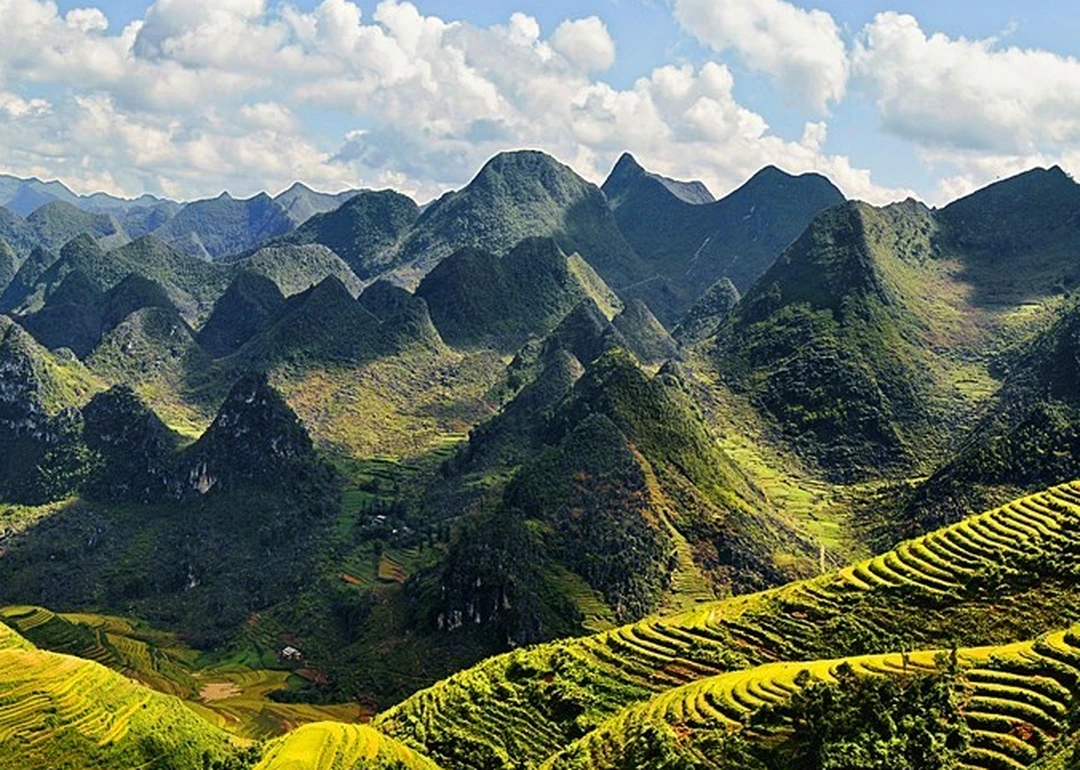
Upon arriving at the Dong Van Karst Plateau, visitors are immediately awestruck by a colossal geological wonder. Before your eyes lie not merely sheer, slate-gray karst peaks scraping the clouds, but an entire primeval world steeped in mystery. The first unforgettable experience is conquering mountain passes that wind like ribbons hugging the cliffs, epitomized by Ma Pi Leng Pass—one of Vietnam’s “Four Great Mountain Passes.” Standing at the summit and gazing into the distance, the panorama opens up with breathtaking vastness: far below lies a sheer abyss where the Nho Que River snakes like a shimmering emerald ribbon reflecting the towering sky, evoking a feeling of both humility and boundless freedom before nature’s grandeur.
The journey of discovery continues as travelers embark on a boat ride along the Nho Que River, gliding through Tu San Canyon—the deepest gorge in Southeast Asia. Drifting in a small boat across the deep emerald waters and looking up at sheer limestone cliffs towering hundreds of meters high to block out the sky, the cool chill rising from the river blends with the whisper of mountain winds to create a timeless, untamed serenity. Stopping at sacred frontier landmarks such as the Lung Cu Flagpole—the hallowed northernmost point of the nation—every visitor feels a surge of national pride while listening to the border winds and the heroic echoes of history.
Beyond its dramatic scenery, the rocky plateau captivates travelers with a vibrant, deeply authentic indigenous culture. It lives in the highland markets bursting with colorful handwoven brocade, the haunting sound of the Hmong *khen* echoing across the slopes, and the ringing laughter of highland children dressed in bright traditional attire. Immersing yourself in this rhythm of life feels like stepping into a timeless sanctuary, where the harshness of stone has forged the fierce vitality, warmth, and genuine hospitality of the local people.
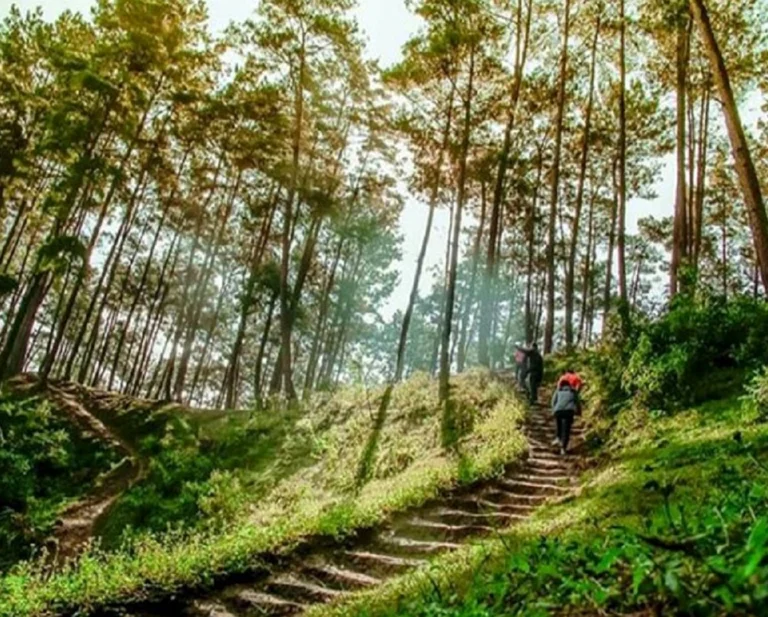
To cap off a long, inspiring day of exploration, nothing compares to gathering around a glowing hearth to savor the finest highland cuisine. The rich, savory warmth of steaming *thang co* infused with mountain herbs, the fiery aroma of Ban Phung corn wine tingling on the tongue, alongside nutty steamed cornmeal (*men men*) and smoky kitchen-hung buffalo meat… all come together for an unforgettable culinary experience. Amid the crisp night air of the rocky plateau, sipping hot tea, listening to the rustle of pine trees, and gazing up at a sky blanket-stitched with stars, every worry seems to melt away—leaving behind stillness, peace, and an enduring love for Ha Giang.
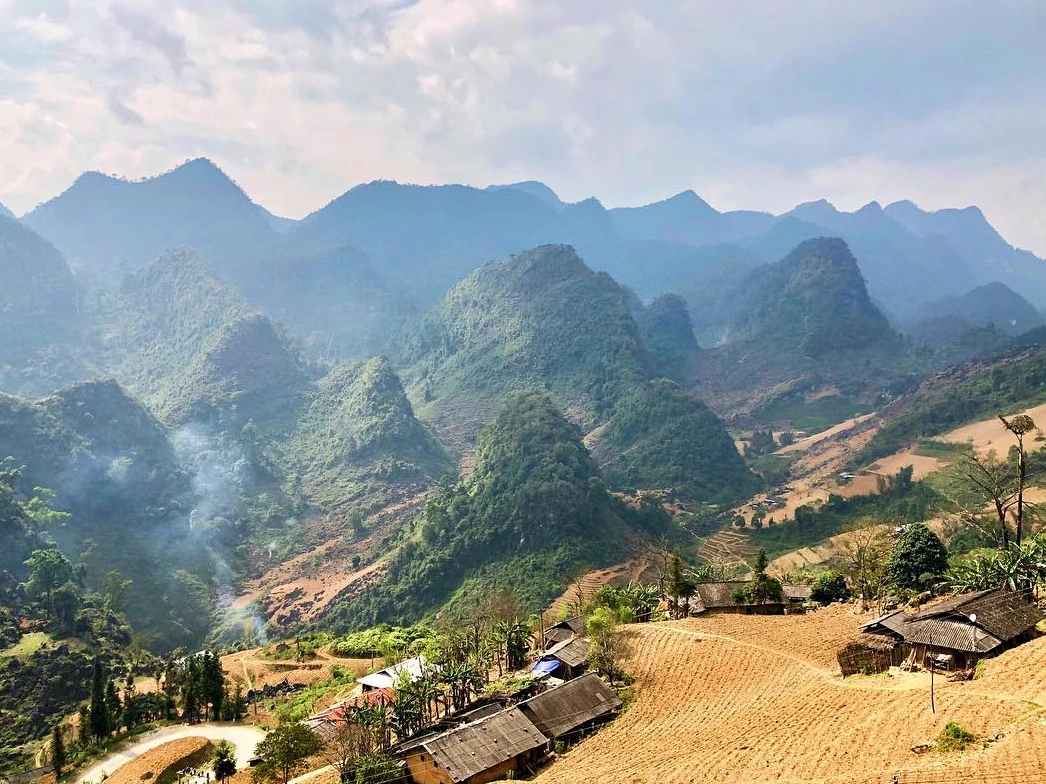
Welcome to our newly updated Dong Van Karst Plateau travel guide—your all-in-one key to preparing seamlessly for an expedition to this UNESCO Global Geopark. As a vast natural geographical region spanning four districts—Quan Ba, Yen Minh, Dong Van, and Meo Vac—the plateau is open 24/7 year-round, welcoming visitors to explore and admire its majestic natural landscapes with no general entrance fee across the route. However, for specific historical and cultural heritage sites within the area, such as the Hmong King’s Mansion (Dong Van District) or the Lung Cu Flagpole, official visiting hours typically run from 7:30 AM to 5:00 PM daily, with very affordable admission fees ranging from 20,000 to 30,000 VND per adult to support heritage conservation.
When it comes to transportation and the best route, departing from Ha Giang City center along National Highway 4C—poetically known as the “Happiness Road”—is the ultimate choice for road-trip enthusiasts. For the safest and most flexible experience when tackling sharp hairpin turns, the steep Ma Pi Leng Pass, or the winding Tham Ma Slope, a motorbike or a self-drive high-clearance SUV is the top recommendation. Alternatively, taking an overnight sleeper bus to Ha Giang and renting a local motorbike is a great energy-saving option for travelers coming from distant provinces.
The best time of year to visit the Dong Van Karst Plateau is from September to March of the following year. During these months, the plateau drapes itself in its most enchanting colors: September glows with golden ripe rice terraces in Hoang Su Phi and Quan Ba; October and November blanket the hills in the soft pink of pristine buckwheat blossoms; December brings pure white mustard flowers blooming dreamily beside ancient rammed-earth houses; and January bursts into life with peach and pear blossoms across highland villages.
Finally, when visiting a region so rich in indigenous heritage and spiritual significance, travelers should observe proper dress codes and cultural etiquette. Opt for neat, flexible clothing paired with athletic shoes or high-grip hiking boots to navigate sharp “cat-ear” limestone terrain safely. When visiting traditional Hmong, Lo Lo, and Giay villages or sacred temples and shrines, wearing modest, respectful attire—avoiding overly short or revealing outfits—shows genuine respect for the long-standing customs and beliefs of local communities, helping preserve the pristine beauty and tranquility of the rocky plateau.
To enjoy a seamless getaway and take in the full splendor of the Dong Van Karst Plateau without worrying about arranging transportation, booking tickets, or planning itineraries, travelers can choose from VDS Travel’s premium all-inclusive Ha Giang tour packages. Every itinerary is thoughtfully timed to hit each photo spot when the scenery is at its most radiant, accompanied by knowledgeable local guides and top-tier hotel and dining standards.