Perched on the historic peninsula jutting out toward the shimmering Bosphorus Strait, Ayasofya-i Kebir Cami-i Şerifi—the Hagia Sophia Grand Mosque—stands tall as a living chronicle encapsulating more than a millennium and a half of rise and fall across two of the world’s mightiest empires: Byzantine and Ottoman. This monument did not begin with the awe-inspiring domed structure admired by posterity today; rather, its roots lie in the turbulent early days of Roman Christianity. Around 360 AD, Emperor Constantine the Great (Constantine I), who paved the way for the Christian era, laid the initial foundations for the first church, named Megale Ekklesia (The Great Church, known in Turkish as Büyük Kilise). However, this wooden basilica suffered a tragic fate when it was burned to the ground during riots in the early fifth century. By 415 AD, Emperor Theodosius II commissioned a far grander basilica, commonly recorded in history as the Secunda Basilica, featuring a marble portal carved with reliefs of twelve lambs symbolizing the twelve apostles.
Nevertheless, the Secunda Basilica met an equally bloody historical end in January 532, when the flames of the Nika Riots erupted from the adjacent Hippodrome, reducing half of Constantinople to ashes and completely destroying the second church. Facing the brink of imperial collapse, Emperor Justinian I (Justinian the Great) not only crushed the rebellion with an iron fist but also resolved to turn the catastrophe into a springboard for reviving the prestige of the Eastern Roman Empire. Driven by an ambition to assert eternal sovereignty and divine providence, Justinian issued an imperial decree to erect a third basilica (Tertia Basilica) surpassing every physical and aesthetic boundary ever achieved in human civilization up to that time.
To bring this unprecedented vision to life, the emperor placed his full trust in two extraordinary polymaths: the geometer Anthemius of Tralles and the engineer-mathematician Isidore of Miletus. Combining intellect far ahead of their era with the labor of tens of thousands of workers mobilized from across the Roman provinces, these two master architects accomplished a construction feat that shook history: completing the monumental edifice in a mere five years and ten months (from 532 to 537). On December 27, 537, when the colossal cedarwood doors swung open for the solemn consecration ceremony, Emperor Justinian I stepped beneath a golden celestial dome that seemed suspended in midair by an invisible chain from heaven, gazed upward at the resplendent vault, and uttered the immortal words etched into human memory: “Süleyman, seni geçtim!”—”O Solomon, I have surpassed you!”—proclaiming that this masterpiece had outshone the legendary Temple of Jerusalem built by ancient King Solomon.
For more than nine subsequent centuries, Hagia Sophia reigned as the supreme spiritual heart of the Eastern Orthodox Church, witnessing countless imperial coronations while enduring devastating earthquakes and the sack of the Fourth Crusade. Then, on May 29, 1453, the tide of history turned once more as the young Ottoman ruler Fatih Sultan Mehmed (Mehmed the Conqueror) led his elite forces into Constantinople. Standing before the majesty of Hagia Sophia, the 21-year-old Sultan forbade any destruction, immediately prostrated himself in prayer, and issued a historic decree converting the monument into a grand mosque (cami). That decision ushered in an extraordinary era of synthesis, where an icon of the Christian world was reborn beneath the cultural and spiritual mantle of Ottoman Islam.
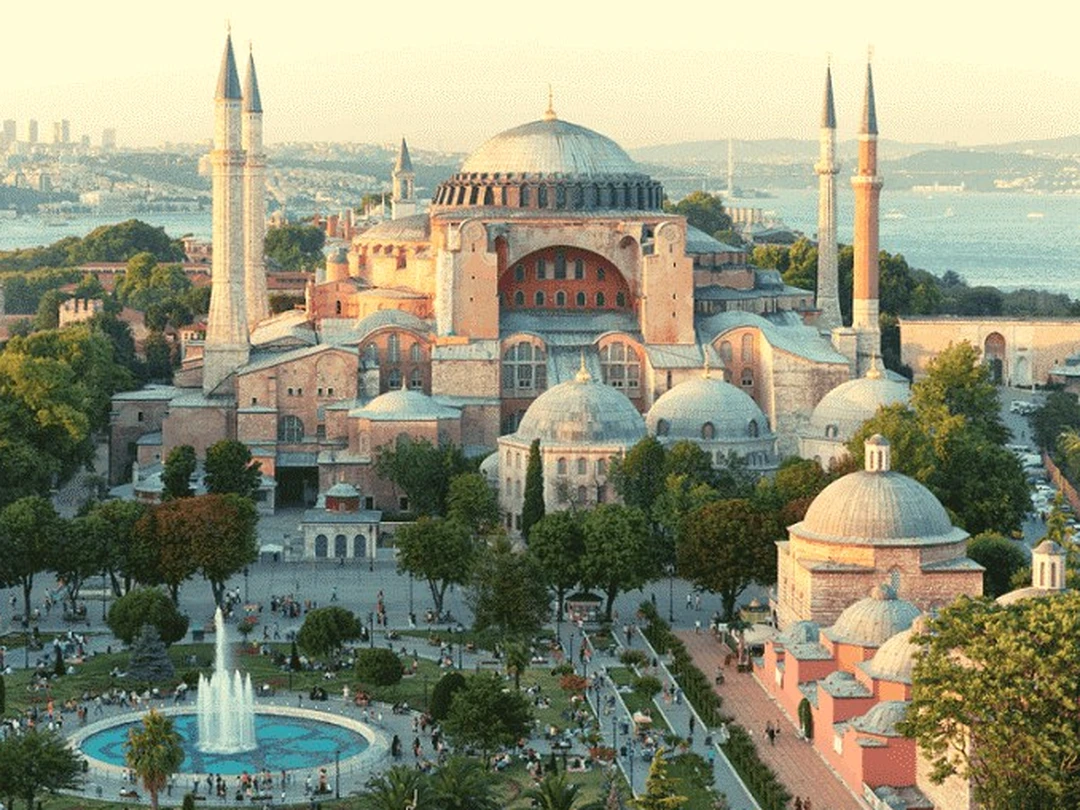
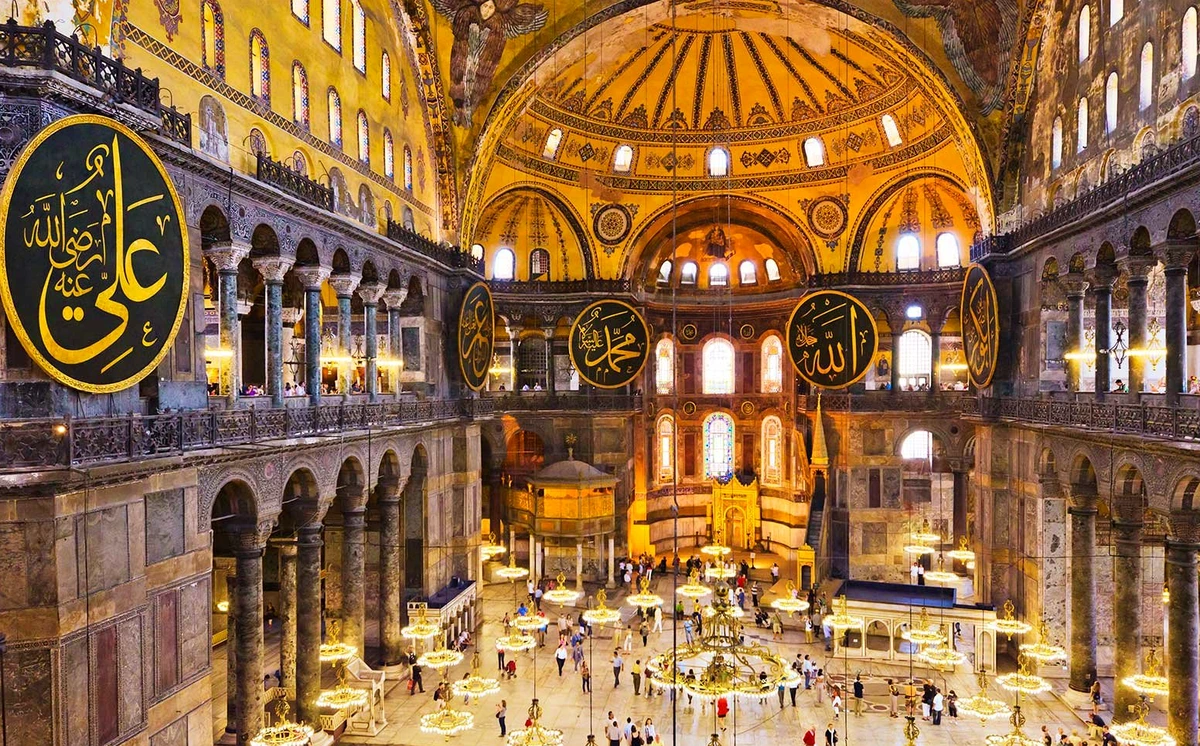
This cultural transformation never erased the soul of Hagia Sophia; instead, it added priceless architectural layers. Under the royal architect Mimar Sinan and successive generations of Ottoman artisans, four slender minarets rose gracefully into the blue sky, serving simultaneously as seismic buttresses reinforcing the massive dome. The Proconnesian marble floor was covered with plush prayer carpets angled precisely toward the holy city of Mecca via an ornate mihrab niche. In the nineteenth century, another pinnacle of artistry was added when renowned master calligrapher Kazasker Mustafa İzzet Efendi personally penned eight colossal circular calligraphic medallions—measuring up to 7.5 meters in diameter—gilded magnificently over linden wood. Inscribed with the names of Allah, the Prophet Muhammad, the four Rightly Guided Caliphs, and the Prophet’s grandsons, these plaques hang solemnly upon the piers alongside exquisite Byzantine mosaics of the Virgin Mary (Theotokos) and Christ Pantocrator, completing an endless epic of East–West civilizational harmony.
Reigning proudly atop the first of the seven iconic hills of Istanbul’s historic peninsula, the Hagia Sophia Grand Mosque commands a geostrategic position that ancient geographers and geomancers likened to the most auspicious dragon vein in Asia Minor. This hilltop—now part of Sarayburnu Promontory jutting out like a falcon’s beak slicing through the waves—marks the vital confluence where the surging currents of the Bosphorus Strait meet the tranquil waters of the Golden Horn and open out into the vast Sea of Marmara. From this vantage point, sweeping vistas encompass the entire maritime gateway linking the Black Sea to the Mediterranean, transforming the monument into both a towering spiritual beacon and a symbolic citadel of Byzantine imperial might that controlled East–West trade arteries for a thousand years.
To support a colossal structure exerting tens of thousands of tons of compressive load in a region frequently battered by violent tremors along the North Anatolian Fault, ancient engineers relied on a remarkably specialized natural geological foundation. This massive edifice anchors itself firmly atop a dense Neogene limestone stratum interwoven with million-year-old volcanic tuff sedimentary layers, forming a rarely matched subterranean bedrock platform. Under Emperor Justinian I, master mechanics and geometers Anthemius of Tralles and Isidore of Miletus reshaped the hillside through stepped terracing, engineering a multi-tiered artificial foundation system designed to distribute both vertical weight and lateral thrust from the great dome evenly. Thousands of tons of pozzolanic lime mortar mixed with volcanic ash and crushed brick—a self-healing material capable of sealing micro-cracks over time—were poured deep into bedrock cavities, creating a resilient monolithic bond that enabled the sanctuary to withstand hundreds of catastrophic earthquakes that leveled surrounding structures.
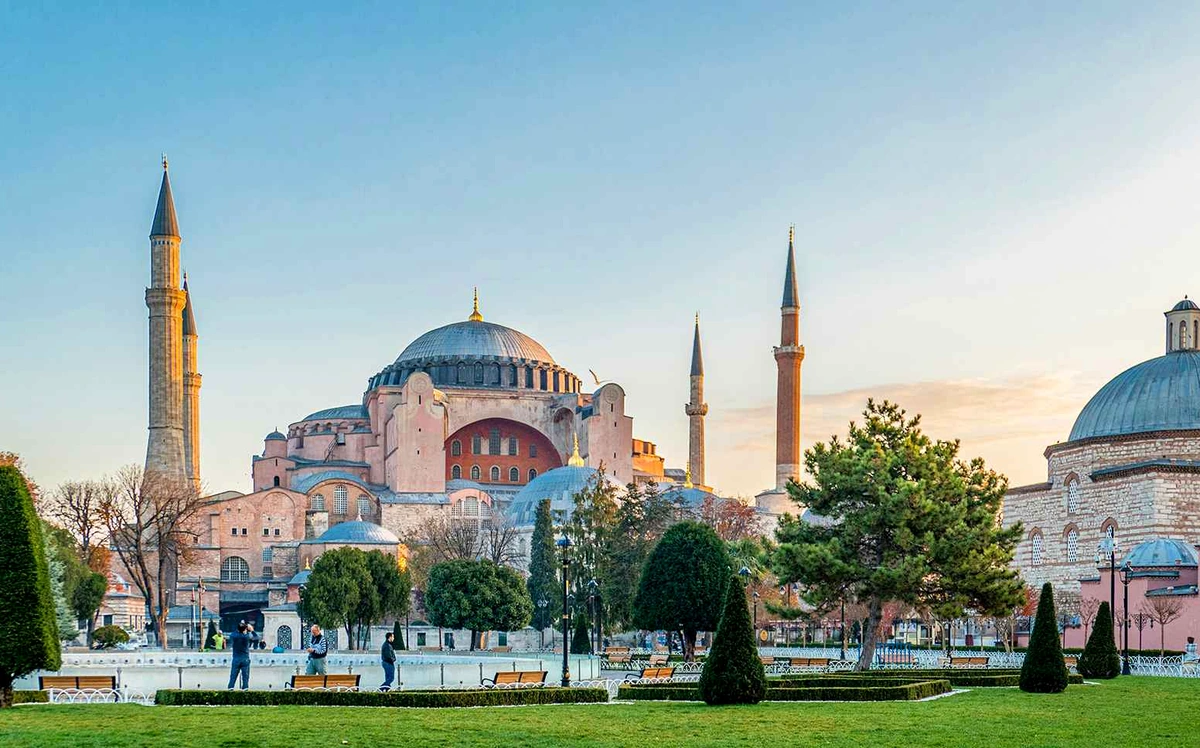
From an urban morphology perspective, Hagia Sophia exists as a breathtaking multi-layered palimpsest where the cultural strata of Rome, Byzantium, and the Ottoman Empire overlap seamlessly. The grand sanctuary stands strikingly at the central nexus of the heritage corridor, forming a dramatic visual dialogue with the Blue Mosque (Sultanahmet Mosque) across the fragrant gardens of the ancient Hippodrome—the millennia-old chariot-racing arena once shaken by the bloody Nika Revolt. To the north, it borders the magnificent Topkapı Palace complex, home to the famed royal kitchens (Matbah-ı Âmire) that once prepared imperial banquets featuring signature dishes like Kuzu Mutancana, lamb stewed with dried fruits. This spatial arrangement establishes an absolute corridor of authority where every step taken by a traveler treads the delicate threshold between earthly sovereignty and divine faith.
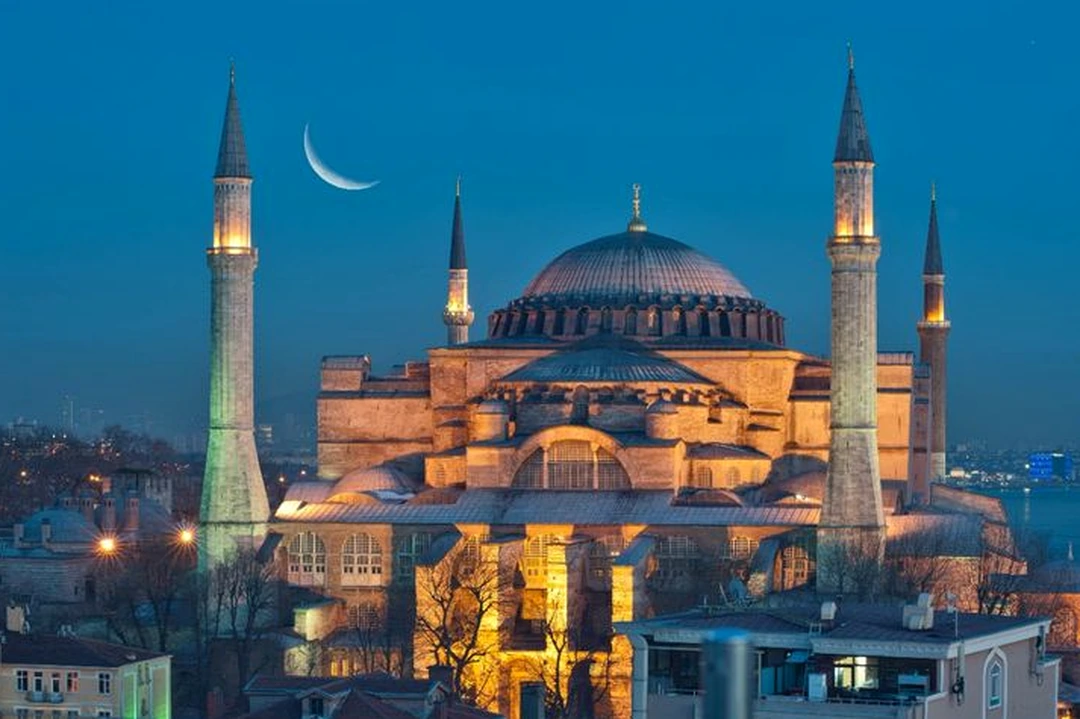
The surrounding landscape is softened by ancient plane trees stretching their leafy canopies over the Ottoman Rococo ablution fountain (Şadırvan) commissioned by Sultan Mahmud I. At sunset, golden twilight gilds Hagia Sophia’s reddish sandstone and brick walls, blending harmoniously with the deep indigo sky framing its four slender minarets. The melodic call to prayer (adhan) echoing from loudspeakers atop the minarets resonates with lapping waves from the Bosphorus and wheeling seagulls over the Golden Horn, weaving an enchanting audiovisual tapestry that affirms the timeless stature of an architectural masterpiece at the heart of both the Islamic and Christian worlds.
Stepping through the imposing millennium-old oak Imperial Gate, the interior of Ayasofya unfolds like a microcosm of the universe, where supreme ancient geometry merges with humanity’s longing to touch the divine. The epoch-making architectural breakthrough of the building lies in its bold fusion of a longitudinal basilica floor plan with a centralized structure anchored by a soaring dome. The two brilliant scholar-architects Anthemius of Tralles and Isidore of Miletus transcended every conventional Roman construction norm, realizing an expansive, unobstructed interior space free from dense rows of columns interrupting the line of sight.
The heart and soul of this entire masterpiece is its colossal central dome—measuring 31 to 33 meters in diameter and rising 55.6 meters above the marble floor—resembling an artificial heaven floating effortlessly in midair. To bear this immense load without buckling the walls below, the master builders pioneered a system of four spherical triangular pendentives, transitioning smoothly from a square pier base to the circular rim supporting the dome. Four massive load-bearing piers, cleverly concealed behind secondary colonnades, work in concert with two vast eastern and western semi-domes to create a flexible, cascading distribution of compressive forces capable of absorbing seismic shocks from the Sea of Marmara.
Lining the base of the dome is a ring of forty arched windows engineered with optical precision. When the sun climbs high, shafts of sunlight stream through these narrow apertures, catching fine airborne dust particles and reflecting endlessly off gilded mosaic tiles to produce the legendary visual phenomenon known as “lux nova”—the new light. Contemporary historian Procopius marveled that the dome did not appear to rest upon solid masonry below, but rather seemed suspended from the heavens by an invisible golden chain, enveloping pilgrims in an overwhelming sense of divine grace.
To complete this extraordinary structure at breakneck speed, Byzantine engineers utilized ultra-lightweight porous clay bricks specially fired on the island of Rhodes—so buoyant they could float on water—bound together with famed Horasan mortar infused with volcanic ash and finely ground brick dust for enduring elasticity across centuries. The interior’s splendor is further elevated by iconic marble and porphyry columns salvaged from celebrated temple ruins across the Mediterranean: proud imperial purple porphyry from ancient Egypt, lush green marble from Thessalian quarries, royal yellow stone from distant Numidia, paired with exquisite white-and-gray veined marble quarried directly from Prokonnesos Island in the Sea of Marmara, book-matched along the walls like abstract landscapes sculpted by nature itself.
Woven deeply into this sacred space is a treasure trove of gilded glass mosaics from the Byzantine Golden Age. High in the apse conch, the Theotokos mosaic depicting the Virgin Mary holding the Christ Child—revered by the Ottomans as Meryem Ana—radiates serene beauty beneath flickering candlelight. Along the upper galleries, intricate Deesis mosaics portray Christ Pantocrator flanked by the Virgin Mary and Saint John the Baptist, alongside portraits of emperors and empresses presenting offerings rendered in millions of shimmering gold-leaf glass tesserae. When the monument entered the Ottoman era, this artistic heritage was preserved rather than erased, entering into a harmonious dialogue with supreme Islamic artistry. Eight giant circular linden-wood calligraphic shields—7.5 meters in diameter—penned by master calligrapher Kazasker Mustafa İzzet Efendi hang solemnly between the arches, bearing the sacred names of Allah, the Prophet Muhammad, and the four virtuous Caliphs, creating a living museum of aesthetic symbiosis unmatched anywhere in the world.
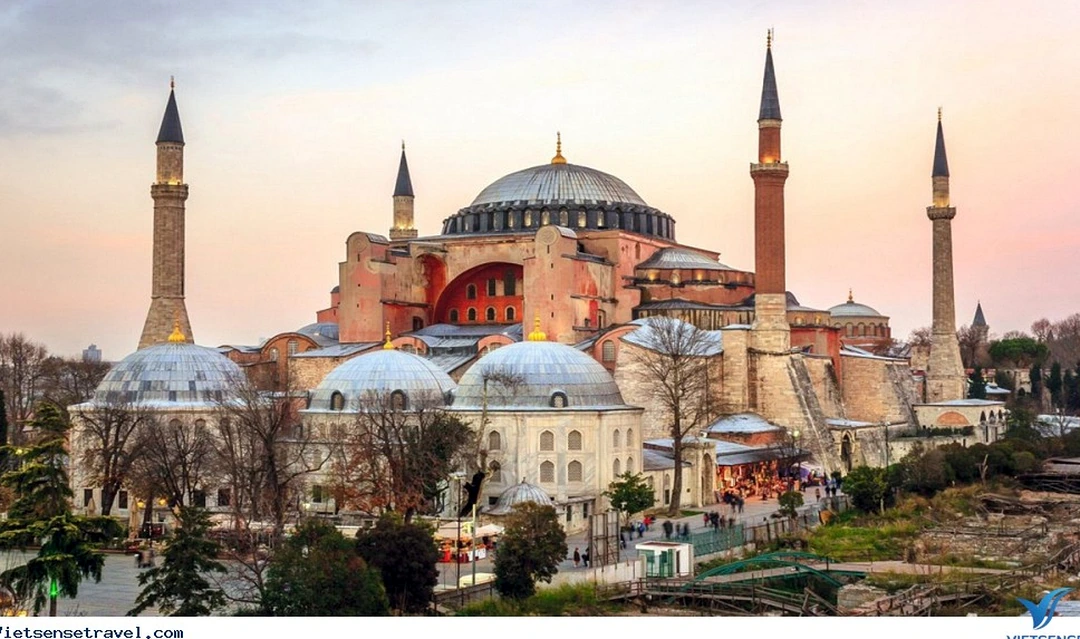
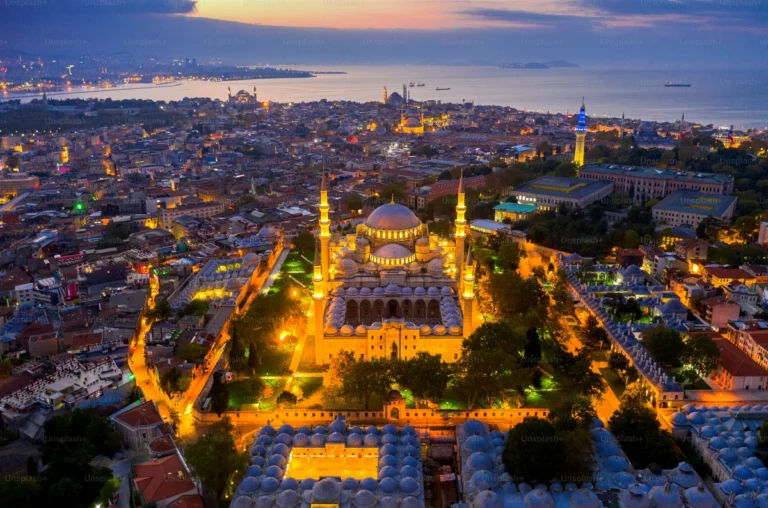
As crimson twilight fades across the calm waters of the Bosphorus Strait and the Sea of Marmara, the historic Sultanahmet peninsula sheds its daytime bustle to drape itself in the mysterious velvet cloak of an Eastern night. In that liminal dusk, Hagia Sophia emerges not merely as an architectural monument that has weathered fifteen centuries of upheaval, but as a grand open-air stage where light, shadow, and sacred sound harmonize in an endless symphony of Byzantine and Ottoman civilizations.
The history of this grand sanctuary is equally a history of visual artistry and the theology of light. Throughout the golden era of the Eastern Roman Empire, the domed interior was engineered to evoke a transcendent experience called “lux nova”—divine illumination symbolizing heavenly grace. On nights celebrating Easter liturgy or imperial coronations, thousands of glass polycandela oil lamps, pure beeswax candles, and ornate silver chandeliers were lit simultaneously. Flickering flames suspended in midair reflected off millions of deliberately angled gold-leaf glass mosaic tesserae, turning the entire ceiling into a floating canopy of stars that blurred the boundary between earthly stone and eternity.
During the Ottoman Islamic era, the philosophy of light evolved into another realm of reverence. Imperial architects thoughtfully lowered expansive brass chandeliers close to the Proconnesian marble floor, creating a warm, intimate canopy of illumination embracing thousands of worshippers bowed in prayer. The amber glow of handcrafted candles and olive-oil lamps cast ethereal shadows across the eight massive circular calligraphic medallions (levha)—measuring 7.5 meters across—inscribed by master calligrapher Kazasker Mustafa İzzet Efendi in the mid-nineteenth century. Under the oblique angles of candlelight, sweeping golden strokes spelling the names of Allah, the Prophet Muhammad, and the Rightly Guided Caliphs appeared to float free from their dark green wooden backgrounds, creating a mesmerizing, solemn three-dimensional visual effect.
When Istanbul settles into late-night stillness, contemporary lighting design takes over Hagia Sophia through carefully positioned exterior LED illumination. Crisp beams accentuate the deep terracotta Roman brickwork weathered by centuries, highlighting the robust silhouettes of massive flying buttresses engineered by master architect Mimar Sinan following devastating medieval earthquakes. Viewed from afar, the four minarets soar proudly like guiding torches piercing a thousand years of darkness, contrasting beautifully with the hushed, contemplative sanctity inside—where worldly clamor seems to pause in the presence of faith.
Evening life surrounding Hagia Sophia opens up a vibrant, poetic cultural experience. Seated on stone benches around the illuminated fountain in Sultanahmet Square, visitors can listen to evening chimes mingling with the resonant call-and-response of the night adhan echoing between Hagia Sophia and the Blue Mosque. Night breezes off the Golden Horn carry the aroma of chestnuts roasting over glowing coals, toasted sesame from freshly baked simit bread rings, and the rich fragrance of Turkish tea steeping in traditional double-stacked çaydanlık teapots. Amid drifting wisps of smoke and warm golden light spilling from historic teahouses nestled beneath sycamore trees, gazing at Hagia Sophia’s monumental silhouette etched against Istanbul’s velvet night sky is a poetic privilege that transports the traveler’s spirit across fifteen glorious centuries.
Stepping out beyond the solemn threshold of Ayasofya, the vibrant energy of Tarihi Yarımada—Istanbul’s Historic Peninsula—immediately greets travelers with a symphony of flavors refined over more than half a millennium. The culinary scene encircling Sultanahmet Square offers far more than physical sustenance; it represents a living continuation of Saray Mutfağı, the illustrious Ottoman palace cuisine blended seamlessly with the bustling street-food pulse spanning Europe and Asia. From early dawn, while wisps of mist from the Bosphorus still linger around minaret spires, the warm fragrance of freshly baked simit fills the cobblestone lanes. Golden sesame-crusted bread rings, baked crisp in wood-fired ovens and stacked neatly aboard crimson two-wheeled vendor carts, serve as a humble yet iconic prelude to a gastronomic journey through the imperial capital.
Venturing deeper into historic restaurants tucked beneath Byzantine city walls, the imperial culinary heritage of the Ottoman sultans shines proudly through recipes once closely guarded inside the kitchens of neighboring Topkapı Palace. Foremost among these is Mutancana, a celebrated fruit-and-meat stew once served at grand royal banquets hosted by Sultan Mehmed II following his conquest of Constantinople. This dish exemplifies sophisticated flavor harmony, with tender morsels of young lamb slow-simmered alongside sweet figs, sun-dried Malatya apricots, raisins, crunchy almonds, and a touch of pure honey, creating a rich, sweet-and-tart depth that enchants the palate. Alongside Mutancana, royal menus invariably feature silky almond soup crafted from poultry bone broth, freshly ground almond paste, rich milk, and nutmeg—recalling the lavish opulence of bygone imperial feasts.
To beat the summer heat or warm the soul on brisk, windy winter afternoons, Istanbulites around Hagia Sophia faithfully preserve the tradition of drinking artisanal şerbet. This refined beverage originated in the cooling tonics and wellness elixirs of the Ottoman imperial infirmary, meticulously steeped from herbs, fruits, and rare aromatics. Gleaming copper urns stationed in shop corners pour amber-hued tamarind şerbet with a crisp tang, or deep-brown licorice root şerbet boasting a lingering, velvety sweetness. Every chilled sip infused with cloves, cinnamon bark, and Damask rose petals not only refreshes weary travelers after hours of sightseeing, but also connects them intimately with ancient royal lifestyle traditions.
The pinnacle of imperial confectionery in this cross-cultural heartland culminates in the classic dessert known as Saray Usulü Bademli Zerde. Dating back to the fifteenth century and traditionally served at grand celebrations honoring royal victories or courtly circumcision festivities, Zerde is an unmistakable statement of regal elegance. Tender glutinous rice grains are simmered in premium saffron infusion, staining the pudding a radiant gold reminiscent of Ayasofya’s dome at sunset. The gentle sweetness of rock sugar melds with handmade rosewater, accented by slivers of nutty almonds, toasted pine nuts, and mildly tart black currants (kuş üzümü). Savoring a bowl of shimmering Zerde alongside a sip of robust Rize black tea served in a tulip-shaped ince belli glass immerses every sense in the timeless beauty of a land straddling two continents.
Stepping inside Hagia Sophia today feels like embarking on a dual cultural pilgrimage where a thousand-year-old world heritage monument coexists harmoniously with living local devotion. Since its official restoration as an active mosque under the name Ayasofya-i Kebir Cami-i Şerifi, the landmark has been jointly managed by the Ministry of Culture and Tourism of Turkey and the Presidency of Religious Affairs (Diyanet). To safeguard priceless historical layers while accommodating worshippers and international visitors arriving from every continent, authorities have implemented a highly organized visitor flow system. International tourists enter via a dedicated southern entrance to explore the upper gallery—home to the finest Byzantine mosaics—while the emerald-carpeted ground floor is reserved primarily for Muslim worshippers performing daily prayers. The monument welcomes visitors daily from early morning until late afternoon, though travelers should pay close attention to the five daily Namaz prayer times—especially Friday congregational prayers (Cuma Namazı)—when ringing chimes and the resonant Azan from all four minarets signal a temporary closure of prayer areas to non-Muslim visitors.
Reaching the historic heart of the Fatih peninsula is remarkably effortless thanks to a modern public transit network woven seamlessly through the ancient city. The T1 tram line (Kabataş–Bağcılar) offers the most convenient route, gliding past the scenic shores of the Golden Horn before stopping directly at Sultanahmet Station. The moment you step off the platform, a two-minute stroll across a leafy square shaded by cypress and plane trees brings the colossal silhouette of the great dome directly into view. Visitors can also approach from the Marmara seafront or Eminönü ferry terminal, following winding basalt-paved lanes beneath the shadow of ancient Theodosian walls to soak in the millennia-old atmosphere of historic Constantinople.
Because Hagia Sophia is an active house of worship, all visitors must strictly observe traditional modest dress guidelines (Tesettür) before passing through the security gates. Women are required to wear a headscarf covering their hair and neck, while both men and women must wear respectful attire covering shoulders and extending below the knees. If unprepared, visitors can purchase convenient non-woven headscarves and robes at the information desk near the entrance for a nominal fee. Before stepping onto the plush velvet carpets covering the marble floor, removing shoes is mandatory; complimentary eco-friendly shoe bags are provided at the entrance so visitors can carry their footwear with them. Walking barefoot across the warm carpet while gazing upward at the soaring dome glittering with six-winged Seraphim angels wraps the mind in solemn serenity, washing away the clamor of modern city life outside.
The ideal time to visit Hagia Sophia is early in the morning, when the first rays of sunlight pierce the forty windows ringing the base of the dome, casting ethereal shafts of heavenly light onto the Omphalion marble inlay—the exact spot where Byzantine emperors were once crowned. After spending hours admiring jeweled mosaics and sweeping Ottoman Arabic calligraphy, visitors can stroll leisurely down nearby Divan Yolu lane for an iconic local meal. Savoring sizzling traditional köfte meatballs paired with fire-roasted peppers at the century-old Sultanahmet Köftecisi, followed by a glass of crimson Turkish çay served in a tulip-waisted glass, provides a deeply satisfying finale to a morning steeped in history.
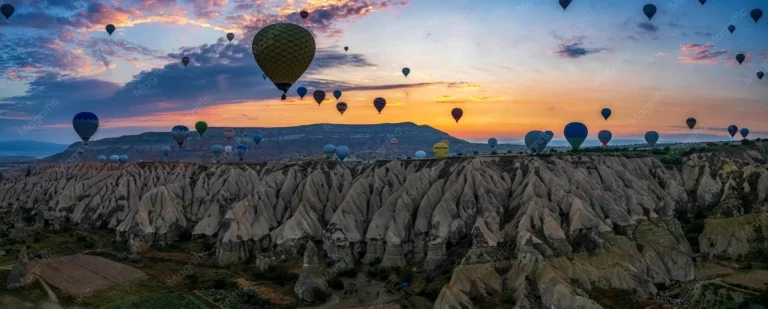
For travelers captivated by the beauty of East–West cultural fusion and eager to uncover untold thousand-year-old secrets across this extraordinary Eurasian crossroads, choosing a well-curated all-inclusive Turkey tour package opens the door to exploring legendary wonders—from the storied citadels of Istanbul to the surreal fairy-chimney valleys of Cappadocia—without worrying about complex travel logistics.