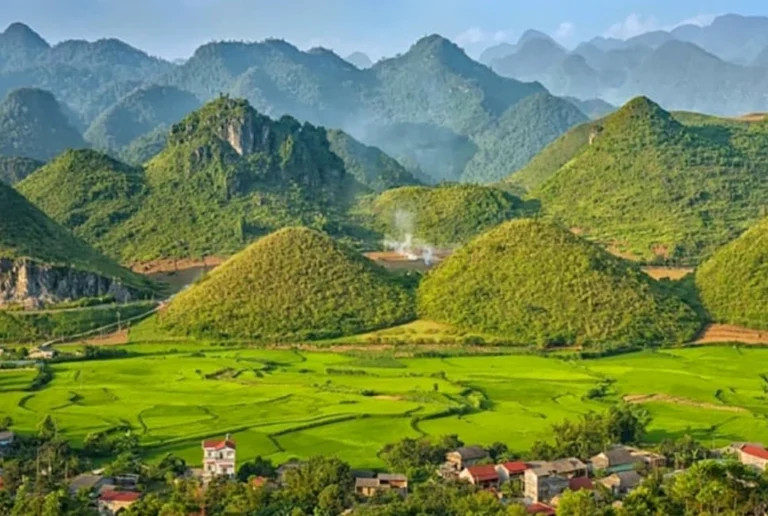
Atop the majestic Dong Van Karst Plateau, where the nation’s frontier touches the clouds and jagged cat-ear limestone peaks pierce the sky, the Lung Cu Flag Tower stands tall as an eternal symbol of Vietnamese sovereignty and resilience. Far more than a mere geographic landmark marking the sacred northernmost point, Lung Cu is a spiritual destination where every Vietnamese visitor setting foot on Dragon Mountain feels a deep surge of pride before the breathtaking beauty of their homeland.
1. Geographic Position & Historical Significance of Dragon Mountain (Long Son)
The Lung Cu National Flag Tower sits atop Dragon Mountain (Long Son) in Lung Cu Commune, Dong Van District, Ha Giang Province, at an elevation of approximately 1,470 meters above sea level. Geographically, Vietnam’s actual northernmost point lies about 3 kilometers north of the tower’s base along a tributary of the Nho Que River, yet Lung Cu Peak has been chosen for centuries as the national flagpole thanks to its unmatched strategic and feng shui command over the entire borderland.
According to historical chronicles and enduring legends, Lung Cu Peak is closely tied to Grand Preceptor Ly Thuong Kiet during his inspection of the northern frontier in the 11th century. To assert the territorial boundaries of Dai Viet, he ordered a flagpole made of Chinese fir to be planted on the highest summit. Later, during the Tay Son Dynasty, after his decisive victory in the spring of Ky Dau (1789), Emperor Quang Trung commanded that a massive bronze drum be placed at the Lung Cu watchtower; each resonant beat served as a signal of peace along the border, echoing across the cat-ear limestone valleys. The name “Lung Cu” originates from the H’Mong terms “Long Cu” (where the dragon resides) or “Long Co” (the king’s drum), reflecting a profound fusion of national defense lore and indigenous heritage across the centuries.
2. Flagpole Architecture & The Symbolic 54-Square-Meter Flag
The present-day Lung Cu Flag Tower was inaugurated following a major restoration in 2010. Standing at a total height of 33.15 meters, the structure features a 20.25-meter pedestal column and a 12.9-meter flagstaff. Its sturdy octagonal shaft, inspired by the Hanoi Flag Tower, exudes stately grandeur and endurance against the fierce borderland gales that roar year-round.
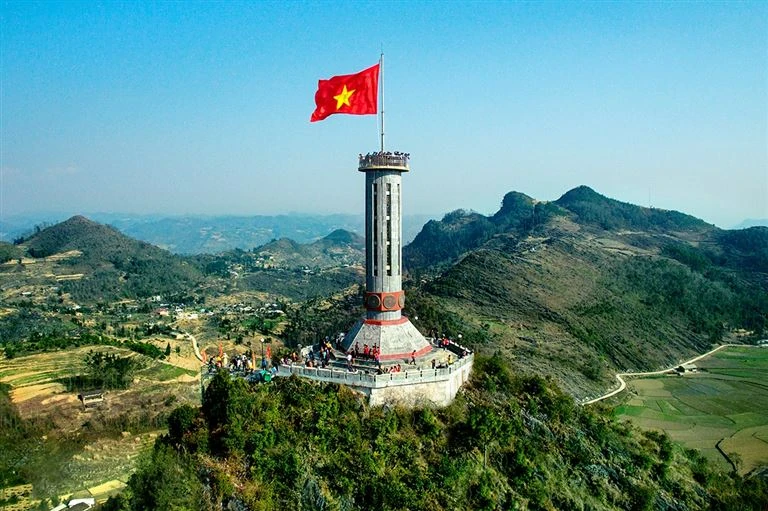
At the base of the tower, eight large blue-stone bas-reliefs are intricately carved to depict glorious milestones in Vietnamese history, interwoven with ancient Dong Son bronze drum motifs such as flying cranes, radiant sun patterns, and scenes of highland folk culture. Flying proudly at the summit against the frontier sky is the red flag with a gold star. Measuring a standardized 54 square meters (9 meters long by 6 meters wide), the flag symbolizes the unbreakable unity of Vietnam’s 54 ethnic groups across the S-shaped land. Because winds atop Dragon Mountain are extraordinarily fierce, soldiers from the Lung Cu Border Guard Post regularly replace the flag every week—or after heavy storms—to ensure the national colors always fly vibrant and bright at the country’s northernmost bastion.
3. Conquering the 839 Stone Steps & Taking in Panoramic Views of the Karst Plateau
To reach the base of the flag tower and gaze out over the sweeping border landscape, visitors embark on a climb up 839 sturdy stone steps divided into three consecutive stages:
- Stage 1 (From the parking area to the waiting pavilion): Ascend nearly 300 stone steps winding along a gentle mountain slope, shaded on both sides by proud Chinese fir trees and hardy wildflowers blooming from rocky crevices.
- Stage 2 (From the rest station to the base of the flagpole): Tackle 283 steeper steps that demand a bit more stamina, rewarded by wide-open vistas and brisk mountain breezes that sweep away any fatigue.
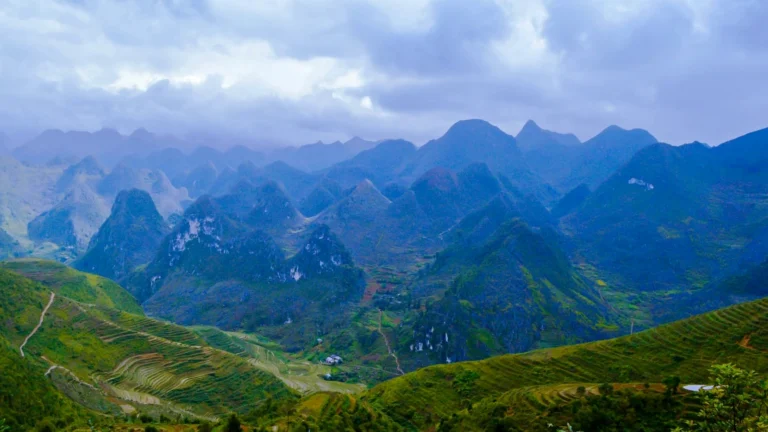
- Stage 3 (The spiral staircase inside the tower shaft): Climb 140 narrow metal steps leading straight up to the observation deck at the top of the column. Stepping out onto the windswept balcony, the entire magnificent panorama of Lung Cu unfolds before your eyes: the rammed-earth houses with yin-yang tiled roofs of Lo Lo Chai Village, two freshwater “Dragon Eye” lakes that never run dry, and cascading terraced fields winding like soft silk ribbons across the hillsides.
4. Unmissable Photo Spots & Priceless Experiences
A pilgrimage to Lung Cu becomes even more memorable when you combine cultural immersion with standout photography spots:
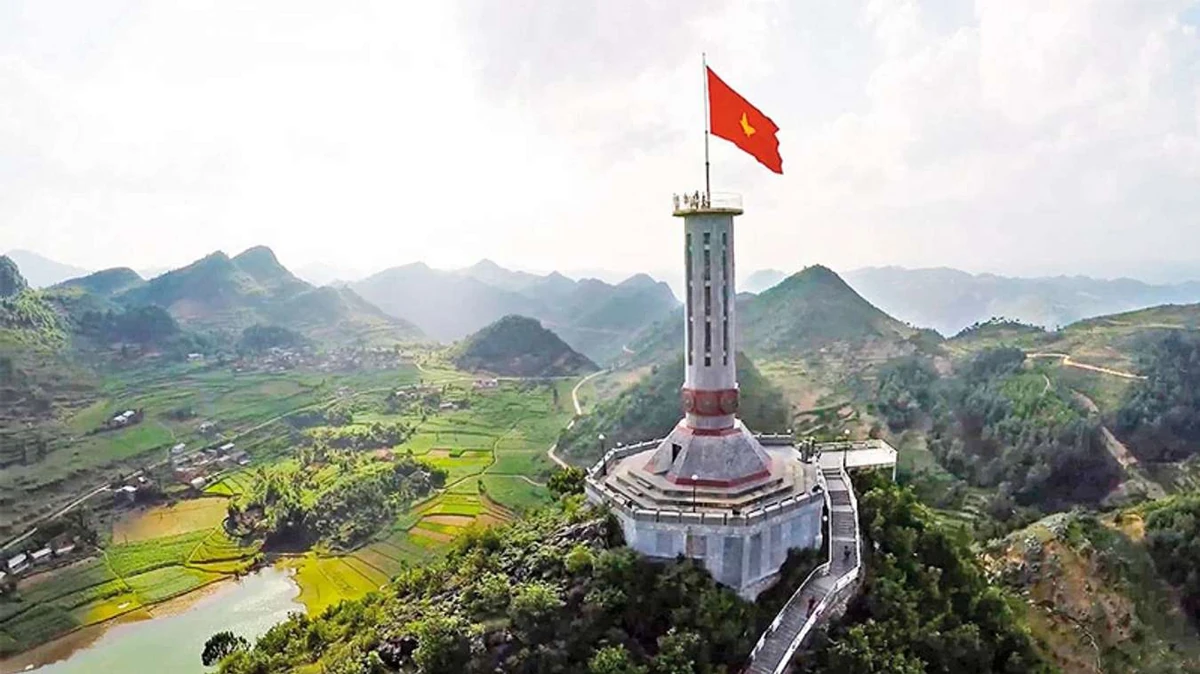
- Saluting the sacred flag beneath the 54m2 banner: Standing solemnly at the foot of the flagpole, listening to the fabric snap in the highland wind, and singing the National Anthem is a deeply moving moment for anyone of Vietnamese heritage.
- Checking in at the Northernmost Point & Border Marker 428: For adventurous trekkers, hiking along the cliffside trail to touch Border Marker 428—where the Nho Que River first enters Vietnamese territory—is a proud milestone.
- Exploring Ancient Lo Lo Chai Village: Nestled right at the foot of Dragon Mountain, Lo Lo Chai looks like a storybook village with its warm brown rammed-earth walls, painstakingly hand-stacked stone fences, and the intricately embroidered traditional attire of the Black Lo Lo people. Sipping a warm, aromatic cup of coffee on a wooden porch while watching sunset fall over the flag tower offers a rare moment of pure serenity.
5. Practical Travel Tips & Best Time to Visit
To ensure your journey to Lung Cu is smooth and completely safe, keep these handy tips in mind:
- Best time to visit: Autumn (September – October), when terraced rice fields turn a brilliant golden yellow at harvest time; or winter (November – December), when buckwheat blossoms blanket the rocky slopes in soft pinkish-purple hues amid crisp, misty weather.
- Clothing & Getting around: Wear athletic shoes with strong grip to prevent slipping on the stone steps. Temperatures in the windswept highlands are typically 5 – 8°C cooler than in the lowlands, so pack a windproof jacket, scarf, and warm layers.
- Accommodation & Dining: Spend a night in a traditional rammed-earth homestay in Lo Lo Chai to savor local specialties like horse thang co, smoked buffalo meat stir-fried with mustard greens, black chicken stewed with forest mushrooms, and a warming cup of herbal-fermented corn wine.
6. Geological & Feng Shui Survey of Dragon Mountain Amid the Karst Plateau
From the perspective of engineering geology and landscape geomorphology, Dragon Mountain (Long Son) is a Paleozoic limestone karst massif formed during the Devonian and Permian periods, roughly 300 to 400 million years ago. Biochemical weathering and karst dissolution over millions of tropical monsoon seasons sculpted a solitary peak resembling a giant dragon head bowing toward the valley, with two gentle mountain ridges flanking both sides like protective wings embracing the fertile Lung Cu plain.
The most extraordinary feature of this geological formation is the miraculous presence of two natural freshwater lakes situated symmetrically at either foot of the mountain, known locally as “Long Nhan” (Dragon Eyes). Across a limestone plateau that normally grows parched in winter as water seeps deep into underground faults, these two Dragon Eye lakes never dry up year-round, maintaining crystal-clear, cool water. The left lake belongs to Lo Lo Chai Village, while the right lake supplies vital drinking and irrigation water for the H’Mong community in Then Pa Village. This harmony of embracing peaks and gathering waters—combining a commanding mountain stance with life-giving springs—creates an auspicious landscape rarely seen on the northernmost edge of the country.
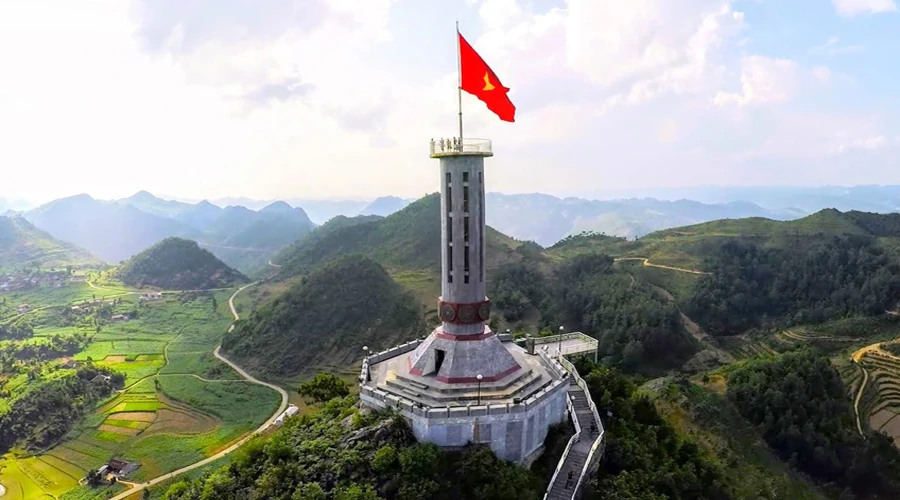
7. Local Culture & Community Life in Lo Lo Chai
Tucked peacefully right below Dragon Mountain, just about a 1-kilometer walk from the base of the Lung Cu Flag Tower, the Lo Lo Chai Community Cultural Tourism Village appears like an unspoiled northern fairy tale. It has long been home to the Black Lo Lo—one of Vietnam’s smallest ethnic minority groups, boasting one of the richest and most distinctive folk cultures in the country.
The rammed-earth houses in Lo Lo Chai are built with compacted clay walls 50 to 60 centimeters thick, keeping interiors warm against biting highland winter winds while remaining cool and pleasant in summer. Their roofs are topped with moss-covered yin-yang tiles, surrounded by hand-stacked dry-stone walls built without mortar that have weathered countless storms through the decades. Lo Lo women are renowned for their weaving and embroidery skills; their traditional outfits, pieced together from thousands of fabric scraps into motifs of sacred birds, diamonds, and dragon eyes, testify to refined artistry and remarkable patience. Visiting Lo Lo Chai, travelers not only unwind in rustic, cozy homestays, but also get to watch traditional xoe dances, hear the deep, sacred resonance of bronze drums during harvest and rain-praying festivals, and immerse themselves in the unhurried, peaceful rhythm of village life.
8. Highland Culinary Map & Unforgettable Mountain Specialties
Lung Cu’s cuisine bears the unmistakable imprint of its chilly alpine climate and pure, wild-foraged mountain ingredients. When stopping here, food lovers should not miss these unique delicacies:
- Traditional horse thang co: An iconic highland dish made from fresh horse meat and offal slow-simmered in a large cast-iron cauldron with more than 12 aromatic herbs and spices, including black cardamom, cinnamon bark, star anise, lemongrass, and wild doi seeds. Its rich, warming aroma and savory depth paired with a shot of fiery herbal corn wine create an unforgettable culinary memory.
- Charcoal-grilled buckwheat cakes: Harvested buckwheat seeds are sun-dried, finely ground into flour, shaped into fluffy round cakes, steamed, and then grilled crisp over glowing embers. Their nutty, mildly sweet flavor and earthy floral aroma warm travelers’ spirits on chilly winter days.
- Grilled free-range black pork with mac khen: Raised free-range along rocky limestone slopes, this indigenous black pig breed yields firm, lean meat with crisp skin. Marinated with aromatic mac khen (wild mountain pepper) and moc mat leaves, the skewered pork is grilled over charcoal until the skin turns golden and irresistibly fragrant.
- Au tau porridge (Cold-relieving & restorative porridge): Though raw au tau tubers are toxic, skilled H’Mong preparation—thoroughly soaking and simmering them with pork trotters for 4 to 6 hours—transforms the root into a potent medicinal delicacy that swiftly restores energy after a long day climbing stone steps.
9. Perfect 2-Day, 1-Night Lung Cu – Dong Van Itinerary
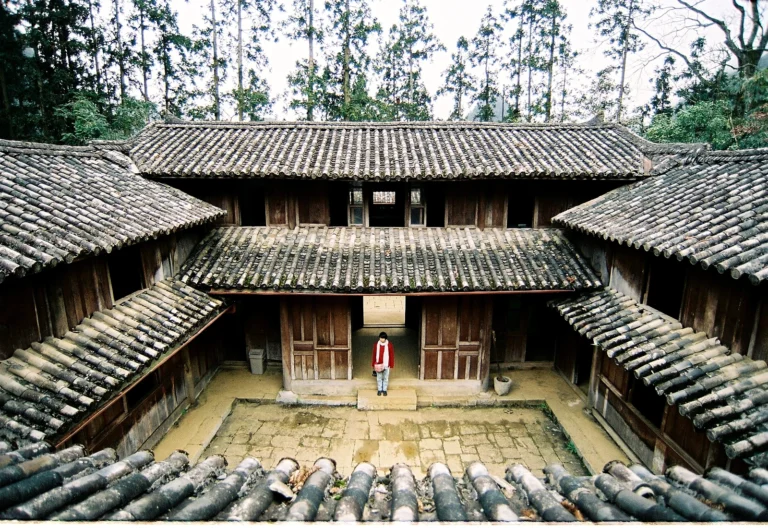
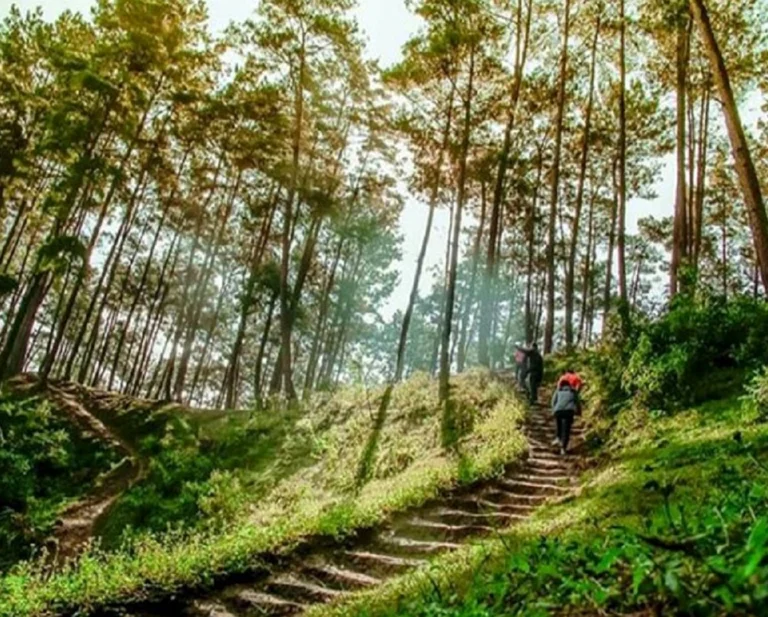
- Day 1: Depart from Ha Giang City via Quan Ba (stop at Heaven’s Gate and Twin Fairy Mountains) -> Yen Minh (expansive pine forests) -> Vuong Family Mansion (H’Mong King’s Palace) in Sa Phin -> Head straight to Lung Cu Commune. Afternoon: Climb the Lung Cu Flag Tower at 3:30 PM to catch sunset from the observation deck. Evening: Check into a homestay in Lo Lo Chai Village, enjoy a black chicken and wild mushroom hotpot, and join a campfire cultural exchange.
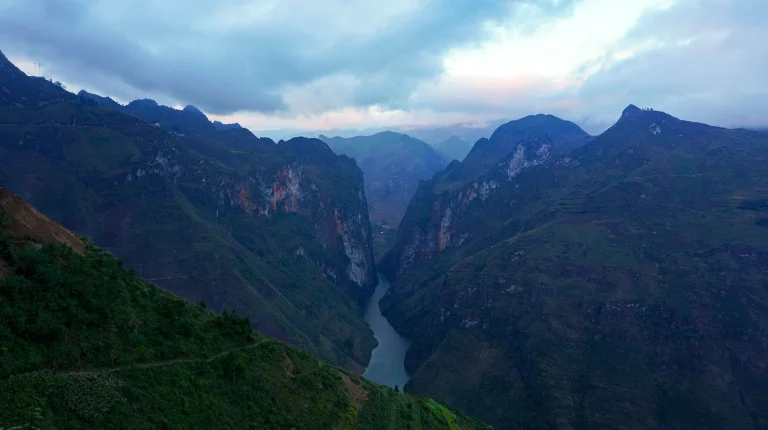
- Day 2: Wake up at 6:00 AM amidst the morning mist of Lo Lo Chai and sip Northernmost coffee at sunrise -> Head to Dong Van Old Quarter for hot steamed rice rolls served in sweet bone broth -> Continue on to conquer the legendary Ma Pi Leng Pass and take a boat cruise through Tu San Canyon on the Nho Que River.