Reclining quietly in the heart of the bustling metropolis of Kunming yet carrying the sedimentary breath of hundreds of years of historic changes, Nancheng Street (Nancheng Jie) is one of the rare spatial sources preserving almost intact urban memories from the dawn of territory reclamation down to the modern era. The origins of this renowned street date back to the early years of the Qing Dynasty, when Kunming’s appearance still bore strong imprints of a vital military outpost across the southwestern frontier. The land sparkling with lights and teeming with travelers today was formerly the Southern Drill Ground (Nan Jiaochang) of Kunming’s ancient city—stricter military ground dedicated exclusively to garrisoning, drilling troops, practicing battle formations, and performing martial arts by imperial garrisons.
In the early Qing Dynasty, this space resounded with troop rallying shouts, clashing blades, and the thunderous hooves of harsh martial exercises. The military garrison system of that era took the Southern Drill Ground as its centerpiece to control the city’s southern gateway, maintaining defensive control across the entire Dianchi Lake basin. Yet the laws of urban historical evolution did not permit this land to remain forever a cold training ground of weapons and armor. Following the flow of time and the settling of frontier turbulence, military functions gradually yielded to civilian needs, laying the initial foundation for a spectacular transformation from a military training ground into one of Yunnan’s most bustling commercial market axes.
Entering the middle Qing period, when borderland trade between Yunnan Province and neighboring nations reached its zenith, Nancheng Street underwent a landmark metamorphosis. Pack-horse caravans along the Tea Horse Road alongside merchants from all directions flooded the former training ground, turning it into a large-scale trading center for precious jewels, jade artifacts, and commodity aggregation. Renowned marbles, Burmese jadeite, white silver, and rare medicinal herbs from all frontier paths gathered at contiguous shopfronts lining the main street. The sound of goldsmith hammers, merchants’ bustling haggling, and pack-horse bells completely replaced military horns, forging the identity of a prestigious and wealthy merchant district renowned across the southern borderlands.
The peak historical transformation of Nancheng occurred during the late Qing to early Republican eras. This was a historic moment when Kunming decided to implement the policy of “self-opening for commerce”—proactively opening up for international trade without total imposition from foreign unequal treaties. Amidst that reform wave, Nancheng Street shone brightly as a core witness and the most dynamic economic nucleus of the self-opened port. Architectural imprints blending traditional Central Dian native styles with modern Western details began emerging, forging a unique urban appearance: preserving profound Eastern souls while welcoming modern industrial and commercial vitality from the outside world.
Today, through numerous historical vicissitudes and large-scale urban reconstructions, Nancheng Street stands resiliently as a living fossil of history. The district earned the honor of becoming one of only three surviving historical and cultural streets across all of Kunming City, ranked as a Yunnan provincial-level historical and cultural street heritage. This ancient street chain has seamlessly linked millennial historical currents: beginning in military uniforms of early Qing garrisons, glowing with jade treasures of middle Qing markets, rising resiliently through self-awakening commercial eras of transition, and continuing to shine brilliantly beneath night lights of a proud heritage space.
Situated within the core of Wuhua District in Kunming City, Nancheng ancient street occupies an exceptionally advantageous geographical position in traditional Eastern urban geomantic arts. The City of Spring has since ancient times been embraced by majestic mountains and rivers, featuring grand Biji to the west, towering Jinma to the east, backing northward against gentle Xishan ridges sloping down toward Wuhua Hill, while facing southward directly toward the expansive waters of Dianchi Lake. Nestled snugly within that vital energy-gathering depression, the Nancheng street cluster inherits an expansive plain terrain with flat, sturdy ground, creating a rare gathering place for sheltering wind and gathering vital energy. In ancient geomantic beliefs, flat yet sturdy terrain at an urban center symbolizes enduring stability where vital energy circulates harmoniously, turning this location into a promised land nurturing livelihoods and drawing merchants from the four directions.
From an urban structural plane, Nancheng’s historical space acts as a crucial link connecting a millennial past with Kunming’s contemporary heartbeat. The district anchors the transitional buffer zone between contemplative Kunming Laojie heritage and the bustling commercial hub of Nanping Avenue. The mutual supportive relationship between Nancheng and neighboring zones reflects ancestral flexible planning thinking while forging an uninterrupted commercial trade flow. Bordering modern Nanping pedestrian zones to the north while sitting westward beside mossy gray-tiled homes of the ancient street, it builds a vibrant energy-exchange field where fashionable urban prosperity is softened by ancient, solemn expressions of clay brick walls and dark wood verandas.

Nancheng’s spatial network is defined by a tightly interwoven quadrangle system comprising the main axis of Nancheng Street, Beihou Street, alongside two branch alleys: Lizhian Alley and Duanren Alley. These four arterial routes resemble branching leaf veins, dividing architectural blocks into balanced, nature-conforming residential and commercial clusters. The names Lizhian imply following paths of righteousness, while Duanren signifies maintaining upright, benevolent hearts; this philosophical nomenclature rich in Confucian ethics is not merely spatial designation, but expresses aspirations to forge harmonious social orders amidst market spaces. Narrow alley planning interlacing multiple layers shelters against intense plateau sunshine characteristic of the Yunnan-Guizhou plateau by day, while generating cooling wind-funnel effects keeping streets airy and leisurely across all four seasons.
Ever since Kunming self-opened its commercial port during modern times, this alley cluster’s terrain has played a hinge role across urbanization processes. Upon opening the Yunnan-Vietnam railway, international commodities, capital, and cultures flooded urban interiors, turning this zone into a vital transit hub meeting native merchants, scholars, and foreign expatriates. Nancheng’s geographical space thus assumed an open character, blending enclosed traditional Central Dian siheyuan architecture with the free-spirited breath of modern commercial streets. Beneath clear plateau skies and spring-like weather year-round, this land mirrors harmonious geomantic advantages, ancestral planning wisdom, and vital cultural life enduring through historical shifts.
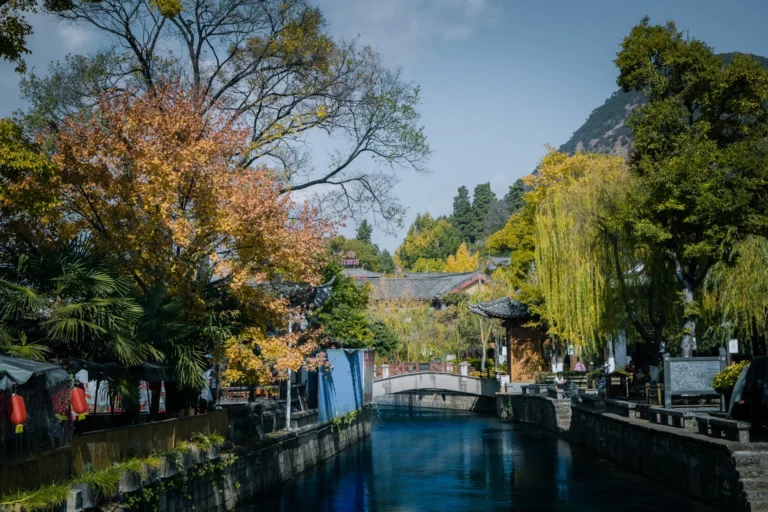
Spanning a total ground area reaching roughly 35,000 square meters, Nancheng Ancient Street’s space emerges as a living outdoor architectural museum preserving nearly intact residential courtyard complexes from Kunming’s prosperous late Qing to early Republican eras. Rather than being flattened by modern urbanization, the entire core conservation zone has been strictly preserved via authentic heritage restoration methods. Punctuating winding narrow axes paved with bluestone polished smooth by time are enclosure walls built from dark dark-green bricks, mossy gray-tiled yin-yang sloping roofs, and wooden balcony railings carved with exquisite floral motifs, perfectly recreating the spirit of southern China’s most bustling inland port.
The core value forging Nancheng Street’s uniqueness rests in the convergence and calibration of Dian residential architectural styles and traditional Central Dian native techniques. Most prominent is the “Yi Ke Yin” (A Seal) model—a square, enclosed house resembling an official’s seal stamp, designed with two-story timber-framed structures and thick brick-stone enclosure walls resisting Yunnan-Guizhou plateau winds while optimizing defensive strength. Interspersing antique streets are diverse courtyard schemes like “San Fang Yi Zhao Bi” (Three Wings and One Screen Wall) featuring three residential wings surrounding courtyards facing screen walls, “Si He Yi Tian Jing” (Four Wings and One Skywell) opening central skywells to capture vital energy, or complex variants like “Si He Wu Tian Jing” integrating four minor skywells at courtyard corners to circulate breezes and natural light. The pinnacle of aristocratic residential art here is marked by the “Liu He Tong Chun” style, a multi-tiered interconnected courtyard complex symbolizing permanence, prosperity, and enduring unity of major merchant clans shaping regional economic destinies.
Standing impressively at the district’s heart is Renhexiang Residential Compound, an ancient architectural work ranked as a provincial and municipal protected cultural relic unit. This served as a private residence cum trading headquarters for a renowned commercial brand across Yunnan during open commercial eras. Stepping across massive ironwood thresholds of Renhexiang, travelers are instantly overwhelmed by superb wood-carving craftsmanship across rafters, corbels, and soaring verandas. Folk tales, Four Gentlemen motifs, and flora-fauna motifs were meticulously carved by ancient artisans onto dark wood grain, harmonizing with sturdy post-and-beam frameworks to forge spaces that are solemn yet cozy.
Large-scale restoration respecting historical authenticity transformed Nancheng Street into a benchmark model for urban heritage adaptive reuse. Restoring modern underground drainage networks, placing electrical cabling underground, and reviving bluestone-paved alleys returned the district’s contemplative atmosphere of golden antique eras. Amidst mossy green-brick walls and glittering lanterns reflecting upon wet stone surfaces after rain, antique spatial structures endure like priceless architectural fossils, quietly recounting lifestyles, aesthetics, and talents of Kunming’s ancestral generations through historical trials.
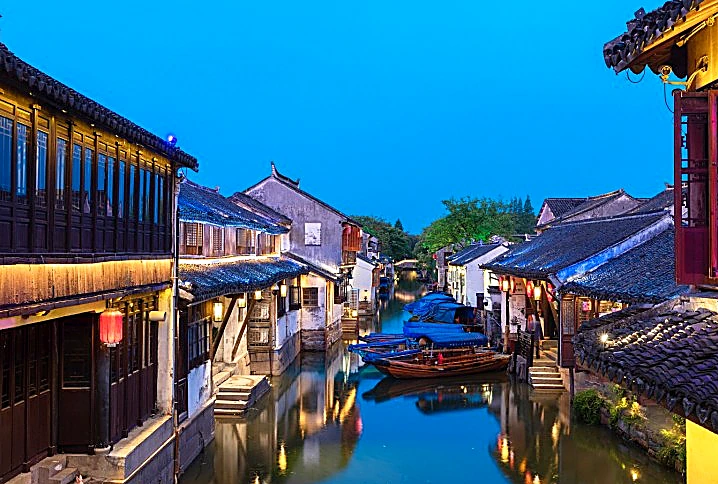
As late-day sunsets retreat behind Xishan ridges, blanketing Kunming’s mossy gray-tiled roofs in deep indigo, Nancheng Ancient Street initiates a magical visual and auditory transformation. Beneath sophisticated contemporary lighting design, the entire antique axis awakens in magnificent splendor, contrasting yet harmonizing past and present. Rows of crimson silk lanterns carrying nostalgic breaths hang alongside wooden railings, casting warm, atmospheric light down bluestone-paved pathways. Nearby, retro-styled multi-colored neon signs of trendy stalls blink proudly, creating multi-layered optical fusions. This vibrant space earned Nancheng Street the honored title of Yunnan’s New Characteristic Tourism Landmark, becoming among the region’s first provincial-level nighttime economic demonstration streets.
Nancheng Street’s strong internal vitality is reflected in impressive operational figures. With on-site service personnel exceeding 3,000, Nancheng’s gears turn ceaselessly to welcome massive crowds averaging over 40,000 daily tourist visits. Travelers and locals fondly dub this location the super IP “Night Canteen” of the City of Spring, where urban rhythms hit peak vitality. Amidst steaming culinary smoke from glowing red charcoal braisers, clinking porcelain tableware, and sizzling oils mingling with anise, cardamom, and pungent grilled chilies, travelers enter flourishing, vibrant worlds, shedding travel fatigue entirely.
Defining cultural depth for Nancheng nights is immersive courtyard theater modeling, where boundaries between audiences and stages dissolve completely. Utilizing skywells and deep courtyards of century-old siheyuan compounds, real-scene plays reenacting Yunnan cultural legends, traditional Dian opera, or turbulent Republican dramas unfold before viewers’ eyes. Inside enclosed spaces scented with pine wood and drifting Pu-erh tea, actor footsteps, sorrowful erhu fiddles, and rapid clapper beats echo against mossy brick walls. Audiences sip chrysanthumum tea, savoring Lin’an’s historical currents as though participating in frontier historical tapestries.
Leaving contemplative courtyard theaters behind, Nancheng’s night life guides travelers into free-spirited, contemporary street art performances. Along alley intersections, young buskers strum acoustic guitars, performing soulful love ballads amid cheering crowds gathered beneath warm yellow lights. Creative art spaces interweave with exquisite handicraft stalls, forging vibrant panoramic landscapes. The charming contrast between classical opera erudition and modern music improvisation, between heritage architecture tranquility and civic market bustle, turns Nancheng nights into poetic panoramas leaving visitors reluctant to depart.
When crimson lanterns illuminate Nancheng’s tiled roofs, the entire street transforms into a multi-layered culinary canvas where Dian cuisine’s intangible heritage values blend naturally with tropical borderland winds. Far beyond nighttime snack stops, culinary matrices here represent centuries of Yunnan trade accumulation, gathering long-standing traditional eateries alongside Nanyang-influenced street flavors. Fragrant highland herbs, fermented goat cheese, and ethnic minority sour-spicy profiles harmonize across antique ceramic tiles, forging gastronomic journeys that are simultaneously nostalgic and vibrant.
The soul anchor of native cuisine here remains celebrated legacy eateries of old Kunming, notably Yunping Fengwei Yuan. Tucked within the old street, this restaurant preserves traditional culinary art cooked in small pottery pots, relying upon Central Dian clay’s heat retention and flavor absorption. Diners rarely miss minced pork rice noodles with chili oil featuring soft, smooth noodles drenched in rich sauce paired with spicy red chilis. To balance spicy flavors, Kunming gourmets order cooling stone pot porridge—comprising simmered glutinous rice chilled and paired with golden cane sugar syrup, sweet osmanthus syrup, and crushed ice.
Continuing highland culinary streams is Songshui Lu, specializing in ecological Pu-erh tea cuisine ranked among Kunming’s top culinary listings. Stepping inside, diners explore sloping hills of ancient tea gardens through wild organic ingredients—clean forest greens, borderland herbs, and hand-processed spices. Strolling along main axes, Nancheng street food charms via grilled Yunnan milk fan cheese—thin goat cheese grilled over charcoal until puffed, brushed with sweet rose honey, forging contrasts between crispy textures and sweet richness. Nearby, sour-spicy chicken feet pounded wooden-style by Xishuangbanna Dai ethnics deliver wild profiles with forest lime acidity and bird’s-eye chili heat.
Beyond native flavors, Nancheng Night Market reflects historical transit roles linking Yunnan to Indochinese nations via the Tea Horse Road and Yunnan-Vietnam railway. Charming Thai hand-pounded papaya salads, Vietnamese rice rolls, and Chiang Mai pork rice noodles forge cross-border culinary fusions. Combined with sweet-and-sour seafood, the district unfurls borderless dining. Synchronized synthesis between legacy depth and rustic southern street food shapes vibrant Nancheng, where every flavor tells complete cultural stories.
Though Nancheng Street’s architectural space welcomes travelers 24/7, its centennial culinary street’s true soul awakens at dusk. Mobile stalls and open kitchens ignite from 5:00 PM extending culinary fun until 2:00 AM. Past 7:00 PM, especially on cool summer months, outdoor seating arrays brim with charcoal smoke and rich aromas, forging vibrant urban nightlife.
Developed public transport makes accessing Nancheng Night Market exceptionally convenient. Kunming’s underground rail network offers optimal transit: take subway to Dongfeng Square Station (transfer between Line 2 and Line 3) or Wuyi Lu Station (Line 3), exit, and stroll hundreds of meters past plane-tree-lined avenues to ancient archways. To appreciate urban heritage, spend afternoons strolling Kunming Laojie siheyuan compounds, admiring Moonlight Tower architecture, antique Tong Ren Tang pharmacy, before joining Nancheng’s evening lantern lighting.
During peak weekend evening hours, tourist crowds at Nancheng Street can exceed 40,000. For complete dining amid crowds, prioritize eateries featuring public pricing per heritage guidelines, avoiding spontaneous unverified street stalls copying trending dishes. Savoring grilled milk fan or spicy fish noodles requires leisure; visiting outside peak 7:30 PM–9:00 PM windows secures roadside seating to sip Pu-erh tea without watching personal belongings.
For cross-border journeys departing Vietnam, land border procedures via Lao Cai–Hekou international border gates utilize streamlined border tourist passes or electronic group visas. Following border clearance in Hekou, travelers board modern high-speed trains crossing Red River valleys to reach Kunming within hours. Essential tech preparation includes pre-activating international e-wallets like WeChat Pay or Alipay linked to cards for fast transactions, alongside international roaming data packages for exploring Yunnan.
Mastering practical guidance transforms culinary adventures into colorful adventures. For travelers desiring deep cultural immersion amidst snow mountains and brilliant cityscapes, selecting structured itineraries like the Hekou – Kunming – Jiaozi Snow Mountain 4D3N Tour provides perfect bridges to enjoy Nancheng Night Market flavors without transit complexities.