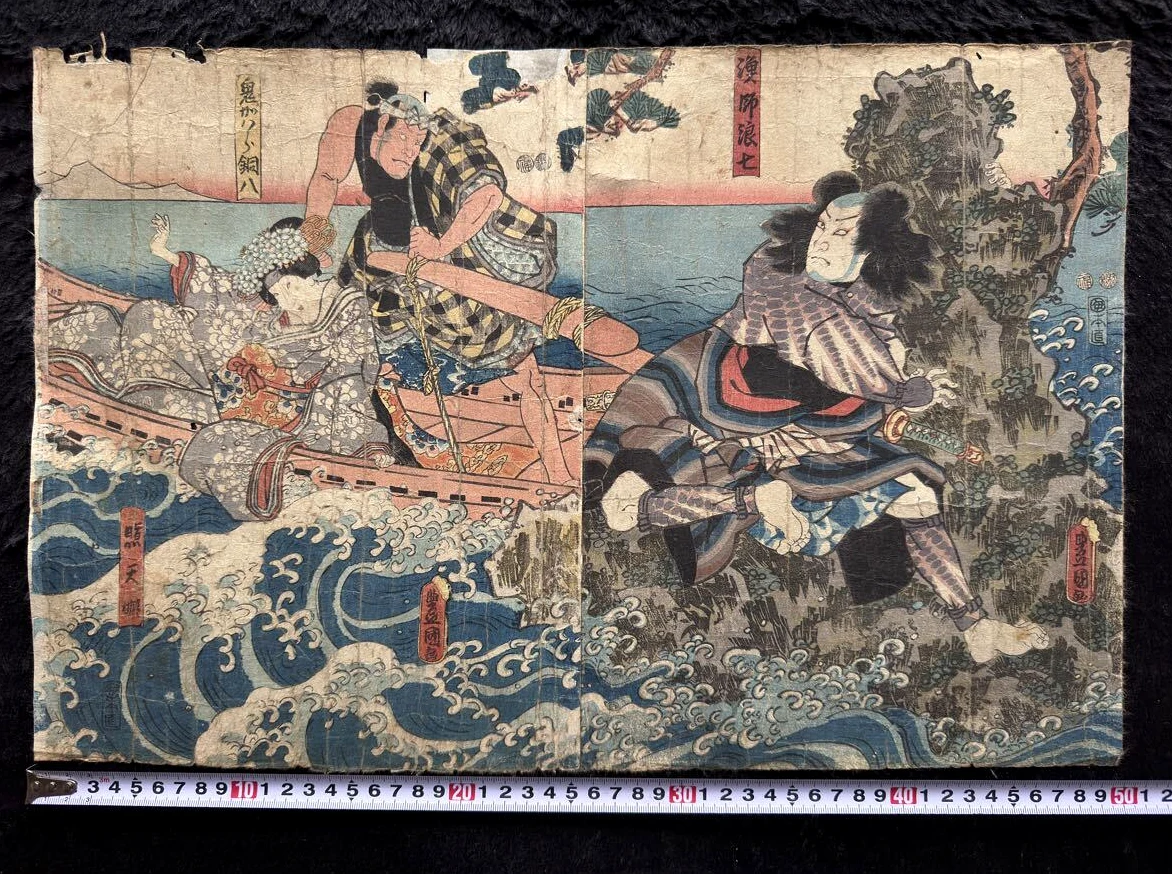
The echoes of the world’s busiest seafood auctions in modern-day Tokyo trace their roots deep into the earliest years of the Edo period (1603–1867), when Shogun Tokugawa Ieyasu established his seat of power along the bay. To ensure a year-round supply of top-grade provisions for the grand Edo Castle, the shogunate granted exclusive fishing and seafood tribute privileges to an elite group of fishermen who migrated from the Kansai region to settle on the island of Tsukuda-jima (佃島). Under the strict protocols of the shogunate at the time, the plumpest and freshest catches were rigorously selected and sent straight to the Shogun’s imperial kitchens. Only the surplus fish and shellfish were permitted to be sold to townspeople around the foot of Nihonbashi Bridge—the most bustling water and land commercial artery of the ancient capital. Thus, the Nihonbashi Uogashi fish market was born, becoming the original cradle that nurtured a thriving seafood culture and the celebrated art of Edomae sushi for over three centuries.
A seismic historical upheaval struck unexpectedly at noon on the fateful day of September 1, 1923, when the devastating Great Kanto Earthquake flattened much of Tokyo and burned the historic wooden market along the Nihonbashi canal to the ground. Confronted with the ruins of natural disaster, the city’s culinary lifeblood remained unbroken. Merchant guilds and seafood wholesale associations swiftly banded together, temporarily relocating operations to a coastal plot named Tsukiji—a place name whose kanji characters literally mean “reclaimed land,” painstakingly filled in during the 17th century following the Great Fire of Meireki. This landmark decision to rebuild laid a solid foundation for the birth of a seafood trading hub on a scale unprecedented in modern Japanese history.
By February 1935, during the reign of Emperor Showa (Hirohito), the Tokyo Central Wholesale Market at Tsukiji officially opened with a monumental, one-of-a-kind crescent-shaped architectural complex directly integrated with railway tracks and dedicated fishing docks. For more than eight decades alongside the nation’s destiny, from the austerity of World War II to the post-war economic miracle, Tsukiji proudly held its unrivaled status under the revered title “Tokyo no Daidokoro”—”Tokyo’s Kitchen.” It served not only as the global benchmark for seafood pricing through breathtaking pre-dawn bluefin tuna auctions, but also as a living museum of Edo merchant culture, honing the mastery of ocean fishmongers and world-renowned sushi chefs.
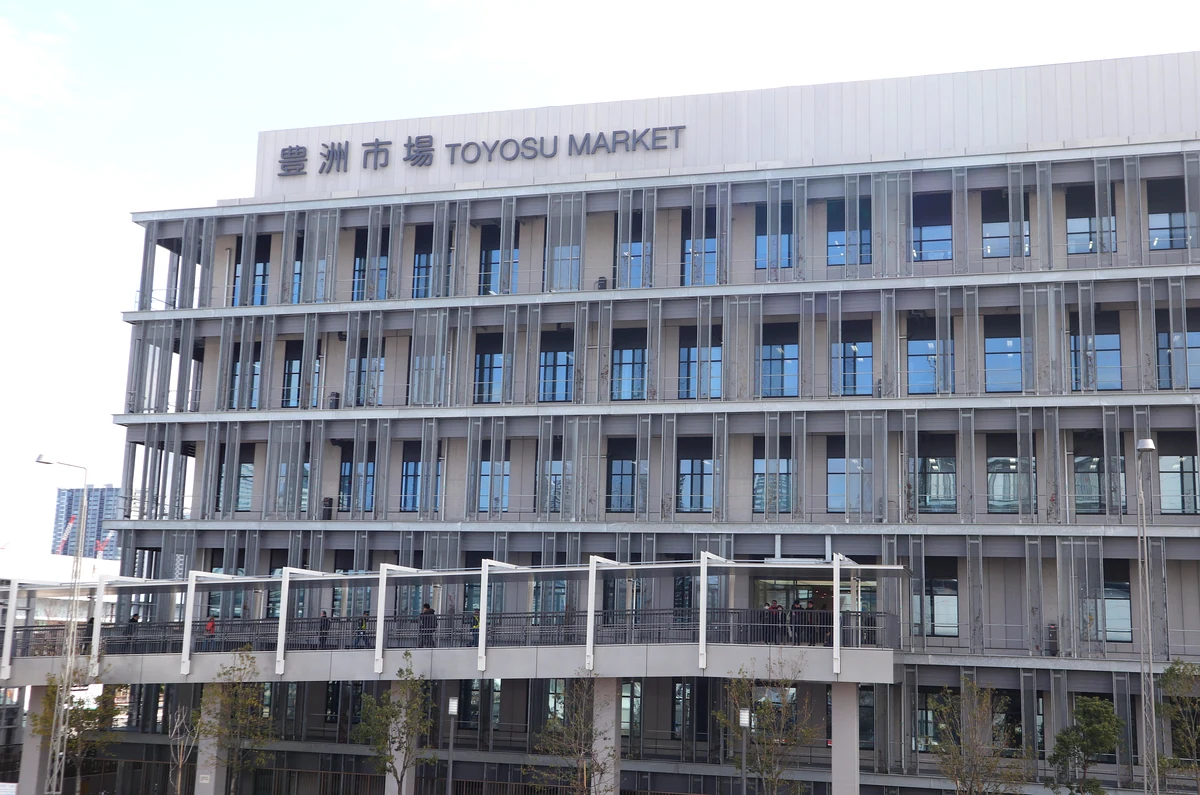
Entering the new century, driven by urgent demands for strict temperature control standards, cold-chain safety, and relief for aging urban infrastructure, a generational transition was set in motion. On October 11, 2018, the state-of-the-art Toyosu Market officially commenced operations on a cutting-edge artificial island in Tokyo Bay, bringing the 83-year history of Tsukiji’s inner wholesale market to a close. Yet this relocation did not diminish the spirit of old; instead, it forged an artful Dual-Market System. While Toyosu assumes the role of a closed, ultra-modern wholesale hub featuring tuna auction rooms behind sterile glass walls, the Tsukiji Outer Market (Tsukiji Jogai Shijo) stands resilient in its original location. Over four hundred classic stalls, multi-generational family eateries, and hand-forged knife shops at Tsukiji keep their fires burning daily, preserving the rustic charm, lively folk energy, and irreplaceable culinary soul in the heart of the capital.
Viewed from the urban landscape of Tokyo Bay, the interplay between Tsukiji Outer Market and Toyosu Wholesale Market forms a rare geomantic and geo-economic axis situated squarely along the “Tokyo Bay Heritage & Gastronomy Trail.” Originating in the 17th century after the Great Fire of Meireki, Tsukiji bears kanji meaning “built land”—reclaimed from marshlands along the Sumida River during the Tokugawa shogunate. Geographically and geomantically, Tsukiji sits in Chuo Ward right at the auspicious confluence where the Sumida empties into Tokyo Bay, creating a “water-gathering wealth” configuration that welcomed the most prosperous commercial vitality of old Edo. Its intricate network of canals paired with adjacent urban ring expressways forged a seamless land-and-water nexus, turning this strip of land into the vital distribution artery for fresh seafood for nearly a century in the modern era.
The shift of wholesale functions to Toyosu in Koto Ward marked a dramatic leap forward in waterfront spatial planning. Built on a reclaimed artificial peninsula spanning 40.7 hectares—1.7 times the size of its predecessor Tsukiji—Toyosu sets an entirely new standard for 21st-century technical infrastructure. Toyosu’s flat terrain directly borders the deep-water channels of Tokyo Bay, allowing fleets of refrigerated trucks and cargo vessels rapid access via the Toyosu Ohashi Bridge and the Shuto Expressway network. The entire market complex is scientifically divided into three colossal buildings: the Fisheries Wholesale Market Building, the Fisheries Intermediate Wholesale Market Building, and the Fruits and Vegetables Building, linked by enclosed elevated walkways to optimize inner-city logistics.
Technical operations at Toyosu represent the pinnacle of Japanese food preservation engineering through an absolute cold-chain model. In stark contrast to traditional open-air spaces, all unloading, storage, and Pacific bluefin tuna (hon-maguro) auction floors at Toyosu are housed in strictly climate-controlled environments maintained below 10°C, completely eliminating any risk of oxidation to the prized o-toro fatty marbling of bluefin tuna weighing hundreds of kilograms. Inside the intermediate wholesale zone, hundreds of stalls are arranged in a precise geometric grid where electric three-wheeled “turret trucks” glide silently across antibacterial concrete floors, transporting freshly auctioned tuna fillets to prestigious restaurants across Tokyo.
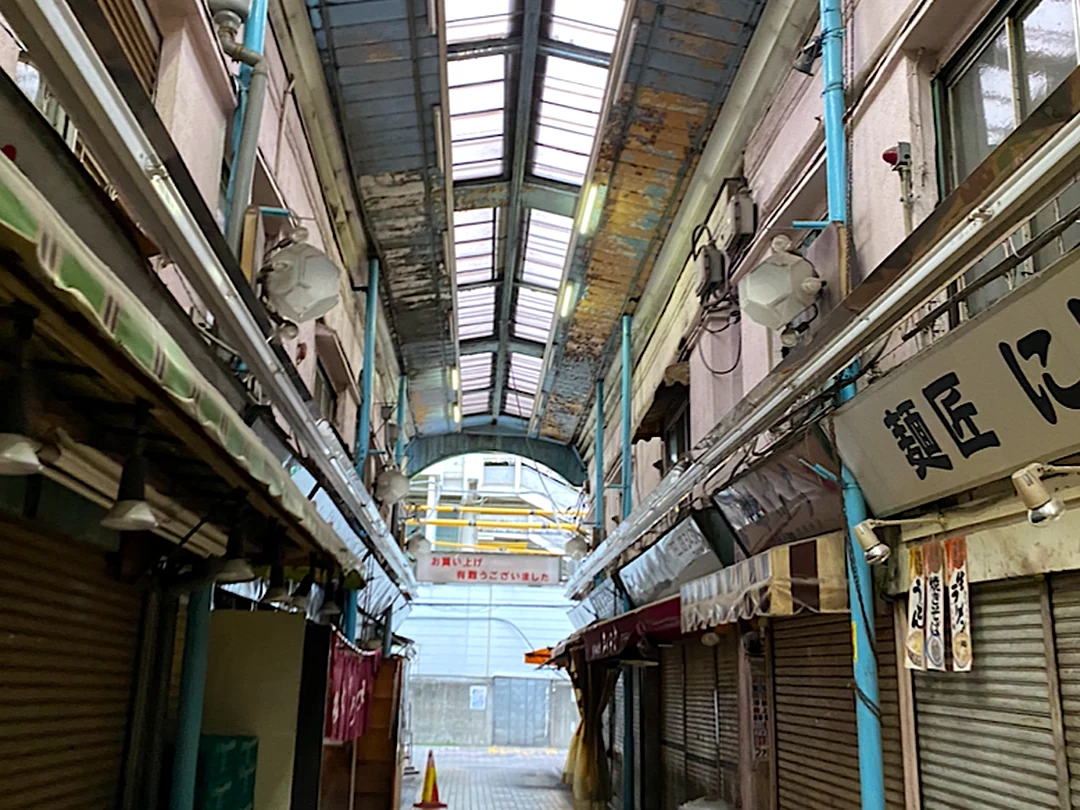
Standing in vivid contrast to the cool, sterile industrial rhythm of Toyosu, the signature streetscape of Tsukiji Outer Market in Chuo Ward preserves the full nostalgic flavor of Showa-era urban life. Narrow alleys barely wide enough for two people to pass crisscross like veins beneath weathered corrugated tin awnings and time-worn wooden signboards. The air bursts with lively sounds and an ensemble of local aromas: fragrant smoke rising from binchotan charcoal grills searing scallop skewers, the delicate scent of katsuobushi bonito flakes shaved paper-thin on the spot, the sizzle of steaming dashi-infused tamagoyaki rolled in copper pans, and the vibrant golden hues of fresh uni sea urchin. This coexistence of ultra-modern engineering at Toyosu and vibrant grassroots commerce at Tsukiji paints a complete panorama, crowning the area as an unmatched seafood mecca on the shores of Tokyo Bay.
The epochal transition from historic Tsukiji to waterfront Toyosu has sparked one of the most compelling architectural and spatial dialogues in Japanese culinary culture. If New Toyosu Market defines the zenith of modern industrial architecture, Tsukiji Outer Market serves as a living bas-relief safeguarding the authentic soul of traditional working-class street life. These two spatial entities, though opposite in form and operational philosophy, harmonize in an endless symphony celebrating artisanal craftsmanship and absolute reverence for the ocean’s finest bounty.
Sprawling across an expansive 40.7 hectares—nearly double the original footprint of the old Tsukiji fish market—New Toyosu Market rises like a high-tech fortress built with wide-span structural steel, clad in insulated glass panels and advanced coated materials. Its interior adheres strictly to the standards of a fully enclosed cold supply chain. Every trading floor is coated in heavy-duty antibacterial epoxy resin paired with positive-pressure recirculating air filtration and multi-tier climate control, maintaining a steady ambient temperature between 10°C and 15°C to prevent protein degradation in every fiber of bluefin tuna. Balancing industrial utility with sustainable development, the facility also incorporates lush rooftop green spaces planted with native flora, acting as a natural thermal buffer against solar radiation while opening up sweeping views toward Rainbow Bridge and the Tokyo skyline.
Toyosu’s spatial layout is systematically organized across three interconnected complexes linked by dedicated logistics viaducts. At the heart of the system lies the Fisheries Wholesale Building, where dramatic bluefin tuna auctions unfold beneath standardized full-spectrum lighting, completely separated from a two-story observation gallery fitted with double-glazed soundproof glass to ensure strict hygiene without disrupting the rapid pace of master appraisers. Adjacent to it stand the Fisheries Intermediate Wholesale Building and the Fruits and Vegetables Building, where electric turret trucks operate along dedicated internal roadways completely segregated from pedestrian walkways used by visitors and wholesale buyers.
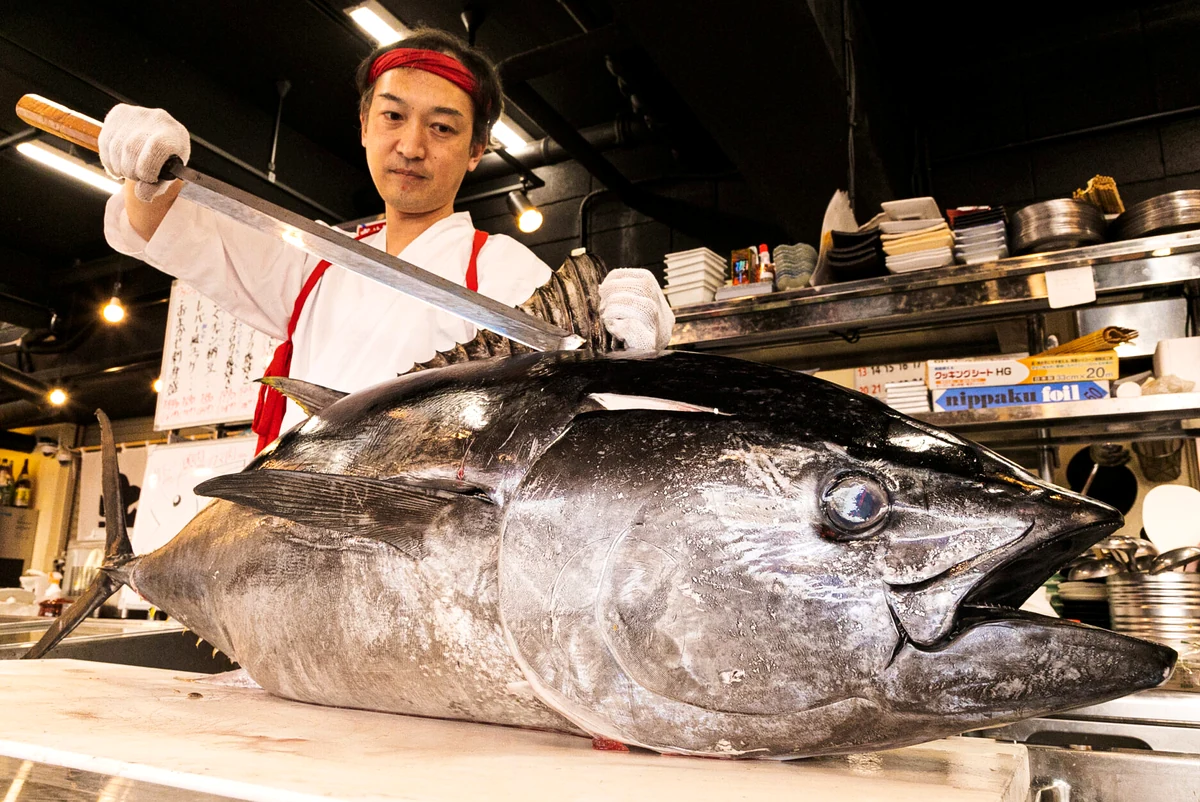
Within Toyosu’s immaculate interior, the art of tuna butchery is elevated into a masterful visual ritual. Multi-generational nakaoroshi tuna artisans wield long-bladed Maguro-bōchō and Oroshi-hōchō knives exceeding one meter in length, as razor-sharp as the katana swords of Edo-era samurai. Each decisive slice along the spine of a colossal fish demands not only extraordinary physical strength but also an intimate command of marine anatomy, preserving the delicate marbling structure of ruby-red Akami, mildly rich Chūtoro, and melt-in-your-mouth Ōtoro.
In total contrast to Toyosu’s sterile beauty and mechanical order, Tsukiji Outer Market stands firm as a living architectural museum steeped in nostalgic Shitamachi charm from the 1950s and 1960s of the Showa era. Beneath low-hanging corrugated roofs and weather-beaten canvas tarps, hundreds of family-run food stalls nestle into narrow lanes just wide enough for two people to squeeze past. Open-air Tsukiji distills the rhythm of traditional urban life, where the steady rhythmic tapping of knives against hinoki cypress cutting boards mingles with the savory aroma of grilled kabayaki eel, the sizzle of dashi-infused tamagoyaki omelets, and the spirited calls of vendors who have devoted half their lives to these corners. This labyrinth of back alleys acts as a spiritual anchor, ensuring the historical memory of the legendary fish market never fades in the face of modernization.
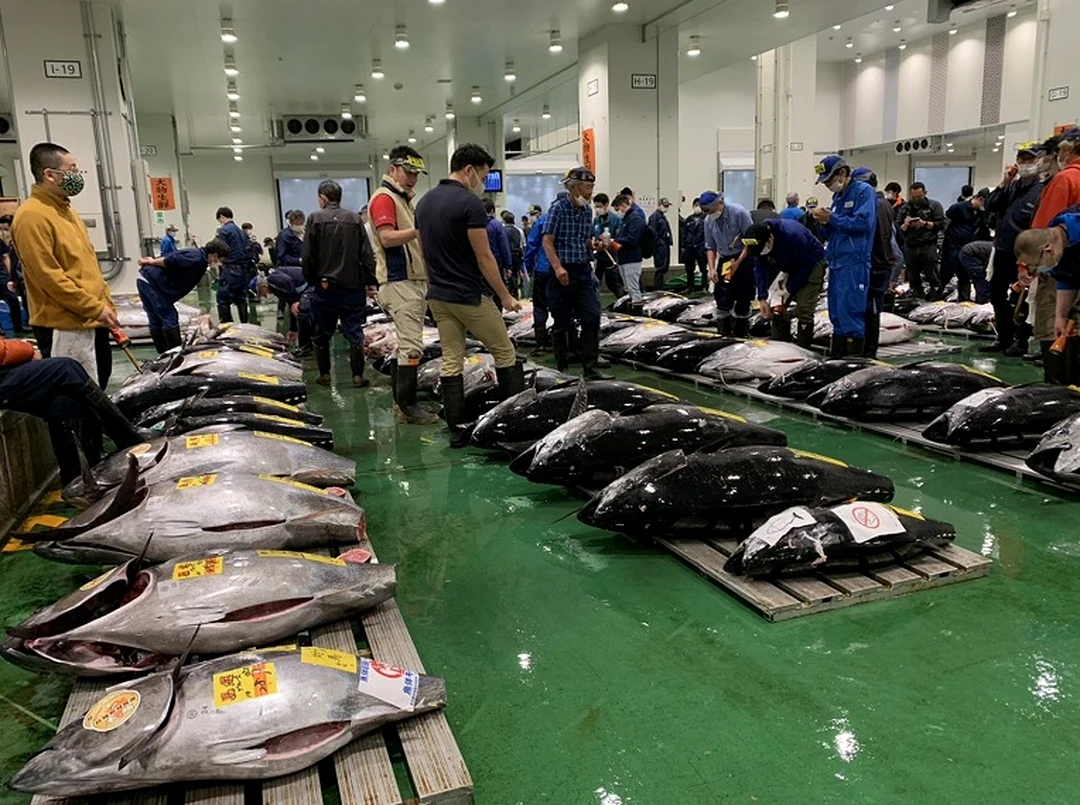
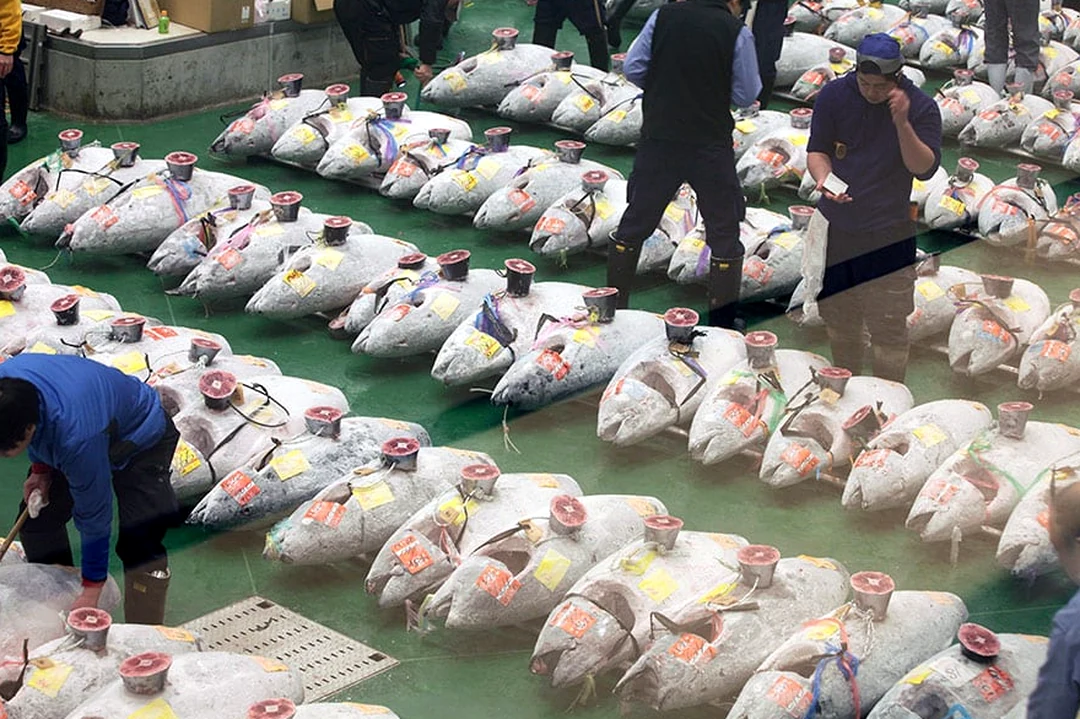
Before nightfall over Tokyo Bay has even lifted, inside Fisheries Wholesale Building No. 6 at New Toyosu Market, a grand live drama of the haute culinary world quietly raises its curtain. At precisely 5:30 AM every day, the crisp ring of a hand-rung brass bell pierces the silence, signaling the official start of the world-famous Pacific bluefin tuna auction. Spanning thousands of square meters and chilled strictly to 10°C, the auction floor blazes beneath standardized full-spectrum fluorescent lights engineered to eliminate shadows, revealing every snowflake-like vein of white fat woven through the deep crimson flesh of bluefin tuna weighing hundreds of kilograms lined up in neat rows. From the upper observation gallery sealed behind double-pane acoustic glass, visitors witness what feels like a living contemporary stage: master nakagai-nin brokers in traditional attire flip tail cross-sections with iron tegi hooks, inspect fat content with pocket flashlights, and flash rapid secret hand signals amid booming, rhythmic chants reminiscent of classical Kabuki theater.
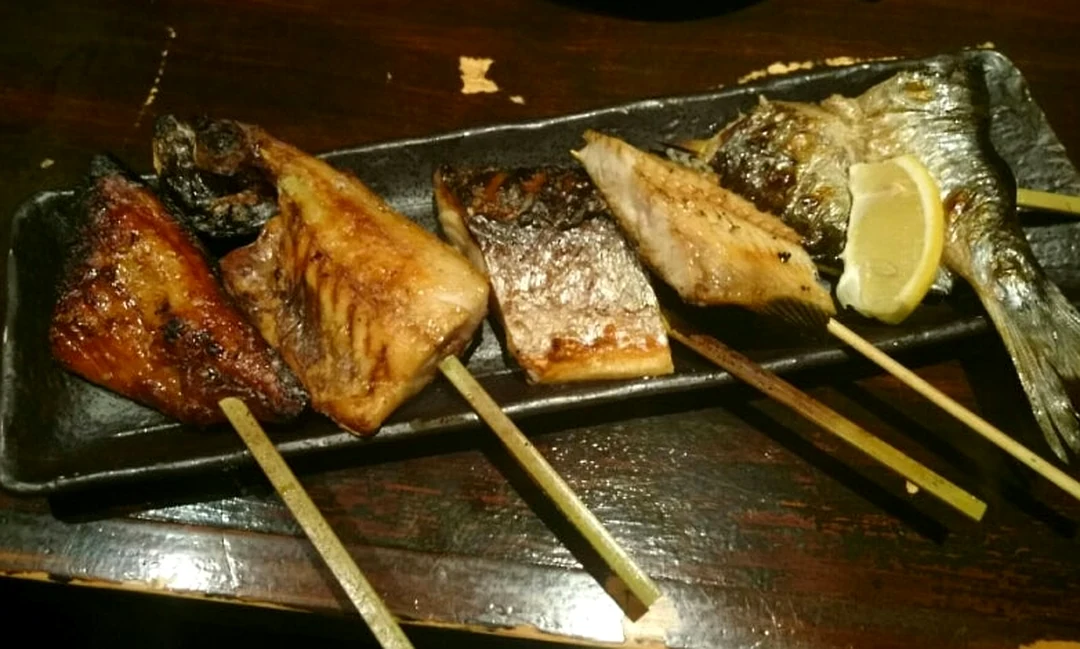
The standardized, futuristic drama of Toyosu creates a sublime cultural counterpoint to the earthy, nostalgic pulse of Tsukiji Outer Market just a short distance away. Whereas dawn at Toyosu is a rigorous showcase of premier appraisers, open-air Tsukiji greets the sunrise through the art of smoke and fire. Beneath rustic, moss-shaded wooden eaves, flames flicker inside binchotan charcoal grills searing butter-basted scallops, golden blocks of steaming tamagoyaki rolled omelet, and wood-barrel-aged rice vinegar blending into an intoxicating aromatic symphony. Crowds weave through narrow alleys barely two people wide, where crimson chōchin paper lanterns sway gently in the sea breeze, painting an enduring tableau of Edo merchant life that carries uninterrupted from dawn into the early afternoon.
As dusk dyes the waters of Tokyo Bay deep violet and city lights begin illuminating the skyline, the adjacent Toyosu Senkyaku Banrai complex emerges as the centerpiece of evening festivities. Inspired by the golden age of bustling riverside markets along the Sumida River, the complex faithfully recreates rows of cypress-wood machiya merchant townhouses, dark kawara tiled roofs, and a towering Toki-no-kane bell tower evoking its Nihonbashi heritage. Indirect artistic lighting from hundreds of glowing andon lanterns and paper lamps casts shimmering reflections across granite-paved streets, guiding travelers into an endless nocturnal culinary journey. Here, celebrated Edomae gastronomy lives on through standing sushi bars and intimate izakaya serving seafood hauled straight from the morning auctions, accompanied by cheerful toasts and the comforting warmth of sake poured from ceramic flasks.
The evening experience at this waterfront enclave reaches peak serenity when visitors ascend to the upper levels of the complex’s open-air hot spring facility. Each day, mineral-rich natural spring water is painstakingly trucked in via specialized tankers across dozens of miles from the famed hot spring regions of Yugawara and the Izu Peninsula to fill outdoor footbaths and soaking pools. Steeping in steaming warm waters kissed by a cool sea breeze, gazing out at the illuminated Rainbow Bridge shimmering across the bay and red-lanterned yakatabune pleasure boats gliding silently by, one truly feels the eternal heartbeat of a sleepless Tokyo—where boundaries between ancient ritual, supreme gastronomy, and modern technology dissolve into the luminous magic of the night.
As morning mist clears over Tokyo Bay, the true pulse of Japanese culinary culture reveals itself through lively sounds and the pure, briny flavors of the sea. Dining at Tsukiji and Toyosu is far more than daily sustenance; it is a ritual honoring the philosophy of “Shun”—savoring ingredients at their absolute seasonal peak—intertwined with the spirit of “Shokunin,” the lifelong dedication of local artisans perfecting their craft. Winding through narrow lanes where historic patina meets modern energy, this flavor map unfolds as a living museum of taste, where every slice of bluefin tuna and every drop of dashi broth carries the generational memory of a legendary port.
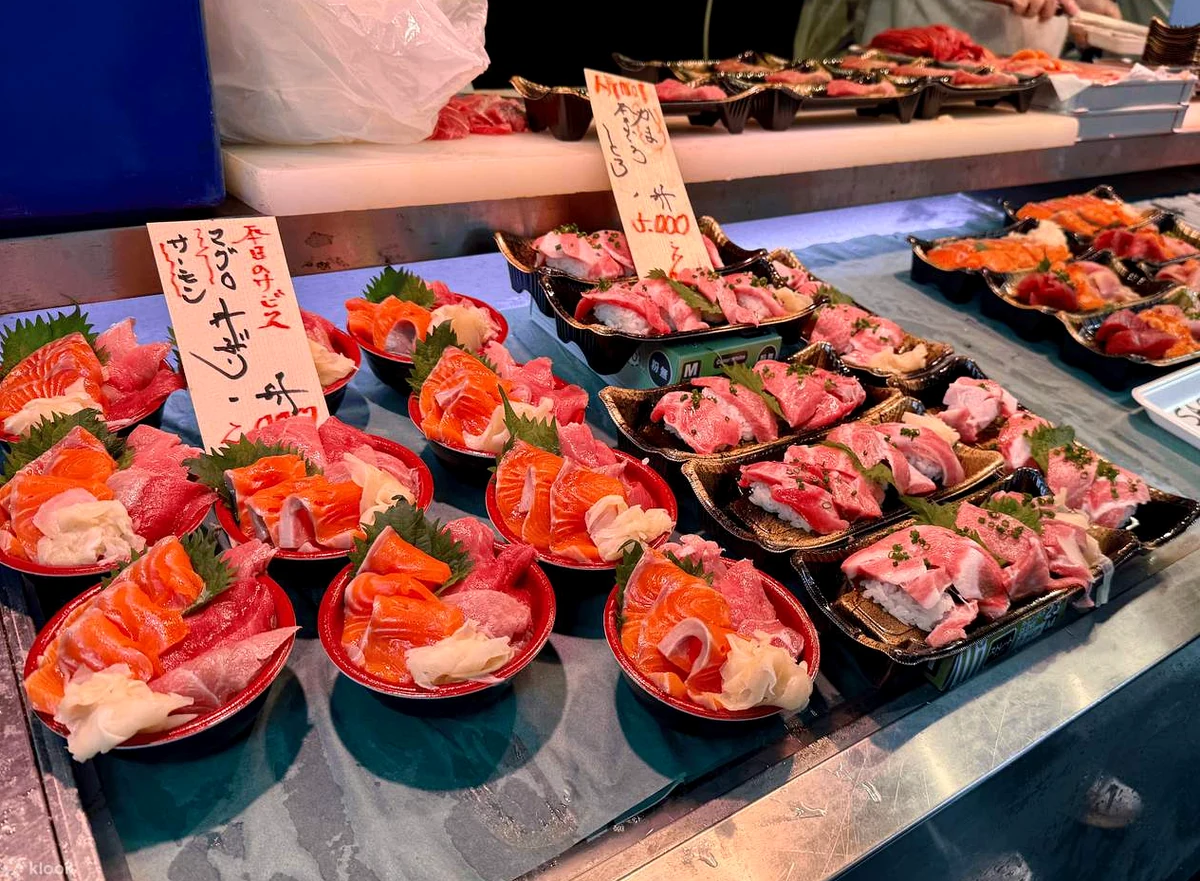
Occupying center stage in this culinary palace is Maguro—Pacific bluefin tuna, the proud emblem of time-honored Edomae sushi culture. From the renowned Sushizanmai chain to humble sushi counters tucked deep inside market lanes, diners embark on a multi-sensory journey across three classic cuts. It begins with Akami, ruby-red, firm, and rich in natural minerality; progresses to Chutoro, striking an exquisite balance between lean sweetness and gentle richness; and culminates in Otoro—the prized fatty belly laced with snowy marbling that melts instantaneously on the tongue at body temperature. Each mound of traditional red-vinegar shari rice is deftly shaped by hand and paired with a touch of fresh wasabi grated on sharkskin, achieving a sublime harmony no industrial technique can ever replicate.
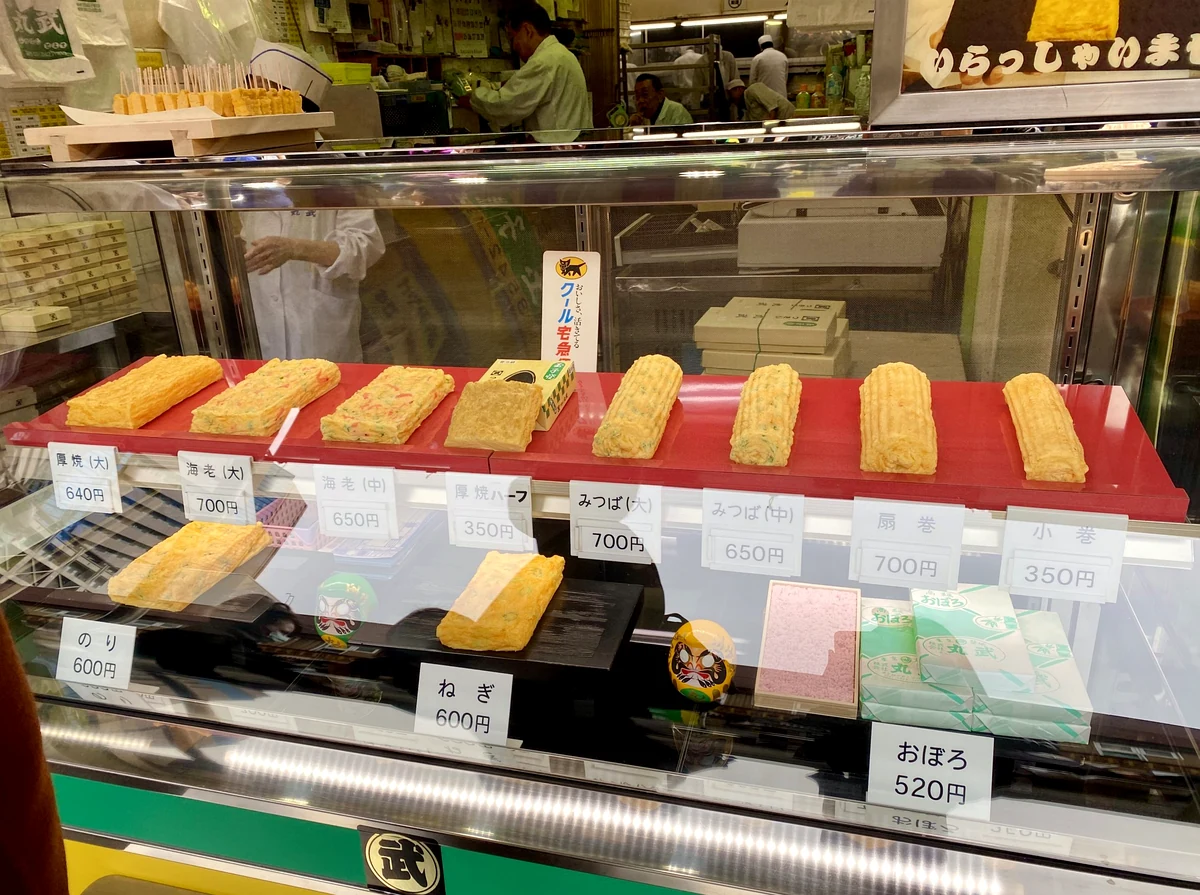
Providing a warm, aromatic counterpoint to the understated luxury of raw tuna is the inviting fragrance wafting from family-run Tamagoyaki kitchens, exemplified by Marutake, an institution boasting over eighty years of heritage across changing eras. Here, rolled omelet making reaches supreme finesse as artisans rhythmically flick their wrists over heavy rectangular copper pans. Thin layers of golden egg whisked with dashi simmered from katsuobushi bonito flakes and kombu kelp are folded layer upon layer into a fluffy, juicy block infused with subtle, refined sweetness. Holding a piping-hot skewer of tamagoyaki in the crisp morning breeze and biting in as sweet, savory broth bursts across your palate is a humble street-food pleasure etched into the memories of generations of travelers.
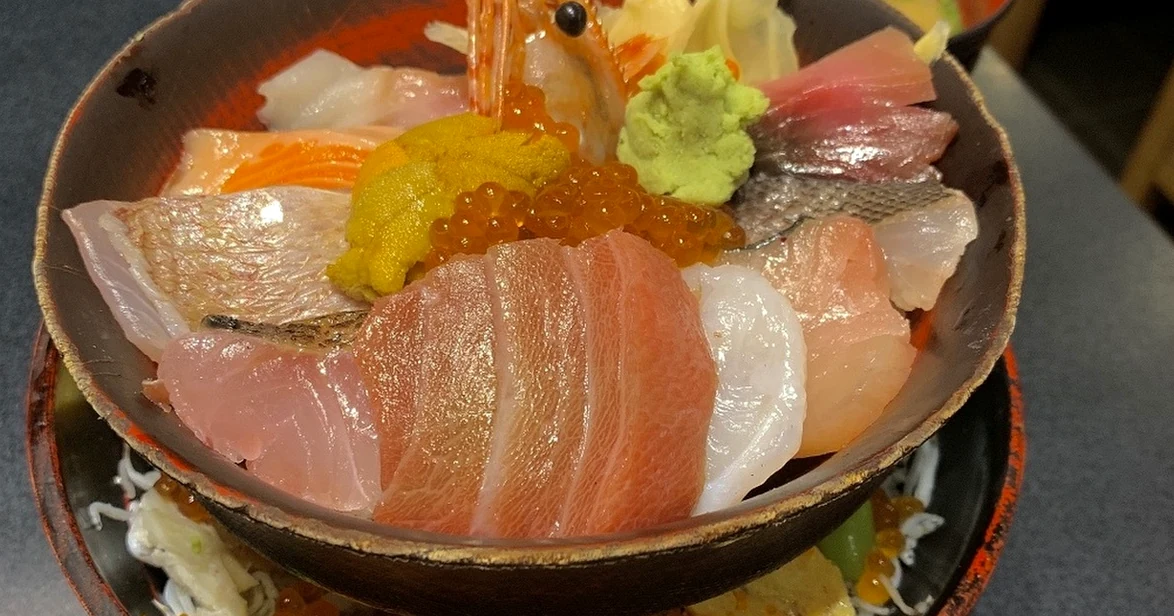
Venturing deeper into the culinary maze, Tsukiji Donburi Ichiba stands as an iconic stop for devotees of Kaisen Donburi—seafood rice bowls brimming with the ocean’s richest harvest. Each bowl of fragrant steamed rice is composed like a colorful canvas: creamy, butter-rich lobes of cold-water Uni sea urchin, glistening pearls of Ikura salmon roe ready to pop with pure oceanic salinity, and lustrous, sweet Amaebi shrimp. Savoring an overflowing seafood bowl at dawn does far more than satisfy hunger after morning strolls—it delivers pure vitality harvested straight from the deep by dedicated fishermen.
This symphony of fish market flavors would be incomplete without oversized fresh oysters delivered daily from the famed waters of Iwate Prefecture in northeastern Japan. Nourished by mineral-rich cold ocean currents, Iwate oysters boast plump, thick meat bursting with creamy sweetness. With swift precision, vendors serve them raw sashimi-style accented by a squeeze of tart sudachi citrus to highlight their crisp brininess, or grill them live over glowing charcoal topped with fragrant scallion oil. Charcoal smoke mingles with the sizzle of bubbling juices inside rough oyster shells, releasing an irresistible aroma that crowns an unforgettable traditional culinary journey in the heart of the capital.
To fully experience the pulse of Japan’s two legendary seafood landmarks, planning a smart schedule is essential for every discerning traveler. At Toyosu Wholesale Market, epicenter of million-dollar bluefin tuna trades, the famous maguro auction begins at 5:30 AM from the observation deck of the Fisheries Wholesale Building (Suisan Oroshiuri-ba-to). Visitors hoping to witness wholesale brokers bidding via secret hand signals must enter an advance lottery through the market’s official online portal weeks ahead of time. After taking in the ultra-modern facility and enjoying a fresh sushi breakfast at Toyosu, the ideal window to head over to Tsukiji Outer Market (Tsukiji Jogai Shijo) is between 8:00 AM and 10:00 AM. This golden hour sees more than four hundred family stalls firing up simultaneously, with wooden counters piled high with juicy Iwate oysters, Hokkaido scallops, and gleaming slices of otoro tuna belly before the narrow lanes become packed around midday.
Tokyo’s renowned public transit network makes connecting between these two distinct market worlds effortless and straightforward. To reach Tsukiji Outer Market, take the Tokyo Metro Hibiya Line to Tsukiji Station (Exit 1 or 2), just a three-minute stroll past the stately Indian-Buddhist architecture of Tsukiji Hongwanji Temple, or ride the Toei Oedo Line directly to Tsukijishijo Station (Exit A1) right on the edge of the historic market. When heading out to New Toyosu Market jutting into Tokyo Bay, the best route is the automated elevated Yurikamome line to Shijou-mae Station. From the station, a seamless network of covered pedestrian skybridges leads directly into every functional zone, guiding visitors effortlessly from the wholesale halls and Uogashi Yokocho retail arcade to the restaurant rows without exposure to sun, rain, or service vehicles below.
When budgeting for your visit, keep in mind that even as Tokyo rapidly embraces digital payments, Tsukiji Outer Market remains a deeply nostalgic traditional marketplace where veteran shopkeepers strongly prefer cash in Japanese Yen (JPY). Carrying a supply of 100- and 500-yen coins alongside 1,000-yen bills ensures smooth, quick transactions without holding up foot traffic in tight lanes. Street food budgets at Tsukiji typically range from a few hundred yen for a steaming skewer of sweet dashi tamagoyaki or charcoal-grilled Wagyu beef, up to 3,000–8,000 yen for a loaded kaisen-don seafood bowl topped with fresh uni or a curated tuna nigiri set at a long-standing sushi counter.
Beyond practical budgeting, understanding unspoken local etiquette marks the hallmark of a respectful traveler in Japan’s traditional markets. Foremost among these rules is avoiding walking while eating (aruki-gui), a habit considered impolite and likely to stain fellow pedestrians’ clothing in crowded alleys; instead, step neatly beside the stall where you purchased your food, savor every bite there, and dispose of wrappers in the vendor’s designated bin. Likewise, never touch raw tuna blocks, scallops, or fresh seafood displayed on ice with bare hands, as human body warmth can alter delicate enzymes and compromise the pristine texture artisans treat as natural treasures.
To eliminate language barriers, unorganized queues, and concerns over mediocre tourist traps, standardized cultural travel following a “No Shopping – True Experience” philosophy has become the top choice for discerning explorers—stripping away forced retail stops to focus purely on cultural insight and authentic gastronomy. To turn your journey through the Land of the Rising Sun into a vivid, seamlessly curated culinary chronicle, explore and join a specialized all-inclusive tour package that unlocks the most celebrated hidden gems of Tokyo’s seafood sanctuaries.