Kobe Port Tower—officially known by its English name—stands at coordinates 34°41′N and 135°11′E within the Meriken Park district of Kobe City, Hyogo Prefecture, Japan. Far more than a simple observation structure, this landmark serves as a revolutionary architectural icon symbolizing Japan’s postwar economic renaissance. Completed in 1963 and designed by Nikken Sekkei Ltd., the tower rises to a height of 108 meters—a measurement carefully calibrated to harmonize with the surrounding port scenery and urban skyline. Its distinctive silhouette draws inspiration from the tsuzumi, a traditional Japanese hourglass-shaped hand drum, tapering gracefully at the waist to form a unique hyperboloid curve. This structural geometry was chosen not merely for aesthetic elegance, but as an advanced engineering solution engineered to withstand coastal gale-force winds and the frequent seismic tremors characteristic of the region.
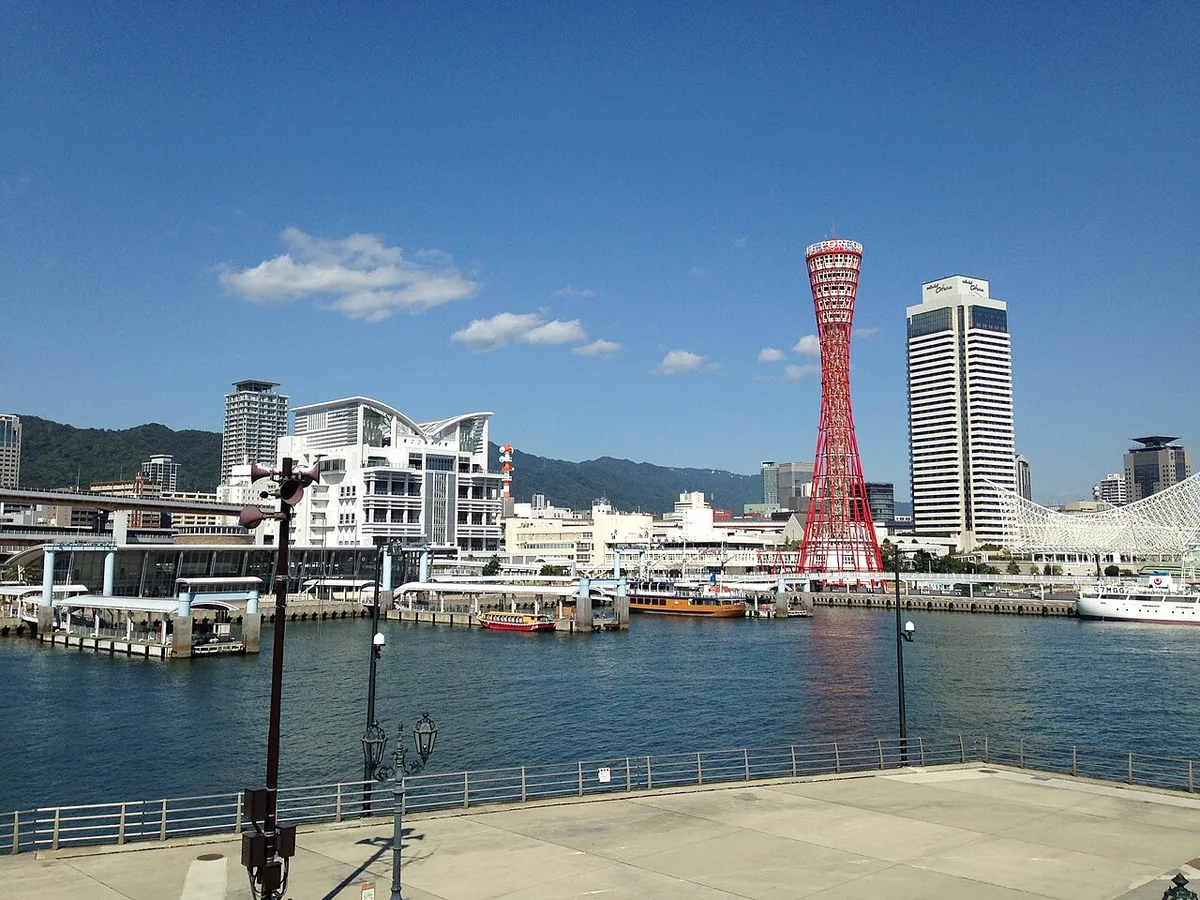
The history of Kobe Port Tower is closely intertwined with the city’s transformation from a traditional industrial seaport into a modern international hub of commerce. During the 1960s, as Japan entered its era of rapid postwar economic growth, Kobe’s municipal authorities resolved to construct an iconic monument affirming the port’s stature as one of the nation’s premier maritime gateways. Selecting tubular steel to craft an interlacing lattice frame enabled the structure to achieve slender visual lightness without compromising structural strength. Composed of 32 crimson-painted steel pipes, the lattice contrasts vividly against the blue of sea and sky while acting as an unmistakable visual beacon for vessels entering and leaving the harbor. Its inauguration on November 21, 1963 marked a milestone in Kobe’s urban planning history, transforming the waterfront into a major attraction for both domestic and international visitors.
The defining trial in Kobe Port Tower’s history occurred during the Great Hanshin-Awaji Earthquake on January 17, 1995. With its epicenter close to Kobe, the magnitude 7.3 quake inflicted catastrophic devastation across the city’s urban infrastructure. Yet Kobe Port Tower proved the resilience of its structural engineering by remaining standing amidst violent tremors even as surrounding waterfront areas suffered severe damage. That survival elevated the tower into an enduring emblem of Kobe’s fortitude and spirit of recovery. In the aftermath of the disaster, the structure transcended its role as a viewing platform to become a quiet monument reminding generations of urban vulnerability before nature and the indomitable will to rebuild—reinforcing public confidence in the caliber of mid-century Japanese engineering.
Architecturally, Kobe Port Tower stands as a pioneering exemplar of diagrid tubular structural design—a technique that later became widespread in modern skyscrapers worldwide. Employing a diagrid lattice allowed engineers to minimize the tower’s overall dead weight while preserving essential rigidity. Inside, multi-level observation decks offer sweeping 360-degree panoramas encompassing Osaka Bay, the Mount Rokko range, and the vibrant waterfront development of Harborland. This synthesis of observation functionality and sculptural form has earned the tower recognition as a Registered Tangible Cultural Property of Japan. Structural engineers and architects continue to study the tower to understand how hyperboloid curves distribute lateral forces, applying those lessons to large-scale infrastructure projects in subsequent decades.
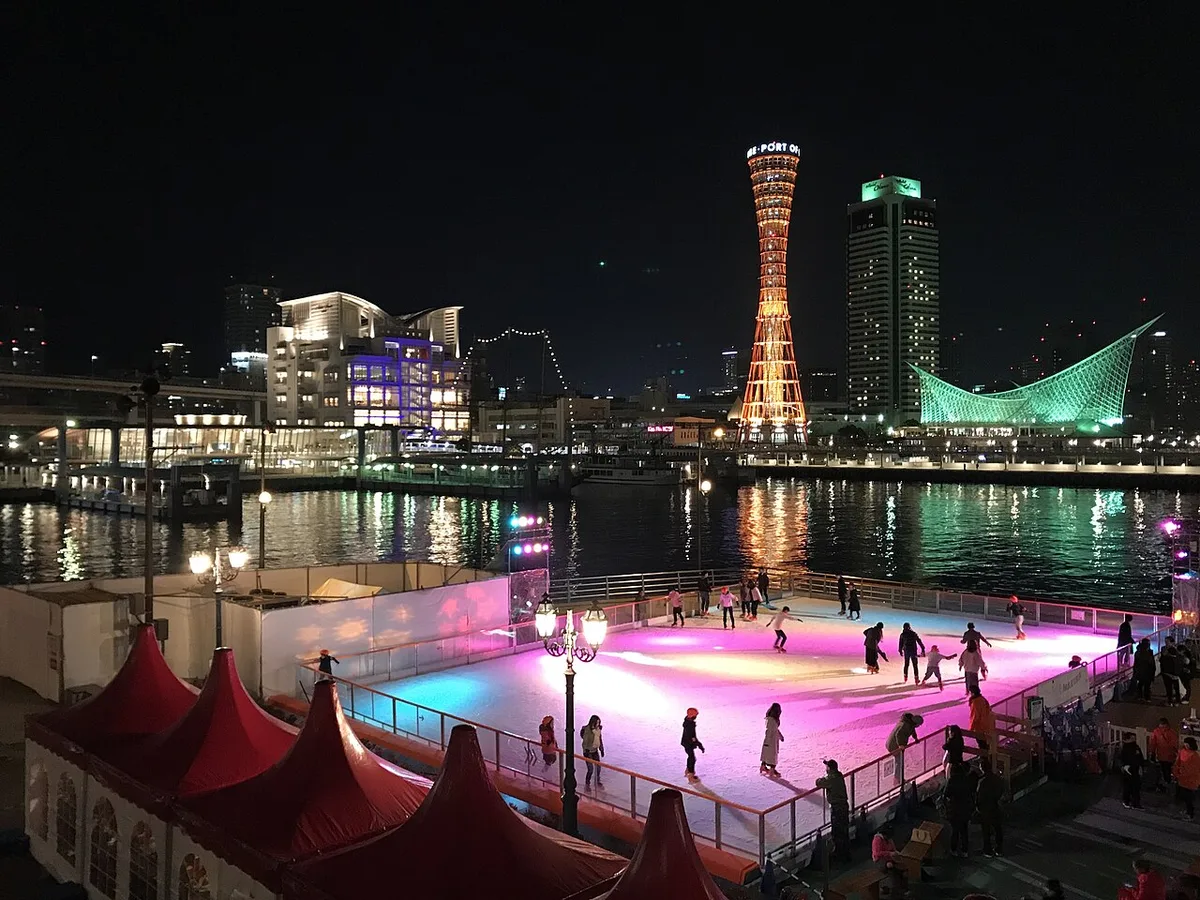
The cultural reach of Kobe Port Tower extends well beyond civil engineering. Featured extensively in Japanese literature, cinema, and visual arts, it has become an inseparable pillar of Kobe’s civic identity. Illuminated against the night sky by thousands of modern LED fixtures, the glowing crimson lattice embodies the seamless intersection of tradition and modernity. In recent decades, the surrounding waterfront—encompassing Meriken Park and Harborland—has been redeveloped into a multifunctional public realm where maritime heritage is preserved alongside contemporary retail, dining, and leisure amenities, with the tower serving as a spatial anchor uniting Kobe’s harbor districts into a cohesive whole.
Throughout its operational lifespan, Kobe Port Tower has undergone periodic restorations and technological upgrades to meet contemporary safety standards and elevate the visitor experience. Most notably, a comprehensive renovation spanning 2021 to 2024 reinforced its structural integrity while modernizing its lighting array and interior amenities. These updates were carried out with deep respect for the original design, ensuring that historical authenticity was never overshadowed by commercialism. The upgraded illumination system not only improves energy efficiency, but also enables dynamic light displays reflecting the vitality of a port city that never sleeps—earning praise from architectural historians as a benchmark for conserving twentieth-century urban icons.
Kobe Port Tower’s iconic stature is further reinforced by its role in reshaping public perception of waterfront spaces. Prior to its construction, the harbor consisted largely of warehouses and docks dedicated strictly to industrial shipping. Introducing a landmark of high aesthetic distinction transformed how residents viewed the shoreline, turning an industrial working zone into a welcoming cultural and recreational promenade. This shift reflects sustainable urban planning principles in which civic infrastructure serves not merely economic utility, but enriches the spiritual and everyday quality of life for residents—making Kobe Port Tower a testament to the evolution of Japanese urban design in the second half of the twentieth century.
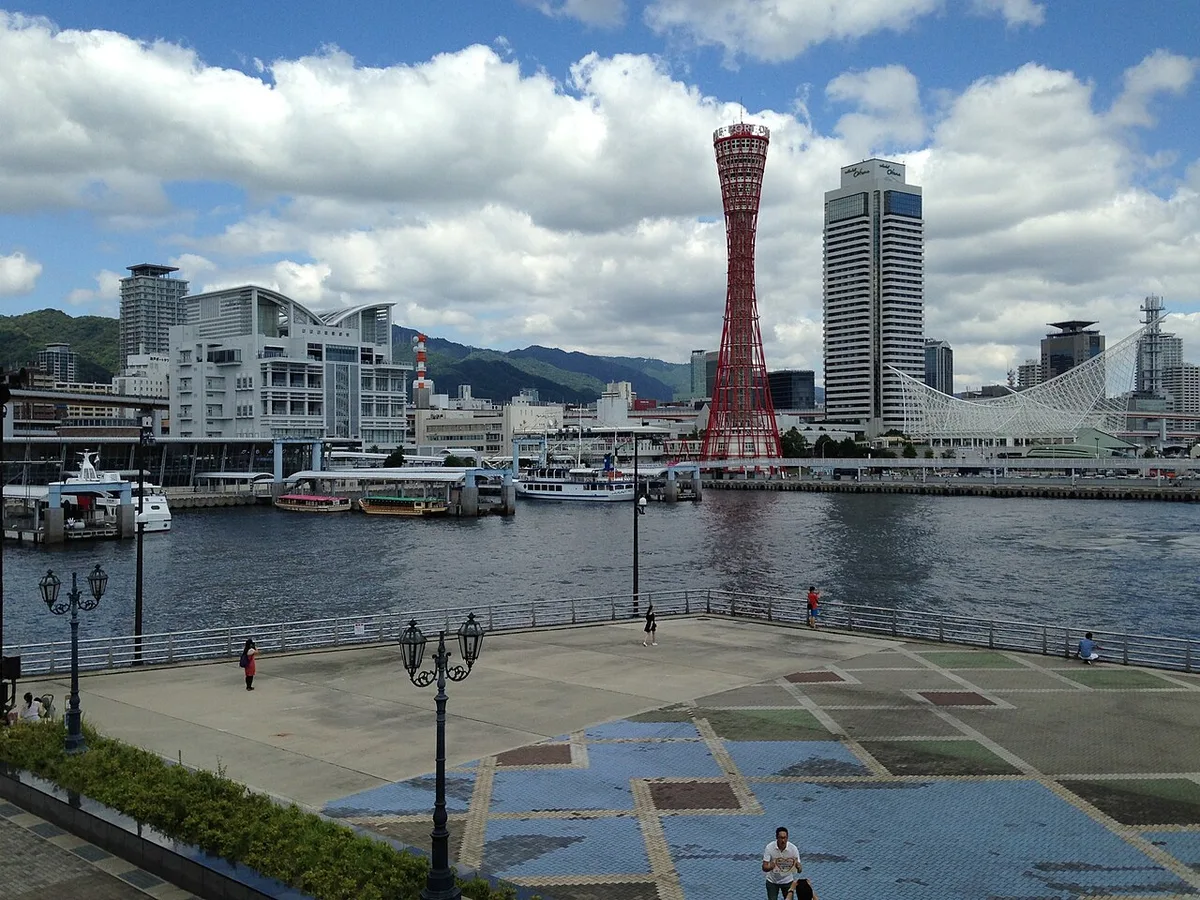
Viewed through an analytical lens, Kobe Port Tower is a living artifact chronicling the triumphs and trials of modern Japan. From its ambitious postwar construction and survival through natural catastrophe to its reinvention in the digital era, the tower has maintained its standing as one of the Kansai region’s foremost architectural landmarks. Blending pioneering engineering with traditional cultural form has endowed it with timeless value that transcends passing architectural trends. For students of architectural history and urban planning, Kobe Port Tower offers a classic case study in how a single structure can redefine a city’s identity and embed itself permanently in national collective memory.
Continuing its historical journey into the present day, Kobe Port Tower sustains its cultural relevance through ongoing public observation and educational programming. Interior exhibitions regularly showcase the history of Kobe Port, the evolution of maritime trade, and postwar and post-earthquake recovery milestones—connecting younger generations with chapters of civic history they may never have experienced firsthand. The enduring resilience of Kobe Port Tower, both structurally and symbolically, demonstrates that truly great architecture lies not in superficial spectacle, but in adaptability and lasting service to its community. As construction technologies continue to advance, Kobe Port Tower will remain an indispensable landmark, spiritual anchor, and signature emblem of Kobe on the world stage.
Situated along the strategic shoreline of Osaka Bay in Hyogo Prefecture, the Kobe Port Tower and Harborland district mark a defining chapter in the coastal urban regeneration of the Kansai region. Spatial redevelopment here began during the late Showa era, when municipal authorities initiated a comprehensive restructuring of older port facilities affected by industrial shifts. Harborland was master-planned as a multifunctional commercial, entertainment, and cultural hub designed to transform a former freight port into an open waterfront welcoming both local residents and international travelers. Harborland’s primary spatial axis follows water-oriented design principles, seamlessly linking historic inland neighborhoods with the bayfront via broad boulevards, granite-paved civic plazas, and architecture harmonizing tradition with modernity.
Anchoring this entire architectural ensemble is Kobe Port Tower, completed in 1963 under the structural engineering leadership of Takeo Naka alongside Nikken Sekkei’s architectural team. Standing as a masterpiece of early modern steel architecture in Japan, the tower is celebrated for its singular hyperboloid geometry inspired by the traditional tsuzumi drum used in Noh theater. Rising 108 meters above the Kobe Bay skyline, it creates a striking visual focal point. Its structural diagram relies on a precisely calculated lattice of intersecting steel pipes engineered to deliver optimal resistance against earthquakes and strong coastal typhoons sweeping in from Japan’s Pacific seaboard.
Constructed from high-tensile alloy steel, the tower’s outer frame comprises thirty-two large-diameter steel pipes joined with the most advanced welding techniques of the era. Its exterior is coated in a vibrant vermilion red—a deeply auspicious hue in Japanese culture symbolizing prosperity, vitality, and endurance across time. Fabricating this hyperboloid structure demanded extraordinary precision at every joint and angle, as the slender waist and flared crown and base generate complex gravitational load distributions. Equipped today with thousands of programmable LED lights, the tower transforms after dark into a monumental light sculpture shimmering across the waters of Osaka Bay.
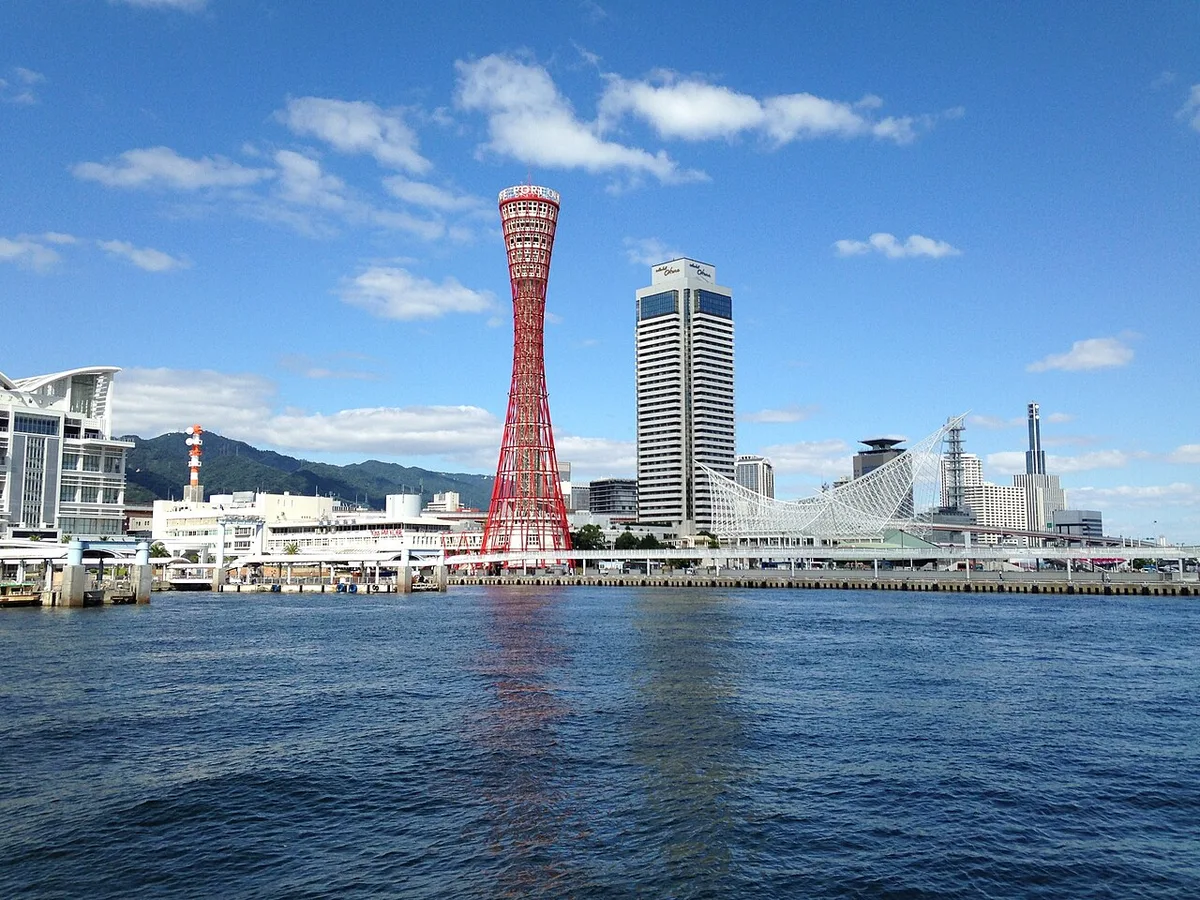
The interior spatial layout of Kobe Port Tower is divided into clearly defined functional levels catering to millions of annual visitors. The main observation levels occupy the upper tiers—including a gently rotating lounge floor—affording uninterrupted 360-degree panoramas of Kobe nestled against the majestic Mount Rokko backdrop and facing out toward the Seto Inland Sea. Floor-to-ceiling tempered glass panels maximize natural daylight and unobstructed sightlines. High-speed elevators and an internal spiral staircase within the central core are engineered to ensure smooth, safe circulation for thousands of daily guests even during peak travel seasons.
Surrounding Kobe Port Tower, the Harborland district is organized into complementary functional zones forming a complete coastal urban ecosystem. The Mosaic zone features an open-air, Mediterranean-inspired shopping and dining complex with low-rise red-tiled buildings lining the water’s edge, where visitors can stroll along wooden boardwalks and enjoy crisp sea breezes. Adjacent landward parcels encompass upscale international hotels, contemporary art spaces, and landscaped waterfront parks. Spanning dozens of hectares, Harborland exemplifies the strategic vision of Japanese urban planners in revitalizing former industrial docklands into economically and culturally vibrant public realms.
Maintenance and preservation of Kobe Port Tower and Harborland are carried out under Japan’s most rigorous engineering standards. Following the 1995 Great Hanshin Earthquake, the tower underwent exhaustive structural inspection and reinforcement, demonstrating remarkable resilience after sustaining zero major structural damage thanks to deep-bored pile foundations anchored into stable strata beneath coastal sediments. Recent renovations further integrated energy-saving LED illumination and advanced marine anti-corrosion coatings, preserving the landmark’s authentic mid-century character while meeting twenty-first-century green building standards.
Attracting millions of visitors annually, Kobe Port Tower and Harborland serve as a vital economic engine for Kansai tourism. A closer look at its spatial design reveals a textbook triumph in pairing forward-looking structural engineering with landscape planning respectful of local maritime heritage. More than a mere observation structure, Kobe Port Tower Harborland stands as an enduring emblem of resilience, urban renewal, and Kobe’s outward-looking global vision.
During the 1960s, as the port city of Kobe entered postwar reconstruction eager to assert itself as one of Japan’s foremost international trade hubs, urban planners envisioned a signature monument capable of redefining the entire Osaka Bay waterfront. Kobe Port Tower was born out of that historical moment with a mandate to serve as a revolutionary engineering milestone. Designed by Nikken Sekkei’s architectural and structural team—with structural engineer Takeo Naka playing a pivotal role—and completed in 1963 (Showa 38), the tower broke decisively with conventional observation towers worldwide by rejecting heavy reinforced concrete shafts and rigid rectilinear boxes. Instead, its designers pioneered a graceful hyperboloid lattice inspired by the traditional Japanese tsuzumi hand drum—a form uniting visual poise with structural mechanics engineered to resist severe earthquakes and coastal gales sweeping off the Seto Inland Sea.
Geometrically, Kobe Port Tower is sculpted from thirty-two vivid vermilion steel pipes curving inward at a slender waist before flaring gracefully toward the crown and base. This traditional vermilion hue was chosen not for mere visual flash, but for its deep cultural symbolism in Japan—representing prosperity, life-giving energy, and protective vitality against natural forces. Interlacing in strict mathematical order, the steel pipes form an open three-dimensional lattice that allows sunlight to pass through from every angle, continually altering the tower’s appearance throughout the day. At dawn, the steel members glow with warm coral-orange highlights reflected across Kobe Bay; after sunset, thousands of intelligent LED fixtures illuminate traditional geometric motifs in light, turning the tower into a luminous centerpiece presiding over the Harborland waterfront.
Stepping inside the tower, visitors and architectural enthusiasts encounter a vertically zoned interior conceived around the gradual upward progression of human perspective. Across its observation and exhibition floors, each level offers a distinct layer of aesthetic and historical discovery. At the base, a spacious lobby showcases original 1960s engineering blueprints, scale models of the hyperboloid lattice, and rare archival photographs documenting the demanding bayfront construction process. High-speed elevators housed within the central core carry guests up through the open steel lattice to the upper observation decks, where seamless curved tempered-glass windows frame 360-degree vistas stretching from the verdant slopes of Mount Rokko in the north across the open waters of Osaka Bay to the south.
A highlight of the spatial experience inside Kobe Port Tower is its famous rotating observation floor—one of the most innovative mechanical features ever incorporated into a Japanese observation tower at the time of its debut. The floor rotates smoothly in a closed circle, completing one full revolution roughly every twenty minutes. Calibrated so gently that guests feel neither dizziness nor vibration, the motion creates the sensation that all of Kobe—from the Meiji-era foreign residences of Kitano and historic piers of Meriken Park to modern container cranes—is gliding past like a living panorama of urban history. This design echoes the Zen aesthetic of impermanence and the ceaseless flow of time, inviting observers to feel attuned to the rhythm of the surrounding landscape rather than standing detached from it.
Examining the interior finishes and exhibition spaces reveals a refined dialogue between traditional Kansai craftsmanship and Western-influenced modernism. Materials such as fragrant hinoki cypress, washi paper, and brushed brass are deployed purposefully to balance tactile warmth with visual clarity. Stylized traditional screens serve as airy partitions alongside contemporary light installations, cultivating an atmosphere that is both dignified and welcoming. Upper-level exhibition galleries periodically display maritime artifacts, antique maps from the Nanban trade era, and scale models of Shuinsen red-seal merchant ships that called at Kobe centuries before modern port expansion—testifying to the region’s deep-rooted role as an international maritime crossroads.
Within Harborland’s urban fabric, Kobe Port Tower also carries profound symbolic resonance as a testament to the resilience of the Kansai people. During the devastating Great Hanshin-Awaji Earthquake of 1995—when surrounding docks and buildings suffered catastrophic destruction—the tower’s flexible hyperboloid lattice stood tall amidst the rubble, becoming a beacon of hope and renewal. To Kobe’s residents, the tower is far more than a landmark or tourist attraction; it is a cherished civic soul preserving collective memory across generations. Preserving its original structural integrity while upgrading its smart lighting and visitor amenities underscores a long-term commitment to safeguarding twentieth-century architectural heritage.
From the perspective of global architectural history, Kobe Port Tower represents a high-water mark of Japanese modernism infused with indigenous cultural identity. Breaking down boundaries between utilitarian civil engineering and expressive sculptural art, it established a lasting benchmark for coastal landmarks. The interplay between the traditional tsuzumi silhouette and cutting-edge hyperboloid steel engineering yielded a timeless monument that continues to inspire contemporary architects seeking an authentic voice within international design.
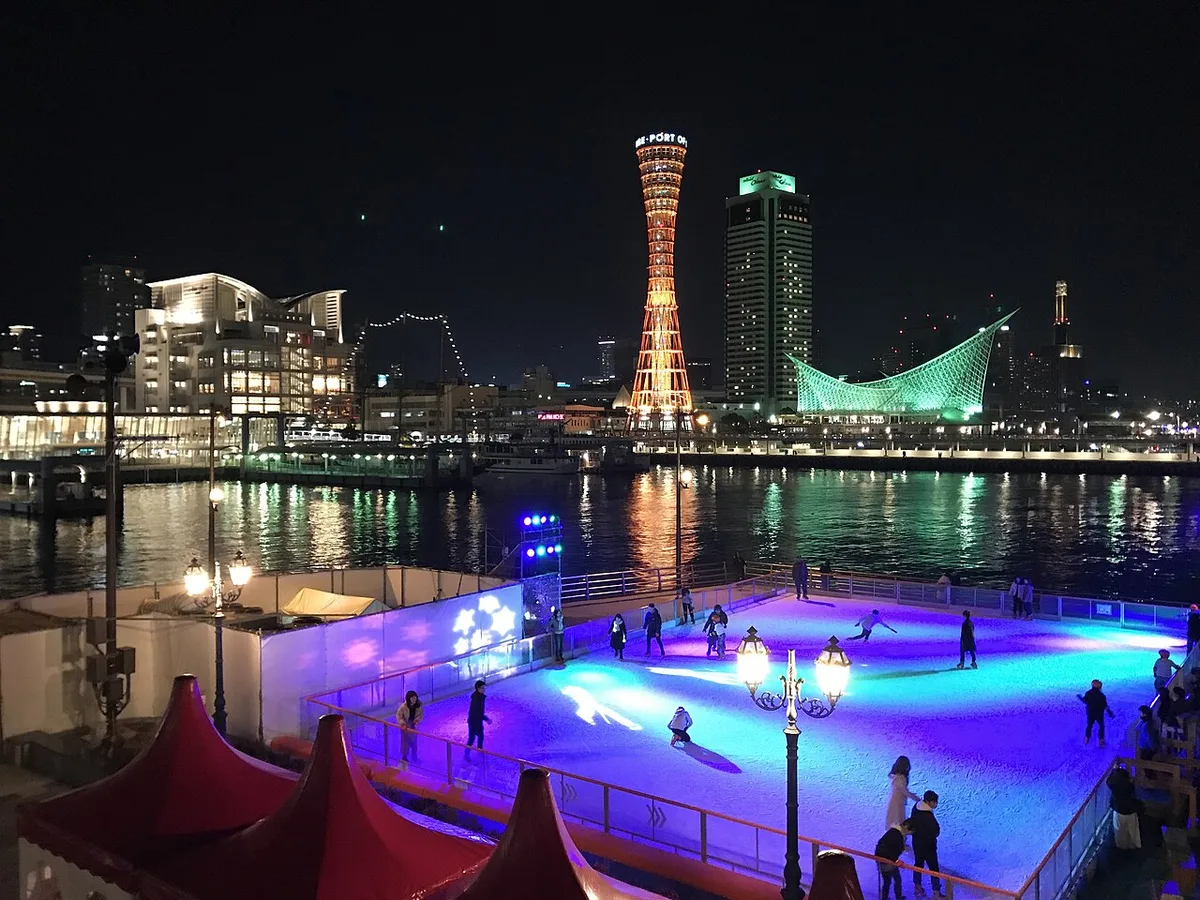
Gracing the coast of Hyogo Prefecture, Kobe Port Tower and Harborland stand as a proud witness to Japan’s industrial rise and urban renaissance. Far from a static maritime coordinate, this waterfront forms a dynamic cultural ecosystem where local daily rhythms intertwine seamlessly with international visitors from dawn until late at night. As morning sunlight pierces the light mist over Osaka Bay, the harbor awakens with the unhurried grace characteristic of Kansai life. Local joggers trace the wooden boardwalks along the seawall, breathing in crisp sea air as café owners open waterfront terraces overlooking the water. Early morning tranquility offers a rare moment of reflection, with the crimson silhouette of the hyperboloid tower mirrored across calm harbor waters as ferries and sightseeing cruisers sound deep horns to herald a new workday in one of Kansai’s busiest commercial ports.
By midday, Harborland accelerates into a bustling hub of retail, dining, and entertainment. Local families and visitors from around the world converge on the Umie and Mosaic complexes to browse boutiques and savor regional specialties of the Seto Inland Sea. The savory aroma of sizzling Kobe beef drifts from waterside restaurants, mingling with freshly roasted coffee and traditional pastries. Street performers animate the pedestrian promenades, ranging from accordionists evoking nostalgic European harbor towns to energetic local high school dance troupes. At the center of it all, Kobe Port Tower draws steady streams of guests ascending to its observation decks, where views stretch from the forested slopes of Mount Rokko in the north across the gleaming expanse of the modern port.
Sunset over Kobe Bay delivers one of the most captivating visual spectacles in Japan. The sky shifts from fiery amber to deep twilight violet, casting luminous reflections across glass high-rises and gentle bay ripples. Hundreds of locals and travelers gather along the wooden terraces near Meriken Park to watch day transition into night. Warm golden light spills from artisan shops and waterfront restaurants, evoking a romantic nostalgia reminiscent of Kobe’s opening to international trade in the late nineteenth century. Acoustic live performances frequently accompany twilight hours, drawing couples and friends together in cool Pacific breezes.
Once night falls, Harborland puts on a dazzling coat of light woven from tens of thousands of smart LEDs adorning Kobe Port Tower and neighboring landmarks. The tower’s programmable illumination shifts dynamically with seasonal themes and festivals, turning the landmark into a giant digital beacon along the waterfront. Nearby, the Mosaic Ferris wheel turns slowly in glowing bands of color mirrored in the bay below. Along the waterfront promenade, couples and families stroll cheerfully while enjoying artisanal ice cream or classic Kansai street snacks—capturing a balanced lifestyle that pairs modern urban energy with warm community spirit.
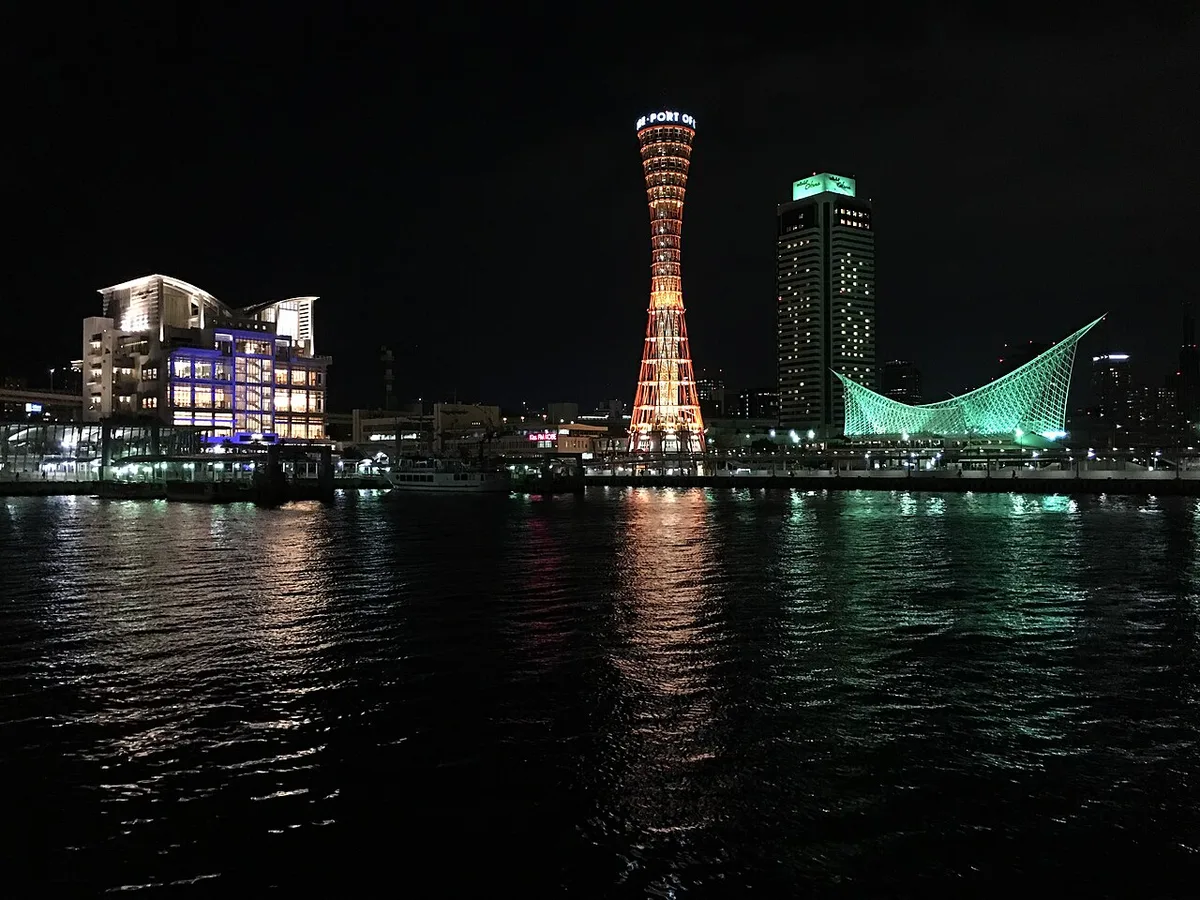
No visit to Harborland is complete without taking in the classic vantage points treasured by local photographers and residents across generations. First is the upper observation deck of Kobe Port Tower itself, offering a 360-degree panorama encompassing the working port, historic dry docks, and the city rising toward Mount Rokko. Equally iconic is the viewing plaza at Meriken Park beside the Port of Kobe Earthquake Memorial Park, commemorating civic resilience after the 1995 earthquake; looking back toward the tower after dark reveals its crimson lattice glowing proudly above the water as a symbol of Kobe’s enduring vitality.
During annual festivals, Harborland’s atmosphere rises to new heights with synchronized light shows, harbor fireworks, and open-air cultural exhibitions drawing tens of thousands of spectators. Notably, the Kobe Luminarie winter light festival showcases an extraordinary fusion of illuminated architectural artistry and community solidarity, transforming avenues leading from the harbor into glowing cathedrals of hand-crafted bulbs. Dressed in smart casual wear or traditional attire, residents stroll orderly yet joyfully beneath the arches—illustrating how Kobe Port Tower and Harborland serve as a model civic space uniting past and present.
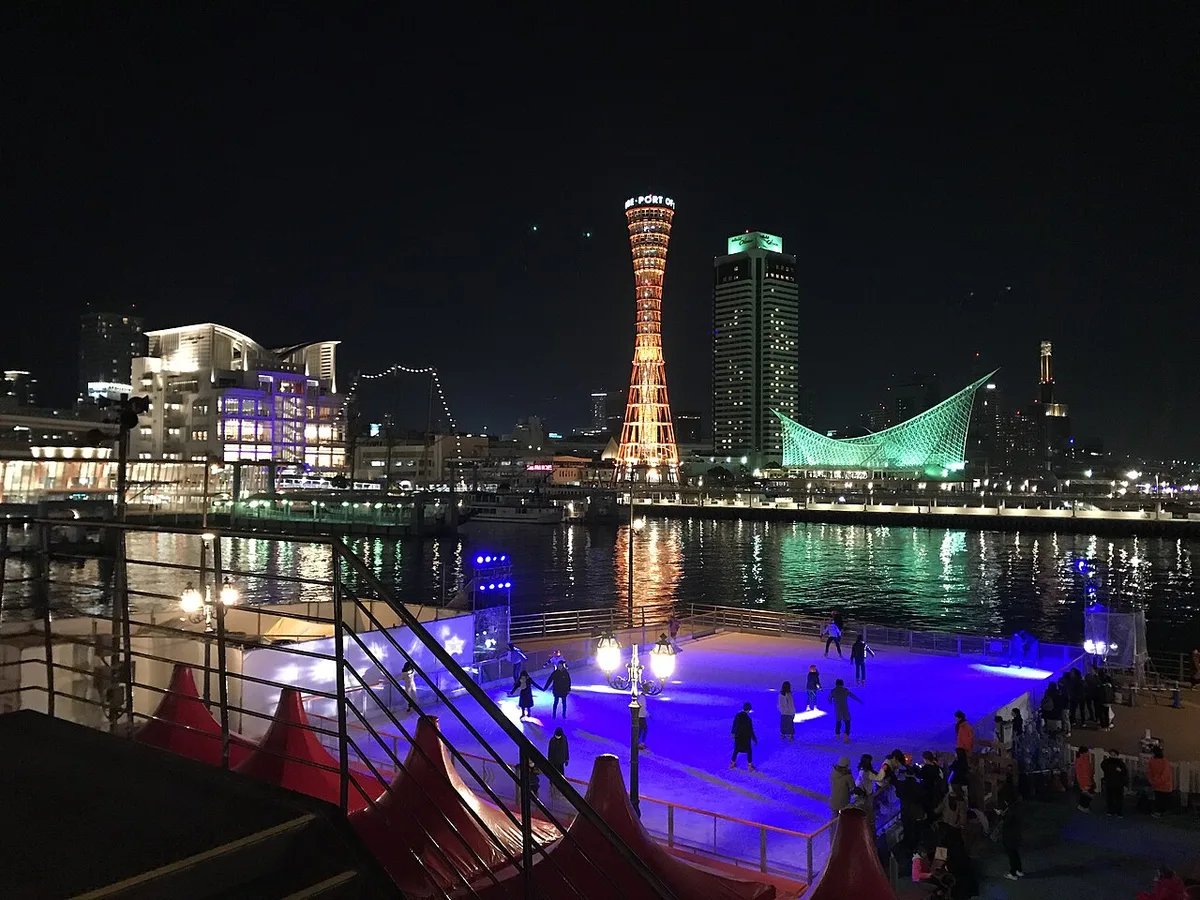
The Kobe Harborland waterfront—centered on the tsuzumi-shaped steel lattice tower—also anchors a distinctive culinary landscape forged through the meeting of traditional Japanese gastronomy and international maritime trade beginning in the late nineteenth century. When the Port of Kobe officially opened to foreign commerce in 1868 (following the 1867 treaties), the city welcomed an influx of Western ingredients, spices, and culinary techniques, giving rise to a cosmopolitan food culture unmatched elsewhere in Japan. Local culinary craftsmanship reflects meticulous precision paired with modern aesthetic sensibility, turning every meal into an edible chronicle of Kansai’s maritime and economic history.
At the pinnacle of the region’s culinary map stands world-renowned Kobe beef, an agricultural masterpiece prized for strict breeding standards and the purebred lineage of Tajima-gyu cattle. At waterfront restaurants around the harbor, Kobe beef is most celebrated in teppanyaki or sukiyaki preparations, where chefs sear prime cuts on seasoned iron griddles with exact temperature control right before diners’ eyes. Dense intramuscular marbling melts effortlessly on the palate, releasing a rich, sweet aroma unique to pasture- and grain-raised Tajima cattle. Purists savor each slice with minimal seasoning—often just a pinch of coarse sea salt or freshly grated wasabi—allowing the pure sweetness of the beef to shine unmasked by heavy sauces.
Alongside prized Wagyu, Harborland’s setting beside the Seto Inland Sea and Osaka Bay provides abundant fresh seafood—most notably Akashi sea bream (Akashi-tai) and Akashi octopus, which form the cornerstone of local sushi and traditional Akashiyaki. Considered the direct ancestor of Osaka’s famous takoyaki, Akashiyaki features delicate, custard-soft dumplings made from wheat flour, rich egg batter, and savory katsuobushi dashi broth. Unlike standard street-style octopus balls, diners eat Akashiyaki by dipping each piping-hot dumpling into a bowl of warm, clear dashi garnished with finely sliced scallions, yielding a silky, refined coastal flavor. Skilled cooks turn the delicate batter swiftly with long wooden chopsticks over heavy copper griddles so the center stays luxuriously tender without overcooking.
The longstanding presence of Kobe’s vibrant Chinese community in nearby Nankinmachi (Kobe Chinatown), just a short walk from the port tower, adds yet another flavorful layer to Harborland’s dining scene. Since the mid-nineteenth century, merchants from Guangdong and Fujian introduced hand-pulled noodles, steamed buns, and warming aromatic spices, blending southern Chinese techniques with fresh local ingredients. Kobe-style beef noodles and soup dumplings (xiaolongbao) here are prized for broths simmered for hours from beef and chicken bones infused with star anise, cinnamon bark, and cardamom—offering comforting warmth on crisp winter afternoons when sea breezes sweep across the harbor piers.
Afternoon tea and pastry traditions around Harborland likewise bear the imprint of Kobe’s early international port heritage. Having embraced Western baking early on, Kobe residents developed a cherished culture of pairing European-style pastries with fine Ceylon black tea or Uji green tea inside historic Taisho Roman-style cafés. Bakeries and patisseries lining streets leading toward the port tower still honor century-old recipes for buttery brioche, apple tarts, and crisp butter sablés crafted with rich Hokkaido dairy and domestic wheat. Here, tea culture transcends formal ceremony to foster a relaxed, cosmopolitan salon atmosphere where artisans, locals, and travelers gather to converse over art, architecture, and harbor life.

Strolling along the pedestrian promenades past Mosaic and the historic Red Brick Warehouses, visitors notice that waterfront restaurants consistently orient dining spaces toward the harbor where cargo vessels and cruise ships moor. This spatial philosophy echoes the traditional Japanese aesthetic of shakkei (“borrowed scenery”), framing the shimmering bay and illuminated port tower as a living backdrop to the meal so taste, sight, and the gentle lapping of waves against stone seawalls unite in a multisensory experience. Local chefs also curate seasonal menus guided by the culinary principle of shun—celebrating ingredients at their fleeting peak of flavor.
Ingredient sourcing across Harborland maintains close ties with historic wholesale hubs such as the Kobe Central Wholesale Market, where vendors inspect fresh catches and mountain produce at dawn. Careful selection of plump oysters from Harima-nada or crisp daikon radishes from the Rokko plateau reflects deep respect for nature and the craft of local farmers and fishermen. As paper lanterns flicker to life along the waterfront promenade at dusk, the mingled scents of charcoal-seared beef, delicate dashi broth, and warm butter pastries create an unspoken cultural signature capturing the proud, cosmopolitan spirit of this historic port city.
Kobe Bay has long occupied a vital place in Japan’s international maritime network since the Meiji Restoration, with Kobe Port Tower rising over Harborland as an enduring emblem of urban renewal and modernity. Planning a rewarding visit to this hyperboloid architectural landmark benefits from understanding local seasonal weather, public transit connections, optimal viewing hours, and Japanese public etiquette. Climatically, Kobe enjoys a temperate maritime climate with four distinct seasons, each lending a different character to the waterfront. Spring (March through May) awakens the bayfront with pleasant temperatures between 10°C and 18°C (50°F–64°F) and crisp sea air, though occasional cool breezes off the Seto Inland Sea make a light jacket advisable. Summer (June through August) brings higher humidity and daytime highs frequently exceeding 30°C (86°F), enlivened by harbor fireworks festivals—calling for breathable attire, sun protection, and regular hydration. Autumn (September through November) bathes the port in romantic golden sunsets and comfortable temperatures from 15°C to 22°C (59°F–72°F), ideal for leisurely walks along waterfront parks and shopping promenades. Winter (December through February), while milder than northern Hokkaido, brings brisk sea winds whipping across the open harbor and upper observation decks, making a windproof coat, scarf, and gloves essential.
Public transit access to Kobe Port Tower and Harborland is remarkably punctual, integrated, and user-friendly. Travelers arriving via JR or private rail lines from Osaka or Kyoto can alight at JR Kobe Station or Kosoku Kobe Station, both located just a ten- to fifteen-minute walk from the waterfront along tree-lined avenues and underground shopping arcades. Within central Kobe, the Kaigan Subway Line stops directly at Harborland Station, placing visitors steps away from the Umie commercial complex and bayfront promenade. Kobe’s signature City Loop Bus also connects major heritage districts—including Kitano Ijinkan and Nankinmachi—with waterfront stops near Meriken Park and Harborland, letting sightseers admire Kobe’s blend of historic Western-style architecture and modern skyline en route. For travelers carrying heavy luggage or preferring door-to-door convenience, metered taxis wait readily outside major stations with spotless vehicles and courteous, uniformed drivers, though fares are considerably higher than public transit.
Timing your visit properly plays a decisive role in maximizing visual enjoyment and photography at Kobe Port Tower Harborland. Late afternoon—beginning roughly one hour before sunset and continuing into full nightfall—is widely regarded as the golden window to experience the bayfront. As warm amber sunlight strikes the tower’s vermilion steel lattice, the surrounding bay waters, historic dockyard cranes, and modern skyline take on a nostalgic glow bridging industrial heritage and contemporary urban life. Shortly after dusk, the tower’s smart LED illumination and the lights of harbor cruise ships switch on simultaneously, transforming the waterfront into a shimmering mosaic reflected across gentle waves. Ascending to the upper observation decks at this hour reveals a sweeping panorama of Kobe sparkling beneath the dark silhouette of Mount Rokko—explaining why Kobe’s night view ranks among Japan’s finest urban nightscapes.
Dressing smartly for a Harborland visit balances comfort, mobility, and coastal weather awareness. Because the open bayfront exposes visitors to stronger winds than inland streets, perceived temperatures around the base of the tower and on outdoor terraces often feel cooler than forecasted. Dressing in versatile layers allows effortless adjustment between breezy outdoor promenades and climate-controlled shopping galleries or observation lounges. Comfortable, supportive walking shoes or sneakers with good traction are strongly recommended, as exploring Harborland entails substantial walking across stone plazas, wooden boardwalks, and multi-level retail complexes. Avoid narrow stiletto heels that can catch in boardwalk gaps or grate surfaces, and pack sunglasses or a cap to cut daytime glare off the water.
Observing Japanese cultural etiquette and public rules helps preserve the cleanliness, order, and welcoming atmosphere of Kobe’s waterfront. On trains and in crowded indoor areas at Harborland, keep voices low and refrain from making phone calls aboard railcars. Littering is strictly frowned upon; carry personal trash in a small bag until locating sorted recycling bins near convenience stores or train stations. Outdoor smoking is permitted only inside designated smoking enclosures, and walking while smoking along waterfront promenades is prohibited. When visiting Kobe Port Tower, tickets can be purchased at the ground-floor counter or reserved online in advance to bypass queues during weekends and national holidays. Admission options vary depending on access to specific observation tiers and combo passes paired with nearby museums or harbor cruises, so reviewing ticket tiers beforehand helps tailor your visit. Following staff instructions and refraining from bringing sharp objects, flammable materials, or pets into restricted areas ensures a smooth, memorable exploration of this iconic maritime landmark.
To experience this journey seamlessly with a knowledgeable local guide, explore our 6D5N Tokyo – Mount Fuji – Nagoya – Kyoto – Osaka Tour featuring a thoughtfully curated itinerary.