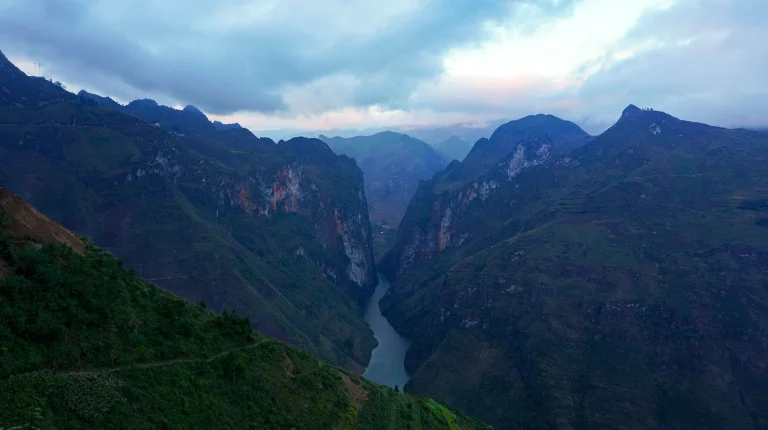
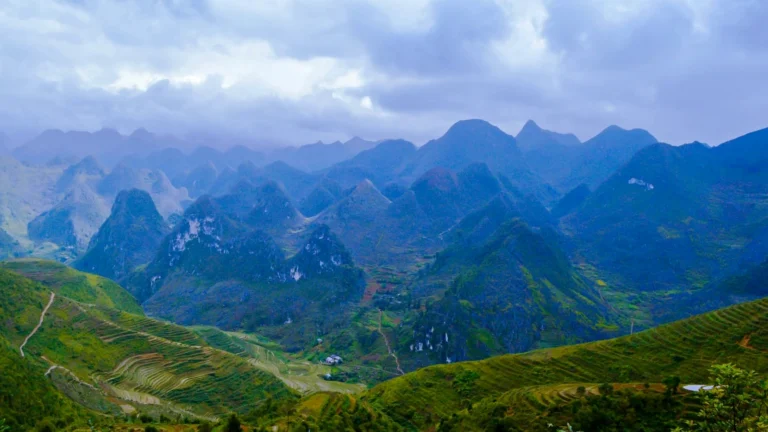
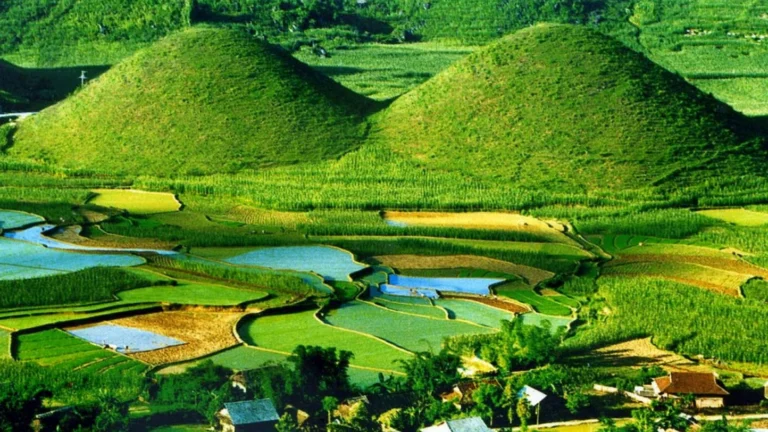
Nestled deep within the Dong Van karst plateau, where sheer cat-ear mountain ridges pierce the clouds like heavenly swords, the Vuong Family Mansion is not merely an architectural structure, but a towering historical “fortress” standing proud amidst the border highlands. Located in the Sa Phin Valley, Sa Phin Commune, Dong Van District, Ha Giang Province, at coordinates 23°14’47″N 105°07’15″E and at an altitude of 1,600 meters above sea level, the mansion emerges as a vivid testimony to a turbulent autonomous era of the Mong ethnic group. This was a convergence of economic and political power, constructed starting in 1898 and completed in 1903 under the hands of the era’s most talented artisans, directed by Vuong Chinh Duc—hailed as the “King of the Mong”—an exceptional leader who skillfully navigated his lineage’s destiny amidst the whirlwinds of modern history.
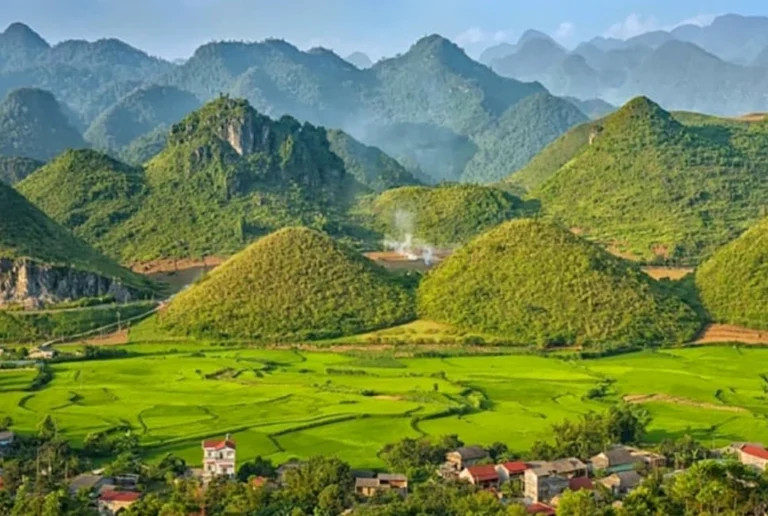
Geographically, ancient feng shui masters likened the Vuong Family Mansion to a sturdy “turtle shell,” a symbol of endurance and eternity. The “Dragon crouching, tiger sitting” terrain of the Sa Phin Valley not only carried spiritual significance regarding the protection of the mountains and forests but also served as a strategic military choice. Surrounded on all sides by limestone mountains forming a natural protective arc, it enabled the Vuong family to control the entire vital route leading into the rocky plateau region. This proud isolation transformed the mansion into an independent power entity, one that the French colonialists eventually had to respect, conferring the title of “Bang ta” (sub-prefectural official) upon Vuong Chinh Duc to maintain order in the border region. The combination of harsh limestone geology and human craftsmanship created a living space that is both private and majestic, clearly reflecting the mindset of a highland monarch.
The heritage value of the Vuong Family Mansion also lies in its unique cultural intersection. The structure is designed in the shape of the Chinese character “Wang” (王)—meaning both the family name and a symbol of supreme authority. The architecture here is a delicate blend of traditional Mong construction techniques with Qing dynasty residential styles, accented with Western technical details introduced by the French. Sturdy green stone walls, robust stone-pine wooden pillars, and solemn yin-yang tiled roofs together tell the story of a golden age when opium was the “white gold” nurturing the prosperity of an entire region. Poppy flower carvings on the wooden structural components are not merely decorative motifs, but historical markers of the economic origin that shaped the mansion’s appearance.
Today, when speaking of the Vuong Family Mansion, heritage researchers and travelers not only admire a nationally recognized architectural art monument but also touch upon fragments of history from a legendary era. From Vuong Chinh Duc to his son Vuong Chi Sinh, every artifact and every set of Chinese horizontal lacquered boards and parallel sentences preserved within the mansion are pieces of memory belonging to a lineage intertwined with Ha Giang’s destiny. Amidst the serene atmosphere of the karst plateau, the Vuong Family Mansion still stands as a resilient historical witness, reminding posterity of an era where power and culture blended to create an exclusive cultural heritage in the heart of the Fatherland’s frontier.
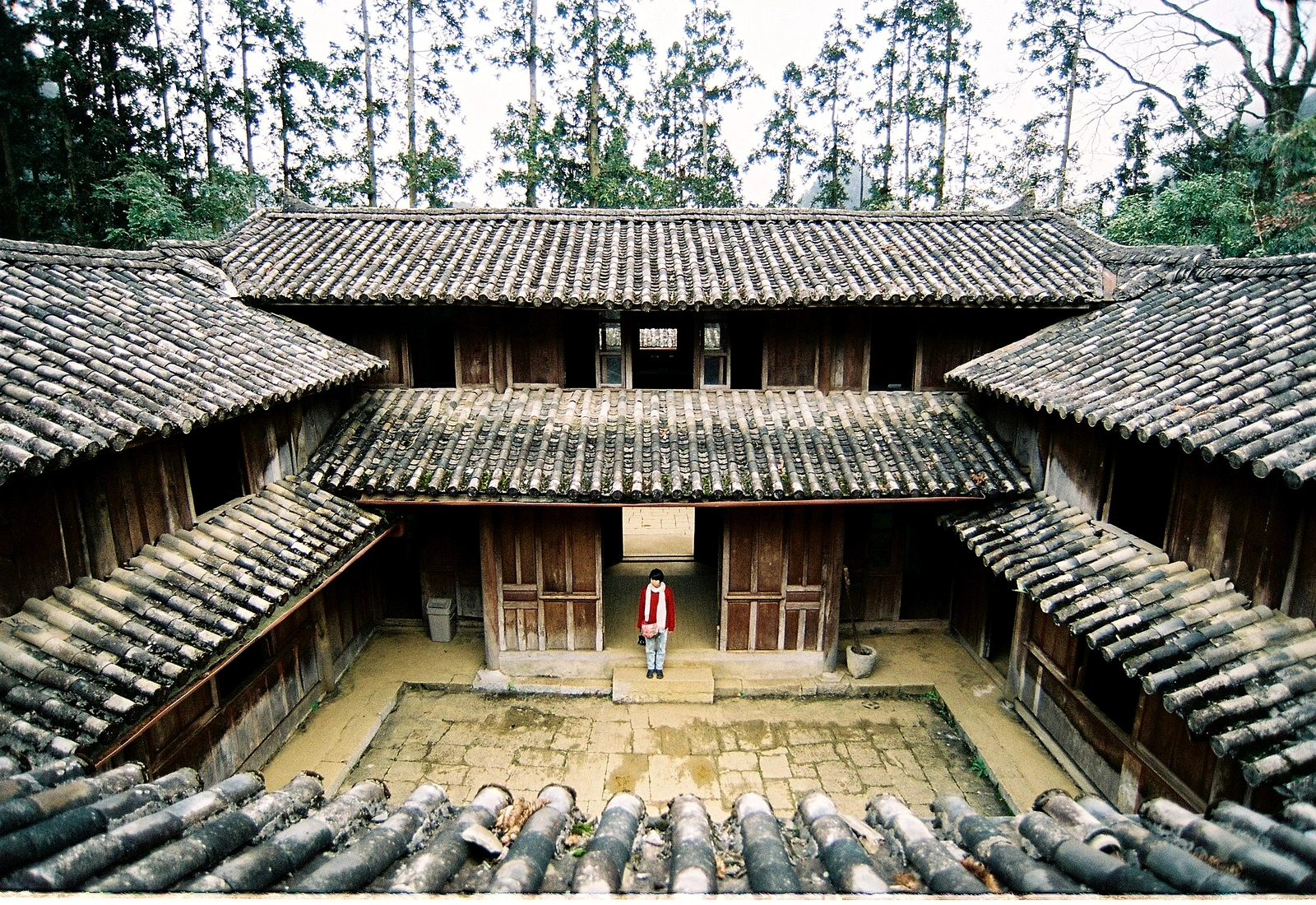
Tucked away within the Sa Phin Valley like a precious gemstone embraced by nature, the Vuong Family Mansion is not just an architectural marvel, but an epic poem written in stone across the Dong Van karst plateau. Upon setting foot here, visitors will immediately be overwhelmed by its unique “turtle shell” terrain. Amidst sharp, surrounding cat-ear limestone mountains, the mansion emerges as a sturdy fortress, a convergence of heaven and earth’s vital energy. The combination of the “Dragon crouching, tiger sitting” terrain and the skilled craftsmanship of Han artisans invited by Vuong Chinh Duc from Yunnan created a flawless architectural masterpiece shaped like the Chinese character “Wang” (王), combining majesty with the mysterious undertones of highland culture.
Stepping through the weather-beened thick ironwood gate, visitors will feel the transition of space. The architecture here represents a refined intersection between Mong building techniques, Qing dynasty residential styles, and spontaneous Western accents. Towering stone-pine columns, meticulously polished green stone walls, and a time-worn moss-covered yin-yang tile system create an astonishingly harmonious overall structure. Notably, the sculptural art within the mansion is a highlight that cannot be missed. Intricately carved poppy motifs on door frames and crossbeams serve not only as symbols of past economic prosperity but also as proof of the Vuong family’s supreme aesthetic standards. Every detail—from tables, chairs, and beds to horizontal lacquered boards and Chinese parallel sentences—exudes the breath of a golden age where the highland aristocratic lifestyle was defined by luxury, privacy, and absolute authority.
To capture “million-view” moments at this historical site, professional photographers usually prioritize two prized shooting angles. The first angle is from the middle courtyard of the Front Mansion looking upward toward the multi-layered roofs. Here, the perfect symmetry of the “Wang” architecture combined with natural light filtering through wooden door gaps creates a deeply philosophical frame, where shadows and light dance across green stone slabs. The ideal time is during the golden hour from 8:00 AM to 9:30 AM, when morning sunlight begins to weave through the canopy of Fokienia trees, casting rays onto the carved patterns and highlighting the solemn yet vibrant beauty of the structure.
The second shooting angle is located at the second-floor corridor area of the Rear Mansion. From this vantage point, you can capture a full panoramic view of the Sa Phin Valley with distant rolling limestone mountains. This is the most “valuable” angle to capture the majestic beauty of the karst plateau in the twilight glow. As the sun gradually sinks behind the mountain peaks, the light transitions into warm amber tones, draping the entire mansion in an ethereal coat. The contrast between the solidity and coldness of stone against the softness and warmth of sunset produces photographs with immense emotional depth. Additionally, utilizing wooden doorframes as “natural frames” to focus on intricately carved details is a technique that infuses your photos with a profound breath of history and art. The Vuong Family Mansion is not merely a destination; it is a place where time stands still, inviting beauty-loving souls to admire and listen to stories told by stone.
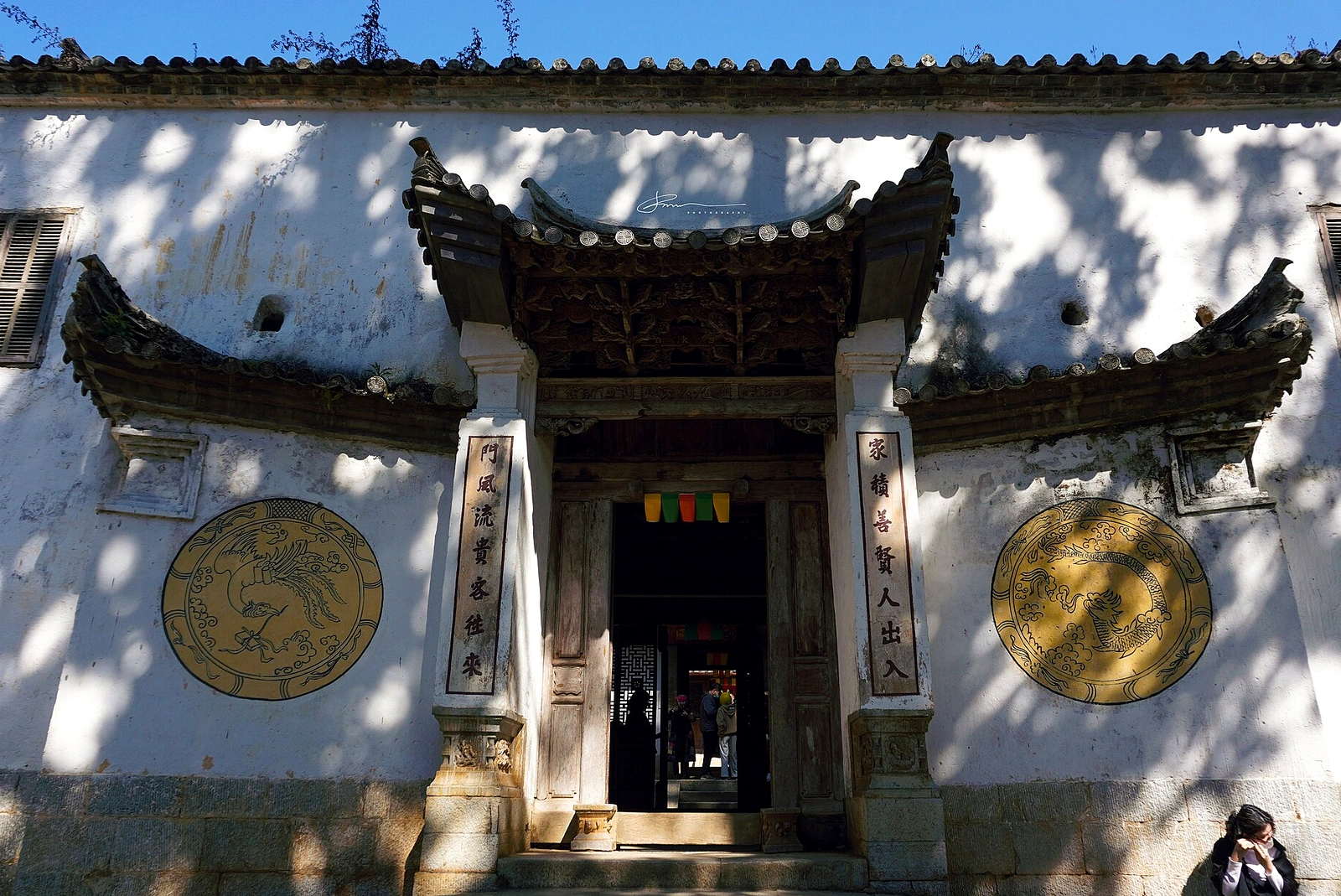
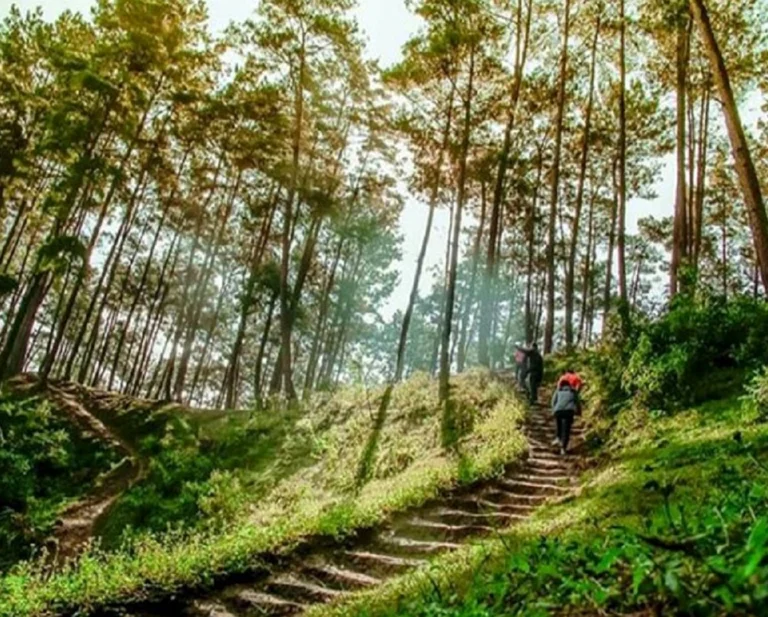
Upon arriving in the Sa Phin Valley, the very first sensation that washes over any traveler is awe at the rugged, majestic beauty of the Dong Van karst plateau. The Vuong Family Mansion is not a static architectural monument, but a living entity where past and present intersect in every heartbeat of the mountains and forests. The experiential journey here begins by following winding trails, where visitors can challenge themselves with short mountain hikes around sharp cat-ear limestone outcrops. Looking down from above, the mansion appears like a giant “turtle shell” resting quietly in the valley heart, embraced by straight-standing ancient Fokienia trees, creating a majestic and mystical ink-wash painting.
Stepping through the time-stained ironwood gate, visitors will feel a strange sense of stillness. The interior space of the mansion carries a serene atmosphere, completely detached from the noisy outside world. Paying respects at the ancestral altars, admiring the intricate poppy flower carvings on wooden pillars, or touching the cool green stone slabs, one can almost hear the echoes of a bygone golden era. This is not merely a sightseeing activity, but a spiritual dialogue with history. Many visitors feel deeply moved standing in the mansion courtyard, gazing up at the moss-covered yin-yang tiled roofs, letting their imagination transport them back to days when horse neighs echoed across mountain slopes and the authority of the “King of the Mong” blanketed the entire border region.
After immersing oneself in the ancient cultural space, the practical experience in Sa Phin becomes even more complete when travelers blend into the local rhythm of life. Right next to the mansion area, highland markets are ideal places to savor renowned local cuisine. Nothing beats sitting beside a warm glowing hearth, sipping fragrant corn wine, eating a bowl of piping hot Thang Co (traditional horse meat stew), or enjoying sweet buckwheat cakes. The flavors of the mountains and forests, combined with the warmth of the Mong ethnic people dressed in vibrant brocade garments, will make anyone feel cozy amidst the crisp chill of the highlands. If time permits, taking a boat trip on the Nho Que River to admire the deep Tu San gorge from water level will be the perfect finishing touch for a journey brimming with emotional highs.
The initial awe gradually gives way to a profound sense of appreciation as visitors realize that the Vuong Family Mansion is not just an architectural relic, but proof of human resilience against harsh nature. Every courtyard corner and every stone wall tells its own story of cultural exchange and the aspiration to assert one’s position amidst the great wilderness. As twilight falls, dyeing the limestone peaks purple, standing from above to view the panoramic mansion shimmering in faint mist, travelers will feel their souls grow light and serene. These are the most precious experiences—where the beauty of history, culture, and nature converge, leaving an unforgettable imprint in the heart of every visitor to this proud frontier land.
The Vuong Family Mansion is not only a distinctive architectural and artistic work but also a must-visit destination in the journey to discover the Dong Van Karst Plateau UNESCO Global Geopark. To ensure a seamless tour, visitors need to grasp basic information regarding operating hours and travel tips for this heritage site.
Regarding operating hours, the Vuong Family Mansion welcomes visitors every day of the week, including holidays and weekends. Visiting hours run from early morning until late afternoon, ensuring visitors have ample time to fully admire the beauty of the Front Mansion (Tien Dinh), Middle Mansion (Trung Dinh), and Rear Mansion (Hau Dinh). As for admission fees, the site applies listed fees in accordance with local heritage management regulations. Visitors should prepare small denomination cash to make ticket purchases convenient at the entrance. Note that these fees are used directly for the conservation and maintenance of the ancient architectural components, so complying with ticket regulations is a practical action to preserve heritage.
Regarding travel routes, starting from Ha Giang city center, visitors will travel along National Highway 4C toward Dong Van District. This route is famous for its treacherous yet mesmerizing hairpin turns, passing through the Quan Ba Heaven Gate and buckwheat flower fields. The mansion is located about 14km from Dong Van town center. The optimal vehicles for experiencing the rocky mountain terrain are motorbikes or personal cars. If traveling by motorbike, visitors must thoroughly check their brake systems and engines before departure due to the continuous mountainous terrain. For large tour groups, 16-to-29-seater tourist buses are the safest and most convenient choice.
The best time to visit the Vuong Family Mansion is in autumn or early winter. At this time, the highland weather is crisp and cool with fresh air, making it ideal for strolling around the mansion grounds without being affected by harsh sunlight or forest rain. Notably, this is also when buckwheat flowers bloom in full splendor, creating a stunning landscape surrounding the Sa Phin Valley.
Because the Vuong Family Mansion is a historical monument of high spiritual and cultural value, visitors should mind dress code regulations. Prioritize modest, polite attire, avoiding overly short or revealing clothes when entering worship areas and family living spaces. Since the terrain in Sa Phin is rocky mountainous country, walkways inside the mansion consist primarily of large stone blocks and steps, so visitors should choose sports shoes or flat shoes with good grip to facilitate movement and avoid high heels, which cause difficulty and are prone to slipping. Finally, always maintain environmental awareness, refrain from touching ancient artifacts, do not write or draw on stone walls, and strictly follow directional signs within the grounds to join hands in preserving this priceless historical value for future generations.
To enjoy a complete vacation and fully admire the beauty of the Vuong Family Mansion without worrying about arranging transportation, booking admission tickets, or planning itineraries, travelers can choose premium all-inclusive Ha Giang tour packages from VDS Travel. Each tour is optimized to schedule check-ins during the most vibrant scenery, accompanied by a team of guides deeply knowledgeable about local culture and top-tier hotel and dining service standards.