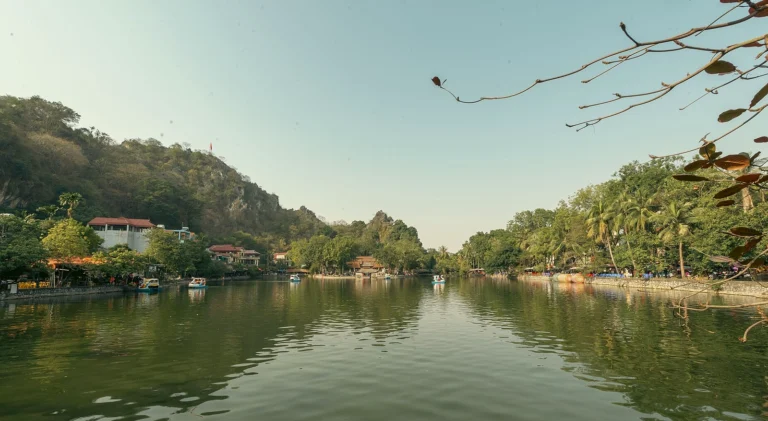
Standing proudly in the heart of windswept West Lake, Tran Quoc Pagoda is more than a mere work of Buddhist architecture—it is a living heritage site where the spiritual essence and remarkable talents of thousand-year-old Thang Long converge. Located on a small peninsula in Yen Phu Ward, Tay Ho District, this ancient pagoda commands one of the most auspicious feng shui positions in the imperial capital, a place where “water gathers and blessings accumulate,” embraced by the vast waters of West Lake—Hanoi’s legendary green lung. The interplay between the serene atmosphere of the Zen sanctuary and the ceaseless pulse of urban life creates a singular landmark where time seems to settle through layers of cultural sediment.
Tracing its history back to the 6th century under the Early Ly Dynasty, the pagoda originated under the name Khai Quoc (National Founding), built by imperial decree of Emperor Ly Nam De in 541. At that time, it stood along the banks of the Red River, serving as the national center of Buddhism and a symbol of the nation’s aspiration for independence and sovereignty. However, facing the harsh forces of nature and the shifting currents of the Red River, the entire structure was relocated in 1615, during the Revival Le Dynasty, to Kim Nguu Islet—a mound rising out of West Lake. This relocation not only preserved the heritage from erosion but also marked a turning point that shaped its distinctive landscape, transforming Tran Quoc Pagoda into a “Buddhist island” in the heart of the capital, where spiritual tranquility blends seamlessly with the scenic splendor of West Lake.
The name Tran Quoc (National Defense), officially bestowed under Emperor Minh Mang in 1842, carries the profound meaning of a temple guarding the realm and safeguarding peace for the nation and its people. Across centuries of vicissitudes—from the Ly–Tran dynasties with the teachings of the Vinitaruci and Vo Ngon Thong Zen sects to the Buddhist revival of the early 20th century—Tran Quoc Pagoda has remained a steadfast spiritual anchor. Historical figures such as Emperor Ly Nam De, Emperor Le Hy Tong, and Lord Trinh Cuong each left an indelible mark on the restoration and preservation of this ancient temple. The enduring bond between feudal dynasties and eminent monks turned the site into an open-air museum preserving priceless intangible cultural values.
In the eyes of heritage researchers and the press, Tran Quoc Pagoda is recognized as one of the oldest pagodas in Vietnam, uniting history, architecture, and sculptural art in full measure. Its monumental collection of stone steles and exquisitely crafted Buddha statues not only testify to the mastery of ancient artisans but also stand as historical witnesses recounting the endurance of Vietnamese culture. Viewed from afar, the pagoda resembles a lotus blooming from the waters of West Lake, crowned by the towering Lotus Stupa, creating a striking visual focal point and affirming its status as a national cultural heritage site where every inch of earth and every branch breathes the history and sacred spirit of Thang Long.
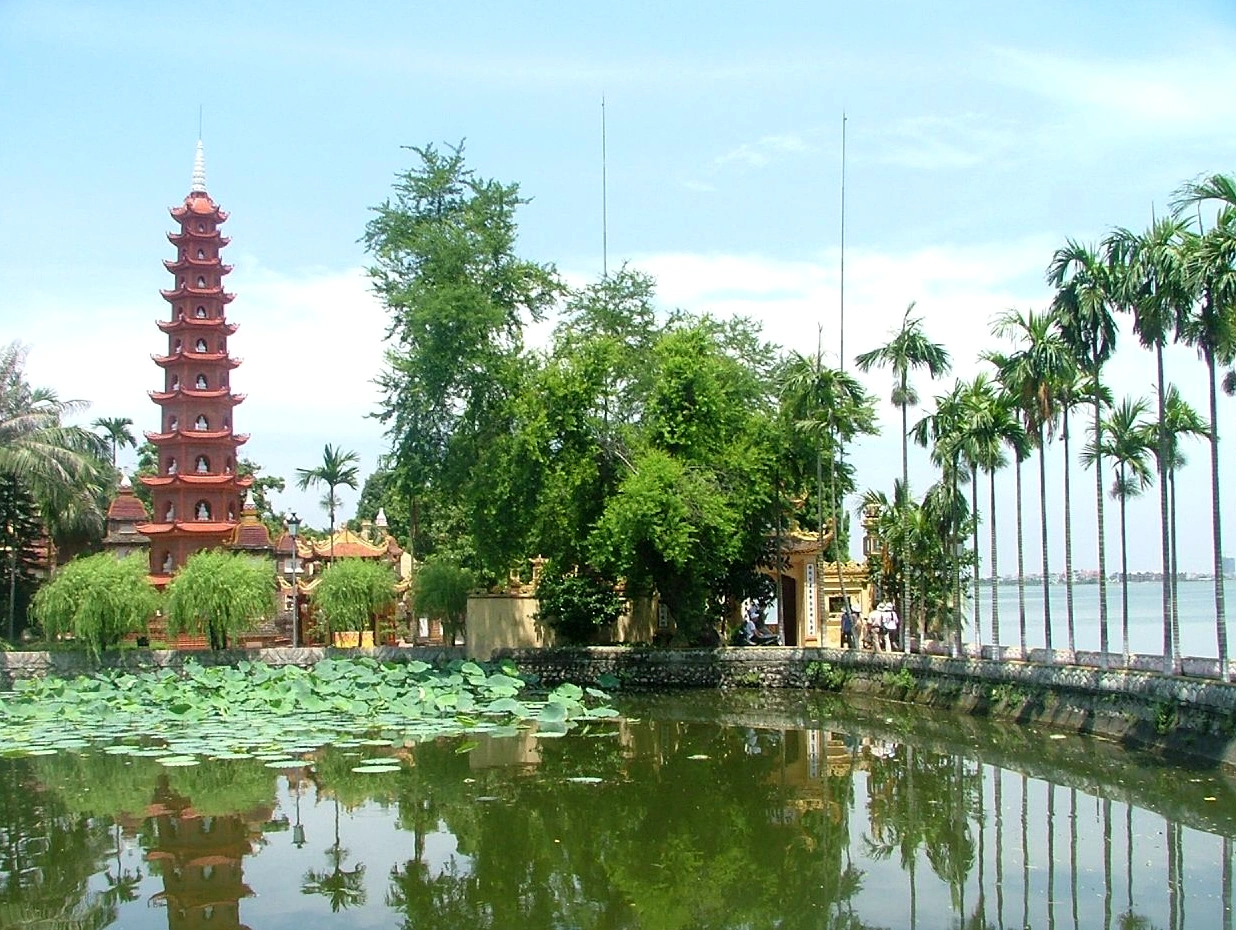
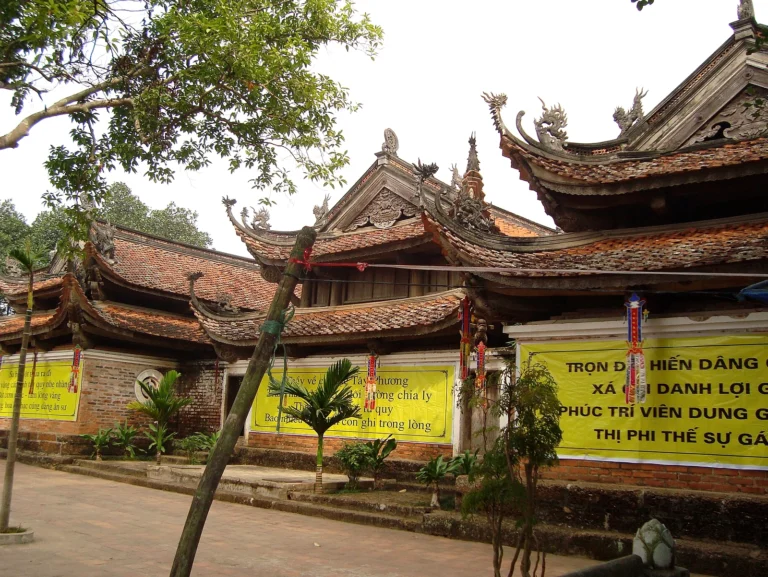
The scenic mastery of Tran Quoc Pagoda lies not only in the grandeur of its structures but also in its spatial arrangement deeply rooted in Eastern Buddhist philosophy. Perched on Kim Nguu Islet amidst breezy West Lake, the ancient temple looks like a serene lotus rising above expansive waters, occupying a truly one-of-a-kind feng shui setting in the former royal capital. Its layout follows the traditional “inner 工, outer 國” architectural style, harmoniously connecting the Front Hall, the Incense-Burning House, and the Main Sanctuary into a unified, solemn whole that retains an otherworldly calm.
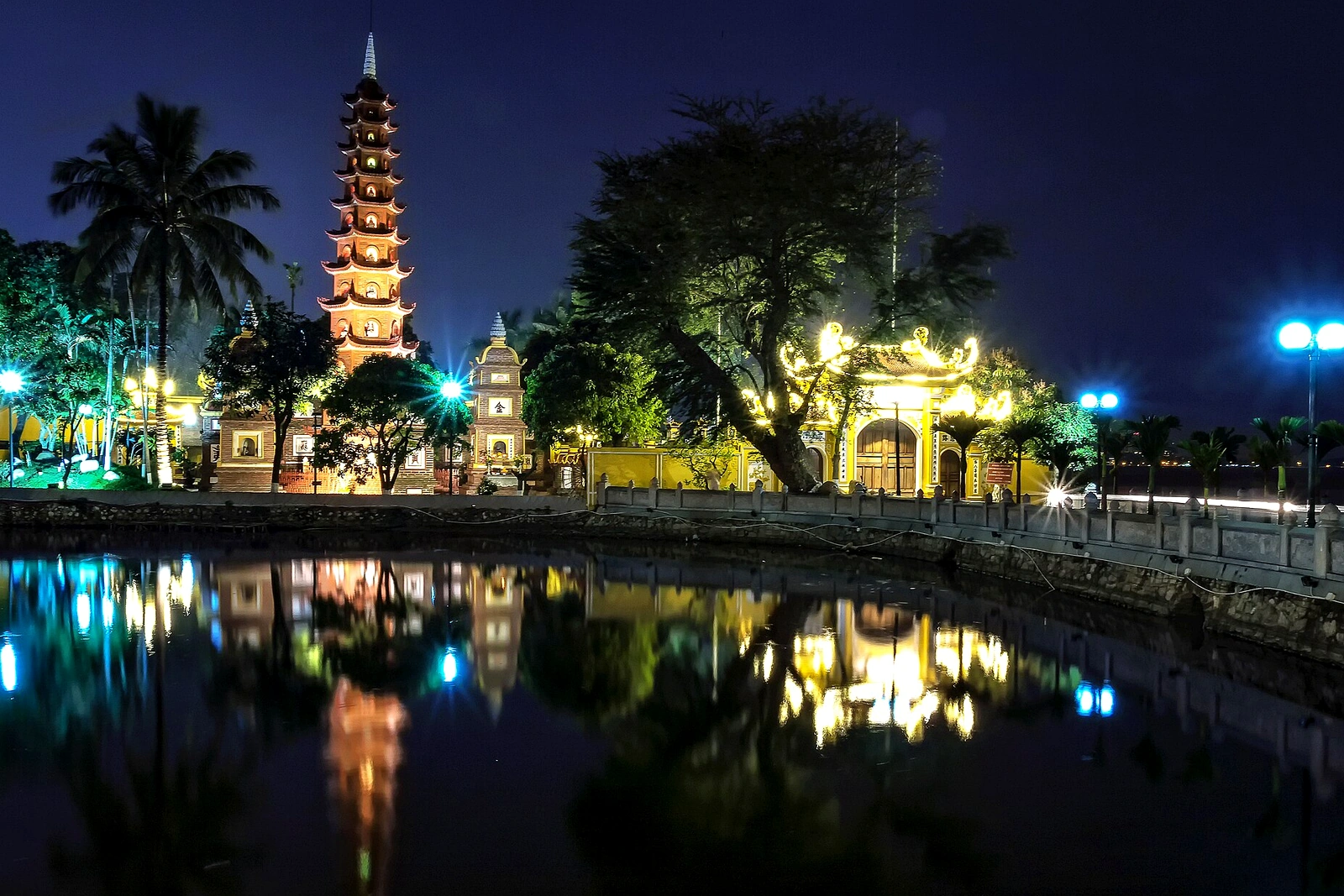
The most magnificent architectural centerpiece is the Six-Degree Lotus Stupa. Standing 15 meters tall across 11 tiers, each level features six arched niches housing pristine white gemstone statues of Amitabha Buddha. The contrast between the terracotta red of fired brick, the weathered gray of ancient stone, and the pure white of the statues creates a powerful visual impression, especially when bathed in sunlight. The intricate carvings on the trusses and ironwood pillars in the Front Hall—depicting lotus blossoms, bodhi leaves, and traditional mythical creatures—are masterworks of sculpture that showcase the artistry of Le–Nguyen craftsmen.
For photography enthusiasts and beauty-seeking travelers, Tran Quoc Pagoda offers million-dollar photo spots that no visitor should miss. The premier and highest-rated vantage point is from Thanh Nien Street looking directly toward the triple-arched entrance gate. From here, you can capture the entire pagoda reflected in the glassy lake, with the narrow causeway leading onto the islet resembling a silk ribbon draped across the water. The golden hour to shoot is at sunset, when the sun dips behind distant high-rises and paints the West Lake sky crimson. Soft, diffused light casts ethereal hues across the water, accentuating the stately silhouette of the Lotus Stupa in a painterly composition.
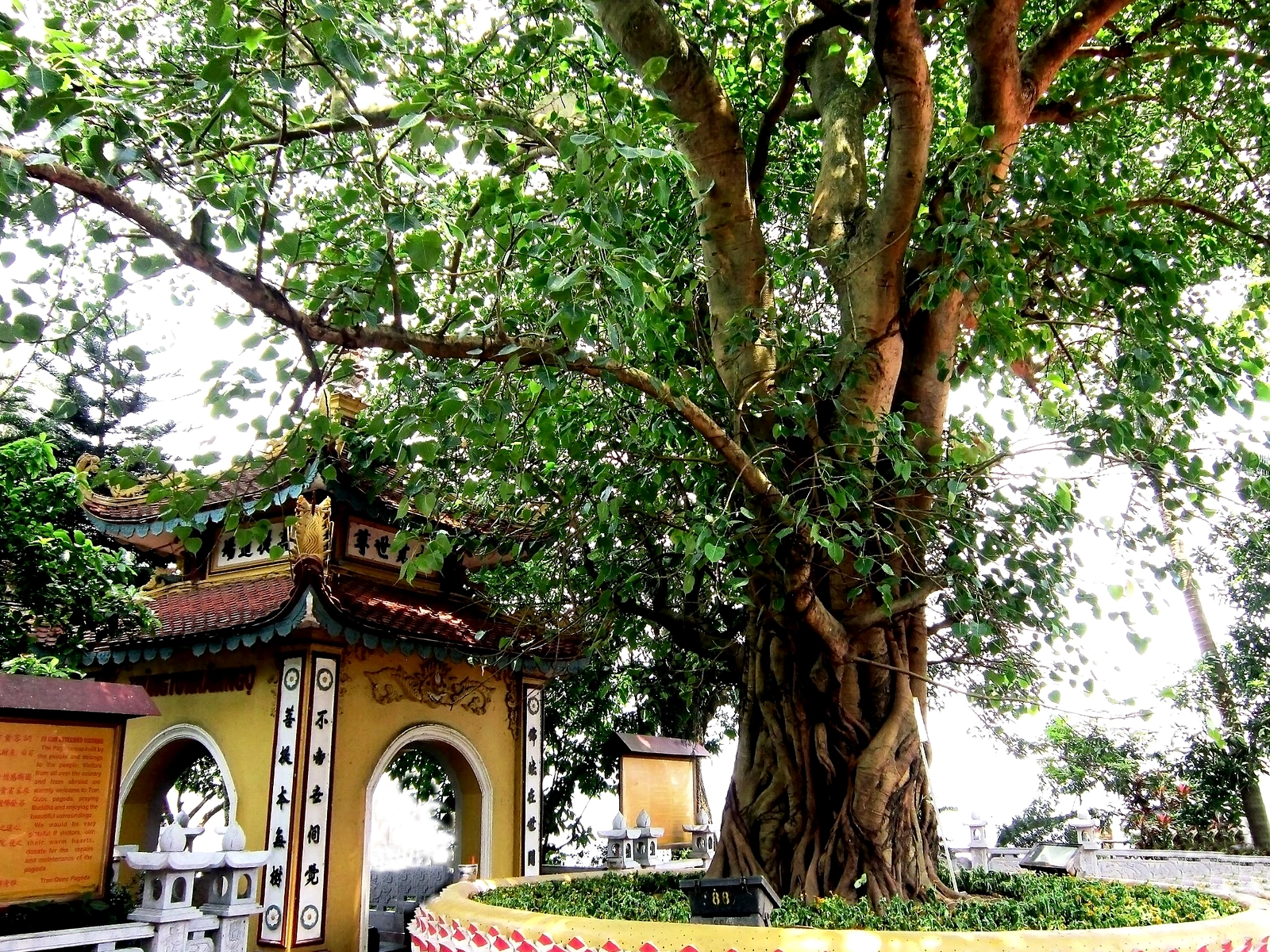
A second prime angle is right inside the pagoda courtyard, tilting your lens upward to frame the full majesty of the 11-story stupa against a deep blue sky or drifting afternoon clouds. If you prefer quiet solitude, visit at sunrise. As the first rays of light filter through the canopy of the ancient Bodhi tree—a treasured gift from India presented by Indian President Rajendra Prasad in 1959—the grounds take on a shimmering, mystical aura. The gentle morning light highlights the stone grain on centuries-old steles and the delicate details of the statues, yielding photographs rich in historical depth and genuine emotion.
Beyond being a historical monument, Tran Quoc Pagoda is a living museum of architecture and landscape design. The harmony between moss-covered tiled roofs, sturdy centuries-old ironwood columns, and the open expanse of West Lake fosters a deeply spiritual sanctuary. Every corner here—from meticulously pruned bonsai pots to Bat Trang brick-paved walkways—holds a story of the resilience of Vietnamese culture. Visiting Tran Quoc, travelers not only find inner peace but also behold one of the finest cultural icons of Hanoi.
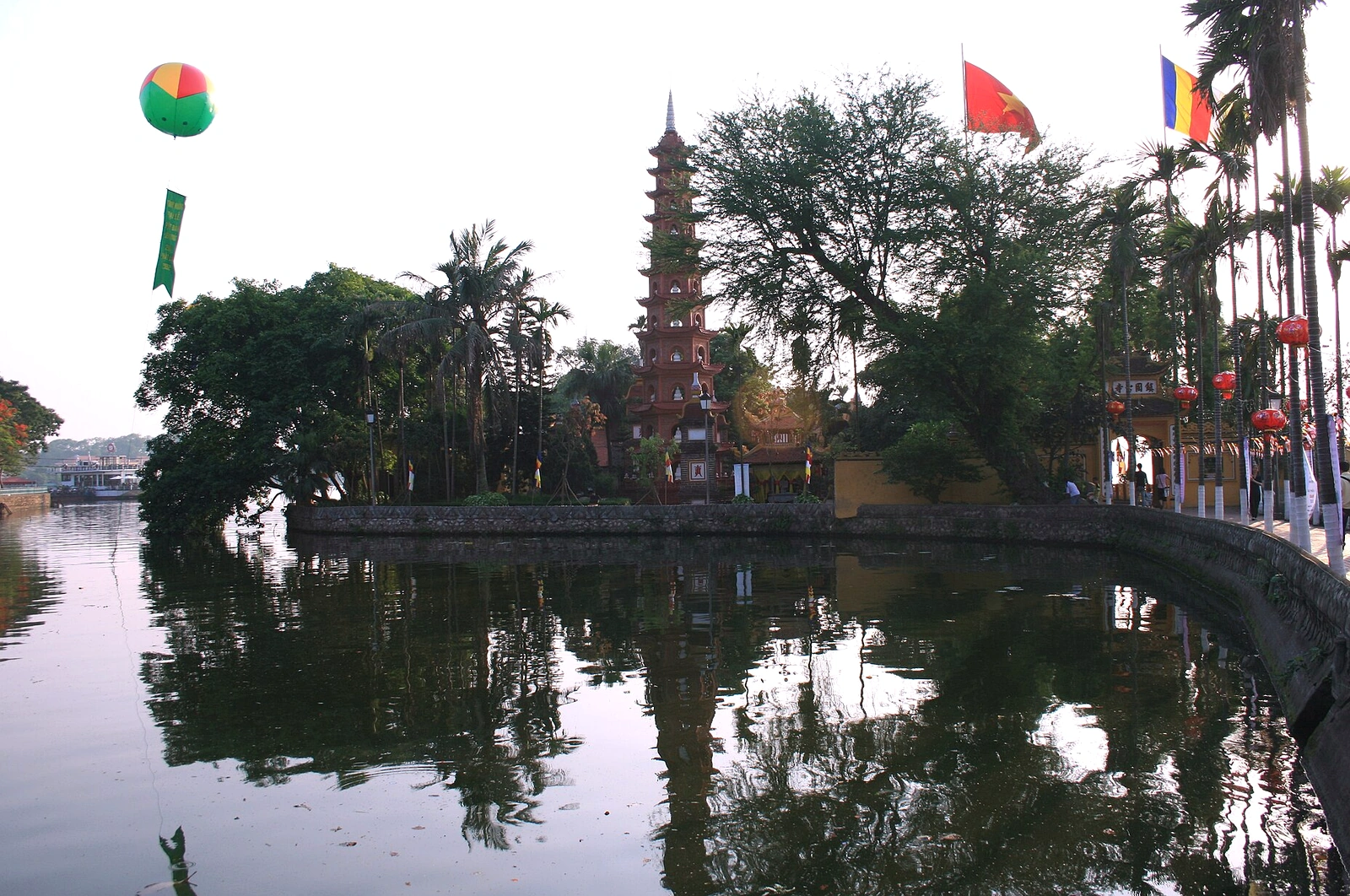
Stepping into Tran Quoc Pagoda, visitors enter not just a sacred place of worship, but a multi-layered cultural journey where every footstep touches both the breath of history and the contemporary pulse of Hanoi. The experience begins as you stroll along the narrow causeway linking the mainland to Kim Nguu Islet. Surrounded by the wide ripples of West Lake, any initial sense of stepping into the open quickly gives way to awe at the seamless blend of ancient Buddhist architecture and sweeping natural scenery. In the late afternoon, as sunset dyes the lake crimson, the pagoda’s reflection on the still water composes an enchanting ink-wash painting, inviting everyone to pause and absorb a rare stillness amid the bustling metropolis.
Paying respects here evokes deep emotional resonance. Passing through the triple-arched gate, the faint scent of incense mingling with the lake breeze seems to wash away daily worries. Visitors often linger to admire the soaring Six-Degree Lotus Stupa with its refined carvings, then quietly observe senior monks and devotees performing rituals. Sincere reverence shines on every face, cultivating an atmosphere of solemnity and contemplation. Strolling around the courtyard beneath the sprawling canopy of the ancient Bodhi tree—a cherished gift from India—offers a quiet sense of connection to the flow of time, where past and present gracefully intersect.
Beyond spiritual reflection, exploring Tran Quoc also opens up poetic leisure experiences. Many visitors opt to rent small boats, paddling gently across West Lake to admire the pagoda from multiple angles. Seen from the middle of the water, Tran Quoc Pagoda rises like a floating lotus, proud and serene. It is an ideal vantage point to take in the dialogue between classical architecture and the open expanse of the capital. The quiet water, the resonant chime of temple bells carried on the wind, and the cool lake breeze blend into a symphony of peace that leaves the spirit remarkably light and refreshed.
After nourishing the eyes and soul, the journey would be incomplete without sampling the celebrated local cuisine around West Lake. Just steps from the pagoda, lakeside eateries serve the iconic West Lake shrimp cakes (banh tom Ho Tay). Golden and crispy, with a delicate batter cradling fresh whole shrimp and served alongside sweet-and-sour dipping sauce and crisp herbs, these fritters have become an indispensable part of Hanoi’s culinary heritage. Savoring this rustic specialty while watching passersby along Thanh Nien Street and enjoying the cool breeze off the water reveals a uniquely Hanoi charm: ancient and contemplative beneath temple roofs, yet vibrant and intimate in everyday flavors.
The union of historical depth, architectural beauty, and vivid local culture makes Tran Quoc Pagoda an unmissable destination. More than a simple sightseeing stop, it is a journey inward toward tranquility, offering every traveler a precious moment of calm and a fresh perspective on the timeless beauty of heritage amid the rush of modern life.
Tran Quoc Pagoda is not only a national historical monument rich in cultural heritage, but also a spiritual destination drawing countless domestic and international visitors. To ensure your visit to this ancient temple goes smoothly and meaningfully, keep the following practical details and travel tips in mind.
Regarding opening hours, Tran Quoc Pagoda welcomes visitors daily from early morning until early evening. These set hours allow the temple to conduct Buddhist rituals and maintain a serene environment. As for admission, entry to Tran Quoc Pagoda is currently free for all visitors coming to worship and enjoy the scenery. However, guests may make voluntary donations into the offering boxes placed around the grounds to support the preservation and restoration of the monument and ongoing Buddhist activities.
For getting there, the pagoda sits on a small islet on the eastern side of West Lake in Hanoi’s Tay Ho District. From the city center, it is easily accessible by several modes of transport. If traveling by private motorbike or car, follow Thanh Nien Street—widely celebrated as the capital’s most scenic avenue, separating West Lake from Truc Bach Lake. For those taking public transit, several Hanoi bus routes pass nearby, providing convenient connections from inner-city districts. Because the pagoda sits on an islet linked to the mainland by a narrow causeway, the surrounding area feels open yet can become crowded during holidays and festivals; using personal transport or a ride-hailing service is therefore the most convenient option.
As a sacred site, proper attire is paramount. Visitors should dress modestly and respectfully, avoiding overly short or revealing clothing out of reverence for the worship space. Although the islet’s terrain is flat rather than rocky or steep, wearing comfortable shoes that are easy to slip off will make it much easier when entering the main halls and inner sanctuaries.
The best time to visit Tran Quoc Pagoda is on crisp autumn days or in the late afternoon as sunset settles over West Lake. During these hours, soft light reflects off the Six-Degree Lotus Stupa, creating a magical, tranquil atmosphere. Additionally, on the 1st and 15th days of the lunar month, the pagoda takes on a livelier yet solemn energy with worship rituals, offering visitors a deeper glimpse into the spiritual life of Hanoians. While exploring, please keep your voice low, move gently, and refrain from touching ancient artifacts or stone steles so this priceless cultural heritage remains preserved for future generations.
To enjoy a seamless getaway and take in the full beauty of Tran Quoc Pagoda without worrying about transportation, ticketing, or itinerary planning, travelers can choose VDS Travel’s premium all-inclusive Hanoi tour packages. Every itinerary is thoughtfully timed for photo stops at the most scenic hours of the day, accompanied by knowledgeable local guides and top-tier hotel and dining standards.