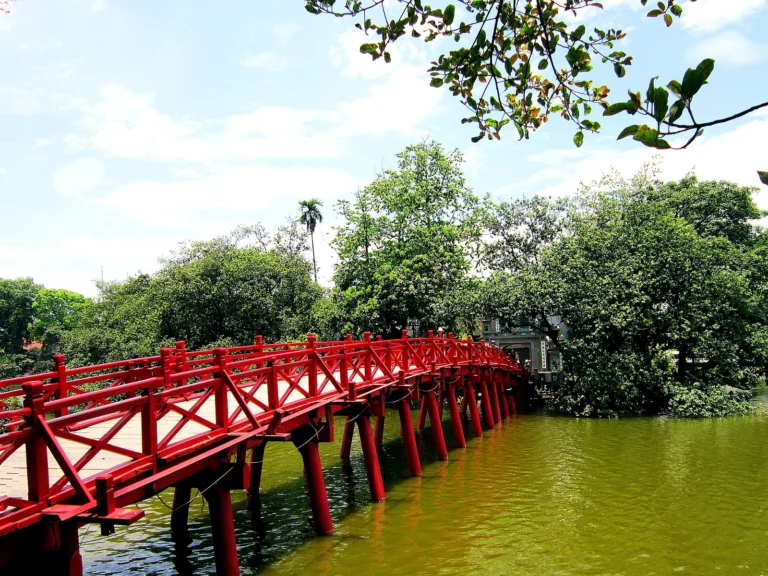
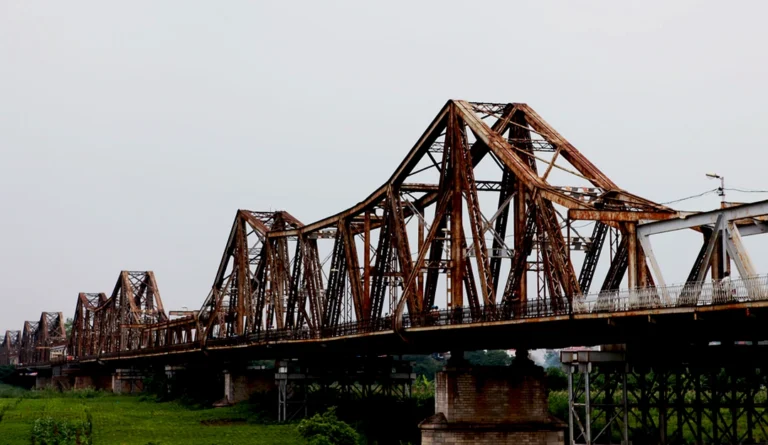
Standing quietly yet majestically in the southern part of ancient Thang Long, the Temple of Literature – Imperial Academy complex occupies an auspicious geographic location that embodies the sacred energy of Vietnam’s mountains and rivers across a thousand years. According to traditional feng shui principles, this site rests upon terrain shaped like a “coiling dragon and crouching tiger,” opening in front toward the airy Van Lake as a bright courtyard gathering water and absorbing abundant vital energy from the Red River and the ancient To Lich River. This natural setting not only fosters an expansive, tranquil architectural sanctuary in the heart of a bustling metropolis, but also symbolizes the sublime harmony of yin and yang and the five elements—a place where the essence of heaven and earth converges to nurture scholarship and the nation’s finest minds in Dai Viet.
The historical origins of this sacred landmark are marked by brilliant milestones from the 11th century, bearing witness to the strategic vision of enlightened Ly Dynasty monarchs in building and defending the nation. According to official historical records, in the fifth year of Thang Long, the fourth year of the Thuan Thien era (1070), under Emperor Ly Thanh Tong, the Temple of Literature was officially constructed to venerate the ancient sages and masters of Confucianism. Just six years later, in the autumn of 1076 during the reign of Emperor Ly Nhan Tong, the Imperial Academy (Quoc Tu Giam) was established right beside the Temple of Literature. The founding of Vietnam’s first national university not only marked the formal institutionalization of Confucian thought in royal court life, but also inaugurated an enduring tradition of reverence for learning and meritocracy across subsequent Vietnamese dynasties.
Enduring the vicissitudes of time and historical upheavals from the Tran, Le, and Mac dynasties to the Nguyen Dynasty, the Temple of Literature – Imperial Academy has stood resilient as a grand citadel of Vietnamese scholarship. During the Early Le Dynasty—most notably in the 15th year of the Hong Duc era (1484) under Emperor Le Thanh Tong—this institution entered its golden age with the royal decree to erect doctoral steles inscribed with the names of laureates who passed the imperial examinations. This priceless heritage, together with its traditional architectural grounds, has been honored by cultural authorities and both domestic and international media as the pinnacle of Vietnamese academic culture—a sanctuary preserving the sacred soul of the land and a source of deep pride for every generation of Vietnamese looking back to their roots.
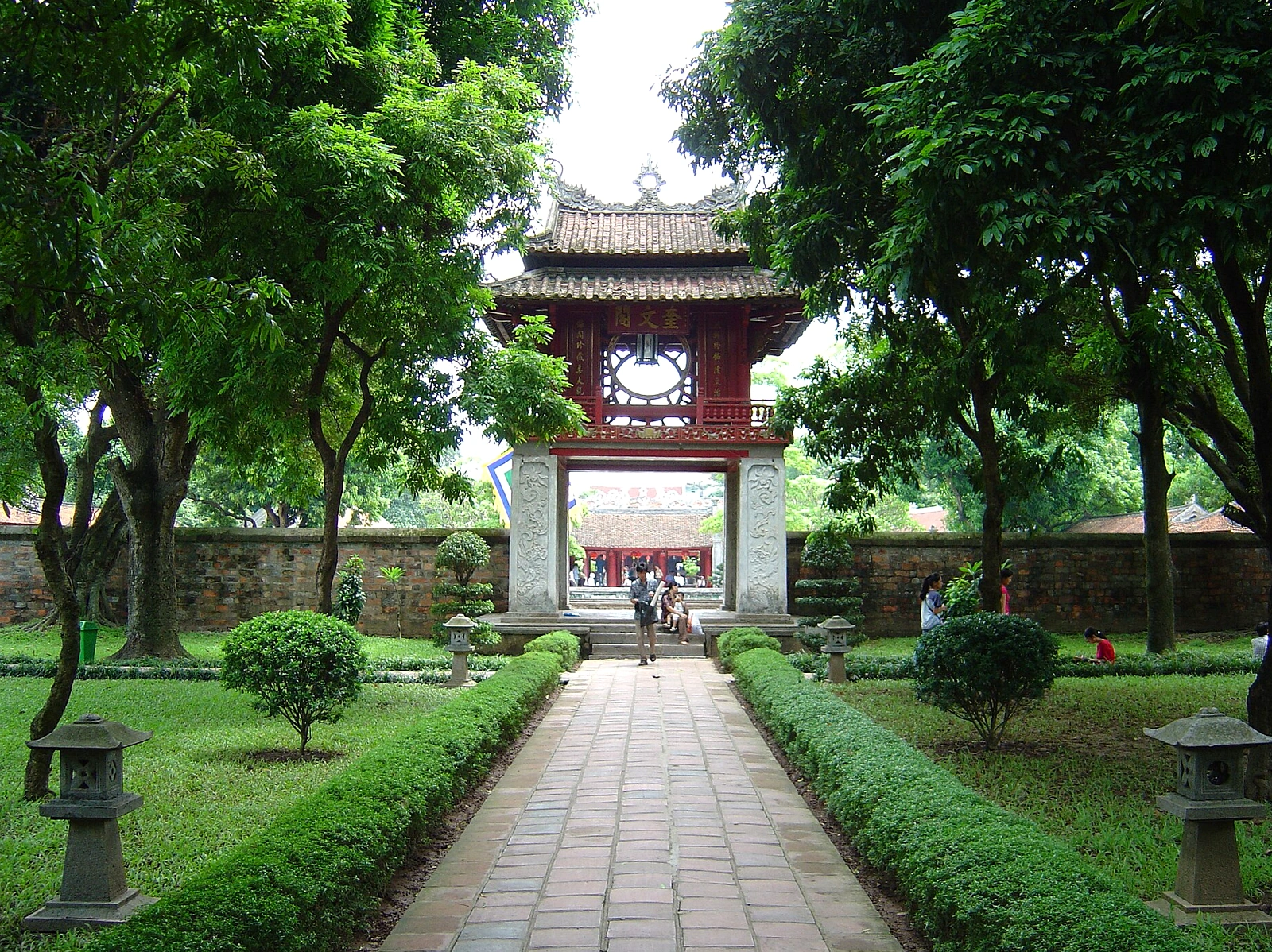
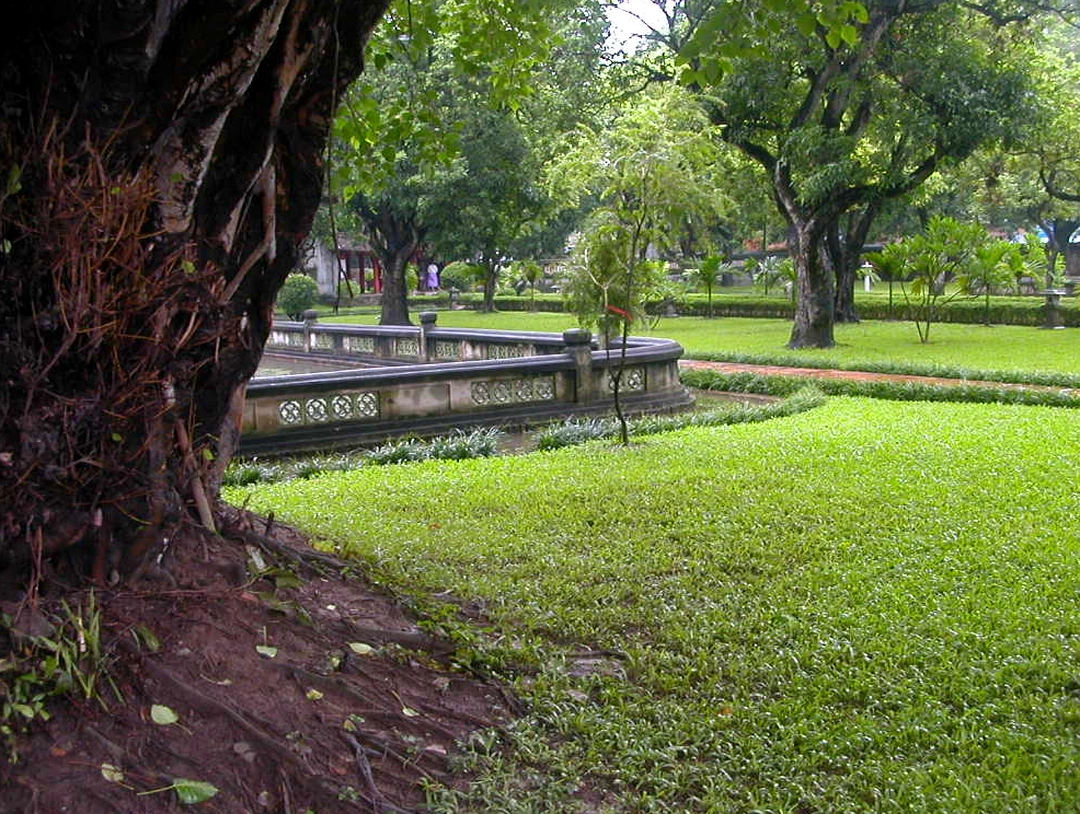
Stepping through the grand ceremonial gate of the Temple of Literature – Imperial Academy, visitors feel as though they have wandered into a serene realm where time stands still in the middle of the bustling capital. This architectural complex is not merely a symbol of scholarly devotion, but also a masterpiece of architectural and landscape art deeply imbued with traditional Eastern feng shui. Laid out along a sacred central axis running from south to north, the grounds are divided into five distinct courtyards punctuated by gates, pools, and shaded gardens of centuries-old trees, forming a harmonious, stately, yet deeply poetic ensemble.
The very first focal point to capture every gaze is Khue Van Pavilion—the iconic cultural emblem of thousand-year-old Hanoi. This distinctive two-story wooden structure rests upon four finely carved square brick pillars, embodying the philosophy of yin-yang harmony through its vermilion-lacquered upper wooden pavilion featuring circular windows on all four sides that radiate light like the rays of the constellation Khue illuminating human intellect. Directly beneath Khue Van Pavilion lies the Well of Heavenly Clarity (Thien Quang Well), as still as a vast mirror framing the sky and reflecting centuries-old trees alongside the quiet rows of doctoral steles flanking both sides. The woodcarvings along every beam and the intricate motifs of dragons, phoenixes, and foliage showcase the supreme craftsmanship of ancient artisans, standing as a testament to the height of traditional Vietnamese fine arts.
To capture the most memorable frames at this historical monument, travel enthusiasts and professional photographers should not miss three classic vantage points. The first is standing along the side corridor looking diagonally across Thien Quang Well to frame the dignified silhouette of Khue Van Pavilion, creating an artistic composition rich in depth and timeless atmosphere. The second is the Doctoral Stele Garden with its solemn rows of stone tortoises; crouching beside the ancient tortoises and tilting your camera upward toward the moss-tiled stele pavilions captures the nostalgic grandeur of history. The third lies in the Dai Bai Hall and Upper Sanctuary of the Thai Hoc courtyard, where open space meets a tranquil pond in front and monumental timber architecture behind.
For ideal lighting, photographers recommend visiting during the morning golden hours (from 7:30 AM to 9:00 AM), when soft sunlight slants through the canopies of ancient banyan trees, casting shimmering patterns across Thien Quang Well and bringing out the rich red and gold lacquerwork of the pavilions. Alternatively, if you prefer a quieter, more romantic mood, visiting at dusk—just as warm lanterns begin glowing along the pathways—reveals a mystical, contemplative beauty steeped in pride for the nation’s scholarly heritage.
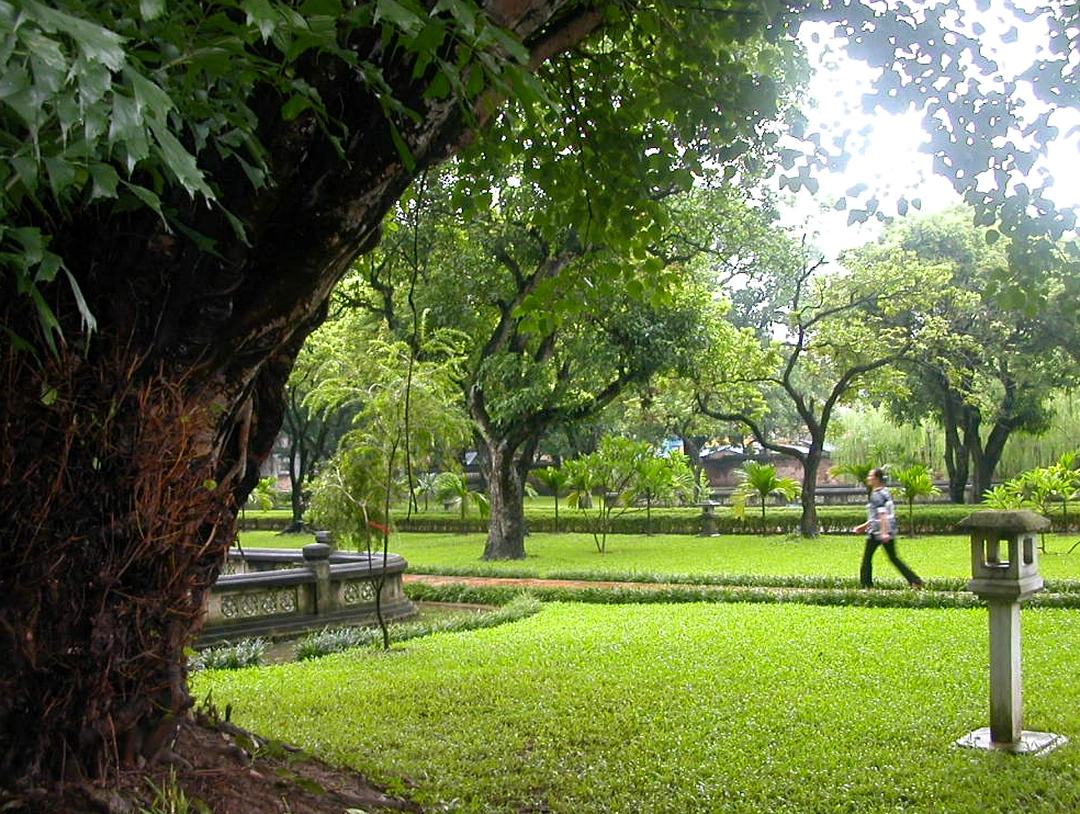
As soon as you cross the historic threshold of the Temple of Literature – Imperial Academy, the noise and rush of capital life fade behind you, giving way to an atmosphere of quiet reverence and moss-draped antiquity. Entering the complex, visitors are immediately struck by the imposing scale of Vietnam’s foremost Confucian architectural ensemble, where every step feels like touching the sacred spirit of the land and layers of thousand-year-old cultural sediment.
Exploring the site goes far beyond admiring the majestic Khue Van Pavilion or turning back golden pages of history through the 82 turtle-borne doctoral steles—a UNESCO Memory of the World documentary heritage. The experience is marked by deeply moving moments as visitors gaze upon weathered stone carvings and light incense in respectful tribute to the nation’s ancient sages and scholars. That solemnity naturally brings a sense of calm, reverence, and heartfelt pride in the centuries-old tradition of valuing education and honoring talent.
Stepping out from the scholarly sanctuary, a vibrant local cultural journey continues right along the streets surrounding the monument. Visitors should not miss savoring Hanoi’s celebrated culinary specialties, from the fragrant warmth of a traditional bowl of richly simmered pho to a creamy, comforting cup of egg coffee on a mossy Old Quarter corner. This subtle blend of nostalgic historical spaces and colorful, flavorful street-food culture creates a complete sensory experience for anyone visiting this sacred landmark.
The Temple of Literature – Imperial Academy is a sacred landmark steeped in Hanoi’s history and culture, attracting large numbers of domestic and international visitors year-round. To make the most of your visit to Vietnam’s first university, keep these practical tips on opening hours, admission fees, and transportation in mind.
Regarding opening hours, the monument welcomes visitors every day of the week, including weekends and major public holidays. Hours generally run from early morning until late afternoon (roughly 7:30 AM to 5:30 PM in summer, and 8:00 AM to 5:00 PM in winter). To enjoy the peaceful atmosphere at its best and avoid harsh midday sun, plan your visit for early morning or late afternoon. Seasonally, autumn (September to November), with its crisp, dry weather, offers the loveliest conditions for strolling beneath the centuries-old trees in the courtyards.
Admission to the Temple of Literature – Imperial Academy follows standard rates publicly posted by the monument management board. Standard adult tickets are modestly priced (around 30,000 to 40,000 VND per entry), while students presenting valid ID and senior citizens receive discounted admission, and young children under the regulated age limit as well as eligible social-policy beneficiaries enter free of charge.
Located right in the heart of the capital, the Temple of Literature – Imperial Academy is easily accessible by multiple modes of transport. If departing from Hoan Kiem Lake or the Old Quarter, you can take a taxi, ride-hailing motorbike, or public bus routes that stop near the entrance gate. For travelers who prefer flexibility, riding a personal motorbike offers quick access via major avenues such as Trang Thi and Dien Bien Phu before turning onto Ton Duc Thang or Van Mieu Street.
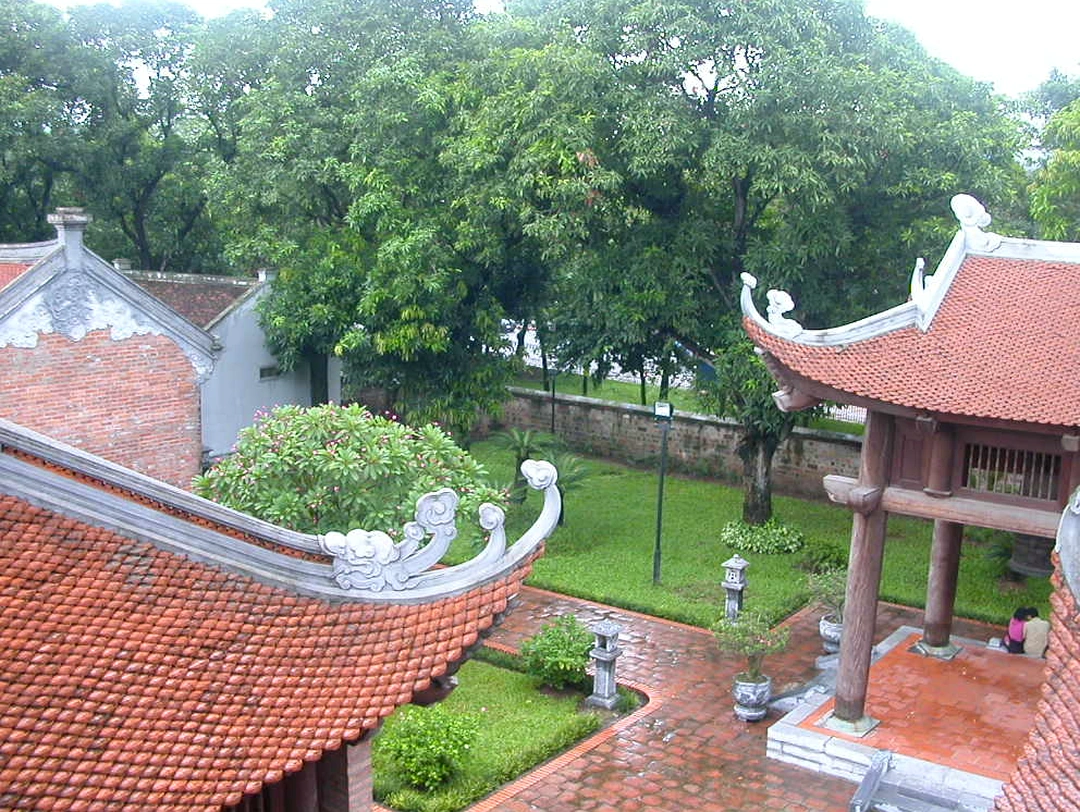
As a cultural sanctuary, spiritual site, and Special National Monument, visitors are expected to observe dress-code etiquette carefully. Dress neatly and modestly, avoiding overly short or revealing attire when entering the main worship halls. Comfortable footwear such as sneakers or flat shoes is ideal for walking across the expansive grounds. Come with an open mind ready to take in a millennium of scholarly heritage in the heart of Hanoi.
To enjoy a seamless getaway and take in the full beauty of the Temple of Literature – Imperial Academy without worrying about transportation, entry tickets, or itinerary planning, travelers can choose VDS Travel’s premium all-inclusive Hanoi tour packages. Every itinerary is thoughtfully timed for photo stops at the most scenic hours of the day, accompanied by knowledgeable local guides and top-tier hotel and dining standards.