Located in the northwestern part of Munich in the state of Bavaria, Federal Republic of Germany, the architectural and landscape complex of Nymphenburg Palace stretches across a vast plain at an average elevation of approximately five hundred meters above sea level. The terrain here was originally a low-lying wetland within the Würm River basin, where the Schloßkanal stream was planned and artificially excavated to form a central hydraulic axis connecting the entire system of courtly architecture. Geographically, this monument occupies a strategic position, standing at the gateway linking the historic city of Munich with the western countryside while possessing a completely secluded geo-ecological space, expansive enough to execute Baroque urban planning projects modeled after seventeenth- and eighteenth-century European absolutist monarchies.
The history of Nymphenburg began in 1664 during the reign of Elector Ferdinand Maria and his wife, Princess Henriette Adelaide of the House of Wittelsbach. The birth of the crown prince, Maximilian II Emanuel, served as the direct impetus prompting the Bavarian court to commission a summer residence to celebrate the occasion, while simultaneously asserting the growing political power of the Bavarian state within the Holy Roman Empire. The Italian architect Agostino Barelli was entrusted by the court with drafting the initial blueprints for the central palace, bearing the unmistakable hallmarks of Roman Baroque architecture with strict geometric volumes, a symmetrical facade, and a harmonious blend of Kelheim limestone and traditional plasterwork.
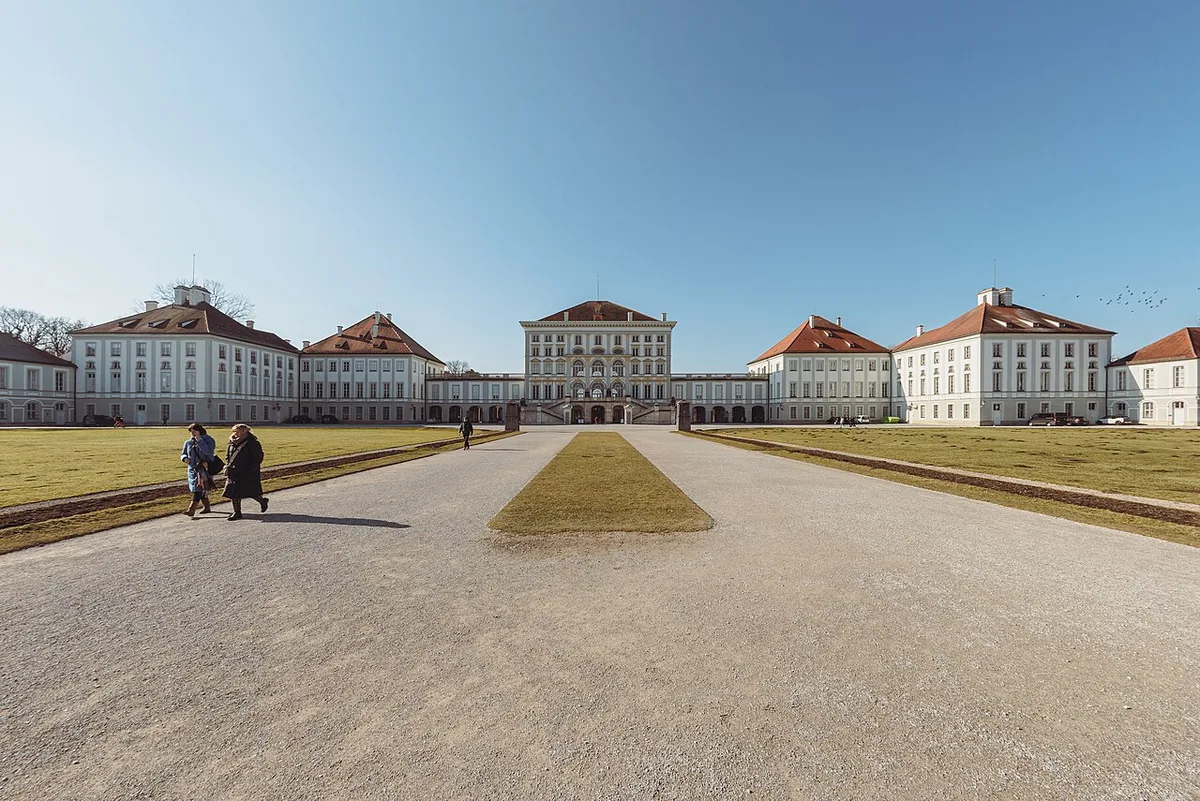
Over the ensuing decades, under the ambitious reign of Maximilian II Emanuel, the palace’s appearance underwent landmark large-scale renovations and expansions. The Elector summoned prominent architects of the era, such as Enrico Zuccalli and Joseph Effner, to design additional lateral wings, creating the expansive horseshoe spatial layout characteristic of European royal palaces during the age of absolutism. Long galleries, triumphal archways, and auxiliary buildings serving the court, administrative offices, and royal guards rose in succession, transforming the area into a miniature court city completely set apart from the hustle and bustle of old Munich.
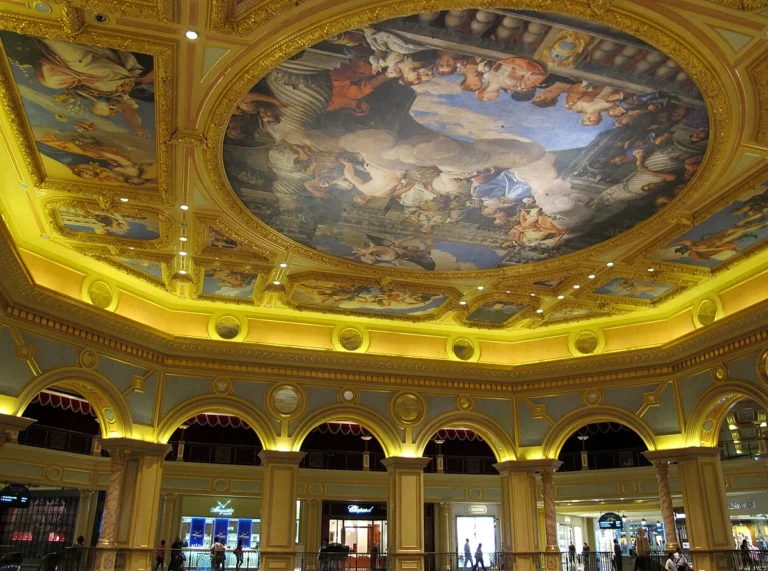
Moving into the eighteenth century, during the rule of Karl Albrecht, who later became Holy Roman Emperor Karl VII, the complex continued to receive masterful additions in interior decoration and park landscape expansion. Under the skilled direction of architect François de Cuvilliés, the intricate, ornate Rococo style was introduced into the state rooms, most notably the Grand Festive Hall known as the Steinerner Saal, featuring monumental ceiling frescoes by the renowned painter Johann Baptist Zimmermann extolling the eternal power and divine right of the House of Wittelsbach. Gilded stucco sculptures, large mirrors reflecting natural light, and exquisitely carved wooden furnishings transformed the palace interior into a living museum of Central European royal decorative arts.
Alongside the central architectural block, the outdoor landscape of Nymphenburg vividly reflects the Enlightenment philosophy of governing nature. The gardens were initially designed in the classical French style with strict geometric axes, neatly trimmed hedges, grand fountains, and straight canals designed for aristocratic boating excursions. However, by the early nineteenth century, under the direction of landscape designer Friedrich Ludwig von Sckell, a large portion of the gardens was remodeled into an English landscape park, preserving the natural contours of meadows, winding lakes, and open groves to create a fluid dialogue between human artistry and untamed nature.
Within the vast grounds of the park, a network of lakeside pavilions serves as experimental architectural works reflecting the diverse tastes of the monarchs. The Badenburg pavilion catered to hydrotherapy bathing and private relaxation, whereas the Pagodenburg embraced the chinoiserie style, deeply influenced by Chinese and Eastern art then fashionable across Europe. Most notably, the Amalienburg pavilion, designed by François de Cuvilliés exclusively for Empress Maria Amalia, stands as a pinnacle of eighteenth-century Rococo, distinguished by its silver-and-blue Hall of Mirrors and a royal hunting lodge equipped with the most advanced architectural technology of the era.
Through the turbulent upheavals of modern European history, including the Wars of the Coalition against France, the Napoleonic era, and the collapse of monarchies following World War I, Nymphenburg Palace fortunately escaped wholesale destruction. Despite witnessing the transfer of power from feudal monarchy to a democratic republic, the monument has maintained its status as a national cultural icon, bearing witness to a golden age of Bavarian art and architecture. In the nineteenth century, it served as the birthplace of the famed monarch Ludwig II of Bavaria on August 25, 1845, forever linked to legends of fairy-tale castles and the king’s passion for Wagnerian art.

The iconic status of Nymphenburg Palace in contemporary culture extends beyond the physical value of its architecture to encompass the preservation of Bavaria’s intangible royal heritage. Today, it houses King Ludwig I’s famous Gallery of Beauties, featuring a collection of portraits of Munich’s loveliest women of the era painted by Joseph Stieler, reflecting the court’s unique aesthetic vision of beauty and nineteenth-century social culture. Furthermore, the royal carriage museum, known as the Marstallmuseum, located in the palace’s former stables, displays an array of coronation coaches, gilded royal sleighs, and intricate equestrian gear, allowing visitors to vividly imagine the opulence and diplomatic pageantry of the Wittelsbach court during grand state occasions.
Nymphenburg’s cultural influence reaches far beyond Germany’s borders, serving as a classic subject of study for international scholars in historic urban planning, Baroque architecture, and heritage conservation. International art exhibitions and annual open-air classical concerts held on the palace grounds keep the monument vibrant, turning it into a public cultural space of global stature rather than a static relic. Rigorous restoration and preservation efforts carried out across generations by the Bavarian state government in collaboration with scientific institutes have ensured that the palace’s original structure, canals, and gardens remain remarkably intact against the challenges of time and intense surrounding urbanization.
Overall, Nymphenburg Palace in Munich encapsulates the complete trajectory of Central European history across more than three centuries of existence and evolution. From a personal royal commemorative project of the Electors, it has risen to become one of Germany’s most significant architectural landmarks, symbolizing the convergence of political power, artistic philosophy, and humanity’s genius for landscape planning. The historical, aesthetic, and archaeological treasures preserved here continue to serve as a solid foundation for the study of early modern European culture, affirming the enduring vitality of a grand architectural legacy across every shift of the times.
Nymphenburg Palace in Munich, the capital of the state of Bavaria, Germany, originated from a dynastic strategic decision in 1664 by Elector Ferdinand Maria and his wife, Henriette Adelaide of Savoy. The creation of this estate marked a profound shift in how the House of Wittelsbach conceptualized spaces of power, moving away from cramped medieval fortresses toward an expansive summer residence architecture that harmonized seamlessly with the surrounding natural landscape. The Italian architect and engineer Agostino Barelli was commissioned by the court to draft the initial plans, drawing inspiration from the Italian Baroque style prevalent across Europe at the time, thereby laying the foundation stones for one of the greatest royal palace complexes on the Old Continent.
The spatial evolution of Nymphenburg underwent multiple phases of large-scale expansion under successive rulers, most notably Max Emanuel, the Elector famed for his ambition to build a residence rivaling France’s Versailles. Under the coordination of architect Joseph Effner and later François de Cuvilliés, the master plan was extended along a strict east-west axis, forging an architectural school that fused Italian Baroque with refined French Rococo. The palace’s main axis stretches for hundreds of meters alongside a straight artificial canal system called the Nymphenburger Kanal, modeled after the hydraulic layout of Venice’s grand waterways, serving not only aesthetic purposes and royal barge transport, but also functioning as a microclimate regulator for the entire estate.
In terms of building materials and bespoke construction techniques, seventeenth- and eighteenth-century artisans employed load-bearing brick masonry combined with traditional lime mortar, subsequently finished with exterior decorative stucco of timeless durability. The main facade of the palace reaches an impressive length of over seven hundred meters when including the symmetrical auxiliary wings and pavilions, creating a commanding, monumental presence softened by Corinthian pilasters and tall arched windows. The vaulted ceiling of the central hall, also known as the Stone Hall (Steinsaal), utilizes complex load-bearing timber framing to create a soaring double-height space, where leading fresco painters of the day such as Johann Baptist Zimmermann executed vaulted ceiling murals using optical-illusion trompe-l’oeil techniques, depicting Greek mythological allegories intertwined with symbols glorifying Wittelsbach rule.

The zoning layout of Nymphenburg Palace clearly mirrors the social hierarchy and ceremonial functions of European feudal courts. At the center of the ensemble stands the main palace building (Zentralbau), housing the state reception halls, royal bedchambers, and art galleries executed to the highest aesthetic standards of Bavarian Rococo. Flanking the central building are curved gallery wings (Kavalierbauten) connecting to quarters for court staff, royal guards, and diplomatic officials, forming an enclosed U-shaped forecourt that embraces the expansive Court of Honor (Ehrenhof) out front. Behind the main building lies a royal park spanning roughly two hundred hectares, originally laid out in the classical French garden style by landscape architect Dominique Girard in the early eighteenth century, complete with strict symmetrical axes, monumental fountains, mythological marble sculptures, and an intricate network of canals.
The standout highlight within this vast landscape is the collection of park pavilions (Parkburgen) scattered throughout the royal grounds, comprising the Amalienburg, Badenburg, Pagodenburg, and Magdalenenklause. Each of these smaller structures represents a distinct architectural microcosm where the court hosted intimate banquets, enjoyed outdoor pastimes, or sought solitude in contemplative spaces featuring grotto-style architecture and hermitage motifs. The Amalienburg, designed by François de Cuvilliés, is widely recognized as a supreme masterpiece of European Rococo, boasting a Hall of Mirrors (Spiegelsaal) dominated by silver and pale blue tones, where intricate gilded floral carvings reflect off massive wall-mounted mirrors to create a breathtaking illusion of infinite space.
In terms of visitor capacity and contemporary function, Nymphenburg Palace operates today as one of Germany’s premier cultural history museums, attracting millions of international visitors each year to study and admire its royal architectural heritage. Heritage management here demands stringent technical standards to preserve the original seventeenth-century fabric intact, from wall frescoes and world-renowned Nymphenburg porcelain collections to the royal state coaches (Marstallmuseum) exhibited in the former stables. Visitor foot traffic is scientifically regulated across functional zones to maintain stable indoor humidity and temperature levels within the historic rooms, shielding gilded artifacts, oil paintings, and rare wooden furniture from external environmental fluctuations.
The complex also stands as a vivid testament to early modern hydraulic engineering, as the water supply for the grand fountains in the main garden is powered by historic water-pumping stations situated along nearby streams—operating continuously since the eighteenth century while retaining their traditional mechanical character. This seamless integration of urban planning, civil engineering, interior decorative arts, and landscape design has made Nymphenburg a living textbook for architectural historians analyzing the European absolutist summer residence model. Every corner of the estate, from the marble steps descending to the canal waters to the intricately carved vaults inside the grand hall, reflects the authoritative aesthetic vision, strategic foresight, and supreme craftsmanship of German and Italian master builders over three centuries of development.
Nymphenburg Palace in Munich, Bavaria, Federal Republic of Germany, stands as a monumental masterpiece of late Baroque and Rococo architecture, initiated in 1664 by decree of Elector Ferdinand Maria and his consort, Princess Henriette Adelaide of Savoy. Originally conceived as a royal summer retreat—a celebratory gift marking the long-awaited birth of throne heir Maximilian—the project established a pivotal milestone in introducing Italian architectural styles into southern Germany. Under the masterful guidance of Italian architect and engineer Agostino Barelli, the initial central structure was designed on the model of a classical Italian villa, governed by strict principles of symmetry and harmonious proportion. Across subsequent reigns of the House of Wittelsbach, Nymphenburg underwent continuous expansion, evolving from a modest country villa into a sprawling royal palace complex that eloquently expressed the political ambitions, absolute authority, and refined aesthetic sensibility of Bavaria’s rulers throughout the early modern era.
A major turning point in Nymphenburg’s architectural evolution occurred in the early eighteenth century under Elector Max Emanuel, who substantially enlarged the palace complex by adding curved auxiliary wings, constructing garden pavilions across the vast grounds, and redesigning the park in the style of Versailles. Renowned architect François de Cuvilliés and garden designer Joseph Effner breathed fresh life into the palace interiors by introducing the intricate, fluid, and theatrical Rococo style. The central hall of the palace, known as the Stone Hall, stands as compelling proof of the era’s supreme interior artistry. Spanning two stories of the building, this grand space features sweeping vaulted ceiling frescoes by master painter Johann Baptist Zimmermann, paired with gleaming gilded details set against pink and gray marble. The ceiling murals depict the Olympian gods bestowing their blessings upon the House of Wittelsbach, artfully weaving Greek and Roman mythological motifs to reinforce the legitimacy and divine authority of Bavaria’s rulers amid the volatile European geopolitics of the time.

The temporal majesty of the Stone Hall forms a striking yet harmonious counterpoint to the Gallery of Beauties, a distinctive cultural space commissioned by King Ludwig I in the nineteenth century. It houses a unique portrait collection of thirty-six paintings executed by court painter Joseph Stieler, capturing the likenesses of Munich’s most celebrated beauties of the era—spanning both noblewomen and commoners who captivated the king, such as the dancer Lola Montez. The philosophy behind this room goes beyond merely celebrating physical beauty in the Romantic tradition; it reflects the monarch’s personal worldview, grounded in the belief that beauty possesses the power to elevate the soul and transcend the rigid social class boundaries of a waning feudal age. Every portrait is rendered with meticulous attention to attire, facial expression, and gaze, fostering a timeless visual dialogue between modern viewers and the legendary beauties who once graced Munich’s high society.
Venturing deeper into the palace’s northern and southern apartments, visitors and art historians encounter impeccably preserved royal living quarters furnished with hand-carved woodwork, rare hand-woven Aubusson tapestries, and exquisite Nymphenburg porcelain stoves. The bedchamber where Bavaria’s first king, Maximilian I Joseph, passed away in 1825 retains the solemn, hushed atmosphere of the nineteenth century, featuring a French Empire-style carved four-poster bed and walls upholstered in gold-embroidered silk damask. The artifacts on display here hold far more than material or artisanal value; they serve as vivid historical documents illuminating daily court life, strict royal protocol, and the political turbulence the Bavarian royal family navigated during Napoleon’s expansion across Europe.
Beyond the main palace building, Nymphenburg’s vast parklands were laid out along the strict symmetrical axes of French Baroque garden design before being partially transformed into a Romantic English landscape garden during the reign of Ludwig II. The centerpiece of the park’s landscape architecture is the Grand Canal fed by the Würm River, where hundreds of white swans glide across the water, creating a scene that is both serene and majestic. Along the park’s strolling paths, royal garden pavilions appear like delightful architectural surprises. The Pagodenburg, a small pavilion blending European forms with Eastern nostalgia, showcases the Enlightenment aristocracy’s deep fascination with Chinese culture and Chinoiserie porcelain art. Its interior is adorned with blue-and-white Delft tiles paired with delicate lacquer screens, reflecting the early globalized worldview of Europe’s elite seen through a romanticized lens of the Far East.
Another unmissable architectural gem within the complex is the Badenburg, a royal bathhouse built in the early eighteenth century, notable for its large indoor swimming pool lined with fine glazed tiles and equipped with the most advanced underfloor heating system of its day. The dressing room at the Badenburg is paneled in precious woods featuring gilded Chinese-style carvings, attesting to the bold cultural cross-present in Bavarian court architecture. Meanwhile, the Amalienburg, a small hunting lodge designed by François de Cuvilliés for Electress Maria Amalia, is widely hailed as the supreme achievement of German Rococo. Its Hall of Mirrors, dressed in a palette of silver-blue and white with mirrors endlessly reflecting carved flora and fauna motifs, conjures an enchanting optical illusion where the boundary between outdoor nature and indoor artifice seems to dissolve entirely.
The rose garden and artificial cascades at Nymphenburg further embody the cosmological philosophy of the Baroque era, in which humanity sought to master and arrange nature according to perfect geometric order, mirroring the monarch’s supreme dominion over all creation. Mythological statues depicting water and forest deities line the canal axes, serving not merely as ornament, but as profound philosophical emblems of the cyclical nature of time and the eternal flow of dynastic history. The Royal Carriage Museum, situated right near the palace’s main entrance, currently houses an extraordinary collection of ornate coronation coaches—most notably King Ludwig II’s coach, adorned with some of the finest gilded bronze carvings in Europe—vividly bringing to life the lavish royal ceremonies of Bavaria’s past.
Ultimately, Nymphenburg Palace in Munich is far more than an invaluable tangible heritage asset of Germany; it is a stone-and-art encyclopedia preserving the intellectual, aesthetic, and political transformations of Europe across centuries. The seamless union of monumental landscape planning and meticulous craftsmanship across both interior and exterior structures has established it as an enduring monument of Western culture. Having weathered the vicissitudes of war and time, this heritage ensemble retains its original integrity, continuing to serve as a vital academic hub for architectural historians, art scholars, and global visitors eager to admire and decode the deeper layers of meaning behind the splendor of one of Central Europe’s most illustrious dynasties.
The royal architectural ensemble of Nymphenburg in western Munich is far from a historical relic frozen in the past; instead, it embodies a vibrant contemporary cultural space where the passage of each hour brings distinct sounds, moods, and movements steeped in local Bavarian life. As the first rays of dawn pierce the thin mist hovering over the main canal, the entire royal estate awakens in a tranquil yet evocative atmosphere. Local residents start their mornings with exercise routines and steady jogs along tree-lined trails in the English landscape park, accompanied by the calls of hundreds of waterfowl gathering on the grand basin in front of the main palace. The mirror-still water reflects the soft pink and orange hues of the early morning sky, painting a serene natural tableau where the line between Baroque architectural history and everyday life seems to vanish completely. The crisp morning air carries the earthy moisture of southern Germany, awakening the senses of everyone who steps onto these sprawling grounds and setting the stage for a continuous rhythm of community life unfolding with the arc of the sun.

As the day progresses toward midday, the atmosphere around the palace shifts noticeably with the arrival of international travelers and art historians, intermingling with the unhurried pace of local families enjoying a weekend outing or picnic. Expansive green lawns stretching before the auxiliary wings become playgrounds for children flying kites or quiet spots for book lovers lounging beneath ancient trees. Gravel pathways hum with footsteps and conversations in myriad languages, generating a lively urban energy that never feels overwhelming. Street musicians playing violins or acoustic guitars frequently choose shaded corners beneath the tree canopy to perform classical pieces by Bach or Mozart, the crisp notes resonating against the limestone walls and the palace’s signature pale yellow stucco exterior. Photography and architecture enthusiasts take advantage of these bright hours to examine the intricate carvings on the facade, the Greek mythological reliefs adorning the central pediment, and the crystal-clear waters of the artificial canal system engineered by renowned landscape designer Joseph Effner in the eighteenth century.
Sunset over Nymphenburg Palace delivers one of the most breathtaking and emotionally resonant visual experiences for visitors who linger until the end of the day. As the sun dips toward the west, its final golden rays slant across the flat surfaces of the canals and park lakes, ablaze with crimson and amber hues above the curved auxiliary pavilions. Snow-white swans and hundreds of wild ducks glide through the water toward quiet coves to roost, trailing gentle ripples that catch the warm glow of dusk. Amber-orange light illuminates the tall glass windows of the central hall, accentuating the refined architectural lines blending Italian and French traditions. This is also the golden hour when photographers seek out the most coveted vantage points—such as standing dead-center on the stone bridge spanning the main canal, where the palace’s monumental scale appears in flawless symmetry across the water, or looking out from upper viewpoints in the royal garden over the entire landscape axis stretching toward the horizon.
When night falls, the palace grounds take on an enchanting aura thanks to a thoughtfully engineered artistic lighting system that highlights every grand architectural contour without diminishing its inherent dignity. Evenings at Nymphenburg are never entirely silent, frequently animated by special cultural events and royal chamber concerts hosted inside the Steinerner Saal beneath Johann Baptist Zimmermann’s ceiling frescoes. The strains of the Munich Symphony Orchestra echo off marble walls, recreating the opulent ambiance of the Bavarian Electoral court of yesteryear and drawing smartly dressed audiences to experience music within a living historical setting. Furthermore, during traditional festivals throughout the year, the expansive estate hosts light festivals and artistic fireworks displays inspired by the lavish court celebrations of its golden age, drawing large crowds of locals eager to share in a spirited sense of community pride in their centuries-old cultural heritage.
An immersive exploration of Nymphenburg Palace is further enriched by discovering the smaller architectural pavilions scattered across the vast royal park, each telling its own story about courtly life and the aesthetic sensibilities of Bavaria’s rulers. The Amalienburg hunting lodge, crafted in exquisite Rococo style and crowned by its silver and pale-blue Hall of Mirrors, stands as a testament to the period’s artisanal mastery and remains a favorite stop for anyone keen to delve deeper into eighteenth-century European interior design. Nearby, the lakeside Badenburg retreat offers a fascinating glimpse into early German royal spa culture and bathing traditions, complete with an indoor pool tiled in fine Delftware. Strolling among these structures goes far beyond passively viewing inanimate monuments; it becomes an active engagement with space—feeling the weight of history beneath worn stone steps, listening to the breeze rustling through centuries-old avenues of trees, and experiencing the contemporary pulse of thousands of daily visitors.
The daily rhythm at Nymphenburg Palace in Munich thus achieves a seamless resonance between a majestic royal past and a lively, approachable present. Every hour of the day reveals a new layer of meaning within the landmark—from the contemplative stillness of early morning and the cosmopolitan energy of midday to the golden splendor of sunset and the hushed mystique of night. Panoramic vistas from the main canal axis, balconies overlooking the French parterre, and winding footpaths through the natural landscape park offer observers multifaceted perspectives on a living architectural treasure. Studying Nymphenburg therefore transcends merely cataloguing construction dates or architectural styles; it invites a deeper understanding of how an iconic monument continues to nourish the spiritual and cultural life of a modern metropolis, affirming the timeless power of human art and culture across space and time.
Nymphenburg Palace in Munich, serving as the summer residence of the Wittelsbach monarchs, functioned not only as a Baroque architectural masterpiece but also as the focal point of a culinary ecosystem deeply rooted in Bavarian history. The emergence of the region’s gastronomic identity was closely tied to provisioning the royal court, where culinary techniques were elevated into a fine art catering to the aristocracy. Over the centuries, the area surrounding the palace cultivated a sustainable food supply network—spanning royal kitchen gardens to satellite farms—creating a distinctive flavor map that still preserves the core values of traditional German cuisine today. The interplay between refined aristocratic culinary methods and abundant produce from the Bavarian countryside shaped an iconic menu in which dishes served not merely as sustenance, but as statements of culture and social standing.

One of the pillars of Nymphenburg’s culinary heritage is the art of slow-braising meats and poultry, a technique favored by royal chefs to lock in the natural flavors of the ingredients. Schweinebraten, or Bavarian roast pork, exemplifies the marriage of high-heat roasting for a crisp crackling skin and dark-beer braising to keep the meat tender inside. At historic dining establishments near the palace grounds, this dish is traditionally accompanied by Knödel—dumplings crafted from potatoes or day-old bread, kneaded with precise starch ratios to achieve an ideal chewy texture. Subtle seasoning, particularly the use of caraway seeds and marjoram, yields an unmistakable flavor profile that honors local ingredients established during the heyday of the Wittelsbach dynasty.
Alongside savory fare, the tradition of afternoon tea and pastries around Nymphenburg carries the unmistakable air of eighteenth-century European court culture. Enjoying confections such as Prinzregententorte, a multi-layered sponge cake filled with chocolate buttercream, evolved into an essential social ritual during leisurely aristocratic afternoons. Local pastry-making demands meticulous control over oven temperatures and flour fineness to produce delicate cake layers that maintain structural integrity beneath rich, velvety fillings. Traditional bakeries around the palace still guard heirloom recipes passed down through generations, prioritizing ingredients like fresh butter from Alpine pastures and pure chocolate. Here, afternoon tea is more than a simple refreshment; it is a cultural practice where the tranquility of Baroque architecture harmonizes with the refined sweetness of classic pastries.
The presence of artisanal beers is likewise an indispensable element of Nymphenburg’s culinary landscape. With a storied lineage tied to royal breweries, the area upholds strict standards of brewing quality, adhering faithfully to the Reinheitsgebot Purity Law of 1516. Helles lagers, celebrated for their golden hue and crisp, light-bodied finish, are typically served in hefty glass mugs to preserve their chill and creamy foam head. Sipping a beer in open-air beer gardens near the Nymphenburg Canal captures Munich’s laid-back lifestyle, strengthening the bond between people and nature over refreshing pours. Brewing here relies not merely on chemical formulas, but on an intimate understanding of local terroir and water quality, resulting in a distinctive taste rarely replicated anywhere else in the world.
The avenues encircling Nymphenburg Palace, particularly those running alongside the canal, act as vital gastronomic arteries. Here, the intersection of time-honored restaurants and contemporary cafés produces a diverse yet cohesive dining scene. Menus frequently highlight freshwater fish sourced from nearby lakes, pan-seared or steamed with fresh herbs. Preparing fish here calls for delicate heat control to keep the white flesh tender, flaky, and moist. These dishes are often paired with crisp white wines from the Franconia region, achieving a seamless balance of flavor and structure that reflects Bavaria’s nuanced culinary sensibility.
Dining traditions around Nymphenburg are also deeply attuned to seasonality. Throughout the year, menus at local eateries shift continuously to showcase freshly harvested regional produce. In autumn, dishes featuring wild forest mushrooms and game take center stage, offering rich, earthy flavors of the woods. When winter arrives, hearty soups brimming with winter root vegetables such as beetroot, carrots, and potatoes become staples for warding off the Alpine chill. This respect for seasonal cycles not only ensures peak nutritional value, but also keeps locals connected to natural rhythms—a philosophy enduring unbroken from the feudal era to the present day.
Culinary craftsmanship around Nymphenburg is equally evident in plate presentation. Influenced by Baroque aesthetics, dishes are thoughtfully composed with attention to color and geometry, creating a striking visual impression before the first bite is taken. Fresh herbs such as parsley, chives, and dill are used not only to brighten flavors, but also to add vibrant visual accents on the plate, reflecting the meticulous mindset of local chefs. Blending classical cooking techniques with modern plating has forged a distinct culinary idiom in which every dish tells a story of local history, culture, and ongoing human creativity.

Exploring this culinary ecosystem would be incomplete without acknowledging the role of local food markets. These markets gather top-tier agricultural goods, from artisanal cheeses to specialty Bavarian sausages. Sourcing ingredients at these markets is woven into Nymphenburg’s food culture, where residents and professional chefs share uncompromising standards for freshness and provenance. Transparency across the food supply chain not only safeguards health, but also underpins the trust and sustainability of the region’s gastronomy. Vendors are frequently multi-generational family businesses that offer not just quality produce, but also traditional preparation tips that help preserve and share treasured culinary heritage.
Ultimately, dining around Nymphenburg is a multi-sensory journey where the palace’s grand architecture and surrounding gardens provide an unmatched backdrop. The stillness of the parklands, the gentle splash of fountains, and the beauty of Baroque pavilions create an ideal setting to savor refined cuisine. Here, past and present converge as time-honored traditions are preserved and reimagined through everyday meals. Nymphenburg’s culinary map is thus far more than a roster of dishes; it is living proof of an enduring, deeply rooted food culture where craftsmanship, hospitality, and reverence for nature guide every step from kitchen to table.
In today’s globalized world, preserving traditional culinary customs at Nymphenburg has become more vital than ever. It is not merely about safeguarding recipes, but about protecting an intangible cultural heritage in which every dish carries the imprint of history and profound human values. A new generation of chefs in Munich is actively pairing modern techniques with heirloom ingredients to craft innovative interpretations while keeping the soul of Bavarian cuisine intact. This continuity and evolution ensure that Nymphenburg’s culinary landscape remains a compelling destination for anyone seeking authentic German cultural experiences. Through these flavors, Nymphenburg Palace shines not only as an architectural icon, but also as a vibrant gastronomic hub where every guest can forge a deeper bond with Bavaria’s history and spirit through memorable, inspiring tastes.
Situated in the western part of Bavaria’s capital, the royal ensemble of Nymphenburg stands as a complete testament to early modern German Baroque and Rococo art, rewarding thorough logistical preparation and practical planning for the most rewarding visit. Reaching the landmark from central Munich is effortlessly supported by the highly integrated public transit network operated by the regional transport authority, MVV. From Munich Central Station (Hauptbahnhof), visitors can take the U1 or U2 U-Bahn subway line to Rotkreuzplatz station, then transfer directly onto Tram Line 17, which drops passengers right in front of the palace’s main entrance at the Schloss Nymphenburg stop. Tram Line 17 can also be boarded directly at central Karlsplatz (Stachus) or near the Old Town (Altstadt), offering maximum convenience for travelers staying downtown without requiring multiple complex transfers. For those who prefer traveling by bus, Bus Route 51 stops right at Schloss Nymphenburg and serves as a convenient alternative during peak hours when trams can become crowded. Visitors carrying heavy luggage or traveling with young children may opt for official Munich taxis or ride-hailing apps—an effortless choice, albeit considerably pricier than an unlimited municipal public transit day pass.
Choosing the best time of year to visit this architectural landmark depends closely on Central Europe’s distinct seasonal shifts, each dressing the royal gardens and palace buildings in a completely different aesthetic mood. Spring, running roughly from March through May, marks nature’s awakening from winter slumber as thousands of tulips, daffodils, and primroses burst into bloom along the main canal axes and French parterre. However, spring weather can be unpredictable, with sudden rain showers and temperatures hovering between 10°C and 15°C, making waterproof layers and a warm windbreaker essential. Summer, spanning June to August, brings golden sunshine lasting well into the evening, providing ideal conditions for strolling out to secluded park pavilions such as the Badenburg and Pagodenburg nestled among ancient trees. That said, summer is also peak international tourist season, bringing heavy crowds and longer queues at ticket counters and security checkpoints. Autumn, from September through November, transforms the foliage into brilliant shades of gold, burnt orange, and russet mirrored in the calm waters of the Grand Canal, evoking the classic romantic nostalgia of German poetry. Winter in Munich, stretching from December to February, frequently sees temperatures dip below freezing, occasionally blanketing Baroque roofs in snow and turning the canal into a natural ice rink for local skaters. Although winter days are shorter and the scenery quieter, it is the least crowded period of the year, offering near-total serenity for visitors eager to study the palace’s architectural history and royal interiors in depth.
The ideal time of day to begin a visit is right when the gates open in the morning—around 9:00 AM for the main palace and 8:00 AM for the parklands. Early mornings bring crisp air and angled natural sunlight streaming through the tall windows of the Steinerner Saal, illuminating Johann Baptist Zimmermann’s monumental ceiling frescoes without the distraction of large crowds. Moreover, arriving at opening time minimizes waits at the ticket office and leaves ample hours to explore the Museum of Man and Nature and the Royal Carriage Museum housed in the northern and southern wings. As for attire, because the estate encompasses both historic parquet-floored palace rooms and miles of gravel garden pathways, comfortable flat walking shoes with good traction are a must to prevent slipping. While the dress code inside the royal apartments is less strict than in major churches, visitors are still expected to dress respectfully and avoid overly revealing or provocative clothing. In winter, dressing in warm, breathable layers is essential, as climate control inside historic exhibition halls is kept moderate to protect the artwork while outdoor temperatures can be freezing.

Ticket purchasing and visitor regulations at the palace require careful attention to ensure a smooth, hassle-free experience. Admission tickets can be purchased on-site at the visitor center in the main building or reserved ahead of time via the official online portal of the Bavarian Palace Administration. Booking tickets online a few days in advance not only saves considerable queuing time during peak hours, but also secures entry slots for capacity-controlled areas such as the Queen’s private apartments and the secluded garden pavilions. Visitors planning to spend a full day exploring the entire estate should opt for the comprehensive combination ticket—covering the main palace, the Marstallmuseum carriage collection, and the park pavilions—as purchasing separate individual tickets is substantially more expensive. One important cultural and preservation rule to keep in mind is the strict prohibition on flash photography and filming inside the main palace interiors, protecting the original pigments of eighteenth-century oil paintings, tapestries, and delicate gilded furniture. Touching artifacts, decorative walls, or sculptures inside the royal rooms is strictly forbidden under Bavarian cultural heritage conservation regulations. Visitors are also prohibited from bringing large luggage, suitcases, or bulky backpacks into the main exhibition halls, and must store them in the automated lockers or cloakroom facilities located on the ground floor. Long umbrellas must likewise be left at the entrance or placed in provided plastic sleeves to prevent water damage to historic wooden floors. Maintaining a respectful, quiet demeanor—refraining from loud conversations or playing audio on mobile speakerphones inside historic galleries—is a basic courtesy expected of every guest to preserve the dignified atmosphere of one of Central Europe’s greatest royal landmarks.
To experience this journey to the fullest alongside a local guide, travelers can explore our 9-Day 8-Night Germany – Austria – Hungary – Czech Republic Tour with a thoughtfully curated itinerary ready to go.