Qinghefang Ancient Street in Hangzhou, Zhejiang Province, China, is situated along the western bank of the Beijing-Hangzhou Grand Canal and adjacent to the historic flow of the Qiantang River, occupying a strategic geographical coordinate within the land-and-water trade network of the lower Yangtze River region. Resting on the low-lying alluvial plains of the Yangtze River Delta basin, the area has an average elevation ranging from three to five meters above sea level, forming an intricate hydrological web of densely interwoven creeks and canals. Over the centuries, its geomorphological evolution has been heavily shaped by alluvial deposition from small tributaries flowing toward the western side of West Lake, alongside an artificial canal network excavated as early as the Sui and Tang dynasties. This geographical positioning did not merely transform Qinghefang into a vital waterway transportation hub linking Hangzhou with the northern provinces via the Grand Canal; it simultaneously forged a distinctive water-town urban landscape where residential architecture, stone bridges, and boat piers are intimately synchronized with the rhythm of the water.
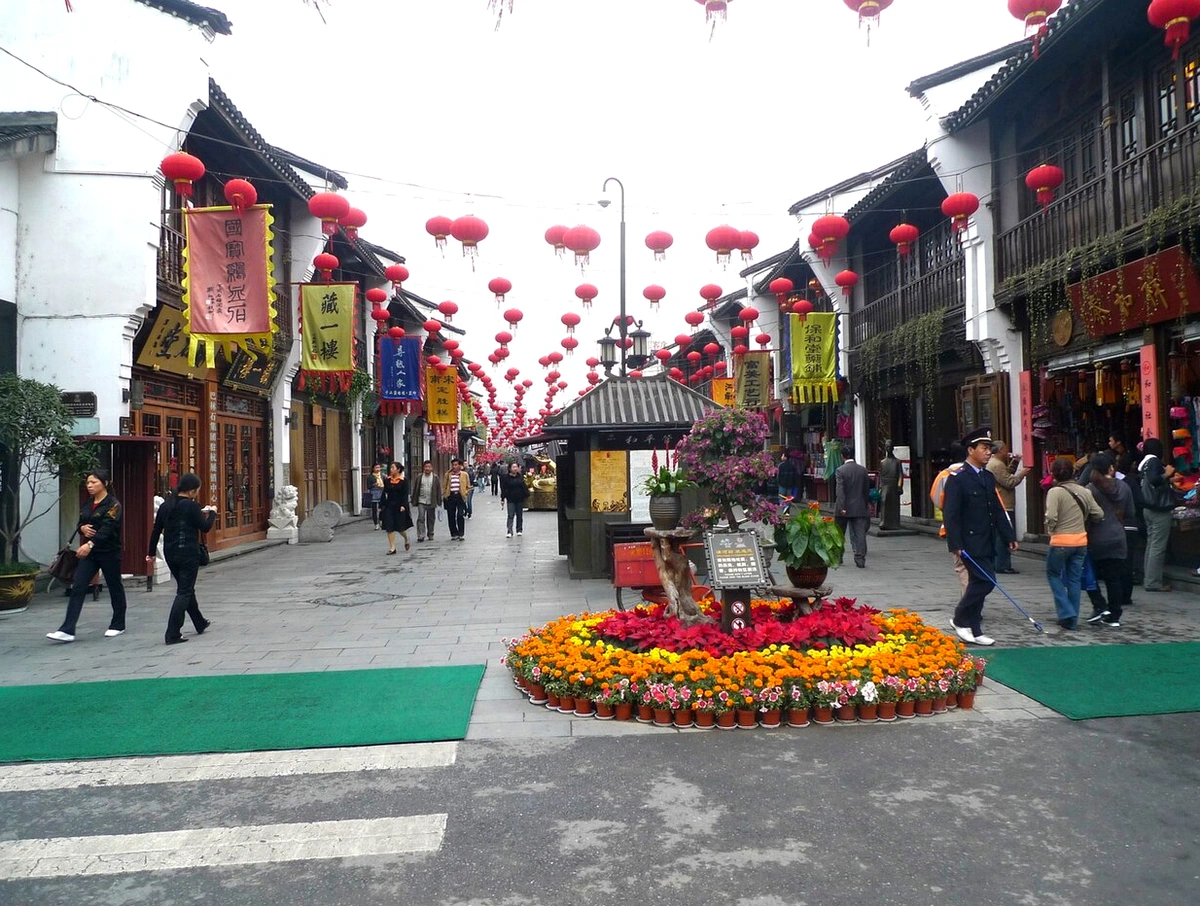
The historical formation and development of Qinghefang are closely intertwined with the commercial prosperity of the region dating back to the Southern Song Dynasty, when Hangzhou was designated as the imperial capital under Emperor Gaozong (Zhao Gou), sparking a surge in population and suburban economic activity. Major historical milestones record the transformation of this area from a sparsely populated fishing village and riverside wharf into a thriving commercial port town during the Ming and Qing dynasties. Under the Ming Dynasty, commodity trade along the Grand Canal reached its zenith, turning Qinghefang into a major transshipment center for salt, silk, rice, and artisanal crafts flowing southward from inland provinces. The rise of a wealthy merchant class fueled demand for shophouses, regional merchant guild halls, and grand residences bearing the unmistakable hallmark of traditional Jiangnan architecture. Through historical upheavals—from the wars of the late Ming era and 19th-century uprisings to early 20th-century modernization—the ancient quarter preserved its traditional urban spatial layout, characterized by bluestone-paved lanes, two-story timber houses topped with yin-yang roof tiles, and cobblestone arch bridges spanning narrow creeks.
The vicissitudes of successive eras have left distinct, overlapping cultural strata across every street corner, house, and relic in Qinghefang. The Second Sino-Japanese War and the Chinese Civil War in the first half of the 20th century inflicted severe damage on the urban infrastructure; many once-bustling commercial port zones were devastated, and parts of the canal network silted up due to a lack of maintenance resources. Nevertheless, the enduring resilience of the local community, combined with tangible cultural heritage passed down through generations, enabled the ancient street to weather periods of decline. By the final decades of the 20th century and the dawn of the 21st century, as municipal and central authorities intensified historic urban preservation efforts, Qinghefang was revitalized as a living museum of traditional Jiangnan civic life. Restoration strictly adhered to architectural conservation principles, faithfully reconstructing traditional shopfronts, lantern arrays, gray brick walls, and hand-planed timber doorframes, thereby authentically recreating the commercial vibrancy and daily atmosphere of a bygone golden age.
The national iconic status of Qinghefang Ancient Street lies in its role as a quintessential exemplar of traditional commercial culture in the lower Yangtze region—a crossroads where an early commodity economy intersected with Confucian ideology, which officially favored agriculture over commerce yet in practice nurtured a dynamic urban merchant class. Unlike solemn imperial palace compounds or purely natural scenic spots, Qinghefang serves as vivid testimony to early urbanization in China, where living spaces, production workshops, and commercial storefronts merged seamlessly within familiar rows of contiguous street-facing houses. Vernacular architectural elements here—from the layout of skywells and ancient underground drainage systems to intricate woodcarvings on roof trusses and lattice doors—reflect the pinnacle of construction engineering and refined aesthetic sensibility achieved by Zhejiang craftsmen. This iconic stature is further reinforced by Qinghefang’s role as a repository of intangible cultural heritage, safeguarding traditional crafts such as paper-fan making, Hangzhou silk embroidery, traditional Chinese medicine preparation, and folk performing arts rooted in canal-side community life.
The cultural influence of Qinghefang Ancient Street extends well beyond the local boundaries of Zhejiang Province, serving as a vital reference point for urban historians, architects, and cultural scholars studying the evolution of pre-modern Asian commercial cities. Its linear urban spatial model aligned along waterways once served as a blueprint for numerous other historic towns along the Beijing-Hangzhou Grand Canal. In the contemporary era, as major Chinese metropolises confront rapid modernization and architectural homogenization, Qinghefang stands as a bastion of local identity, offering invaluable lessons on balancing heritage tourism development with the preservation of authentic daily life for indigenous residents. Its tangible and intangible cultural assets continue to foster pride in Hangzhou’s centuries-old history while providing rich material for scholarly research into socioeconomic transitions from the feudal era to industrialization.
The enduring presence of Qinghefang Ancient Street at the heart of modern Hangzhou thus affirms the autonomous historical value of an urban space that has weathered profound upheavals while retaining its essential character. From the earliest footsteps of merchants along the canal wharves to today’s steady stream of travelers and scholars, the ancient quarter continues its mission of bridging past and present, safeguarding the collective memory of a riverside urban civilization. The archaeological, architectural, historical, and social values converging here form a resilient cultural whole, rightfully standing as one of the foremost urban heritage treasures of the Jiangnan region in particular and Chinese civilization as a whole—one that future generations must continue to cherish, protect, and study in depth.
Qinghefang Ancient Street in Hangzhou, Zhejiang Province, China, originated from a waterfront settlement bearing the distinct imprint of Southern Song urban planning and took definitive shape across the Ming and Qing dynasties. From a geological and landscape-ecological perspective, the district sits atop alluvial delta sediments of the lower Qiantang River, where silt and sand accumulation created a low, flat terrain crisscrossed by an intricate hydrological network of natural and man-made canals flowing directly toward West Lake. Spatial development here did not follow the rigid, square geometric grid of northern feudal capitals; instead, it evolved organically along watercourses and vital waterway arteries. This geographical setting required ancient planners to employ sophisticated land-leveling techniques, embankment reinforcements, and drainage layouts to cope with the tidal patterns and seasonal storms characteristic of the Jiangnan coastal plain.
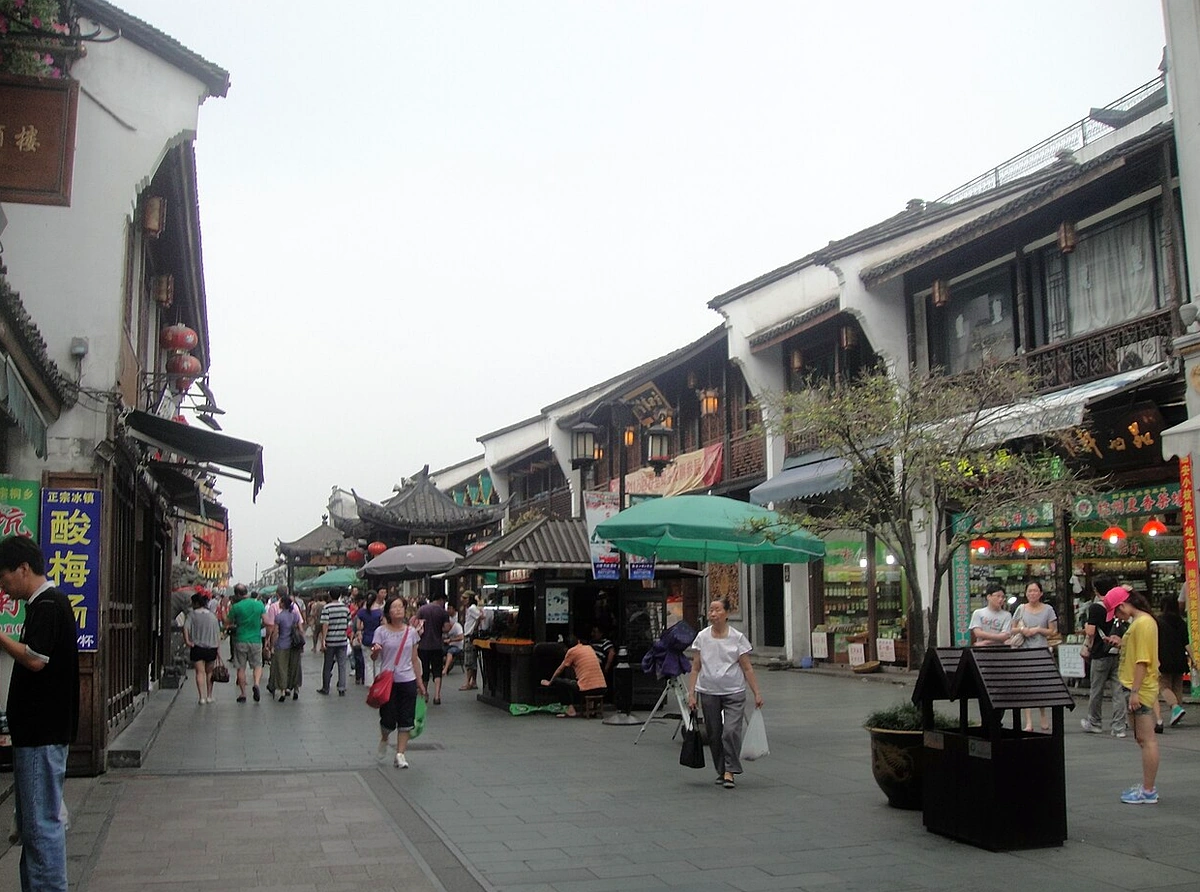
The zoning layout of Qinghefang Ancient Street demonstrates a planning philosophy that tightly integrated commercial functions with residential life, organized into concentric spatial layers radiating inward from the water’s edge. The district’s primary thoroughfares were not wide carriage avenues, but long, narrow bluestone-paved alleys running parallel to the canals, serving simultaneously as pedestrian arteries and natural ventilation corridors for the entire neighborhood. Commercial zones clustered predominantly along boat wharves and river junctions, where street-facing shophouses doubled as retail storefronts for silk, tea, and herbal medicine in front and storage warehouses at the rear or on the ground floor. This spatial configuration produced high building density characterized by traditional tube-like residences—narrow in frontage yet deep in length—designed to maximize commercial street frontage under imperial property tax laws while maintaining close-knit living quarters for extended multi-generational clans.
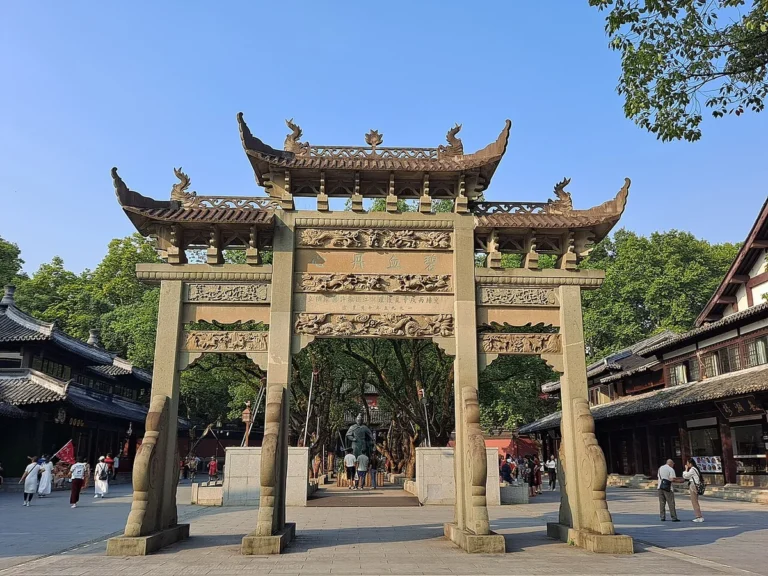
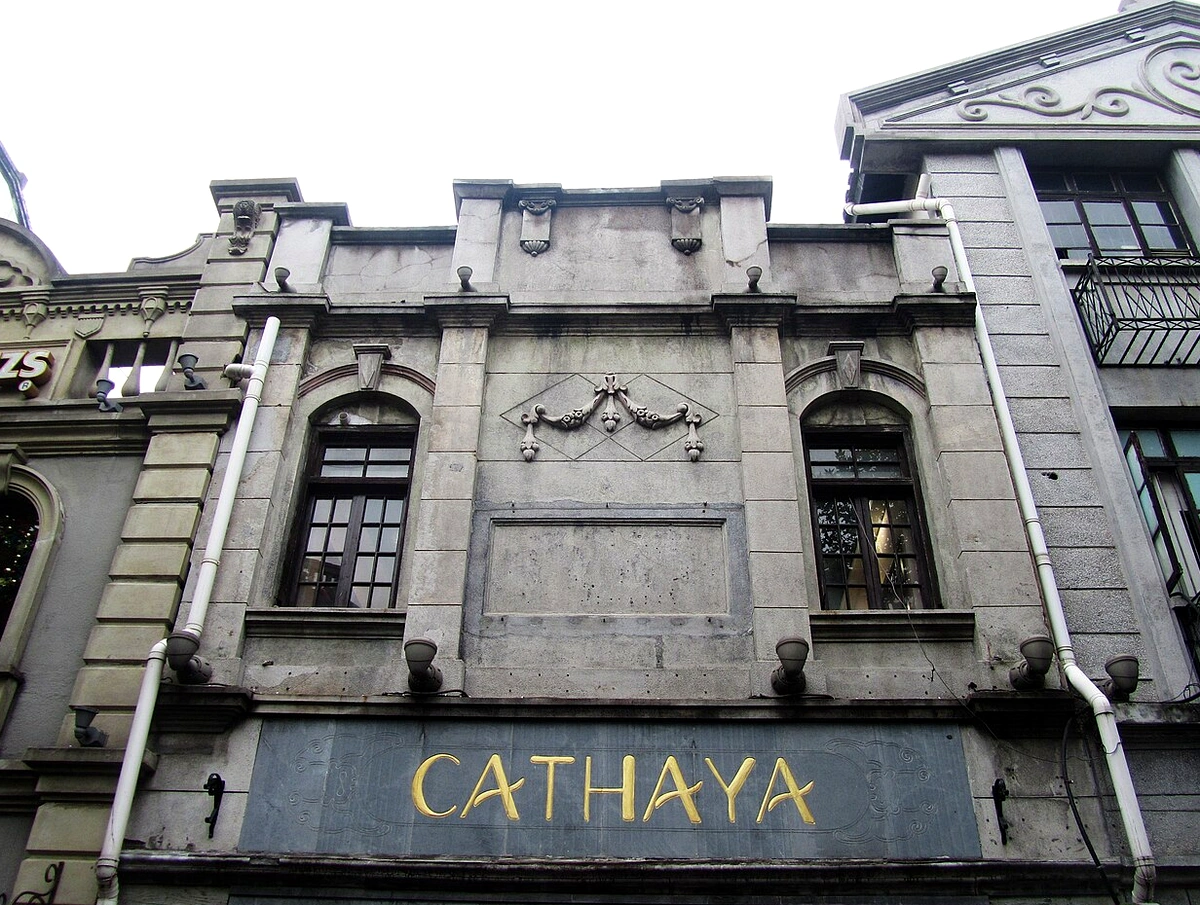
Architecturally, the buildings of Qinghefang exemplify the classic Jiangnan style, featuring two- to three-story structures built with traditional load-bearing timber frames paired with enclosing walls of unfired gray brick and bluestone. The distinctive craftsmanship of regional carpenters is showcased in intricate mortise-and-tenon joinery executed without a single iron nail, granting buildings high structural elasticity to withstand minor seismic shifts or the gradual settling of soft alluvial soil. Load-bearing wooden pillars rest atop large, finely carved stone plinths to prevent ground moisture from rising and rotting the timber. Roofs are clad in dark gray yin-yang tiles pitched steeply for rapid rainwater runoff, with upturned eaves curving gracefully toward the sky to create a soft skyline harmonious with the surrounding water and mist.
Firebreak walls—known as Matouqiang (horse-head walls)—represent one of the most critical engineering highlights of Qinghefang Ancient Street, embodying urban defense strategies against fire hazards in densely populated neighborhoods. Rising higher than the rooflines, these stepped, tiered walls built of heat-resistant brick and lime-sand mortar not only prevented flames from spreading between adjoining houses, but also imparted a distinctive visual rhythm to the entire streetscape. Inside each residence, a central skywell (tianjing) served as a microclimatic regulator, inducing natural cross-ventilation and channeling daylight deep into interior rooms hemmed in by thick masonry walls. These inner courtyards also collected rainwater in accordance with Five Elements feng shui principles of “gathering water,” reflecting ancient builders’ profound mastery of survival and adaptation to the natural environment.
The overall spatial footprint of Qinghefang Ancient Street spans a vast area shaped across centuries of urban evolution, encompassing hundreds of vernacular residences, merchant guild halls, religious temples, and ancient stone bridges arching over canals. Building heights were strictly regulated under traditional harmonious planning norms, rarely exceeding three stories so as to preserve human-scale proportions and maintain a serene, antique ambiance. Architectural embellishments—such as wooden lattice doors carved with bird-and-flower motifs, relief brick carvings depicting classical legends, and lacquered, gold-leafed wooden shop signs—were crafted by master artisans, preserving the exquisite decorative arts of historic Hangzhou.
In the contemporary era, Qinghefang Ancient Street functions as a living museum of Chinese urban planning history and vernacular architecture, drawing vast numbers of international visitors and cultural researchers each year. Visitor capacity across this heritage zone is carefully managed through crowd-flow controls aimed at protecting delicate timber structures and historic foundations from structural fatigue caused by overcrowding. Pedestrian routes are guided along enclosed walking circuits, paired with strict restrictions barring large motorized vehicles from entering the historic core. This synergy between rigorous physical conservation and the preservation of daily community life has enabled Qinghefang to sustain vibrant vitality, standing as living proof of East Asian water-town urban artistry.
Qinghefang Ancient Street in Hangzhou, Zhejiang Province, China, represents one of the best-preserved port-and-vernacular architectural ensembles, encapsulating the zenith of traditional Jiangnan building artistry during the Ming and Qing dynasties. Across the passage of time and urban transformation, the district’s spatial layout has retained its classical checkerboard street pattern, featuring bluestone-paved lanes, a dense network of commercial canals, and continuous rows of two-story timber buildings engineered with remarkably intricate structural framing. These edifices do not merely reflect the prosperity of a bustling economic hub along the Beijing-Hangzhou Grand Canal; they also serve as a living museum of woodworking artistry, stone-carving techniques, and spatial composition steeped in East Asian feng shui philosophy.
Examining the overall layout of the ancient quarter reveals distinct zones delineated by socioeconomic function and community belief, most notably merchant guild halls, mansions of affluent clans, and sacred temples. Each zone strictly observes north-south axial symmetry harmonized with traditional Jiangnan garden landscaping, where the enclosed interiors of historic residences are fluidly balanced by open skywells that admit natural light and airflow. This arrangement generates a pleasant microclimate—cool in summer and warm in winter—while expressing a cosmological worldview centered on harmony among heaven, earth, and humanity in classical Chinese architecture.
The most profound highlight of Qinghefang’s distinctive architectural artistry lies in its shrines and temples, which safeguard the core spiritual traditions of both local residents and traveling merchants from afar. Sacred halls—particularly shrines dedicated to the Water God and patron deities of commerce—were constructed on an imposing scale, featuring multi-tiered eaves sweeping upward like swallow wings and clad in jade-glazed yin-yang roof tiles. Friezes and roof ridges are adorned with intricate terracotta reliefs portraying historical episodes, folk legends, and scenes of everyday Jiangnan life. Stepping inside these sanctuaries, visitors are immediately struck by monolithic pillars and beams of pine and cedar, planed smooth and interlocked through sophisticated mortise-and-tenon joinery without a single iron nail—a testament to the pinnacle of structural mechanics achieved by feudal-era master carpenters.
Treasured relics and artifacts housed within these monuments include hundreds of lacquered and gilded horizontal plaques and vertical couplets, ancient bronze bells cast during the Qianlong reign, and stone stelae inscribed with commercial regulations and village covenants. These couplets not only hold high literary merit—executed in masterful cursive and regular calligraphy by renowned scholars of the era—but also convey profound philosophical principles tying business ethics to integrity, honesty, and benevolence. Pure brass censers, Longquan celadon porcelain vases, and antique silk landscape scrolls are arranged solemnly upon altar tables, creating a contemplative, serene, and deeply sacred atmosphere rooted in traditional folk belief.
In terms of decorative motifs, wood, brick, and stone carvings across Qinghefang Ancient Street achieve scholarly refinement, reflecting the wealth and cultivated aesthetic tastes of historical merchants and literati. Wooden partition screens placed in the entrance halls of old residences feature multi-layered openwork carvings depicting classical motifs such as the Four Gentlemen (pine, chrysanthemum, bamboo, and plum blossom), the Eight Treasures, and auspicious symbols like bats holding coins or carp leaping over the Dragon Gate. The skillful interplay of openwork and relief carving gives every detail vivid three-dimensional depth, creating the illusion that figures and foliage are gently swaying in the natural light filtering down from the skywell.
The philosophical meaning embedded within these architectural works is closely bound to Confucianism, Daoism, and Buddhism—the three intellectual pillars shaping traditional Chinese culture. Confucian philosophy is evident in the solemnity of primary front axes and the clear hierarchical division of space between upper and lower, outer and inner realms—separating guest reception halls, ancestral worship chambers, and private family quarters. Meanwhile, Daoist thought permeates the placement of miniature rockeries and water ponds within mansion courtyards, designed to mirror the circulation of cosmic energy and earthly qi according to yin-yang and Five Elements principles. Together, these elements endow the built environment with seamless equilibrium, allowing people to find inner tranquility amidst a bustling commercial quarter.
Furthermore, the cultural depth of Qinghefang Ancient Street is affirmed through the organization of communal spaces and traditional rituals sustained over centuries. Street-facing buildings with deeply overhanging eaves form continuous covered colonnades that shelter pedestrians from sun and rain while serving as vibrant commercial arcades where merchants traded silk, green tea, and fine ceramics. The architectural model of “shop in front, residence in back” (qiandian houju) reflects pragmatic commercial acumen while preserving the privacy and dignity of traditional East Asian family life.
Preserving these distinctive architectural treasures in the modern era demands a deep command of material history and traditional building techniques. Whenever archaeologists and conservation architects intervene to repair decayed timber beams or weathered brick walls, they must strictly adhere to authenticity standards—using traditional materials such as lime-sand mortar reinforced with handmade paper fibers and reviving ancient mortise-and-tenon joinery without stripping away the aged patina coating historic surfaces. It is precisely this scientific, historically respectful approach that has enabled Qinghefang Ancient Street to retain its authentic soul, avoiding the over-commercialized artificiality seen in many mass-market tourist destinations.
A comprehensive examination of the architectural artistry and cultural heritage of Qinghefang Ancient Street in Hangzhou thus opens an intimate window into ancient urban heritage, where every brick and carved relief carries heroic historical narratives and deep humanistic philosophy. This ensemble stands not merely as a witness to the flourishing commodity economy of feudal China, but also as an enduring symbol of traditional aesthetic resilience amidst the relentless passage of time—a true masterpiece of vernacular architecture worthy of reverence, study, and preservation for generations to come.
Qinghefang Ancient Street in Hangzhou endures as a living chronicle of traditional Chinese urban life, where the local daily rhythm has been shaped by centuries of history along the West Lake basin and its dense web of canals. The passage of time within this space is far more than a shift in natural daylight; it unfolds as a sequence of social rituals deeply imprinted with Jiangnan culture. Exploring daily life here calls for a panoramic lens stretching from dawn—when morning mist still clings to yin-yang tiled roofs—to nightfall, when tens of thousands of red lanterns burst into brilliant glow. Observing this living tapestry reveals how local residents safeguard heritage through everyday cultural practices, transforming every alleyway and stone doorstep into a living museum of urban anthropology.
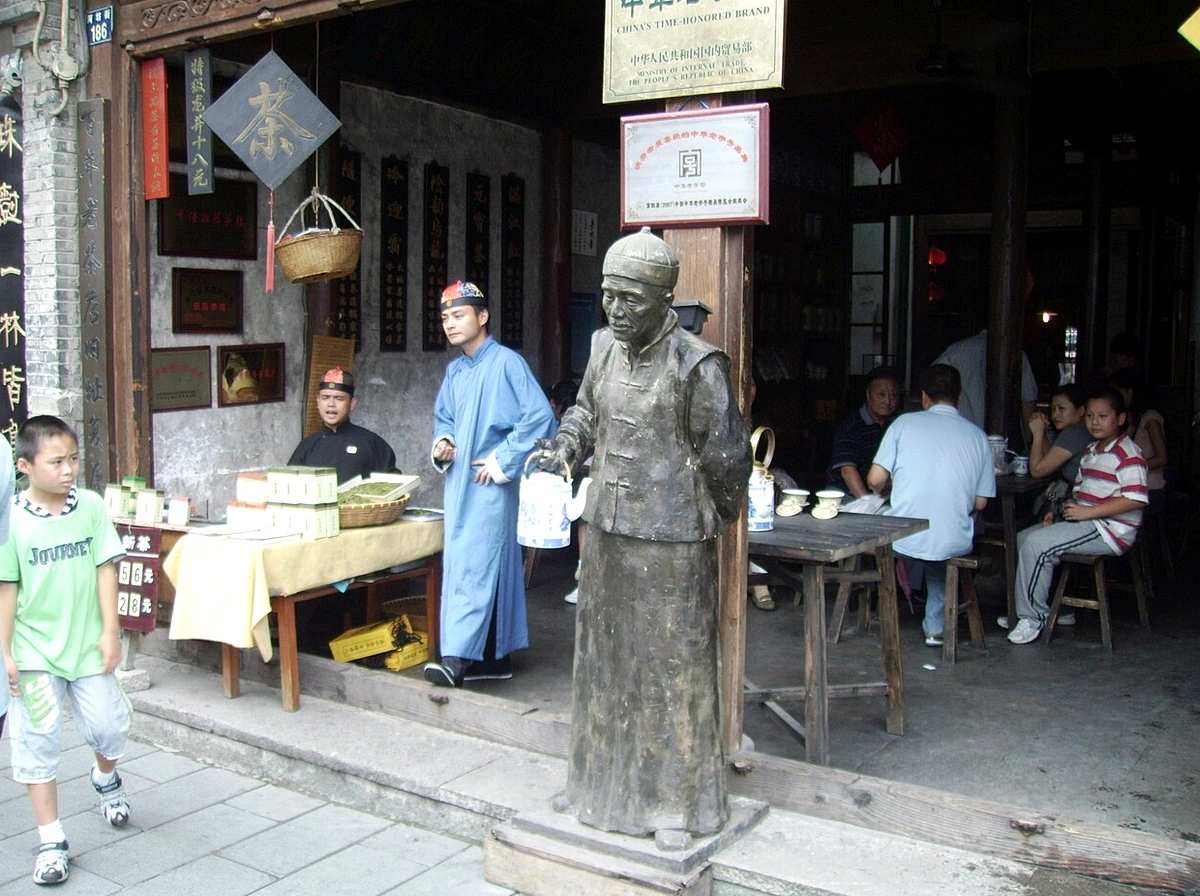
Dawn breaks early in Qinghefang Ancient Street as the first rays of sunlight pierce the pale mist rising off the narrow creeks running alongside the neighborhood. Elderly locals are typically the first to stir, maintaining lifelong routines of morning wellness strolls and Tai Chi practice in communal courtyards or along ancient granite embankments. Morning sounds here carry the unmistakable signature of Jiangnan: the steady swish of bamboo brooms sweeping courtyards, water gurgling gently through centuries-old stone culverts, and the creak of wooden oars as boatmen prepare for the day’s work. Roadside teahouses stoke their stoves while mist still lingers, releasing the delicate aroma of premium Longjing (Dragon Well) tea mingled with freshly steamed buns and crisp fried dough sticks. Locals gather at their favorite neighborhood teahouses from early morning to read newspapers, discuss current affairs, and exchange trade news, fostering a strong sense of community cohesion. The bustle unfolds unhurriedly, reflecting a philosophy of slow, mindful living cultivated across generations along the water’s edge.
As the sun climbs higher toward midday, the street’s rhythm shifts toward the lively cadence of traditional commerce and artisan crafts. Shops lining both sides of the main thoroughfares throw open their doors, displaying exquisite local handicrafts including Hangzhou silk, hand-painted folding fans, fine ceramics, and rare medicinal herbs. Whiffs of sandalwood incense drifting out from antique shops blend with the savory aromas of small eateries serving West Lake Vinegar Fish and Dongpo Pork. Explorers and local residents mingle along smooth bluestone lanes where bicycles and pedestrians share space harmoniously. Senior artisans sit beneath front eaves engrossed in silk embroidery or woodcarving, readily chatting and sharing craft techniques with curious passersby. Spontaneous folk performances frequently spring up in open courtyards or beneath the verandas of historic houses, where traditional musicians play classical Jiangnan melodies on the pipa and erhu, drawing appreciative crowds of onlookers.
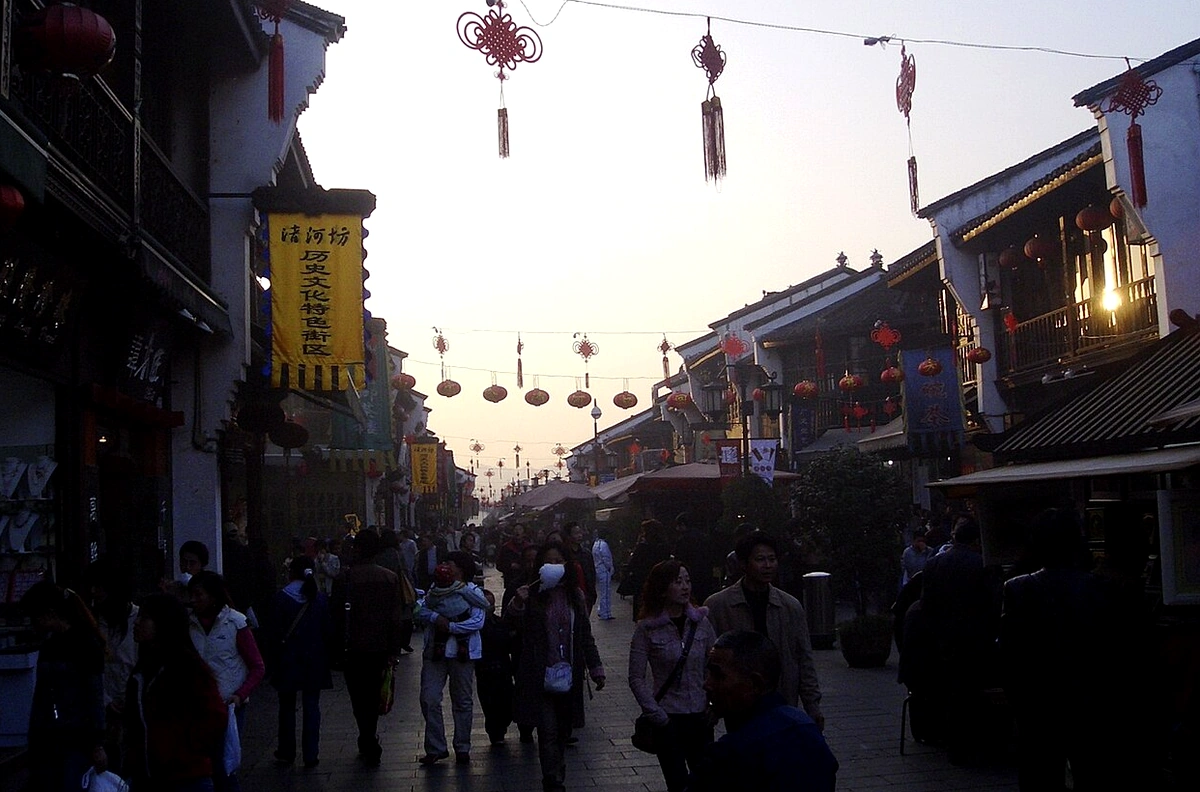
The transition into twilight brings a serene, poetic beauty to Qinghefang Ancient Street as golden-amber rays from the setting sun reflect across calm canal waters like a living ink-wash painting. At this hour, the pace slows, giving way to relaxation and family gatherings. Wisps of kitchen smoke curl upward from tiled rooftops and historic residences, carrying the appetizing scents of evening meals in preparation. Residents gather outside their front porches to catch the cool evening breeze and chat with neighbors while awaiting dinner. Streetlights flicker on, illuminating whitewashed walls weathered by time and intricately carved wooden doors. This dusk transformation conjures a deeply nostalgic atmosphere, transporting visitors back to Hangzhou’s illustrious past when daily life moved in harmony with the natural cycle of sunlight and shadow.
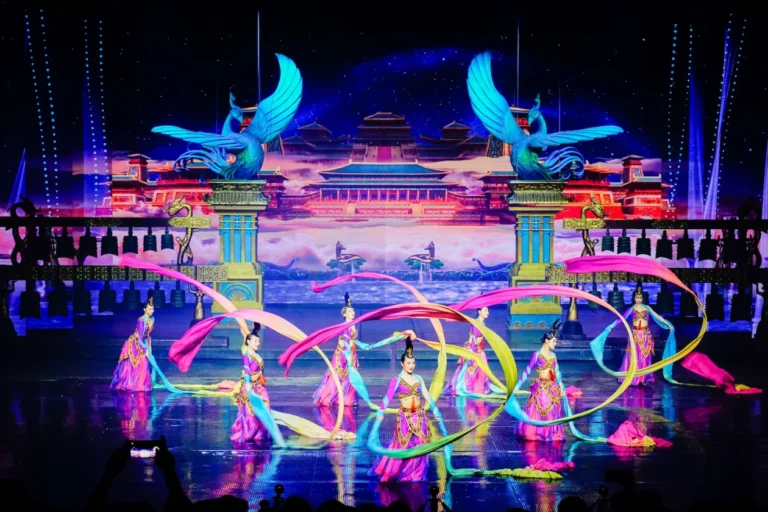
Once nightfall blankets the district, Qinghefang Ancient Street undergoes a dazzling metamorphosis beneath the artistic glow of thousands of red lanterns suspended along wooden eaves and stone bridges. The nocturnal ambiance takes on an enchanting aura, drawing photography enthusiasts and night-culture explorers alike. Light shows and traditional musical performances take place on outdoor stages and inside grand teahouses, reenacting historical tales from the Song Dynasty and the rich cultural life of ancient townsfolk. Night-market food stalls bustle with travelers and locals sampling iconic street delicacies such as sweet glutinous rice cakes, stinky tofu, and richly spiced grilled skewers. Laughter, traditional stringed melodies, and rippling water merge into a vibrant urban symphony, proving that the ancient quarter is no lifeless relic, but a living, breathing cultural space thriving in the modern world.
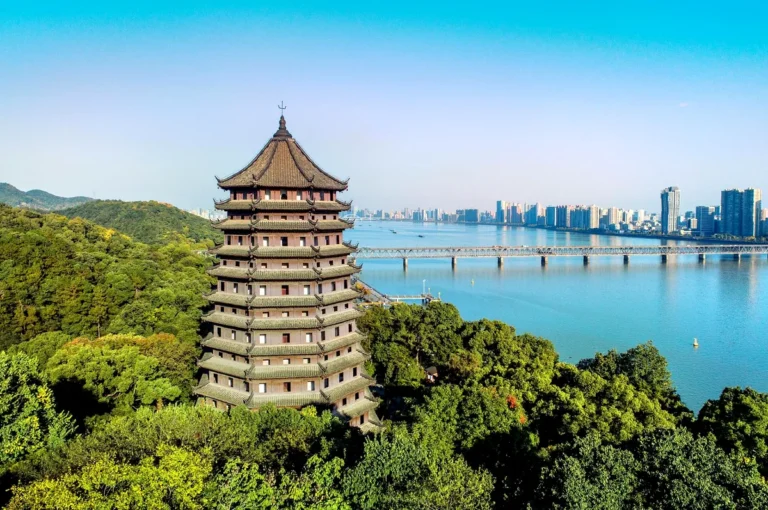
To capture the finest panoramic views of Qinghefang’s architectural layout and daily rhythm, observers should seek out strategic vantage points shaped by its historic urban design. The premier observation spot sits atop the ancient stone arch bridges spanning the main canals, offering sweeping vistas down the length of the street with its undulating tiled rooflines and bustling pedestrian flow below. From this elevation, the harmony between vernacular architecture, water, and greenery comes into full focus, embodying traditional feng shui principles of balance between yin and yang, humanity and nature. Another prized vantage point lies on the upper terraces of restaurants and teahouses converted from historic merchant mansions. Here, visitors can savor a warm cup of tea while admiring the lantern-lit ancient street below, gazing outward to where nostalgic heritage meets the modern skyline of contemporary Hangzhou. These perspectives deliver far more than aesthetically striking photographs—they offer moments of quiet contemplation into the cultural and historical depth of one of West Lake’s most storied historic districts.
Originating as a thriving commercial center along the Grand Canal during the Song Dynasty, Qinghefang Ancient Street in Hangzhou, Zhejiang Province, China, has nurtured and refined a local culinary tradition deeply rooted in Zhejiang cuisine (Zhejiang Cai)—one of the Eight Great Culinary Traditions of China. Across centuries of bustling trade, the district became a melting pot of refined culinary craftsmanship, marrying fresh ingredients from fertile West Lake with abundant regional produce transported along vital waterways. From a cultural research perspective, Qinghefang’s gastronomy does not merely showcase culinary artistry; it preserves communal dining customs, imperial court recipes adapted for civic life, and profound East Asian wellness philosophies distilled into every flavor.
Topping the roster of culinary heritage here is Dongpo Pork (Dongpo Rou), an iconic dish inextricably linked to the renowned poet, statesman, and cultural luminary Su Shi (Su Dongpo), who governed Hangzhou in the 11th century. Crafting this dish demands meticulous selection of pork belly with perfectly balanced layers of lean meat and fat, cut into neat squares and arranged in a clay pot lined with scallions and thick slices of fresh ginger to prevent sticking. The secret to its mastery lies in slow braising over gentle heat for hours using pure Shaoxing rice wine rather than water, seasoned with rock sugar and premium soy sauce. When finished, the pork is meltingly tender yet holds its square shape intact, its glossy skin glowing a natural reddish-amber, with rich fattiness balanced effortlessly by the fragrant aroma of aged rice wine and the clean sweetness of rock sugar—delivering a sublime gastronomic experience infused with the refined spirit of Song Dynasty literati.
Alongside rich braised meats, Qinghefang’s culinary repertoire is celebrated for freshwater fish dishes harvested straight from West Lake, led by West Lake Vinegar Fish (Xihu Cuyu) and Mustard Carp. West Lake Vinegar Fish demands exacting ingredient preparation: a live grass carp of ideal weight is swiftly cleaned and poached in gently simmering water devoid of salt or oil. Once just cooked through in a few minutes, the fish is lifted out and glazed with a glossy sauce crafted from high-grade rice vinegar, brown sugar, and a touch of kudzu starch. Its flavor profile strikes a bold harmony between bright, refined acidity and gentle sweetness, awakening the palate while completely masking any earthy freshwater notes—a testament to Jiangnan cuisine’s devotion to preserving pure, natural flavors.
No exploration of Qinghefang’s culinary map would be complete without honoring its tea artistry and traditional pastries woven into everyday local life. Bordering the world-famous Longjing tea-growing hills, the ancient street treats tea appreciation as an indispensable spiritual ritual within its social fabric. First-grade Longjing tea leaves are hand-picked prior to the Qingming Festival and pan-fired in hot iron woks using the traditional ten-step artisan technique—pressing, shaking, rubbing, smoothing, and sweeping—to produce flat, jade-green tea buds. When brewed, pure spring water heated to roughly 85°C is poured into a tall clear glass, allowing tea drinkers to watch the emerald leaves unfurl gracefully like an underwater dance.
Accompanying the gentle astringency and lingering sweet aftertaste of Longjing tea is an array of signature Hangzhou pastries, including savory sesame cakes, osmanthus lotus-root starch cakes, and fresh shrimp-and-pork rice cakes. Osmanthus lotus-root cake is crafted from mature lotus roots harvested from marshes west of the city, ground into fine starch, blended with wild forest honey and fresh autumn osmanthus blossoms, and steamed in traditional bamboo baskets to lock in natural fragrance. Featuring a warm ivory hue, chewy-soft texture, and intoxicating floral aroma, the pastry pairs seamlessly with hot green tea—achieving an ideal balance between deep sweetness and crisp refreshment that reflects ancient Chinese culinary principles of yin-yang and Five Elements harmony.
Along the historic lanes of Qinghefang, culinary establishments are arranged along a historical continuum, with multi-generational family shops standing shoulder-to-shoulder beneath moss-grown tiled eaves. Dajing Lane and adjacent alleys once housed merchant guilds trading spices, medicinal herbs, and dried delicacies catering to both prosperous traders and imperial households during feudal dynasties. Each small shop steadfastly guards ancestral recipes—from exact spice ratios to wood-fired cooking times—resisting industrial shortcuts in order to preserve authentic flavors handed down for centuries.
Local dining customs also observe strict seasonal rhythms throughout the year. In spring, residents favor light, refreshing dishes pairing tender mountain bamboo shoots with cured Jinhua ham. Summer brings cooling lotus-seed soups and black-sesame glutinous rice dumplings served in jasmine-scented syrup. By autumn, as crisp breezes arrive, slow-braised stews, rich pork dishes, and sweet osmanthus tea reclaim center stage at family tables. This seasonal progression does more than optimize bodily nourishment in accordance with traditional Chinese medicine—it embodies an enduring bond between human life and the natural ecological cycles of fertile Jiangnan.
Ultimately, the culinary heritage and dining traditions of Qinghefang Ancient Street in Hangzhou constitute a vibrant intangible cultural treasure preserving the aesthetic refinement and artisanal mastery of past eras. Through every dish, cup of tea, and historic dining hall, generations of local artisans have succeeded in safeguarding traditional identity at the heart of a modern metropolis, turning every meal into an immersive journey through Chinese history, artistry, and philosophy.
Exploring the historic monuments and antique urban fabric of Qinghefang in Hangzhou rewards travelers with a thorough understanding of its spatial layout, modern public transit links woven around heritage zones, and distinct cultural etiquette. Backed by centuries of history tied to waterway commerce and Jiangnan civic life, Qinghefang unfolds as a living tableau of gray brick-and-tile architecture, arched stone bridges, and interlacing canals. To fully appreciate every layer of historical sediment here, careful planning around travel seasons, optimal transportation, appropriate attire, and local customs plays a decisive role in shaping an authentic cultural exploration.
From a climatic and ecological standpoint across the lower Qiantang River basin, the most rewarding times of year to visit Qinghefang are spring (March to May) and autumn (September to November). Spring brings the soft, dewy atmosphere characteristic of southern China, as weeping willows along canal banks burst into fresh green shoots and mild temperatures between 15°C and 25°C create ideal conditions for strolling down bluestone alleys. Autumn ushers in crisp, high skies and pale golden sunlight casting warm highlights across weathered brick walls—offering sublime optical contrast for documenting architectural heritage. Conversely, summer in Hangzhou brings intense heat and high humidity with temperatures occasionally exceeding 35°C, requiring thorough sun protection and regular hydration. Winter introduces a penetrating damp chill rising off lakes and canals, occasionally dusting yin-yang tiled roofs with light snow that turns the ancient street into a serene ink-wash painting, though cold outdoor conditions can make extended walking more challenging.
Transportation connections to Qinghefang Ancient Street are remarkably well developed, seamlessly linking modern urban rail transit with traditional pedestrian-friendly lanes inside the historic core. The Hangzhou Metro is the most efficient way to reach the district from central railway stations or Hangzhou Xiaoshan International Airport. Subway lines operate with high punctuality and clear bilingual signage in Chinese and English, making navigation effortless. From nearby metro stations, visitors can continue via local public buses or regulated taxis and ride-hailing services booked through mobile apps. However, inside the historic core of Qinghefang—where narrow cobblestone lanes and ancient stone bridges prevail—motorized traffic is strictly restricted to protect heritage structures and ensure pedestrian safety. Consequently, exploring at a leisurely pace on foot, or utilizing public bicycles parked at designated perimeter stations, remains the sole and ideal way to venture deep into its historic commercial alleys.
Time of day also profoundly shapes the visitor experience within this historic quarter. Early morning, roughly between 7:00 AM and 9:00 AM, captures Qinghefang at its most authentic, before morning mist fully lifts from the canals and as family-run artisan shops open their wooden shutters. During these quiet hours, free from large tour crowds, travelers can observe genuine daily routines and time-honored customs of longtime neighborhood residents. By contrast, dusk through late evening reveals a completely different persona as rows of red lanterns illuminate wooden eaves and shimmer across the water—clothing the street in nostalgic splendor, albeit alongside peak crowds gathering around street-food stalls and traditional teahouses.
Selecting appropriate attire for visiting Qinghefang balances practical comfort for extended walking with respect for sacred and historic spaces. Because the district is paved with centuries-old bluestone slabs—worn smooth in places and sloped across arched stone bridges—cushioned sneakers or supportive walking shoes with reliable traction are essential. Choose breathable, moisture-wicking fabrics in summer and warm layered clothing in winter. In particular, when entering sacred spaces such as ancient temples, traditional merchant guild halls, or historic teahouses tucked inside the quarter, visitors should dress modestly and respectfully, avoiding overly revealing outfits out of deference to local spiritual and aesthetic traditions.
Cultural etiquette and local customs in Qinghefang Ancient Street call for sensitivity and awareness from international travelers to ensure harmonious interactions. Local residents value polite, understated demeanor; loud talking, boisterous behavior, or public arguments are frowned upon as disruptive to the serene dignity of the heritage district. When shopping for traditional handicrafts, antiques, or Longjing tea at family-owned stores, polite bargaining is common practice, though it should always be conducted courteously and respectfully toward artisans and shopkeepers rather than aggressively. Additionally, always ask permission politely before taking close-up photographs of local residents—especially elderly neighbors relaxing outside their homes or artisans at work. Touching displayed antiques inside private museums or centuries-old original wooden architectural carvings is strictly discouraged, as oils and perspiration from human hands can damage aged timber and antique lacquer pigments.
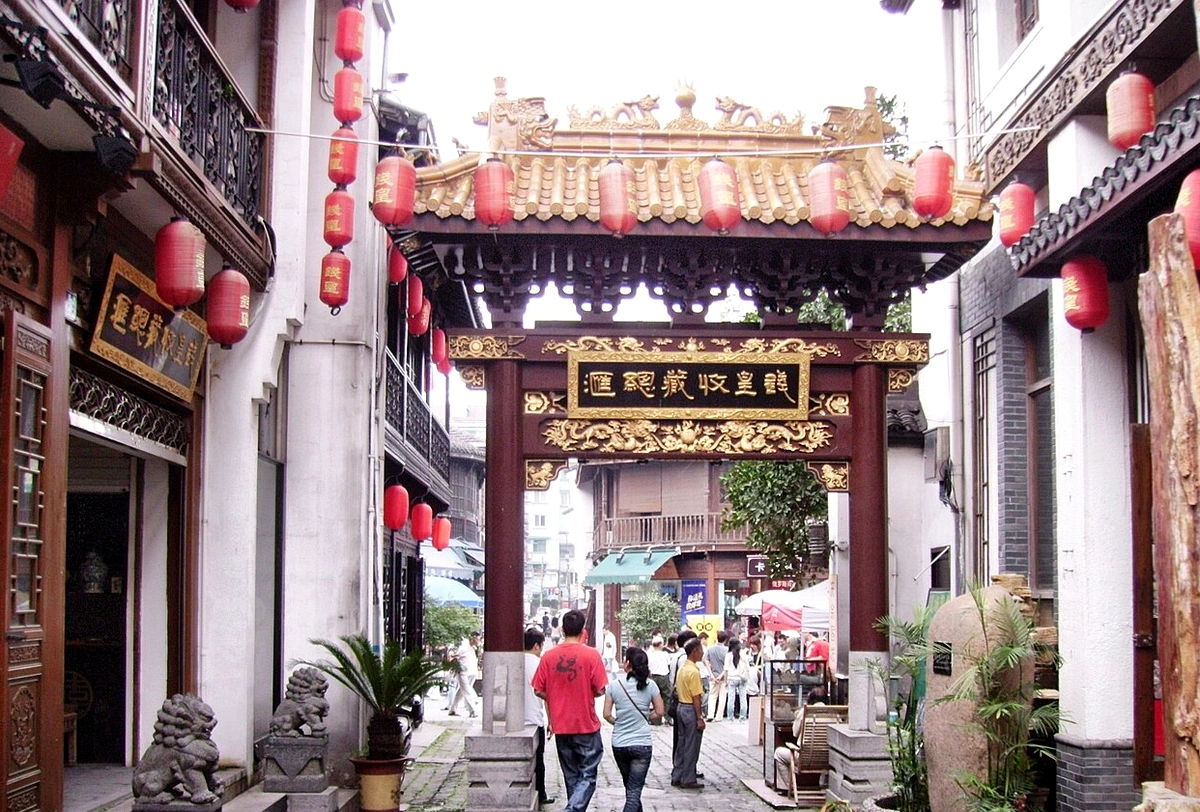
Ticketing at Qinghefang Ancient Street operates on an open-access model for the public streetscape itself, paired with dedicated electronic ticketing for enclosed historic landmarks located within the district. Strolling along the main thoroughfares, admiring rows of historic shophouses, and walking beside the canals is completely free of charge, encouraging broad public access to living heritage. However, entering specific landmark sites—such as former mansions of feudal-era merchants, traditional craft museums, or contemporary art exhibitions housed inside historic compounds—requires purchasing separate admission tickets. Ticket purchases are predominantly processed via mobile digital payment platforms, so travelers should set up widely accepted local e-wallet apps in advance; while cash is still accepted at select traditional ticket windows, options are limited due to comprehensive digital management across the heritage zone. Keeping these practical guidelines in mind ensures a smooth, enriching, and deeply memorable journey through Qinghefang Ancient Street in Hangzhou.
To experience this journey seamlessly alongside a local guide, explore our curated Beijing – Suzhou – Hangzhou – Wuzhen – Shanghai tour with a thoughtfully planned itinerary.