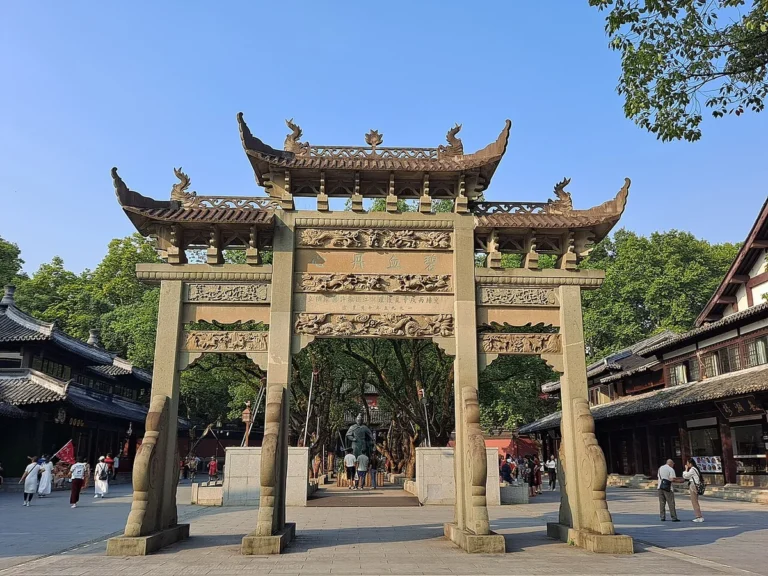
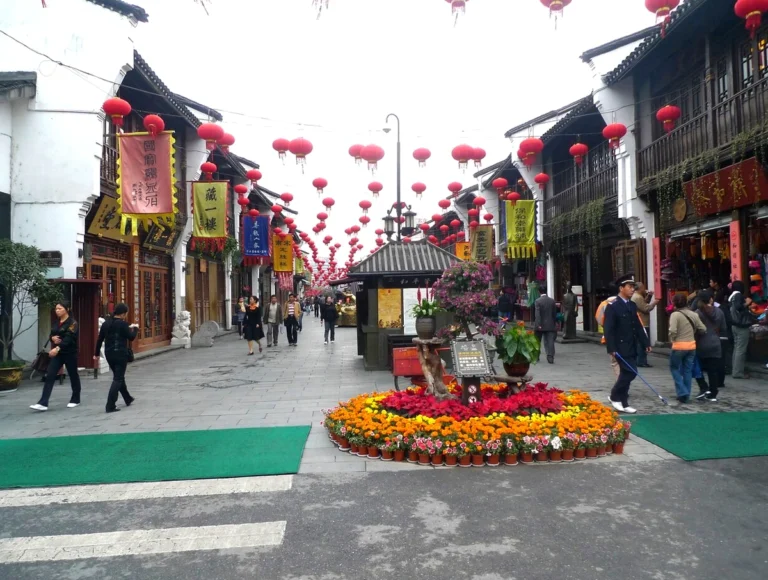
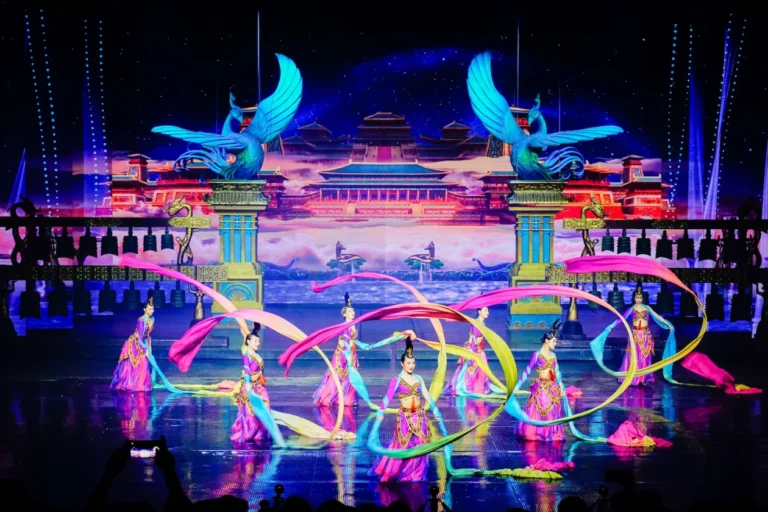
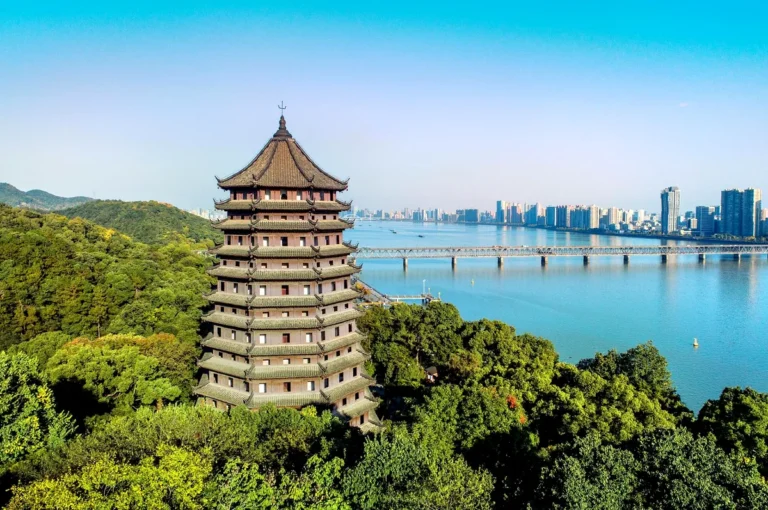
Lingyin Temple—also known as Lingyin Si (Temple of the Soul’s Retreat)—is situated at roughly 30 degrees north latitude and 120 degrees east longitude in the western part of Hangzhou City, Zhejiang Province, China. The temple occupies a strategic setting in the valley between Feilai Peak (Peak That Flew From Afar) and North Peak, where natural waterways converge to create a temperate dense forest ecosystem characteristic of the Jiangnan region. With a modest average elevation above sea level yet terrain enclosed by sheer limestone cliffs, the area has developed a stable microclimate that has allowed timber structures to endure across centuries. The presence of limestone caves at Feilai Peak—housing hundreds of Buddha statues carved directly into the rock face from the Five Dynasties and Ten Kingdoms period through the Yuan Dynasty—has turned this site into an open-air sculptural museum of unmatched historical value, reflecting the evolution of Buddhist thought across successive eras of imperial China.
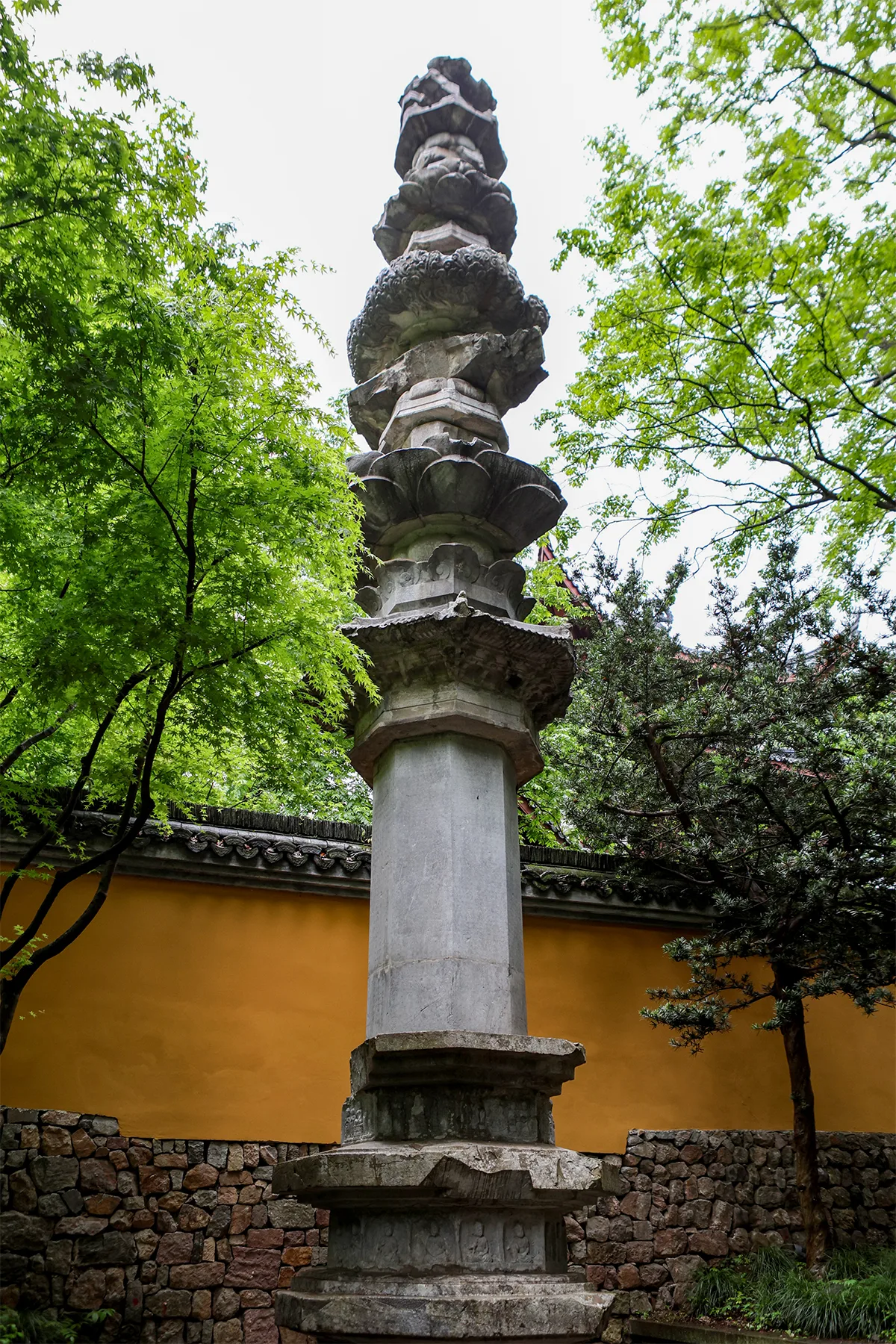
The founding history of Lingyin Temple begins in 326 AD during the Eastern Jin Dynasty, when the Indian monk Huili arrived in this region. According to accounts in local gazetteers, upon seeing the strangely shaped peak, he exclaimed that it must be a haunt of immortals, and thus named the temple Lingyin—conveying the sense of a sacred and tranquil sanctuary. In its earliest phase, the temple was merely a small thatched hermitage, yet thanks to its prime location near what would later become the capital of Lin’an, it soon garnered patronage from noble families and royalty. By the Five Dynasties and Ten Kingdoms period—especially under the Wuyue Kingdom—Lingyin Temple experienced its first golden age with a monumental architectural scale comprising dozens of halls, pagodas, and monastic quarters housing thousands of monks and nuns. This expansion went far beyond physical scale, cementing the temple’s standing as one of the most important centers of Buddhist scholarship south of the Yangtze River.
Over more than 1,600 years of existence, Lingyin Temple has confronted countless historical upheavals, from dynastic power struggles to natural disasters and the wear of time. Historical records indicate that the temple has been destroyed and rebuilt no fewer than 16 times. One of its darkest periods came during the late Yuan and early Ming dynasties, when military conflict and the decline of religious institutions left many structures abandoned or severely damaged. Nevertheless, with each reconstruction, subsequent dynasties strove to restore the original layout based on older architectural plans while incorporating distinctive traits of their own era. Notably, during the reign of Emperor Kangxi of the Qing Dynasty, when he conducted imperial tours of the south, he personally bestowed inscriptions and names for several main halls, elevating the temple’s status as a symbol of legitimacy and royal authority in the spiritual life of his subjects.
Architecturally, Lingyin Temple strictly follows the axial symmetry principles of traditional Chinese Buddhist architecture. Its principal structures—including the Hall of the Heavenly Kings, the Mahavira Hall (Great Hall), and the Hall of the Medicine Buddha—are arranged along a central axis rising from lower to higher ground, making full use of the natural slope to project solemnity and grandeur. The Mahavira Hall, the central edifice, stands out for its tiered double-eave roof, massive ironwood (lim) columns, and intricate dougong bracket sets, serving as a testament to the pinnacle of construction craftsmanship achieved by artisans of the era. Inside the hall stands a statue of Sakyamuni Buddha carved from camphor wood and towering over 24 meters tall, widely regarded as one of the largest seated wooden Buddha statues in the world. The interplay of natural materials such as stone, timber, and traditional lacquers creates a space of worship that is at once deeply religious and reflective of the refined aesthetics of Hangzhou culture.
The cultural influence of Lingyin Temple reaches well beyond the boundaries of a purely religious institution. It has long served as a cultural repository frequented by literati and poets of old in search of creative inspiration. Poems, stelae, and calligraphy carved into the cliff faces of Feilai Peak offer vivid evidence of the mingling of Buddhist thought and Confucian culture throughout Chinese history. Monks here did not merely practice the Dharma; they also contributed to compiling scriptures, advancing the art of tea, and developing traditional medicine—elements that helped shape the distinctive cultural identity of Hangzhou. Preserving these values is not solely the duty of heritage authorities, but also a continuation of a national cultural stream, as Lingyin Temple continues to uphold traditional rites and draws millions of visitors for study and devotion each year.
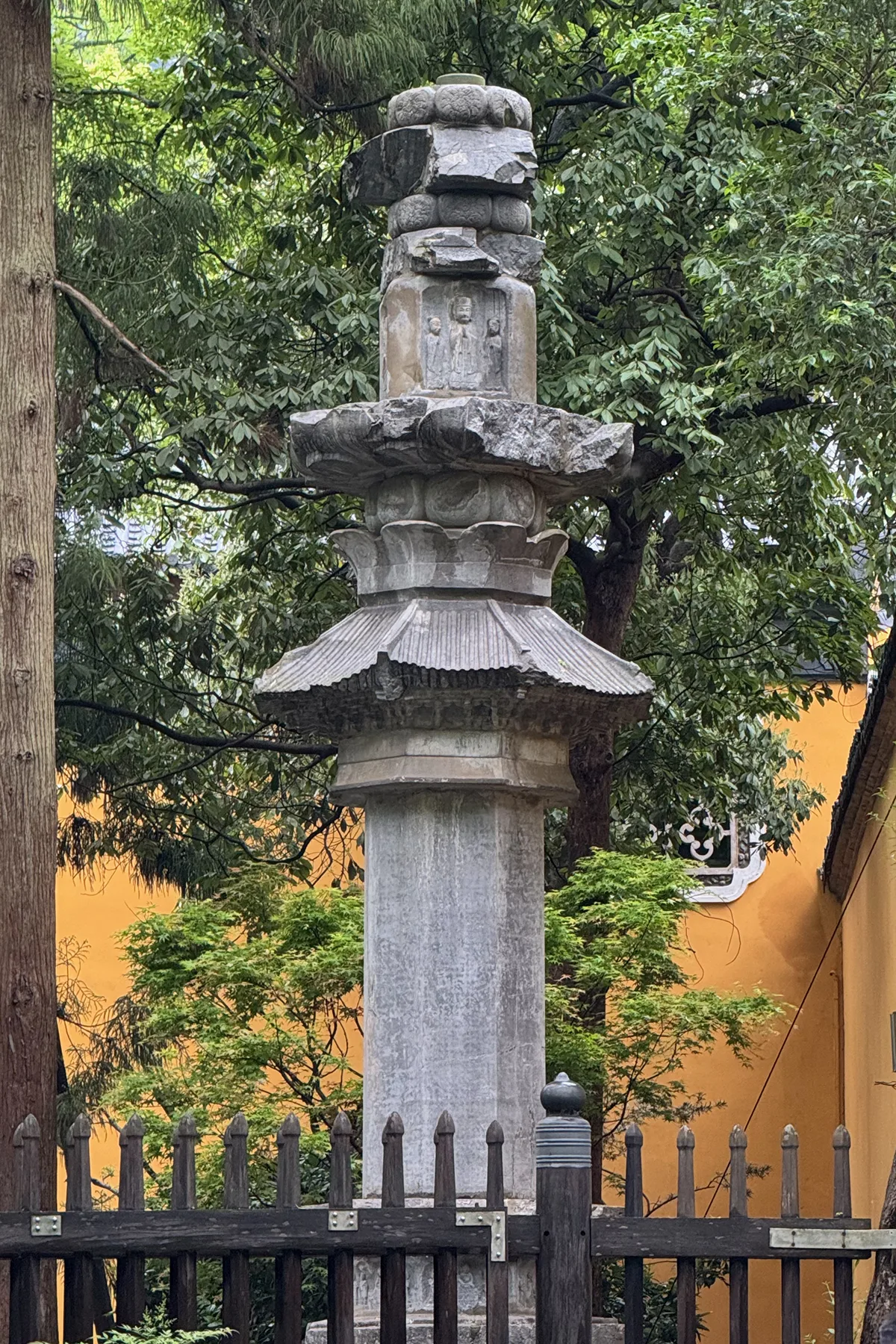
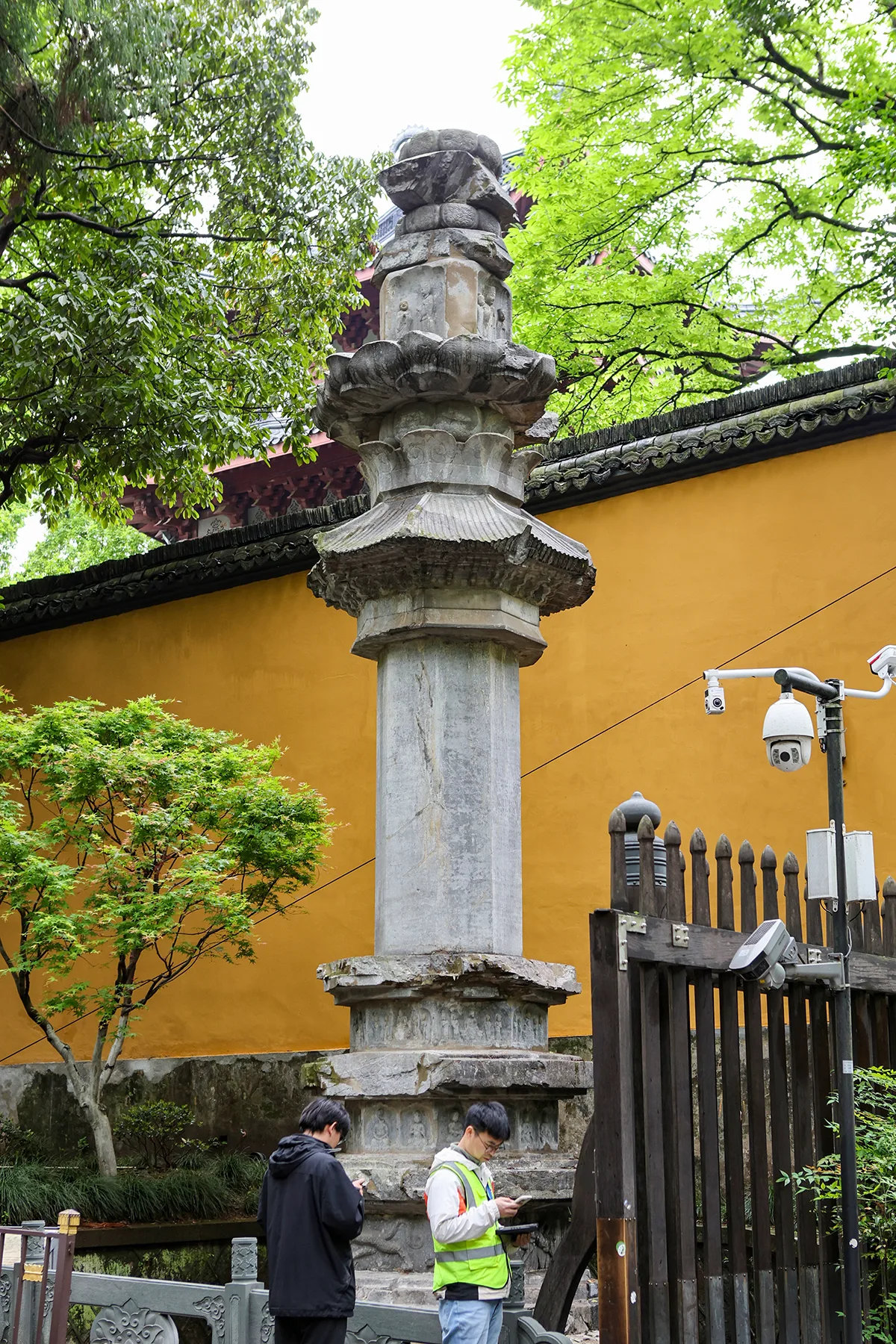
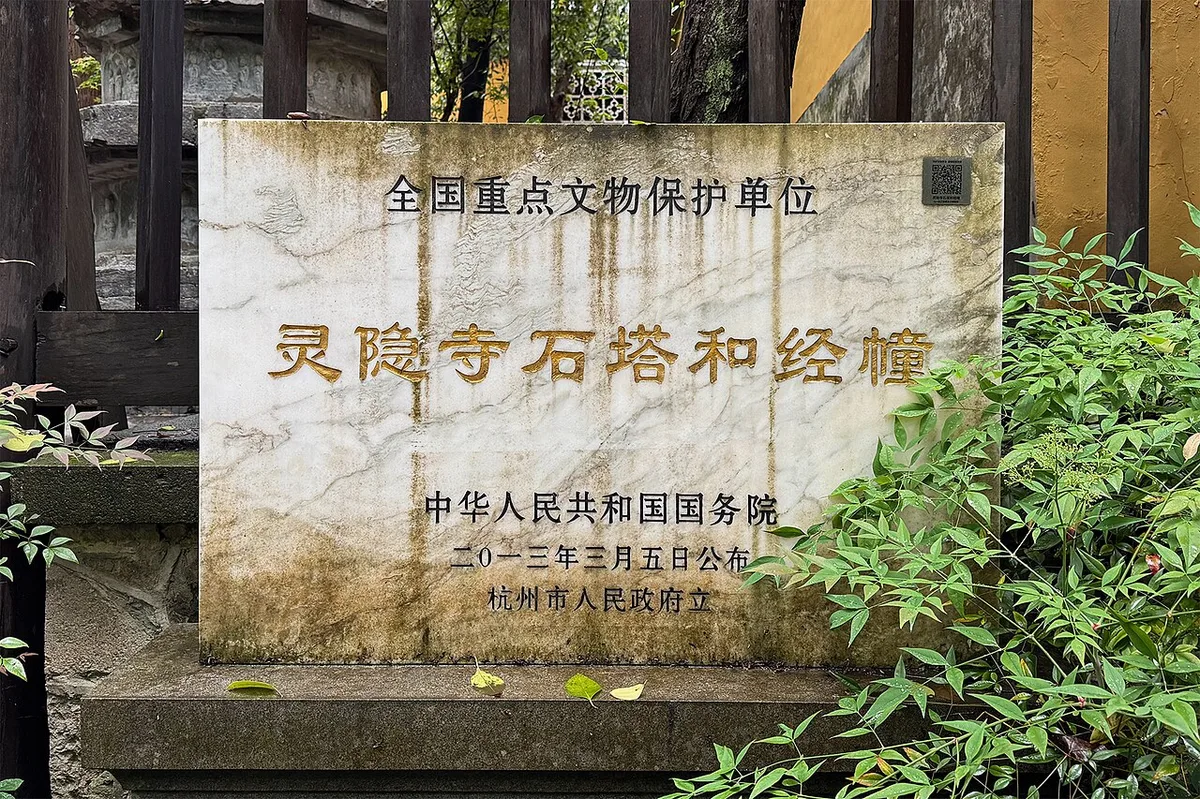
In a modern context, Lingyin Temple has transitioned from a secluded monastic center into a strictly protected national heritage site. Large-scale restoration projects in the late 20th and early 21st centuries employed modern archaeological methods to repair damaged sections while adopting digitization to archive ancient manuscripts and precious relics. The temple’s inclusion on China’s list of key national cultural heritage sites in China affirms its irreplaceable place on the world heritage map. Historians often emphasize that Lingyin Temple’s value lies not merely in its walls or roof tiles, but in the resilience and adaptability of a cultural entity weathering the storms of history. It is a living entity where past and present intersect, and where philosophical truths of impermanence and permanence are vividly expressed in every brick, statue, and ancient tree across the temple grounds.
Viewed objectively, Lingyin Temple stands as a symbol of perseverance in safeguarding Eastern Buddhist cultural heritage. Historical events—from the Cultural Revolution to other periods of social upheaval—have left scars upon its structures, yet they have also underscored the extraordinary vitality of the monastic community and heritage stewards. Maintaining religious observance alongside scholarly research has enabled the temple to remain a vital bridge between generations. The ideological, artistic, and historical values embodied by Lingyin Temple belong not only to Hangzhou or China alone, but form an essential part of humanity’s cultural heritage, offering deep insight into the formation and growth of major civilizations across East Asia.
Finally, in assessing Lingyin Temple’s symbolic stature, it must be viewed in organic relationship with its surrounding natural landscape. The pairing of limestone peaks, clear streams flowing through the temple compound, and ancient woodland groves forms a harmonious whole in which human architecture never overpowers nature, but instead honors its beauty. This is a core philosophy of Chinese Buddhist architecture: seeking harmony with the cosmos rather than conquest over it. That very philosophy has sustained Lingyin Temple’s enduring appeal across millennia, making it an essential destination for anyone seeking to understand the cultural and historical depth of one of the world’s oldest civilizations. The temple’s survival proves that even as time passes and dynasties rise and fall, the spiritual values entrusted to architecture can endure through every hardship for generations to come.
Lingyin Temple—also known as Lingyin Chan Temple—traces its origins to 326 AD under the Eastern Jin Dynasty, when the Indian monk Huili arrived in Hangzhou and noticed geomorphological similarities between this mountain and Vulture Peak (Gridhrakuta) in his homeland. Geologically, the area belongs to the limestone range northwest of West Lake, where millions of years of tectonic movement sculpted sheer cliffs, natural caves, and strangely shaped sedimentary boulders. The interplay of rolling hills and Cold Spring Stream (Lengquan) winding through the compound shaped an architectural layout rooted in following nature, with buildings arranged along a vertical axis from low to high elevation to harness the terrain’s slope and create spaces of transition rich in Buddhist philosophy.
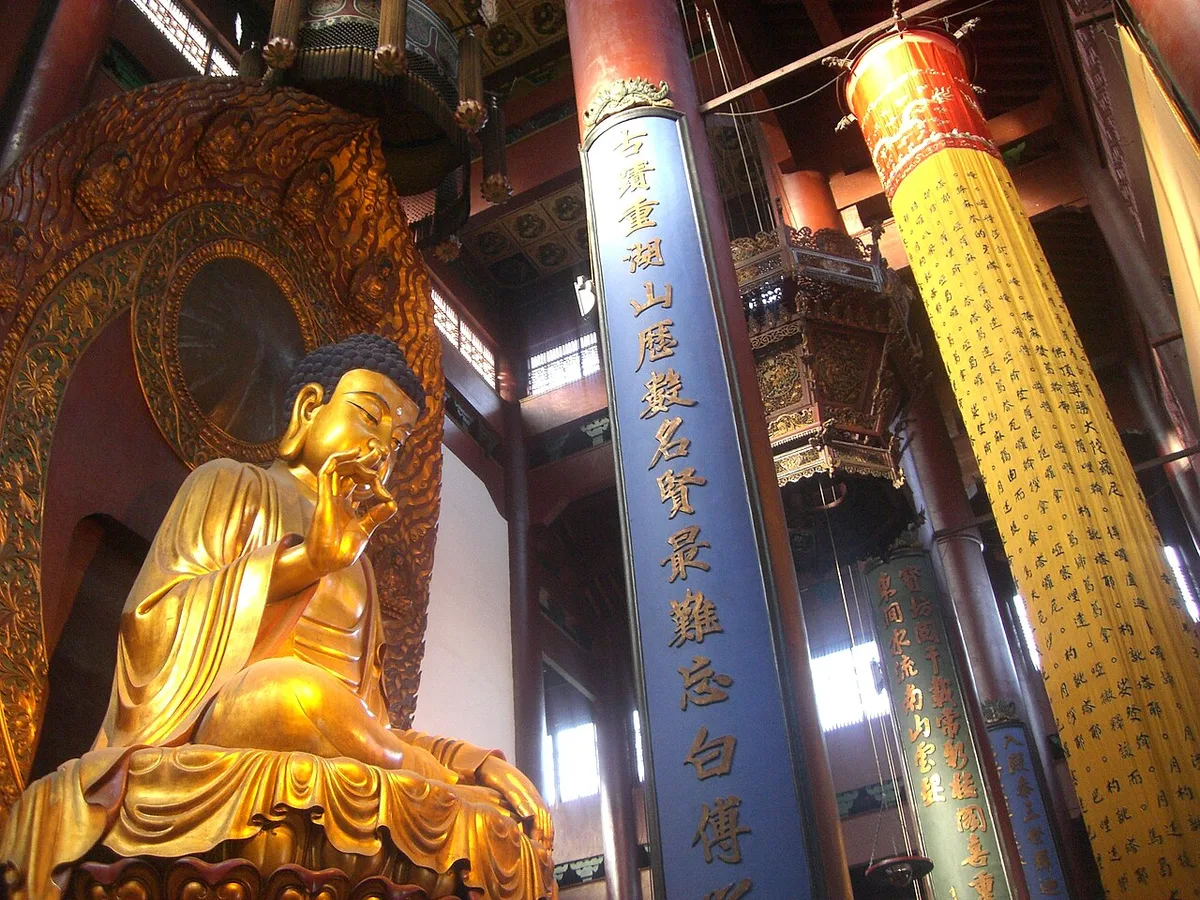
The overall structure of Lingyin Chan Temple does not adhere to a rigid symmetry like imperial palaces; instead, it distributes its main halls along a central axis—including the Hall of the Heavenly Kings, Mahavira Hall, and Hall of the Medicine Buddha—alongside auxiliary areas such as the Dharma Hall and Sutra Library. The Hall of the Heavenly Kings, the first structure to greet visitors, is built with sturdy ironwood columns and traditional glazed tile roofing, housing a horizontal plaque personally inscribed by Emperor Kangxi of the Qing Dynasty. Passing beyond this area, the spatial sequence opens toward the Mahavira Hall, a monumental structure reaching 33.6 meters in height that serves as the focal point of the entire complex. Relying primarily on timber is not merely aesthetic; it reflects a construction tradition suited to the Jiangnan region, where a humid climate calls for ventilation and the moisture-resilient flexibility of traditional mortise-and-tenon timber framing without iron nails.
Construction techniques at Lingyin showcase the height of Chinese timber architecture, particularly the dougong system—interlocking wooden brackets stacked to support heavy eaves, distribute weight, and give the structure seismic resilience. The massive columns inside the Mahavira Hall rest atop monolithic stone plinths, a technique that prevents wood decay from direct contact with damp ground. Fine craftsmanship is further evident in the carvings on crossbeams, windows, and wooden reliefs, where artisans depicted Buddhist parables in astonishing detail. The Buddha statues inside—most notably the gold-leafed camphor-wood statue of Sakyamuni Buddha standing 24.8 meters tall—are the result of joining numerous large timber segments, a major technical feat for the architects and craftsmen of their time.
The Feilai Peak area, directly opposite the temple gate, is an inseparable part of Lingyin’s spatial planning. It is a low limestone hill featuring hundreds of Buddha statues carved straight into the cliff face from the Five Dynasties and Ten Kingdoms period through the Yuan Dynasty. Integrating stone carvings into the natural landscape reflects an ecologically mindful planning ethos that blurs the boundary between human architecture and nature. Caves such as Qinglin Cave and Longhong Cave serve not only as sites of devotion but also as natural climate regulators, circulating cool breezes across the temple grounds in summer—an early yet highly effective green architectural solution.
The overall grounds of the Lingyin Chan Temple complex span dozens of hectares, with building density tightly controlled to preserve harmony between structures and the greenery of ancient trees. Flagstone walkways meander along the natural contours, linking functional zones without disrupting the original landscape layout. Its drainage system is also ingeniously engineered, using mountain gradients to channel water from small streams through the grounds, maintaining energy circulation and necessary moisture for surrounding flora. Visitor reception areas are carefully planned to channel foot traffic, preventing congestion at major halls while preserving quietude for monastic practice.
In terms of building materials, alongside wood and stone, builders of old used hand-fired bricks for perimeter walls, offering strong thermal insulation and durability in Hangzhou’s humid subtropical climate. Glazed roof tiles in gray or yellow—depending on a building’s rank—serve not only as ornament but also to shield underlying timber from rainwater. Roof ornaments, such as mythical beasts and cloud motifs, are crafted from fired ceramic, combining refinement with long-term durability. Together, natural materials and handcraft techniques produced an architectural ensemble able to endure across centuries despite historical upheavals and harsh weather.
Visitor capacity at Lingyin Chan Temple today is managed through upgraded infrastructure that preserves heritage integrity. Service facilities, guesthouses, and administrative zones sit along the outer perimeter, separated from the main worship halls to safeguard tranquility and solemnity. Modern materials like reinforced concrete are restricted to underground utilities or concealed structural supports, protecting the authentic character of traditional timber architecture. Entrances are sized appropriately to regulate crowd flow, ensuring the safety of historic wooden buildings and upholding the sanctity of the spiritual space.
Functional zoning at Lingyin is also clearly expressed through differences in height and scale among its halls. The Mahavira Hall, largest in scale, occupies a central, elevated position along the main axis, symbolizing solemnity and the centrality of Buddhism. Secondary halls such as the Hall of the Medicine Buddha or the Avatamsaka Hall are arranged flanking the axis to create overall compositional balance. Spacing between halls forms spacious courtyards where communal rituals take place and visitors can admire the architecture from varied angles. These courtyards also act as acoustic buffers, dampening outside noise and preserving the calm needed for meditation.
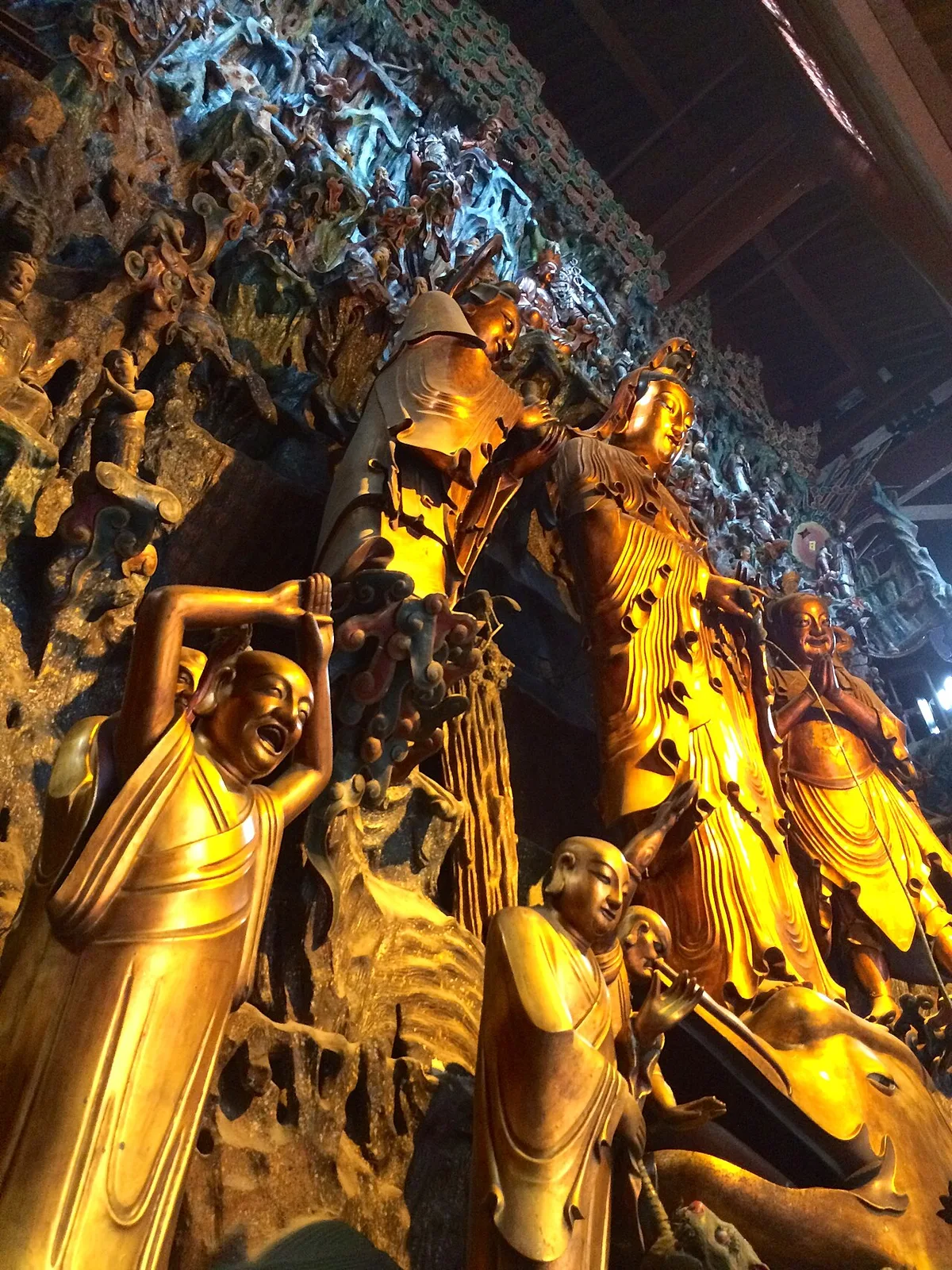
A distinctive construction technique at Lingyin lies in how timber joints are fitted without metal nails, a method demanding exacting precision in design and fabrication. Each wooden member is numbered and joined according to a logical scheme, allowing the structure to expand and contract with temperature and humidity shifts without cracking or warping. This attests to the engineering sophistication of builders in imperial China, who understood material properties and environmental forces well enough to create enduring structures. Perimeter walls were built using dry-stacked brick techniques without mortar, or traditional lime mortar, aiding ventilation and natural moisture regulation indoors.
Overall, architectural planning at Lingyin Chan Temple exemplifies the union of philosophical thought and pragmatic building craft. Every feature—from cliff-carved stone statues to monumental timber halls—is arranged to create a cohesive spatial experience through which people can sense a connection between self and cosmos via the language of architecture. Preserving these qualities goes beyond maintaining physical fabric to safeguarding spatial integrity, ensuring future generations can still experience architectural accomplishments shaped over a millennium ago. Lingyin’s longevity stems not only from materials, but from planning in tune with nature—a valuable lesson for modern architecture balancing development with heritage conservation.
Throughout its history, Lingyin has undergone repeated restorations and reconstructions following wars and natural disasters, yet its overarching master plan has persisted across dynasties. This demonstrates the soundness of the original layout, designed to adapt to environmental shifts and evolving needs. Modern architects studying Lingyin often examine how its buildings interact with terrain, how natural light is drawn in through windows and eaves, and how spaces are arranged to promote air circulation. These elements are not mere building techniques, but the art of spatial composition, where even the smallest detail carries symbolic meaning and practical function.
Ultimately, the greatness of Lingyin Chan Temple lies not solely in grand scale or costly materials, but in the simplicity of its approach to nature. Rather than imposing human will upon the landscape, it integrates with, respects, and celebrates nature’s gifts—the very key to the complex’s enduring vitality. From moss-covered stone steps to gleaming dark ironwood pillars, every element tells a story of permanence and of human capacity to shape sacred spaces from humble materials. Lingyin still stands as a testament to the intersection of history, geology, and architectural art, continuing to inspire scholars and offer deep cultural value to all who care for humanity’s heritage.
Lingyin Temple, located northwest of Hangzhou City, Zhejiang Province, China, represents one of the most important Buddhist centers in the Jiangnan region since its founding in 326 AD by the Indian monk Huili. The temple’s presence is not merely a religious landmark, but an archive of aesthetic values, craft techniques, and philosophical thought accumulated over more than 1,600 years of history. Lingyin’s overall structure strictly follows central-axis symmetry—a classic hallmark of Chinese imperial and religious architecture—where each hall is arranged in a logical sequence guiding pilgrims from the mundane world into the serene realm of Buddhist teachings. The blend of Feilai Peak’s natural hillside terrain and human-made structures forms a unified whole, where the sweeping roofs of major halls like the Mahavira Hall mingle with the canopy of ancient trees, fostering deep contemplation through a balance of stillness and movement.
The first architectural highlight worth noting is the Mahavira Hall (Dai Hung Bao Dien), the rebuilt central structure crafted on a grand scale from precious timber, showcasing the pinnacle of traditional woodworking techniques. Standing over 33 meters tall, this sanctuary uses no modern concrete pillars, relying instead on an intricate load-bearing wooden frame system that opens up a spacious and majestic interior. At the heart of the hall sits a statue of Shakyamuni Buddha carved from camphor wood and covered in gold leaf, measuring nearly 20 meters high including its lotus pedestal. Far more than a mere work of art, this statue is a testament to masterly joinery, where Qing-dynasty artisans assembled dozens of large timber blocks to create a Buddha figure with accurate anatomical proportions and a facial expression radiating tranquility and wisdom. Carved motifs along the pillars and crossbeams reflect classic Buddhist parables, with flowing lines evoking clouds and lotuses that express an aesthetic sensibility toward impermanence and the eternal beauty of the Dharma.
Opposite the main temple gate, the Feilai Feng (Peak That Flew From Afar) cliff area serves as a priceless open-air stone sculpture museum, housing more than 340 Buddhist statues carved directly into limestone cliff faces from the Five Dynasties and Ten Kingdoms period through the Yuan dynasty. These works offer a sweeping overview of how Chinese Buddhist sculptural styles evolved across centuries. Song-dynasty carvings here typically feature refined facial expressions and flowing robes with delicate drapery folds, reflecting the strong influence of Confucian and Daoist thought on character depiction. By contrast, Yuan-dynasty sculptures display the influence of Tibetan Buddhist aesthetics with bolder lines, muscularity, and somewhat fiercer expressions. Preserving these works in a natural outdoor setting exposed to weather and high humidity poses a major challenge for conservators, while also attesting to the durability of limestone and the surface-treatment skills of ancient craftsmen.
Venturing deeper into the interiors of secondary halls such as the Hall of Heavenly Kings and the Hall of the Medicine Buddha, observers can discern subtle spatial arrangements grounded in Buddhist cosmology. The Hall of Heavenly Kings, anchored by a smiling Maitreya Bodhisattva at its center, acts as a welcoming gateway for all sentient beings, while the Four Heavenly Kings guarding the four cardinal directions are rendered on a colossal scale with armor detailed down to every link. Every decorative element—from gilded and lacquered wood reliefs to ceiling motifs—carries symbolic meaning tied to protection and spiritual guidance. The dominant color palette of Lingyin architecture balances the red of wooden columns, the gold of Buddha statues, and the blue-green of glazed roof tiles, forming a color scheme that is at once vibrant and solemn, reflecting notions of nobility and purity in traditional Eastern culture.
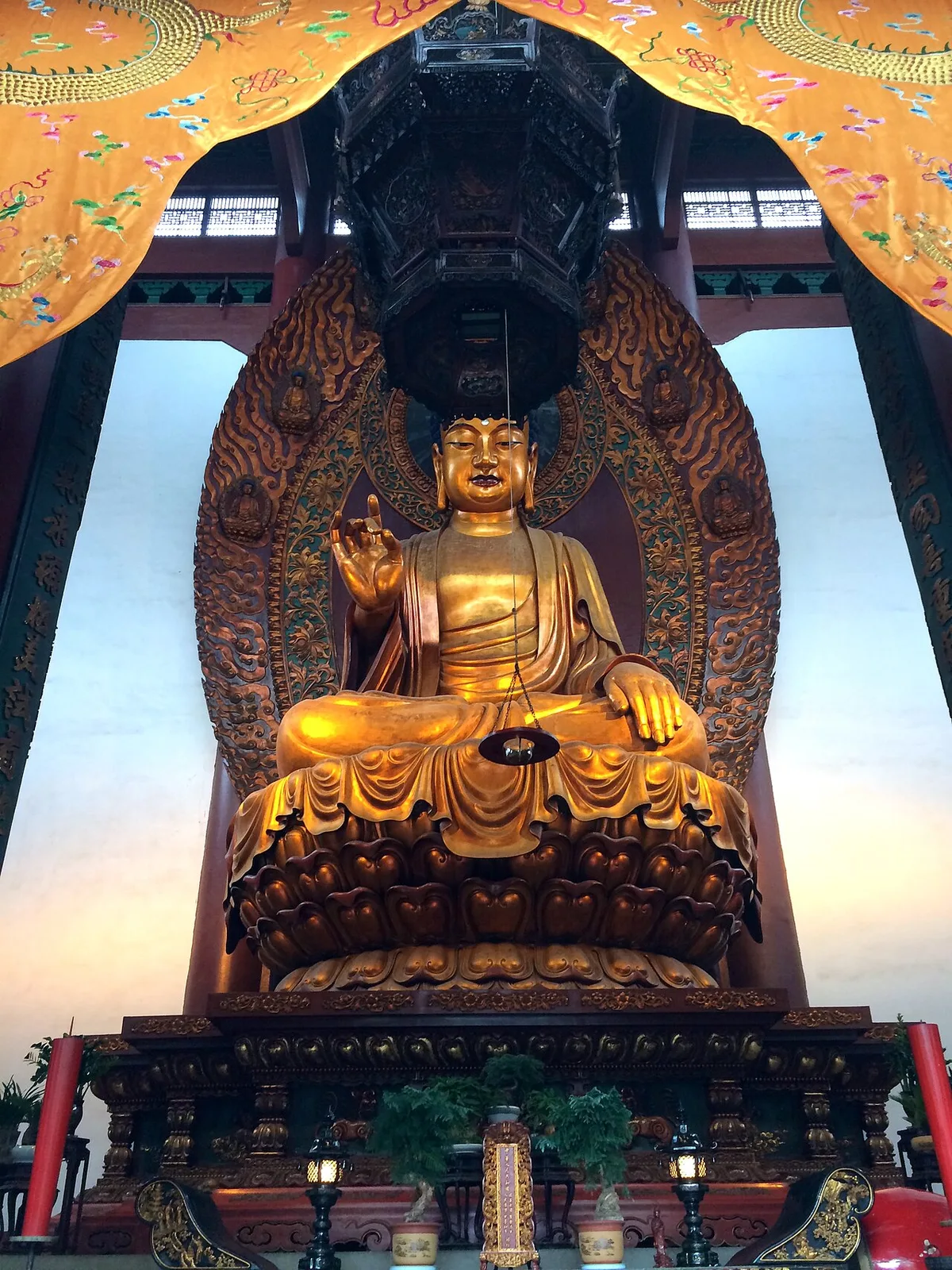
Beyond timber architecture and stone carving, Lingyin also safeguards ancient scripture collections and culturally significant historical artifacts. Hand-copied sutras on Xuan paper, bronze bells cast during the Ming dynasty with deep, resonant tones, and murals depicting the lives of eminent monks are vital pieces that give this heritage site its cultural depth. Calligraphy displayed on horizontal plaques and couplets hung throughout the halls carries not only literary value but also stands as high visual art, with unhurried, supple brushstrokes that reveal the scholarship and inner state of Zen masters across eras. The interplay of natural light filtering through latticed wooden windows and the drifting haze of incense smoke creates a distinctive atmosphere where visitors can sense a connection between past and present in every architectural detail.
Lingyin Temple’s architectural philosophy is equally evident in its use of open space and engagement with nature. Bluestone-paved walkways, small gardens with traditionally pruned ornamentals, and gentle streams running through the temple grounds are all carefully arranged to encourage the circulation of qi and energy. This reflects an ideal of harmony between humanity and the cosmos, where the temple is not set apart from the natural world but becomes an organic part of it. Stone stairways climbing to higher halls do more than provide passage; they carry symbolic weight as a journey of spiritual practice, where each step trains mind and patience. That these structures have endured for over a millennium—despite repeated renovations and reconstructions—demonstrates the mastery of ancient builders in handling foundations across complex mountainous terrain.
Viewed through the lens of archaeology and art history, Lingyin Temple is a living record of cultural exchange between China and neighboring regions along the Silk Road. Influences from the Buddhist art of India, Central Asia, and Southeast Asia are artfully woven into a Chinese symbolic system, producing a distinct architectural idiom rarely seen elsewhere. Decorative motifs such as lotuses and Dharma wheels, alongside mythical creatures like lions, dragons, and phoenixes, serve not merely as ornament but as cultural codes layered with meanings of protection, prosperity, and awakening. Every statue, pillar, and brick at Lingyin carries a story of human persistence in pursuing truth and beauty through material form.
Ultimately, Lingyin Temple’s value extends far beyond what meets the eye, resting in the cultural depth it embodies. It represents the continuity and flourishing of Buddhist ethical and humanistic values across Chinese history. Preserving the temple means more than conserving physical buildings; it means safeguarding a way of thinking, a manner of relating to nature, and an aesthetic system that shaped the cultural identity of the Jiangnan region. Modern restoration efforts—combining traditional craft with advanced conservation technology—continue to keep this heritage alive, ensuring future generations can still access and understand the core values our forebears inscribed into every carving, curved eave, and enduring stone statue in the heart of Hangzhou.
Lingyin Temple, or Lingyin Si, situated in the northwestern part of Hangzhou, Zhejiang Province, China, is one of the oldest and most influential Buddhist centers in the Jiangnan region. Founded in 326 AD by the monk Huili, the temple is not simply a religious building but a living organism where the daily rhythm of monks and pilgrims merges with the passage of time around West Lake. The temple’s day begins in the earliest hours before the sun peeks above the deep green ridges of the Feilai range. While darkness still lingers, the temple bell rings out deeply and serenely, breaking the quietude and marking the start of a new day of practice. At this hour, the atmosphere at Lingyin reaches its purest state, as the sound of chanting mingles with wind rustling through ancient trees to bring inner stillness to everyone present.
As dawn light filters through old pine boughs, the monks’ daily routine comes into sharper focus. Soft footsteps on moss-covered stone steps, the steady swish of courtyard brooms, and the rising scent of sandalwood incense from the halls compose a deeply ceremonial picture of daily life. Pilgrims begin arriving along the main paths bearing hopes and prayers, creating an interaction between the spiritual realm and everyday reality. Around Feilai Feng, the Buddhist statues carved directly into the rock face during the Song and Yuan dynasties draw close attention. Morning light catching fine chisel work highlights the skill of past sculptors while evoking historical stories of cultural convergence between Buddhism and traditional artistry. Those well-versed in art history often choose this hour to examine every detail of the carvings, where each fold of a robe and each gaze of the Arhats conveys a message on human philosophy.
By midday, as the sun climbs high, Lingyin Temple shifts into a livelier mood with large numbers of international travelers and locals. Ceremonies taking place in the Mahavira Hall draw considerable attention. Bells, wooden fish drums, and chanted prayers fill the hall with a distinctive soundscape that is at once solemn and uplifting. Pilgrims perform incense offerings and bow reverently before the camphor-wood statue of Shakyamuni Buddha, one of the largest wooden Buddha statues in China. Interaction between people and architecture here goes beyond devotion to become an aesthetic experience. Sweeping curved roofs, massive Phoebe zhennan (nanmu) timber columns, and intricately carved plaques and couplets reflect the aesthetics of imperial Chinese dynasties, particularly the legacy of Buddhist architecture from its golden ages.
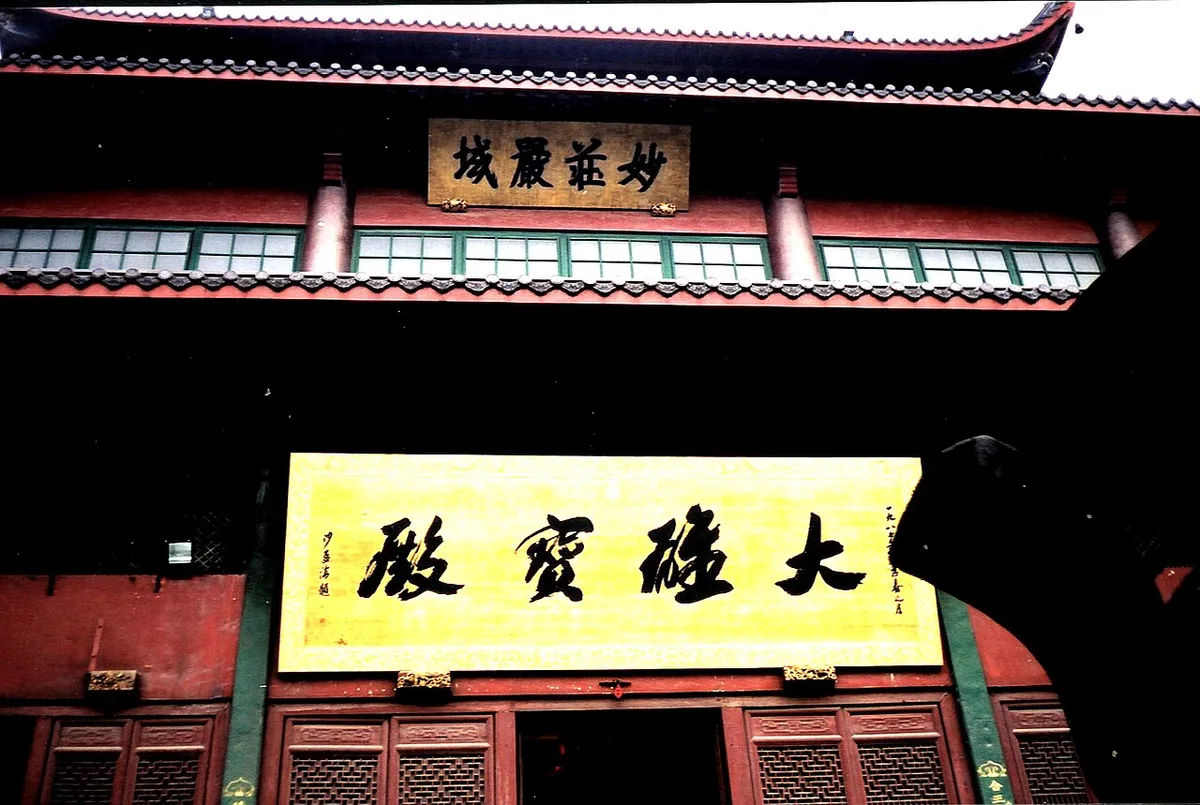
As dusk settles and shadows gradually claim the grounds, the temple returns to its innate stillness. This is an ideal moment to watch light shift across architectural surfaces. Late-day sunbeams gild lacquered and gilded walls, creating a captivating visual effect. The most prized panoramic viewpoints often sit on higher ground within the temple compound, overlooking the entire architectural complex nestled into the dramatic valley landscape. From these vantage points, one sees complete harmony between human handiwork and natural topography—a core principle of traditional Chinese feng shui and architecture. The quiet of late afternoon also marks the end of routine chores for the monks as they prepare for evening meditation, lending the grounds a solemn, contemplative air.
At night, Lingyin Si does not glow with modern electric floodlights; instead, it is lit by oil lamps or soft golden light from the halls, creating a mysterious atmosphere rich in historical depth. During festivals or special dates on the lunar calendar—such as Buddha’s Birthday or major observances—the temple comes alive with traditional artistic performances. Buddhist concerts featuring classical instruments like the guzheng and bamboo flute weave serene melodies that help listeners find peace of mind. These performances are more than entertainment; they serve as a medium for sharing Buddhist ethics and philosophy with the wider community. Participants can feel a strong bond between past and present through authentic sounds and imagery.
Exploring Lingyin Si is also closely tied to experiencing tea culture, an essential thread in everyday life in Hangzhou. Small teahouses around the temple offer an ideal vantage point to watch local life unfold. Visitors often stop by after visiting the temple, sitting over a fragrant cup of Longjing (Dragon Well) tea to discuss life philosophies or simply take in the scenery. The pairing of tea and Zen has become a hallmark of local culture here, where each cup carries the flavors of earth and sky alongside quietude of spirit. Learning how tea is brewed, savored, and understood is also an important part of exploring culture in this area.
For photography enthusiasts and students of architecture, vantage points from hilltops or narrow paths leading into the temple provide deeply artistic perspectives. Watching foliage shift with the seasons—from the lush greens of spring to the radiant golds of autumn—creates ever-changing scenes. Every season at Lingyin Si has its own character, rewarding explorers with patience and sensitivity who look closely for subtle nuances. Stone walls, weathered brick paths, and silent Buddha statues each tell stories of time and existence. Exploring here is not merely about capturing pretty pictures, but about understanding how a major religious center has functioned for over a millennium.
In the end, the rhythm of life at Lingyin Temple is a synthesis of many elements: temple bells, incense, pilgrims’ devotion, architecture, and nature. It is a living space where every individual who steps inside can find a piece of themselves within the quiet depth of the surroundings. Exploring it calls for respect for traditional values and an openness to life’s lessons. However much time passes, Lingyin Si holds its place as a cultural landmark—a place where human cadence and natural rhythms blend seamlessly into an unforgettable cultural experience for anyone who visits Hangzhou.
The historical legacy preserved here resides not only in ancient texts or display pieces, but in the very way the temple operates each day. From conserving the stone carvings at Feilai Feng to upholding traditional Buddhist rites, every effort reflects enduring dedication to cultural continuity. Explorers who come here are not just passersby; they witness the ongoing current of a tradition stretching back thousands of years. Stories of eminent monks, legends of the temple’s sacred power, and historical episodes tied to the Song dynasty come alive in every corner of the grounds. That is the special allure of Lingyin Si, where history is never merely past, but ever-present, vital, and inspiring in the pulse of modern times.
The culinary landscape around Lingyin Temple in Hangzhou goes beyond basic sustenance, forming a cultural tradition shaped by Chan (Zen) Buddhist philosophy paired with refined Jiangnan culinary craft. Across its history from the Five Dynasties and Ten Kingdoms period to today, the area has developed a distinct vegetarian fare born from the need to nourish monks and pilgrims during practice and worship. The meeting of local ingredients from the fertile lands south of the Yangtze River with light, restrained cooking techniques has created a singular flavor map where every dish reflects respect for nature and moderation in daily living.
The signature dish of this culinary tradition is Lingyin tofu, crafted using pure spring water flowing down from the North Peak (Beigaofeng) range. Tofu-making here calls for care in selecting soybeans, soaking them in natural spring water, and using traditional coagulants to achieve a texture that is silky yet firm enough to hold its shape. When served, the tofu is typically prepared lightly—using just a touch of vegetable oil, fresh ginger, and scallions—to highlight the beans’ natural sweetness. This restraint reflects the culinary mindset of Chan masters, who believed food should keep its essential nature so diners can experience inner calm through taste.
Alongside tofu dishes, spring bamboo shoots hold a central place on traditional menus around Lingyin. Surrounded by hilly terrain, the area yields its finest fresh bamboo shoots in March and April. Locals commonly slow-braise the shoots with dried shiitake mushrooms and seasonal vegetables. This braising method avoids heavy spices like chili or pepper, focusing instead on drawing out natural sweetness from plant ingredients to create a delicate, light dish suited to the quiet setting of temples. Enjoying bamboo shoots here is also tied to seasonal customs, linking people directly to the growth cycles of the land.
Tea culture around Lingyin is an inseparable part of the broader culinary experience. Longjing tea, Hangzhou’s renowned green tea, grows on nearby hillsides, forging a close link with the temple’s history. Tea drinking here goes beyond quenching thirst to become a meditative ritual. Drinkers often choose white porcelain cups to show off the liquor’s emerald hue. When brewing, water temperature is carefully kept around eighty degrees Celsius so as not to scald the leaves, preserving the delicate chestnut aroma and lingering sweet aftertaste. Having tea after a vegetarian meal not only aids digestion, but also helps pilgrims clear their minds ahead of seated meditation or exploring historical sites across the temple grounds.
Beyond vegetarian staples, the neighborhood around Lingyin Temple also preserves culinary techniques using wild forest mushrooms and foraged greens. Cooks at traditional restaurants nearby strictly follow principles of seasonality. They hold that each plant reaches its peak flavor at its proper time, and using out-of-season ingredients shows disregard for nature. Dishes such as stir-fried shiitake mushrooms with bok choy or wild greens soup cooked with roasted peanuts exemplify simple cooking methods paired with abundant ingredients. Plating is likewise thoughtful, favoring restraint in color and form to mirror Hangzhou’s aesthetic of finding beauty in simplicity.
The growth of food streets near Lingyin has created a space where tradition and modernity meet. Even amid tourism waves, longtime eateries maintain their identity by keeping family recipes alive. These lanes do more than supply food; they preserve stories of Hangzhou’s culinary history. Visitors can find small shops crafting rice-flour sweets—such as mung bean cakes or green tea cakes—by hand every day. These pastries are typically lightly sweetened to let the pure flavor of the ingredients shine through, a hallmark of Jiangnan cuisine.
Dining customs around Lingyin are also reflected in how eating spaces are arranged. Traditional restaurants often feature dark wooden tables and chairs with open layouts facing gardens or tree-shaded paths, creating a sense of harmony with the surrounding environment. Meals are enjoyed at a leisurely, unhurried pace so diners can savor each layer of flavor. This is a form of mindful eating, where focusing on the palate helps people temporarily set aside the worries of everyday life. Servers here are often well-versed in the origins of each ingredient and gladly share details on how crops are cultivated or harvested, further enriching the guest experience.
Another vital aspect of this flavor map is the choice of spices and herbs used in cooking. Rather than relying on industrial seasonings, Lingyin cuisine prioritizes medicinal herbs such as goji berries, red dates, or tonic roots. These ingredients do more than enhance flavor—they reflect the traditional Eastern medical philosophy of food as medicine. Paired with fresh vegetables, they yield cooling, detoxifying soups well suited to Hangzhou’s humid climate. This emphasis on health through food is a cultural heritage passed down across generations, contributing to the enduring vitality of the local culinary tradition.
Looking closer at culinary technique, steaming and double-boiling stand out as signature methods around Lingyin. These techniques are favored because they preserve the maximum nutritional value and natural flavors of ingredients. Steaming tofu or vegetables in bamboo baskets not only imparts a subtle bamboo aroma, but also keeps dishes from absorbing excess oil. It is a testament to the skill of cooks who draw on traditional tools for optimal results. Every dish brought to the table carries the breath of the mountains and forests, the purity of spring water, and the care of its maker.
In summary, the culinary landscape around Lingyin Temple is a rich system built on tranquility, respect for nature, and refined craftsmanship. From snow-white tofu and vibrant Longjing tea buds to crisp bamboo shoots, every element contributes to a deeply meaningful cultural experience. For travelers seeking a deeper understanding of Hangzhou culture, exploring the local food here is not just about tasting flavors—it is about grasping a harmonious way of life where people, food, and nature exist in complete balance. That core ethos has allowed this food culture to thrive for centuries and remain an inseparable part of the region’s cultural heritage.
Lingyin Temple, also known as Yunlin Chan Monastery, sits in northwestern Hangzhou, Zhejiang Province, China, and ranks among the most important Buddhist centers in the Jiangnan region. Visiting the site calls for thoughtful route planning and an understanding of the distinct climate of the Yangtze River basin. Hangzhou experiences a humid subtropical climate with four clear seasons, with spring and autumn widely regarded as the best times for a pilgrimage or study visit. In spring, from March to May, temperatures typically range from 15°C to 25°C with moderate humidity, making it comfortable to walk along the paths leading into Feilai Peak and the temple grounds. By contrast, summers in Hangzhou are often long, hot, and humid, occasionally exceeding 35°C, which can make outdoor sightseeing tiring. Autumn—especially October and November—brings crisp, dry air that highlights golden autumn foliage and the quiet dignity of the ancient halls. Winters can dip below freezing, yet Lingyin Temple dusted with light snow offers a special aesthetic and spiritual appeal for those drawn to quiet contemplation and serene Buddhist rituals.
Hangzhou’s modern public transit network makes reaching Lingyin Temple straightforward from central areas such as West Lake or Hangzhou East Railway Station. Combining the metro with dedicated buses is often the smoothest option for visitors. Metro Line 7 or Line 3 connects directly to key city transfer hubs; from the nearest metro station, travelers can hop on Bus 7, Bus 807, or dedicated tourist shuttle lines heading straight to the Lingyin stop. Taxis and ride-hailing apps are also practical choices, especially for groups of three or more or travelers who value privacy and flexibility. Keep in mind, however, that on weekends and public holidays, local authorities often restrict private vehicles near the temple to ease congestion, making public transit generally more predictable on schedule than driving a private car.
The best time of day to visit Lingyin Temple is early in the morning right as the gates open. Arriving before 8:00 AM helps you beat large tour groups and experience the peaceful stillness that defines a Chan monastery. Early morning light filtering through old-growth trees casts dramatic contrasts of light and shadow, bringing out fine details on Buddha statues and traditional timber architecture. Travelers with a keen interest in history and architecture should set aside four to six hours to explore major halls such as the Hall of the Heavenly Kings, the Grand Hall of the Great Sage (Mahavira Hall), and the Bhaisajyaguru (Medicine Buddha) Hall, while also leaving time to view the rock carvings along Feilai Peak across from the temple.
Because Lingyin Temple is an active place of worship, visitors are expected to dress modestly and respectfully. Very short bottoms, bare shoulders, or clothing with offensive graphics are considered disrespectful in a sacred setting. Natural, breathable fabrics work well for climbing stone steps and gentle slopes. Comfortable walking shoes are essential, as the grounds span a wide area with uneven stone paving. During summer months, bring a hat, sunglasses, and sunscreen; in winter, layering light garments makes it easier to adjust between outdoor paths and indoor halls.
When planning admission, note that ticketing at Lingyin Temple is split into two separate steps. A ticket for the Feilai Peak scenic area is required for everyone, while entry into Lingyin Temple itself requires a separate temple ticket. Tickets are primarily booked online or purchased at self-service kiosks at the entrance, and visitors need a valid passport or acceptable ID for verification. Crowds surge during major Buddhist holidays, so booking in advance through official channels is strongly recommended to avoid sold-out slots or long lines in challenging weather.
Observing local customs and taboos is part of respectful conduct during your visit. Photography is strictly prohibited inside worship halls housing large Buddha statues to preserve solemnity and protect artworks from flash exposure. Loud talking, running, or disrespectful behavior near altars is frowned upon. When offering incense, follow instructions from staff at designated communal burners rather than bringing oversized incense sticks or flammable items onto the grounds. Keeping the environment clean, avoiding littering, and respecting the quiet practice of resident monks are basic courtesies every visitor should uphold.
Managing your time around nearby services is another practical detail to keep in mind. Tea houses and souvenir shops around the temple offer places to rest and experience Hangzhou’s tea culture, though it is wise to stay cautious around unofficial solicitations or items marketed with exaggerated spiritual claims. Checking prices and product quality in advance at reputable vendors overseen by site management helps ensure a safer, more rewarding experience. For deeper historical context, hiring a licensed local guide is well worth considering, as they can share informed insights spanning from the Jin Dynasty to the present and explain inscriptions and architectural details that are easy to miss at a glance.
Finally, arriving with an open and respectful mindset toward local cultural values is key to a fulfilling visit. Lingyin Temple is more than a stop on a sightseeing map—it is a living museum of Chinese Buddhist history. The blend of sweeping mountain scenery in western Hangzhou and refined architectural craft creates a distinctive setting that rewards slow observation. By following guidance on timing, transportation, and etiquette, visitors can engage with this heritage thoughtfully and help safeguard one of East Asia’s oldest and most significant religious landmarks. Careful preparation—from transit and attire to tickets and customs—removes avoidable friction so exploring Lingyin Temple becomes a rich cultural and intellectual journey.
To enjoy this journey seamlessly with a local guide, you can check out our Beijing – Suzhou – Hangzhou – Wuzhen – Shanghai tour with a pre-planned itinerary.