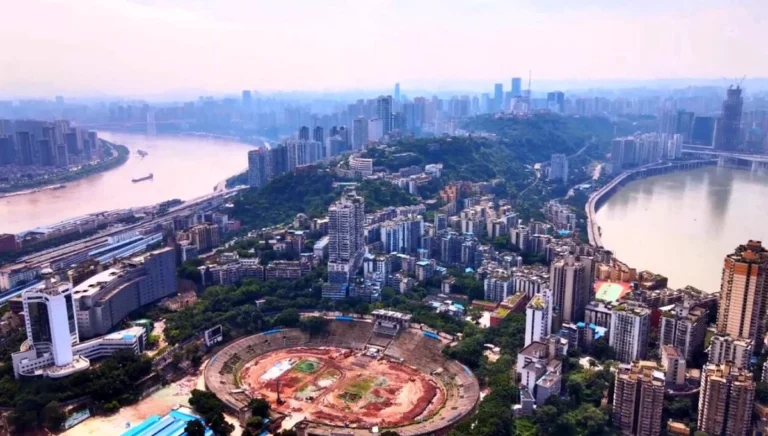
Tracing time back to the final years of the 1980s, when the misty mountain city of Chongqing was still buckling under the limitations of urban transport infrastructure, a revolutionary decision was officially approved by the Municipal Party Committee and the Municipal People’s Government, laying the foundation for a legendary engineering feat known as the Chongqing Yangtze River Cableway, respectfully called by locals the Yangtze River Aerial Corridor. Commenced in December 1986 and officially entering trial operation on October 24, 1987, this project was born as a bold and artistic solution to the thorny transport challenge stemming from rugged geographical features described by the harsh natural phrase “two rivers embracing, three mountains clamping.” Right in the heart of a metropolis where the surging Yangtze River cuts Puxi and Pudong into isolated worlds, the project planned and executed by the Chongqing Passenger Cableway Co., Ltd. achieved resounding success in creating what posterity praises as the “First Aerial Corridor of the Great Yangtze River,” opening a new chapter in the public transit history not only of Chongqing alone, but across the entire architectural infrastructure landscape of China at the time.
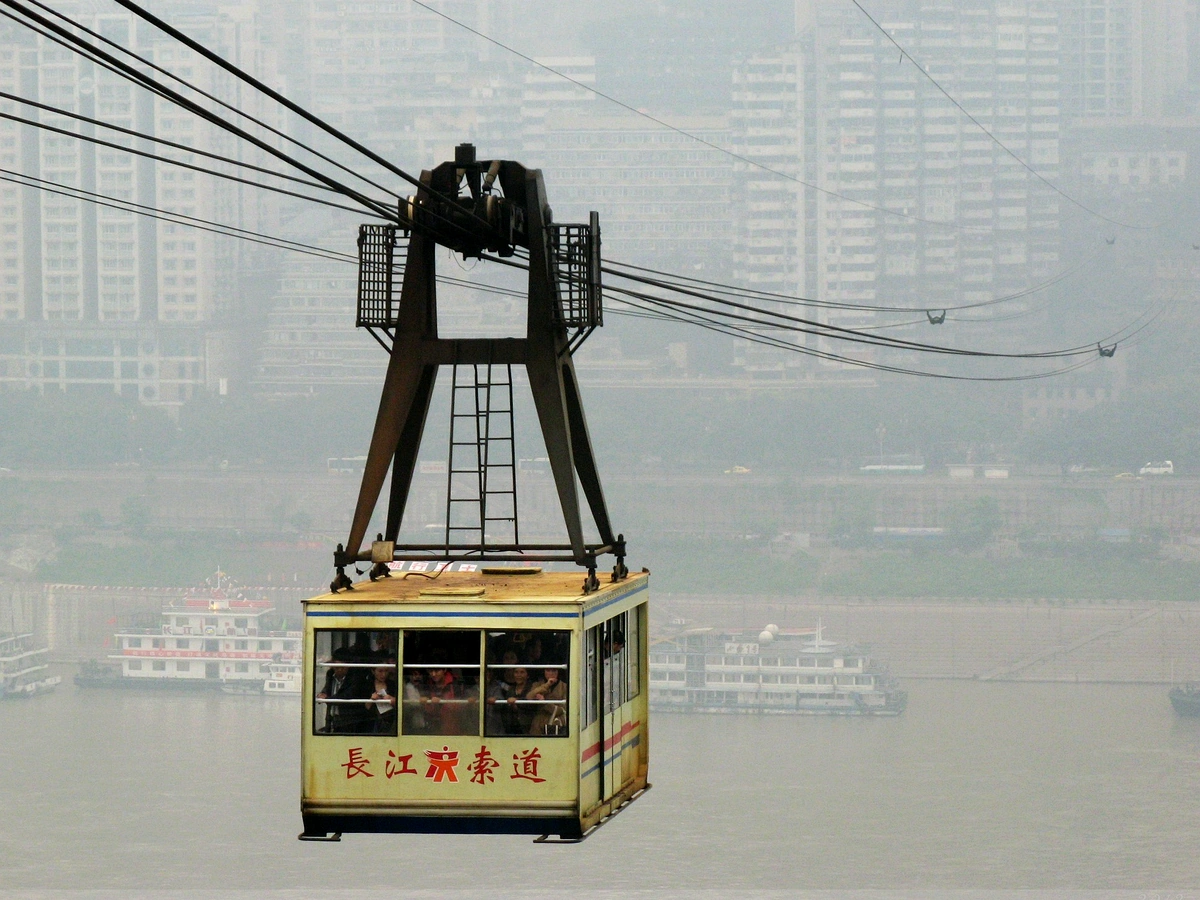
Looking back at the shifts in urban history, the existence of this historic cable car line from its birth to the present day has spanned three distinct developmental stages, faithfully reflecting the heartbeat of the times. It began with the Embryonic Period lasting from 1987 to 1990, when the first cabins glided over the silver waters, shouldering the sacred mission of completely resolving the essential daily travel needs of tens of thousands of citizens commuting between the two riverbanks, putting a definitive end to the scene of crowds waiting wearily on ferry boats entirely dependent on water levels and weather conditions. Entering the Transition Period from 2000 to 2010, when modernization surged forward with the appearance of dense, grandiose cross-river bridges and urban rail networks crisscrossing the city, the cable car’s traditional transit role began to shift. Yet instead of sinking into oblivion or being erased under the pressure of urbanization, this landmark stepped into a glorious new turning point starting in 2013: the Cultural and Tourism Golden Era. This spectacular transformation was marked when the cable car line was officially honored as a Chongqing Cultural Relic Protection Unit and a national AAAA-level tourist scenic spot, and most importantly, when it became the muse of contemporary cinema, continuously appearing in blockbuster films that captivated millions of viewers across Asia, such as Crazy Stone and I Belonged to You.
Through all the vicissitudes of time, from a practical, highly technical livelihood utility of the 1980s, the Chongqing Yangtze River Cableway has now transcended the framework of a mere transit structure to transform into a living cultural symbol, a proud historical witness preserving the collective memory of the Ba-Shu people. Standing inside suspended cabins mid-air, gazing out at the surging Yangtze River embracing towering skyscrapers sprouting densely on both banks, visitors are not only experiencing one of the world’s most unique travel journeys, but also touching the pulse of the past, where the sweat, intellect, and upward aspirations of the people of Chongqing are forever engraved into the legend of the mother river.
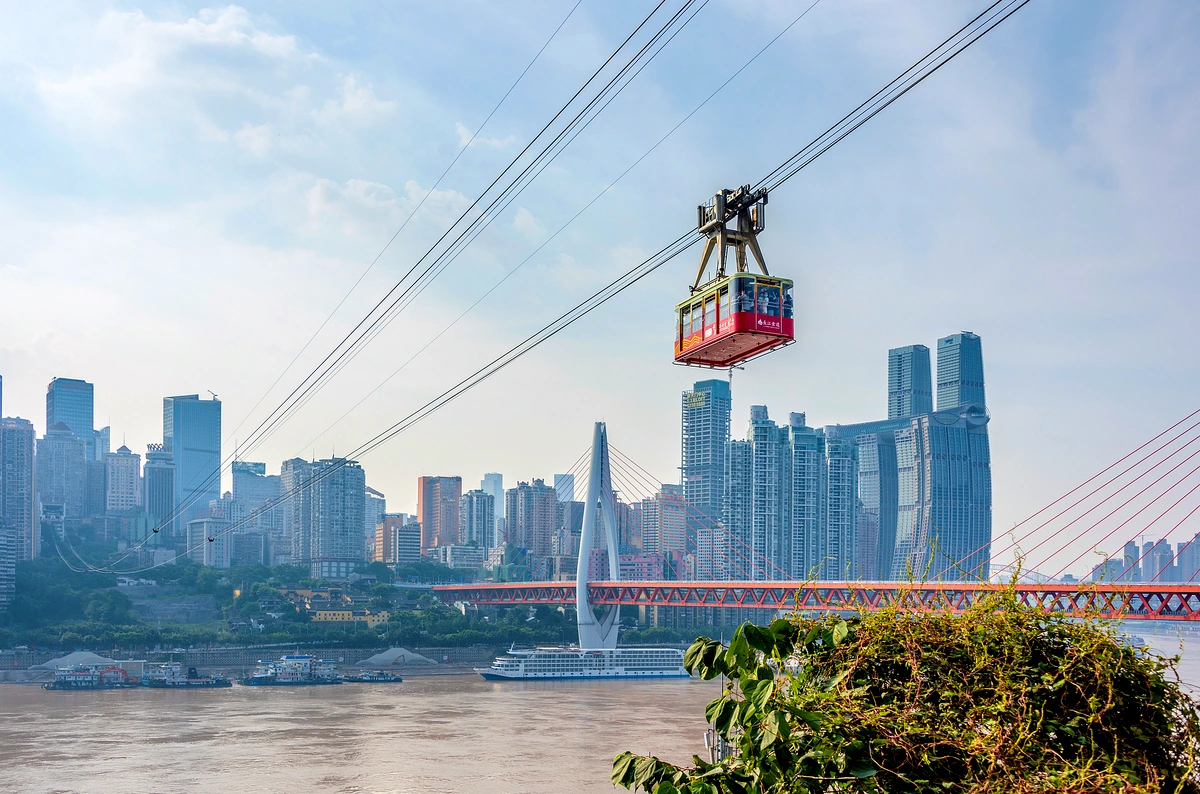
Humbly present amidst a mountain metropolis crowded with layers of skyscrapers and grand cable-stayed bridges, the Chongqing Yangtze River Cableway (重庆长江索道) is not merely an iconic public transit vehicle, but an architectural masterpiece harmonizing exquisitely with the feng shui terrain and rugged topography of the Sichuan Basin. Viewed from a geomorphological perspective, this project lies entirely within the characteristic parallel canyon geomorphology of the eastern basin, where the rushing currents of the Yangtze River carve deeply through the Tonglu Gorge, creating a magnificent natural tavern with steep vertical cliffs on both banks that challenge all conquest efforts by human transportation engineering across centuries.
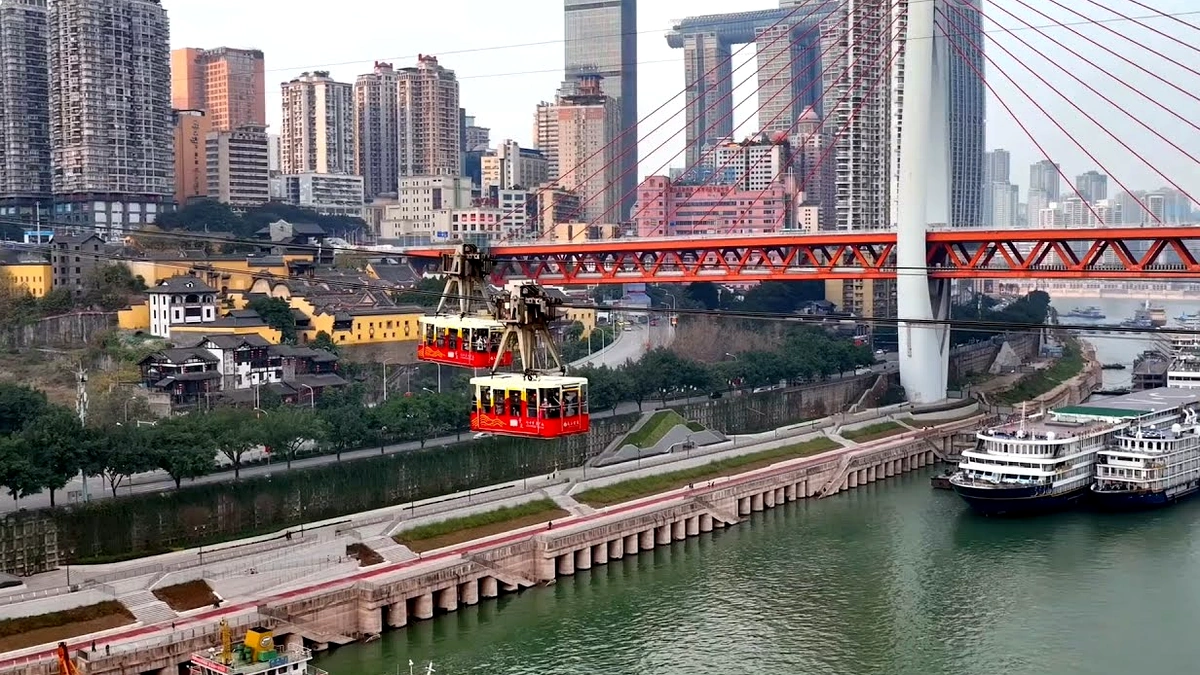
The mid-air journey of this cable car line, spanning over one thousand one hundred meters, begins from two terminal stations positioned precisely according to classic East Asian feng shui principles of “scenic mountains and waters” and “gathering water while concealing wind.” The Northern Station stands majestically at No. 150 Xinhua Road, within the historic Yuzhong District, right in the bustling Lower Half City (Xiaobancheng) Old Town, sitting right next to the sacred Luohan Temple and the bustling Chaotianmen Port crowded with boats. In urban feng shui, this location is prized as a supreme “water-capturing and energy-gathering” point, possessing the capacity to absorb and store prosperous energy radiating from the magnificent confluence between the Yangtze and Jialing Rivers, turning this zone into a commercial and vital energy hub that never runs dry with the rhythm of time.
Perfectly complementing the Northern Station on the northern bank is the Southern Station, delicately planned on Longmen Road in the Shangxinjie neighborhood of the southern Nan’an District. Unlike the commercial hustle of the opposite bank, the Southern Station carries a more subdued beauty as it rests firmly against the majestic heart of Nanshan Mountain, its wide facade facing directly opposite the winding bend of the great river and encompassing the legendary “Haidong Misty Rain” scenic vista that has stirred poets across imperial dynasties. The opposition yet mutual complement between the two stations not only resolves the challenging cross-river transport puzzle of a fractured urban terrain, but also creates a spatial axis imbued with the philosophy of Yin and Yang harmony, where humans through transparent glass cabins can fully perceive the feng shui heartbeat of an entire mountain region converging the vital energies of heaven and earth.
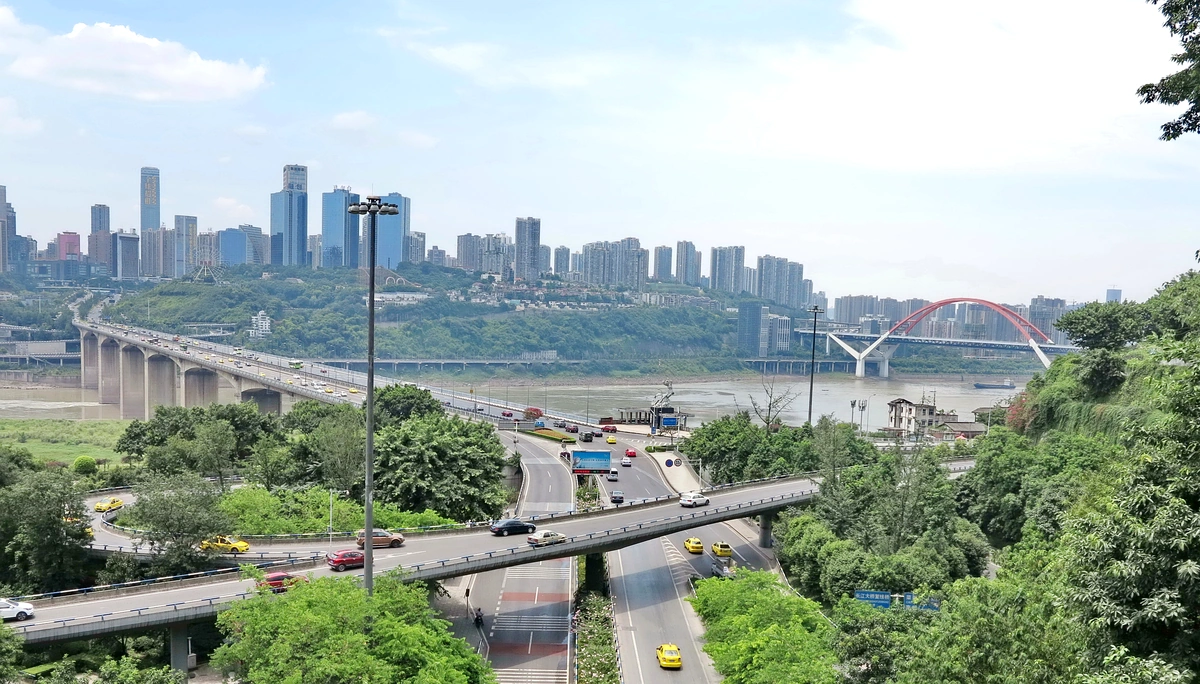
To realize a project crossing complex canyon air currents and rushing water columns without damaging the pristine natural landscape, planning engineers skillfully applied the art of borrowing scenery and wonderfully combining modern construction techniques with traditional Chinese architectural philosophy. The load-bearing cable system, reinforced concrete support towers, and state-of-the-art automated operating equipment are concealed or harmoniously integrated into the greenery of the cliffs and the density of the historic urban core, ensuring the project never looks out of place or crudely intrudes upon the ecological environment. Conversely, the very presence of red cabins gliding smoothly over the water adorns Chongqing’s actual virtual natural scenery with a nostalgic touch, where past and present, between people-oriented science and natural feng shui laws, co-create an urban heritage transcending space that lives forever in the hearts of travelers from afar.
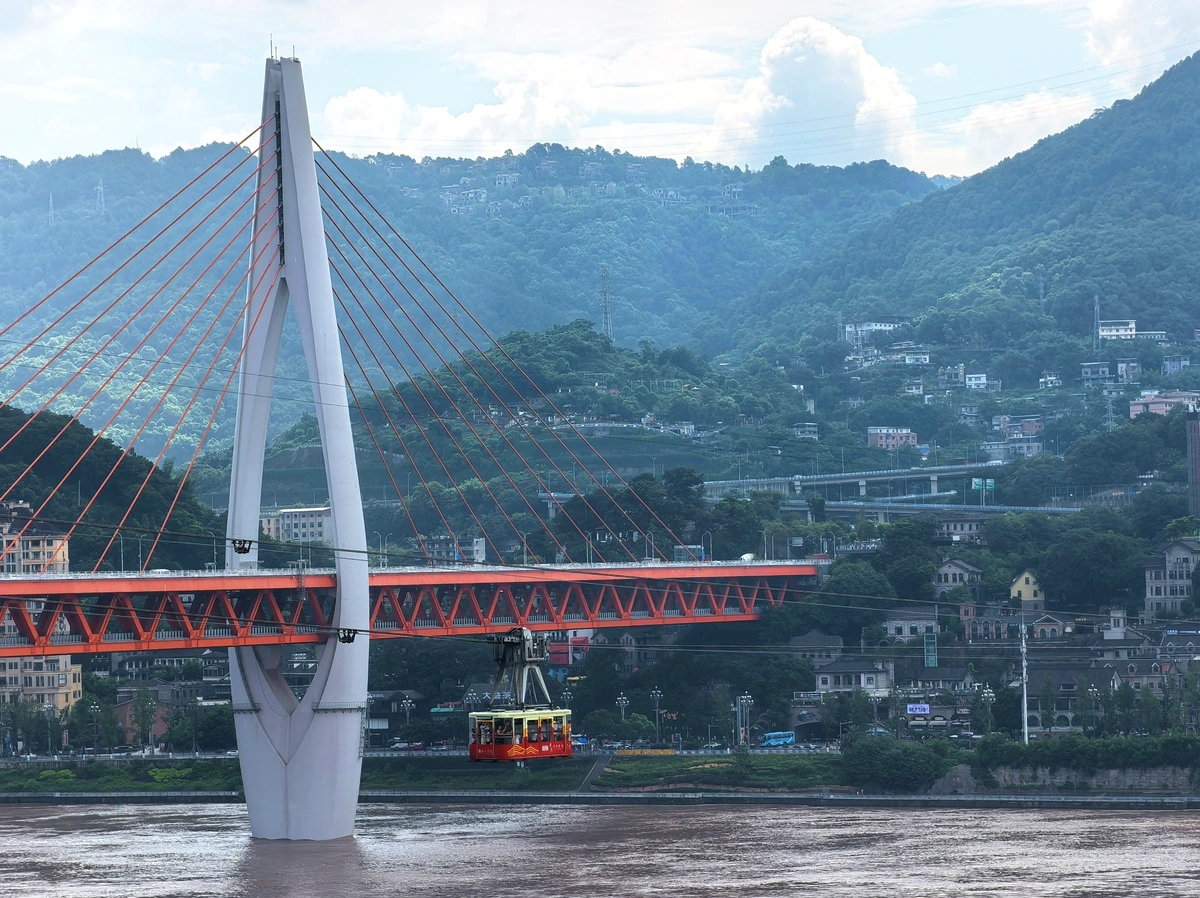
Piercing through the year-round thick mists of Chongqing, the city of fog, the Yangtze River Cableway (重庆长江索道) opens up a unique engineering wonder where pinnacle mechanical craftsmanship harmonizes completely with China’s most rugged topography. Delving deep into its operating structure according to modern construction methods, this is a double-track reversible aerial tramway system. Viewed from the urban spatial horizon, this cable line stretches majestically across the surging waters of the great river, connecting the bustling pulse between Xinhua Road in the Yuzhong Peninsula to the north and the thriving commercial rhythm of Nan’an District to the south, forming an irreplaceable aerial transport artery for decades.
Looking at practical statistics, the scale of the project prompts any civil engineer to marvel at the boldness of mountainous urban planning thinking. The total horizontal span length of the entire line reaches 1,166 meters, crossing the vast river basin without any intermediate support piers rising from the surging current, demanding absolute precision in anchoring and tensioning cables. The operational elevation difference between the two terminal stations is approximately 48 meters, a distance sufficient for each 4-to-5-minute journey to grant passengers a suspended mid-air sensation, taking in the entire magnificent space of the central peninsula and cascading hillside high-rises. The capacity of the current third-generation cabin reaches 65 plus 1 passengers, allowing a maximum one-way transport capacity of up to 900 passengers per hour, effectively easing the colossal traffic pressure between both riverbanks.
To withstand harsh weather conditions and the characteristic gale-force winds of the Yangtze River valley, the entire load-bearing frame and tower structure are reinforced with extremely sturdy spatial truss steelwork, capable of withstanding severe Category 12 gales while ensuring minimal permissible structural sway. The heartbeat of the cable car system utilizes high-strength galvanized load-bearing and hauling cables, rigorously inspected against the world cable transport industry’s strictest safety standards. Meanwhile, the cabin body is crafted from ultra-lightweight yet extremely durable aluminum alloy, combined with 360-degree panoramic laminated safety glass walls, opening an unobstructed spatial viewing angle for passengers to admire the surging Yangtze River below and the overlapping architectural movements of the mountain megacity.
The safe operational foundation of this project lies in the modern drive and braking system neatly housed in the Northern Station machine room, where operating engineers monitor the entire cabin movement cycle. A robust three-layer protection mechanism is established, comprising service brakes for routine speed regulation, emergency brakes ready to activate in unexpected situations, and automatic rail-clamping safety devices that lock down the cable line upon detecting any technical anomaly exceeding standard parameters. The flawless combination of advanced mechanical materials, precise spatial calculation thinking, and automated control systems has transformed the Chongqing Yangtze River Cableway not only into a public cross-river transport vehicle, but also into a living museum of 20th-century urban infrastructure engineering artistry, continuing to proudly soar mid-air and leave a deep imprint in the memory of millions of visitors.
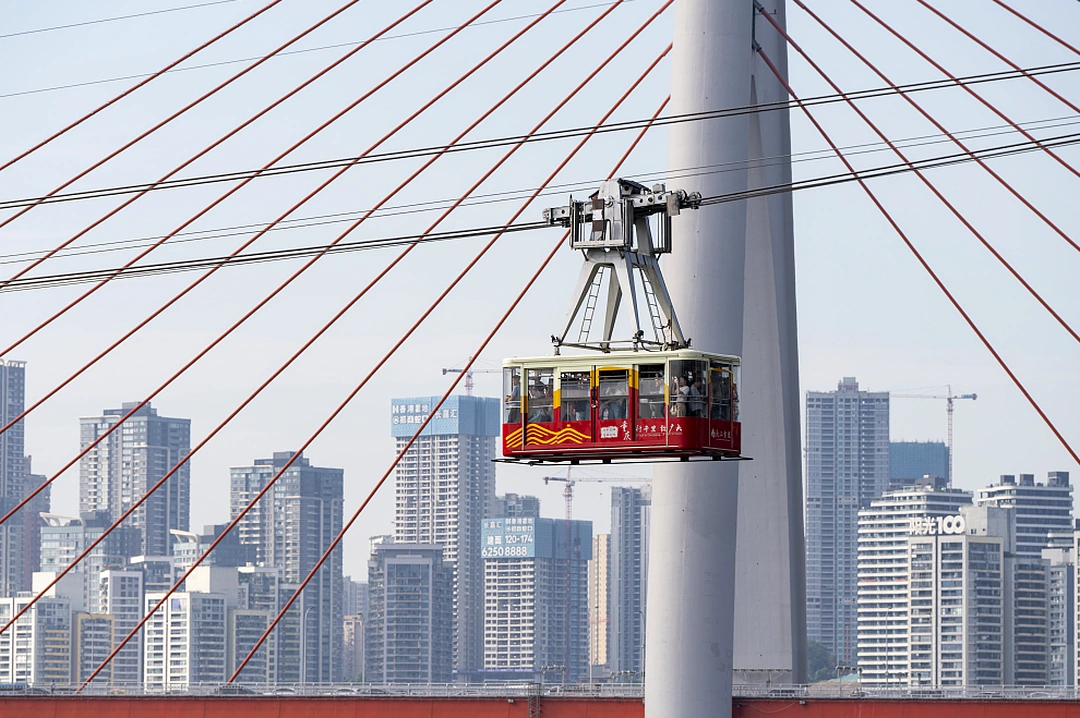
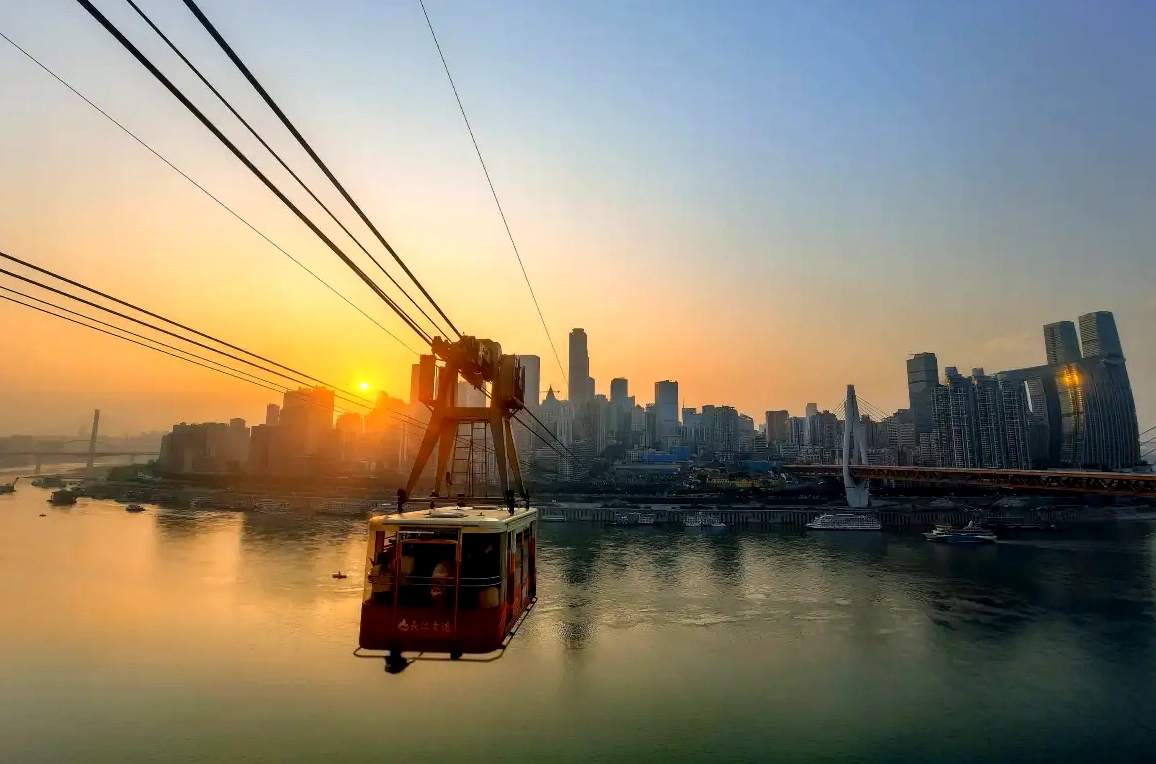
When night falls, casting away the city’s characteristic thick mists over towering skyscrapers, the Chongqing Yangtze River Cableway (重庆长江索道) transforms itself into the central character of Asia’s grandest real-world light show. Far more than a heritage public transport vehicle, this cable car system is the core dynamic illumination element shaping the famous Chongqing night scenery brand. As the cabin slowly leaves the station, an overwhelming visual world opens before the traveler, where the boundary between cinema, contemporary art, and reality seems to blur, leaving space for the deepest aesthetic feelings.
This visual experience is forged from the miraculous resonance of a dynamic matrix LED lighting system blanketing hundreds of skyscrapers on both the Nan’an and Xinhua Road banks. Massive reinforced concrete blocks that appear rugged and industrial by day are clothed in vibrant digital garments, fluidly changing colors in sync with the city’s heartbeat. At the center of this colossal canvas stands the warm, nostalgic golden lighting of the Dongshuimen Bridge, creating a refined contrast between 21st-century dazzling modernity and subdued urban memory. Amidst this magnificent space, the cable car cabin body glides smoothly, equipped with intricately concealed linear LED strip lighting. Viewed from afar, the cabin moving suspended mid-air resembles a pearl drifting lazily across a black silk ribbon of the Yangtze River, or much like a shooting star cutting across a foggy night sky.
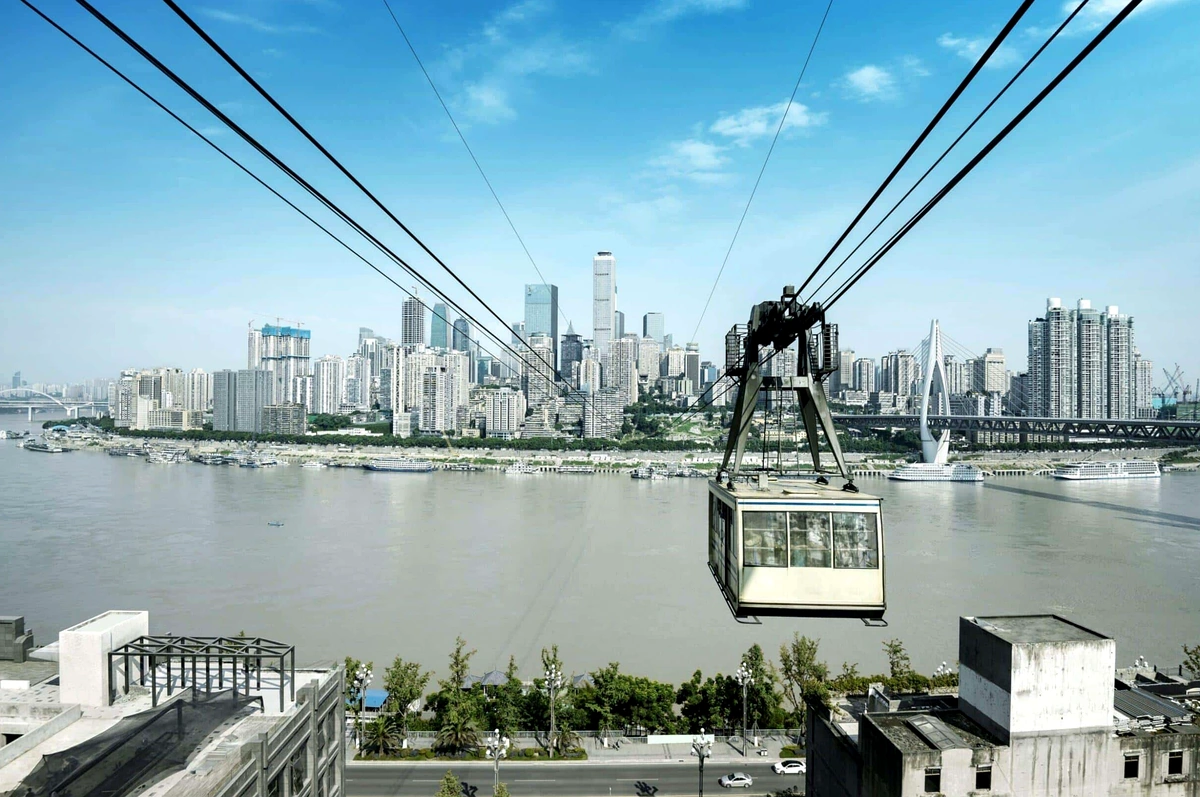
Stepping into the cabin interior, visitors are not only treated to exterior landscapes, but also enveloped in an immersive art space imbued with indigenous cultural branding. To honor the heritage value of the cable line once dubbed “the world’s first river-crossing flight corridor,” operators skillfully integrated famous cinematic IPs that used the location as a backdrop. Sounds echoing inside the cabin comprise a unique blend of classic film soundtracks, emotional folk melodies tinged with Chongqing dialect, and modern electronic music, delivering an unforgettable multi-sensory experience. This combination awakens every traveler’s senses, making them fully appreciate the unique industrial romance found only in this mountain city.
Right within this realm of light and sound art, Chongqing’s nightlife emerges as bustling, prosperous, yet deeply nostalgic. Sitting inside a cabin gliding over endlessly surging waters, watching shimmering light reflections across the river surface alongside lights glowing from thousands of windows, travelers feel as though they are browsing living historical pages of a city that never sleeps. This is not simply a transit journey from one riverbank to the other of the Yangtze River, but a voyage across space and time, where light, music, and architecture merge to portray the most magnificent painting of contemporary Chongqing’s soul and heartbeat.
Stepping out of the suspended cabins of the Chongqing Yangtze River Cableway to touch ground at either terminal station, travelers not only step into a one-of-a-kind multi-layered urban space, but also wander into the cradle of one of China’s most vibrant and fiery culinary cultures—Ba-Shu cuisine. Stationed right in the shadow of towering skyscrapers or along winding rocky slopes of Shangxinjie and Xinhua Road is an intangible heritage map of flavors passed down through generations. The flavors here do not merely fill empty stomachs; they have risen to become an existential philosophy, where bone-deep numbness, fiery spice, and beef tallow richness blend into the fierce rhythm of the great river, creating a culinary synthesis that captivates anyone who falls in love with this misty land.
Mentioning Chongqing while omitting riverside hot pot is tantamount to never having stepped foot into this mountain city. Unlike northern hot pot or southern delicate broths, hot pot in traditional restaurants beneath the cable car is an eight-diagram array of color and taste featuring a base layer of shimmering pure beef tallow, embracing tongue-numbing chilies from Shizhu County, mouth-numbing Sichuan peppercorns from Hanyuan, premium Pixian broad bean paste, and over twenty rare herbal spices. This mixture is meticulously stir-fried over continuous low heat for over eight hours to extract a thick broth carrying the five classic flavors of Ba-Shu culinary art: ma, la, xian, xiang, chun (numb, spicy, fresh, fragrant, and rich), lingering deep in the throat. Authentic hot pot dining requires following the nine-grid method, dividing the pot frame into nine squares each maintaining different boiling temperatures to precisely cook ingredients ranging from crispy duck tripe to chili-marinated beef balls, turning every chopstick pick into a mesmerizing gastronomic adventure.
Just a few steps away along winding slopes heading toward Shangxinjie, rustic dining spaces invite travelers with the mouth-watering aromas of street food stalls passed down through decades featuring Chongqing Xiaomian (small noodles) and hot-and-sour rice noodles (Suanlatang). Xiaomian’s primary distinction lies in its elaborate bottom seasoning sauce, where homemade chili oil, fermented soy sauce, minced garlic, rice vinegar, and smooth sesame paste bind tightly to chewy alkaline noodles, delivering an irresistible pull that awakens every sense from the very first bite. Meanwhile, Suanlatang conquers diners with translucent sweet potato noodles soaked in the pleasant tang of vinegar set within a broth spicy with chili oil and crunchy roasted peanuts—a perfect combination to banish the dampness of foggy days covering the long river.
Beneath the Chongqing cable car, the sweet aftertaste of imperial and traditional folk snacks lingers through characteristic culinary features. Nestled in mossy alleys is Xiaocheng sweet glutinous rice, carrying the elegant aroma of osmanthus sugar water, where soft sticky rice balls are embraced by sweet molasses cooked with fresh osmanthus blossoms picked from suburban ancient gardens. Right beside it, freshly baked Cixi pastries or flaky thousand-layer pastries straight from traditional family ovens on Shangxinjie—featuring golden, flaky crusts enclosing sweet red bean paste or savory five-spice minced meat—serve as living proof of the delicate fusion between ancient imperial cuisine and contemporary urban life. Savoring a crispy pastry in the cold wind blowing off the Yangtze River while watching cable car cabins glide gently through mist makes local culinary culture reveal intense vitality and leave lasting emotional echoes.
To fully complete the journey exploring the legendary “aerial bus” of the southwestern Chinese megacity, mastering practical guides from operating hours, transit routes, to insider tips serves as the golden key helping visitors enjoy sublime scenery without interruption from unexpected confusions. The Chongqing Yangtze River Cableway operates year-round with seasonal timeframes adjusted to ensure absolute passenger safety before natural weather fluctuations. Specifically, during the peak season from March through October, the system welcomes visitors from 07:30 AM until 22:30 PM; whereas in the low season from November to February, operating hours close slightly earlier, from 07:30 AM to 21:30 PM, alongside potential temporary suspensions during extreme weather days like heavy gales or thick mists obscuring technical visibility.
A vital survival rule for anyone wishing to experience this cable line is ticket booking. Due to the intense appeal of this transit architectural heritage, daily crowds are colossal, causing long queues of 1 to 3 hours at stations to be routine. To save precious time, travelers are required to perform real-time real-name ticket bookings in advance via the management’s official WeChat mini-program. Seasoned travel experts encourage visitors to choose early morning time slots right when the cable line opens or the second half of the night slot when crowds thin out, thus both easily securing crowd-free photo angles and fully enjoying the romantic moment when city neon lights begin shimmering across the Yangtze River.
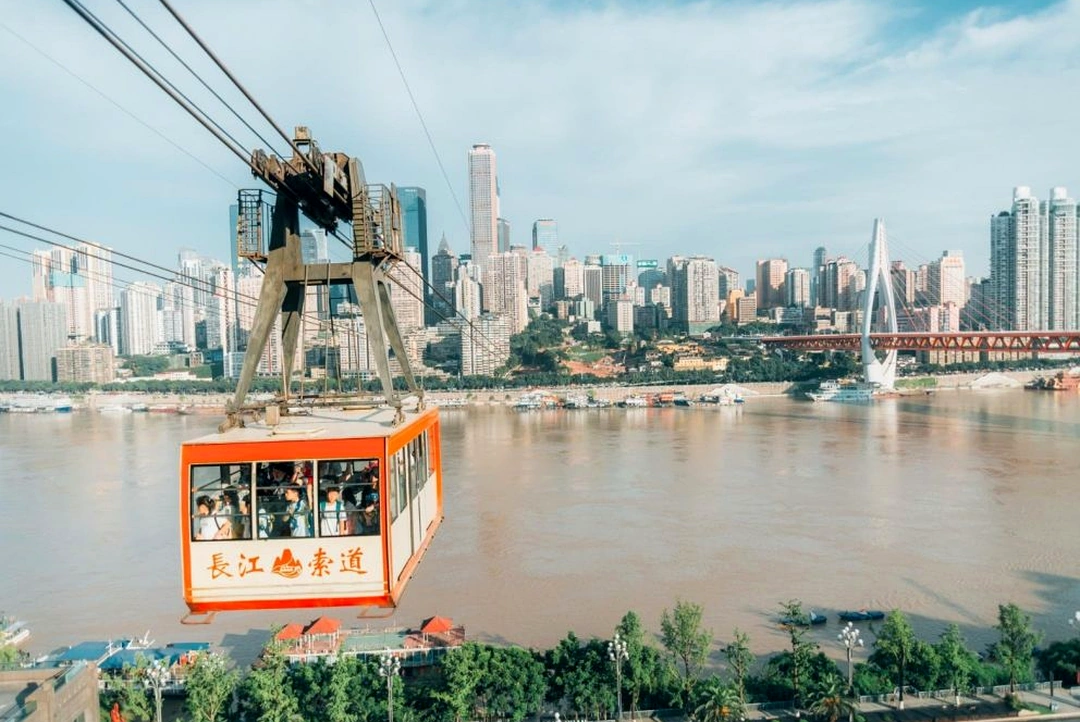
Beyond proactive timing and ticketing, approaching both cable car terminal stations also requires thorough preparation regarding public transit. The Northern Station, commonly known as Xinhua Road Station in Yuzhong District, welcomes massive crowds from the city center; travelers can commute conveniently via Metro Line 1 or Line 6, alight at Xiaoshizi Station, find Exit 5B, and walk a short distance to arrive. Conversely, when experiencing the reverse direction from south to north, travelers will stop at the Southern Station, namely Shangxinjie Station in Nan’an District, easily accessible via Metro Line 6 or the Loop Line of the modern underground transport system. Knowing station exits well helps travelers avoid getting lost in the maze of towering skyscrapers characteristic of Chongqing’s mountain terrain.
To optimize sightseeing experiences and avoid missing any prized angle of the fog city, an ideal loop itinerary has been researched and recommended by route designers: the seamless combination of “riding the cable car one way combined with walking across the Dongshuimen Bridge.” Accordingly, visitors can ride the cable car from the North Bank to the South Bank to take in panoramic river views and skyscrapers from above, then leisurely stroll back across the historic Dongshuimen Bridge pedestrian span, which opens up magnificent photography angles to embrace the Chaotianmen peninsula and bustling dual-bank urban life. Because Chongqing’s terrain is famous for steep gradients, numerous stone steps, and winding slopes, travelers should prepare comfortable anti-slip walking shoes to protect their feet throughout the exploratory journey.
Finally, to ensure a smooth and civilized trip, visitors must strictly comply with safety regulations inside cabins and station areas, strictly refraining from smoking, shoving, and especially unauthorized drone piloting within the cable car airspace to guarantee absolute technical safety for public transit cable systems. These minor details contribute to preserving the integrity of one of this heroic land’s most iconic experiences. If you wish to have everything arranged from ticketing, transport to professional guides throughout your tour, explore our all-inclusive tour packages for a reassuring journey of soaring emotions.