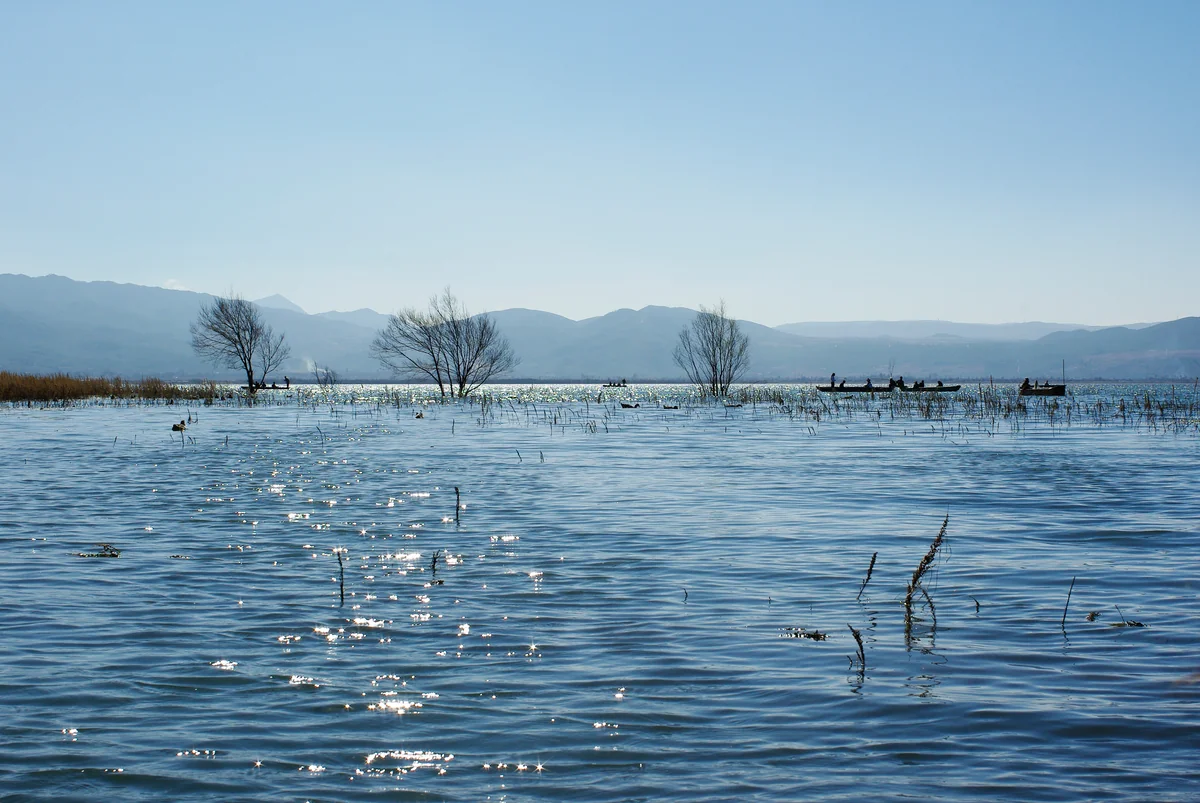
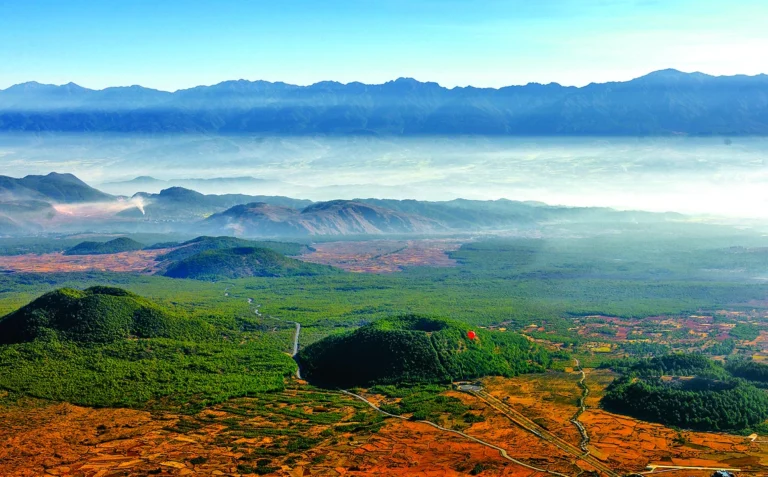
Located on the Yunnan-Guizhou Plateau at an average elevation of 3,500 to 4,000 meters above sea level, Potatso National Park emerges as a pristine fairyland, a priceless ecological treasure of the legendary Shangri-La in Yunnan Province, China. Regarding geographical coordinates, this colossal nature reserve lies about 22 km east of downtown Shangri-La (Diqing Tibetan Autonomous Prefecture), situated right along the arterial exploration route for Yunnan’s culture and nature, seamlessly connecting with other renowned destinations in the region.
Established and officially opened to visitors in 2006, Potatso marked an important historical milestone in China’s nature conservation efforts. It was the first national park on mainland China to fully meet rigorous international ecological conservation standards set by the International Union for Conservation of Nature (IUCN). The name “Potatso” is actually an ancient Tibetan transliteration carrying profound sacred meaning: a rescue boat helping sentient beings cross the ocean of suffering of birth and death to reach the shore of enlightenment. This religious and spiritual significance is imbued in every inch of land, tree, and stream here, tied to the deep-rooted religious life of the indigenous Tibetans.
Potatso’s genesis is tied to specialized orogenic tectonic terrain, where snow-capped high mountains intertwine with deep glacial valleys, forging an exceptionally rich and unique ecosystem. It serves as one of the world’s most vital biodiversity centers, located within the Three Parallel Rivers Protected Areas (recognized by UNESCO as a World Natural Heritage Site). The ecosystem here largely preserves its pristine wildness, untouched by the heavy destruction of modern industrial activities.
Regarding its unique symbolic significance, Potatso is not merely an ordinary sightseeing eco-tourism destination, but a living museum of geology, climate, and anthropology across the Tibetan Plateau. The intersection between highland temperate and frigid climates has sculpted a majestic natural space where humans and all things blend as one. Boundless primeval forests, seasonal wildflowers, crystal-clear mirror-like freshwater lakes, and boundless deep blue skies without a wisp of cloud have created an immortal symbol of a “real-life Shangri-La on Earth.”
Visiting Potatso during an exploration of Yunnan’s travel routes, travelers not only feast their eyes upon breathtaking natural scenery, but also have the opportunity to contemplate the Tibetan community’s philosophy of living in harmony with nature. Every blade of grass and stream here carries its own legends, recounting to future generations the formation of this sacred land, making it an irreplaceable stop in any world-class international travel itinerary.
Although it lacks grandiose temples built by human hands in the conventional sense, Potatso National Park possesses a magnificent “natural architecture,” sculpted by millions of years of geological and glacial tectonics. Spanning a total area of over 1,300 km², this park is a colossal ecological complex comprising deep valleys, rolling mountains, boundless grasslands, dense primeval forests, and above all, a highly precious highland freshwater lake system.
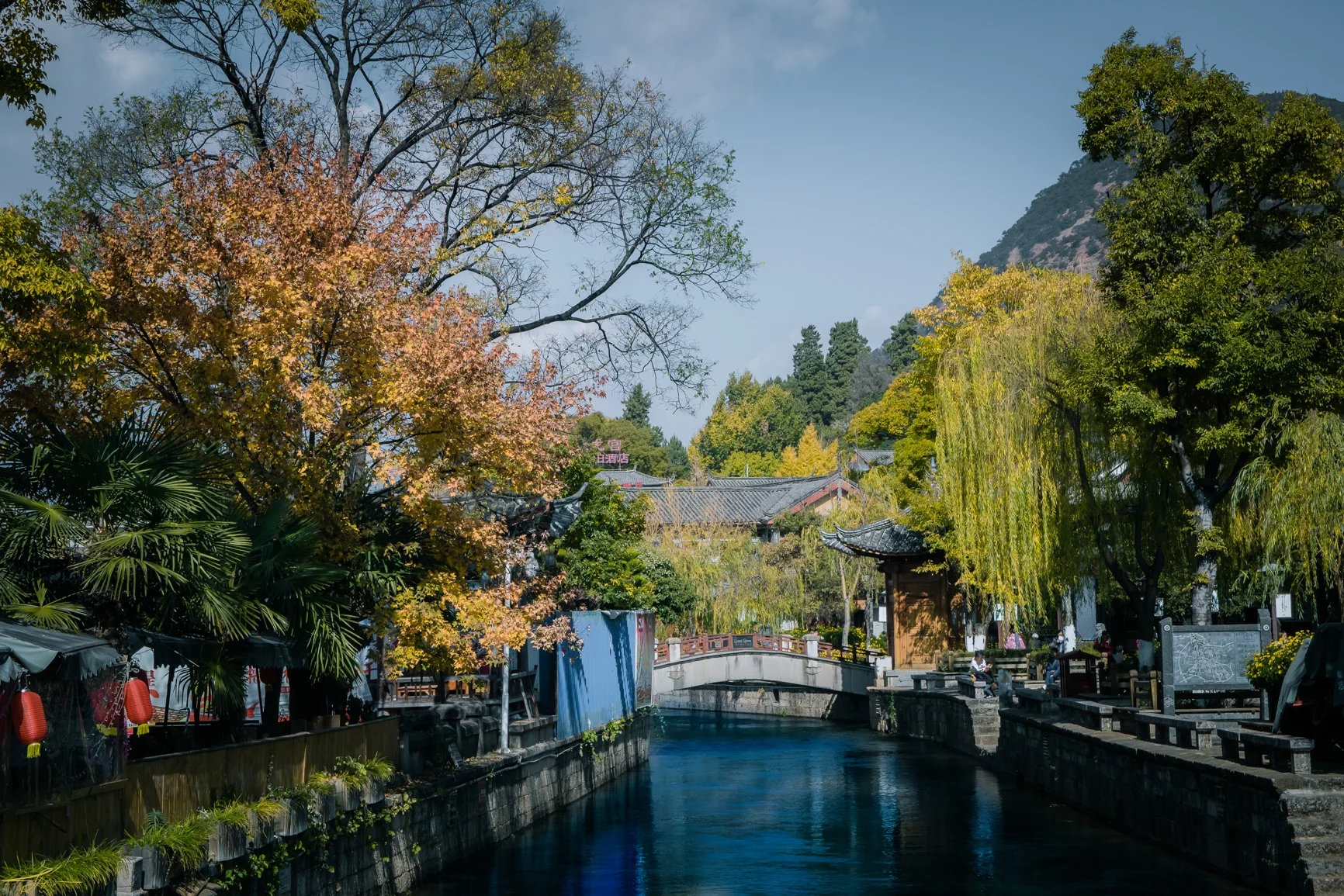
Scenery of water canals and traditional Chinese architecture beside a river shaded by autumn trees.
The first and most majestic visual highlight within Potatso’s natural architectural space is Shadu Lake (also known as Shudu Lake), located in the southern sub-district of the park. Sprawling with a water surface area of hundreds of hectares, Shadu Lake rests peacefully at an elevation of about 3,700 meters above sea level. In Tibetan, “Shadu” means “stone lake,” tied to the legend of sacred stones rising from the watery depths. The special feature of Shadu Lake is that its water is so transparent one can see right to the bottom, perfectly reflecting skies, mountains, and surrounding ancient spruce forests like a magnificent natural tableau.
Surrounding Shadu Lake is an extraordinarily rich vegetation system. During summer and autumn, the lakeshore transforms into a brilliantly colored carpet of wildflowers interwoven with lush green meadows where herds of Yaks graze leisurely. Kilometers-long wooden boardwalks meticulously built along the lake allow visitors to leisurely stroll, enjoying close-up views of the underwater ecosystem where rare fish swim actively without disturbing the delicate natural environment.
Not far from Shadu Lake lies Bita Lake (Bitahai), another breathtaking scenic wonder likened to a deep blue jade jewel in the heart of the plateau. Bita Lake resembles a giant crescent moon, famous for its small island in the center—home to lush groves of ancient rhododendron bushes. In spring and early summer, when rhododendron flowers bloom brilliantly along the lakeshore, fallen petals drift onto the water surface, creating a floating flower carpet. Beneath clear waters, endemic round-bellied fish playfully swallow rhododendron petals containing mild toxins, causing them to become intoxicated and float listlessly on the surface—a unique, one-of-a-kind natural phenomenon known as “rhododendron-intoxicated fish.”
Beyond major lakes, Potatso also features Bitahai Wetland, a highland wetland serving as a green lung regulating climate across the entire region. The only artificial architectural system intervening with nature here consists of tens of kilometers of elevated wooden trails designed above land and water surfaces. These winding paths snake softly through dense primeval forests where towering pine and spruce trees are draped in moss, creating a magical atmosphere straight out of Nordic fairy tales or wonderland realms.
Potatso’s visual imprint changes spectacularly across seasons, delivering unprecedented visual experiences. Spring brings brilliant pink and red rhododendron blossoms blanketing hillsides; summer dons an emerald green coat of lush foliage and clear skies; autumn transforms the entire park into a dazzling yellow-orange palette of maple leaves, poplar leaves, and sun-kissed grasslands; while winter dyes the landscape in smooth white snow, turning it into a serene, solemn snow-and-ice kingdom.
Exploring Potatso National Park requires careful itinerary preparation not to miss the most wondrous moments. Due to the park’s immense scale and complex highland terrain, internal transit relies entirely on management-operated shuttle buses combined with walking along pre-designed wooden trails to protect the ecosystem.
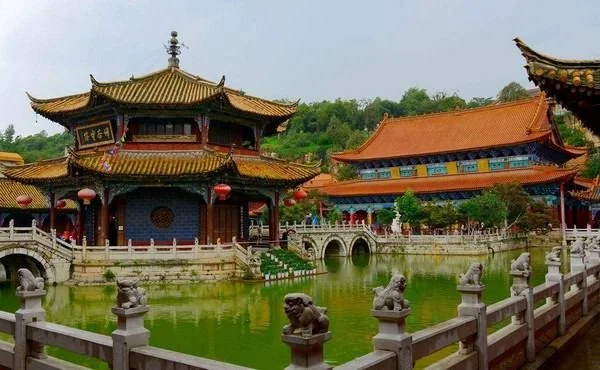
Traditional Chinese temple architecture beside a lake in Yunnan
A complete experiential journey in Potatso typically starts early in the morning departing from Shangrila town. After completing ticket procedures at the main gate and boarding the park’s specialized shuttle bus, the first stop is usually the Shadu Lake area. Here, visitors embark on a several-kilometer walk along the lakeside wooden trail. This is the ideal time of day to admire lingering mist over the water, when early morning sunbeams pierce through pine canopies, creating magical optical effects.
After completing the Shadu Lake lakeside trail, the shuttle bus takes visitors deeper into the park toward the grassland and valley area. Here, visitors can stop at resting stations to enjoy a warm cup of Tibetan butter tea, experience riding Yaks across boundless windswept grasslands, or simply sit quietly on wooden benches watching clouds drift overhead.
The next destination on the itinerary is the Bita Lake area. Here, visitors can choose to continue walking to explore the primeval forest ecosystem or take an ecological boat (if seasonal services operate) to admire the island in the middle of the lake and discover the unique underwater fish ecology. Every stop opens up entirely novel perspectives, turning a multi-hour journey into pure fascination.
Woodland wooden bridge at Shadu Lake: A classic photo spot with winding boardwalks vanishing among moss-draped ancient trees, delivering a solitary yet immensely poetic and majestic ambiance. Bita Lake in autumn: Where golden leaves drift onto crystal-clear water, serving as a perfect backdrop for natural, subdued, and contemplative photography. Windswept Yak grassland: Scenery backed by rolling high mountains, deep blue skies, and leisurely grazing Yaks, breathing the wild spirit of the Tibetan Plateau. Highland observatory area: Capturing the entire valley and dense forest system in wide-angle framing, affirming the scale of China’s first national park in China.
Exploring the breathtaking nature at Potatso would be incomplete without experiencing the rich culinary culture of the Tibetan and Naxi people around Shangrila. Due to the harsh climate of the cold highlands, local cuisine focuses on high-energy dishes that warm the body and supply essential protein.
One of the first dishes every visitor must try upon arriving is Yak hot pot. Yaks are endemic animals of the Tibetan Plateau living at elevations above 3,000 meters, feeding on clean grass and natural herbs, resulting in firm, flavorful, rich meat loaded with nutritional value. Yak hot pot is typically simmered with rare wild mushrooms foraged directly from primeval forests around Potatso, alongside red dates, goji berries, and traditional spices, producing a clean, sweet, nourishing broth that banishes the biting highland cold.
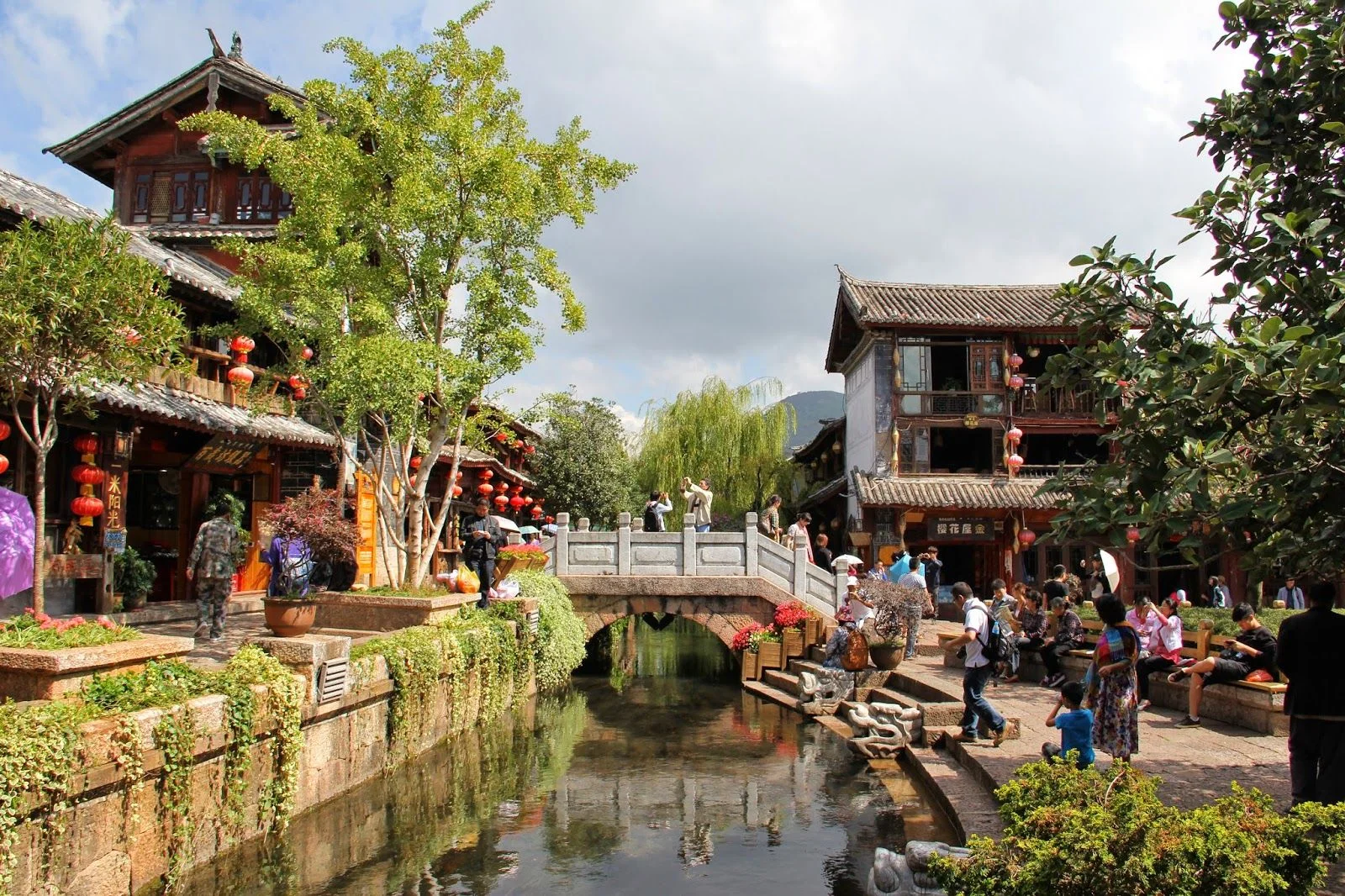
Scenery of Lijiang ancient town, Yunnan, China with canals, stone bridges, and traditional architecture.
Alongside Yak hot pot, salted butter tea (Suba) and highland barley cakes (Tsampa) form an indispensable culinary duo in every local meal. Butter tea is made from thoroughly boiled black tea blended with fresh Yak butter and a touch of pink rock salt, churned evenly in a specialized bamboo tube. This beverage offers a rich, salty flavor with characteristic butter aroma, helping visitors quickly combat altitude sickness symptoms and warm the body extremely effectively. Enjoying butter tea with Tsampa cakes made from hand-kneaded roasted barley flour lets visitors taste the rustic yet resilient flavor of local people.
The area surrounding the park exit and ancient markets in Shangrila city is a shopping paradise for unique handicrafts and local specialties. Visitors can find countless meaningful souvenirs for family and friends:
Tibetan silver jewelry and gemstones: Handcrafted bracelets, rings, and necklaces made from heavy silver set with Turquoise (blue jade) and agate stones, carrying wishes for peace and good fortune according to Tibetan Buddhist beliefs. Shawls and handmade textiles from wool and Yak fleece: Exceptional heat-retaining shawls featuring colorful brocade patterns, meticulous in every stitch. Dried matsutake mushrooms: One of the world’s rarest wild mushrooms growing naturally beneath pine canopies in Potatso, holding exceptionally high nutritional and economic value as a premium gift. Pure Tibetan incense: Formulated from dozens of rare highland herbs and medicinal plants, used for room scenting, meditation, or worship, delivering a serene, warm aroma. Mini Mani wheels: Miniature spiritual symbols to carry along, recalling the sacred Buddhist realm of Shangri-La.
To ensure your exploration of Potatso National Park runs smoothly, safely, and emotionally fulfilled, visitors should equip themselves with invaluable practical insights from international travel experts.
Every season in Potatso possesses distinct beauty; however, the ideal visiting windows throughout the year are divided into two main periods:
Spring and early summer (May to June): Warmer weather, clear blue skies, especially rhododendron blooming season blanketing hillsides and surrounding Bita Lake, creating a brilliantly colorful, breathtaking landscape. Autumn (September to November): Considered the finest time of year when the entire park shifts into golden, orange, and red autumn foliage. Dry weather, minimal rain, and excellent visibility make it highly favorable for photography and sightseeing.

Tourist in a red jacket taking commemorative photos by a lake and ancient temple in Lijiang, China
Visitors should limit visits during winter (December to February) as temperatures drop deep below zero and heavy snow causes certain walking trails to close for safety, though winter suits those wishing to admire mystical snow and ice landscapes.
The most popular departure point to reach Potatso is from Shangrila town. Visitors can choose local taxis, car rentals (with valid Chinese driving licenses), or day-tour packages booked at hotels or travel agencies in Dukezong Ancient Town. The distance is just over 20 km, taking about 30 to 45 minutes by car.
LISTED SIGHTSEEING TICKET & SERVICE PRICING TABLE
Because Potatso sits at a high elevation (above 3,500m), altitude sickness (高原反应) is a real hazard for visitors unaccustomed to thin air. Travelers must strictly observe survival rules:
Absolutely avoid running, strenuous exertion, or climbing quickly upon arrival. Move very slowly, breathing deeply and evenly. Prepare portable mini oxygen canisters (widely sold at grocery stores in Shangri-La cheaper than inside the scenic area), take red blood cell supplements or drink glucose water a few days before the trip. Carry thick windproof jackets, thermal layers, woolen hats, gloves, and sunglasses as highland weather changes rapidly—glaring sunshine by day but biting cold when clouds gather or evening arrives; solar radiation at this altitude is extremely intense. Bring sports shoes or specialized hiking boots with good traction since wooden boardwalks can be slippery during early morning frost or light rain.
Regarding culture and spiritual beliefs, when interacting with local residents or passing sacred areas, lung-ta wind prayer flags, and carved Mani stone piles, visitors should note:
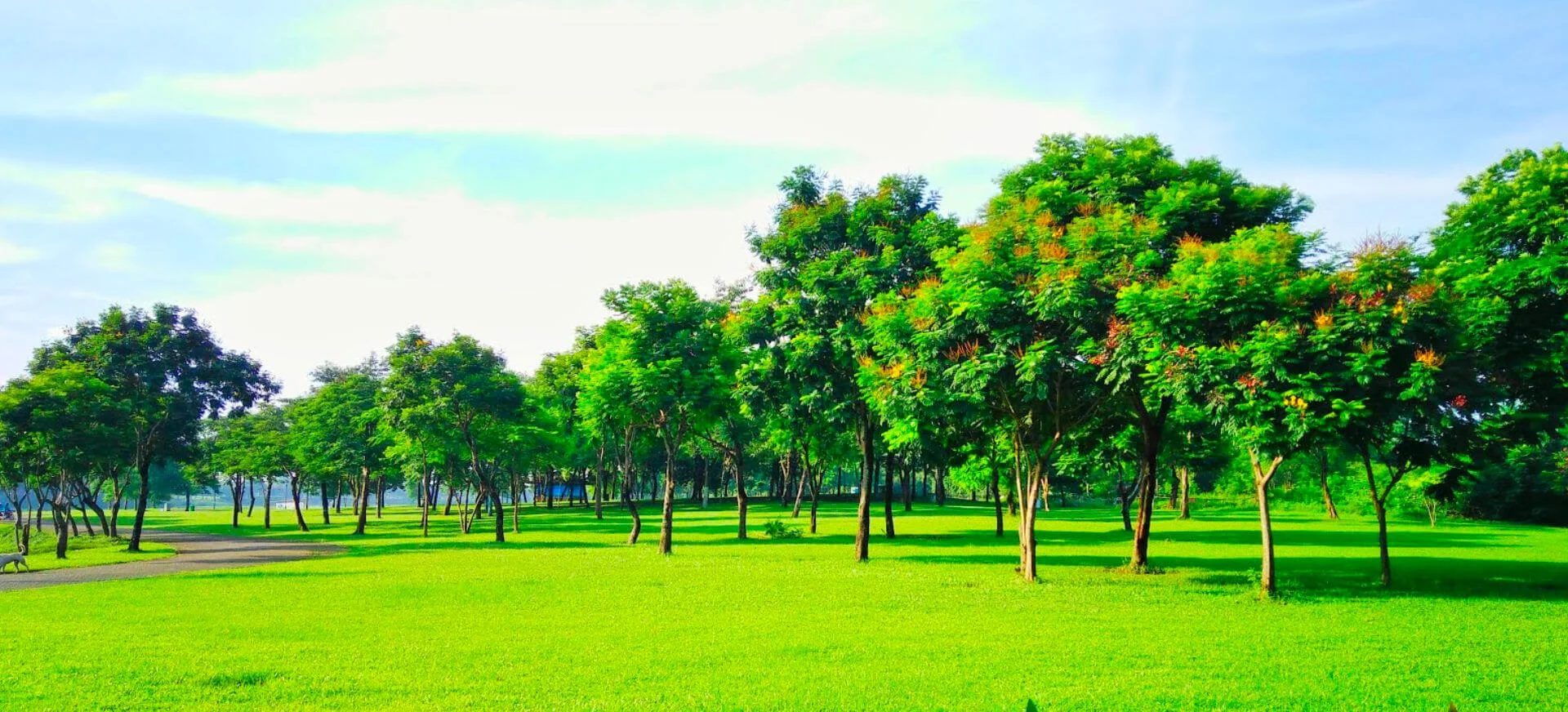
Scenery of a lush green park with wide lawns and straight trees under clear blue skies.
Do not step on religious items, do not touch Tibetan children’s heads, and always ask permission before photographing local people or monks. Strictly comply with the park’s environmental protection rules: no littering, no picking flowers or breaking branches, no harming pristine flora and fauna. Potatso is a strict nature reserve, and all environmental vandalism is severely penalized under Chinese law.
Answer: The most convenient departure point is Shangri-La city (Diqing Tibetan Autonomous Prefecture, Yunnan Province). You can stay overnight in Dukezong Ancient Town in Shangri-La to gradually acclimate to altitude a day prior, then hire a car or join a day tour to Potatso the following morning with a travel distance of only about 22 km.
Answer: A complete sightseeing itinerary at Potatso typically lasts 4 to 6 hours. Because the park is very large and visitors must move via specialized shuttle buses combined with walking across main stops (Shadu Lake, valleys, Bita Lake), you should dedicate a full morning to early afternoon for this destination.
Answer: Seniors and children can certainly visit Potatso, yet special attention must be paid to altitude sickness risks since the park sits above 3,500m. Prepare portable oxygen canisters, walk very slowly, avoid strenuous movement, and ensure stable baseline health before deciding to purchase entrance tickets.
Answer: Not compulsory. Internal park transport is designed combining specialized shuttle buses carrying visitors between sub-districts and long wooden trails for strolls. You can freely choose to walk short lakeside sections and board shuttle buses to subsequent stops.
Answer: The two finest photography seasons of the year are May – June (rhododendron blooming season brilliantly framing Bita Lake) and September – November (autumn scenery with golden leaves, orange-red foliage blanketing trees, reflecting on crystal-clear water creating breathtaking picturesque tableaux).