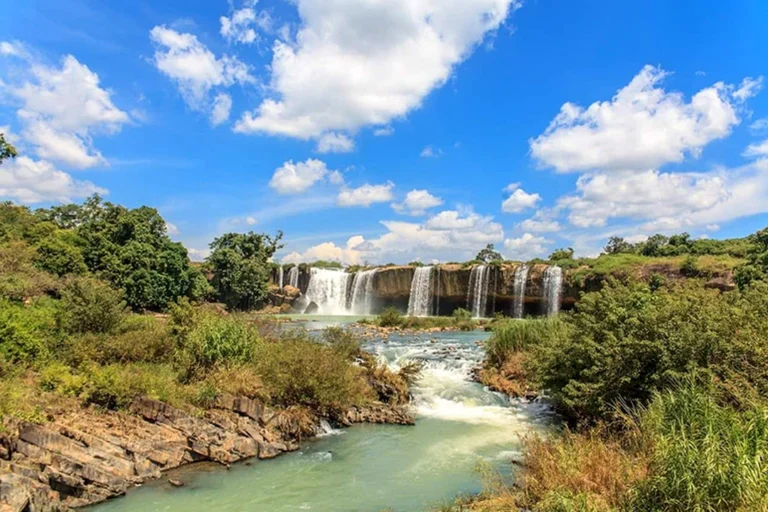
Nestled amidst the windswept basalt wilderness of the Central Highlands, where the passage of time seems suspended in the rustling leaves of ancient old-growth forests, Pa Sy Waterfall emerges as a sacred emblem of the Tay Nguyen cultural space. From a geographical and feng shui perspective, the waterfall sits within the historical forest boundaries extending from the Buon Ma Thuot region, where terraced terrain creates gently undulating hills embracing deep valleys. The topography here bears the distinct hallmark of converging water energy: underground streams accumulate from high mountain peaks, trickling tirelessly through layers of basalt rock weathered over millions of years before bursting forth as a white silk ribbon amid the deep green of the primeval forest. This seamless fusion of majestic mountains, rich primary vegetation, and pure flowing water makes the site a unique ecological sanctuary—possessing both the untamed, fierce beauty of wild nature and the contemplative stillness of a sacred realm.
Turning the pages of primary historical records and ethnographic field studies reveals that the origin of the landmark’s name holds deeply valuable layers of indigenous linguistic heritage. According to textual studies and ancient Ede philology, the name “Pa Sy” is a phonetic evolution of the original terms “Po Si” or “Pa Sye,” referring to the land of the deities or a domain governed by supreme tribal chiefs. Unlike lowland monuments tied to royal feudal dynasties, the historical timeline of Pa Sy Waterfall is anchored in the enduring survival of the Ede Bih and M’Nong village alliances. This territory carries no administrative imprint of Vietnam’s central imperial courts during the Ly, Tran, Le, or Nguyen dynasties; instead, it existed independently as a promised land for indigenous ethnic communities. The name officially entered modern chronicles through late-19th and early-20th-century highland expeditions led by explorer Henri Maitre and missionaries of the Paris Foreign Missions Society, unveiling invaluable records of a land untouched by the ravages of war or Western administrative intervention.
Intertwined with this magnificent landscape is a tapestry of historical figures and generational legends of the Central Highlands people, for whom Pa Sy Waterfall is far more than natural scenery—it is a sacred spiritual realm (Yang). The site preserves heroic legends of great chieftains such as Chief Y Jut and the renowned Ama Kuh clan, who pioneered, safeguarded, and defended their villages’ living space against the tides of change. According to heritage researchers, the waterfall once hosted vital agricultural rituals, most notably the Water Wharf Worship Ceremony (Yo me brue)—a rite praying for favorable weather, bountiful harvests, and the enduring continuity of the ethnic lineage. Furthermore, Pa Sy Waterfall served as a sacred natural boundary dividing swidden farming lands among clans, standing as living proof of the indigenous people’s harmonious coexistence with customary law and nature.
Today, despite mounting pressure from commercialized mass tourism, Pa Sy Waterfall retains its unique geological value and authentic cultural heritage, earning deep respect and protection from research institutions and the press. Its ancient basalt formations and surrounding habitats serve not only as a premier ecotourism resource but also as a living museum of Central Highlands anthropology. Accurately recognizing the coordinates, historical roots, and cultural significance of Pa Sy Waterfall is the golden key to restoring its rightful stature: a sacred heritage space where the spirit of the mountains and forests continues to whisper stories of origin across the ages.
From the perspective of geomorphology and natural landscape architecture, Pa Sy Waterfall stands as a monumental sculpture carved by the invisible hand of creation in the heart of the Central Highlands. The space exudes raw authenticity through its remarkable topography: the main cascade plunges from a height of over forty meters, cleaving through fertile basalt layers and piercing ancient sedimentary strata millions of years old. At the base of the falls, churning waters roar into a vast natural pool of deep emerald green, framed by moss-draped boulders and sheer hexagonal columnar cliffs resembling grand temple pillars forgotten by time. Each falling sheet of water generates a year-round mist that refracts sunlight into ethereal rainbows suspended in mid-air, elevating the landmark’s majestic, mysterious, yet deeply captivating allure.
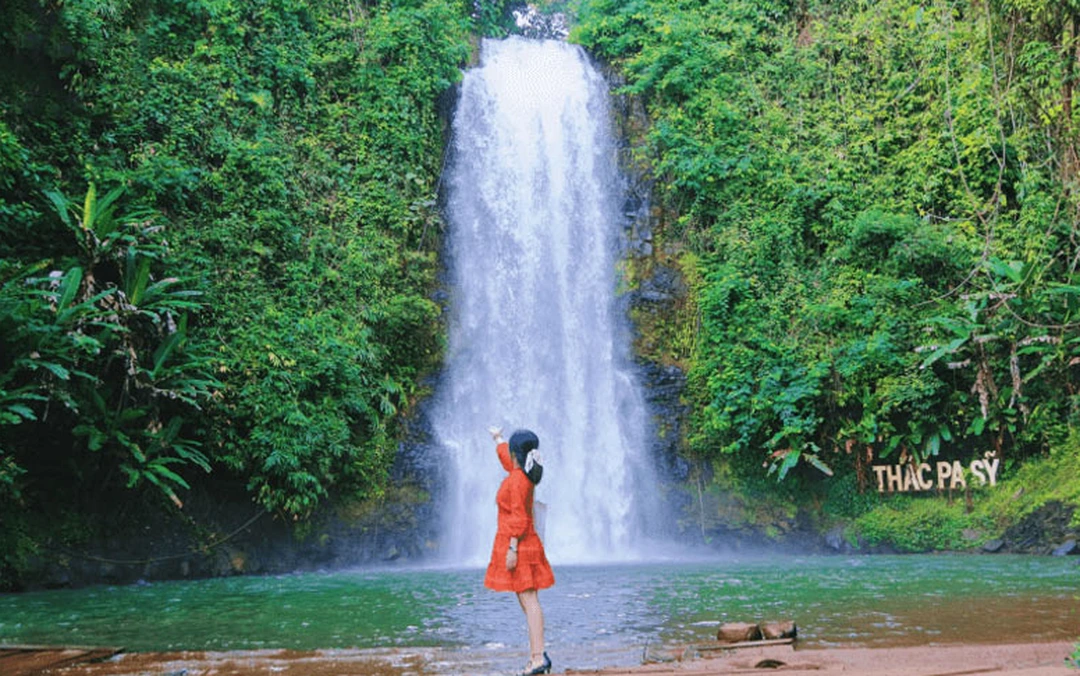
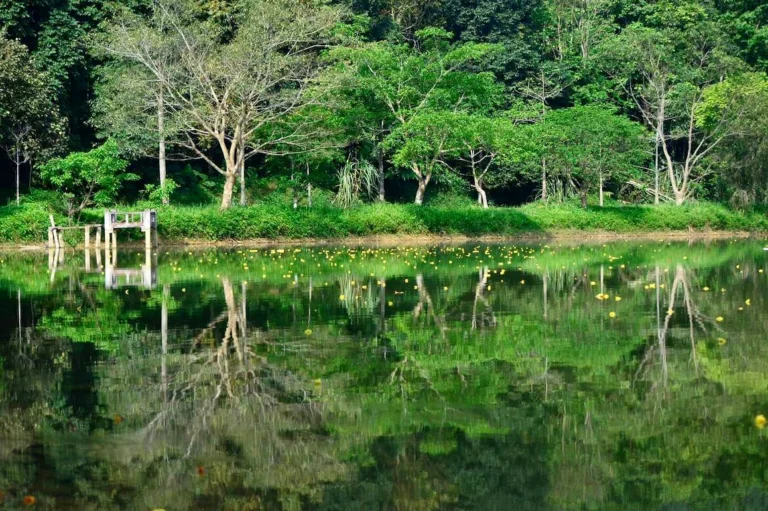
The ecosystem surrounding Pa Sy Waterfall is equally a botanical marvel, featuring centuries-old trees towering overhead to cast cool shade alongside tangled lianas and a lush, primary tropical understory. To capture the full grandeur and poetic beauty of this landmark on camera, professional photographers and travel journalists favor two classic vantage points proven across numerous field expeditions. The first spot is a natural rock outcropping jutting right to the edge of the downstream pool, facing the main cascade head-on; this angle captures the entire imposing height of the white water column plunging down the cliffside, creating a frame with tremendous spatial depth and cinematic scale. The second spot lies along a mossy stone trail hugging the hillside, offering a sweeping panorama of the verdant valley and the crest of the waterfall peeking through a veil of mist.
For ideal lighting, experts highly recommend the golden window between 7:00 AM and 9:00 AM, when dawn sunlight begins filtering through the primary forest canopy, sending brilliant golden rays slicing across the delicate mist and spray rising from the base of the falls. The soft, crystal-clear natural light during these hours accurately renders every rugged contour of the basalt cliffs, the deep emerald hue of the pool, and the pure silvery white of the rushing water without blown-out highlights or harsh backlighting. This seamless harmony of dramatic terrain, singular natural architecture, and seasonal morning light makes Pa Sy Waterfall a pinnacle landscape icon, inspiring profound pride in the pristine geographical heritage of the highlands.
Stepping foot at Pa Sy Waterfall in the heart of Buon Ma Thuot, visitors do not merely enter a contemplative historical space—they immerse themselves in a series of vivid, rewarding real-world experiences. The journey to the falls begins with lively footsteps along a winding trail beneath centuries-old forest canopies. Melodious birdsong blends with the sighing wind of the deep woods to create a natural symphony that awakens every sense. Moving deeper inside, cool mist rising from the thundering cascade carries the earthy aroma of red basalt soil and wild forest blossoms, washing away the fatigue of noisy city life. A true sense of awe unfolds as the view opens onto white waters roaring day and night into a crystal-clear emerald pool, kicking up frothy spray like a soft silk ribbon draped across the lush green hillside.
To take in this magnificent natural panorama, travelers can challenge themselves by climbing the rugged, moss-covered boulders or gliding gently across the tranquil water aboard a traditional dugout canoe. Seated in a wooden canoe paddled by local Ede artisans, gazing up at towering vine-draped cliffs while listening to the highland breeze sweep through the trees, the mind grows effortlessly light and serene. Beyond its breathtaking scenery, this space holds profound spiritual depth. Pausing at the base of the falls, visitors can touch the sacred waters, pay quiet reverence, and listen to village elders recount legends of the deities (Yang) and courageous tribal chiefs. In that moment, the stillness of the surroundings merges with the pulse of a heroic past, leaving a deep resonance in the soul—reminding us how small humanity is before grand nature, yet how closely connected we remain to our roots.
Capping off this journey of natural and spiritual discovery, the local cultural experience at Pa Sy Waterfall would be incomplete without indulging in highland cuisine. Right beside rustic thatched huts built along the forest edge, visitors can savor celebrated specialties bursting with the authentic flavors of the Central Highlands. Among them are crispy free-range grilled chicken dipped in fiery bird’s-eye chili salt, fragrant sticky rice roasted in bamboo tubes sweet with newly harvested upland rice, and savory cassava-leaf soup simmered with dried venison. Gathering around a warm jar of traditional rice wine (ruou can), sipping its spicy-sweet brew rich with human warmth as gong music echoes through the wilderness, travelers truly become one with the primal, untamed, yet deeply hospitable rhythm of local life. Together, these prized experiences weave a vibrant tapestry of ecotourism and indigenous culture, making Pa Sy Waterfall an unforgettable stop on any journey through wild Buon Ma Thuot.
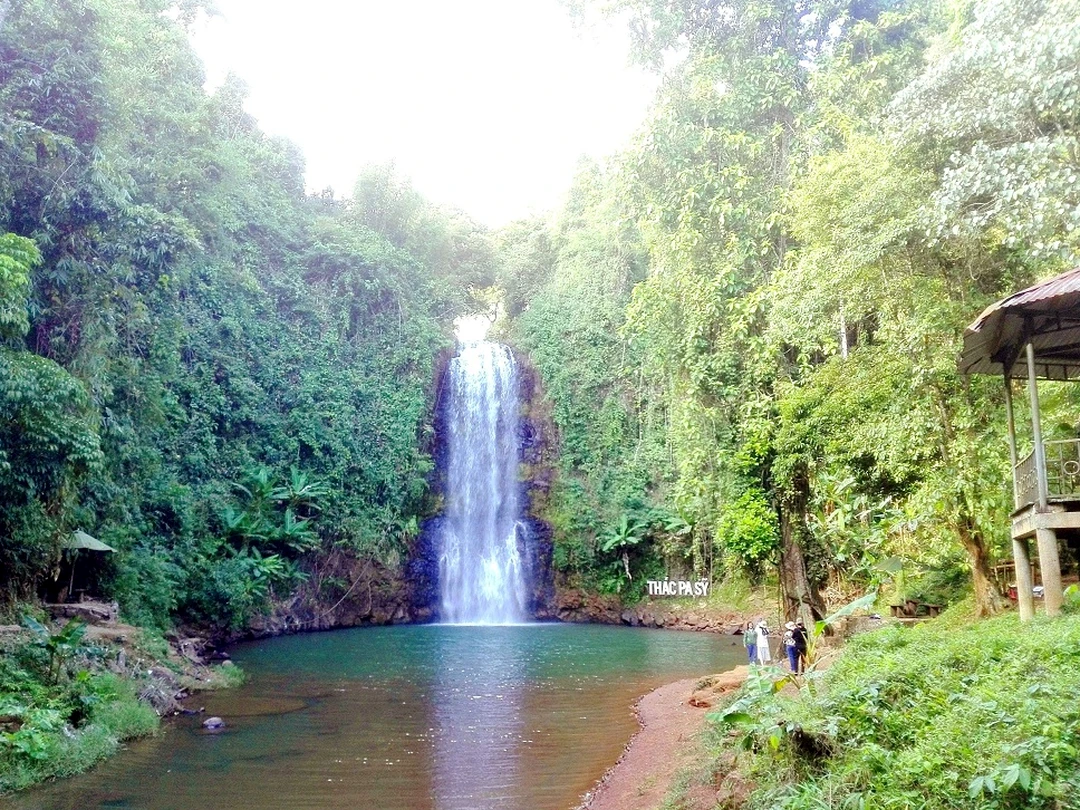
Welcome to the Pocket Guide: Opening Hours, Ticket Prices & Essential Tips for Visiting Pa Sy Waterfall—a practical resource designed to make your journey to this legendary cascade seamless, safe, and deeply respectful of authentic local values. To ensure the best possible experience, travelers should keep in mind key details regarding hours, fees, transportation, and cultural etiquette at this sacred site.
Regarding operating hours, the Pa Sy Waterfall scenic area opens daily from 7:00 AM and closes to visitors at 5:00 PM each day to support ecological conservation and forest security. Currently, to encourage visitors to explore and gain a deeper appreciation of the indigenous cultural space, the heritage management board waives admission fees entirely for all domestic and international guests. However, visitors are welcome to make voluntary contributions to the community conservation fund via donation boxes located at the information station.
To travel from downtown Buon Ma Thuot to Pa Sy Waterfall, the best options are a personal motorbike or a high-clearance SUV capable of navigating the steep, rocky roads characteristic of highland terrain. Departing from the city center, follow the main arterial roads toward the outskirts, using a topographic map or asking local Ede residents in villages along the way to stay on the historic trail leading directly to the base of the waterfall without straying into private swidden farming plots.
The best time of year to visit Pa Sy Waterfall is during the dry season from November to April, when sunny weather makes travel easy and underground springs feed clear, refreshing waters. Conversely, if visiting during the rainy season, travelers must exercise extreme caution due to swift currents and slippery rocks. Additionally, because this is a sacred site (Yang) intertwined with the spiritual life of the indigenous community, visitors are required to dress modestly and respectfully, wear practical attire suited for rocky terrain, strictly refrain from littering, and maintain reverence toward the traditional cultural symbols of the village.
To enjoy a seamless getaway and take in the full beauty of Pa Sy Waterfall without the hassle of arranging transportation, booking tickets, or planning itineraries, travelers can choose VDS Travel’s premium all-inclusive Buon Ma Thuot tour packages. Every itinerary is thoughtfully timed for photo stops when the scenery is at its most radiant, accompanied by knowledgeable local guides and top-tier hotel and dining standards.