Nestled in the heart of bustling Buon Ma Thuot while retaining the serene stillness of an ancient monastery, Minh Thanh Pagoda stands as a unique spiritual landmark where the sacred spirit of the Central Highlands mountains and rivers converges with traditional Buddhist heritage. Geographically, the ancient temple sits on elevated, airy ground facing the pristine headwaters of the Dak Lak plateau—the legendary red basalt land. Its feng shui layout embodies the most auspicious principles of Eastern philosophy: “backed by mountains, facing water.” Behind it lies the sturdy support of rolling hills, while the expansive front welcomes brisk breezes sweeping across the vast forests, carrying the pure breath of this frontier highland.
Tracing its history back to the second half of the 20th century—specifically the year of the Fire Rooster (1957)—when Dak Lak was still an untamed plateau blanketed in old-growth forests and dotted with indigenous Ede, M’Nong, and Gia Rai villages, the founding of Minh Thanh Pagoda carried profound historical significance. This was an era marked by waves of settlers migrating from central provinces such as Quang Nam, Binh Dinh, and Thua Thien Hue to reclaim land and establish new settlements. The temple’s creation not only fulfilled the religious needs of the displaced Kinh Buddhist community, but also marked a pivotal milestone in rooting and weaving Kinh Buddhist culture into the grand gong cultural space of the Central Highlands, enriching the vibrant tapestry of the red-soil region.
The name “Minh Thanh” itself encapsulates deep Buddhist philosophy: “Minh” signifies the light of wisdom that illuminates ignorance, while “Thanh” represents attainment and fulfillment in both the Dharma and worldly life. The name reads like a humble yet fervent prayer from the founding ancestors for a sanctuary of peace, where the light of compassion could soothe the hardships and sorrow of a turbulent historical era. The temple’s establishment is closely tied to the Dharma-propagating merits of venerable monks from the 9th and 10th generations of the Linji Orthodox School (Lam Te Chanh Tong). Under the mandate of the Dak Lak Provincial Buddhist Association (its predecessor), these monks steadfastly held their ground, spreading the Dharma while serving as an unshakable spiritual anchor for Buddhist followers amid the storms of war.
Beyond its exceptional historical and cultural value, heritage authorities and architectural journalists recognize Minh Thanh Pagoda as a living museum of mid-20th-century architectural art and craftsmanship. Distinct from its namesake pagoda in Pleiku, which bears heavy Japanese influences, Minh Thanh Pagoda in Buon Ma Thuot preserves the pure essence of traditional Central Vietnamese Buddhist architecture harmoniously blended with indigenous materials. The load-bearing frame of the main sanctuary showcases a unique interplay between sturdy reinforced concrete and some of the rarest, most prized hardwoods of the Central Highlands, such as Siamese rosewood (cam lai) and Sindora wood (gu mat). Every intricate carving on the horizontal lacquered boards, parallel sentences, and roof trusses testifies to the mastery of Central Vietnamese carpenters who brought their craft to the highlands, creating an architectural legacy built to endure the ages.
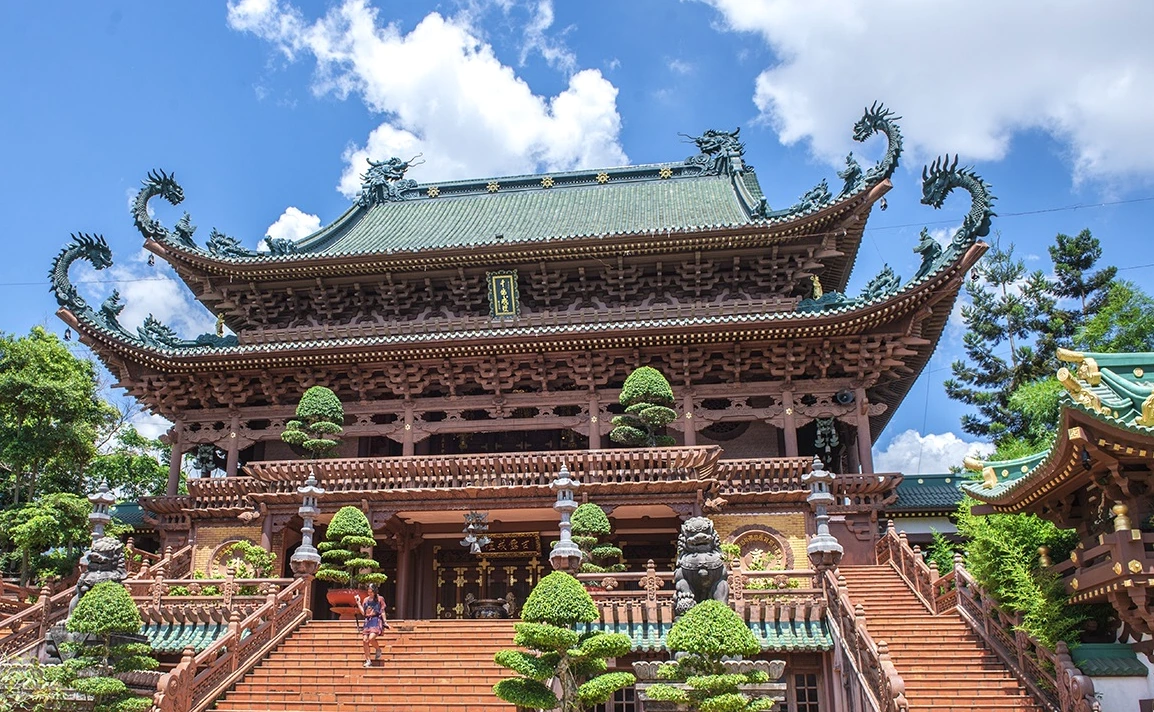
Set in the center of sun-drenched, windswept Buon Ma Thuot, Minh Thanh Pagoda emerges as a tranquil sanctuary uniting traditional Central Vietnamese Buddhist architecture with the untamed beauty of the Central Highlands. From the very first steps through the triple-arched entrance gate (Tam Quan), visitors are captivated by a majestic landscape shaded year-round by lush, ancient trees. Ancient masters carefully selected the monastery’s site according to Eastern feng shui: resting firmly against elevated ground and opening out onto a spacious courtyard that captures vital energy and cool highland breezes. Completely insulated from the noise and rush of the city outside, the grounds open into a sacred, contemplative realm steeped in Vietnamese spiritual identity.
What truly sets Minh Thanh Pagoda apart artistically is its original architectural ensemble bearing the distinct imprint of the 1960s and 1970s. The imposing main hall stands out with its sweeping, dragon-scale tiled roof curving gracefully toward the deep blue sky like the wings of a soaring phoenix. The roof ridges and eaves are intricately sculpted with motifs of two dragons flanking the moon alongside stylized golden lotuses. Notably, the structure’s load-bearing framework masterfully combines reinforced concrete with rare native Central Highlands timbers like cam lai and gu mat. Stepping inside the worship hall, natural light mingles with drifting tendrils of incense smoke, illuminating exquisitely carved wooden columns and gilded, red-lacquered plaques and couplets that reflect the devotion and virtuosity of master artisans from decades past.
To capture unforgettable, artistic photographs at Minh Thanh Pagoda, photography enthusiasts and travelers should not miss two “million-view” vantage points highly praised by travel journalists. The first is located in the main ceremonial courtyard, where a low-angle shot looking up toward the main hall captures the sweeping curves of the dragon-scale roof framed by the emerald canopies of ancient trees. The ideal window for this shot is early morning (6:00 AM to 7:30 AM), when soft dawn light filters through the highland mist, casting warm golden rays across the timber and roof tiles to create an ethereal, deeply peaceful scene. The second spot lies along the covered corridor flanking the main hall, where rows of polished wooden pillars stretch into the distance, creating remarkable spatial depth. Sunset (5:00 PM to 6:00 PM) is the golden hour here, as the setting sun casts amber and crimson streaks through the windows, bathing the corridor in a nostalgic, contemplative glow.
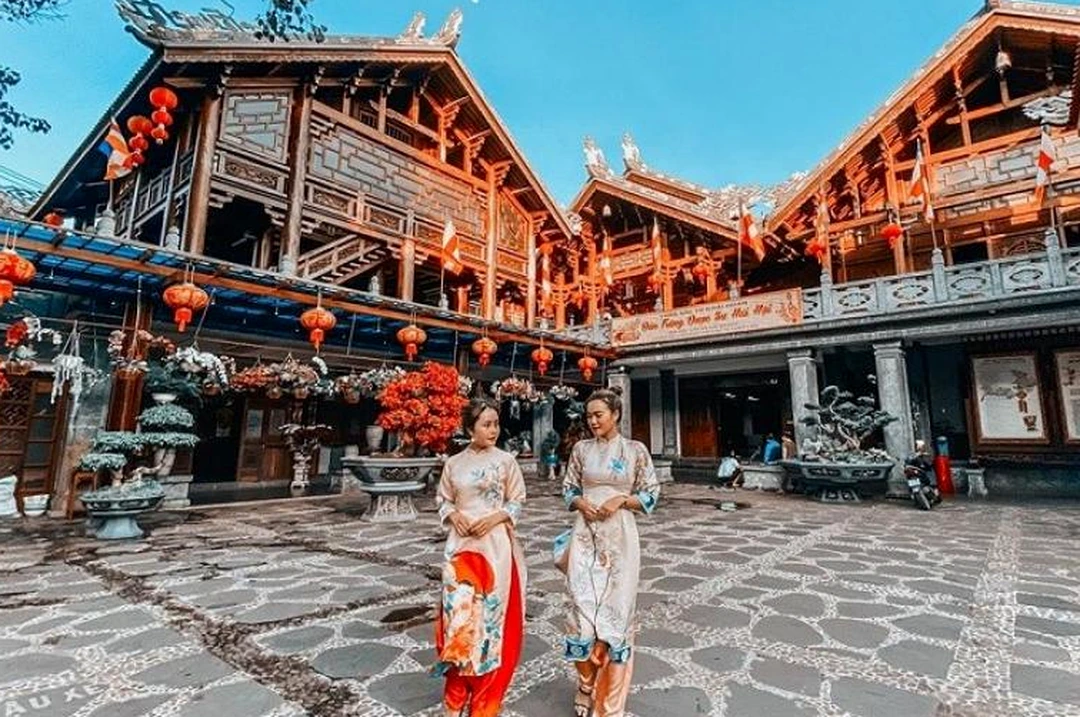
Stepping into Minh Thanh Pagoda in Buon Ma Thuot, visitors are immediately drawn into an atmosphere that feels both sacred and remarkably welcoming, far removed from the bustle of the highland city. The first lasting impression is a sense of awe at the seamless harmony between traditional Buddhist spirituality and the grandeur of the Central Highlands. The pathway leading up to the pagoda winds like a soft silk ribbon hugging the hillside, inviting visitors to ascend a flight of moss-covered stone steps—a gentle yet meditative climb that helps shed the worries and fatigue of everyday life.
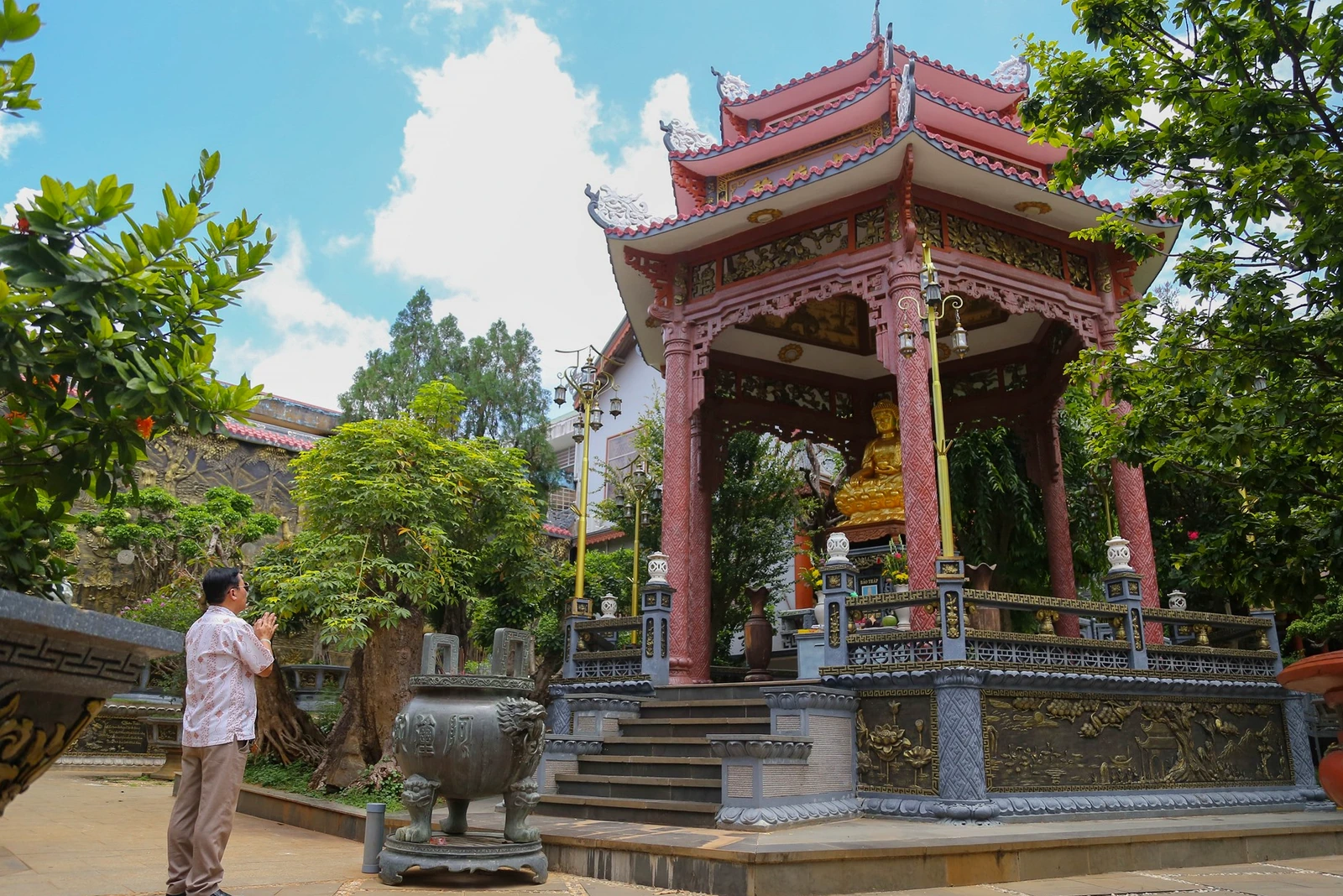
Passing through the ancient triple-arched gate reveals classic East Asian architecture crowned with curved dragon-scale tiled roofs, enveloped in wisps of fragrant incense and the resonant chime of temple bells echoing through the air. Paying respects and praying here brings moments of indescribable stillness. Looking out from the main hall courtyard, visitors are treated to a breathtaking panorama of Buon Ma Thuot veiled in morning mist, where endless emerald coffee plantations meet the breezy highland sky. Standing in that wide-open space, breathing in crisp air scented with earth and sky while faint sounds of gongs drift from nearby villages, offers a rare sensory and spiritual experience.
Beyond spiritual worship and scenic contemplation, a pilgrimage to Minh Thanh Pagoda also unlocks a vivid local cultural narrative of community bonds forged between Kinh settlers and indigenous Ede and M’Nong peoples. This cultural richness continues seamlessly once you step outside the temple gates to explore Buon Ma Thuot and savor its famed local delicacies. Nothing beats concluding a peaceful temple visit by gathering around a glowing fire to sip rich, aromatic Ban Me coffee infused with the essence of basalt soil, paired with savory bamboo-tube sticky rice with grilled chicken (ga nuong com lam) or wild bamboo shoots stir-fried with smoked buffalo meat—iconic dishes that capture the soul of the Central Highlands forests.
Every moment spent at Minh Thanh Pagoda in Buon Ma Thuot is far more than mere sightseeing; it is an immersion into living history and a journey into the depths of local culture and spirituality. The sanctuary leaves visitors deeply moved by its enduring resilience through the tides of history, while leaving behind tranquil, lasting memories of this sun-and-wind-swept highland region.
Minh Thanh Pagoda in Buon Ma Thuot is a remarkable spiritual and cultural destination that draws large numbers of travelers and Buddhist devotees whenever they visit the Central Highlands. To ensure your pilgrimage and exploration of this historic monastery go smoothly, knowing practical details regarding opening hours, transportation, and temple etiquette is essential.
Regarding opening hours, the pagoda welcomes Buddhists and sightseers every day of the week. Ideal visiting hours typically run from around 6:00 AM to 6:00 PM daily. On the 1st and 15th days of the lunar month, as well as during major Buddhist holidays such as Vesak (Buddha’s Birthday) and Vu Lan (Ullambana Festival), the temple usually opens earlier and extends its hours to accommodate community worship. Notably, admission to visit and pray at the pagoda is completely free for all guests.
To reach Minh Thanh Pagoda from central Buon Ma Thuot, visitors can easily travel by motorbike, private car, or taxi. Starting from March 10 Square or the Provincial Cultural Center, the best route follows the main arterial roads through the city center before turning onto local streets leading directly to the temple grounds. Thanks to well-developed urban infrastructure, wide roads, and clear signage, the drive takes only about 10 to 15 minutes.
As a sacred site steeped in longstanding cultural and historical significance, visiting Minh Thanh Pagoda calls for modest, respectful attire. Guests should opt for conservative clothing that covers shoulders and knees, avoiding overly short, tight, or revealing outfits to preserve the solemnity of the sanctuary. Additionally, because the expansive temple grounds incorporate natural highland terrain and stone stairways, wearing comfortable footwear such as sneakers or flat sandals is recommended for easy walking and climbing steps.
The best time of year to visit the pagoda is during the Central Highlands dry season, which stretches from roughly November to April of the following year. During these months, Buon Ma Thuot enjoys dry weather, gentle sunshine, and minimal rainfall—ideal conditions for outdoor travel, taking commemorative photos, and leisurely soaking in the serene stillness of this ancient sanctuary in the heart of the mountain town.
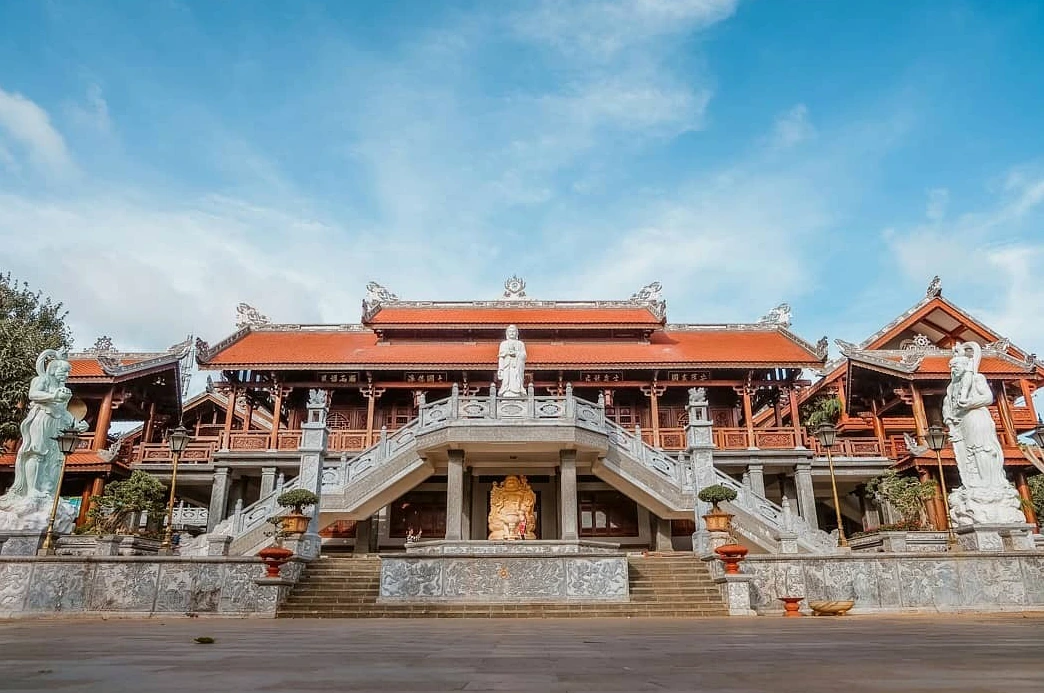
To enjoy a seamless getaway and experience the full splendor of Minh Thanh Pagoda without worrying about arranging transportation, tickets, or itineraries, travelers can choose VDS Travel’s premium all-inclusive Buon Ma Thuot tour packages. Every itinerary is thoughtfully timed so you can capture photos when the scenery is at its most radiant, accompanied by knowledgeable local guides and top-tier hospitality and dining standards.