Amid the majestic and serene Southern Truong Son mountain range, the Mang Den plateau emerges like an ethereal fairyland at an average elevation of about 1,200 meters above sea level. Located at geographic coordinates of roughly 14°39′ North latitude and 108°15′ East longitude, within Mang Canh commune—now Mang Den town, Kon Plong district, Kon Tum province—the Our Lady of Mang Den monument complex occupies a distinctive site deeply marked by the intersection of sacred natural space and the early-modern to modern missionary history of the Central Highlands.
From a feng shui perspective, this scenic landmark brings together the classic standards of traditional Eastern spatial arrangement in harmony with an indigenous ecological worldview. Behind the monument rise towering, primeval mountain slopes that remain lush green year-round, serving as a solid screen that forms a “mountain-backed” (“tựa sơn”) posture. In front opens an expansive valley, where the headwater lakes and streams of the Dak Bla River wind and murmur day and night, creating a “water-facing” (“hướng thủy”) setting that nurtures vital energy. This terrain not only imparts a quiet, solemn beauty but also holds a deep sense of peaceful energy in the minds of visiting pilgrims.
In particular, through the animist beliefs of indigenous ethnic groups such as the Mo Nam and H’re, this area was originally considered a sacred, untamed forest governed by supreme deities (Yang). The presence of the statue of Our Lady amid that vast wilderness has created a remarkable cultural dialogue between Catholic faith and local spiritual traditions, transforming an unspoiled landscape into a symbol of harmony, shelter, and nourishment.
In popular perception, this landmark is sometimes confused with Buon Ma Thuot city in Dak Lak province. This mix-up stems from the historical administration of the diocese in the past, when Kon Tum served as a major missionary center across the Northern Central Highlands, alongside overlapping waves of population migration over different periods. However, in terms of historical chronicles and human geography, Mang Den is the true original home of this sacred site. Associated with its pre-establishment period prior to 1971, this was once a rugged region largely untouched by central feudal dynasties, yet marked by the enduring footsteps of generations of missionaries.
Through the lens of the press and heritage management agencies, the Our Lady of Mang Den Statue is more than just a religious monument; it has become a valuable cultural and geological heritage site of Kon Tum. Here, the beauty of the vast basalt plateau terrain, a year-round temperate climate, and an atmosphere steeped in epic character all converge. Every inch of soil, treetop, and stream in Mang Den whispers stories of time, inviting heritage-loving souls to come pay homage, reflect, and immerse themselves in the sacred roots of the land of a thousand pines.
Dubbed the “second Da Lat” of the vast Central Highlands, the Our Lady of Mang Den Statue stands amid a majestic, pure natural landscape filled with sacred stillness. Perched at an elevation of 1,200 meters above sea level, the monument rises as an architectural focal point in seamless harmony between skilled human craftsmanship and the grand creation of Mother Nature. The heritage complex is surrounded by endless primeval pine forests, lush green all year round and drifting with mist, creating a refined, otherworldly atmosphere completely removed from the hustle and bustle of everyday city life.
In terms of sculpture and architecture, the statue of Our Lady of Mang Den possesses a simple yet profoundly majestic and contemplative beauty. The statue is carved in a standing posture with her head gently bowed and her hands lowered in front in an attitude of prayer and protection for all people, her gentle, benevolent face turned toward humanity with a gaze brimming with compassion and peace. What makes this sacred statue uniquely distinctive is that parts of her hands were lost through historical upheavals; yet that symbolic imperfection only deepens its poignant, approachable, and deeply sacred aura in the hearts of pilgrims. Surrounding the statue is a spacious, clean open-air courtyard with quiet stone benches beneath ancient pine canopies, paired with stone-paved pathways that wind gracefully along the natural contours of the mountainside, offering an ambiance that is both solemn and intimate with nature.
To capture the most memorable moments when visiting this sacred space, professional photographers and travel journalists often favor two emotionally evocative camera angles. The first angle is straight on from the pathway leading up to the monument pedestal, framing the entire statue of Our Lady against a wide open sky with straight rows of pine trees reaching up into the mountain clouds in the background. The ideal time for this shot is early morning, between 6:00 AM and 7:30 AM, when the first rays of dawn pierce through the ethereal mist, casting golden beams onto the statue to create a truly magical and sacred optical effect.
The second angle, highly praised for its artistic merit, is taken from an oblique vantage point on the hillside looking inward, allowing the photographer to encompass the entire expanse of primeval valley surrounding the monument. The golden hour to make the most of this angle is at sunset, when the Mang Den sky shifts into hues of purplish-pink blended with the muted orange of twilight. The soft late-day light embraces the statue of Our Lady, accentuating the antique, contemplative contours of the monument amid the untouched wilderness and yielding viral-worthy photographs brimming with nostalgia and serenity that touch the deepest chords of every distant traveler’s soul.
Upon arriving in Mang Den, visitors are immediately drawn into a captivating hands-on journey where unspoiled nature and indigenous life blend into one. The first highlight of the trip is the trekking trail winding through vast forests of ancient pines toward the revered grounds of the Our Lady of Mang Den Statue. The whispering mountain wind harmonizes with birdsong to create a tranquil symphony of the forest. A gentle path guides travelers into the sacred space, where the pure white statue emerges gracefully against the deep green valley. Initial feelings of awe quickly give way to profound inner stillness when standing before the quiet sanctuary, where incense smoke mingles with drifting mist.
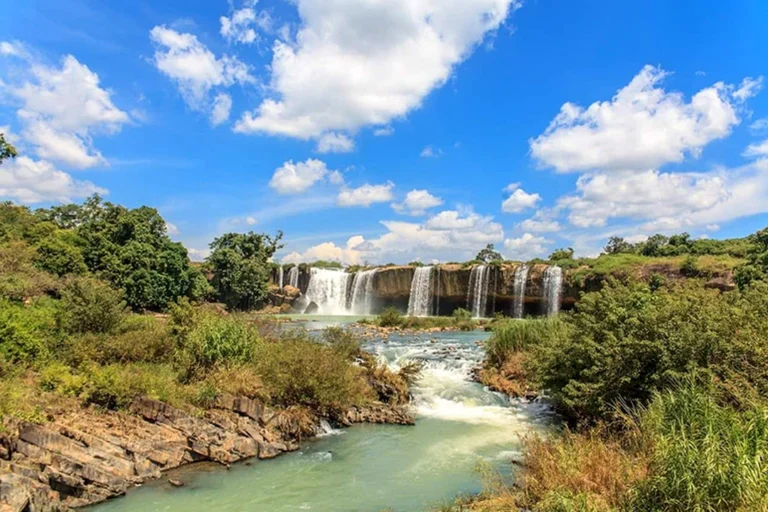
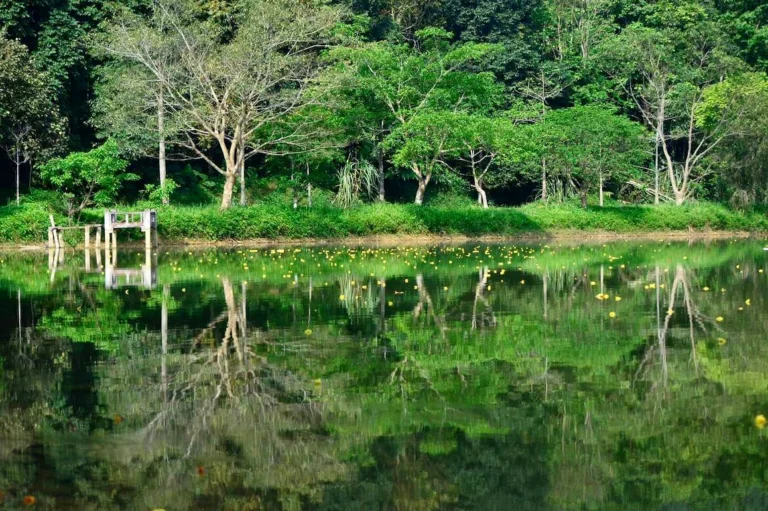
Beyond spiritual pilgrimage, exploring this destination also opens up uniquely rewarding ecological experiences. Visitors can join gentle hikes up surrounding hilltops to take in panoramic views of the Mang Den plateau veiled in white clouds. In the distance, networks of lakes and headwater streams wind like soft silk ribbons cradling primeval valleys. Paddling a dugout canoe or taking a scenic boat ride across the mirror-calm lakes in the early morning brings an extraordinary sense of peace, washing away the cares of urban life.
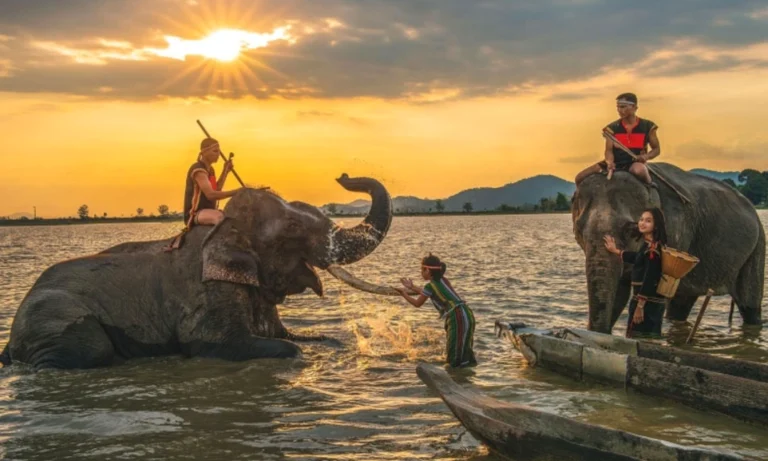
The vitality of the Northern Central Highlands is also vividly portrayed through the living indigenous culture of the Mo Nam and H’re communities. Travelers have the opportunity to visit traditional villages, listen to the resonant sound of gongs beside flickering fires, and hear legendary epic tales of forest and water deities. The interplay between contemporary religious devotion and traditional animist beliefs creates a rare cultural depth, turning every step of exploration into a living lesson in history and anthropology.
At the end of a long day of exploration and pilgrimage, one cannot miss the chance to savor the renowned local cuisine rich in the flavors of the Kon Tum mountains and forests. Guests can gather together to enjoy fragrant, sticky bamboo-tube rice (com lam), Mang Den grilled chicken seasoned with mac khen (forest pepper) and wild peppercorns, and aromatic skewers of black pork grilled over mountain stream embers. Taking a sip of sweet wild sim fruit wine amid the crisp chill of the plateau at 1,200 meters awakens every sense, leaving each visitor with unforgettable memories of a sacred land rich in identity.
The Our Lady of Mang Den Statue is one of the most famous spiritual and ecotourism destinations in the Northern Central Highlands, drawing large numbers of travelers and pilgrims from all directions year-round. To ensure your journey to this windswept plateau goes smoothly and fulfilling, equipping yourself with practical tips on visiting hours, routes, and etiquette is essential.
Regarding opening hours, the grounds of the Our Lady of Mang Den Statue are open freely to visitors and pilgrims every day of the week, including public holidays and Sundays. Visitors can come to offer incense and pray at any time from early morning until late afternoon without strict time restrictions. Notably, admission is completely free of charge for all individuals and tour groups, making it as accessible as possible for the faithful and travelers from near and far.
To get there, departing from the center of Kon Tum city, travelers cover a distance of about fifty-five kilometers along National Highway 24. This route winds its way through the majestic mountain passes and slopes of the Southern Truong Son range, offering breathtaking scenery along the way. The most convenient modes of transport are private cars, motorbikes, or intercity buses running from Kon Tum to Kon Plong district. The road is now well-paved with asphalt, though drivers should watch their speed carefully and turn on fog lights when traveling during seasonal transitions when dense clouds and mist roll in.
The best time of year to visit Mang Den is during the dry season, from December of the previous year through April of the following year. During these months, the weather is dry with warm sunshine during the day and a gentle chill at night, making it ideal for climbing steps, sightseeing, photography, and attending outdoor religious ceremonies. As for attire, since this is a sacred space connected to a solemn place of worship set in high mountainous terrain, visitors should prioritize modest, respectful, and neat clothing appropriate for religious customs. Additionally, it is advisable to wear sneakers or shoes with good traction for easy movement on the stone steps, and to bring along a light jacket, as temperatures on the Mang Den plateau are typically noticeably cooler than in lowland areas.
To enjoy a seamless holiday and fully admire the beauty of the Our Lady of Mang Den Statue without worrying about arranging transportation, booking sightseeing tickets, or planning itineraries, travelers can choose VDS Travel’s premium all-inclusive Buon Ma Thuot tours. Each tour is thoughtfully designed to optimize photo check-in times when the scenery is at its most radiant, accompanied by a team of guides deeply knowledgeable about local culture alongside top-tier hotel and dining standards.