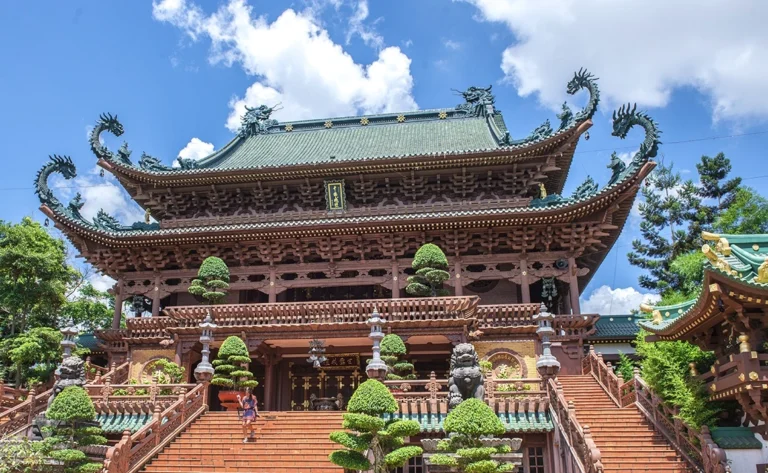
Nestled deep within the mist-shrouded expanse of the Southern Truong Son mountain range, the Mang Den plateau emerges like a legendary frontier where pristine geological wonders converge with the profound depths of Vietnam’s cultural heritage. Rising above popular geographic misconceptions that once associated this region with the urban landscape of Buon Ma Thuot (Dak Lak), Mang Den actually occupies a distinct vantage point roughly 50 kilometers northeast of Kon Tum City, situated entirely within the majestic mountainous territory of Kon Plong District, Kon Tum Province. Standing at an average elevation of 1,200 meters above sea level, this region boasts an advantageous geographical setting with a cool, temperate climate year-round, embraced by vast primeval pine forests and a dramatic network of lakes and waterfalls—forming one of the most auspicious “water-gathering, fortune-gathering” feng shui landscapes in the Central Highlands.
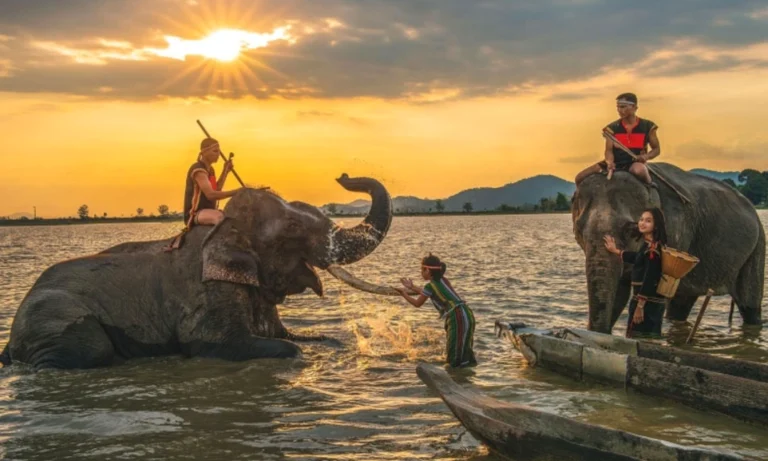
From a linguistic and historical standpoint, the name Mang Den is a phonetic adaptation of “T’mang Deng” in the language of the Mo Nam people—an indigenous subgroup of the Xe Dang ethnic community. According to ethnographic fieldwork and imperial land records, “T’mang Deng” carries the sacred meaning of a “flat, expansive land,” while also symbolizing a hallowed realm inhabited by deities, where dark-green cogon grasslands blend seamlessly with fertile red basalt soil. Across centuries of shifting chronicles—from the prehistoric era of Austronesian and Mon-Khmer peoples whose traces remain in archaeological strata along the Dak Bla River basin, through the feudal periods under the Le and Nguyen dynasties—Mang Den has preserved its solemn majesty as an autonomous stronghold of tribal alliances woven into the heroic epics of the Central Highlands.
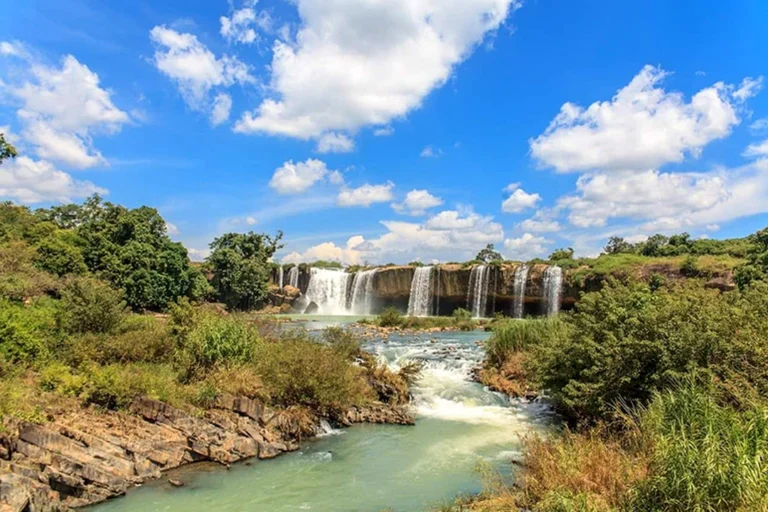
Mang Den’s intrinsic geographical allure is further enriched by a unique geological ecosystem widely recognized by heritage authorities and travel publications alike. Chief among these is the legendary “Seven Lakes, Three Waterfalls” system—including Dak Ke, Pa Sy, Toong Dam, and Toong Zo Ri—glistening like celestial mirrors reflecting the sacred spirit of the mountains and rivers. Every cascade and stream here is bound to the deeply humanistic legend of the “Seven Lakes and Three Waterfalls,” recounting how the deity Pa Sy created this land. The seamless union of an isolated geographical setting, magnificent mountainous feng shui, and deep historical memory has shaped Mang Den into a living museum—a premier heritage travel destination that preserves the untamed soul of the great forest across time.
Perched amidst the majestic Southern Truong Son mountains at an altitude of over 1,200 meters above sea level, the Mang Den Tourist Area unfolds like a breathtaking symphony of nature, where earth, sky, and sacred forest merge into a grand scenic masterpiece. The plateau’s terrain is extraordinarily distinctive, featuring undulating valleys encircled by endless belts of primeval pine forest that form a lush, vibrant green basin. Here, the climate remains refreshingly cool throughout the year, with drifting mists veiling the hillsides to evoke a beauty that is both untamed and primordial, yet steeped in millennia of indigenous cultural heritage. Viewed from above, the network of rivers and streams winds gracefully like silver ribbons across rich carpets of vegetation, accentuating the dramatic yet poetic charm of a land affectionately dubbed the “Second Da Lat” of the Central Highlands.
Beyond its sublime natural scenery, Mang Den also showcases spiritual architecture and eco-conscious structures that harmonize effortlessly with the epic expanse of the great forest. Resorts, traditional communal Rong houses, and architectural works throughout the area are designed with utmost respect for the natural topography, utilizing local timber, natural stone, and rustic yet finely crafted bamboo and thatch. Intricate carvings adorning the pillars of the Rong houses echo the sculptural artistry of the Mo Nam and Xe Dang peoples, featuring geometric motifs, sacred animal totems, and cosmological symbols that attest to the enduring vitality of indigenous culture. Rather than obscuring the landscape, these architectural spaces serve as harmonious accents that elevate the majestic beauty of Kon Plong’s mountains and forests.
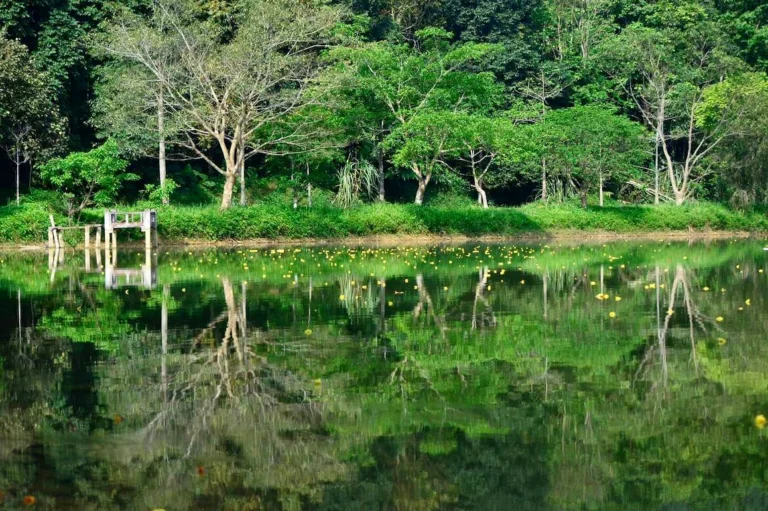
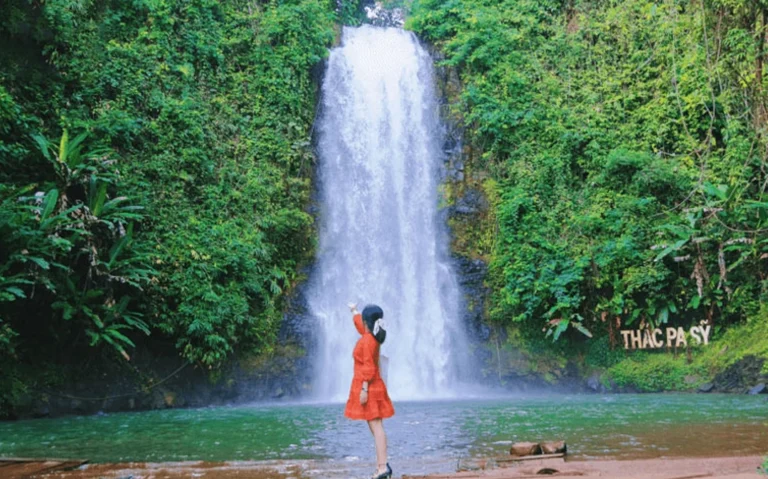
To capture the fleeting interplay of light and nature in Mang Den, seasoned photographers and travel journalists always share insider tips on two unmissable “million-view” vantage points. The first is the Pa Sy Waterfall area between 7:00 AM and 8:30 AM. During this window, the first rays of morning sunlight pierce through the dense canopy of the primeval forest, casting brilliant golden beams directly onto the foaming white waters plunging from a height of 45 meters, framed by moss-draped cliffs and lush green ferns for a truly heart-stirring composition. The second spot prized by photography enthusiasts is the wild rose myrtle hills or the Dak Ke Lake valleys at dusk (from 4:30 PM to 5:30 PM). As the sun dips behind the Truong Son range, the Mang Den sky is painted in ethereal hues of magenta and violet, reflecting off the glassy surface of the lake to create a serene, contemplative, and enchanting panorama that awakens every sense of those who set foot in this sacred land.

Upon arriving at the Mang Den Tourist Area in Kon Plong District, Kon Tum Province, travelers are immediately enveloped by a wilderness that is raw, majestic, and deeply poetic. Worlds apart from the hustle and bustle of city life, this highland sanctuary greets visitors with mist-shrouded mornings, crisp mountain air kissing the skin, and the resinous fragrance of ancient pines drifting on the breeze. That initial sense of awe quickly gives way to an extraordinary calm as you behold a vast, sprawling plateau—true to its original name given by the Mo Nam people. Real-world experiences here go far beyond mere sightseeing; they become an immersive journey touching the deepest chords of body and soul.
Exploring Mang Den begins with hiking and trekking trails winding through boundless stretches of old-growth forest. Beneath centuries-old canopies, lively birdsong mingles with the gentle murmur of forest streams to create the natural chorus of the highlands. Travelers enjoy invigorating yet rewarding climbs up gentle hills to take in panoramic views of the Mang Den valley from above. Gazing out across the horizon, the entire expanse of Kon Plong unfolds in endless waves of green, punctuated by crystal-clear lakes as smooth as mirrors. Drifting by boat across natural lakes or immersing yourself in the cool waters of the “Seven Lakes, Three Waterfalls” system (such as To Dang and Dam Keeng) offers moments of pure tranquility, washing away the stresses and worries of everyday life.
Alongside its spectacular scenery, Mang Den is also a revered spiritual haven boasting renowned pilgrimage sites that bring quiet depth to the soul. Visitors should not miss paying respects at the Statue of Our Lady of Mang Den, tucked away in a tranquil pine grove, or making a pilgrimage to the grand Khanh Lam Pagoda, where temple bells resonate through the stillness of the surrounding forest. Standing within such serene spaces, the heart grows light and daily anxieties seem to dissolve, giving way to reverence and a profound spiritual reconnection.
No journey through Mang Den is complete without savoring its remarkably distinctive local cuisine. Amidst the crisp chill of the Kon Tum highlands, nothing compares to gathering around a glowing fire to feast on grilled free-range chicken paired with fragrant bamboo-tube upland sticky rice, dipping the sweet, savory meat into wild doi seed salt and pepper, or warming up over a steaming pot of sturgeon hotpot. Even more memorable are signature highland specialties such as wild sour bamboo shoots stewed with meat and stir-fried cassava leaves with male papaya blossoms—flavors infused with the essence of the mountains that awaken every palate. With all its grandeur, vitality, and rich cultural identity, Mang Den leaves every visitor with a lingering nostalgia and enduring reverence for this sacred highland realm.
Welcome to the Mang Den plateau in Kon Plong District, Kon Tum Province—a magnificent sanctuary nestled in the heart of the Southern Truong Son wilderness. To ensure your journey exploring this “flat and expansive land”—true to its original meaning in the Mo Nam language—goes smoothly, the pocket guide below provides the most practical and accurate information for travelers.
Regarding operating hours, ecological attractions, natural landmarks, and spiritual sites here welcome visitors seven days a week, typically from early morning until sunset to ensure traveler safety along winding mountain passes. Most natural scenic spots, pristine lakes and waterfalls, and community cultural spaces are completely free to enter. Visitors only incur costs for accommodations, dining, or select privately managed agritourism sites and specialty nurseries.
To reach Mang Den, the most convenient mode of transport from central Kon Tum City is by motorbike or private car along National Highway 24, a roughly 50-kilometer journey heading northeast. This scenic route winds over gentle mountain passes shaded by green pines and lined with wildflowers. If traveling from distant provinces, visitors can fly into Pleiku Airport (Gia Lai) and then take an intercity bus or rent a self-drive car heading north for just over 100 kilometers to reach this breezy plateau.
The ideal time of year to visit Mang Den is during the dry season, which runs from November through April of the following year. During these months, the weather is dry with golden sunshine, yet the air retains the signature crisp chill of the highlands. Notably, visiting between late November and December rewards travelers with roadways ablaze in the pink blossoms of cherry trees, alongside the gleaming golden hues of harvest-ready terraced rice fields.
Finally, when exploring Mang Den—especially sacred landmarks such as the Statue of Our Lady of Mang Den or historic pagodas and churches—visitors should dress modestly, respectfully, and neatly in accordance with local customs. Additionally, because the terrain consists primarily of hills, valleys, open grasslands, and red dirt trails, packing a sturdy pair of sneakers or non-slip hiking shoes along with a light jacket is essential to stay comfortable and prepared for every outdoor adventure.

To enjoy a seamless getaway and take in the full splendor of the Mang Den Tourist Area without the hassle of arranging transportation, booking entrance tickets, or planning itineraries, travelers can choose VDS Travel’s premium all-inclusive Buon Ma Thuot tour packages. Every itinerary is thoughtfully timed for photo stops when the scenery is at its most radiant, accompanied by knowledgeable local guides well-versed in regional culture alongside top-tier hotel and dining standards.