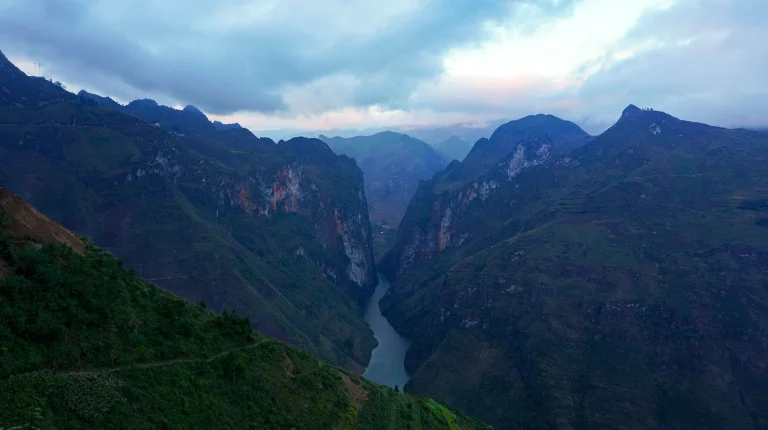
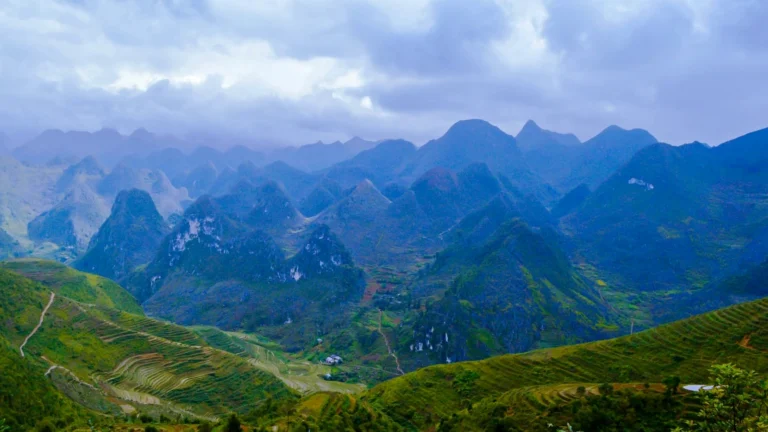
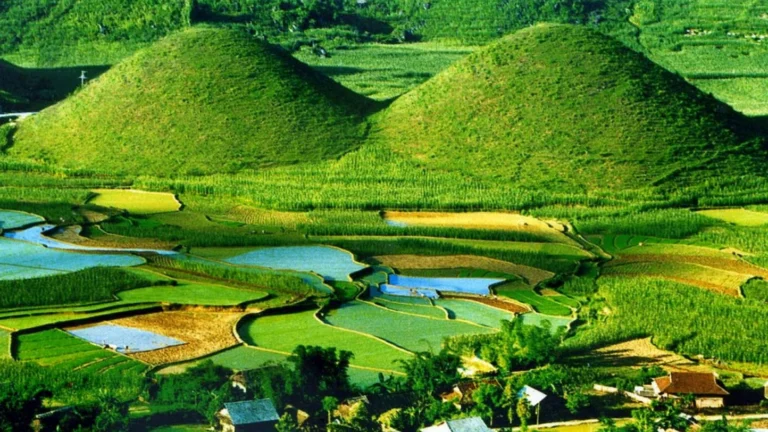
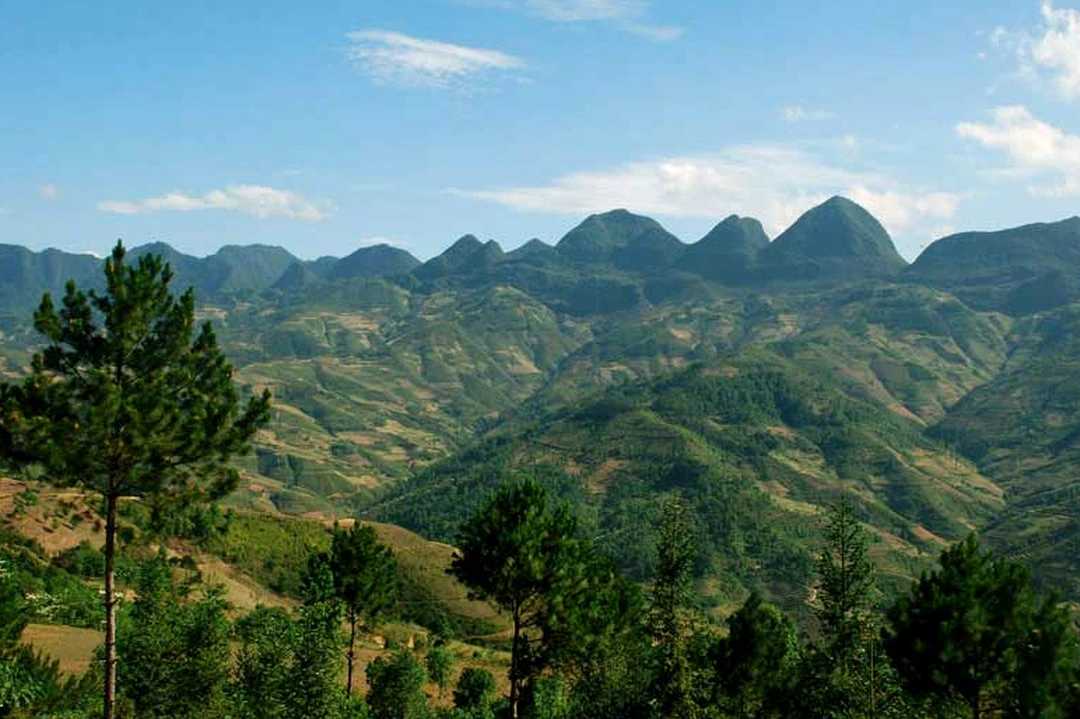
Nestled in the mountainous far north of Vietnam, Yen Minh Pine Forest stands out as a singular natural wonder, seamlessly blending the rugged grandeur of the karst plateau with the poetic, lyrical charm of a subtropical highland. Geographically, the forest stretches across the valleys and mountain slopes of Yen Minh District, Ha Giang Province, serving as a vital transportation and ecological gateway along the arterial route connecting Ha Giang City with the Dong Van Karst Plateau. The landscape reflects traditional geomantic principles of “backing onto mountains and facing water,” framed by jagged, cloud-piercing cat-ear limestone peaks that cradle fertile basin valleys where the Nho Que River and its tributaries wind through. The artistic contrast between cold, silent gray rocks millions of years old and an endless, towering sea of green pines creates a geo-cultural space that is both untamed and majestic, holding a magnetic appeal for avid travelers and heritage researchers alike.
Looking back through feudal historical records and research archives from the Vietnam Institute of Cultural Heritage & History, the origins of Yen Minh Pine Forest are closely tied to profound geopolitical shifts along the frontier. From the Prehistoric and Protohistoric eras, this region was a long-standing settlement for ethnic groups belonging to the Tibeto-Burman and Mon-Khmer language families, leaving behind rich cultural layers beneath the ancient pine canopies. Entering the era of independent feudal dynasties—Ly, Tran, Le, and Nguyen—this territory was gradually integrated into the central court’s sophisticated administrative system. During the Revival Le and Nguyen dynasties, particularly under the border consolidation policies of Emperors Minh Mang and Tu Duc guided by the doctrine of “every inch of land, every citizen,” Yen Minh Pine Forest was more than just native primary vegetation dominated by Masson’s pine (Pinus massoniana); it also asserted its role as a strategic ecological belt and a vital trade corridor linking Yunnan (China) with Vietnam’s interior via Meo Vac and Dong Van.
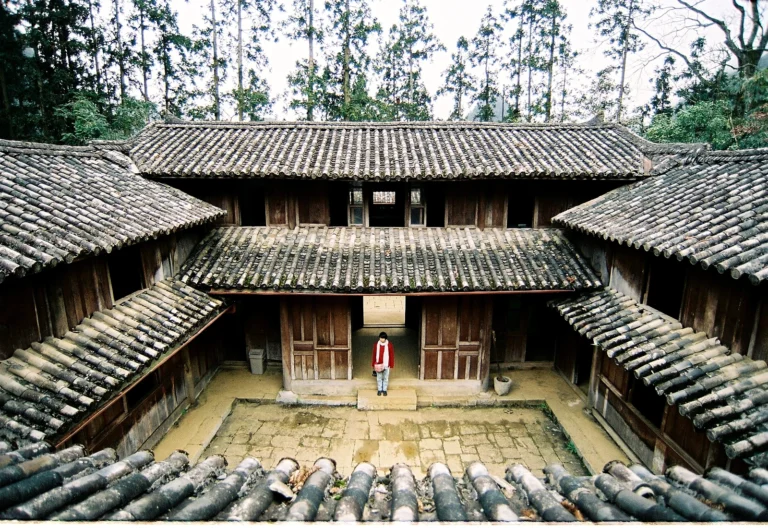
In the modern era, the significance of Yen Minh Pine Forest was further documented in the archives of the Government-General of Indochina starting in 1905, when French colonial authorities established military observation posts and harvested its valuable forestry resources. Beyond that, this land bears the imprint of historical figures and local chieftain dynasties, most notably the Vuong clan (Vuong Chinh Duc and Vuong Chi Sinh) alongside respected Hmong and Dao patriarchs who played a pivotal role in safeguarding their communities. The forest has witnessed the turbulent ebbs and flows of history, from uprisings against feudal mountain oppression to serving as a steadfast revolutionary base for the Yen Minh guerrilla forces during the wars of resistance.
Today, through scholarly research and the lens of journalism and media, Yen Minh Pine Forest is celebrated as a living ecological and geological museum within the Ha Giang Karst Plateau UNESCO Global Geopark. The harmony of millions of years of tectonic geological value, a unique pine forest ecosystem, and deep-rooted indigenous culture has transformed this area into an invaluable heritage landmark. Visiting Yen Minh means stepping into an authentic realm where the sacred spirit of mountains and rivers and echoes of a thousand-year history still whisper through the rustling highland winds.
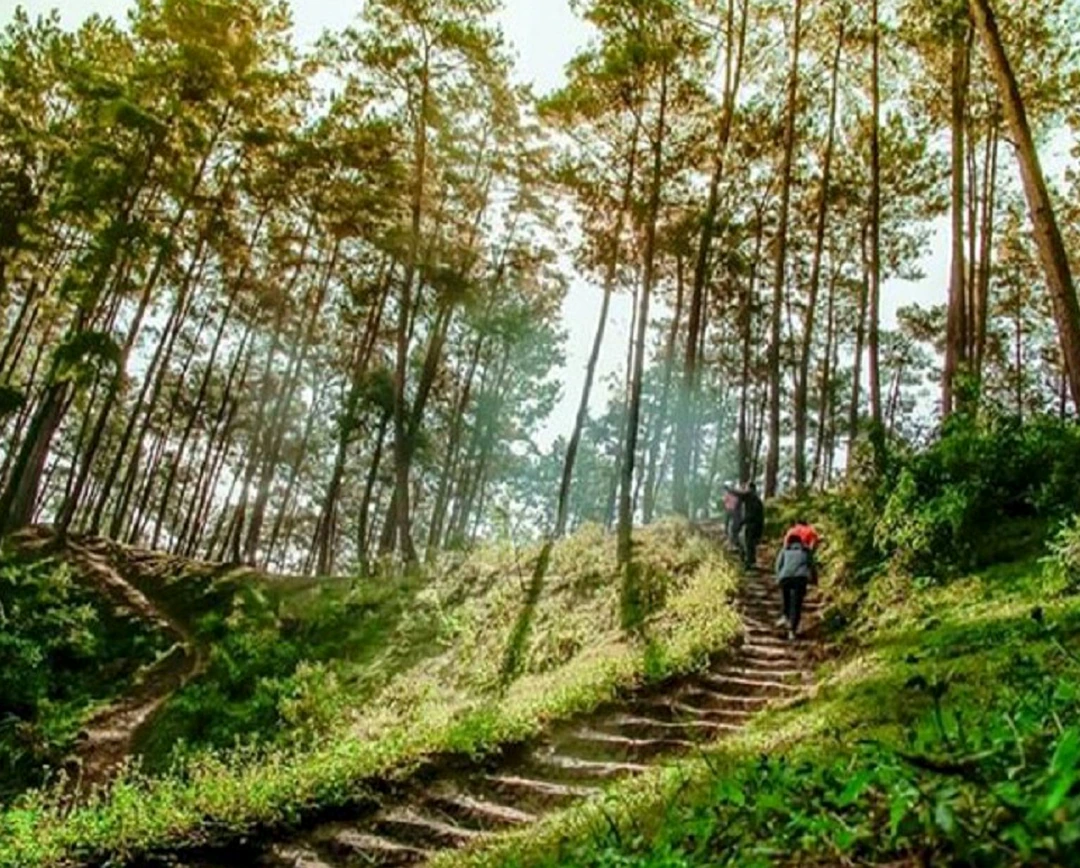
Yen Minh Pine Forest appears as a magnificent masterpiece of nature on the Ha Giang karst plateau, bringing together raw, majestic beauty and deep poetic charm. Viewed from above, the vast expanse of vegetation with straight, towering Masson’s pines forms a lush green blanket draping over rugged limestone ridges and winding valleys. The terrain here is remarkably unique, undulating in waves across steep mountainous slopes to create deep, open spatial layers. Beneath the needle-leaf canopy, a thick carpet of forest litter blends with the signature red basalt soil to paint a vibrant natural brocade. The gnarled, moss-draped trunks of ancient pine trees stand as a vivid testament to resilient life amidst harsh frontier weather, evoking a beauty that is at once solemn, timeless, and unexpectedly gentle.
To capture the seamless harmony between earth, sky, and this breathtaking landscape, professional photographers and travel enthusiasts often seek out two classic vantage points dubbed “million-view” photo spots. The first check-in spot sits right at the hairpin turn of Yen Minh Slope, offering a panoramic vista over the entire green pine valley stretching out like a soft silk ribbon winding along the mountainside. From here, camera lenses can capture the striking contrast between treacherous, winding mountain passes and the serene stillness of the vast pine wilderness. The second photo spot lies deep within the heart of the forest, where sunlit clearings allow rays of light to slant through the canopy, creating a magical optical effect straight out of a cinema frame.
The ideal time to capture once-in-a-lifetime photographs at Yen Minh Pine Forest is at dawn (from 5:30 AM to 7:00 AM) or at dusk as the sun sets (from 4:30 PM to 5:30 PM). As first light breaks, delicate wisps of mist clinging to the treetops mingle with early sunbeams piercing through the fog, forming radiant, ethereal shafts of golden light. Conversely, in the late afternoon, the setting sun bathes the horizon in warm amber, illuminating the trunks of old-growth pines to create a deeply tranquil and contemplative sense of depth. These are the quintessential golden hours that showcase the full grandeur, splendor, and lyrical beauty of this historic and natural landmark.
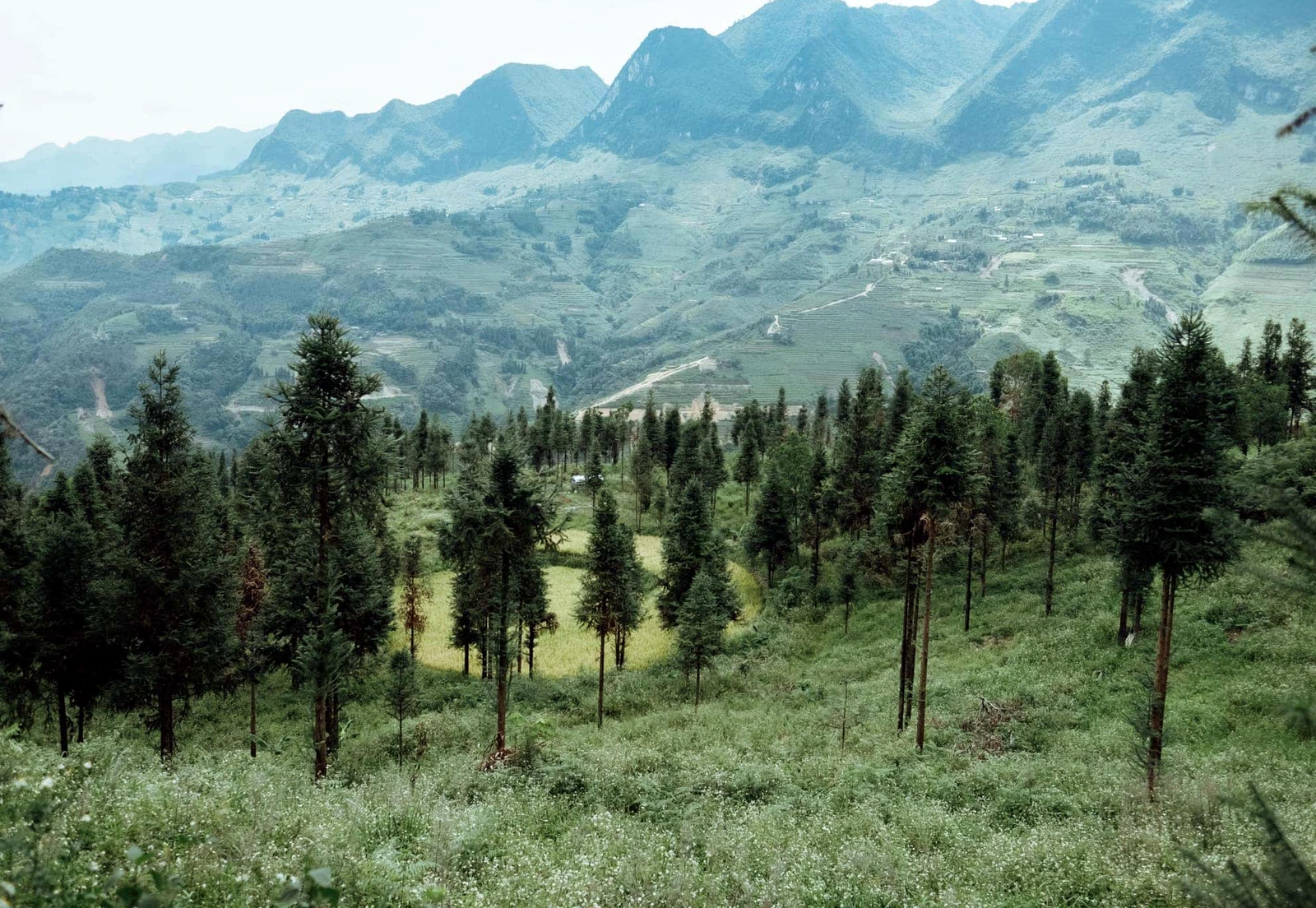
Stepping into Yen Minh Pine Forest, visitors are immediately captivated by a grand natural expanse where tens of thousands of Masson’s pines reach straight toward the clouds. Amid the signature crisp chill of the Ha Giang karst plateau, the earthy, resinous aroma of pine mingles with drifting mist to create an unusually serene atmosphere. Any feeling of smallness before the vast wilderness quickly gives way to exhilaration as travelers set out along winding trails beneath the needle-leaf canopy. The sound of mountain breezes sighing through layers of foliage feels like a symphony of the highlands, offering priceless real-world moments for anyone seeking quietude and total immersion in untamed nature.
Exploring this destination goes far beyond admiring lush greenery; it unfolds as a series of engaging, multifaceted experiences. Travelers can challenge themselves on gentle trekking paths leading up to high vantage points with sweeping views over the Yen Minh valley below. Looking down from above, terraced rice fields curve gracefully around peaceful villages while a small stream meanders past moss-covered rammed-earth houses, composing a picturesque landscape painting. For those drawn to spiritual culture, pausing at indigenous sacred spaces tucked beneath ancient pines offers moments of quiet reflection to unwind and restore inner balance away from the bustle of urban life.
Alongside its stunning natural scenery, Yen Minh Pine Forest preserves the vibrant indigenous heritage of the Hmong and Dao ethnic communities who have inhabited the surrounding hills for generations. Visitors have the chance to join local community gatherings, listen to the resonant melodies of the khen (bamboo mouth organ) echoing across the mountains, or watch graceful traditional dances. That cultural immersion becomes even richer when gathering around a glowing hearth to savor renowned Ha Giang highland specialties—such as rich thang co stew, fragrant free-range “armpit” pork, chewy five-color sticky rice, or a warming cup of corn wine infused with mountain hospitality.
Upon leaving Yen Minh Pine Forest, what lingers in every traveler’s heart is not merely the majesty of the scenery or the richness of local delicacies, but also a deep respect for the resilient spirit of nature and the people living on the frontier. The fusion of quiet historical depth, an unspoiled ecosystem, and vibrant cultural identity turns this place into an unforgettable stop along any journey through Vietnam, leaving a lasting yearning in anyone who has ever set foot here.
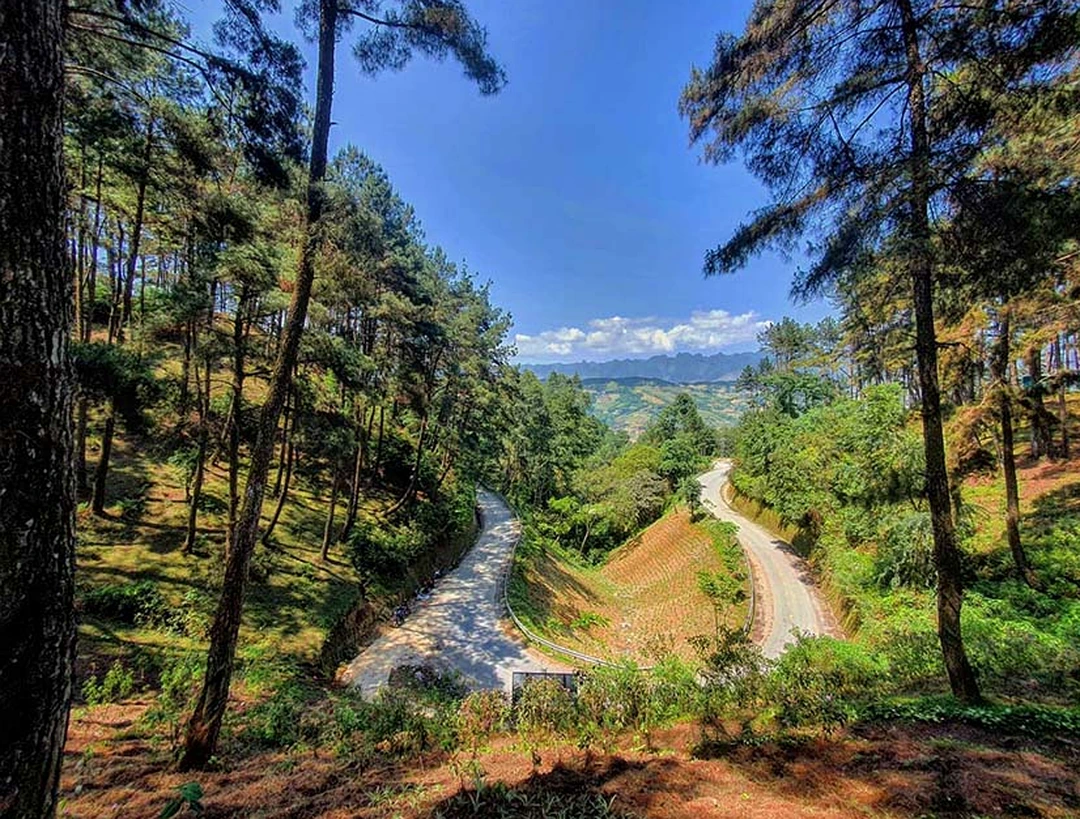
Welcome to the latest updated travel guide to Yen Minh Pine Forest, a practical handbook to help you prepare thoroughly for exploring the “Da Lat of the karst plateau.” Regarding opening hours, Yen Minh Pine Forest is a public natural landscape located in Yen Minh District, Ha Giang Province, open freely to visitors 24/7 every day of the week. Travelers do not need to purchase entrance tickets or pay any sightseeing fees to visit, stroll, or take photos here, allowing complete flexibility to plan your itinerary without time constraints.
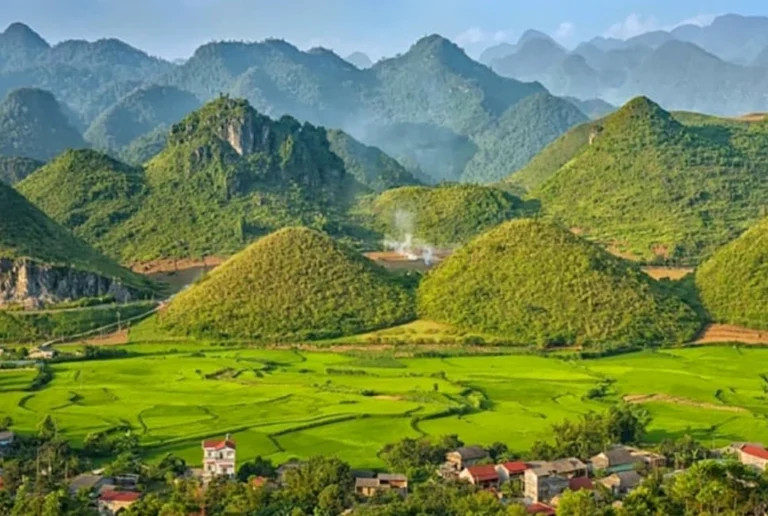
To reach Yen Minh Pine Forest in the most convenient way from downtown Ha Giang City, the top recommended options are riding a motorbike (for adventurous road-trippers) or hiring a private car with a driver experienced in mountain terrain. Departing from Ha Giang City, follow National Highway 4C toward Quan Ba, pass Quan Ba Heaven Gate and Co Tien Twin Mountains, and continue for roughly 40 kilometers until you officially enter the pine forest area. This route is famous for its dramatic hairpin bends and winding mountain passes, rewarded by breathtaking scenery on both sides—especially as you descend the pass into Yen Minh valley, where an endless expanse of primeval pine groves unfolds right before your eyes.
The best time of year to visit Yen Minh Pine Forest is from September to March of the following year. In autumn (September to October), crisp weather and brilliant golden sunlight filtering through ancient pine canopies create a wonderfully romantic setting. Meanwhile, from November to January, the forest takes on a mystical beauty wrapped in dense morning mist. In particular, visiting between October and December gives you the added bonus of seeing buckwheat flowers in full bloom across the surrounding hillsides.
As for attire and local etiquette, because the pine forest sits on a karst plateau with moderate slopes, gravel-and-dirt footpaths, and fluctuating temperatures between day and night, opt for comfortable, breathable, stretchable clothing paired with high-traction sneakers or hiking shoes. Be sure to pack a warm jacket, as temperatures beneath the pine canopy are typically cooler than in lowland areas. Additionally, when visiting nearby Hmong and Dao villages around the forest, respect indigenous traditions, never photograph local residents without asking permission first, strictly maintain public cleanliness without littering, and refrain from lighting unauthorized campfires in the forest to help protect this precious natural heritage ecosystem.
To enjoy a seamless getaway and take in the full splendor of Yen Minh Pine Forest without worrying about arranging transportation, booking tickets, or planning routes, travelers can choose VDS Travel’s premium all-inclusive Ha Giang tours. Every itinerary is thoughtfully timed for photo stops at the most radiant hours of the day, accompanied by knowledgeable local guides and top-tier hotel and dining standards.