Located in the southern suburbs of Beijing, the Temple of Heaven (Chinese: 天坛公园) is not merely a masterpiece of ancient architecture that reached the pinnacle of Eastern aesthetics, but also a focal point where divine authority, cosmological philosophy, and the vicissitudes of Chinese history converge. The founding milestone of this renowned sacrificial complex was set in the 18th year of the Yongle reign (1420) under Emperor Chengzu of Ming, Zhu Di. After deciding to relocate the capital from Nanjing to Beijing, the ambitious emperor commissioned the planning and construction of a sacred sacrificial space south of the Forbidden City, modeled after the sacrificial rituals of Nanjing. At that time, the complex was named the “Altar of Heaven and Earth”—a gathering place of deities where the emperor performed joint sacrificial rites (worshiping both Heaven and Earth together). The decision to site the complex in the south carried profound feng shui significance, as the south belongs to the Fire element, representing Yang energy, radiance, and the absolute authority of the Son of Heaven ruling over all under heaven.
A major historical turning point that fundamentally transformed the appearance and spirit of this sacrificial complex occurred in the 9th year of the Jiajing reign (1530). Accepting a revolutionary memorial from Minister of Rites Xia Yan advocating the principle of “separating the sacrifices to Heaven and Earth,” Emperor Shizong of Ming (the Jiajing Emperor) initiated the construction of the Fangze Altar (the Temple of Earth) outside Andingmen Gate specifically for worshiping the Earth deities. Accordingly, the original Altar of Heaven and Earth was completely redesigned to be dedicated exclusively to Heaven worship, and in the 14th year of the Jiajing reign (1535), it was officially renamed the “Temple of Heaven.” During this grand liturgical reform of the Jiajing era, blue glazed tiles were thoroughly substituted for the former imperial yellow, officially laying the foundation for the proud deep-blue hue—a classic visual symbol mirroring the boundless vault of the sky that has endured for centuries.
Entering the Qing dynasty, during the glorious era of Emperor Gaozong of Qing (the Qianlong Emperor), the Temple of Heaven underwent another golden period of restoration and expansion. The monarch ordered reconstructions that heightened the magnificence of the sacrificial space, notably transforming the tri-colored glazed tile roof of the Hall of Great Sacrifice (predecessor of the Hall of Prayer for Good Harvests) into a pure, monochromatic deep blue, while expanding the infrastructure of the Circular Mound Altar. Precious ancient texts such as the Collected Statutes of the Ming Dynasty and the Collected Statutes of the Qing Dynasty, alongside the famous stone stele “Imperial Inscription on the Reconstruction of the Circular Mound Altar by Qianlong” and the plaque in the Beamless Hall, still preserve intact the “edicts of self-reproach” (imperial edicts of repentance before Heaven and Earth) and the rigorous system of grain-praying rituals. These inscriptions are invaluable historical relics, capturing moments when the supreme ruler of the realm set aside his exalted status to bow in repentance and pray for favorable weather and prosperity for his subjects.
However, the history of the Temple of Heaven does not consist solely of the glory of imperial ceremonies; it also bears the scars of turmoil during the modern era. In 1900, a sovereignty disaster struck when the Eight-Nation Alliance occupied Beijing and turned this sacred ground into a military encampment, severely desecrating its inherent solemnity. In 1914, in the final throes of imperial ambition, Yuan Shikai chose this site to stage his notorious monarchist restoration sacrifice to Heaven. It was not until 1918 that the Beiyang Government officially abolished the boundaries of the forbidden imperial precinct, transforming the Temple of Heaven into a public park open to ordinary citizens via ticketed admission. From a sacred forbidden ground reserved solely for imperial footsteps, the Temple of Heaven officially entered a new chapter, becoming an encyclopedic cultural heritage site welcoming the world with open arms.
Situated in the southeastern outer suburb of ancient inner Beijing, the feng shui coordinates of the Temple of Heaven were meticulously calculated by Ming dynasty grandmasters based on the classic architectural philosophies of the ancient text Kaogongji (Record of Trades). The principle of “Ancestral Temple on the left, Altar of Soil and Grain on the right; court in the front, market in the back” harmonized seamlessly with ancient regulations governing suburban sacrifices outside the capital, turning this land into a nexus of spiritual energy between the dynasty and the cosmos. Placing the sacrificial altar south of the inner city not only served Heaven-worshiping rituals in accordance with the law that Yang energy originates in the south, but also established a solid feng shui counterweight along the capital’s north-south central axis. The entire space is enclosed within a strict layout where the natural terrain was reshaped to serve the philosophy of the unity of Heaven and Humanity.
The spatial planning language of the Temple of Heaven is a visual embodiment of the cosmological diagram “Round Heaven and Square Earth,” deeply ingrained in Eastern philosophical thought. The enclosing walls, spanning a total area of 273 hectares, are divided into two concentric rings—inner and outer walls—in which the northern wall curves gracefully in a proud semicircle symbolizing the vast dome of the sky, while the southern wall is squared off with sharp corners representing the broad, flat earth. This seamless transition from angular geometry to sweeping curves not only creates a distinctive visual rhythm but also delineates spiritual boundaries, elevating the entire complex into a microcosm right in the heart of Beijing.
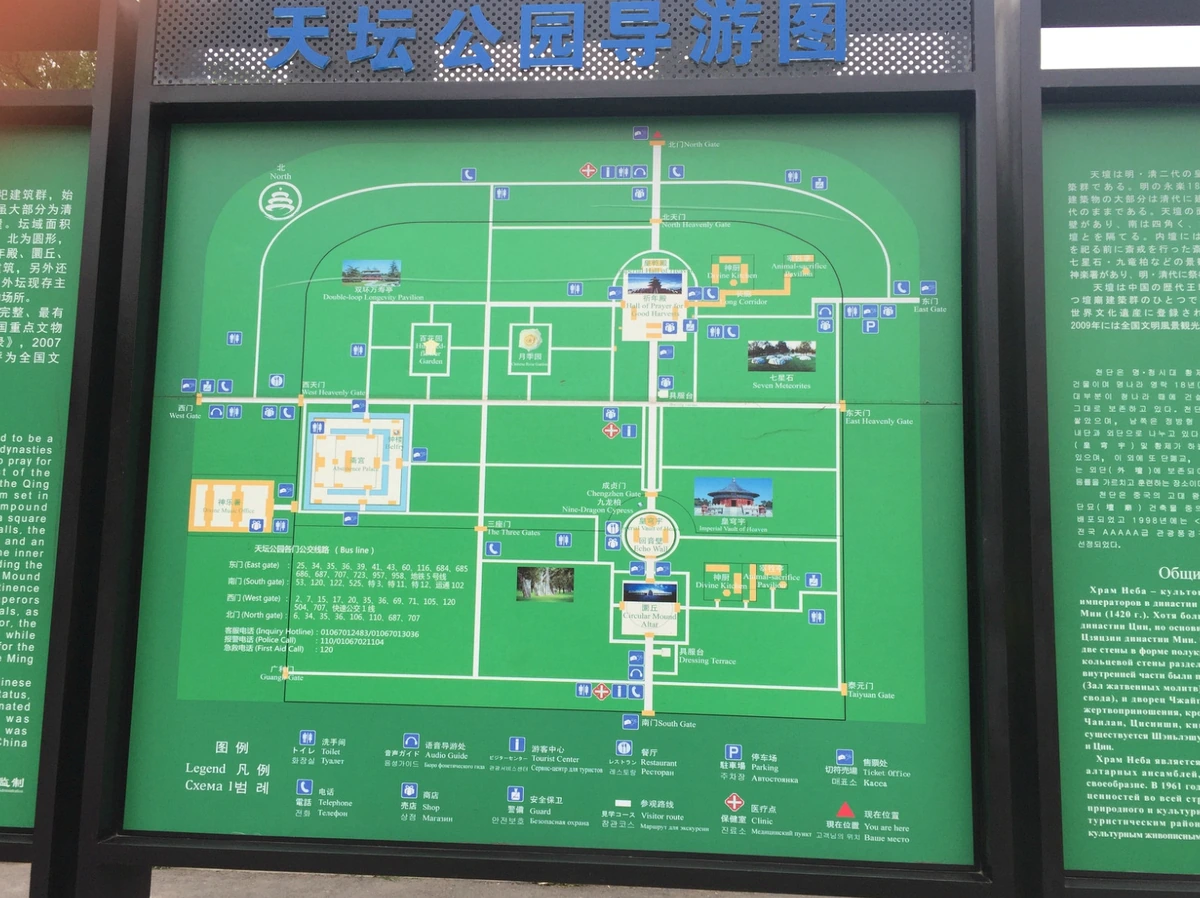
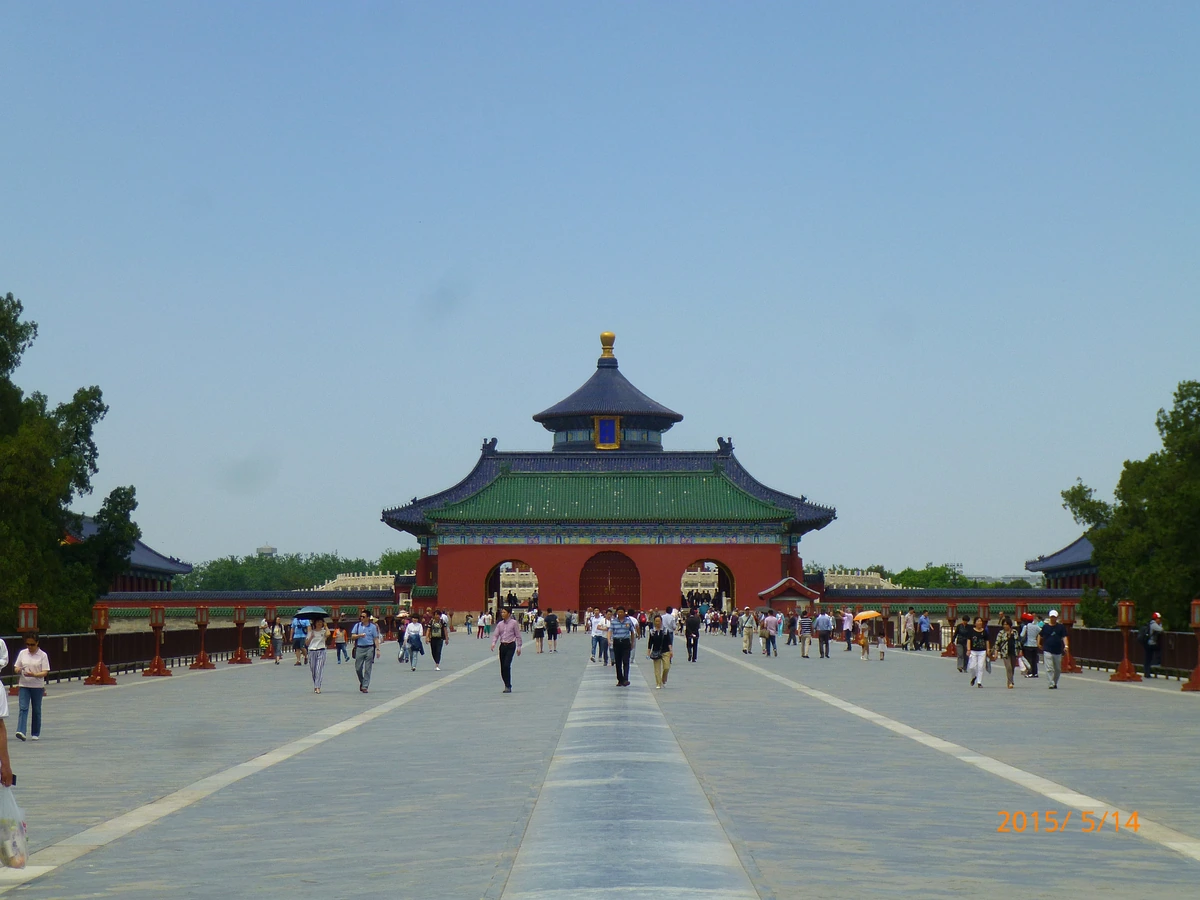
Connecting these two sacred realms is the Danbi Bridge, also known as the Sacred Way—a magnificent stone-paved ceremonial causeway running along the north-south axis, measuring 360 meters in length and up to 28 meters in width. This grand processional axis acts as the backbone of the entire complex, clearly dividing it into two core functional zones: the Altar of Prayer for Good Harvests zone in the north, dedicated to grand rituals praying for abundant crops, and the Circular Mound Altar zone in the south, exclusively used for Heaven-worshiping ceremonies during the Winter Solstice. Walking along the Danbi Bridge, the elevation of the walkway gradually rises toward the north, creating a remarkable optical effect that makes ritual participants feel as though they are ascending step by step away from the mortal realm straight into the ninth heaven.
Alongside its masterful architectural layout, the ecological landscape of the Temple of Heaven is an ancient feat of environmental engineering. Standing amidst this sacred space is a magnificent grove of ancient trees comprising more than 3,500 centuries-old cypresses, most famously the Nine-Dragon Cypress, whose twisted trunk ridges resemble nine coiling dragons. The high density of oriental arborvitae forests and dark-green scholar trees not only shrouds the ceremonial halls in solemn tranquility but also acts as an ecological screen regulating the natural microclimate. This vast green canopy purifies the air, tempers Beijing’s sweltering summer heat, and retains warmth in the earth during winter, realizing complete harmony between imperial temple architecture and the vibrant breath of nature.
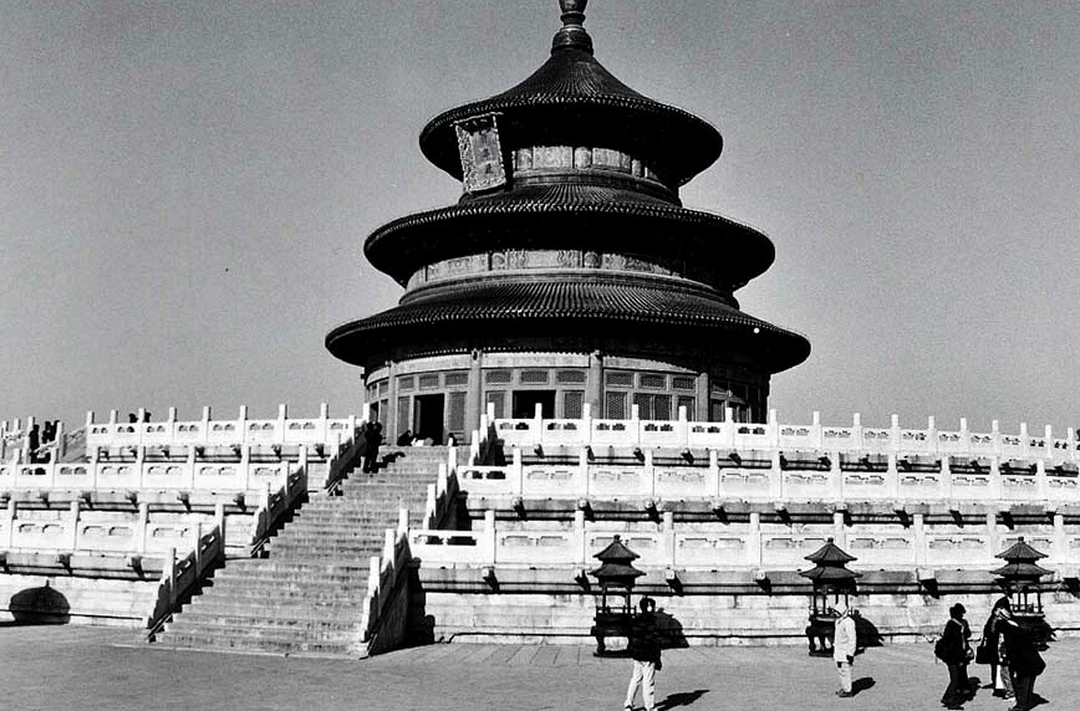
Nestled amidst lush ancient pine and cypress groves, the Temple of Heaven stands as a rare masterpiece reaching the zenith of traditional Chinese timber architecture, strictly adhering to the Qing dynasty imperial construction manual Gongcheng Zuofa Zeli (Architectural Structural Regulations). The first striking feature to capture visitors’ eyes is the enchanting deep-blue hue of millions of glazed tiles covering the tiered roofs. Crafted using a complex low-temperature lead-glazing firing technique, this color not only conveys majesty and vastness but also symbolizes “Cangtian”—the boundless azure sky in Eastern spiritual philosophy. From its grand overall scale down to every carved detail, the Temple of Heaven is perfectly orchestrated to materialize the sacred communion between humanity and the universe.
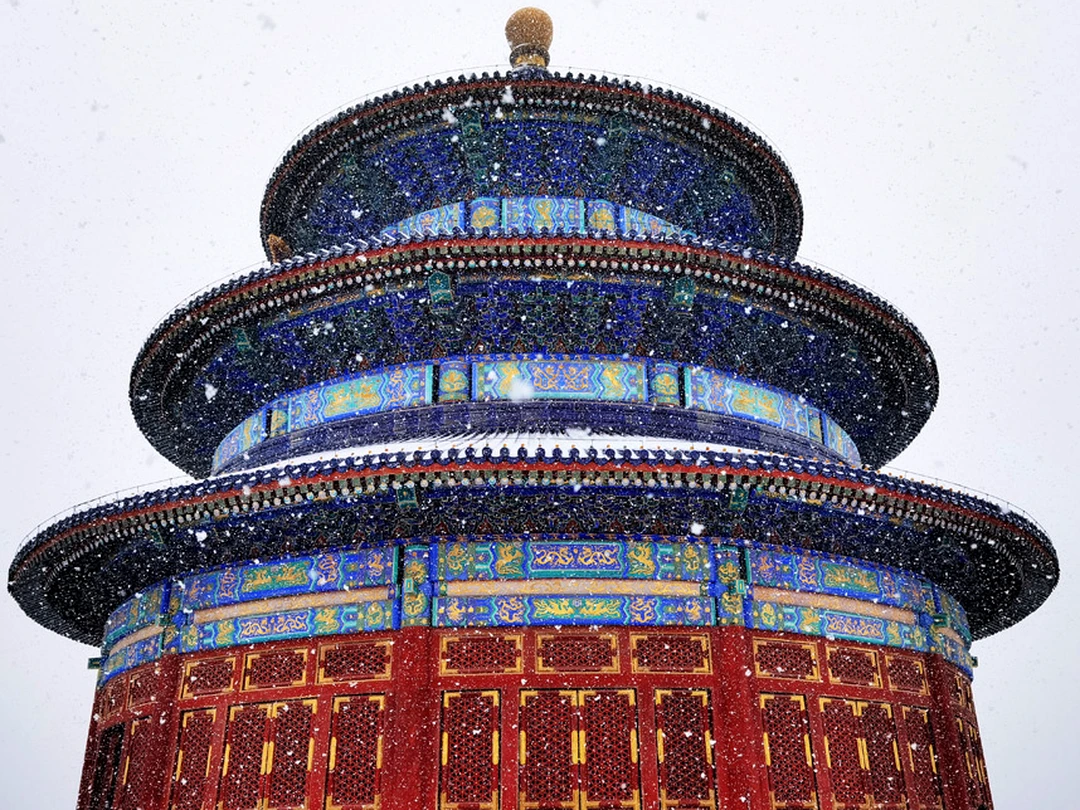
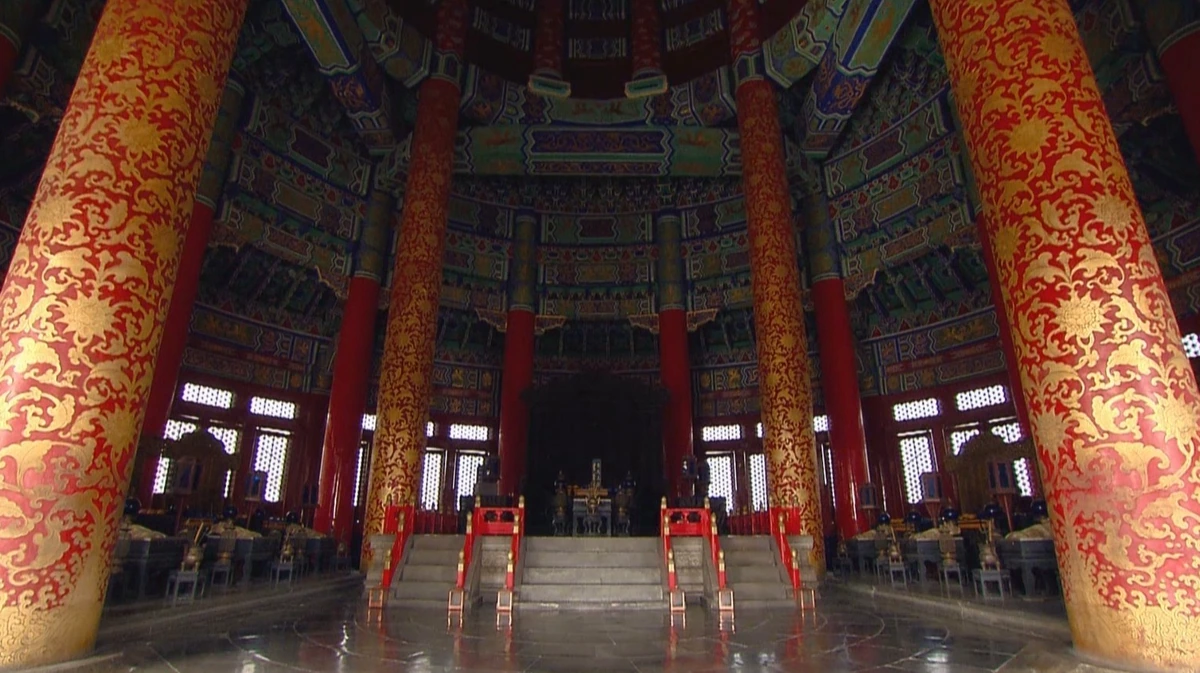
The most dazzling architectural centerpiece of the entire complex is the Hall of Prayer for Good Harvests—a circular grand hall with triple eaves and a conical roof measuring 32.75 meters in diameter and soaring 38.25 meters in height. Yet what makes this structure an extraordinary engineering marvel lies in its interior structural system: the entire colossal hall, weighing thousands of tons, uses not a single main crossbeam or iron nail. This construction triumph relies entirely on supreme mortise-and-tenon joinery combined with an intricate network of dougong brackets and architraves interlocking tightly to distribute and bear structural loads with astonishing precision.
Supporting the entire roof of the Hall of Prayer for Good Harvests is a system of 28 priceless monolithic Phoebe zhennan (nanmu) wooden columns arranged in concentric circles steeped in ancient calendrical and cosmological philosophy. The four largest central columns, known as the “Dragon-Well Pillars,” represent the four seasons of the year: Spring, Summer, Autumn, and Winter. The middle ring consists of 12 “Golden Pillars” symbolizing the 12 two-hour periods of a day and night in the traditional lunar system. The outermost ring comprises 12 “Eave Pillars” representing the 12 months of the year. Together, the 12 Golden Pillars and 12 Eave Pillars total 24, signifying the 24 Solar Terms—the vital agricultural weather calendar of ancient civilization. Each grain of nanmu timber serves not only as a mechanical load-bearing element but also as a spiritual link connecting the cyclical operations of all things.
Beyond the pinnacle of timber architecture, the Temple of Heaven conceals ancient acoustic marvels that continue to captivate researchers to this day. In the Imperial Vault of Heaven compound, the circular Echo Wall was built using the “polished bricks fitted without mortar” technique—smooth bricks ground perfectly flat and laid so tightly together that no gaps are visible. This craftsmanship turns the wall surface into a flawless acoustic mirror, enabling two people standing at opposite ends of the wall, tens of meters apart, to whisper and hear each other with crystal clarity. Directly in front of the steps of the Imperial Vault of Heaven lie the Triple Sound Stones: clapping one’s hands while standing on the first stone produces a single echo, standing on the second yields two echoes, and standing on the third generates three consecutive reverberations. Even more wondrous is the circular Heart of Heaven Stone situated at the exact center of the top tier of the Circular Mound Altar; when standing here to chant sacrificial prayers or make a slight sound, sound waves bounce back from the surrounding marble balustrades, creating an intense acoustic resonance right inside the chest that made the emperor’s supplications seem to echo straight up to the jade throne of Heaven.
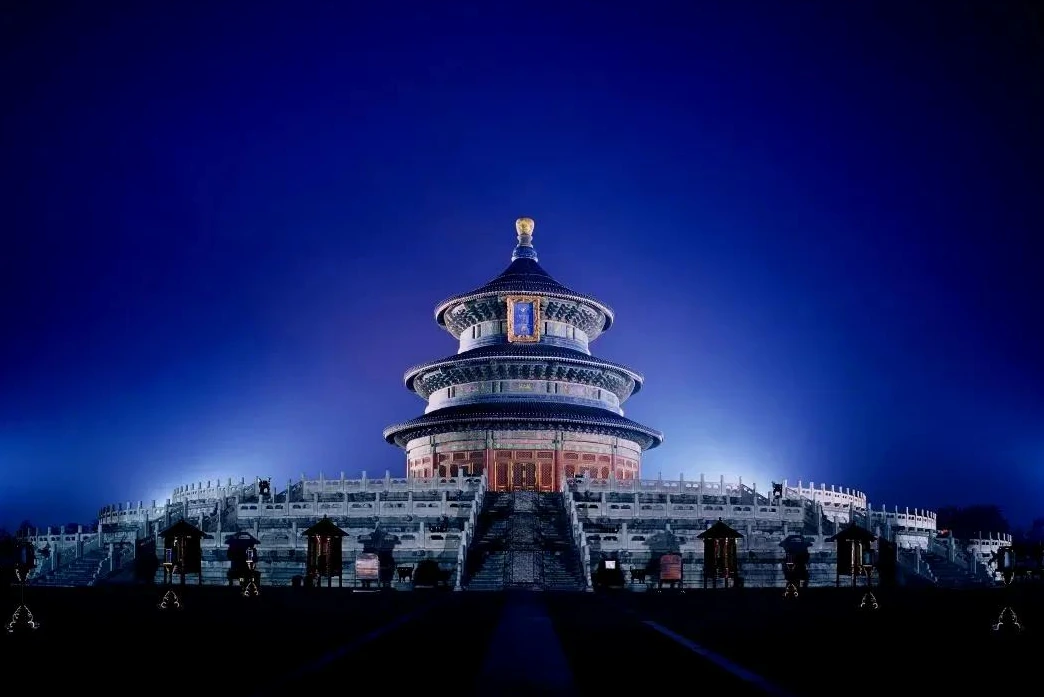
As dusk gradually settles over ancient Beijing, the Temple of Heaven takes on an entirely different persona, subtly transitioning from daytime solemnity to the ethereal beauty of a nocturnal lightscape. Nighttime illumination here strictly follows the principle of “seeing the light without seeing the lamps,” utilizing soft diffused lighting with low illuminance to preserve the authentic character of the ancient monument. The Hall of Prayer for Good Harvests—the heart of the architectural ensemble—glows beneath warm-toned LED fixtures angled with pinpoint precision. Gentle golden light caresses every sweeping curve of the triple-tiered deep-blue glazed roofs, accentuating its monumental silhouette alongside the alluring vermilion hue of the giant timber columns. Viewed from afar, the resplendent hall appears like a “jade pavilion in the clouds,” creating a poetic nocturnal light spectacle while faithfully upholding the ancients’ profound philosophy of the “Unity of Heaven and Humanity.”
Beyond shimmering illuminations, the cultural depth of the Temple of Heaven during major solar terms such as the Spring Equinox and Winter Solstice is vividly awakened through large-scale live-action cultural performances. Most notable is the reenactment of the “Grand Imperial Procession” alongside traditional Heaven-worshiping ceremonial music, meticulously reconstructed from official historical records in the Treatise on Rites of the Draft History of Qing. Over a hundred performers clad in authentic court attire of princes, high officials, and Ming-Qing imperial guards appear, faithfully recreating the pageantry of imperial palanquins, banners, ceremonial parasols, and ritual weaponry. Every step and gesture of the procession strictly adheres to ancient imperial etiquette, offering spectators a visually captivating and authentic glimpse into the majesty of feudal state ceremonies.
The soul of this live-action spectacle also resides in the ancient soundscape revived through the “Zhonghe Shaoyue” (Music of Central Harmony)—the most revered court ritual music of the Ming and Qing dynasties. Within the sacred atmosphere of a Beijing night, melodious yet resonant harmonies rise from exquisite ancient instruments such as the bianzhong (ancient bronze bell chimes), bianqing (sedimentary stone chimes), xun (ancient globular clay flute), and xiao (vertical bamboo flute). The metallic and lithic timbres blend with lingering flute notes, accurately reproducing the traditional musical scales once used to commune with Heaven and Earth while guiding visitors on a nostalgic journey across space and time. The union of rare musical instruments and exemplary performance artistry transforms the Temple of Heaven at night into an unmatched open-air heritage concert hall.
Nightlife around the sanctuary of Heaven and Earth is therefore neither hectic nor noisy like modern urban districts, unfolding instead in a tranquil, profound, and contemplative rhythm. Visitors can stroll along millennium-old bluestone pathways, breathe in the crisp Beijing night air, admire the artistically illuminated heritage buildings, and let their minds drift with the lingering melodies echoing through the grounds. Evening visits to the Temple of Heaven offer far more than scenic sightseeing; they deliver a holistic multisensory experience where a glorious imperial past and refined modern leisure intertwine, leaving an indelible cultural impression.
A pilgrimage to the Temple of Heaven does not end with admiring the grandeur of imperial sacrificial architecture; it also opens the door to a deeply rewarding culinary journey through the heart of Nancheng (the Southern City)—a district preserving the authentic undercurrent of old Beijing gastronomy. Situated on the threshold between solemn imperial precincts and the vibrant everyday life of ordinary townsfolk, the neighborhood surrounding the Temple of Heaven is a wondrous crossroads of refined imperial court cuisine and hearty Nancheng street snacks. Through centuries of historical change, time-honored family brands around this area have safeguarded their one-of-a-kind culinary secrets, turning every meal into an authentic ritual of tasting culinary heritage.
Standing out on the heritage flavor map around the grand park is Yueshengzhai, an illustrious culinary establishment founded in 1775 during the reign of Emperor Qianlong. This brand passed rigorous selection trials to become an officially appointed purveyor of braised meats to the Qing Imperial Kitchen. Yueshengzhai’s world-renowned specialty lies in its soy-braised beef and lamb. Choice fresh cuts are slow-simmered for hours over gentle heat in a closely guarded master broth accumulated over decades, infused with more than a dozen precious Chinese medicinal herbs. The rich braising liquid penetrates deep into the tender meat fibers, imparting a fragrant herbal aroma and savory sweetness that melts effortlessly on the tongue without ever feeling greasy.
Leaving Yueshengzhai, visitors need only stroll a few paces to reach Duyichu, a legendary eatery linked to the anecdote of Emperor Qianlong himself visiting incognito and bestowing a gold-lettered signboard upon the shop. It captivates even the most discerning gourmets with its Three-Delicacies Shaomai—featuring wrappers as thin as silk paper pleated like a court lady’s skirt around a succulent, juicy filling—alongside its Mending Meat Pies, shaped to resemble the bronze studs adorning imperial palace gates. Right next door buzzes the lively atmosphere of Baodufeng, a renowned brand specializing in quick-blanched beef tripe dating back to the Qing dynasty. Baodufeng elevates offal cuisine to a fine art through meticulous selection of specific stomach cuts such as sandan, duling, and baiye. Masterful knife work and flash-blanching in boiling water for precisely 3 to 5 seconds lock in a remarkably crisp, springy crunch. Dipped into an intricate sauce blending sesame paste, fermented bean curd, chive flower sauce, chili oil, and finely chopped cilantro, the flavors burst forth with unforgettable intensity.
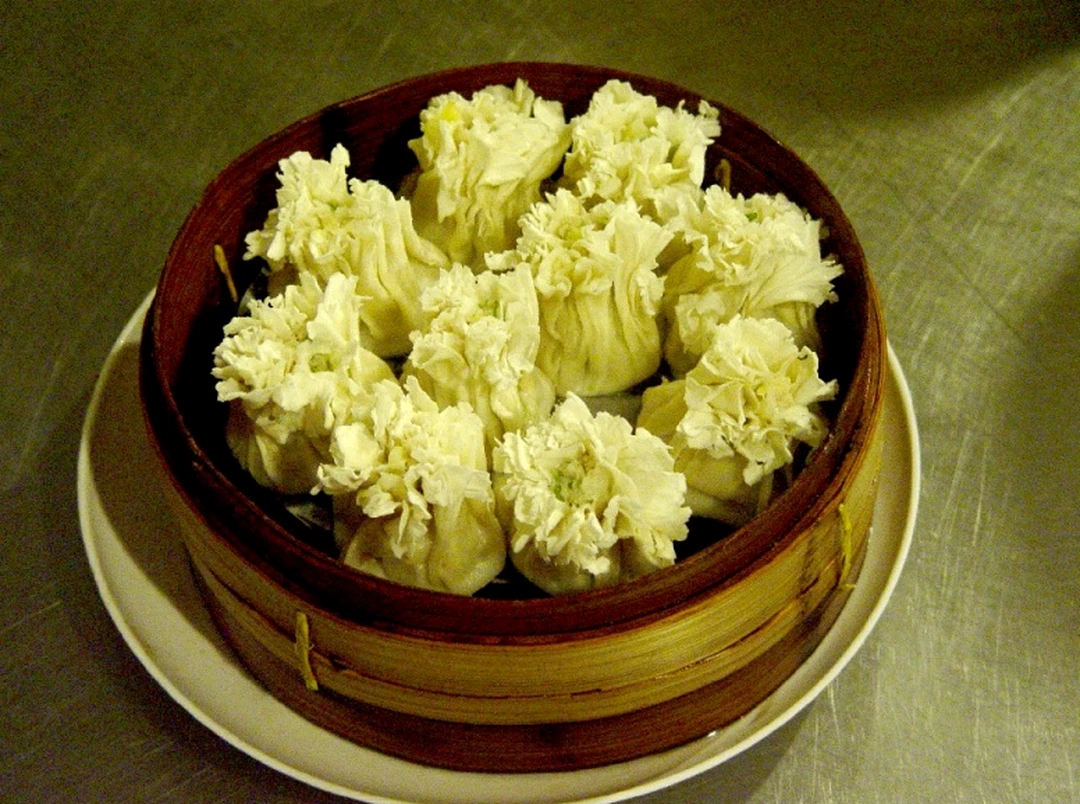
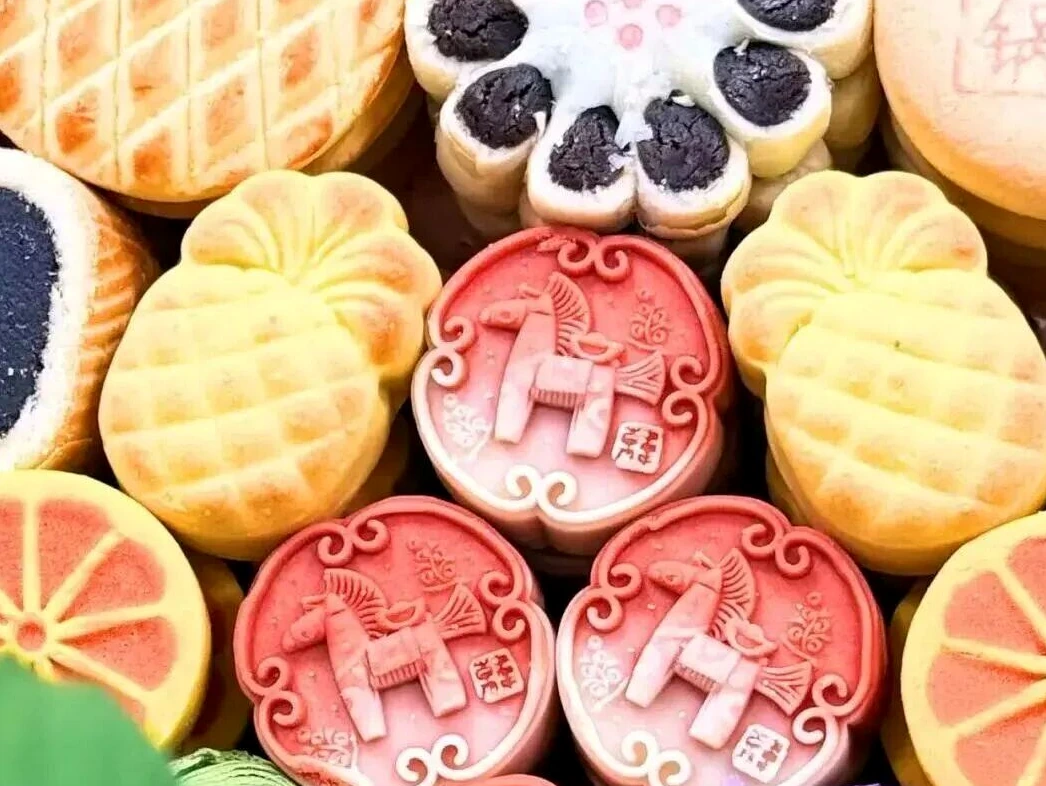
The culinary culture surrounding the Temple of Heaven would be incomplete without its collection of Manchu-Han imperial pastries, once exclusive luxuries reserved for Qing nobility. Delicate sweet treats such as naijuan zhuogao (fried cream rolls), aiwowo (steamed glutinous rice cakes with sweet fillings), and wandouhuang (yellow pea cake) epitomize meticulous craftsmanship. Among them, wandouhuang reaches absolute perfection by using top-grade white peas that are hulled, finely sieved, and simmered continuously until naturally thickened. The finished pastry gleams with an elegant golden hue and a surface as smooth as jade; upon entering the mouth, it melts instantaneously, leaving a refreshing, refined sweetness lingering across the palate.
Savoring the time-honored culinary traditions surrounding the Temple of Heaven is more than merely satisfying hunger after a scenic walk—it is a cultural dialogue transcending time. Amidst the clinking of spoons and dishes and the rich aroma of secret spices, travelers seem to relive old memories of the imperial capital, where royal refinement and rustic folk charm swirl together into a complete and priceless travel experience.
To fully appreciate the solemn beauty and profound humanistic architectural philosophy of this World Heritage site, understanding its operating regulations and visiting procedures is an essential preparation step for every traveler. The complex is divided into two zones with distinct operating hours: the Outer Altar park grounds open from 06:00 to 22:00 (last entry at 21:00), offering a serene setting for community cultural activities; meanwhile, the core Inner Altar zone—home to the Hall of Prayer for Good Harvests, the Imperial Vault of Heaven, and the Circular Mound Altar—opens only from 08:00 to 18:00 during peak season and shortens to 08:00 to 17:00 during the off-peak season. Visitors should especially note that all major ancient architectural complexes within the Inner Altar are closed every Monday for routine maintenance. To avoid unexpected disruptions, the ticketing system now enforces mandatory real-name registration: travelers must book up to 7 days in advance via the official WeChat mini-program named “Temple of Heaven Park” (天坛公园). The best-value option in terms of both budget and experience is the through-ticket (combo pass), reasonably priced at just 34 RMB in peak season and 28 RMB in off-peak season, granting full access to all the most sacred monuments within the heritage site.
The modern public transit network of Beijing makes reaching the heritage site effortless via several major routes. The fastest and most recommended option is taking Subway Line 5 to Tiantan Dongmen Station (Temple of Heaven East Gate) and exiting through Exit A, which places you directly in front of the park’s East Gate. Alternatively, those wishing to explore from the western side can take Subway Line 8 to Tianqiao Station to enter via the West Gate. Arriving early in the morning rewards visitors with an authentic immersion into the daily cultural life of old Beijingers, as the Outer Altar grounds come alive with cheerful chatter, groups practicing Tai Chi, locals writing water calligraphy on stone pavements, and silk-fan dancers beneath centuries-old cypress canopies.
To experience the uninterrupted flow of the sacred spatial axis as well as the essence of Ming-Qing feng shui, your itinerary should follow a classic golden route. After entering through the East Gate, the first stop is the Hall of Prayer for Good Harvests—symbolizing imperial aspirations for favorable weather and bountiful harvests. From here, stroll along the Danbi Bridge—the elevated stone causeway rising toward the sky and bridging the spiritual and mortal realms—leading directly to the Imperial Vault of Heaven, where the acoustic wonders of the Echo Wall await. Conclude your journey at the Circular Mound Altar—the majestic three-tiered white marble altar for Heaven worship—before leisurely exiting through the South Gate. This linear route covers an average walking distance of 3 to 5 kilometers across expansive stone courtyards and steep marble steps.
To ensure the most comfortable and enriching exploration, proper attire and supporting gear play a decisive role. Wearing high-quality sneakers or dedicated walking shoes is essential to protect your feet across the long walking route. Beijing’s climate is characterized by dry air, brisk winds, or strong sunlight depending on the season, making a windproof jacket, thermal layers, or sun-protection accessories along with a personal water bottle indispensable. Furthermore, to fully grasp the historical narratives, Yin-Yang and Five Elements philosophies, and mysterious acoustic phenomena at each corner of the monument, renting a GPS-enabled smart audio guide at the entrance is highly recommended. Thoughtful preparation in both knowledge and stamina will turn your visit into a living documentary. To plan a seamless trip and savor every moment at this iconic destination, travelers can explore professionally curated and optimized all-inclusive China tour packages.