Standing proudly amidst the vast wilderness of Northwest Vietnam, Fansipan Peak is far more than a mere geographic coordinate; it is a sacred symbol where earth meets sky, renowned as the “Roof of Indochina.” Located at 22°18′12″N 103°46′30″E within the majestic Hoang Lien Son mountain range, the peak lies approximately 9 km southwest of Sapa town center. Rising to an elevation of 3,147.3 meters above sea level, Fansipan looms like a pillar supporting the heavens, a place where feng shui converges with the spiritual essence of the land to create a breathtaking landscape of mountains and rivers rarely found elsewhere.
Regarding the origin of its name, Fansipan is called “Hua Xi Pan” in the local indigenous language, meaning “tottering giant rock slab.” This name not only describes the distinctive geological formation of the summit but also reflects the keen observational wisdom of the highland people. For the H’Mong, Red Dao, Giay, and Thai ethnic groups, Fansipan has long been a sacred sanctuary intertwined with legends of mountain deities who protect the fertility and prosperity of the Muong Hoa Valley. Over generations, these folktales have built up a rich layer of cultural heritage, transforming Fansipan into a living legacy where people come to reconnect with the roots of nature.
The history of conquering Fansipan is a heroic chapter in Vietnam’s chronicles of exploration. During the French colonial era, this peak became an aspirational destination for Western explorers. In 1905, a French expedition set foot on the summit for the first time, ushering in a new era for geological research and adventure tourism in the highlands of Lao Cai. Since then, Fansipan has served not only as a challenge for thrill-seekers but also as a subject of study for scientists, who have documented its status as one of the most biodiverse ecosystems, boasting rich flora and geological strata dating back millions of years.
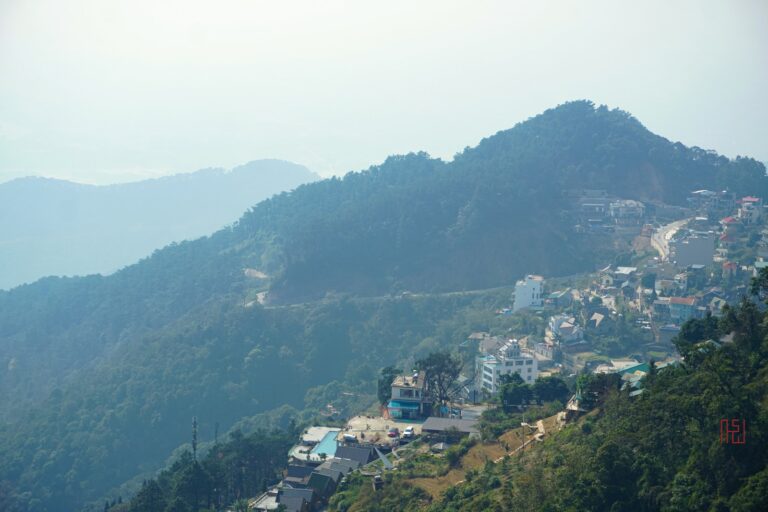
Geographically, Fansipan is the crowning centerpiece of the Hoang Lien Son range—known as the “mountain range of precious medicinal herbs.” Its terrain is sculpted by sheer cliffs, deep valleys, and year-round shrouds of mist, creating an aura that is both magnificent and mystical. Tourism authorities and mainstream media consistently affirm Fansipan as a national “treasure,” valued not only for its scenic beauty but also for its geological heritage. Preserving and promoting Fansipan’s value is continually balanced between developing modern tourism infrastructure and safeguarding indigenous cultural identity.
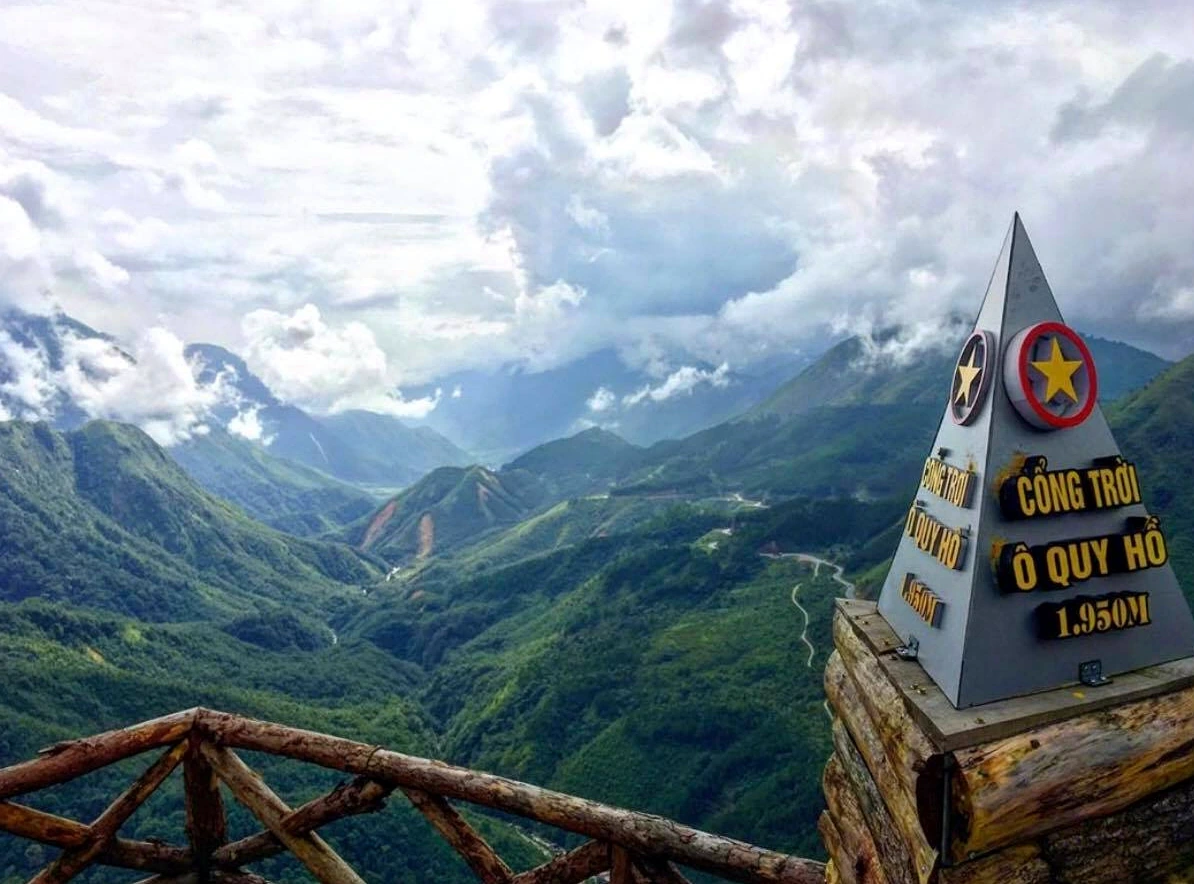
Today, standing atop the 3,147.3-meter summit, visitors are not only awestruck by the grandeur of nature but also touched by the depth of history. Every boulder and ancient tree along the journey breathes with the passage of time, telling the story of a land that has weathered countless ups and downs to become a world-class tourism icon. Fansipan, therefore, is more than a destination; it is a journey toward inner stillness and the majesty of creation, where everyone can discover a sacred connection between themselves and the vast universe.
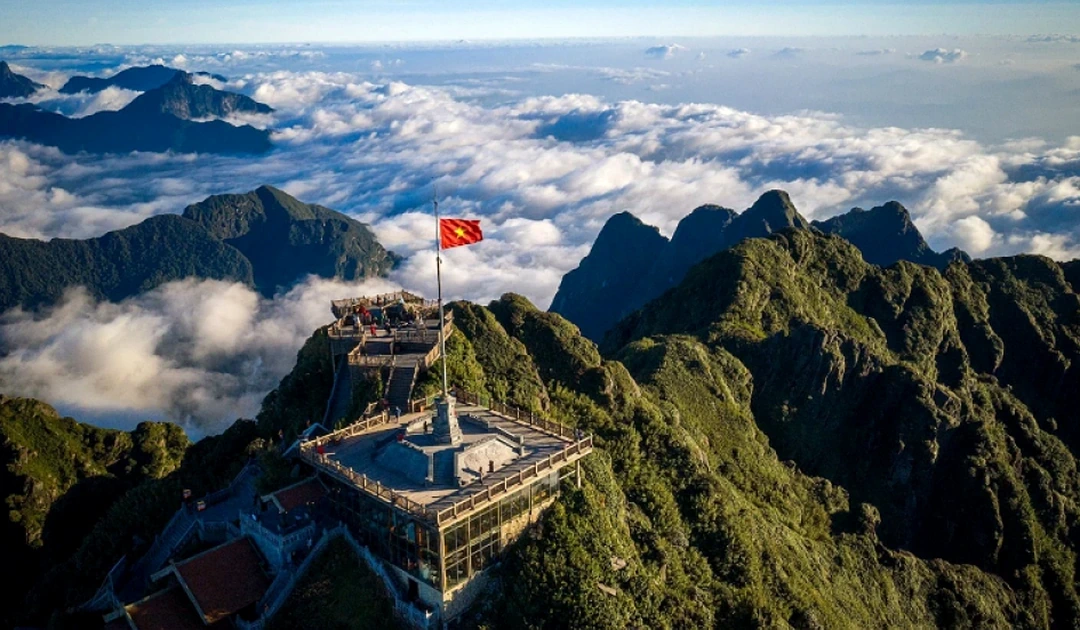
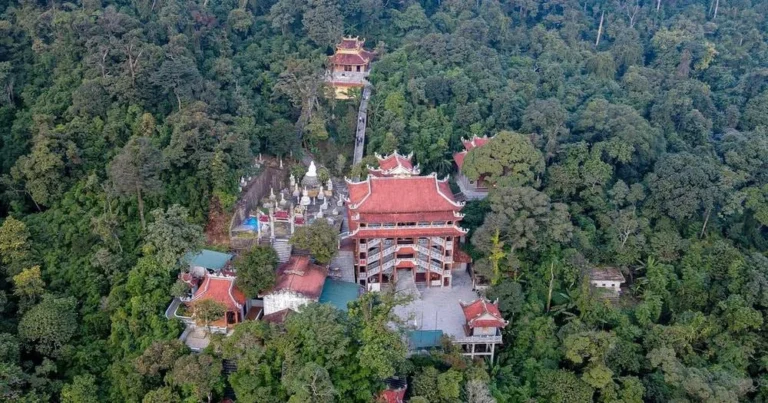
Fansipan Peak is not just a geographical landmark, but an architectural masterpiece harmonizing human craftsmanship with the grandeur of nature. Upon arriving at the “Roof of Indochina,” visitors are immediately captivated by a spiritual complex deeply imbued with Vietnamese Buddhist culture, intricately constructed amidst the clouds. Standing out most prominently in this sacred space is the Great Amitabha Buddha Statue (locally celebrated alongside the Maitreya Buddha monument), a colossal bronze sculpture rising 21.5 meters high. Every contour of the Buddha’s face is finely sculpted, radiating compassion and serenity in striking contrast to the rugged, dramatic cliffs of the Hoang Lien Son range. Nearby, the 12-meter-tall statue of Avalokiteshvara Bodhisattva stands tall, gazing out over the Muong Hoa Valley as a symbol of protection and peace for the Northwest region.
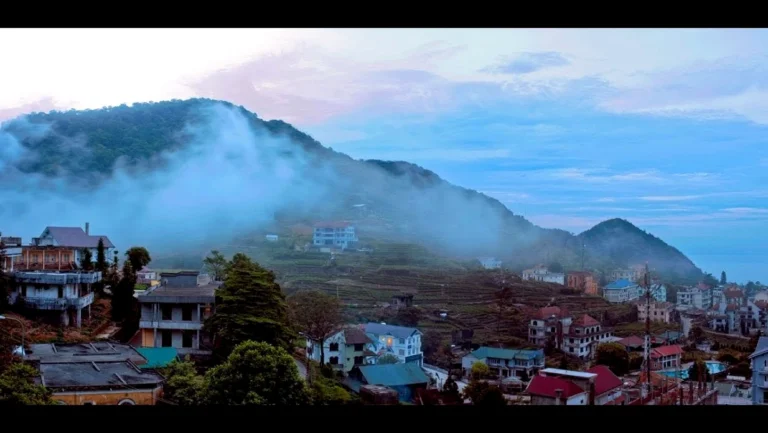
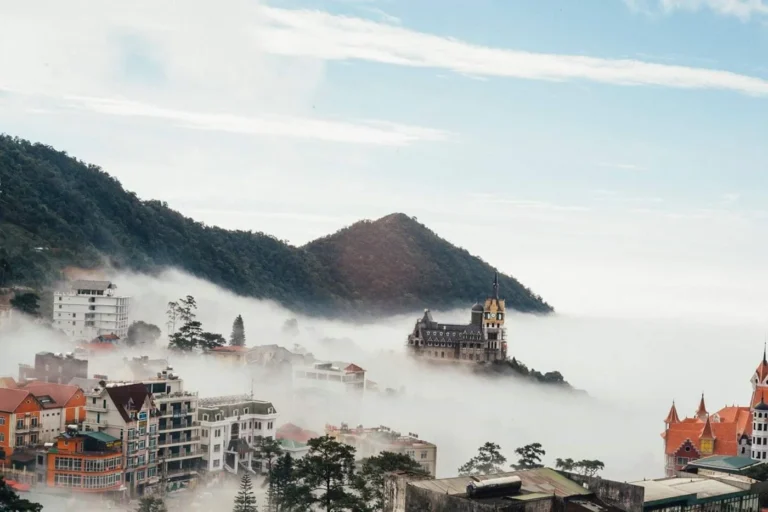
The architecture here extends beyond statues to a harmonious ensemble of structures, including the 11-story Pagoda, the Arhat Path lined with 18 meticulously crafted bronze Arhat statues, and Bich Van Zen Monastery with its traditional wooden design. Together, they form a tranquil, ethereal sanctuary where every step feels as though you are walking in the clouds. Fansipan’s topography is uniquely dramatic, with rugged high-altitude peaks perpetually veiled in mist, creating an ever-changing natural canvas. Billowing white clouds roll like ocean waves—at times enveloping the curved pagoda roofs, and at others parting to reveal sheer rock faces—producing a living masterpiece that no painter could ever fully capture.
To capture million-view moments, photographers and travel vloggers typically prioritize two prime vantage points. The first is the National Flagpole area at sunrise. As the first rays of dawn pierce through the sea of clouds, bathing the entire landscape in a rosy glow, the red flag with its golden star flutters proudly against a deep blue sky, creating a deeply moving and inspiring scene. The soft morning light accentuates the majesty of the architectural complex and the splendor of the Hoang Lien Son range. The second spot is near Fansipan Peak Station or along the Arhat Path at sunset. As the sun dips behind distant mountain ridges, the sky ignites in vibrant shades of purple and orange, providing an enchanting backdrop for silhouette shots beside the Buddha statues or ancient stupas. The high-contrast light at this hour highlights architectural silhouettes and adds dramatic depth to the scenery.
Additionally, riding the funicular mountain railway offers a panoramic perspective of the Muong Hoa Valley from above. Vintage-style train carriages glide along the mountainside, carrying passengers straight through layers of clouds and evoking the sensation of entering a fairy-tale realm. Whether you are a spiritual seeker, an architecture enthusiast, or simply a dreamer searching for once-in-a-lifetime photo angles, Fansipan effortlessly delights with its seamless blend of man-made beauty and natural majesty. Every vista here is an invitation to explore—a place where humanity feels humble before nature yet elevated by enduring cultural values.
Setting foot on Fansipan Peak is not merely a sightseeing trip, but a journey into the clouds where the boundary between reality and a celestial wonderland feels thinner than ever. For souls seeking tranquility, making a pilgrimage through the spiritual complex at 3,147 meters evokes profound emotion. Walking up moss-covered stone steps as temple bells echo through the mountain wind, visitors are awed by the majestic bronze Buddha towering amidst a sea of white clouds. The fusion of exquisite Buddhist architecture and the rugged beauty of the Hoang Lien Son range creates a rare meditative sanctuary, allowing everyone to find inner peace far removed from the noise and dust of urban life.
For those yearning for conquest, trekking up Fansipan remains the ultimate “mecca” for hikers. Although the modern cable car system has shortened the distance, traversing steep trails on foot and weaving through primeval forests teeming with diverse flora remains a deeply rewarding privilege. The sensation of placing your hands on the 3,147-meter summit marker after hours of effort brings an explosion of emotion—pride, exhilaration, and pure joy. From that lofty vantage point, gazing out across the horizon, the entire Northwest region unfolds like a magnificent painting of overlapping mountain ranges veiled in mist, leaving every traveler speechless before the grandeur of creation.
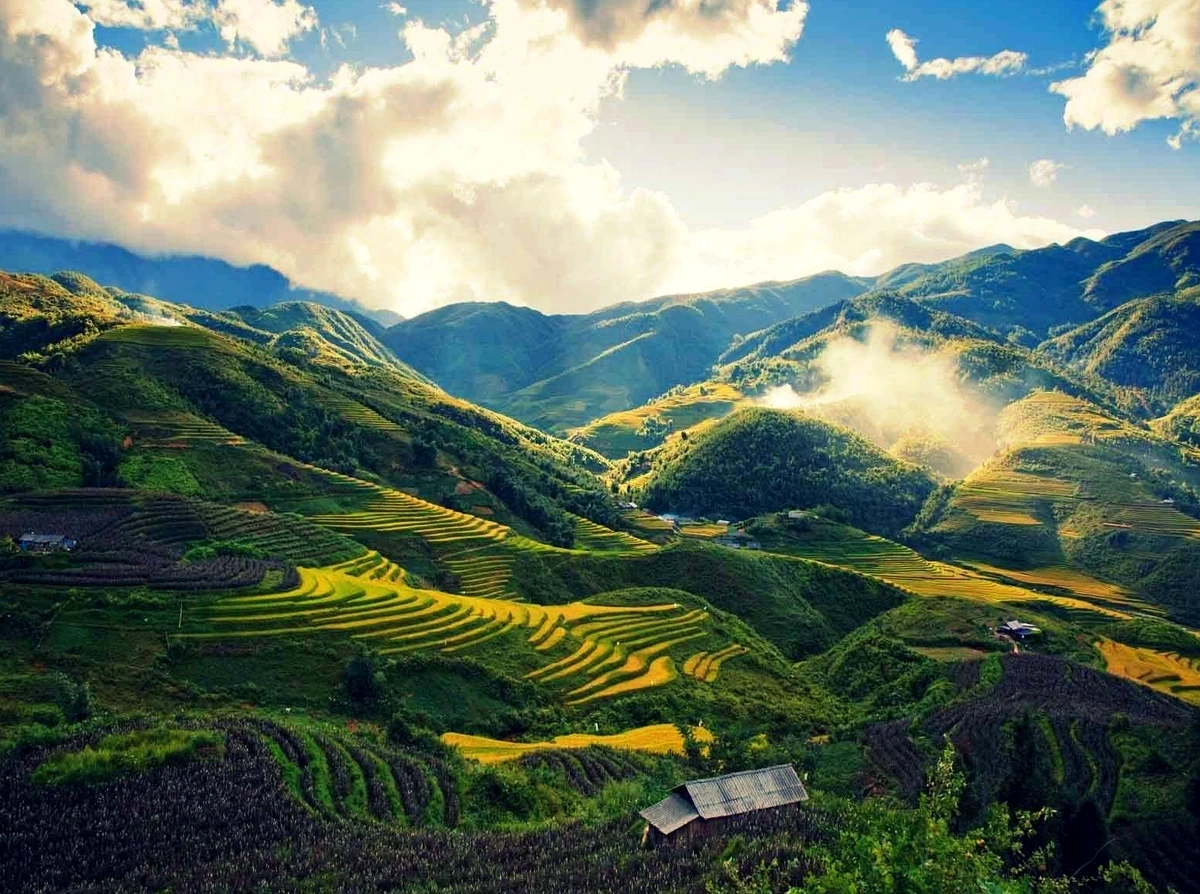
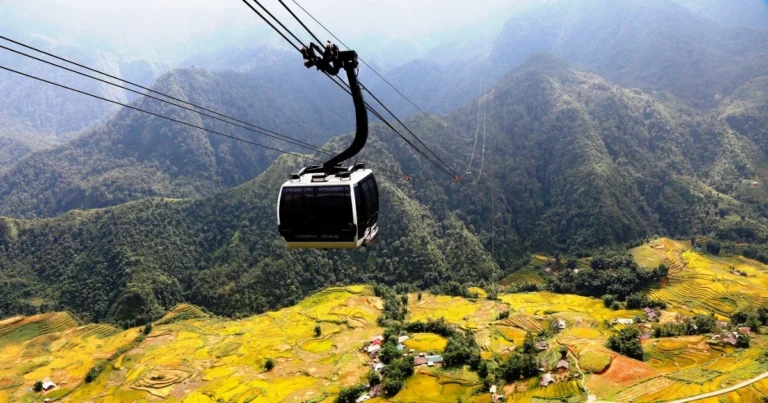
The Fansipan experience becomes even more vibrant when visitors immerse themselves in the rhythm of local indigenous culture. After descending the mountain, exploring the Muong Hoa Valley via the funicular railway offers a completely different perspective. From above, terraced rice fields—gleaming gold during harvest season or lush green in the new planting season—unfold like soft silk ribbons draped across the slopes. In villages such as Cat Cat or Ta Van, travelers can soak in the rich culture of the H’Mong and Red Dao people. Here, you will hear the melodious notes of the jaw harp, be greeted by the warm, genuine smiles of locals, and savor the bold aroma of corn wine alongside famous specialties like thang co (traditional horse meat stew) and smoked buffalo meat. Every dish is more than just cuisine; it is the crystallization of sun, wind, earth, sky, and the heartfelt hospitality of the highland people.
The sense of wonder extends beyond the scenery to the magical transformations of the weather. On certain days, Fansipan Peak turns into a realm of frost and white snow, transforming the area into a “miniature Europe” in the heart of Vietnam. Standing in the biting cold to admire snow-covered tree branches before retreating to a cozy wooden lodge to sip hot tea beside a glowing hearth is a priceless experience everyone should try at least once in a lifetime. Fansipan is not merely a destination—it is an emotional journey where every traveler discovers a part of themselves amidst the vast wilderness, leaving with lingering, sweet memories of mountain clouds and highland warmth.
To ensure your journey to conquer the “Roof of Indochina” goes smoothly and seamlessly, travelers should keep up to date with the latest visiting procedures. Today, Fansipan is no longer just an adventure trekking destination; it has evolved into a large-scale cultural and spiritual tourism complex that requires thoughtful preparation in terms of both transportation and attire.
Regarding operating hours, the Fansipan cable car system generally welcomes visitors from 08:00 to 16:00 daily. However, this schedule may be adjusted flexibly depending on actual weather conditions at the summit. On days with dense fog, strong gusts of wind, or heavy frost, management may temporarily suspend operations to ensure absolute safety. Therefore, before departing, visitors should check announcements on the official Sun World Fansipan Legend website or contact their hotel reception directly for real-time operational updates.
In terms of costs, admission to Fansipan is not free. Round-trip cable car tickets for adults currently cost around 680,000 VND, while children (measuring between 1m and 1.4m in height) receive discounted rates. Visitors can also opt for combo packages that include round-trip cable car tickets and a buffet lunch for roughly 900,000 VND for better value. For the funicular mountain railways (the Muong Hoa route or the Summit route), separate tickets must be purchased at the stations, priced between 100,000 VND and 150,000 VND depending on the segment. Note that ticket prices may fluctuate during public holidays, Tet (Lunar New Year), or regional tourism promotion campaigns in Lao Cai Province.
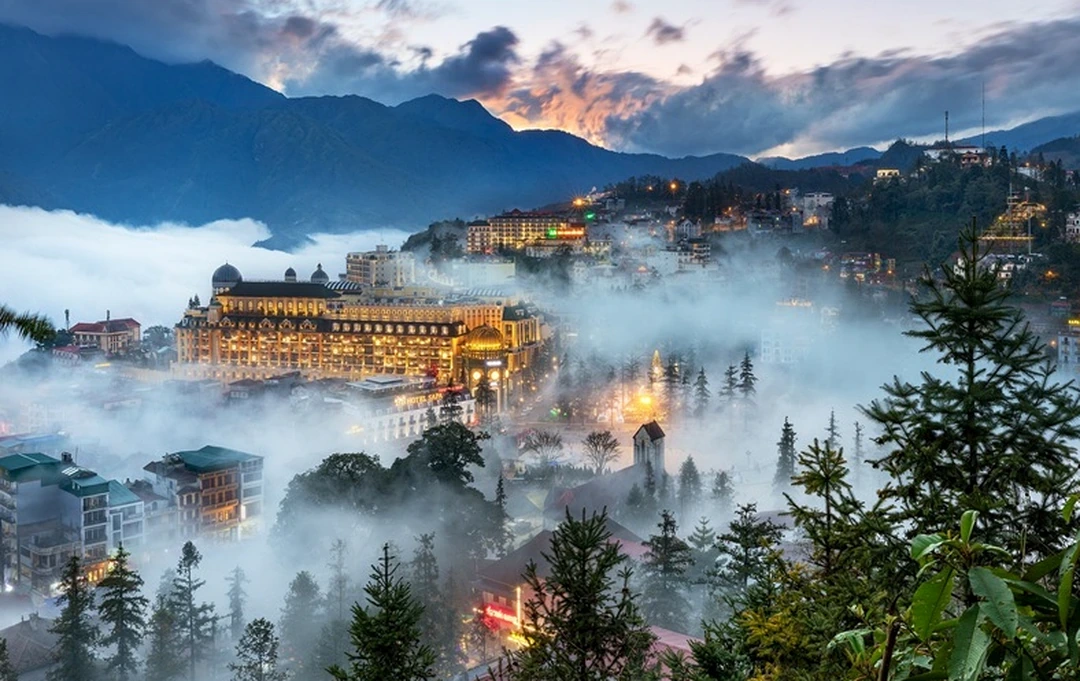
The most convenient way to reach the Fansipan cable car station (located within the Fansipan Legend tourist complex) from Sapa town center is by taxi or electric buggy. For a complete experience, start your journey on the Muong Hoa funicular railway from Sapa Station (located inside the Hotel de la Coupole – MGallery). This is the most scenic route, allowing you to admire panoramic views of the Muong Hoa Valley from above before embarking on your cable car flight through the sea of clouds.
When it comes to clothing, this is a crucial factor that many visitors overlook. Fansipan features high rocky mountain terrain, and temperatures at the summit are typically 8–10°C lower than in Sapa town center. Dressing in layers is recommended so you can easily add or remove clothing as temperatures shift. In particular, because this is a spiritual complex housing numerous sacred temples and pagodas, visitors must dress modestly and respectfully, avoiding overly short or inappropriate outfits. A pair of athletic shoes with good grip is essential, as the stone steps around the summit area are quite steep and can easily become slippery.
Finally, the best time to visit is divided into two main seasons. If you love the sight of golden terraced rice fields at harvest time, plan your trip for September and October. If you want to chase billowing seas of clouds or hope to witness frost and snowfall, the period from December to February of the following year is the ideal choice. Always keep an eye on the weather forecast to ensure a safe trip and capture the most unforgettable moments atop the “Roof of Indochina.”
To enjoy a worry-free vacation and fully take in the beauty of Fansipan Peak without the hassle of arranging transportation, booking tickets, or planning itineraries, travelers can choose premium all-inclusive Sapa tour packages offered by VDS Travel. Each tour is thoughtfully designed to optimize photo opportunities when the scenery is at its most vibrant, accompanied by knowledgeable local guides and top-tier hotel and dining standards.