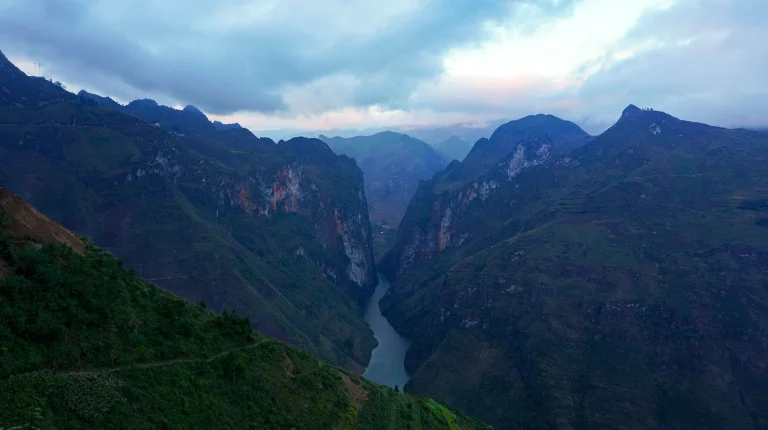
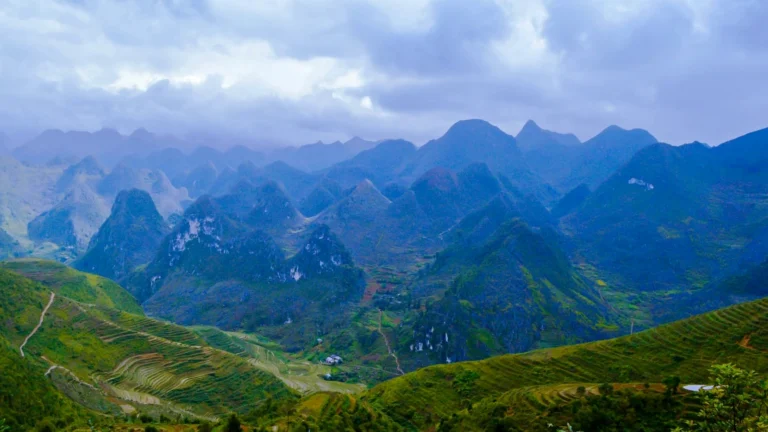
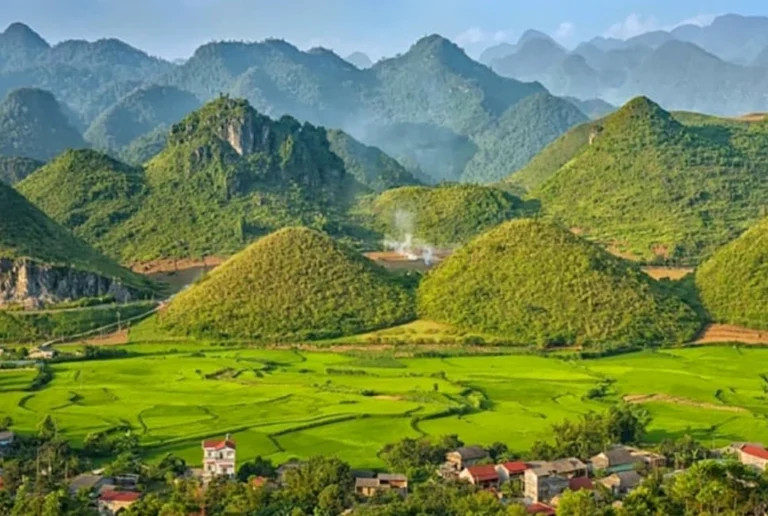
If Ma Pi Leng Pass is hailed as the “king of treacherous mountain passes” in Vietnam, then the emerald-green Nho Que River winding deep at the bottom of the gorge is the softest, most majestic natural masterpiece bestowed upon the northernmost frontier of Ha Giang. Cleaving the boundary between the Dong Van Karst Plateau and the towering Ma Pi Leng peak, the Nho Que River and Tu San Canyon unveil a rare geological wonder where travelers can immerse themselves in the breathtaking harmony of mountains, water, and drifting clouds.
1. Origins of the Jade River & The Legend of the Split Mountain
The Nho Que River originates from the Nghiem Son mountain range in Yunnan Province, China, at an altitude of over 1,500 meters, flowing northwest to southeast across the border into Vietnam at Lung Cu Commune. The river continues to carve its path along the Dong Van Karst Plateau through Meo Vac District before merging with the Gam River in Cao Bang. Its most scenic and grandiose stretch spans roughly 14 kilometers, threading directly through the Tu San Canyon at the foot of Ma Pi Leng Pass.
Local residents still pass down a captivating legend about how the river was formed: in primordial times, a massive stone mountain stood blocking the water’s path, leaving one side parched and cracked from drought while the other suffered devastating floods. Pitying the suffering people, the River God pleaded with the Mountain God to step aside so the water could flow, but the Mountain God ignored the plea. Enraged, the Thunder God swung his divine sword, striking the colossal peak with a bolt of lightning during a stormy night to split it in two. Water roared through the monumental fissure, transforming into the vibrant green Nho Que River that brings prosperity and life to all living things across the highlands.
2. Tu San Canyon: Southeast Asia’s Deepest Karst Gorge
The crowning highlight of any journey along the Nho Que River is Tu San Canyon. Boasting sheer cliff walls rising 700 to 800 meters high, a chasm depth reaching nearly 1,000 meters, and a length of approximately 1.7 kilometers, it is recognized as a one-of-a-kind tectonic karst canyon and the deepest gorge in Southeast Asia.
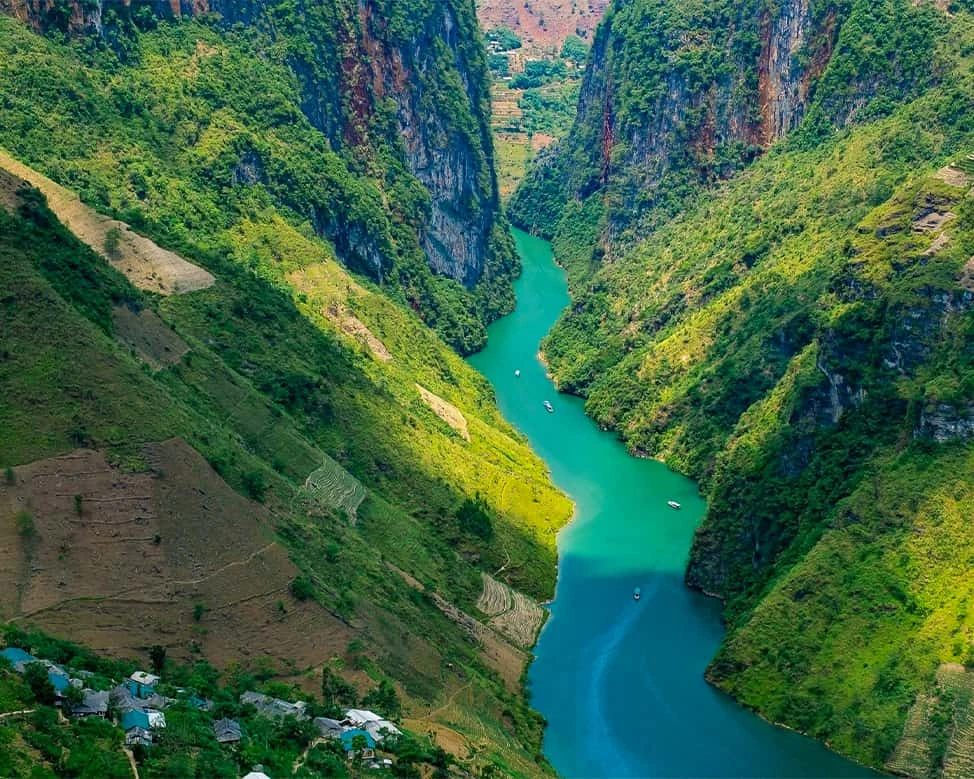
Millions of years ago, violent shifts in the Earth’s crust combined with the relentless erosion of underground waters sculpted two towering limestone walls standing face-to-face. Gliding on a boat through the heart of Tu San Canyon and gazing upward reveals only a narrow sliver of sky sparkling with shafts of sunlight piercing through a hazy blue mist. Fantastical stalactites drape along the riverbanks, while the gentle murmur of water and echoing calls of forest birds create a mystical natural symphony that leaves every traveler breathless in awe of nature’s grandeur.
3. Boat Cruises & Kayaking Through the Heart of the Canyon
Exploring the Nho Que River has become far more accessible and diverse today, offering unique water sports and sightseeing experiences:
- Sightseeing motorboat cruises: Motorboats glide smoothly across the mirror-calm water, taking visitors past the river’s most dramatic bends. This is the ideal option for families or anyone looking to relax, take in the picturesque landscape, and capture sweeping panoramic photos.
- Self-guided Kayaking and SUP (Stand-Up Paddleboarding): For younger travelers who crave an active adventure, paddling across the cool jade waters at your own pace, pausing to touch ancient rock faces, or slipping into small cavern alcoves delivers an unmatched sense of exhilaration.
- Check-in at Death Cliff & cliffside cafes: Along the Ma Pi Leng Pass route, several cafes boast million-dollar views overlooking the iconic U-bend of the Nho Que River. Sipping a hot cup of tea amid a sea of drifting clouds while gazing down at the river—appearing like a slender green thread at the bottom of the abyss—is an unmissable experience.
4. Routes Down to Ta Lang & Xin Cai Boat Piers
To reach the water’s edge of the Nho Que River, travelers have two main access routes, each offering a distinct experience:
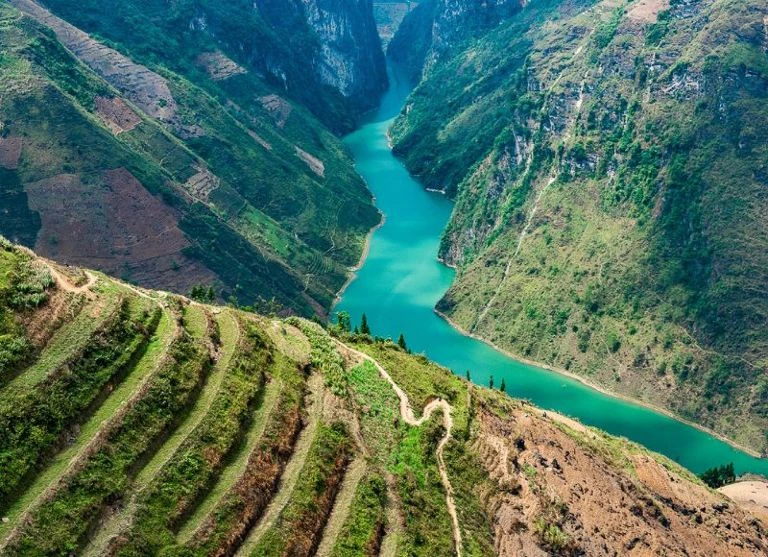
- Ta Lang Boat Pier (Pai Lung): A dramatic, steep 8-kilometer descent from Ma Pi Leng Pass down to the dock. This narrow concrete road features sharp hairpin turns that require confident driving skills. Today, professional local motorbike taxi services operate at the top of the slope to shuttle visitors down to the pier safely at reasonable rates.
- Xin Cai Boat Pier: Located on the opposite side of Trang Huong Bridge, this route features gentler slopes and is much more convenient if your itinerary continues onward toward Meo Vac or Cao Bang.
5. Pocket Guide & Best Times to Photograph the Nho Que River
Keep these practical tips in mind to make the most of your excursion on the Nho Que River:
- Golden hours of the day: Between 9:00 AM and 11:00 AM, or 2:00 PM and 4:00 PM. During these windows, sunlight shines directly into the canyon floor, illuminating the crystal-clear emerald water at its most vibrant without shadows cast by the surrounding peaks.
- Best time of year: October to December, when Ha Giang enters buckwheat flower season and dry weather leaves the river calm and at its deepest shade of jade. During the rainy flood season (June – August), the water can turn muddy brown with stronger currents, so be sure to check the weather forecast before setting out.
- What to pack: Bring sunglasses, sunscreen, a wide-brimmed hat, and a waterproof pouch for your phone or camera when participating in boating and paddling activities.
6. History of the Waterway & The Nho Que 1 Hydropower Project
Prior to 2018, the stretch of the Nho Que River running through Tu San Canyon was a fierce torrent filled with treacherous rapids and roaring currents, completely inaccessible to standard tourist boats. Residents of Pai Lung and Ta Lang communes who needed to cross the river had to rely on rudimentary suspension bridges or paddle bamboo rafts across dangerous whirlpools.
A major turning point occurred when the Nho Que 1 Hydropower Plant was constructed and its reservoir was filled. Rising water levels calmed the once-raging currents, transforming a rocky, shallow riverbed into a mirror-still emerald lake dozens of meters deep. This topographical transformation unlocked unprecedented waterway ecotourism potential, allowing modern sightseeing boats and kayaks to venture deep into the bottom of Tu San Canyon. Local residents who once struggled to farm barren, rocky slopes have now been trained as professional boat captains and guides, creating sustainable livelihoods and transforming the economic landscape of the Dong Van – Meo Vac highlands.
7. Specialized Karst Ecosystem & Canyon Biodiversity
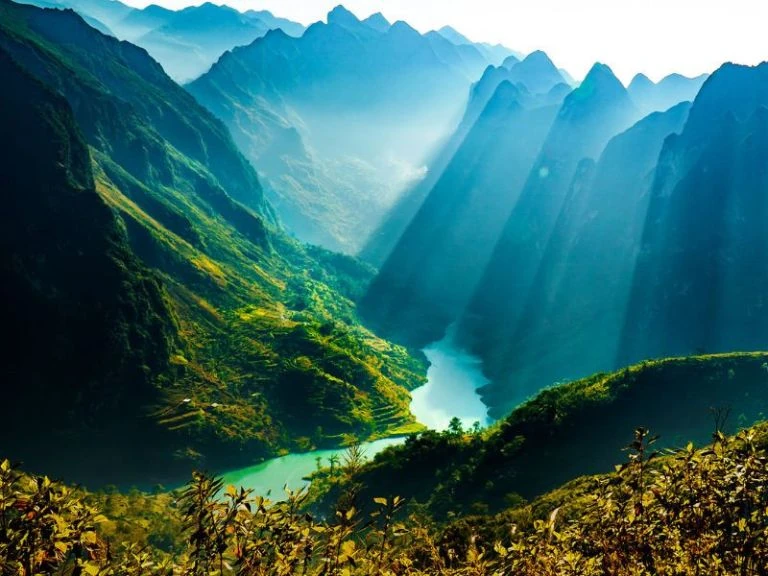
Tu San Canyon and the Nho Que River basin are more than just scenic marvels; they form an invaluable endemic limestone ecological reserve within the Dong Van Karst Plateau UNESCO Global Geopark. The sheltered microclimate inside the gorge retains high humidity and blocks harsh northeast monsoons, creating an ideal sanctuary for numerous rare flora and fauna species:
- Native flora: Ancient red pines, rare wild orchids, and high-value traditional medicinal herbs cling to the sheer limestone cliffs. In spring, vibrant red kapok flowers (Bombax ceiba) burst into bloom along both riverbanks, reflecting in the jade water to create a stunning contrast of colors.
- Tonkin snub-nosed monkey population: The watershed protection forests along the Nho Que River and the rocky mountains of Meo Vac serve as one of the few remaining habitats for the Tonkin snub-nosed monkey (Rhinopithecus avunculus)—a critically endangered endemic primate listed on the IUCN Red List and a symbol of biodiversity conservation efforts in Vietnam.
8. Essential Safety Guidelines for SUP & Kayaking
Stand-up paddleboarding (SUP) and kayaking through Tu San Canyon offer a world-class adventure sport experience, though visitors must strictly adhere to technical safety rules:
- Personal safety gear: 100% of participants are required to wear a properly fitted life jacket with all buckles securely fastened at all times while on the water, regardless of swimming ability.
- Waterway traffic rules: Although the water inside the gorge is calm, passenger motorboats regularly travel through the channel. When paddling a SUP or kayak, stay close to the cliffside edge, never cut across the bow of an oncoming motorboat, and maintain a minimum safe distance of 20 meters from moving vessels to avoid capsizing in their wake.
- Gear protection: Always use a specialized waterproof dry bag with a secure lanyard for smartphones, cameras, and wallets. Avoid wearing expensive jewelry, as items dropped into the 30- to 50-meter-deep canyon waters cannot be recovered.
9. Riverside Camping & Savoring Meo Vac Cuisine
Several eco-friendly glamping sites have recently opened along the banks of the Nho Que River, offering a magical overnight stay amid the tranquil wilderness. As night falls inside the light-pollution-free canyon, a dazzling canopy of stars emerges overhead, glittering like the Milky Way.
Guests can gather around a crackling campfire to savor fragrant stream fish grilled with wild forest chili salt, local pork roasted in bamboo tubes, and sips of sweet corn wine while listening to the soothing sound of river water lapping against the rocks. A peaceful night’s sleep surrounded by untamed nature washes away everyday stress and recharges your spirit for the adventures ahead.