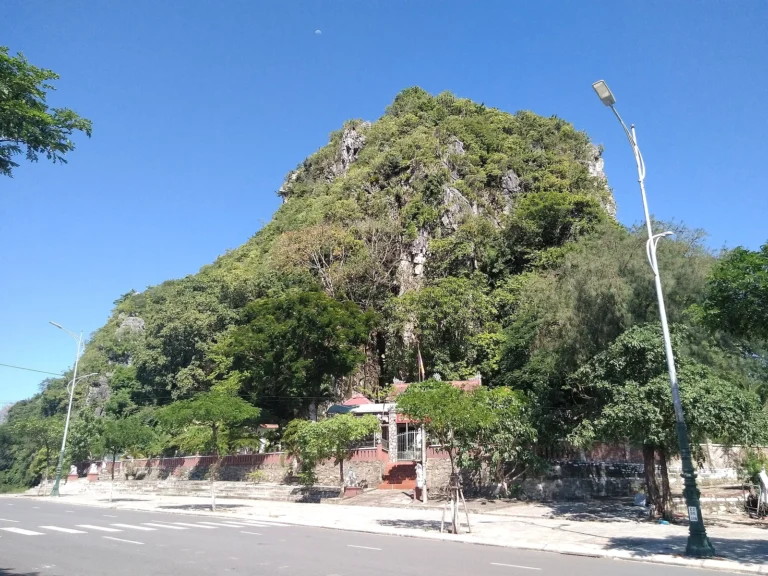
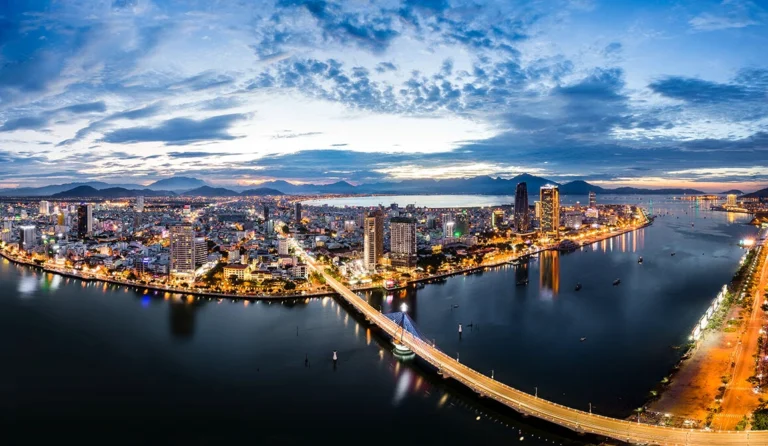
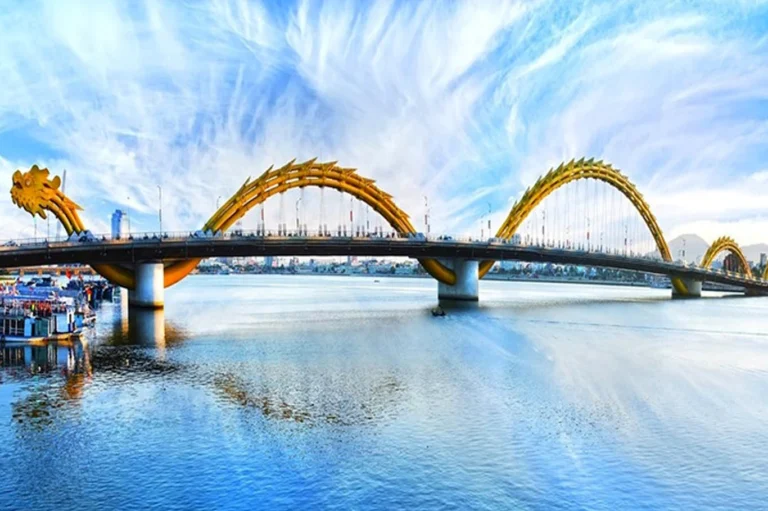
Located on the Son Tra Peninsula—known as the “green lung” of Da Nang City—Linh Ung Pagoda at Bai But is far more than a religious structure; it is often likened to a “lotus pedestal” resting between heaven and earth, where the ocean breeze meets the stillness of primeval forest. Occupying a prime location in Tho Quang Ward, Son Tra District, the pagoda sits about 10 kilometers northeast of the city center. From this vantage point, visitors can take in sweeping, majestic views of Da Nang Bay, where stretches of fine white sand embrace deep blue waters. This forms a classic “mountain-backed, water-facing” posture—a golden principle in East Asian feng shui symbolizing stability, prosperity, and peace.
The terrain of Linh Ung Pagoda at Bai But is shaped like a hill resembling a giant turtle stretching toward the open sea, its back resting against the vast primary forest of the Son Tra Peninsula. The combination of distinctive coastal limestone geology and lush vegetation creates a mild, breezy microclimate year-round, making it an ideal sanctuary for souls seeking serenity. Within Da Nang’s “Three Great Linh Ung Pagodas” system, the Bai But pagoda is regarded as the centerpiece—not simply for its architectural scale, but for the spiritual values deeply woven into the cultural life of Central Vietnam.
The origin of the name “Bai But” (Buddha’s Beach) is tied to spiritual legends cherished by local coastal communities. According to folklore, during the reign of Emperor Minh Mang, amidst days of raging storms and rough seas, local fishermen happened upon a Buddha statue that had drifted onto the sandy shore. Seeing this as an auspicious omen—a manifestation of the compassionate savior—they erected a small shrine to worship it. From that day forward, the waves grew calm, fishing voyages sailed smoothly, and livelihoods prospered. Thus, the name “Linh Ung” (Miraculous Response) was born, becoming a profound article of faith symbolizing the Dharma’s protection over humanity against the harshness of nature.
Though rooted in ancient legends, the complex standing today is the result of dedicated modern construction. Groundbreaking took place in 2004, and the pagoda was inaugurated on July 30, 2010—the fruit of tireless advocacy by Most Venerable Thich Thien Nguyen alongside the unified support of Da Nang’s authorities and citizens. Beyond being a contemporary Buddhist cultural heritage site, the pagoda is recognized by tourism authorities as an iconic cultural landmark that helps define the city’s spiritual tourism identity. The presence of the 67-meter-tall Lady Buddha (Guan Yin) statue—currently the tallest in Vietnam—has become a cultural milestone and a towering spiritual “lighthouse” between sea and sky, cementing Da Nang’s status as a destination where breathtaking natural beauty meets profound humanistic heritage.
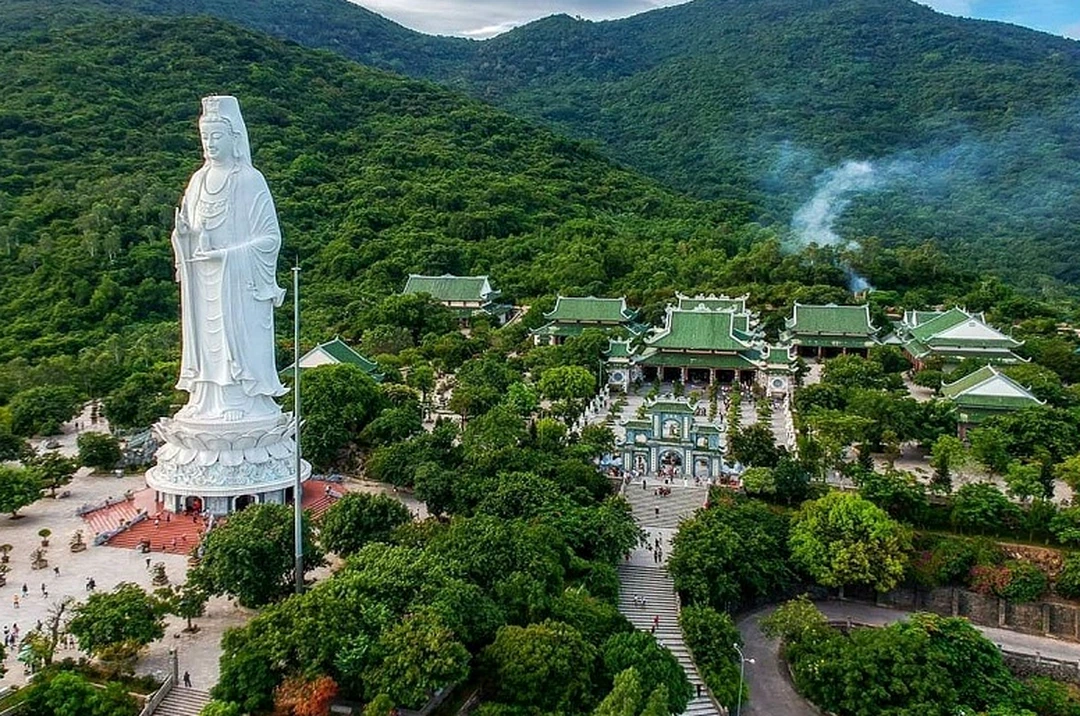
Linh Ung Pagoda at Bai But is not merely a pure spiritual sanctuary, but also an architectural masterpiece seamlessly blending human craftsmanship with the spirit of the wilderness. Positioned in an auspicious “mountain-backed, water-facing” setting, the pagoda rests on a hill shaped like a giant turtle, backed by the expansive primeval forest of the Son Tra Peninsula and facing directly out over the vast Da Nang Bay. Feng shui experts liken this topography to a steadfast anchor where the spiritual energy of heaven and earth converges, creating a tranquil space completely removed from the bustle of the distant city.
The strongest visual focal point is the 67-meter-tall Lady Buddha statue soaring into the blue sky. With a lotus pedestal measuring 35 meters in diameter, the statue is not only the tallest of its kind in Vietnam, but also a marvel of sculpture. Every contour of Lady Buddha’s face is intricately carved, radiating compassion and gentleness as her eyes gaze down upon the East Sea, as if watching over fishermen’s boats braving rough waves. Inside the base of the statue are 17 tower levels, each enshrining Buddha figures in different postures, lending rare cultural depth and architectural artistry. When bathed in sunlight, the statue’s pristine white finish gleams brilliantly against the deep green of the ancient forest and the turquoise expanse of the ocean.
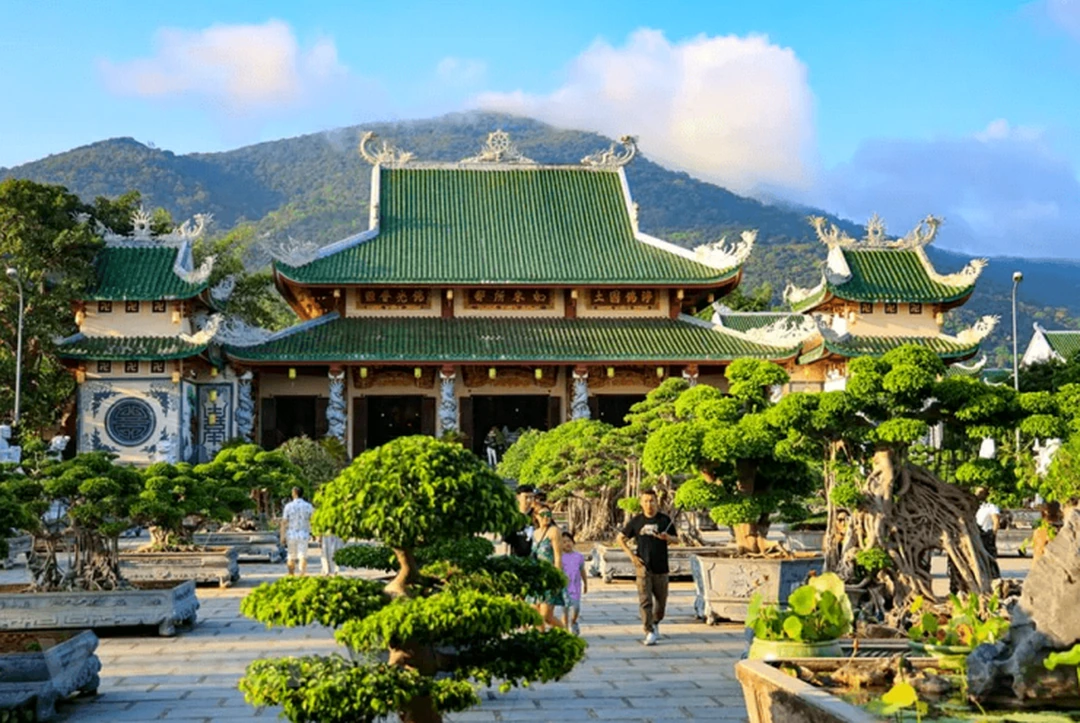
The overall architecture of the pagoda strikes a delicate balance between classical East Asian aesthetics and modern openness. Upward-curving tiled roofs reminiscent of bird wings, sturdy ironwood pillars meticulously carved with dragons and phoenixes, and expansive paved courtyards create an atmosphere that is both dignified and welcoming. Lining the pathway to the main hall are 18 Arhat statues sculpted from solid white stone. Each figure tells its own story with distinct expressions—ranging from joy, anger, love, and sorrow to deep contemplation and serenity—drawing visitors into a realm of enlightenment and reflection.
To capture “million-view” photographs, photographers typically favor two golden hours: sunrise and sunset. At dawn, as the first rays of sunlight pierce through the thin mist over the Son Tra Peninsula, frame your shot from the main courtyard looking straight out across Da Nang Bay. At this hour, the entire city emerges softly in a golden glow, creating a truly magnificent natural panorama. To capture the imposing grandeur of the Lady Buddha statue, head down to the lower flower garden and shoot from a low angle looking upward; the contrast between the white statue and the deep blue sky produces a powerful, serene composition.
Sunset is also when Linh Ung Pagoda takes on a captivating, contemplative beauty. As the sun dips behind the mountain range, the light shifts from golden-orange to soft violet, draping the curved tiled roofs and stone statues in a mystical aura. This is the ideal time to capture silhouette shots of the Arhats against a glowing evening sky. The fusion of stone sculpture artistry, traditional temple architecture, and the dramatic scenery of Son Tra makes this an unmissable destination where every corner becomes an evocative visual work of art.
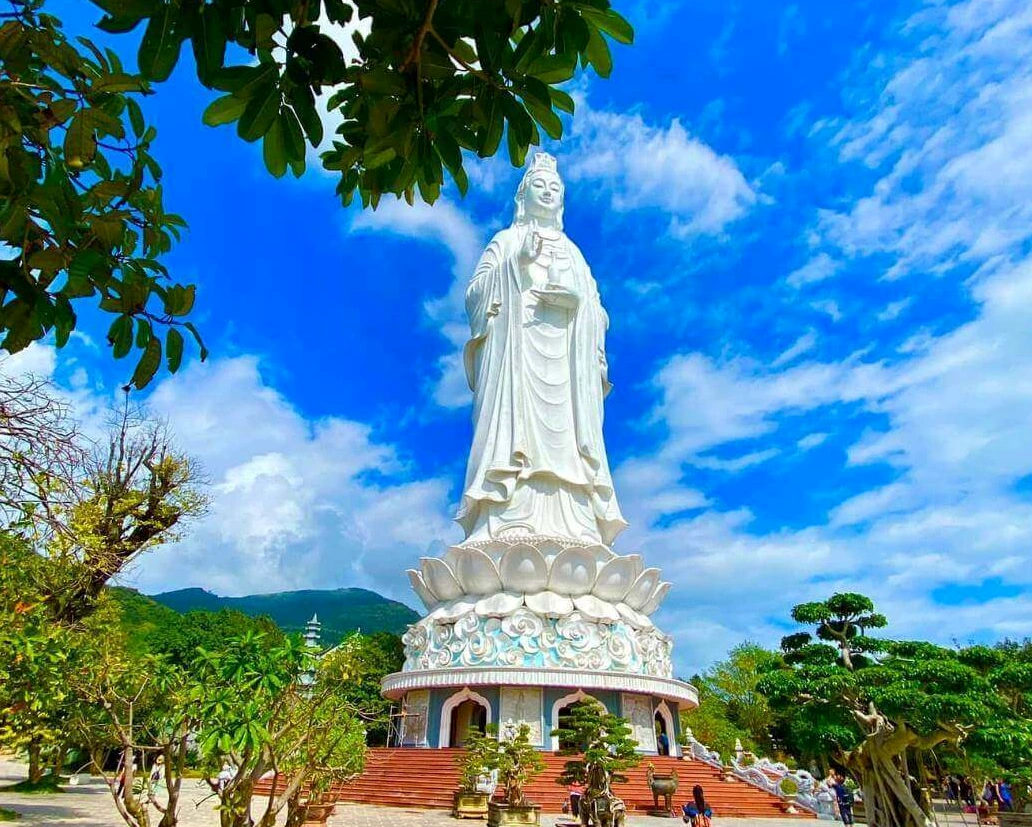
Upon arriving at Linh Ung Pagoda at Bai But, the first sensation that washes over visitors is not only awe at the sheer scale of the complex, but a remarkable stillness that settles into every breath. Standing in the main courtyard, where salty sea breezes blow freely, you feel tiny before the towering, pure-white, majestic Lady Buddha statue set against the great wilderness of Son Tra. In that moment, all the clamor of the distant city seems to melt away, leaving only the resonant chime of temple bells blending with the gentle murmur of waves breaking against the cliffs below—forming a pure, spiritual symphony.
Paying homage here goes far beyond lighting incense and offering prayers; it is a deeply enriching journey into local culture. Along the walkway leading to the main hall, the row of 18 finely carved white-stone Arhat statues—depicting human emotions of joy, anger, attachment, and sorrow—invites you to pause and reflect. Each statue embodies a lesson on human existence and enlightenment, reminding visitors of the value of compassion and letting go. Many visitors choose to walk slowly up each stone step, listening to the rustle of forest leaves and the breath of nature, allowing their minds to be cleansed after long, exhausting days.
For restless spirits who love exploring, a trip to Linh Ung offers a seamless blend of spirituality and outdoor adventure. After paying your respects at the pagoda, you can spend time lightly trekking along the scenic trails winding around the Son Tra Peninsula. With a bit of luck, you might spot red-shanked douc langurs—a rare primate species dubbed the “queen of primates”—swinging through the canopy of the ancient forest. Further afield, hiring a small boat from local fishermen to cruise around Da Nang Bay offers a completely different perspective looking back toward the peninsula: Linh Ung standing like a guardian deity, towering above to watch over the peace of the entire city.
Keep in mind that your experience here wouldn’t be complete without sampling the local flavors. After leaving the pagoda grounds, stop by the small roadside eateries along Hoang Sa Street to enjoy homegrown specialties from the Son Tra Peninsula. Rustic dishes such as wild forest greens dipped in fermented anchovy sauce (mam nem), fresh seafood just caught off Bai But Beach, or a steaming bowl of oyster porridge brimming with the natural sweetness of the sea will awaken your taste buds. Sitting at a modest eatery, savoring local specialties while gazing out over the vast ocean, you will feel a wonderful connection between people, nature, and the spiritual culture of Da Nang.
The awe of standing at the foot of the Lady Buddha statue, the quiet stillness of hearing chants carried on the wind, and the fulfillment of connecting with green forests and blue seas—all come together to create a priceless experience that no video or photograph can fully capture. Linh Ung Pagoda is more than a tourist attraction; it is a place to rediscover inner balance, where local culture and natural beauty intertwine, leaving visitors with unforgettable impressions of a Da Nang that is sacred, free-spirited, and vibrant with life.
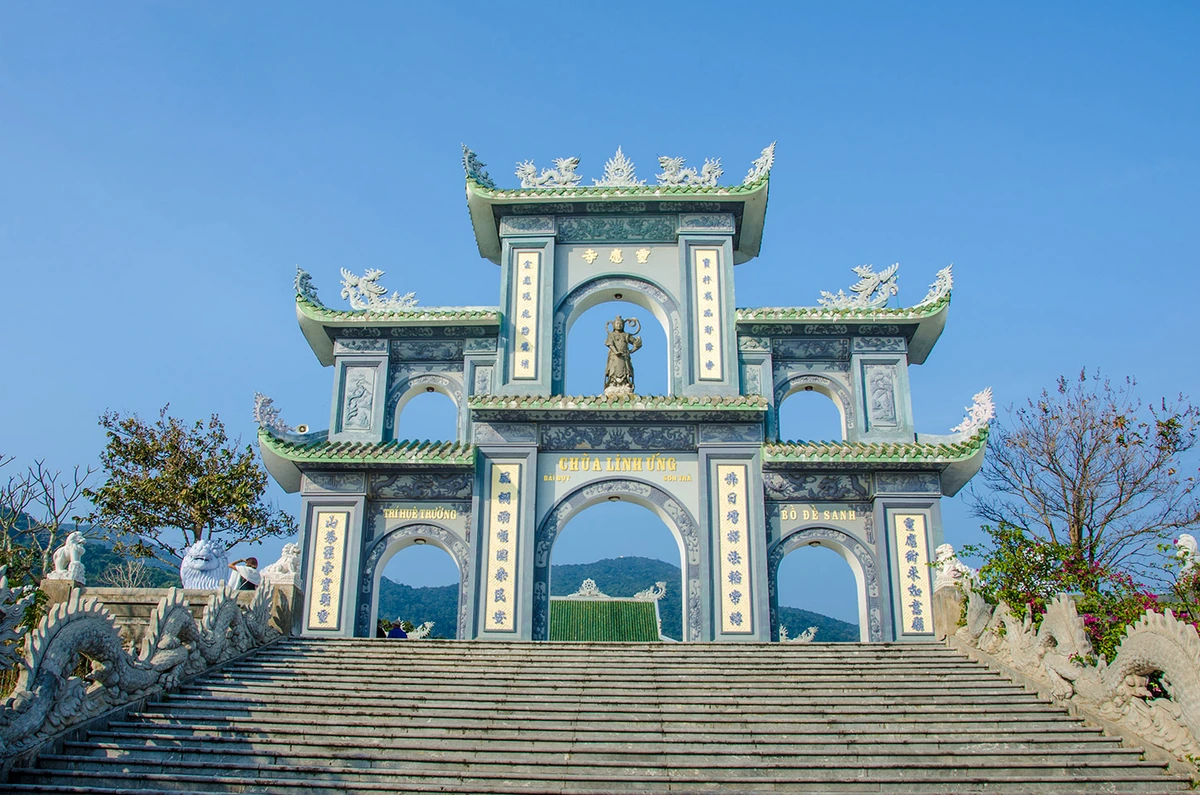
To make your exploration of Linh Ung Pagoda at Bai But seamless and meaningful, it helps to stay up to date on visiting regulations as well as key transportation tips. Currently, Linh Ung Pagoda maintains a completely free-entry policy for all domestic and international visitors, charging no admission or sightseeing fees for any area within the grounds. Daily visiting hours are set from 06:00 AM to 09:00 PM. This generous schedule allows visitors to pay respects to the Lady Buddha statue in the crisp morning air, or admire panoramic views of Da Nang sparkling with city lights after nightfall from the highest point of the pagoda.
When it comes to getting there, a motorbike remains the top choice for travelers wanting to fully soak in the scenic coastal route along Vo Nguyen Giap and Hoang Sa Streets. The ride from the city center takes only about 20 to 30 minutes. However, because the pagoda sits on the Son Tra Peninsula with steep inclines and sharp hairpin turns, riders should carefully check their brakes and tires before setting off. For families or elderly visitors, taking a taxi or ride-hailing car is a safer, more comfortable alternative. Note that during peak hours or major festivals, private vehicles must strictly follow traffic instructions from peninsula management to avoid congestion in parking areas.
As this is a sacred, solemn site, adhering to the dress code is essential. Opt for modest, respectful attire, avoiding shorts, short skirts, or sleeveless tops when entering the main worship halls. If you inadvertently arrive in unsuitable clothing, shawl rentals or complimentary wraps are usually available near the pagoda entrance so you can cover up before stepping into sacred spaces. Additionally, due to the rocky mountain terrain and numerous stone staircases, wear sneakers or secure flat sandals with good grip rather than high heels to ensure safety while exploring the expansive grounds.
The best time to visit Linh Ung Pagoda is from March to September. This coincides with Da Nang’s dry season, bringing clear skies and bright sunshine ideal for taking photos and enjoying unobstructed views over Da Nang Bay from above. On crisp, clear-sky days in particular, the sight of the Lady Buddha statue towering against a deep blue backdrop makes for truly striking photos. Conversely, October to December is typically the rainy and stormy season, when roads up the peninsula can become slippery and shrouded in thick fog, so be sure to check the weather forecast before planning your trip to ensure a smooth and safe visit.
To enjoy a seamless getaway and take in the full beauty of Linh Ung Pagoda without worrying about arranging transportation, booking tickets, or planning itineraries, travelers can choose from VDS Travel’s premium all-inclusive Da Nang tour packages. Each itinerary is thoughtfully timed to capture photo spots at their most radiant, accompanied by knowledgeable local guides and top-tier hotel and dining standards.