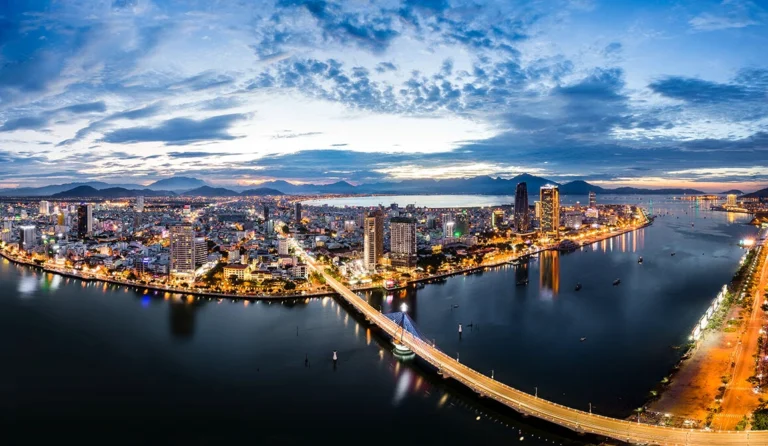
Viewed through the lens of historical geography and urban anthropology, the commanding coordinates of Dragon Bridge (Long Kieu) over the Han River are far more than a mere junction of modern traffic—they form a sacred convergence of the geomantic energy of the Quang region. Spanning the historic waterway artery of Da Nang, the bridge occupies a strategic position linking the horizontal axis from the traditional urban heart of Hai Chau District to the sweeping white-sand coastline of the Son Tra Peninsula. Here, every steel girder reaches forward not simply to solve urban infrastructure challenges of the Doi Moi era, but also to inscribe onto the waters of the Han River a spiritual landmark where a seafaring past and a globally integrated future seamlessly merge.
From the perspective of traditional feng shui and local topography, Dragon Bridge commands an auspicious setting embodying the classic “Dragon Attending the Gathering Waters” formation. Flowing gently through the urban core, the Han River resembles a winding ribbon of water energy that gathers vital force from the upstream mountains and carries it toward the vast Da Nang Bay. The bridge lies along an eastward axis—the direction of sunrise, new beginnings, and international outreach—backed by the majestic Truong Son mountain range to the west and sheltered by the cliffs of Son Tra to the east. The presence of a Ly–Tran dynasty dragon motif surging across the waves not only evokes the legend of the “Children of the Dragon and the Fairy,” but also establishes an artificial architectural “dragon vein,” activating prosperity, fortune, and enduring vitality for both historic and modern Quang Nam–Da Nang.
The origin of the name Long Kieu and the historical milestones of the structure are closely tied to a proud era of transformation for Da Nang in the early 21st century. Groundbreaking took place on July 19, 2009, and the bridge was inaugurated on March 29, 2013, marking the 38th anniversary of the city’s liberation—a project deeply stamped with the strategic vision of leaders of that era, including Prime Minister Nguyen Tan Dung and Da Nang People’s Committee Chairman Nguyen Ba Thanh. The vernacular name “Dragon Bridge” feels straightforward yet grand, while its classical Sino-Vietnamese title, “Long Kieu,” carries a resonant gravitas that recalls the nation’s noble cultural roots. The bridge emerged as a fitting hyphen between the storied heritage of a traditional port city and its aspiration to soar like a dragon into a world-class economic and tourism hub.
Beyond its architectural significance, the space surrounding Dragon Bridge preserves deep layers of folk culture and collective memory. Through the research of journalists and heritage scholars, the structure has transcended its function as a purely utilitarian transport link to become a piece of contemporary cultural heritage—a semiotic symbol of regional pride in Quang land. The sight of the undulating golden dragon breathing fire and spouting water on weekends has evolved into a distinctive communal cultural ritual, drawing millions of domestic and international visitors alike. In doing so, Dragon Bridge not only anchors the traditional spirit of Vietnam’s origin myths, but also affirms the enduring vitality of Vietnamese heritage amid modern global integration.
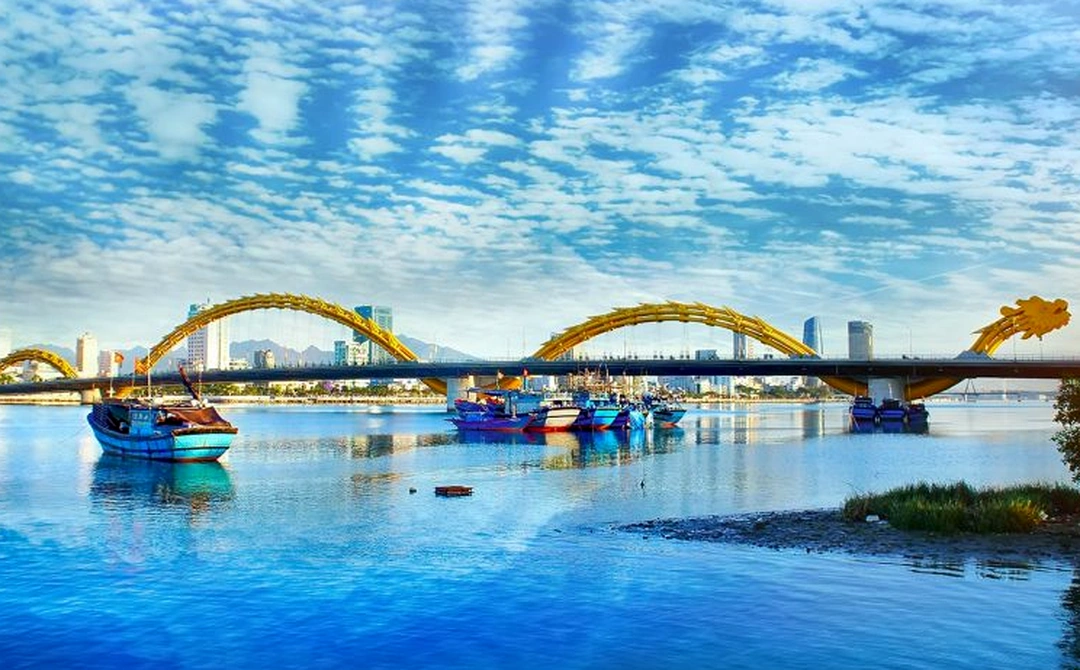
From the standpoint of contemporary architecture blended with symbolic sculptural art, Dragon Bridge in Da Nang stands out as a monumental masterpiece arching across the poetic Han River. The structure represents a seamless fusion of world-class steel-arch bridge engineering and the soul of traditional East Asian culture. Its defining centerpiece is the form of a Ly-dynasty golden dragon undulating powerfully as it surges toward the open sea. The dragon’s body is crafted from a continuous steel box-girder system coated in radiant gold paint, symbolizing prosperity and majesty. Its head rises proudly toward the east, paired with a smart color-changing LED lighting system that paints a brilliant ribbon of light across Da Nang’s night sky. While by day it projects the robust, imposing presence of a major transport landmark, at dusk Dragon Bridge transforms into a grand light-art installation shimmering across the rippling surface of the Han River, creating a captivating modern cityscape.
To capture the full grandeur of Dragon Bridge and its most viral photo angles, professional photographers and leading travel publications frequently point to two prime vantage points. First, the sidewalk along Tran Hung Dao Street (right beneath the eastern end of the bridge in Son Tra District) offers an ideal angle to frame the majestic dragon head straight-on. The golden hour to shoot here is between 5:30 PM and 6:30 PM at sunset, when the sky shifts into dreamy hues of purple and rose and the bridge’s illumination system switches on, creating striking color contrast. Second, high-rise rooftop cafes or hotel balconies along Bach Dang Street (on the western bank of the Han River) provide a sweeping panoramic perspective encompassing the entire graceful curve of the dragon’s body spanning the water. The best window for this vantage point is at dawn (from 5:00 AM to 6:00 AM), when soft morning sunlight casts its first golden rays onto the steel dragon scales against the tranquil backdrop of a city just waking up, yielding photographs that are at once architectural records and poetic works of art.
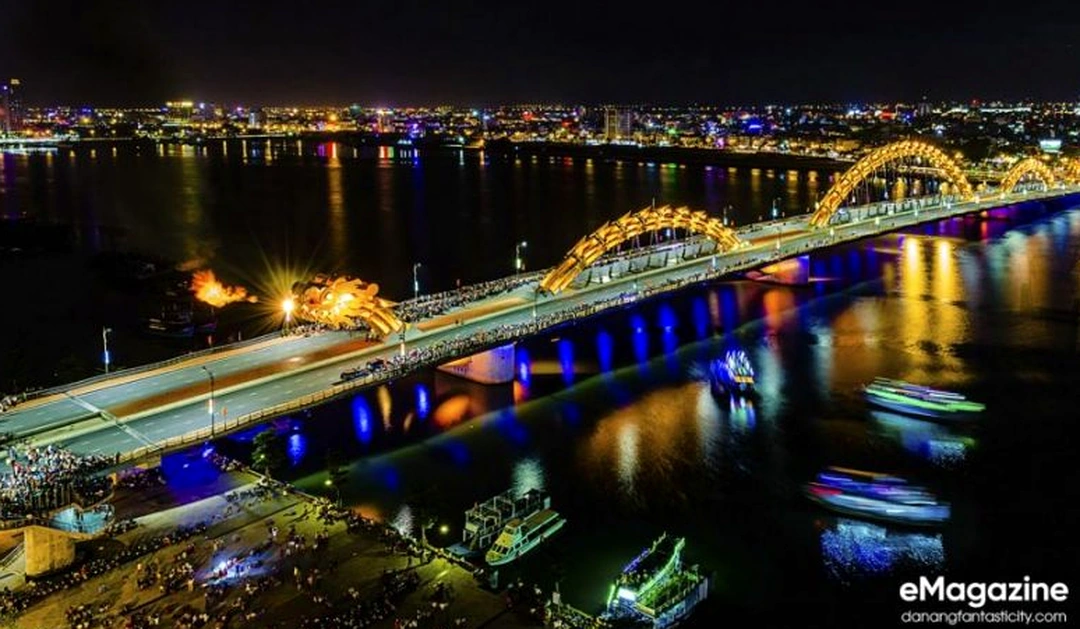
Stepping onto Dragon Bridge at twilight, as the urban landscape transitions from natural daylight to vibrant LED illumination, any visitor is swept away by a seamless tableau where modernity meets tradition. Rather than appearing merely as a massive steel structure curving gracefully across the Han River, the bridge doubles as a living stage for the local culture of the Quang region. A sense of awe settles in as you stand beneath its sturdy piers, gazing up at the elongated dragon stretching toward the open sea—a vivid reminder of the resilient ambition of Da Nang’s people. Strolling along the pedestrian walkway on weekend evenings, visitors immerse themselves in lively crowds, surrounded by cheerful chatter and excited cheers from locals and international travelers alike as everyone awaits the magical moment when the dragon breathes fire and spouts water. When jets of flame blaze across the night sky, followed immediately by powerful bursts of water carried on the brisk river breeze, the spectacle delivers an exhilarating visual and auditory experience that awakens every sense.
Beyond its light and engineering shows, exploring Dragon Bridge opens up opportunities to admire the scenery from several distinctive perspectives. Cruising down the Han River on a night boat tour offers a serene, poetic interlude where travelers can take in the full majesty of Dragon Bridge from the water, drifting past colorful arches reflected on gentle ripples. Meanwhile, settling into a rooftop cafe along Bach Dang or Tran Hung Dao Street to gaze out over the riverfront and watch the city’s ceaseless rhythm leaves an unforgettable impression. For travelers who love active exploration, pairing a visit to Dragon Bridge with an excursion to the Son Tra Peninsula and Son Tra Peak—often affectionately dubbed coastal “mountain climbing” right along the seaward corridor from the bridge—rewards you with sweeping elevated views over the curving coastline and the dragon bridge gleaming like a centerpiece in the heart of the city.
The spiritual life and indigenous culture surrounding Dragon Bridge also form an essential piece of the experience, enriching both cultural discovery and firsthand exploration. Just a short distance from the foot of the bridge, centuries-old traditional shrines, folk sanctuaries dedicated to the Whale God (Ngu Ong), and longstanding spiritual traditions of Central Vietnam’s coastal fishermen quietly endure, creating an intriguing yet harmonious counterpoint to the high-tech, fast-paced rhythm of a modern smart city. Stepping into these quiet spaces, visitors cannot help but feel moved by the stillness of time, sensing the deep undercurrents of traditional heritage still pulsing beneath this young metropolis.
A visit to Dragon Bridge would feel incomplete without sampling the renowned local culinary scene infused with the bold flavors of Central Vietnam. Right across the bridge, traditional Mi Quang eateries serve golden turmeric-tinted noodles bathed in rich shrimp-and-pork broth, topped with crunchy roasted peanuts and fresh herbs—an authentic taste of Quang culinary heritage. A little farther away lie the savory aromas of pork belly wrapped in rice paper with two-end skin (banh trang cuon thit heo), pungent fermented anchovy noodle bowls (bun mam nem), and freshly caught seafood straight from the East Sea. Savoring a steaming bowl of Mi Quang in the cool river breeze while gazing at the illuminated Dragon Bridge through the window lets travelers experience the genuine warmth, hospitality, and heartfelt spirit of the local people, turning a simple trip into a cherished memory.
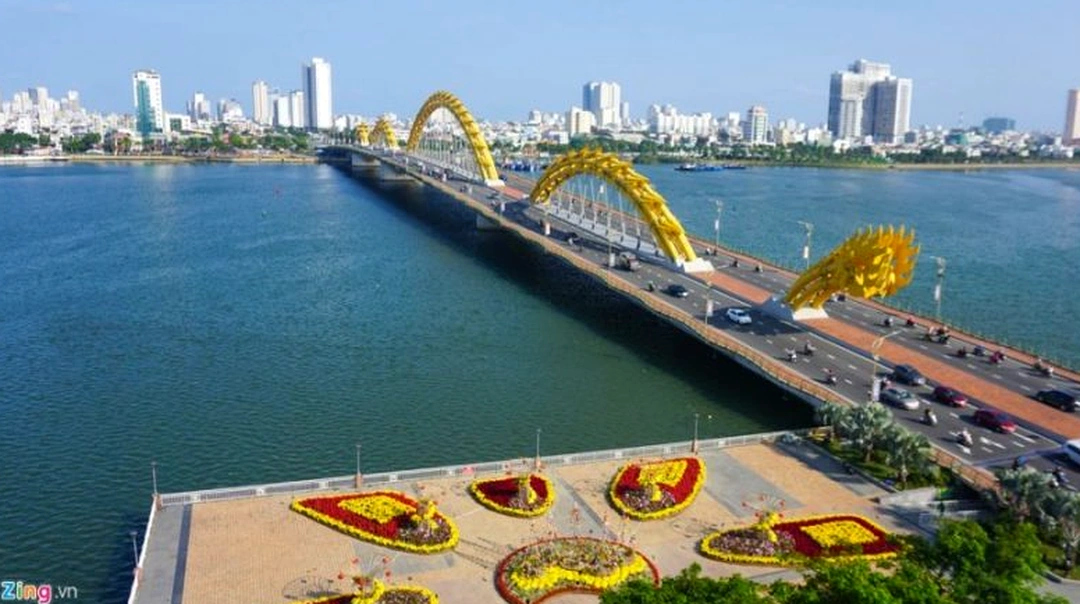
Da Nang’s Dragon Bridge is both a working transport artery and a public cultural landmark open freely to residents and travelers day and night. Because it sits along a primary thoroughfare spanning the Han River, there are no admission tickets or fees of any kind—sightseeing, strolling, and taking in the views are completely free. Visitors are welcome to walk onto the bridge at any hour to enjoy the open river air and capture memorable photos without worrying about entry costs.
Getting there is straightforward: starting from the city center (Hai Chau District), travelers can easily reach Dragon Bridge by motorbike, car, taxi, or public bus. The most direct routes follow major avenues such as Bach Dang, Nguyen Van Linh, or Le Dinh Duong straight toward the Han River waterfront. If you prefer experiencing the city at a unhurried pace, strolling along the western bank of the Han River before stepping onto the bridge’s pedestrian walkway is an ideal way to soak up panoramic views of the water and surrounding landmarks.
The best time of year to visit is during Central Vietnam’s dry season (roughly from March to September), when skies are clear, rainfall is minimal, and weather conditions are ideal for outdoor sightseeing. In particular, visiting on weekend evenings (Saturday and Sunday) or major public holidays lets you witness Dragon Bridge’s signature fire-and-water show, which takes place at 9:00 PM. To secure the clearest and safest viewing spot for the performance, arrive about 15 to 20 minutes early to claim a place along the bridge walkway or on the sidewalks along the eastern and western banks of the Han River.
When visiting and exploring Dragon Bridge, dress neatly and comfortably, opting for sneakers or flat shoes suitable for walking long stretches. Because the bridge is wide open and exposed to river breezes, bringing a light jacket in the evening or a sun umbrella during the day will make your visit far more comfortable. Finally, following traffic safety rules, keeping public spaces clean, and keeping a close eye on personal belongings will ensure your visit to this Han River icon remains safe, respectful, and unforgettable.
To enjoy a seamless holiday and experience Dragon Bridge at its finest without the hassle of arranging transportation, booking tickets, or planning itineraries, travelers can choose VDS Travel’s premium all-inclusive Da Nang tour packages. Every itinerary is thoughtfully timed for photo stops at peak scenic moments, accompanied by knowledgeable local guides and top-tier hotel and dining standards.