When thick fog settled over the ancient oaks of the British Isles in the mid-nineteenth century, the rhythm of life among the British aristocracy under Queen Victoria followed a strict schedule. Inside grand estates, upper-class custom dictated that lunch was merely a light midday bite, while a lavish evening banquet never began before eight or nine o’clock at night. The long stretch of time from midday until late evening left a distinct physiological and social lull inside spacious aristocratic drawing rooms. Out of that seemingly everyday inconvenience was born one of Western civilization’s most refined and enduring culinary traditions.
The origins of this graceful ritual are closely tied to Anna Maria Russell, the seventh Duchess of Bedford and a close lady-in-waiting to Queen Victoria. Around 1840, while staying at Woburn Abbey in Bedfordshire as well as Belvoir Castle, the Duchess frequently experienced fatigue and a sinking feeling in her stomach around four o’clock in the afternoon. To stave off hunger before a formal evening dinner, she asked a servant to bring a silver tray of hot black tea to her private boudoir, along with a few slices of buttered bread and light cakes. At first it was a discreet personal habit behind closed doors, yet once Anna Maria realized how comforting the ritual was, she began sending notes inviting close aristocratic friends to her private room to share afternoon tea and chat.
Before long, the Duchess of Bedford’s refined habit spread beyond Woburn Abbey and swept through London as a fashionable craze. The turning point came when Queen Victoria herself embraced the custom at court, transforming an intimate culinary gesture into a national social institution. Royal tea receptions at Buckingham Palace quickly established strict standards for attire, deportment, and ceremony. Ladies wore vibrant silk gowns with signature Victorian skirts and crisp white lace gloves, while gentlemen dressed smartly in tailored suits, gathering around fine royal bone china tea sets and gleaming three-tier silver stands.
A common misconception in modern culture is treating “Afternoon Tea” and “High Tea” as interchangeable, whereas historical reality records them as two sharply contrasting social worlds. The original aristocratic custom is “Afternoon Tea”—more accurately called “Low Tea” because its delicate fare was served on low tea tables beside plush sofas in an elegant drawing room. Low Tea’s core menu centers on refinement: crustless cucumber finger sandwiches, warm baked scones spread with clotted cream and strawberry jam, and dainty pastries. By contrast, “High Tea” was a product of the Industrial Revolution—a hearty, practical meal for working-class laborers after long hours in factories and mines. They gathered around high dining tables at six o’clock in the evening to replenish their energy with meat pies, cured or salted fish, cheese, and pots of strong, brisk black tea.
Going far beyond a purely sensory treat, Victorian afternoon tea created a distinctive space of social empowerment for upper-class women. In an era when public life and politics were dominated almost entirely by men, the afternoon tea room became a rare autonomous domain presided over by women. There, amid wisps of fragrant tea, noblewomen felt free to discuss art and literature, debate political shifts, and strengthen aristocratic alliances without rigid social constraints. Across changing dynasties, the afternoon tea ceremony has kept its classic spirit intact, standing as a lasting symbol of regal poise and aesthetic living across Britain.
The shaping of London’s upper-class tea culture was closely linked to the geographic artery of the River Thames and the golden maritime routes opened by the British East India Company from the seventeenth century onward. The winding Thames served not only as a vital trade route bringing fine tea chests from lush estates in Assam, Darjeeling, or Fujian to Docklands wharves, but also as a catalyst for shifting power westward through the capital. While the eastern port district handled bulk storage and rough-and-tumble commerce, Mayfair, St. James’s, and the prestigious West End became an elite enclave right beside Buckingham Palace and St. James’s Palace. The gentle, serene terrain of this aristocratic core, paired with lush royal parks such as Hyde Park and Green Park, created a soothing microclimate removed from Victorian London’s industrial soot—an oasis made for unhurried afternoon conversation.
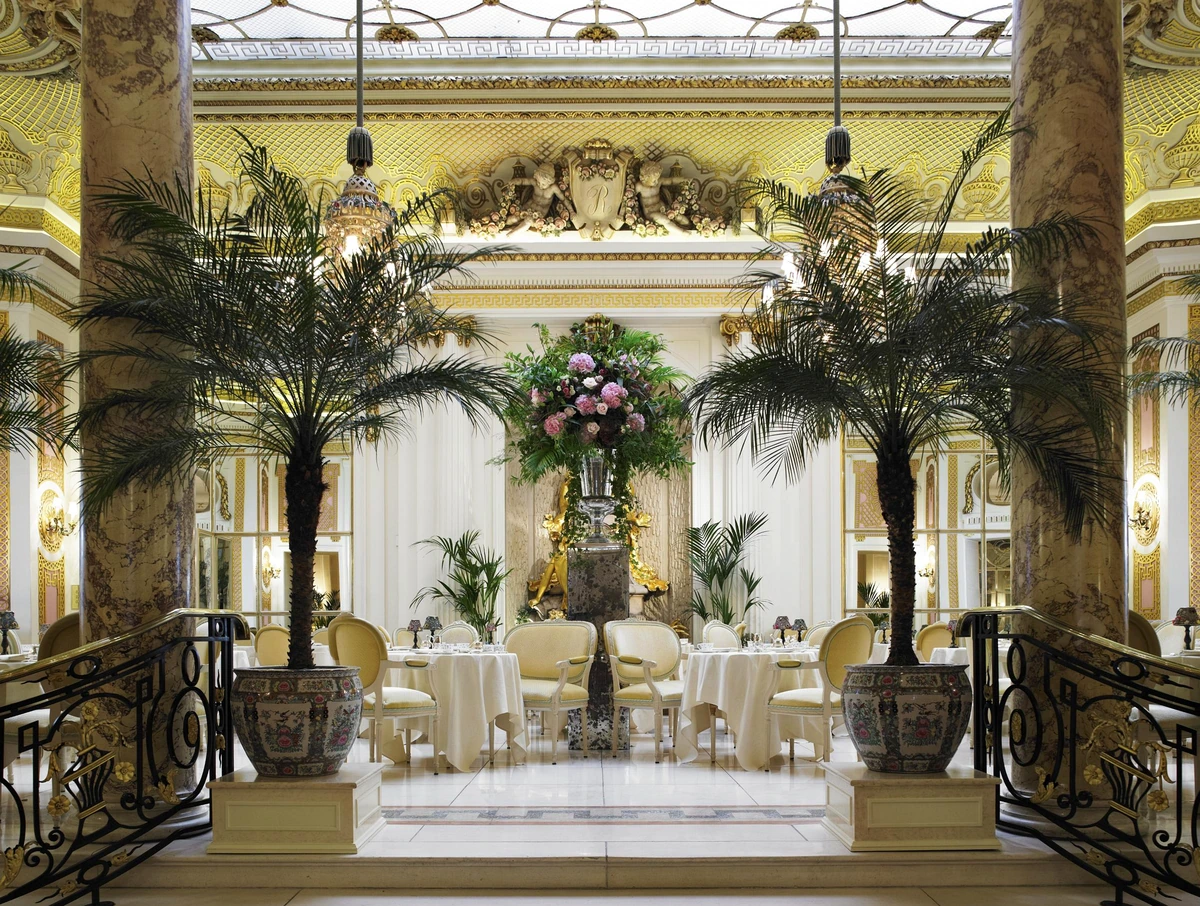
Central London’s aristocratic tea ecosystem is anchored by landmark venues along Piccadilly and Brook Street, exemplified by the grand Palm Court at The Ritz, the dazzling Claridge’s, and royal department store Fortnum & Mason, founded in 1707. The interiors of these classic tea rooms blend Neoclassical architecture with Belle Époque splendor. Rooms often feature soaring vaulted ceilings with twenty-four-karat gold-leaf moldings, tall marble columns catching soft natural light through stained glass, and sparkling Baccarat crystal chandeliers. To balance the grandeur of precious metals and stone, potted tropical palms and fresh English country-garden floral arrangements are artfully placed alongside harp or piano music, weaving a serene and refined atmosphere for society guests.
Alongside prime settings and ornate surroundings, tea-making technique and table styling are the true hallmarks of British royal quality. A proper afternoon tea begins with careful control of water temperature and steeping time. The water should be pure mineral water brought to roughly 95 to 98 degrees Celsius for traditional black teas such as Earl Grey or English Breakfast, releasing complex tannins without scorching tender leaves. Tea service pieces should be crafted from 925 sterling silver or glazed royal Bone China, holding steady heat across a three-to-five-minute steep. Before pouring, the porcelain pot is warmed with a splash of hot water to temper the clay and keep every pour evenly warm.
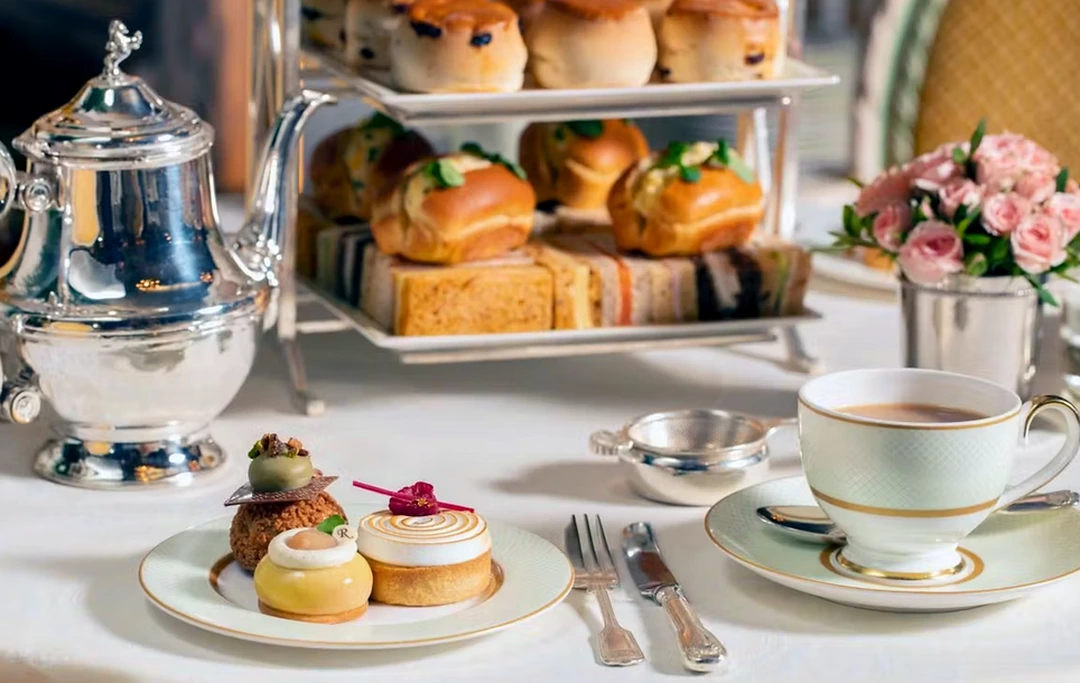
Table presentation for afternoon tea follows strict geometric order on the famed three-tier stand. Center stage belongs to a silver or matching porcelain tier stand that guides the palate from savory to sweet, moving from bottom to top. The bottom tier holds neat, crustless finger sandwiches with refined pairings such as buttered cucumber, dill-cured Scottish smoked salmon, and rare roast beef with Dijon mustard. The middle tier welcomes golden, buttery scones kept warm under a silver-lined napkin, ready for rich clotted cream handcrafted from Devon or Cornwall milk and ruby-red strawberry jam. The top tier crowns the experience with miniature petit fours, fruit tarts, and colorful macarons, bringing an elaborate, time-honored London ritual to a graceful close.
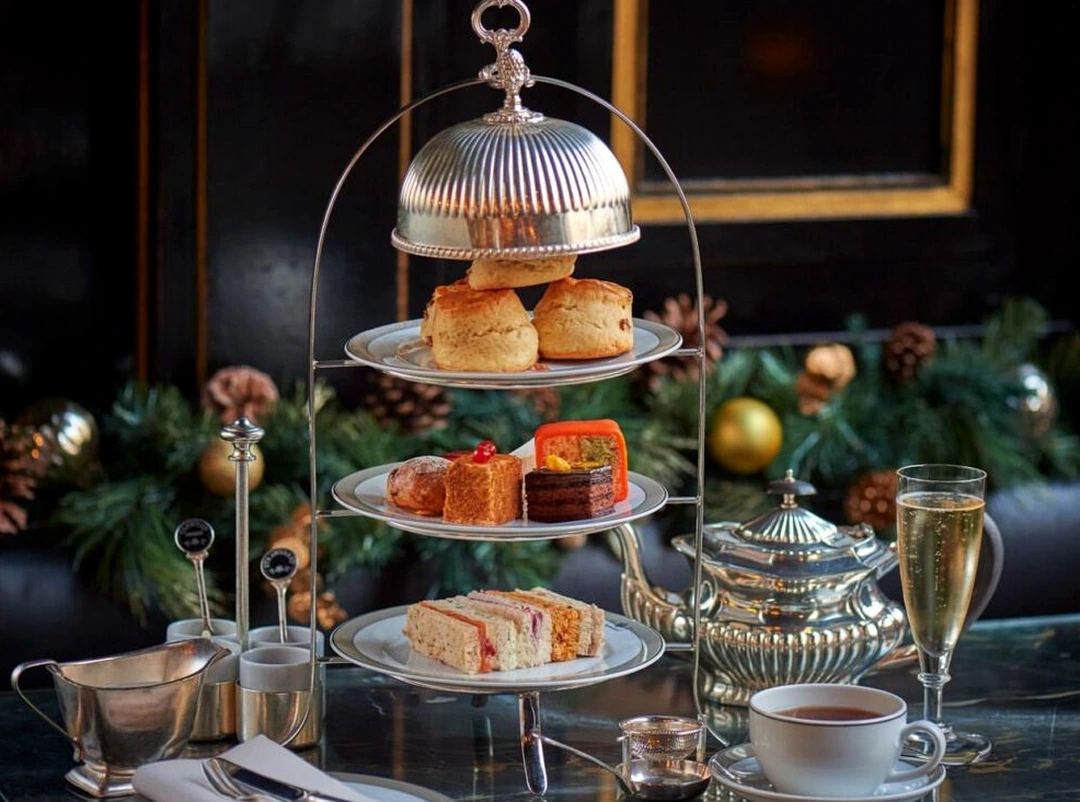
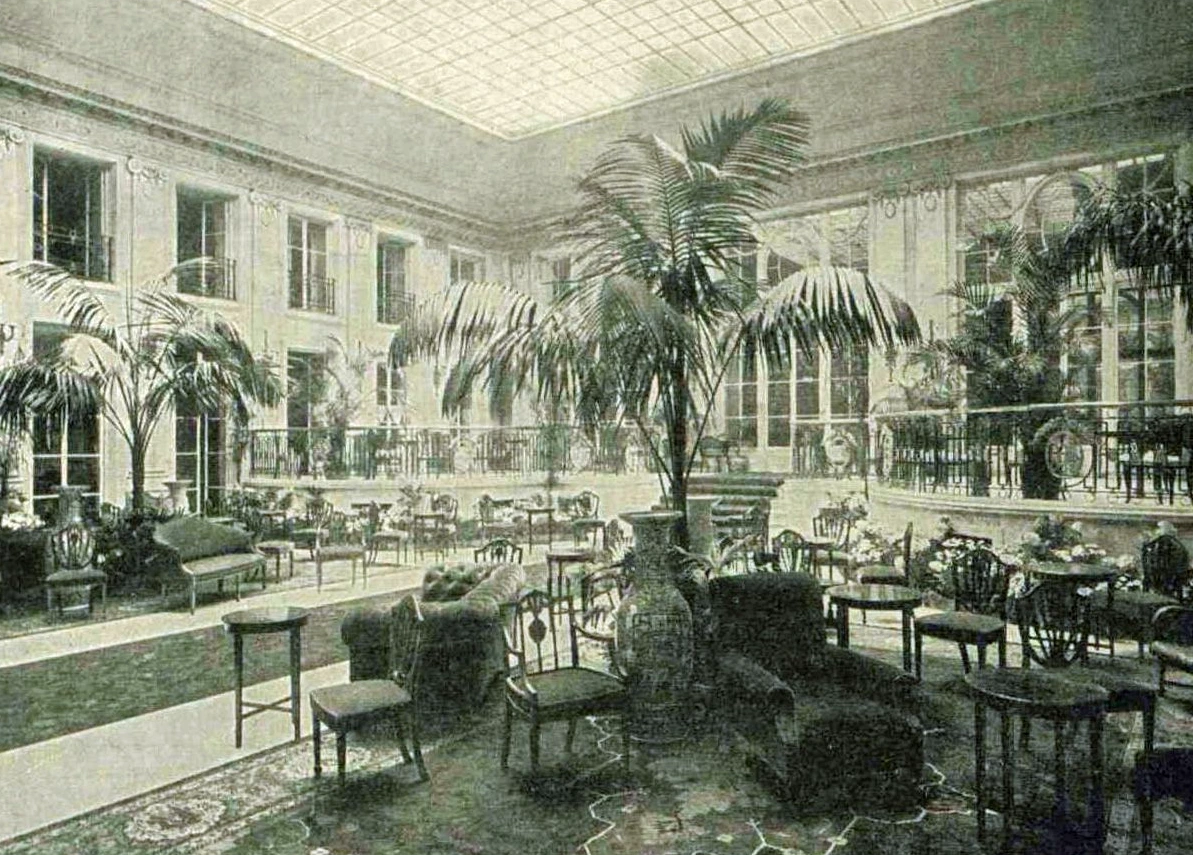
London’s high-society tea rooms are far more than places to pour amber infusions; they represent spatial artistry at the crossroads of Edwardian and Neoclassical design. Under King Edward VII, when the British Empire reached peak luxury in leisure culture, celebrated salons such as The Palm Court at The Ritz and The Thames Foyer at The Savoy were built as true temples of art. Drawing inspiration from Paris’s renowned Beaux-Arts school, master architects Charles Mewès and Arthur Davis applied classic proportions and raised vaulted ceilings past six meters to create an airy grandeur like a miniature royal palace in the heart of a bustling capital.
The defining architectural feature of these heritage tea rooms is a curved stained-glass skylight overhead, letting gentle western afternoon daylight wash across every table. Beneath that luminous glass canopy, craftsmanship reaches near-flawless detail. Floors and stately columns are clad in solid Carrara marble quarried in Tuscany, Italy, with subtle smoky veining reflecting light like still water. Surrounding walls feature intricate raised plaster moldings gilded in 24-karat leaf in the French ormolu tradition. Regal gold, finely carved dark mahogany, and deep emerald-green handwoven velvet drapery come together in a backdrop that feels at once hushed, solemn, and lavish.
The physical scale of royal tea salons is calibrated down to the centimeter to balance festive glamour with discreet privacy. Classic “Palm Court” layouts rely on lush Kentia palms—a prized tropical plant Queen Victoria loved and used to decorate Osborne House. Full palm fronds gently partition seating areas, screening sightlines between noble guests while absorbing sound naturally. As a result, gentle harp notes or melodies from a central Steinway grand piano blend seamlessly with quiet conversation without harsh echo, preserving the poise and discretion prized by elite patrons.
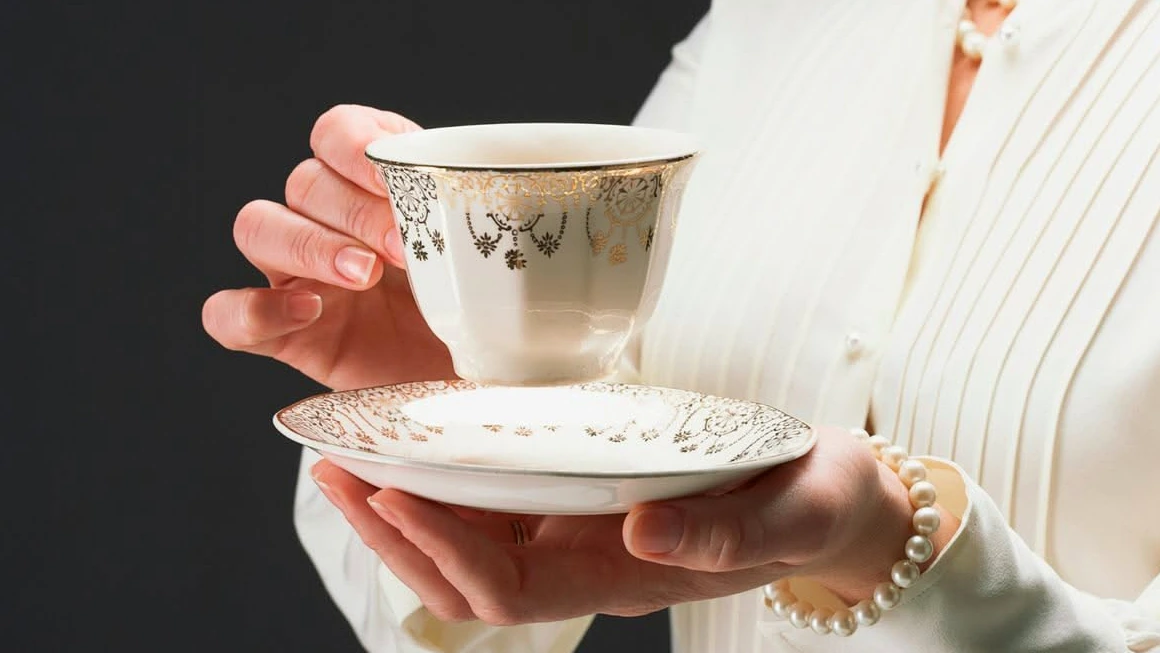
Alongside the grand architecture lies the exquisite craftsmanship of the entire tea service apparatus, where every item on the table is a handmade treasure. Tea tables are always draped in cloths woven from the finest Irish linen, pressed dead flat without a single crease. Teapots, three-tier stands, and sugar tongs are crafted from solid 925 sterling silver, periodically hand-polished by skilled silversmiths to achieve a mirror-like sheen. The china used for afternoon tea must be top-tier fine bone china from royal-warranted potteries such as Josiah Wedgwood or Royal Crown Derby. Containing over forty percent pure bone ash, this porcelain offers astonishing lightness and delicacy, a warm ivory hue, and magical translucency when held up to candlelight, while possessing optimal thermal durability to keep tea water at the ideal temperature throughout an unhurried ritual lasting hours.
As dusk gradually settles over historic Mayfair avenues or the maple groves of St. James’s Park, the afternoon tea ritual at London‘s high-society sanctuaries enters an enchanting phase of transformation. The fleeting intersection of fading daylight filtering through Victorian glass domes and the warm glow of hundreds of candles and Waterford crystal chandeliers is hailed as the aristocracy’s golden hour. Waterford crystal from Ireland—a symbol of supreme refinement since the eighteenth century—refracts light through countless diamond cuts, dusting a dazzling veil of gold over Royal Crown Derby bone china sets rimmed in 22-karat gold and gleaming three-tier Sheffield silver trays. At this hour, the tearoom is no longer merely a place to delight the palate, but resembles a resplendent visual stage where the boundary between a living art museum and a royal banquet completely dissolves.
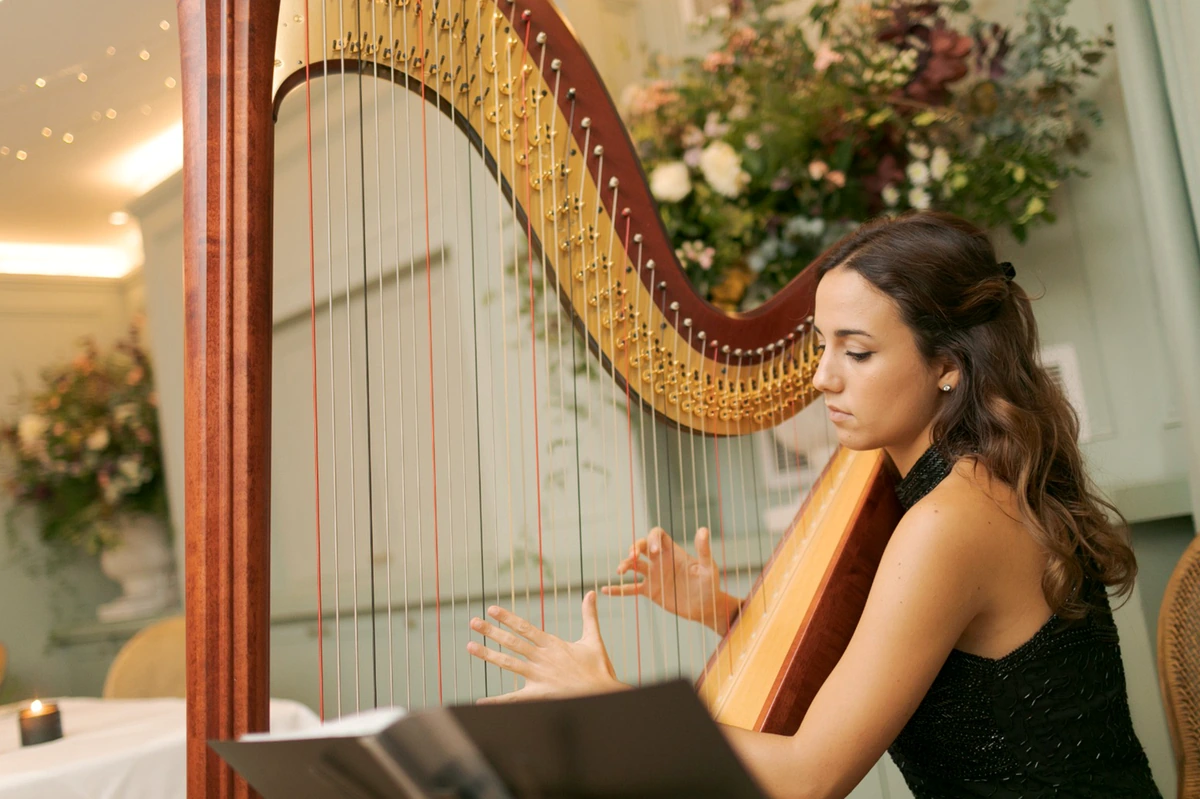
The late-afternoon soundscape is meticulously composed like a live chamber performance, where sound and light blend with every refined gesture of the guests. Rather than lifeless recorded tracks, renowned salons such as The Palm Court at The Ritz or The Foyer & Reading Room at Claridge’s always dedicate a tasteful stage corner to a harpist or a Steinway & Sons grand piano. Each resonant arpeggio from the harp carries an Edwardian romanticism intertwined with timeless excerpts by Edward Elgar or Frédéric Chopin. Room acoustics are cleverly calibrated by architects using fine oak paneling, thick Axminster carpets, and heavy silk-velvet drapes that absorb harsh noise, leaving only the crystalline music and the gentle, refined clink of a silver spoon stirring inside a teacup without ever striking the porcelain wall.
Once the clock passes 17:00, the rhythm of the tearoom officially steps into a new chapter called Champagne Tea—a spectacular bridge between twilight and the glamorous nightlife of the Land of Fog. The fragrant aroma of fine Earl Grey black tea and smoky Lapsang Souchong gradually gives way to the crisp pop of prestigious sparkling wines bearing a Royal Warrant, such as Bollinger, Pol Roger, or Laurent-Perrier Cuvée Rosé. Slender flute glasses receive streams of fine amber effervescence, pairing wonderfully with elevated savory bites suited for evening festivities: from sage-roasted venison tarts and Oscietra caviar blinis to smoked salmon sandwiches topped with gold leaf. This evolution preserves the regal character of Queen Victoria’s era while opening a modern social space where conversation around the tea table grows livelier beneath warm golden lighting.
Evening tea service is also closely tied to strict standards of etiquette and attire, creating a tranquil yet sumptuous nocturnal pulse in the heart of the British capital. Guests strictly observe refined evening dress codes, appearing in elegant evening gowns and impeccably tailored bespoke suits from Savile Row. Every movement—from picking up a warm, tender scone spread with Devonshire clotted cream, to holding a champagne glass by its crystal stem so hand warmth does not affect the chill of the wine, to keeping conversation at a graceful murmur—fully expresses upper-class culture. Beneath the night mist enveloping London, crystal-lit tearooms stand like timeless islands of time, preserving the quintessence, pride, and ageless allure of British aristocratic culture.
Set upon an elegant three-tier silver stand in the center of a table draped in snow-white linen, the culinary map of a British royal afternoon tea is arranged with strict discipline like a three-act harmony. The unwritten aristocratic tasting rule always begins on the bottom tier with a plate of precisely trimmed finger sandwiches. Ultra-soft bread slices have their crusts completely removed and are cut into slender bars sized for two fingers so ladies could dine gracefully without smudging lipstick or soiling lace gloves. Inside are classic flavors tied to country estates: paper-thin cucumber slices sprinkled with sea salt and spread with herb butter, Scottish Highland smoked salmon paired with dill and sour cream, or creamy egg salad accented with tender watercress sprigs. This delicate prelude is not meant to fill the stomach, but to gently awaken the palate before guiding guests up to the second tier, where the soul of the tea party reigns: fragrant scones fresh from the oven.
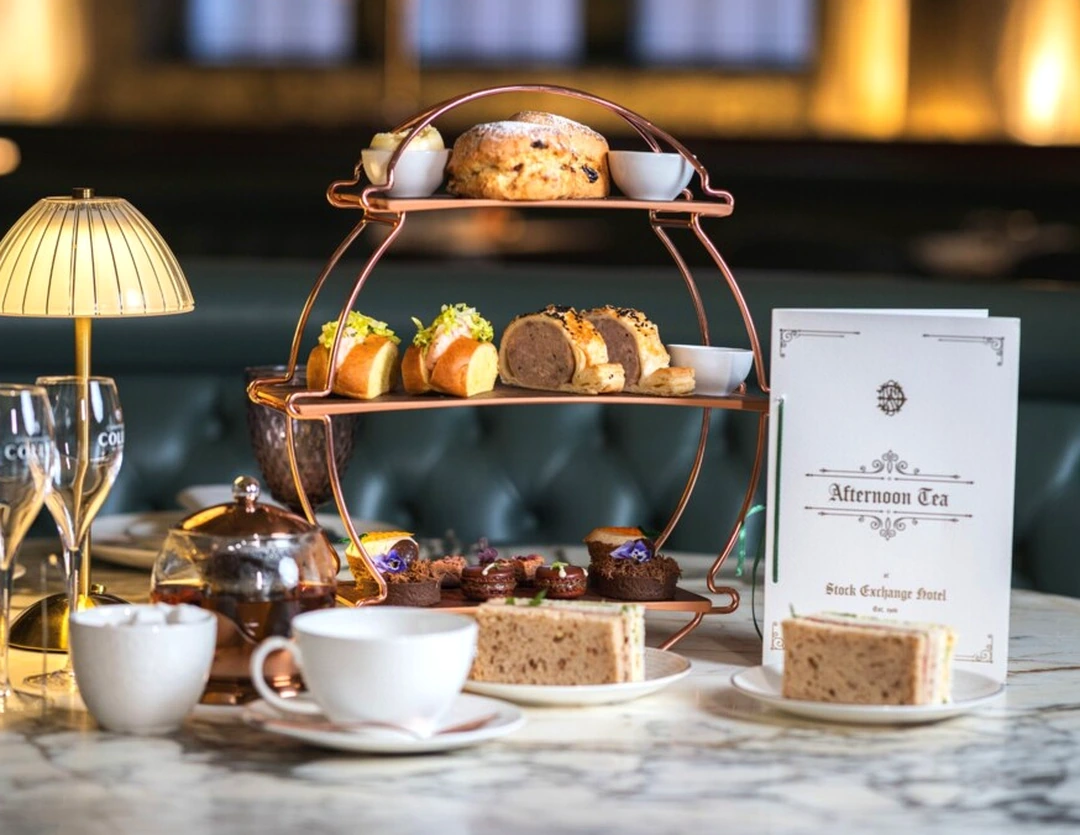
Originating from humble sixteenth-century Scottish griddle cakes, scones entering London’s grand tearooms have transformed into tender, lightly split pastries demanding absolute grace in how they are enjoyed. A supreme rule of aristocratic etiquette is never to use a steel knife to slice a scone apart, as doing so is considered a crude act that crushes the crumb’s natural light texture. Connoisseurs use their fingertips to deftly pull the scone open along its natural horizontal split. From there, a centuries-old culinary debate between Devon and Cornwall unfolds. The Devonshire camp champions spreading rich clotted cream onto the scone half first like a thick layer of butter, then spooning deep-red strawberry jam on top. Conversely, Cornish devotees insist that sweet strawberry jam must soak into the warm crumb first, topped afterward with a cool crown of clotted cream. The late Queen Elizabeth II was a loyal adherent of the Cornish method, turning the act of dressing a scone into a distinguished emblem of royal tradition.
To complete the scone experience, the irreplaceable catalyst is the famed clotted cream of South West England. Gently heated from unpasteurized fresh cow’s milk in copper pans and cooled slowly overnight, the cream rising to the surface reaches a record fat content of up to fifty-five percent, forming a golden skin over a dense, velvety interior as smooth as snow velvet. Blended with handmade strawberry or wild raspberry jam, the bright tang of fruit and pure richness completely banish any dryness from the baked flour. Following that enchanting finish, the top tier of the silver stand welcomes guests with dainty patisserie creations: from light, vanilla-scented Victoria Sponge and glossy meringue-topped lemon tarts to refined pastel macarons representing the pinnacle of European pastry craft.
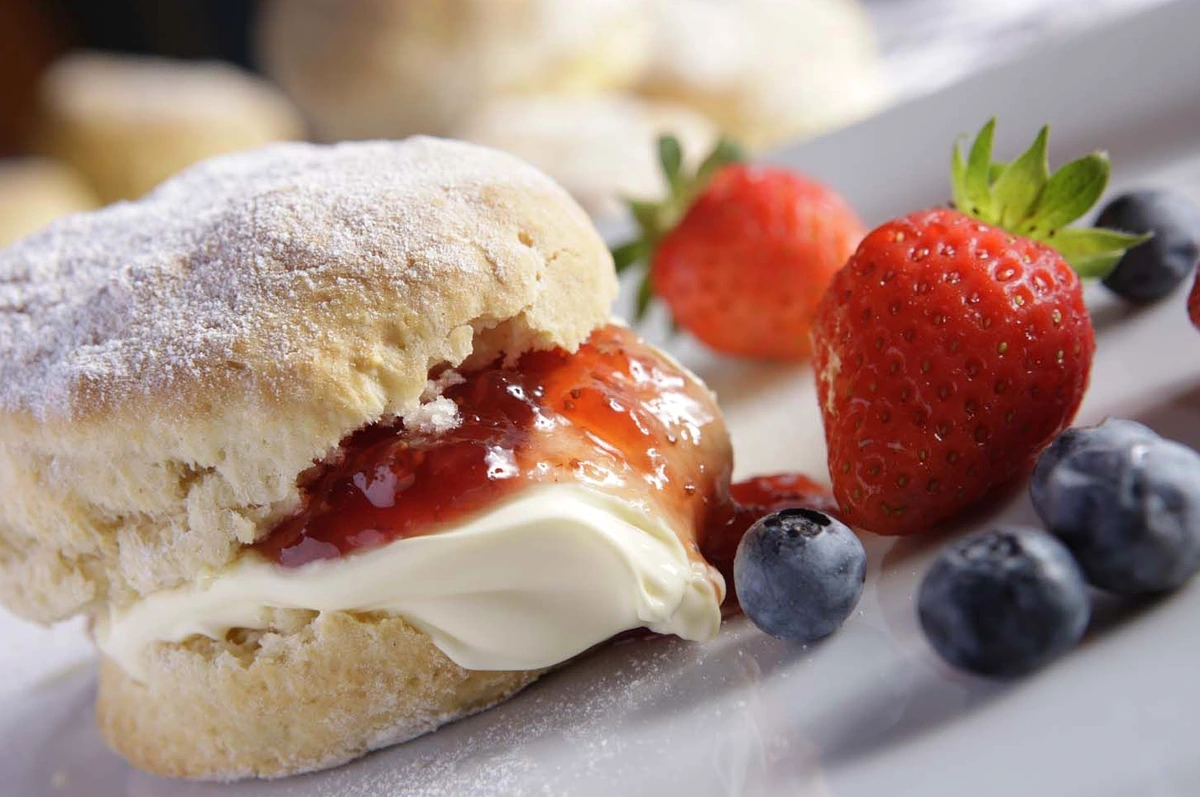
The centerpiece connecting this entire universe of flavor is steaming hot tea poured from solid sterling silver pots or fine bone china teapots from Josiah Wedgwood and Royal Crown Derby. Amid countless fine teas from India or Ceylon, Earl Grey—fragrant with Calabrian bergamot peel—always holds an unshakeable throne. Linked to Charles, 2nd Earl Grey, Prime Minister of Great Britain under King William IV, this citrus-scented black tea features a clean, bright structure that refreshes the palate between rich pastries and paves the way for heightened enjoyment.
The foundation of the afternoon tea experience lies not only in gastronomy, but in refined etiquette passed down across generations. It is the poise of lifting a porcelain cup by gently pinching the handle between thumb and index finger rather than slipping a finger through the loop; the technique of stirring quietly along a six-to-twelve-o’clock line without a single clink; or the subtlety of navigating whether milk or tea is poured first into an antique glazed cup. At London’s celebrated afternoon tea sanctuaries such as The Ritz, The Savoy, or Claridge’s, each late afternoon remains a ticket back in time, where guests immerse themselves in quiet luxury and savor the full regal bearing of the Land of Fog.
To savor a true afternoon tea at London’s renowned culinary sanctuaries—such as Palm Court at The Ritz, The Foyer & Reading Room at Claridge’s, or The Diamond Jubilee Tea Salon at Fortnum & Mason—thoughtful planning feels like an inseparable part of the ceremony. These upscale tearooms typically operate from around noon at twelve o’clock until half-past five in the afternoon daily, divided into set seating slots lasting roughly an hour and a half to two hours per service. Because demand for experiencing royal culture remains very high among both aristocrats and international visitors, booking three to six months in advance through each hotel’s online reservation system is nearly essential, especially if you hope to secure an ideal table on weekends or major holidays.
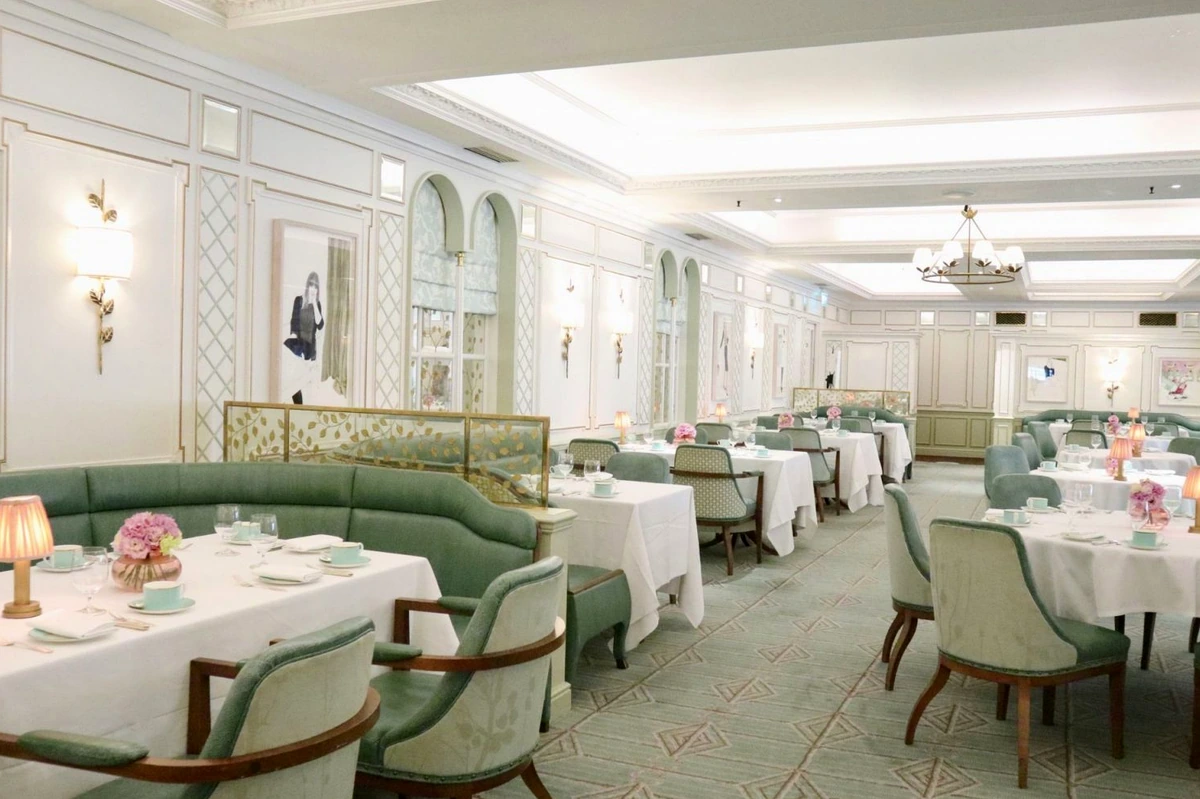
The most convenient way to return to classic tea rooms in the West End or Mayfair is via London’s legendary underground network. Visitors can take the Piccadilly or Victoria line to Green Park station, located just a few steps away from The Ritz’s opulent entrance through a scenic canopy of ancient trees, or Piccadilly Circus station to immerse themselves in the centuries-old heritage space of Fortnum & Mason. The cost for a traditional royal afternoon tea table currently ranges from seventy-five to one hundred and ten British pounds per guest, and can reach up to one hundred and thirty to one hundred and fifty pounds if opting for premium champagnes such as Laurent-Perrier, Dom Pérignon, or Krug.
Upon stepping through the magnificent gold-gilded revolving doors, the dress code known as Smart Elegant serves as the first honorable passport that every diner must strictly observe. Casual athletic wear, denim jeans, collarless t-shirts, sandals, and canvas loafers are strictly prohibited; instead, gentlemen are required to wear a collared shirt with a tie paired with a tailored blazer and polished leather dress shoes, while ladies appear gracefully in elegant dresses, chic tweed jackets, and refined accessories. If you feel overwhelmed by the extensive tea menu featuring dozens of rare varieties from across former colonies, do not hesitate to consult the Tea Sommelier—experts thoroughly knowledgeable about the terroir, humidity, and flavor profile of each tea leaf to select a spring floral-scented Darjeeling First Flush or a mysterious pine-smoked Lapsang Souchong that harmonizes perfectly with your personal palate.
Seated in a plush velvet armchair, every subtle gesture at the table reflects a profound understanding of the traditional etiquette of British aristocracy. One of the most common misconceptions is sticking out the pinky finger when lifting a teacup; in fact, according to court protocol, the pinky must always be folded gently and naturally against the hand, with the thumb and index finger securely gripping the handle of the fine bone china cup without threading a finger through the loop. When dissolving sugar or fresh milk, the patterned silver spoon is only permitted to stir gently along a vertical axis from the six o’clock to twelve o’clock position, with absolute silent movement and never letting the spoon clink against the porcelain wall of the cup. For the golden-baked scone, diners should gently use their hands to break the pastry in half along its natural crack rather than cutting it with a knife, then successively spread a layer of rich clotted cream from the Devonshire meadows followed by a topping of vibrant red strawberry jam.
Concluding a tranquil afternoon amidst tinkling piano melodies and lingering tea aromas, fully embracing these regal flavors will turn your journey to the misty land into an invaluable cultural memory—an experience you can discover completely when joining the all-inclusive UK – Scotland tour package, meticulously designed with depth and enriching experiential dimensions.