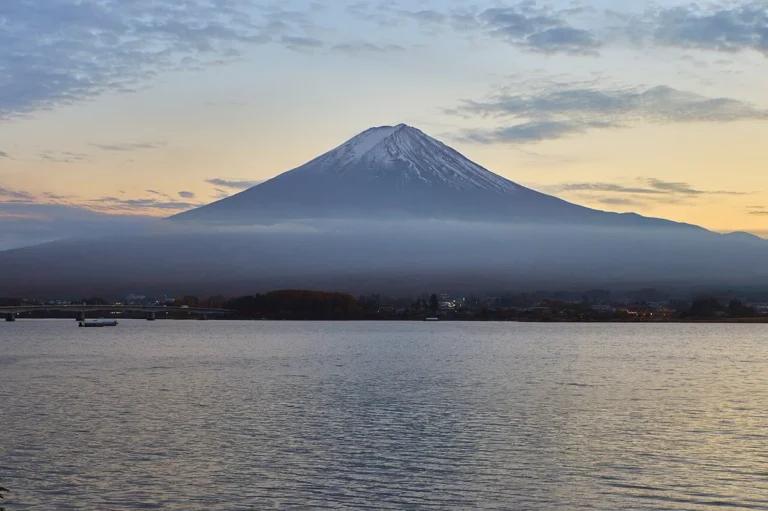
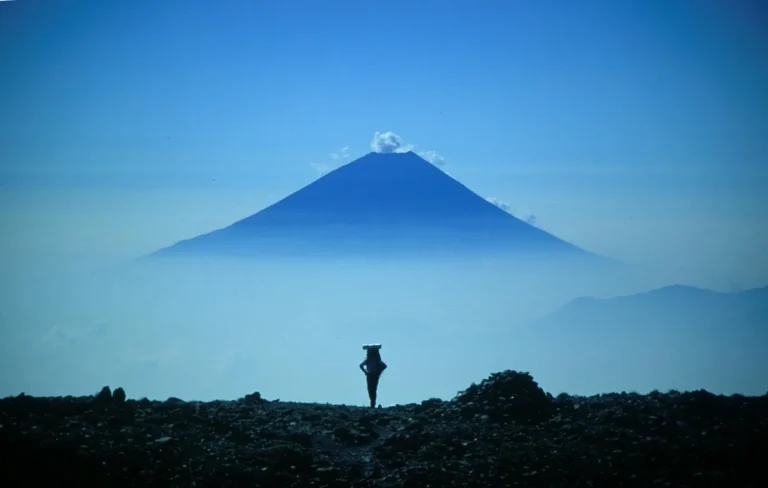
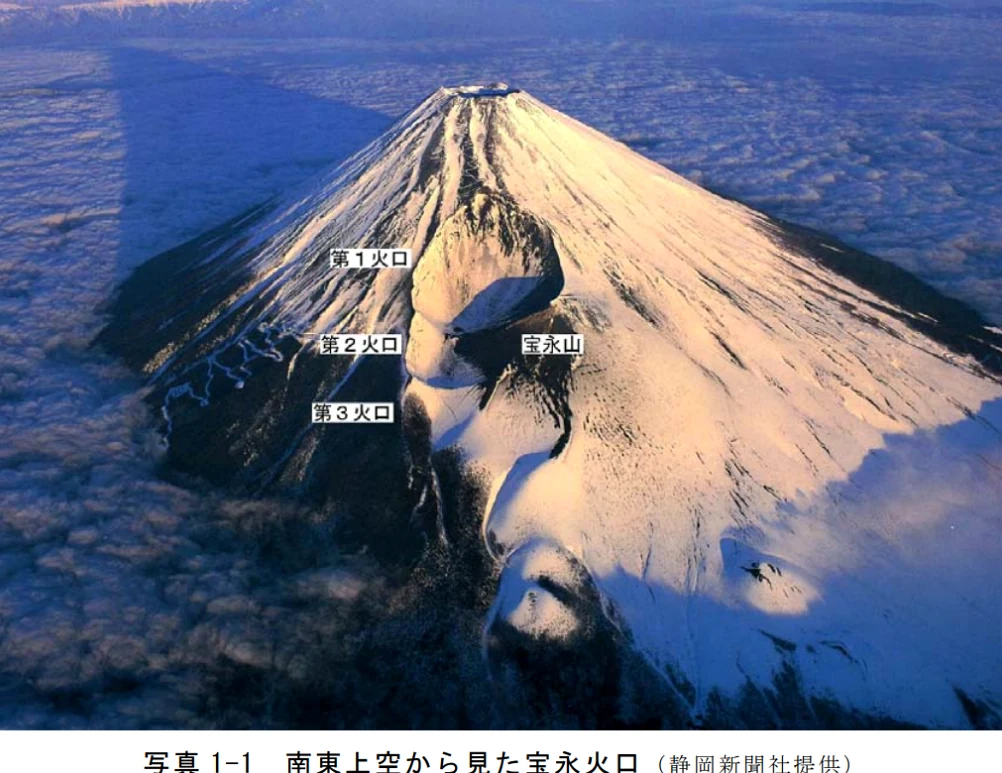
Beneath the majestic silhouette of perpetually snow-capped Mount Fuji, the history of the Onsen hot springs in the Hakone basin is far more than a cycle of natural forces—it is an epic symphony uniting fierce geology with pure indigenous faith. The historic Hōei eruption in 1707 during the Tokugawa Shogunate showered millions of cubic meters of volcanic ash and lava onto the southern slopes, permanently reshaping the geological strata around the mountain’s base. Water from eternal snowmelt seeps down through porous, mineral-dense basalt layers, heated by subterranean magma chambers simmering for tens of millennia before emerging reborn as sacred, sulfur-rich thermal springs. Within the Shinto worldview, this phenomenon is revered as the sacred breath of the kami (deities), where the boundary between the earthly realm and the primordial energy of the universe dissolves in drifting wisps of steam.
Tracing history back to its earliest days, the town of Hakone first entered hot-spring chronicles in the tenth year of the Tempyō era (738) during the Nara period. Ancient lore records that the high priest Shōken, while traveling to spread Buddhist teachings, discovered the very first thermal spring in Yumoto, transforming the area into a sanctuary for physical and spiritual purification among ascetic Buddhist practitioners. After centuries nestled quietly among sacred peaks, Hakone’s Onsen entered its most illustrious golden age during the turbulent Sengoku (Warring States) era and the subsequent Edo period (1603–1867). Beyond serving as a haven for spiritual renewal, it became a strategic military recuperation outpost; during his famed 1590 siege of Odawara Castle, the warlord Toyotomi Hideyoshi ordered his commanders and soldiers to soak in Hakone’s warm waters to heal blade wounds and restore fighting spirit. Following in his footsteps, Shogunate founder Tokugawa Ieyasu so revered these mineral springs that he repeatedly dispatched retainers carrying sealed wooden casks of Hakone thermal water hundreds of miles to Edo Castle for royal wellness rituals.
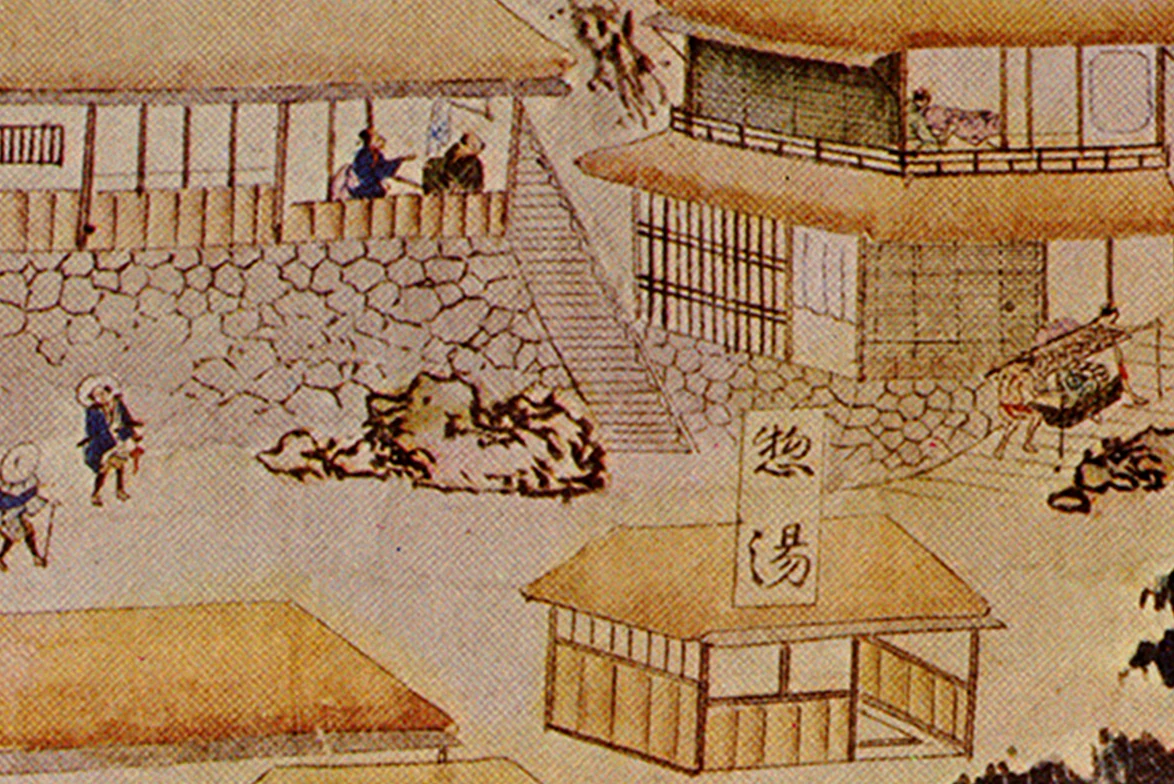
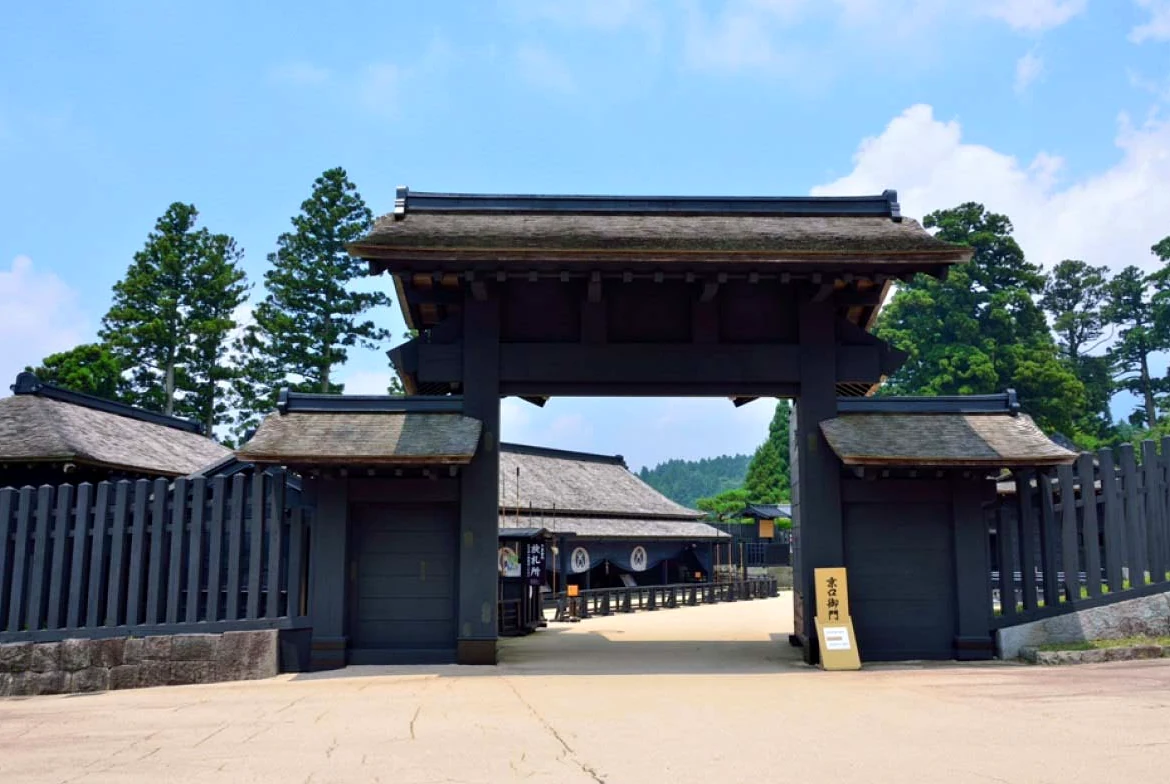
The destiny of Hakone’s subterranean springs was inextricably linked to the Tōkaidō (Eastern Sea Route)—Japan’s longest vital highway connecting the thousand-year imperial capital of Kyoto with the Shogunate’s seat of power in Edo. Crossing the treacherous Hakone Pass was always the most grueling trial for travelers, guarded by the Hakone Sekisho checkpoint under ironclad martial law to inspect weapons and monitor passing traffic. After days of exhausting trekking up steep, slippery stone paths and enduring the anxiety of strict checkpoint interrogations, wayside inns (yado) lining the hot springs became sanctuaries for weary souls. Here, the ritual of shedding travel-stained garments and immersing oneself in purifying mineral waters evolved into a semi-religious custom, enabling samurai, merchants, and ordinary travelers alike to wash away fatigue and replenish their vitality before continuing their thousand-mile journey.
A monumental turning point dawned upon this hot-spring region during the Meiji era (1868–1912), when waves of Western modernization swept across the Land of the Rising Sun, ending centuries of national isolation. From a feudal military outpost, Hakone swiftly reinvented itself into an upscale resort destination of international stature thanks to its proximity to the new capital of Tokyo. The opening of the Fujiya Hotel in Miyanoshita in 1878 marked a historic milestone, seamlessly blending traditional Japanese shrine-inspired architecture with modern Western comforts to welcome distinguished foreign guests. Pristine thermal waters once reserved for samurai swordsmen became a cosmopolitan gathering place hosting global icons—from legendary comedian Charlie Chaplin to music legend John Lennon—shaping a Hakone that remains at once timelessly serene and radiantly progressive across the shifting tides of history.
From the perspective of East Asian geomancy (feng shui), the borderland linking the Fuji Five Lakes region of Yamanashi Prefecture with the Hakone caldera of Kanagawa Prefecture was revered by the ancients as Japan’s premier dragon-vein power spot. Towering Mount Fuji, rising in flawless symmetry, acts as the protective “guardian mountain” radiating boundless fiery yang energy, while the chain of ancient crater lakes—exemplified by mirror-still Lake Ashi—serves as a basin gathering water and sheltering wind in pure, receptive yin harmony. This rare geomantic alignment of “water in front, mountain behind” forms an exemplary equilibrium of yin and yang, turning the entire Hakone basin into a concentrated reservoir of vital energy where subterranean mineral veins have been continuously nourished for millennia beneath the geothermal pressure of sedimentary lava strata.
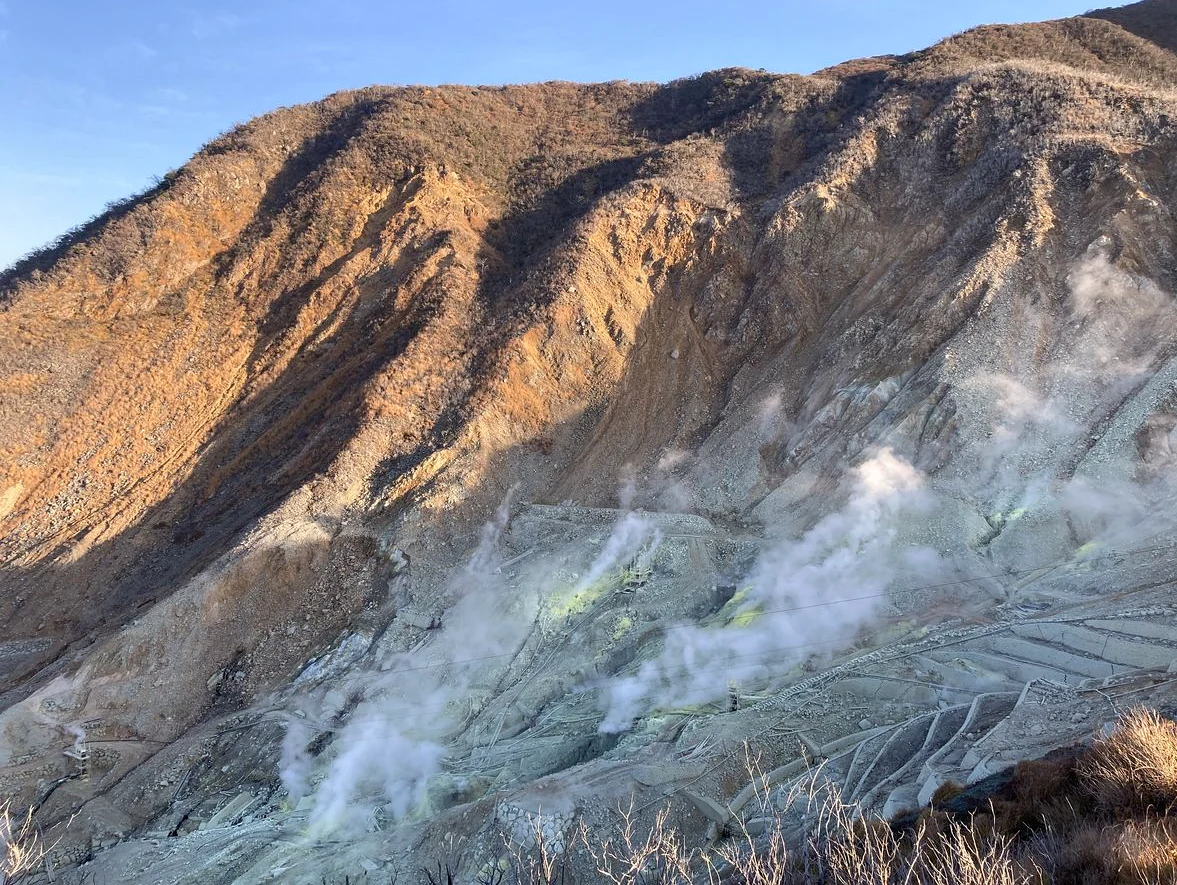
At the very heart of this tectonic arc lies Owakudani Valley—known in ancient times by the ominous name “Ōjigoku” (Great Hell Valley)—serving as the most vivid living testament to the awe-inspiring mechanics of hydrothermal activity. Formed by the catastrophic collapse of Mount Kamiyama roughly three millennia ago, this vast volcanic crater vents dense columns of sulfur-saturated steam from deep beneath the earth day and night. Hydrothermal harvesting here represents a pinnacle of harmony between natural bounty and precision engineering. Pure groundwater fed by snowmelt along Mount Fuji’s slopes filters through porous pumice beds, is superheated by magma warmth, and is channeled into open-air collection wells. From there, a traditional network of cedarwood conduits paired with modern heat-resistant pipelines naturally cools the mineral-rich water—laden with sulfur, calcium, and sulfuric acid—from boiling point down to an ideal bathing temperature without any dilution, preserving its original purity to the highest balneological standards.
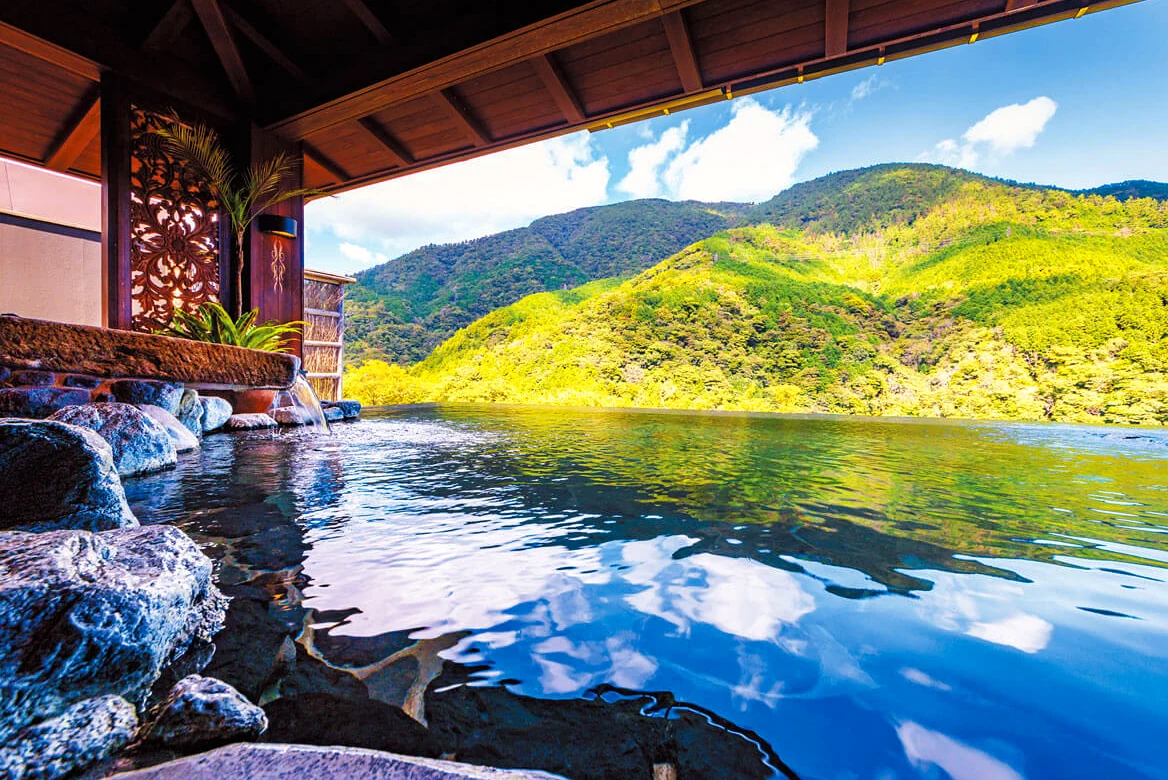
The most distinctive hallmark of outdoor bathing spatial design in Hakone and around the foothills of Mount Fuji is the masterful application of Shakkei—the celebrated Japanese garden aesthetic of “borrowed scenery.” Open-air baths, or Rotenburo, are never confined within claustrophobic walls; instead, they open their visual boundaries entirely to the grandeur of nature. Master stonemasons use dark basalt and andesite boulders quarried directly from local lava fissures to line the bath edges, paired with aromatic Hinoki cypress headrests that release a soothing fragrance upon contact with rising steam. Sightlines from every bath are precisely aligned along visual axes pointing straight toward the eternal snowcap of Mount Fuji peeking through drifting clouds, or artfully framing the fiery crimson of Momiji maple forests in autumn and the deep evergreen expanses of ancient Sugi cedar groves.
This landscape composition operates as a living organism, where the constant drift of rising thermal mist merges seamlessly with mountain breezes and placid lake surfaces. Immersion in these waters offers far more than the physical and chemical benefits of minerals acting upon the body’s meridian points; it elevates bathers to a heightened sensory state where the boundary between human craft and the cosmos dissolves completely, transforming the act of soaking into a sacred communion amid majestic nature.
The Onsen bathing sanctuaries and traditional Ryokan inns tucked into the rolling slopes of Hakone and the foothills of Mount Fuji embody the fullest expression of Sukiya-zukuri architecture. Originating in the teahouse residential aesthetics that flourished from the Azuchi-Momoyama era through the peaceful Edo period, this architectural school rejects the imposing, rigid formality of samurai-era Shoin-zukuri style in favor of understated, organic Wabi-sabi beauty. Every Onsen residence here feels less like a mere lodging facility and more like a living organism crafted to erase the divide between human interiors and the mist-shrouded wilderness outside. Japanese aesthetic philosophy permeates every pillar proportion and every Engawa wooden veranda hugging the hillside, where harsh daylight is deliberately softened to give way to tranquil shadows, guiding the mind into deep meditative calm even before disrobing to enter the warm spring waters.
The enduring vitality of Hakone’s Onsen architectural masterpieces stems from supreme artisanal craftsmanship and the careful selection of Japan’s finest natural materials. At the heart of soaking tubs and structural beams lies Hinoki, the prized Japanese cypress harvested from dense old-growth forests. Boasting tight wood grain and natural resistance to water and decay without chemical treatment, Hinoki wood releases the crisp, calming aroma of cypress essential oils whenever warmed by sulfur-rich thermal water, inducing profound relaxation for the nervous system. Underfoot, thick Tatami mats—woven tightly from compressed rice-straw cores wrapped in vibrant green Igusa rush—exude the gentle scent of meadow grass with every bare step. Framing each room are sliding Shoji screens crafted from slender wooden lattices and handmade Washi paper, diffusing harsh sunlight into a soft, mist-like glow, complemented by porous Juraku-kabe earthen clay walls that naturally regulate indoor humidity and purify the air through every changing season.
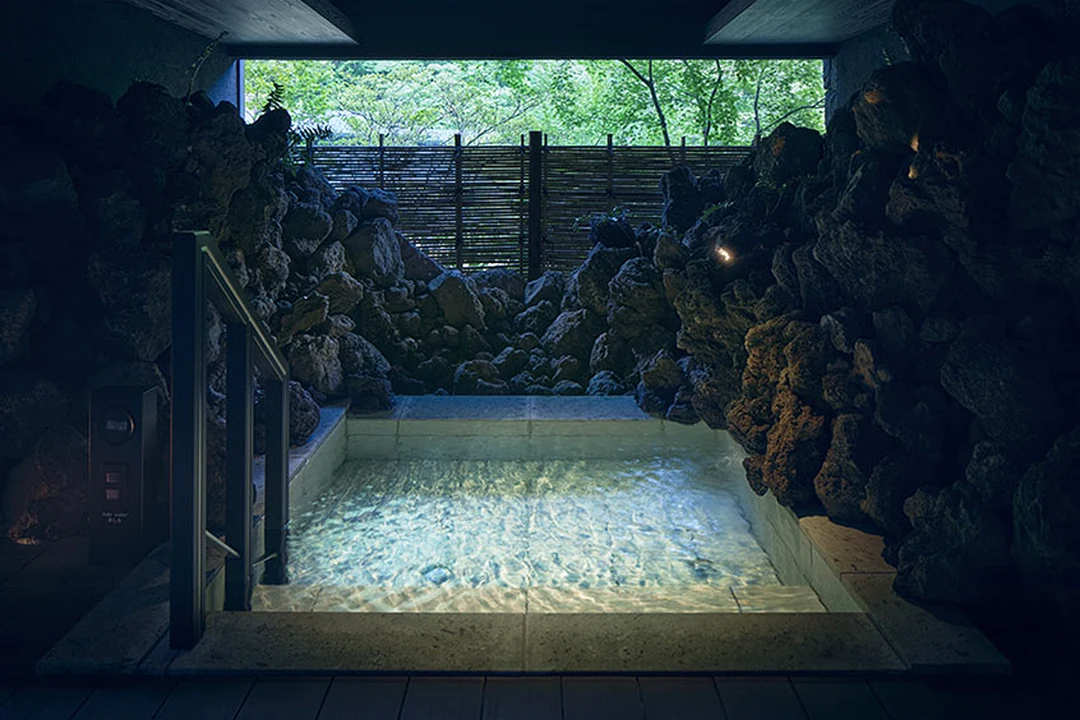
While interior pavilions preserve quiet refinement, open-air Rotenburo baths represent the zenith of Zen-inspired landscape artistry. Artificial symmetry has no place here; instead, artisans meticulously arrange millennia-weathered Mount Fuji volcanic boulders and moss-draped river stones salvaged from mountain streams. Master Japanese gardeners sculpt every corner of a Rotenburo into a serene microcosm, where glassy, ripple-free water mirrors the twisting branches of Podocarpus pines, blazing scarlet maple canopies in autumn, or fresh blankets of powdery snow clinging to branches in midwinter. This expansive open layout allows bathers to soak in deep geothermal warmth while gazing out across the drifting steam of Owakudani Valley, listening to the murmur of the Sukumo River, or admiring the snow-crowned cone of Mount Fuji on the distant horizon.
In practice, the Onsen landscape across Hakone and the Mount Fuji belt forms a rich, multi-tiered tapestry spanning humble multi-generational family inns to world-class Luxury Ryokans setting the global benchmark for opulent hospitality. Exemplifying imperial prestige is Gora Kadan, formerly the summer villa of the Kan’in-no-miya branch of the Japanese Imperial Family. Long, glass-and-timber corridors link secluded suites, each featuring a private open-air Rotenburo carved from monolithic stone or Hinoki wood that blends seamlessly into historic Japanese gardens. Meanwhile, KAI Hakone enchants guests by celebrating traditional Yosegi-zaiku wood marquetry across interiors overlooking a babbling river, and Hoshinoya Fuji—nestled along a red-pine slope above Lake Kawaguchiko—pairs minimalist modern cabins with sweeping panoramic views of the sacred peak, defining the pinnacle of luxury Onsen experiences amid majestic nature.
When twilight descends over the Hakone mountain range and the imposing silhouette of Mount Fuji dissolves into mystical dusk, life here rejects the clamor and neon spectacle of modern metropolises. The grandest “live performance” in this region is not staged with mechanical sets, but unfolds through subtle shifts in the natural world governed by the aesthetics of Yūgen (profound grace and mystery) and Wabi-sabi. Beneath a crystal-clear canopy of countless stars untainted by urban haze, snow-crowned Mount Fuji casts its solemn reflection across the mirror-like waters of the Five Lakes, while wisps of sulfurous steam rising from Ōwakudani mingle with evening mist to create an unrivaled natural masterpiece. Nightfall envelops the landscape like a purifying invitation, drawing travelers into a dimension of absolute stillness and Eastern meditative awareness.
Nighttime illumination in hot-spring towns such as Hakone-Yumoto, Tōnosawa, and Gōra pays homage to the culture of shadows (In’ei Raisan) famously celebrated by novelist Jun’ichirō Tanizaki. Rather than harsh glare from modern floodlights, evening pathways are softly lit by the warm amber glow of traditional andon lanterns—crafted from Hinoki cypress frames and handmade Washi paper—dotting moss-covered stone steps and winding approaches to storied ryokans. Wooden architectural ensembles dating back to the Edo and Meiji periods reflect upon the rushing waters of the Haya-kawa River, opening an ethereal realm where the boundary between present reality and historical memory seems to vanish. Light is calibrated just brightly enough to reveal weathered stone steps, fallen maple leaves, or moss-covered stone tsukubai water basins, gently guiding the mind away from worldly distractions.
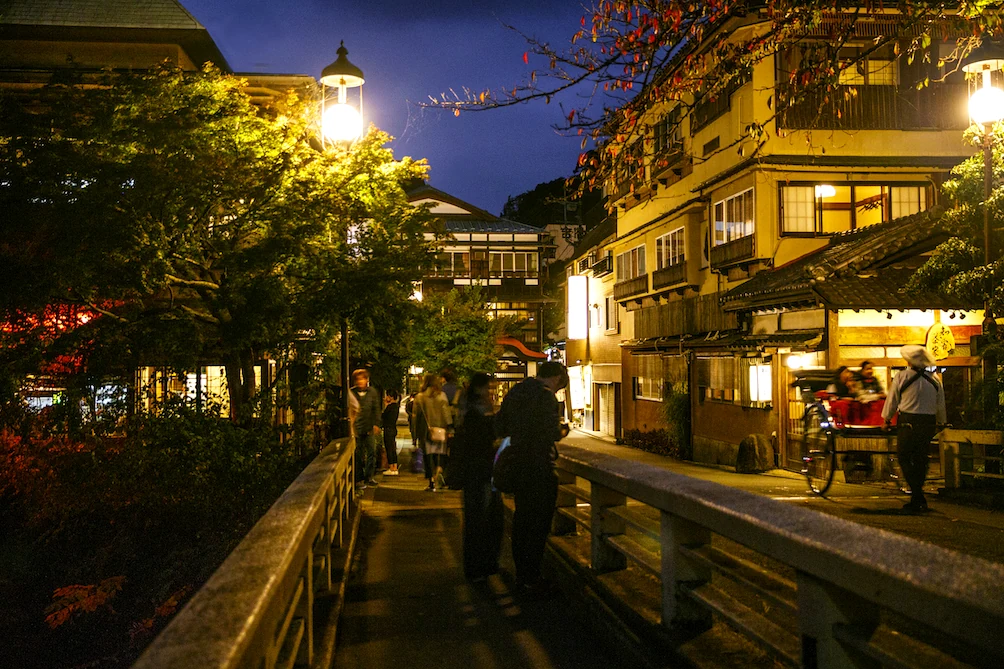
The crowning highlight of evening life in Hakone is the ritual of Kaiseki Ryori—traditional multi-course haute cuisine—served inside refined tatami-matted dining rooms. Every evening Kaiseki banquet is an exquisite performance for both palate and eye, in which the master chef (itamae) acts as a storyteller chronicling the four seasons through premier regional ingredients. Opening with a delicate sakizuke appetizer, courses progress through a seasonal hassun platter arranged like a miniature landscape evoking Mount Fuji beneath the moon, fresh bluefin tuna sashimi (mukōzuke), and prime Wagyu beef seared atop blistering volcanic lava stones. Each course is presented on time-honored Kiyomizu-yaki porcelain or urushi lacquerware and savored unhurriedly alongside sake brewed from pure spring water filtered through the Hakone mountains, turning dinner into a sacred, contemplative ritual.
As late night deepens, the evening journey culminates in a soak inside an open-air rotenburo nestled against a mountainside or gazing out across enigmatic Lake Ashi. Mineral-rich thermal waters abundant in sodium chloride and bicarbonate well up from thousands of meters underground, enveloping the body in billowing warm steam against the crisp night air. In the profound silence, only subtle sounds remain: the rhythmic clack of a bamboo shishi-odoshi water rocker, mountain breezes rustling through ancient cedar boughs, and mineral water trickling gently over basalt rocks. Looking up at the brilliant Milky Way arching above the sacred cone of Mount Fuji, travelers achieve complete harmony of body and mind—experiencing Toji (traditional hot-spring recuperation) at its purest and most sublime.
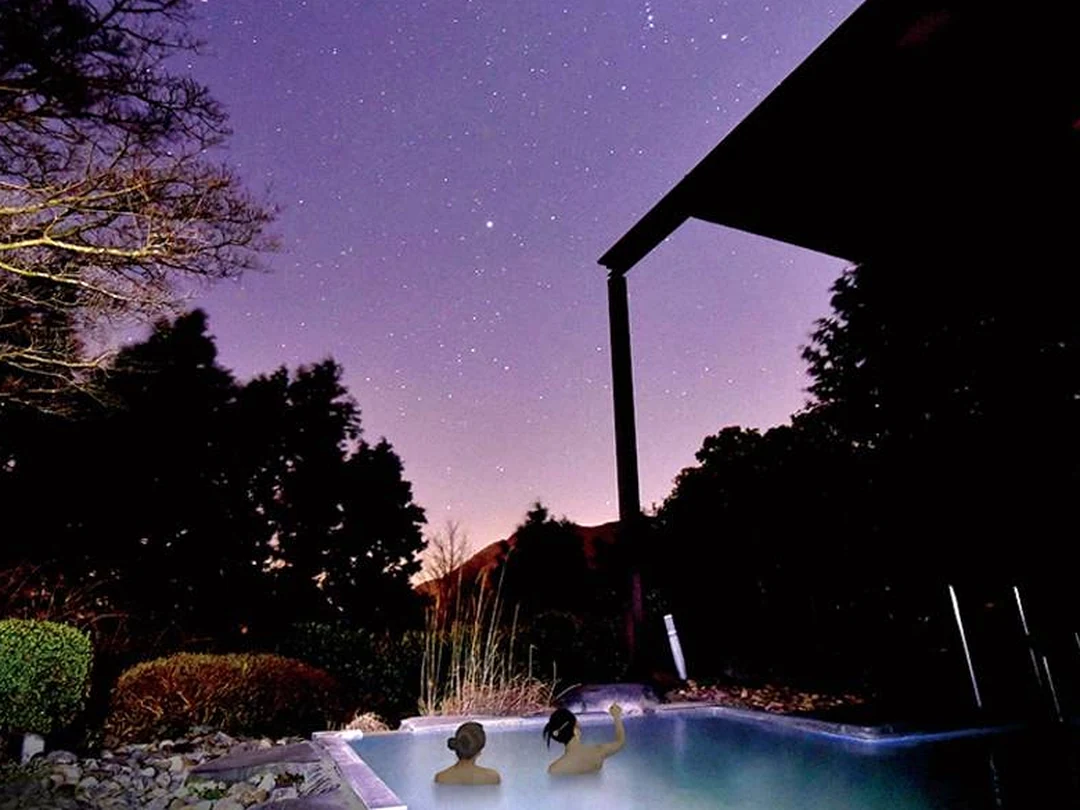
Beneath the towering silhouette of Mount Fuji and the mist-draped valleys of Hakone, culinary artistry goes far beyond simple nourishment—it blossoms into an intimate communion between humanity and a thousand-year terroir. Geothermal springs bubbling up from beneath the earth and pure snowmelt filtering through countless strata of basalt rock have sculpted a one-of-a-kind gastronomic map. Here, every heirloom dish carries the essence of mountain and sky, reflecting natural philosophy and storied episodes from Japan’s heroic past.
Arriving in Hakone, the first local specialty to awaken the senses is a bowl of pristine Hakone Soba. The soul of these buckwheat noodles lies in Mount Fuji snowmelt filtered over decades through volcanic sediment until it attains extraordinary purity and softness. Hand-kneaded light-brown buckwheat noodles, briefly blanched and chilled in cold spring water, retain a crisp, satisfying bite and pair harmoniously with a fragrant dashi broth infused with shaved bonito flakes and kombu kelp. Venturing up from the tranquil town into the rugged geothermal terrain of Owakudani, travelers can witness the boiling of Kuro-tamago—famed “black longevity eggs”—amid swirling clouds of sulfurous steam. Fresh hen eggs are lowered directly into natural thermal pools hovering around 80°C; a chemical reaction between dissolved iron in the mineral water and hydrogen sulfide gas rising from the earth dyes the shells a glossy jet-black. According to Heian-period legend, the Bodhisattva Enmei Jizo blessed this valley, inspiring the enduring folk belief that eating a steaming black egg right beside the volcanic vents restores vitality and adds seven years to one’s life.
Crossing beyond Hakone toward the northern foothills of Mount Fuji in Yamanashi Prefecture—formerly historic Kai Province—local cuisine shifts toward hearty, rustic mountain fare. The undisputed icon here is Hoto Nabe, a culinary tribute to the Warring States period. Linked in legend to the brilliant warlord Takeda Shingen, who is said to have sliced the wide, flat noodles with his own sword, this nourishing dish served as energy-rich field rations sustaining his troops before battle. Served piping hot in a heavy cast-iron pot, thick, chewy wheat noodles simmer in a robust red miso broth enriched with the natural sweetness of tender kabocha pumpkin, wild shiitake mushrooms, taro root, and seasonal mountain vegetables. This wholesome combination not only wards off biting highland chills, but also preserves the resilient spirit of mountain communities. Topping the modern gastronomic map of Yamanashi is renowned Koshu Wine Beef. Japanese Black cattle are raised carefully on hillside farms overlooking the lakes on a diet supplemented with fermented grape pomace sourced from century-old Koshu wineries. Rich polyphenols in the grape skins stimulate metabolism, producing intricate snowy marbling laced throughout vibrant red meat that melts like butter on the palate and leaves a lingering, subtly sweet finish kissed with aged wine aroma.
The ultimate culinary finale along the hot-spring circuit is an elaborate multi-course Kaiseki Ryori banquet at a traditional ryokan, where acclaimed chefs—several recognized with prestigious Michelin stars—elevate seasonal local ingredients into miniature works of art. Pride of place almost always belongs to slices of authentic A5 Wagyu beef sizzling on a red-hot lava stone quarried directly from Mount Fuji. Pure intramuscular marbling melts slowly against the volcanic stone, locking in rich, unadulterated beef flavor without heaviness. Seated inside a serene tatami room, listening to spring water murmur outside the veranda while raising a cup of warm sake, travelers truly grasp the refined art of living and soulful Japanese hospitality (omotenashi).
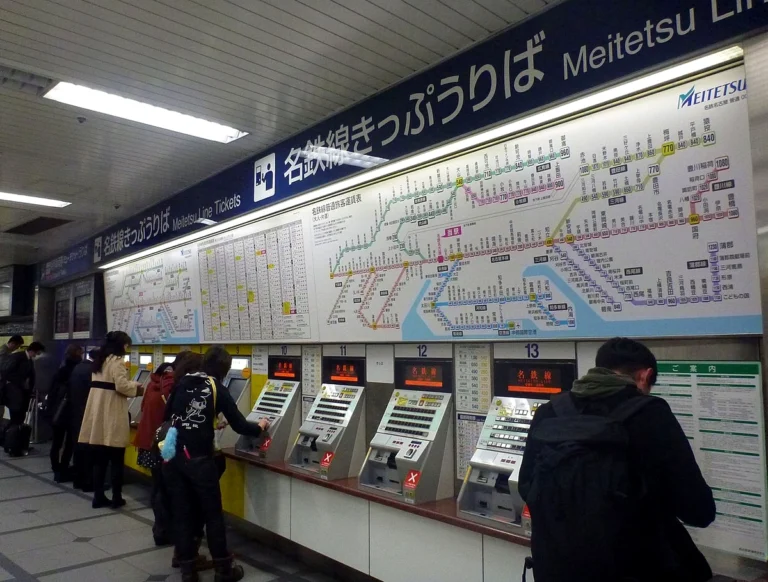
Reaching the geothermal veins beneath Mount Fuji and Hakone Valley begins aboard some of Japan’s most impeccably engineered transit lines. From Tokyo’s bustling Shinjuku Station, the Odakyu Romancecar express glides smoothly across the Kanagawa plains, delivering travelers straight to the gateway of Hakone-Yumoto in under ninety minutes. Alternatively, passengers riding the famed Tokaido Shinkansen alight at historic Odawara Station before transferring onto the Hakone Tozan Network—a scenic multi-modal loop linking switchback mountain railways climbing steep slopes, the Hakone Ropeway gliding over Owakudani’s sulfurous plumes, and stately sightseeing vessels cruising across mirror-calm Lake Ashi beneath Mount Fuji’s gaze. Planning a unhurried itinerary attuned to the rhythm of nature is the essential first step before entering these sacred thermal sanctuaries.
Once the wooden doors to the bathhouse slide open, every action follows time-honored etiquette designed to preserve the absolute purity of millennia-old thermal waters. Before stepping into any soaking pool, thoroughly washing away dust and perspiration at individual sit-down shower stations equipped with stools and cedarwood pails is an inviolable rule. Locals celebrate this bathing culture through the concept of “hadaka no tsukiai”—sincere, unfiltered fellowship in complete nudity, where social barriers, titles, and worldly garments are shed so all bathers commune equally with nature. Swimsuits and undergarments are strictly prohibited inside the baths. The small cotton modesty towel provided is meant solely for wiping perspiration or resting neatly folded atop the head to help regulate body temperature; allowing even a corner of the towel to touch the bathwater is considered a serious breach of hot-spring sanctity.
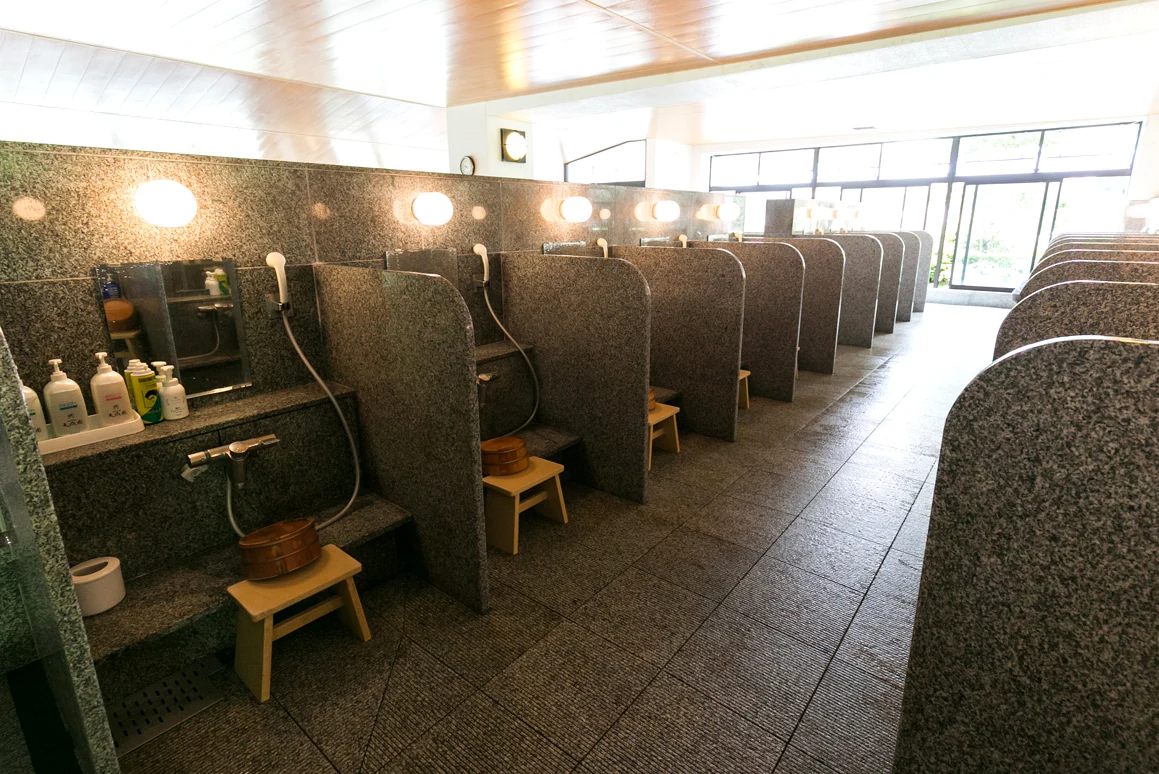
Natural thermal waters across Hakone and the Fuji Five Lakes typically maintain temperatures between 38°C and 42°C, calling for gradual physical acclimatization. Before immersing yourself, use a wooden ladle to pour warm spring water gently over your wrists, feet, and the back of your neck (kakeyu) to prepare your circulation, then ease into the bath slowly, limiting each soak to 15–20 minutes so alkaline trace minerals and metasilicic acid absorb effectively without straining the cardiovascular system. Swimming, splashing, and bringing cameras or smartphones into bathing areas are strictly forbidden in order to safeguard meditative tranquility and absolute privacy. For travelers with tattoos—which have historically faced restrictions in traditional bathhouses—the proper approach is to cover small tattoos with waterproof adhesive patches or book a private reservable bath (kashikiri-buro). Concluding your soak with a chilled glass bottle of pasteurized fresh milk in the lounge completes the restorative cycle, leaving both body and spirit thoroughly refreshed.
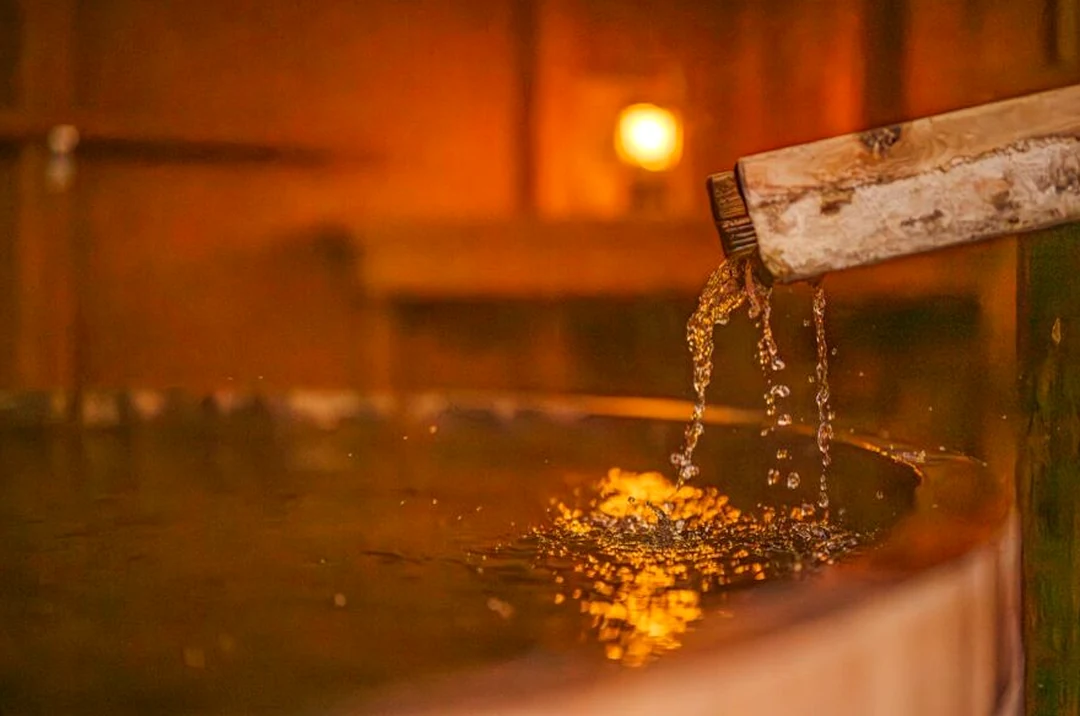
An authentic Onsen retreat calls for thoughtful pacing—savoring the unhurried rhythm of a historic ryokan, appreciating refined kaiseki cuisine, and slipping into steaming mineral waters while morning mist still drapes the sacred peak. To keep your hot-spring pilgrimage free from rushed schedules or forced commercial shopping detours, choosing a well-crafted journey that respects quiet personal contemplation is always the wisest priority. You can explore a thoughtfully curated, all-inclusive Japan tour package designed to let you experience the serene elegance and unmatched hot-spring heritage of the Land of the Rising Sun to the fullest.