In the heart of modern Tokyo, where towering skyscrapers rise proudly and the relentless pace of life never slows, beats an ancient heart pulsing with the quiet rhythm of history and spirituality—Asakusa Senso-ji Temple. Far more than a simple tourist attraction, Senso-ji is a living chronicle, a witness to the birth and evolution of old Edo and present-day Tokyo, carrying within it legendary tales, turbulent milestones, and an unyielding spirit that has endured for nearly 14 centuries.
The journey to discover Senso-ji must begin at its very dawn, on a distant morning in 628 AD—the 36th year of Empress Suiko’s reign according to the Japanese calendar. Back then, Asakusa was still a small, tranquil fishing village nestled along the gentle Sumida River. On that fateful March 18, two fisherman brothers, Hinokuma no Hamanari and Hinokuma no Takenari, pulled up an unusual object while casting their nets to make a living on the river. It was neither fish nor driftwood, but a solid gold statue of the Bodhisattva of Mercy (Kannon Bosatsu), measuring a mere 5.5 cm, radiating a mysterious, sacred aura. Rather than a mere coincidence, local villagers believed this discovery was an auspicious omen—a divine blessing from the Buddhist realm.
News of the sacred Buddha statue spread swiftly throughout the village. Village chief Hajino Nakatomo, a man of deep faith and foresight, recognized the extraordinary spiritual significance of the image. He decided to dedicate his own residence, transforming it into a modest sanctuary named Amida-do, where the Kannon statue was solemnly enshrined. This became the very first cornerstone, the seed of today’s grand Senso-ji—a humble beginning infused with immense spiritual power that drew the earliest devotees to worship and pray.
Over the centuries, the small temple’s renown gradually spread far and wide. In the 9th century, an eminent high priest named Shokan—also associated with the revered monk Gyoki—visited Senso-ji. With a profound understanding of Buddhist teachings and a desire to safeguard the absolute sanctity of the Kannon statue, Master Shokan made a historic decision: he placed the image inside the main sanctuary and declared it a “Secret Buddha” (Hibutsu). Since that day, the original Kannon statue has never been unveiled for public viewing, remaining forever hidden behind sacred doors and enveloping Senso-ji in an aura of mystery and supreme reverence.
Entering the Edo period, Senso-ji’s stature was elevated once again through the patronage of one of the most powerful figures in Japanese history: Shogun Tokugawa Ieyasu. The founding Shogun of the Tokugawa Shogunate designated Senso-ji as the official prayer temple for his clan (Shogunate Bodhi temple). This decree not only secured abundant financial backing but also transformed Senso-ji from a local shrine into a major Buddhist center of Edo, driving magnificent architectural expansion with imposing gates, ornate halls, and bustling approach avenues that laid the foundation for the temple complex we admire today.
Yet, Senso-ji’s historical path was not always strewn with roses. The temple endured countless severe trials. Throughout the Edo period, devastating fires repeatedly ravaged its wooden structures. Later, the Great Kanto Earthquake of 1923 dealt another crushing blow. Perhaps the most tragic catastrophe of all, however, occurred during World War II. In March 1945, relentless U.S. air raids over Tokyo reduced the vast majority of the Senso-ji complex to ashes, leaving behind smoldering ruins that seemed to have permanently erased a historic landmark.
Nevertheless, powered by the resilient spirit and deep devotion of the Japanese people, Senso-ji rose again from the ashes. The Japanese government and the citizens of Tokyo joined forces in a monumental reconstruction effort. By 1958, the Main Hall (Hondo) and numerous surrounding structures were completely rebuilt—not only recapturing their traditional splendor, but also incorporating modern engineering techniques using reinforced concrete paired with traditional materials to permanently protect the temple against natural disasters and war. This rebirth was far more than the restoration of architectural monuments; it was a testament to national willpower, faith, and pride, cementing Senso-ji as an enduring symbol of renewal and hope.
From a tiny Kannon statue retrieved from the Sumida River—nurtured by the hands of humble fishermen, the devotion of a village chief, the vision of high priests, and the patronage of mighty Shoguns—Senso-ji has risen to become Tokyo’s oldest, most sacred temple and its inseparable cultural heart. Here, past and present converge, and every brick and roof tile tells a tale of legendary origins and turbulent history, inviting travelers to explore the soulful depths of the Land of the Rising Sun.
Stepping through the timeless gates of Senso-ji, visitors do more than admire a historic monument—they enter a living museum of Japanese Buddhist architecture, where the essence of ancient Asuka style blends seamlessly with sturdy Showa-era construction techniques. Every line and material here speaks of resilience, reverence, and an artistic vision that transcends time, making Tokyo’s oldest temple a supreme architectural masterpiece and an eternal icon of Japanese culture.
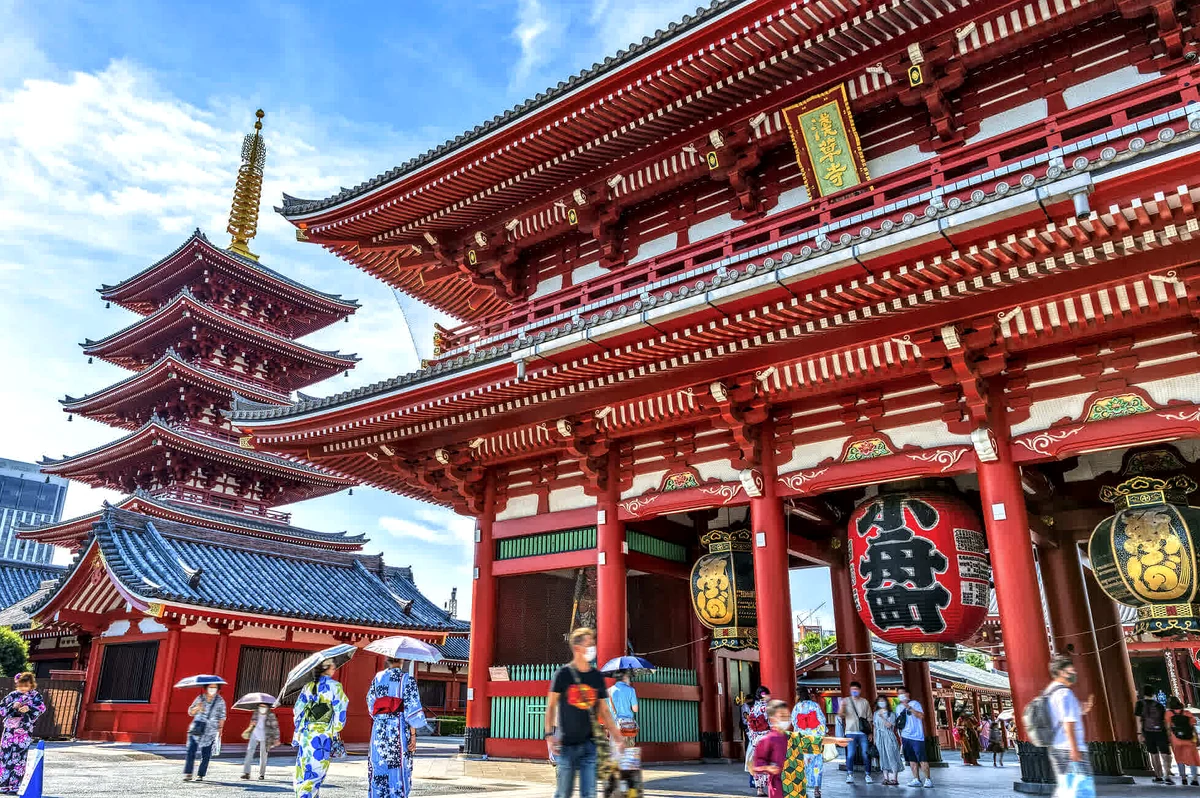
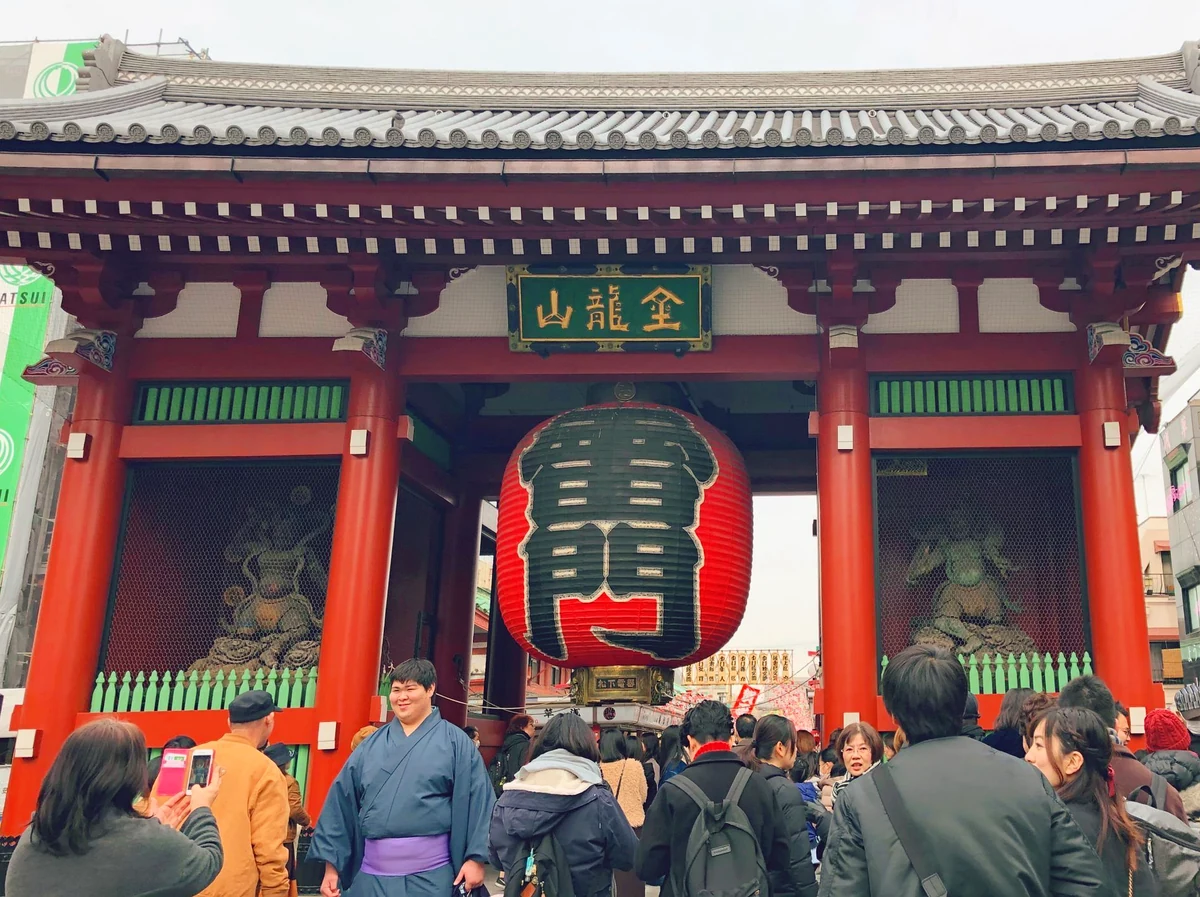
The starting point for exploring Senso-ji’s architectural beauty is the magnificent Kaminarimon Gate (Thunder Gate), an unmistakable symbol of Tokyo. Although reconstructed in 1960 following several historical calamities, including a major fire in 942, Kaminarimon preserves the imposing soul of a sacred gateway. The centerpiece of the gate is its colossal red lantern (*Chochin*), towering 3.9 meters high, 3.3 meters wide, and weighing 700 kg, boldly inscribed with the characters “雷門” (Kaminarimon). Flanking the gate, fierce and majestic statues of Fujin (God of Wind) and Raijin (God of Thunder) stand guard like celestial protectors watching over the peace of the temple and the ancient capital of Edo.
Beyond Kaminarimon stretches a 250-meter stone-paved avenue called Nakamise-dori—not merely a walkway, but an integral part of the Senso-ji complex that vividly recreates the bustling commercial atmosphere of the Edo period. Lining both sides of the street, nearly 90 traditional craft and food stalls topped with curved tiled roofs and vintage wooden signboards form a vibrant cultural corridor, guiding visitors step by step deeper into the temple’s sacred precincts.
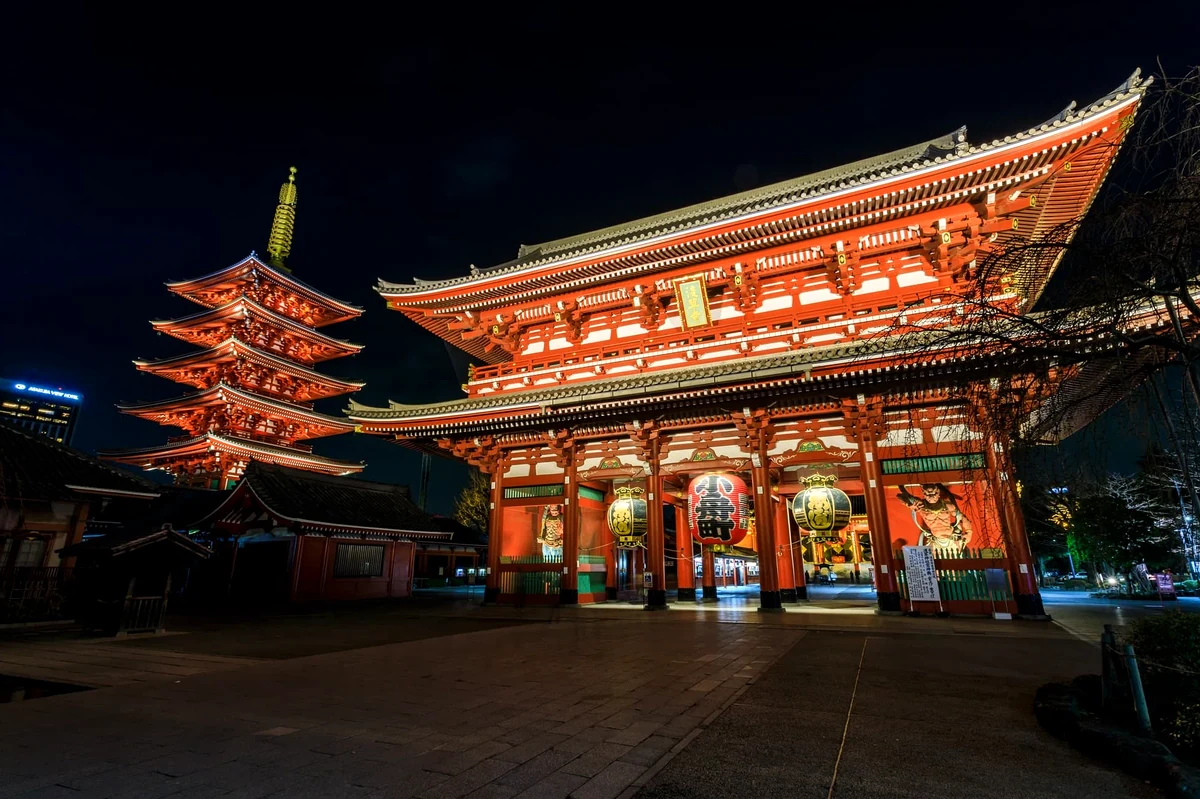
At the end of Nakamise-dori stands Hozomon Gate (Treasure-House Gate), the second portal leading into the main sanctuary courtyard, showcasing a distinct architectural silhouette and an even more vital role. This sturdy two-story structure (*Nio-mon*) serves not only as an entrance but also as a vault on its upper floor housing priceless temple treasures, including ancient sutras designated as Cultural Heritage. Guarding either side of the gate are two muscular, fierce-eyed Nio guardian deities protecting both spiritual and material sanctity. Alongside the giant central lantern, two smaller red lanterns hang symmetrically on either side, heightening the solemn and mystical grandeur of the gate.
Right beside Hozomon, the Five-Story Pagoda (Gojunoto) soars dramatically into the Tokyo sky to an impressive height of 53.32 meters, proudly standing as the second-tallest pagoda of its kind in Japan, surpassed only by Toji Temple in Kyoto. Beyond its visual grace, the pagoda is a triumph of Japanese structural engineering. Gojunoto is built with advanced earthquake-resistant technology, centered around a massive wooden core pillar (*Shinbashira*) running from the foundation to the spire to effectively absorb and dampen seismic vibrations during major quakes. Its top tier also enshrines relics of Shakyamuni Buddha brought from Sri Lanka, making Gojunoto a sacred stupa where architectural brilliance meets profound spiritual value.
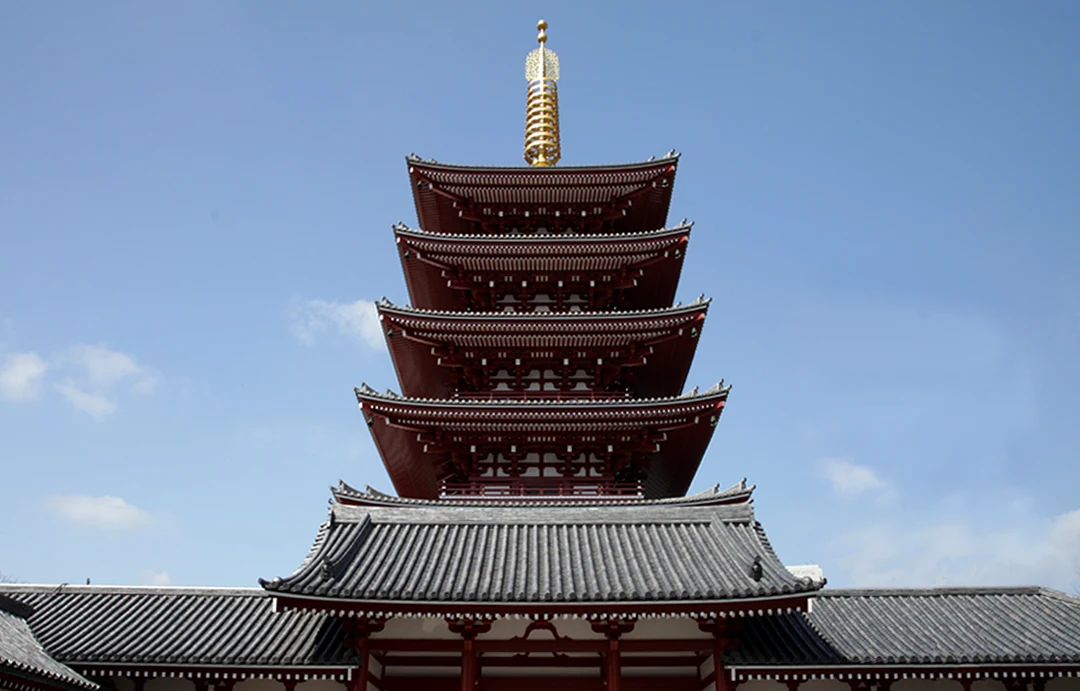
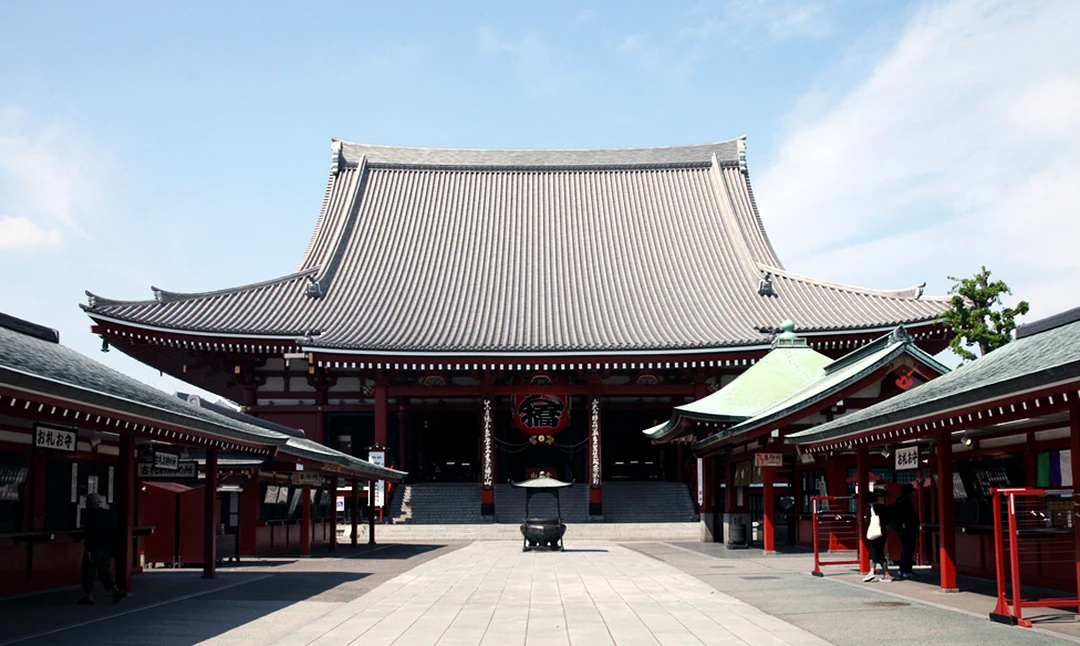
Finally, at the heart of the Senso-ji complex lies the Main Hall (Hondo / Kannondo), a monumental structure with an expansive floor plan where spiritual energy converges. Its traditional sloped roof is clad in ultra-lightweight titanium tiles—an ingenious fusion of classical aesthetics and modern technology engineered to withstand typhoons and harsh weather. Inside the Main Hall, the ornate main altar conceals the sacred statue of Kannon, the Bodhisattva of Mercy—the Hibutsu, forever closed to public view, wrapping the sanctuary in reverence and mystery. The 1958 reconstruction of the entire complex, combining reinforced concrete with traditional craftsmanship, represents not just a preservation effort, but a bold declaration of Senso-ji’s cultural and architectural immortality in the face of natural disasters and historical tragedies, especially after the 1945 bombing of Tokyo.
Every vista at Senso-ji—from the grandeur of Kaminarimon to the graceful poise of Gojunoto, from the lively energy of Nakamise-dori to the solemnity of the Main Hall—forms a living work of art. Far more than a temple, it is an architectural symphony where past and present harmonize, and where human devotion and ingenuity find their fullest expression, affirming Senso-ji’s status as a timeless masterpiece of architecture and artistic heritage.
Stepping across the threshold of the imposing Thunder Gate is far more than an ordinary sightseeing tour—it is a journey into profound spiritual and cultural values, offering the most rewarding experiences that ancient Senso-ji Temple has to offer. More than a mere destination, it is a microcosm where past and present intertwine, inviting every traveler to immerse themselves in each unforgettable moment.
One of the unmissable rituals, steeped in spiritual significance, is the incense smoke purification ritual (Jokoro) in front of the Main Hall. Here, curling plumes of fragrant smoke rise from a massive bronze cauldron, carrying beliefs of cleansing and healing. You will see locals and international visitors alike gently wafting the smoke with their hands toward their heads, faces, or any aching parts of their bodies, hoping for blessings, relief from ailments, and sharper mental clarity. Standing within this sacred space, breathing in the soothing aroma of incense, and witnessing everyone’s heartfelt devotion is an experience that feels both deeply reverent and profoundly peaceful.
Continuing the spiritual journey, visitors can test their luck with Omikuji fortune slips, a unique cultural tradition costing just 100 yen. Shake the bamboo cylinder, draw a numbered wooden stick, and match it to the corresponding drawer to receive a paper fortune predicting your prospects in wealth, love, and health. Interestingly, if you draw a bad fortune (Kyo), there is no need to worry. Simply tie it onto the metal racks provided within the temple grounds—a symbolic act to leave ill luck behind and take only good fortune home. It is a simple ritual, yet one imbued with deep meaning about Japanese faith and hope.
Senso-ji is also a paradise for lovers of beauty and photography, boasting unmissable million-dollar photo spots. First, stand squarely in front of the Kaminarimon Gate and shoot upward with a wide-angle lens to capture the colossal red lantern—standing 3.9 meters tall, 3.3 meters in diameter, and weighing 700 kg—framed against the bustling crowds passing beneath. Next, from the middle of lively Nakamise-dori, aim your lens toward the 53.32-meter-tall Five-Story Pagoda (Gojunoto). This vista becomes truly magical and resplendent at sunset or when the pagoda illuminates around 18:00, showcasing its advanced earthquake-resistant architecture and the sacred relics of Shakyamuni Buddha enshrined within. Finally, do not forget to capture a moment at the prayer area before the Main Hall, where drifting wisps of incense create an enchanting backdrop, yielding photographs rich in both cultural depth and emotion.
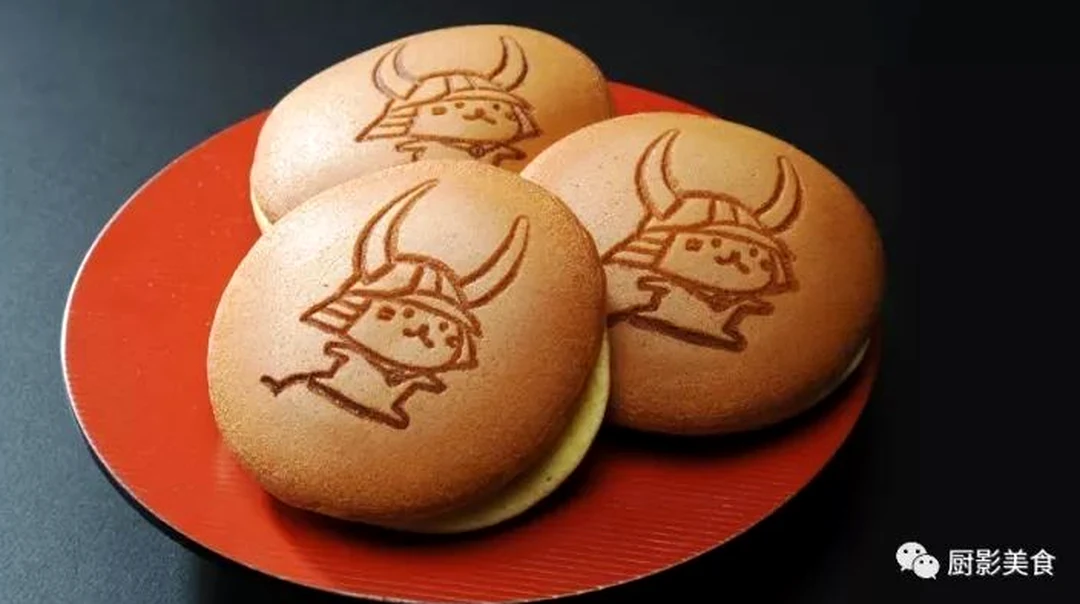
A journey through Senso-ji would be incomplete without indulging in the local culinary scene. The historic Asakusa district is a “mecca” of Edo-style cuisine, where you can savor traditional delicacies that have endured for centuries. Begin with Ningyo-yaki, charming little Asakusa doll cakes baked from flour, eggs, and sugar with a silky-sweet red bean paste filling, molded into temple icons such as the five-story pagoda or doves. Time-honored shops along Nakamise-dori like *Kimuraya Honten*, operating since 1868, are absolute must-visits. Next is Kaminarimon Age-Manju, deep-fried buns with a delightfully crisp exterior and a soft, sweet red bean filling that leaves an unforgettable impression.
If you are eager to try something more distinctive, seek out Monjayaki—Tokyo’s answer to the savory Japanese pancake, featuring a runnier batter than Okonomiyaki that is cooked directly on a sizzling Teppan griddle right at your table. The Monja streets along the Sumida River or lively Hoppy Street are ideal spots to dive in. For seafood aficionados, Unadon or Unagi (grilled eel over rice) is a stellar choice. Fresh eel is brushed with a secret heirloom *tare* sauce and grilled over aromatic charcoal, delivering a rich, irresistible flavor. Renowned establishments near the temple such as *Maekawa* or *Yoroikutsu* come especially recommended. Finally, do not miss Dango—chewy, tender rice dumplings skewered and lightly toasted over flame, then glazed with a sweet-savory soy sauce syrup—a beloved everyday snack across Japan.
For the most rewarding experience, it is best to visit Senso-ji in spring (March–April) when cherry blossoms burst into bloom along Sumida Park beside the temple, or in May to immerse yourself in Tokyo’s grandest festival—Sanja Matsuri. Autumn (October–November) is equally enchanting, bringing crisp weather and maple leaves ablaze in vibrant reds and golds. When visiting this sacred sanctuary, remember to dress modestly and respectfully (covering shoulders and knees) as a sign of reverence. Senso-ji offers completely free admission to its outdoor grounds, main gates, Nakamise Street, and the Main Hall, providing effortless access to Japanese culture and spirituality. Whether through sacred rituals, iconic photo angles, or unforgettable flavors, each experience forms a precious piece in the vivid, lasting mosaic of Senso-ji in every traveler’s heart.
After immersing yourself in the sacred atmosphere and ancient architecture of Senso-ji, your exploration of Asakusa leads into another realm—where local flavors tell historical tales and dining becomes a refined art form. This is far more than a simple “food map”; it is a stroll through the currents of time, where every dish carries the soul of old Edo alongside the vibrant pulse of modern Tokyo. We proudly present the culinary treasures that no traveler should miss when wandering this storied neighborhood.
Opening this feast for the palate is the iconic Ningyo-yaki, affectionately known as “Asakusa doll cakes.” These delightful baked treats combine flour, eggs, and sugar into a soft, fragrant shell embracing a smooth, sweet *anko* red bean filling. What gives Ningyo-yaki its irresistible charm is its whimsical craftsmanship, meticulously molded into familiar Asakusa emblems such as the Five-Story Pagoda (Gojunoto), peaceful doves, or the imposing Kaminari thunder mask. More than just a dessert, they make meaningful souvenirs encapsulating local heritage. Visitors can find them piping hot, fresh off the iron, at historic confectioneries lining Nakamise-dori—most notably Kimuraya Honten, an institution open since 1868 where traditional flavors have been safeguarded across generations.
Continuing the culinary trail, Kaminarimon Age-Manju offers an ingenious twist on traditional steamed *manju*. Instead of steaming, these bite-sized buns are deep-fried to a golden, crunchy perfection on the outside, creating a thrilling contrast with the soft, sweet red bean paste tucked within. That initial crisp crunch followed by a gentle sweetness melting on the tongue makes Age-Manju the ideal energy-boosting street snack as you stroll past the legendary Kaminarimon Thunder Gate.
For curious palates craving an interactive, one-of-a-kind dining experience, Monjayaki stands out as Tokyo’s playful take on savory Japanese pancakes. Unlike standard Okonomiyaki, Monjayaki uses a much looser batter cooked directly on a piping-hot Teppan griddle built right into your dining table. It is a hands-on culinary adventure where you chop and mix ingredients—shredded cabbage, seafood, meat, and liquid batter—before spreading them thin across the hotplate to create a lightly crisped crust beneath a moist, savory center. Enjoying Monjayaki goes hand in hand with a lively atmosphere filled with the sizzle of hot iron and cheerful chatter. To experience it at its most authentic, head to Hoppy Street or the dedicated Monja alleys along the Sumida River, lined with eateries specializing in this Kanto regional favorite.
Another indispensable culinary icon of Asakusa is Unadon or Unagi—celebrated charcoal-grilled eel over rice. Since ancient times, fresh eel caught from the Sumida River has been prized as a delicacy here. Each eel is expertly prepared, basted in a closely guarded heirloom *tare* glaze, and grilled over glowing charcoal until the skin turns lightly crisp while the flesh remains melt-in-your-mouth tender, infused with a balanced sweet-savory richness. The enticing aroma of grilled eel mingling with steamed, glossy white rice creates a meal that is both refined and deeply nourishing. To savor Unagi at its finest, sought-after institutions like Maekawa or Yoroikutsu preserve time-honored preparation secrets passed down through generations, delivering the authentic pinnacle of Edo gastronomy.
Finally, round out your gastronomic tour with Dango—chewy, bite-sized rice dumplings skewered and lightly toasted over open heat. Traditional Dango is crafted from rice flour, imparting a subtle, comforting aroma of toasted glutinous rice. Once grilled, the skewers are brushed with a glossy sweet syrup or sweet-savory *shoyu* (soy sauce) glaze, striking an ideal harmony of sweetness, umami, and signature chewiness. Dango is not only a ubiquitous street treat, but also an integral fixture at seasonal festivals and tea ceremonies, reflecting the quiet elegance of Japanese food culture. Strolling down Nakamise-dori with a warm skewer of Dango in hand, watching the bustling crowds drift by amid Asakusa’s timeless ambiance, is an authentic cultural pleasure.
Asakusa is not merely a repository of architectural and spiritual heritage, but a living museum of street food and traditional cuisine, where every flavor serves as a fragment of history and Japanese culture. We believe that exploring the culinary delights here will become an unforgettable highlight of your journey, enriching your experience of the Land of the Rising Sun.
Having explored the historical depth, admired the architectural beauty, and immersed ourselves in the unique spiritual rituals and rich culinary map of ancient Asakusa Senso-ji Temple, our journey concludes with an essential “pocket handbook.” These golden tips—distilled from on-the-ground experience and deep local insight—are designed to help readers and travelers enjoy the safest, smoothest, and most memorable visit to Tokyo’s most sacred temple.
Choosing the best time of year to visit Senso-ji largely shapes your overall experience. If you love romantic natural scenery and want to soak up festive energy, spring (March–April) is the ultimate choice. During this season, rows of cherry trees lining adjacent Sumida Park burst into full bloom, creating a picturesque, dreamlike backdrop. Notably, on March 17–18, the Kannon-ura festival unfolds with time-honored traditional rituals, offering a rare window into local heritage. May also brings the explosive energy of Sanja Matsuri—one of Tokyo’s largest and most vibrant festivals—transforming Asakusa into a jubilant sea of revelers. Conversely, if you seek tranquility, contemplative beauty, and crisp, comfortable strolling weather, autumn (October–November) will delight every sense. Maple canopies turn brilliant shades of crimson and gold, framing the temple’s ancient architecture in a breathtaking tapestry that evokes an indescribable sense of serenity.
When it comes to visiting hours, Sensoji offers remarkable flexibility. The expansive outdoor grounds and the bustling Nakamise-dori shopping street remain open 24/7, allowing visitors to explore freely at any hour. You can choose to visit early in the morning to enjoy the peaceful atmosphere before the crowds arrive, or late in the evening after the stalls have closed to admire the glowing lanterns and illuminated architecture. However, the Main Hall (Hondo)—which enshrines the sacred statue of Kannon, the Goddess of Mercy—has specific opening hours: from 06:00 to 17:00 daily. During the summer months, it opens slightly earlier at 05:30, giving early risers the chance to experience the solemn atmosphere of the morning prayer service.
One of Sensoji’s biggest advantages is its admission policy. Visiting the main areas—including the Kaminarimon Gate, Nakamise-dori Street, the Five-Story Pagoda (Gojunoto), and the Main Hall (Hondo)—is completely free of charge. This ensures that travelers of every budget can access and appreciate the beauty and cultural value of the temple. A small admission fee may only apply if you wish to enter special traditional gardens or periodic art and cultural exhibitions. This is a deeply appreciated aspect of the temple, reflecting the open and welcoming spirit of Japanese hospitality.
As a sacred site with over a thousand years of history, Sensoji’s dress code is not overly strict, yet visitors are expected to show proper respect. Guests are advised to wear modest, respectful attire, particularly when entering the Main Hall. This means covering your shoulders and knees and avoiding overly short, revealing, or inappropriate clothing. Beyond being a rule, dressing modestly is a meaningful way to show reverence for local culture and beliefs. Additionally, in certain sub-halls or traditional rooms with tatami mat flooring, visitors will be asked to remove their shoes before entering—a customary practice at shrines and temples across Japan.
Finally, to ensure a safe and hassle-free visit, please keep an important safety tip in mind. Asakusa Sensoji attracts tens of millions of visitors each year, and Nakamise-dori Street in particular is almost always packed with foot traffic. Consequently, pickpocketing or minor commercial scams can occasionally occur in the most crowded sections. To protect your personal belongings, we strongly recommend wearing your backpack or bag in front of your chest and keeping valuables—such as passports, cash, credit cards, and electronics—secure at all times. Taking this simple precaution lets you enjoy the vibrant beauty of Asakusa with complete peace of mind.
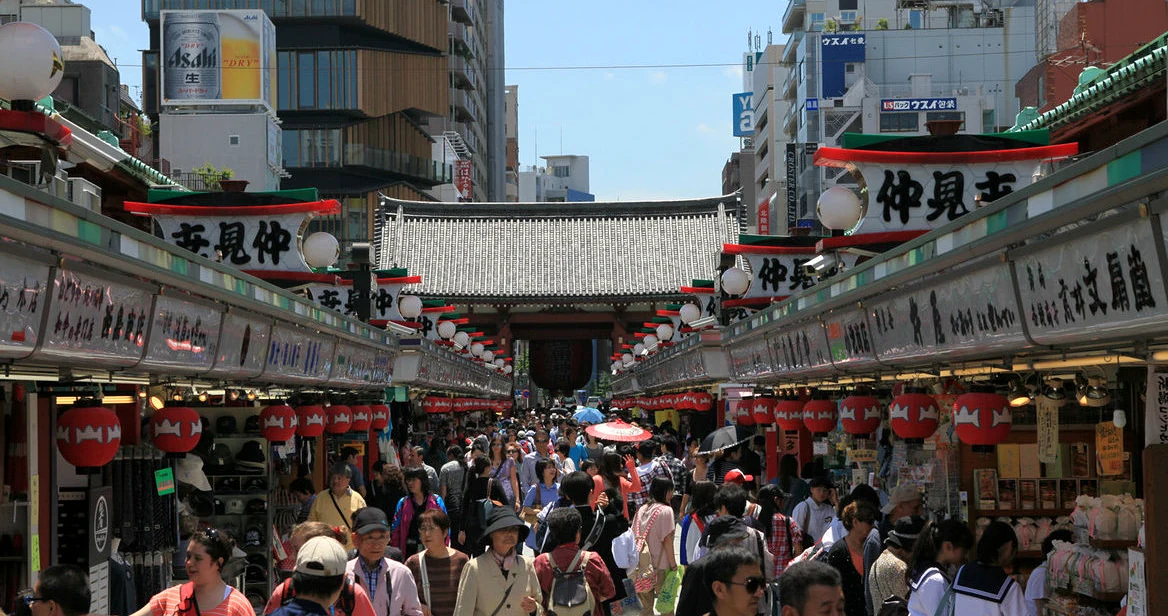 Crowds bustle through the colorful Nakamise Street in the heart of Tokyo
As our chronicle of the ancient Asakusa Sensoji Temple draws to a close, it becomes clear that this landmark is far more than an architectural relic or a routine tourist stop. With a rich history spanning over 1,400 years since its founding in 628 AD, Sensoji stands as a living symbol of Japanese cultural and spiritual heritage—a gateway into a world of sacred legends and timeless values. And right at this crossroads of a glorious past and a vibrant present, VDS Travel has thoughtfully crafted journeys of connection, transforming every trip from mere sightseeing into profound cultural empathy.
Sensoji is not only a “must-visit” stop in Tokyo, but also a strategic cornerstone and signature heritage site within VDS Travel’s premium tourism value chain. Positioning this ancient temple as the very first cultural touchpoint, travelers landing at Haneda or Narita Airport can immediately immerse themselves in the captivating historical current of the Land of the Rising Sun. Along the legendary “Golden Route” linking Tokyo, Hakone, Kyoto, and Osaka, Sensoji serves as a warm welcome, ushering guests into tales of the two fisherman brothers, Hinokuma no Hamanari and Hinokuma no Takenari, who pulled the statue of Kannon Bodhisattva from the river; of the high priest Shokan who established the sacred “Hibutsu” (hidden Buddha) tradition; and of Shogun Tokugawa Ieyasu, who designated Sensoji as the official prayer temple for his clan. Every step beneath the imposing Kaminarimon Gate and its giant 700-kilogram red lantern connects you with history—from the Great Kanto Earthquake of 1923 to the monumental post-World War II reconstruction in 1958.
With VDS Travel, the Sensoji experience is elevated to an entirely different level, far beyond what an ordinary sightseeing tour can offer. We take pride in organizing thematic walking tours led by local guides deeply versed in Buddhist lore, the unique architecture of the 53.32-meter Five-Story Pagoda (Gojunoto) with its advanced earthquake-resistant engineering, and the mysteries housed within the Main Hall (Hondo). Guests don’t just listen to stories—they live them, stepping into the sacred atmosphere of the Jokoro incense purification ritual, testing their fortune with traditional Omikuji paper lots, and learning how to tie away an unfavorable fortune to invite good luck. These are stories told from the heart, helping every traveler not just admire the sights, but truly understand the cultural depth behind them.
To make the journey even more vivid and unforgettable, we also offer an exclusive traditional Kimono or Yukata rental experience. Imagine strolling down lively Nakamise-dori—lined with nearly 90 artisan and street-food stalls—dressed in a vibrant Kimono, posing for professional editorial photos in front of the Hozomon Gate or the magnificent Five-Story Pagoda. These are more than just great photographs; they are moments of transformation, immersing you in the atmosphere of old Edo and leaving an indelible mark on your memory. And to complete the local culinary picture, guests booking an all-inclusive package receive our exclusive “Asakusa Gourmet Pass” food map, guiding you straight to must-try delicacies like sweet red-bean-filled Ningyo-yaki cakes, crispy Kaminarimon Age-Manju, Kanto-style Monjayaki, and legendary grilled eel rice bowls (Unadon) from time-honored establishments like Maekawa.
Every small detail—from choosing the ideal season to visit Sensoji, whether during spring cherry blossoms or autumn’s crimson and gold maple foliage, to reminders on modest dress inside sacred halls and personal safety tips along crowded Nakamise Street—is meticulously prepared. We don’t just sell tours; we craft experiences and priceless memories that connect travelers with the heart of Japan in the most authentic and meaningful way. Exploring Sensoji is never just a trip—it is a dialogue with history, an immersion into culture, and a renewal of the soul.
If you are ready to write your own story in the Land of the Rising Sun and feel every heartbeat of both ancient and modern Tokyo, let VDS Travel accompany you. Don’t miss the opportunity to experience the seamless blend of history, culture, and first-class service. Book your spot today to begin your unforgettable journey with our All-Inclusive Package Tour, where every moment is a discovery, every destination tells a story, and every journey brings you closer to yourself and the world.