On the journey to discover Europe’s magical lands, there are destinations that are not merely scenery, but living chronicles where time seems to stand still to recount the story of a golden past. Zaanse Schans Windmill Village, sitting modestly yet proudly just about 20 km northwest of Amsterdam within the municipality of Zaanstad in North Holland, is just such an open-air museum. It is not only an emblem of the Netherlands, but also a powerful testament to human ingenuity and resilience, as well as the birthplace of an industrial revolution that shaped the modern world.
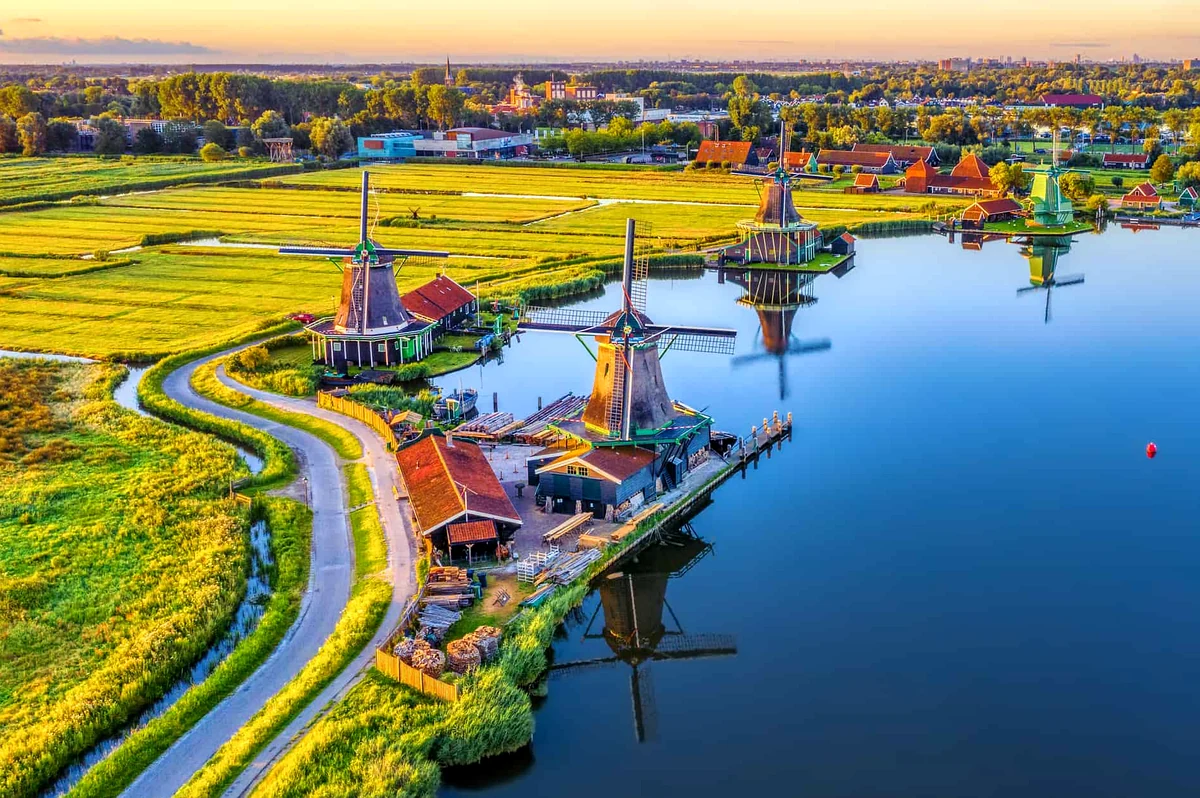
To truly feel the pulse of Zaanse Schans, we must step back into the pages of the 17th and 18th centuries—the most brilliant era, known as the Dutch Golden Age. Right here in the Zaan River valley, a marvel took shape: this was not simply a peaceful countryside, but the world’s first industrial area. Picture a vivid scene: along the gentle banks of the Zaan River, more than 600 giant windmills rose tall, their sails turning nonstop to create a brisk, powerful industrial rhythm. Each windmill was a massive production machine, intricately designed to serve countless purposes: sawing large timber logs into planks, pressing oil from rapeseed, grinding rare spices imported from the East, dyeing cloth, and producing high-grade paper. All of these products were essential resources powering the mighty merchant fleet of the Dutch East India Company (VOC), helping the Netherlands become the world’s leading maritime and commercial empire of that era.
Yet the wheel of history never stops turning. When the Industrial Revolution erupted in the 19th and early 20th centuries, the rise of steam engines and new technologies pushed traditional windmills into obscurity. Scores of windmills were abandoned, fell into severe decay, or were even dismantled to make way for modern factories. The priceless heritage of a golden age stood on the brink of disappearing forever, remaining only as faint memories in local minds.
Fortunately, in 1961, a gifted and passionate architect named Jaap Schipper sparked a ray of hope. He could not bear to watch these historical symbols fade away. With far-sighted vision, he proposed a bold, unprecedented idea: establishing an open-air museum to rescue and preserve the remaining windmills. This was more than just an idea—it was a call to action, an intense desire to safeguard the soul of the Zaan region.
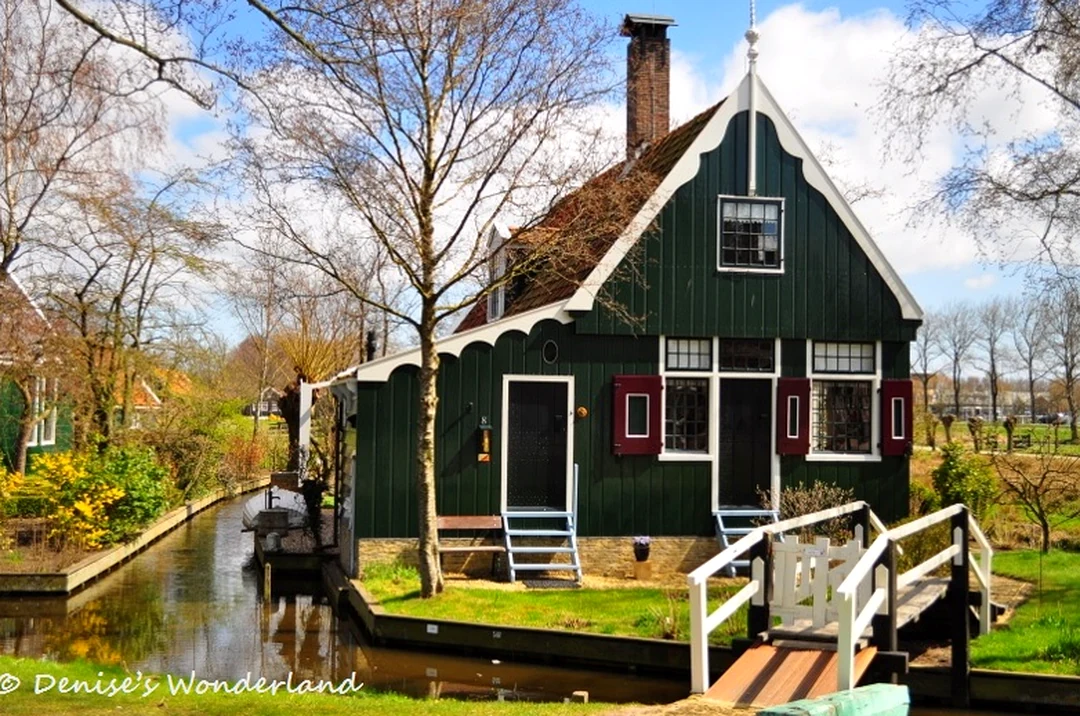
And so, one of history’s greatest large-scale relocations unfolded across 13 years, from 1961 to 1974. It was a challenging journey filled with love and reverence for heritage. Windmills, workshops, and wooden dwellings built in the signature traditional Zaan style—featuring Classic Zaan Green accented with white or red trim, steep black-tiled roofs, and small practical windows built to withstand North Sea gales—were carefully and methodically taken apart. Every piece, every brick, and every timber beam was numbered and transported intact by barge from across the Zaan region to gather along the Zaan River at today’s site, which we call Zaanse Schans. This reconstruction was not merely reassembling structures; it was breathing life into a sleeping past and rebuilding a lively, authentic space from a bygone era.
The greatness of this region is also witnessed through the footsteps of illustrious historical figures. Foremost among them is Tsar Peter the Great of Russia. In 1697, the ambitious ruler did not hesitate to travel to nearby Zaandam—then a bustling industrial and maritime center—to learn advanced shipbuilding techniques and windmill operation firsthand. The timber Czar Peter House, where he stayed and studied, remains an important historic landmark closely linked to Zaanse Schans, attesting to the far-reaching international influence of Dutch technology at the time.
Today, Zaanse Schans is far more than just a tourist destination. It is a living museum, an open book on Dutch industrial history, architecture, and culture. Every windmill, every green wooden house, and every cobblestone lane tells a story, inviting visitors to immerse themselves in earlier centuries to better understand the origins and historical context that shaped today’s resilient, creative Netherlands. It is a journey back to the roots, where windmill sails still turn diligently like a whisper from the past, reminding us of the value of heritage and the strength of human resolve.
As first footsteps reach Zaanse Schans, visitors do not merely enter a village—they step into a living canvas where time seems frozen in the 17th and 18th centuries, the radiant golden age of the Netherlands. Here, each architectural structure is more than a physical frame; it is a vivid proof of the talent, creativity, and resilience of the people of Zaanland. Zaanse Schans is not just an open-air museum; it is a holistic architectural masterpiece, a living museum of peak artistic value where industrial practicality blends gracefully with poetic beauty to form a priceless legacy.
The first distinctive trait that catches the eye is the unique Zaan architectural style, embodied in wooden houses painted in a deep green—the classic shade known as “Classic Zaan Green.” This green not only creates visual harmony, but also symbolizes endurance, blending into waterways and lush green meadows. Delicate white or red trim, steep black-tiled roofs, and compact windows are not mere decorative details, but smart architectural solutions built to brave harsh North Sea storms. Each house, however modest, radiates a rustic yet proud beauty, reflecting the simple, efficient lifestyle of residents who once lived and worked in the world’s first industrial zone.
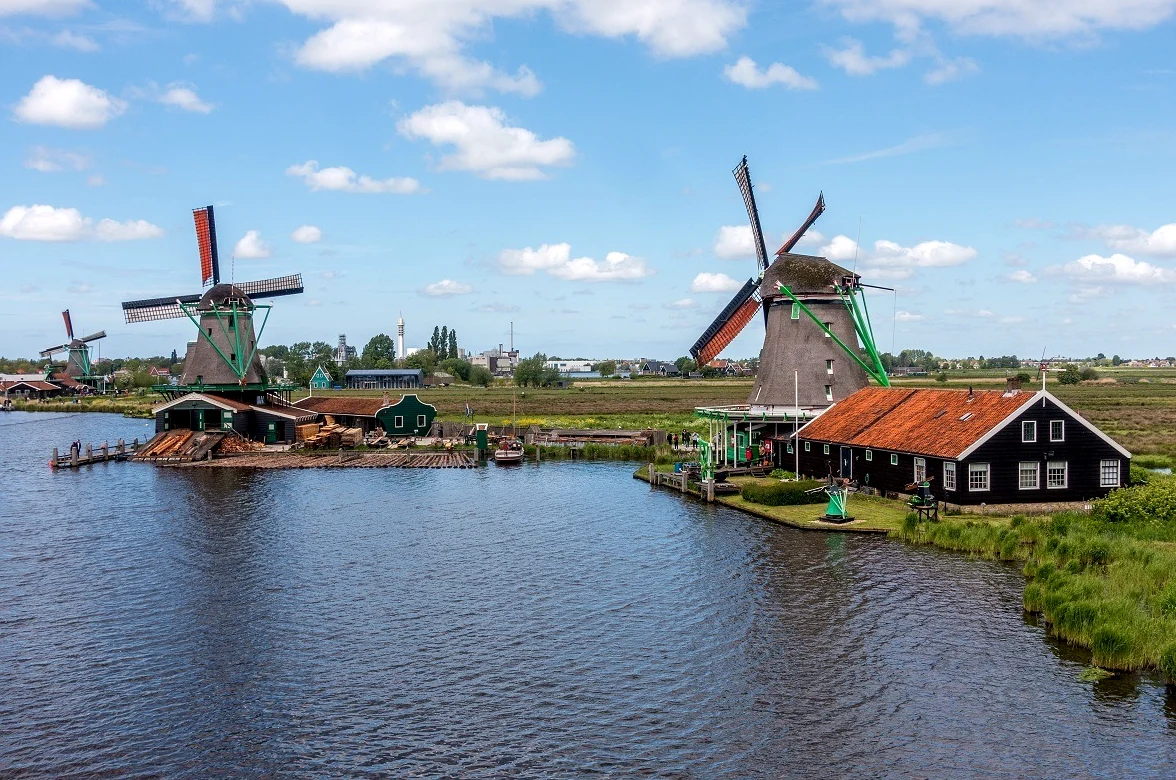
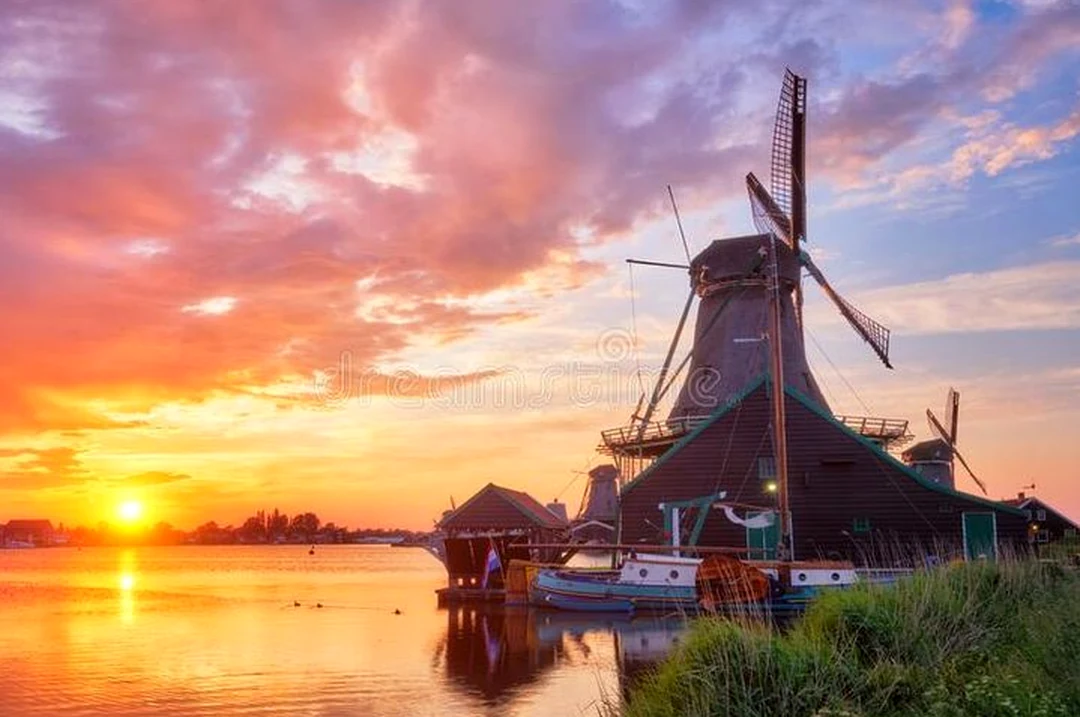
Yet the soul and heart of Zaanse Schans are, unmistakably, the giant windmills rising tall against a clear blue sky. They are not just icons; they are grand industrial machines, bearing witness to an era when the Zaan River valley once had more than 600 windmills operating at once. Imagine smock mills or octagonal mills averaging 20m to 35m in height, with impressive sail spans from 22m to 27m. Every turn of traditional cloth sails or automatic louvered braking systems is a heartbeat of history, generating power for countless trades: sawing timber, pressing oil, grinding spices, dyeing cloth, and making paper to supply the Netherlands’ famed VOC merchant fleet.
The durability and longevity of these masterpieces come from careful material selection and refined construction techniques. Northern pine treated with pine resin against rot serves as the primary material, paired with sturdy stone foundations and cast iron for the massive internal drive gears. Stepping inside a windmill like De Kat—the only remaining paint/mineral mill of its kind in the world—visitors are amazed by the giant oak gearwork and stone rollers grinding pigments into vibrant colors for fine art and industry. Or take Het Jonge Schaap, a sawmill reconstructed in 2007 from 18th-century blueprints, a testament to meticulousness and reverence for heritage where timber was cut to build ocean-going ships.
The peak artistic value of Zaanse Schans lies not only in each individual structure, but also in the harmonious whole of a “reborn” village. The story of the historic relocation from 1961 to 1974, when architect Jaap Schipper and his associates dismantled and moved intact a host of windmills, workshops, and wooden homes from across the Zaan area to gather along the Zaan River at today’s site, was an extraordinary undertaking. It was not just an effort to preserve heritage, but the creation of a vibrant space where every angle frames a picture-perfect scene—a “Classic Photo Spot” every photographer dreams of. From the dike along the west bank of the Zaan River, the panorama of windmills rising above the water with a small wooden bridge spanning the river has become iconic, appearing on 90% of Dutch travel postcards—the clearest proof of this place’s timeless beauty.
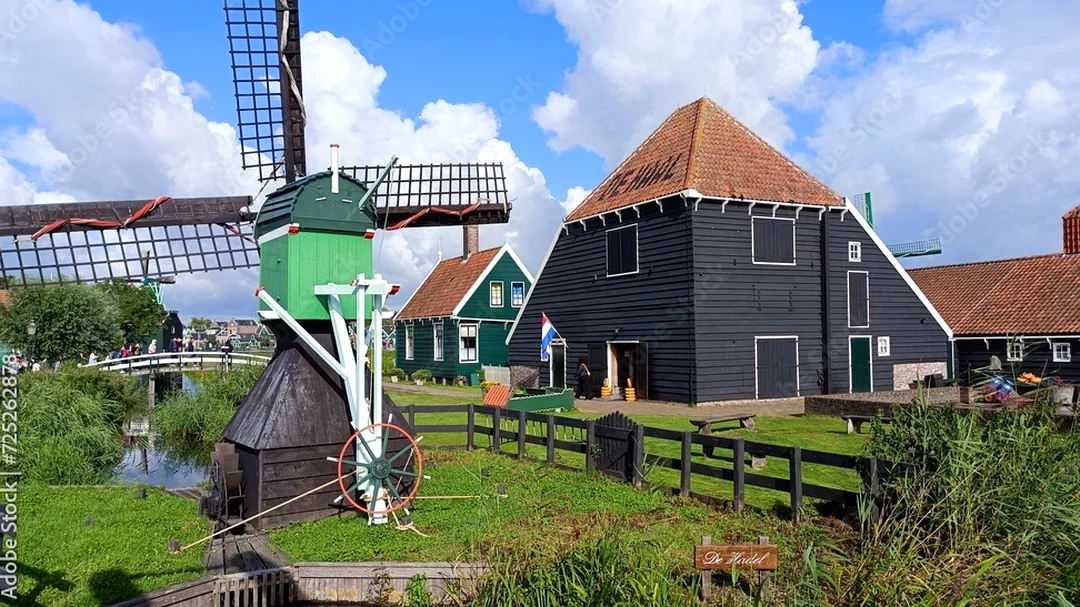
Going deeper inside a windmill—such as climbing to the operating floor of De Kat to witness complex mechanical transmission firsthand—is not just a history lesson, but a profound appreciation of design refinement. Every detail, from sweeping sails to the smallest gears, is the result of centuries of accumulated knowledge and craftsmanship, turning raw industrial machinery into works of architectural art. Zaanse Schans, with its seamless blend of function and aesthetics, is not merely a destination; it is an invitation to admire, learn, and fully feel the worth of an architectural heritage preserved and celebrated, forever a symbol of Dutch creativity and timeless beauty.
Leaving behind the bustling streets of Amsterdam, the journey to Zaanse Schans is not just a trip, but a voyage back in time where every step touches the essence of 17th-century Holland. And within that living tapestry of heritage, there are experiences that are not only “worth every penny” in cost, but priceless in emotion and insight—moments that VDS Travel has handpicked so its travelers will not miss a thing.
First and foremost are the classic photo spots, where the beauty of Zaanse Schans is distilled into timeless frames. Nothing compares to standing on the dike along the west bank of the Zaan River, taking in the panoramic view of windmills rising tall above the water with a small wooden bridge spanning across like a graceful touch. This is the exact angle featured on more than 90% of Dutch travel postcards, an unmistakable symbol of the land of windmills. From here, the signature dark green wooden houses of the Zaan style, accented with crisp white trim, appear like a living, breathtaking landscape, telling the story of a golden age of Dutch industry. Or when stepping onto the Julianabrug drawbridge, visitors can admire a bird’s-eye view of Zaanse Schans from above, capturing the captivating contrast between a 17th-century industrial past with historic windmills and the modern rhythm of life flowing by.
Yet Zaanse Schans does not stop at pretty pictures. Its true value lies in the in-depth experiences inside the windmills, where visitors can touch history and feel the energy of a bygone era. One highlight not to be missed is the chance to climb onto the operating deck of De Kat—the only remaining paint/mineral mill in the world, built in 1646. Here, amid the creaking of oak and the wind rushing through the sails, visitors can watch firsthand the massive cast-iron and oak gear system driving the grinding of pigment stones. It is a captivating mechanical harmony, proof of the ingenuity of historic Dutch engineering, where every movement is part of producing vibrant colors for painting and the textile-dyeing industry. Standing inside that space, breathing in the scent of aged wood and mineral dust, is an unforgettable sensory experience.
Continuing the journey into Dutch craftsmanship, visitors can immerse themselves in the world of traditional wooden clogs. At the Catharina Hoeve workshop, artisans demonstrate the intricate wooden clog-making (Klompen) process, from raw blocks of wood to finished pairs. Beyond just watching, visitors can try on wooden clogs in a range of sizes themselves, feeling their sturdiness and distinctiveness—a cultural icon that has stood the test of time. To unlock all of these experiential treasures, the Zaanse Schans Card is the golden key. Priced around 23.5 EUR per adult, this card not only includes admission to key windmills such as De Kat, De Zoeker (an oil mill built in 1672), and Het Jonge Schaap (a sawmill reconstructed in 2007 from original 18th-century drawings), but also opens the doors to the Zaans Museum, the Catharina Hoeve cheese workshop, and the 18th-century Bakery Museum, where the aroma of warm stroopwafels beckons.
With us, “high-value” experiences are elevated to another level through exclusive value-added services. We are proud to offer the opportunity to join a private tour with a master windmill technician (Millwright). This is a rare privilege that allows travelers to gain deep insight into complex 17th-century mechanical drive systems—secrets that general visitors do not get to access. The specialist explains in detail the gears, drive shafts, and how wind power is converted into productive energy, offering a comprehensive and profound perspective on this industrial heritage. Furthermore, to make the journey to Zaanse Schans as distinctive and relaxing as possible, we also design itineraries combining travel via an exclusive Zaan River cruise (Zaan Cruise). Instead of facing road traffic congestion, the group is brought straight from Amsterdam to the edge of the village by water, admiring the distinctive waterway architecture of the Zaan region from a fresh perspective and opening up a refined, unforgettable experience.
These experiences—from admiring iconic scenery and exploring the mechanical depth inside windmills to touching traditional trades and enjoying the exclusive privileges we offer—are far more than ordinary sightseeing activities. They are truly “high-value” moments that leave a lasting impression of a resourceful, resilient, and creative Netherlands where past and present blend seamlessly.
After wandering among historic windmills and vibrant green wooden houses, Zaanse Schans also opens up a captivating culinary map where the palate is awakened by quintessential local flavors that tell the story of an authentic, down-to-earth Netherlands. This is not merely a visual exploration, but a gastronomic adventure in which every dish is a slice of culture and a heritage preserved across generations. We believe that to truly touch the heart of a place, you must taste what it nurtures.
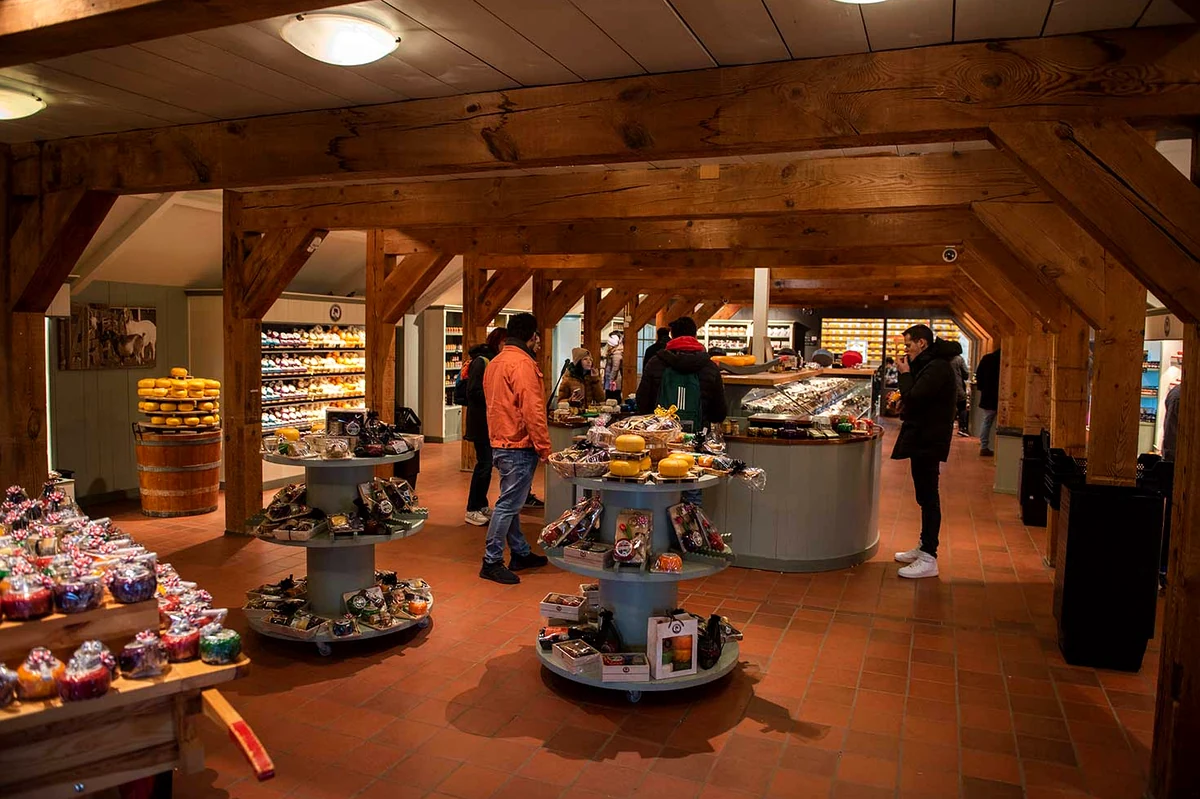
The first stop on the culinary journey in Zaanse Schans must be Kaasmakerij Catharina Hoeve, a renowned artisan cheese workshop. The moment you step inside, a rich, inviting aroma of fresh milk and aging cultures envelops you, leading to neatly arranged shelves of Gouda—from mild, creamy young cheeses to firm-rinded old vintage cheeses with deeper, more complex flavors. Here, visitors are treated to a complimentary tasting spread of more than 30 varieties of cheese, each with its own character. Especially memorable are distinctive creations such as spicy green peppercorn cheese, fragrant lavender cheese, or intriguing black garlic cheese, all crafted using traditional recipes that reflect the ongoing creativity of the Zaan people. Each bite melting on the tongue is more than flavor—it is a sense of the care and patience of craftsmen who turn fresh milk into a culinary work of art.
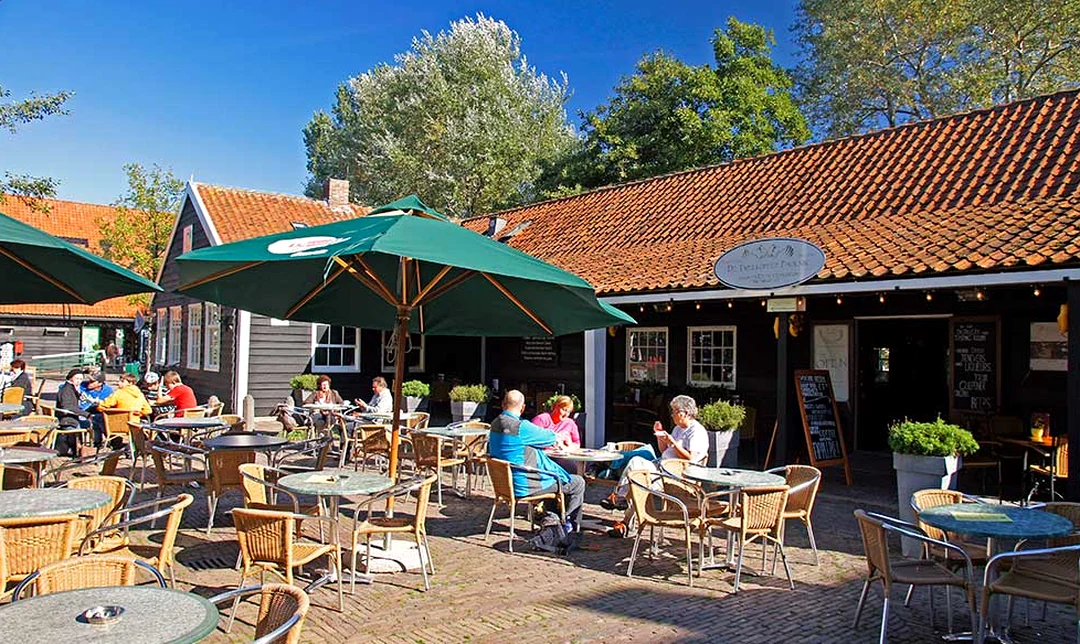
Continuing along the sweet side of the culinary map, the historic bakery De Tweekoppige Gans, nestled among wooden houses, is where you will find the soul of the stroopwafel—the famed waffle sandwich filled with caramel syrup. Watching the handmade process, from dough balls pressed thin on hot cast-iron griddles to two crisp waffle layers clamping around rich, flowing cinnamon-caramel syrup, is a delight to behold. The scent of cinnamon, caramel sugar, and baked pastry fills the air, inviting you to enjoy a warm stroopwafel straight off the iron. The secret to savoring it to the fullest is resting it over a hot cup of coffee so the warmth softens and gently melts the syrup inside, creating a harmonious balance between the bitterness of coffee and the sweetness of the pastry—an unforgettable moment of relaxation in the heart of Zaanse Schans.
For a heartier, cozier meal, De Kraai restaurant, standing right within the village complex, is an ideal spot to enjoy Pannenkoeken—traditional Dutch pancakes. Unlike delicate French crêpes or thick American pancakes, Dutch pannenkoeken have a medium thickness, cooked in large cast-iron pans until golden brown and paired with endless sweet or savory toppings. You can choose savory bacon, crisp fresh apple, or even both together, drizzled with a touch of signature Dutch apple syrup (Appelstroop) for a well-rounded, savory-sweet flavor. It is comfort food in the family tradition—filling and warming—reflecting the simplicity and refinement of local food culture.
And if you love discovering bold, iconic flavors from the North Sea coast, raw lightly salted herring (Hollandse Nieuwe) is a must-try experience. This dish is a source of Dutch pride, made from the freshest herring, lightly cured in brine to preserve the fish’s natural sweetness. When served, the herring is typically accompanied by finely diced onions and gherkins, creating a balanced interplay between the brininess of the fish, the mild bite of onion, and the gentle tang of pickles. The traditional way to eat Hollandse Nieuwe is a cultural ritual in its own right: holding the fish by the tail, tilting your head back, and lowering it slowly into your mouth. It is more than just food—it is a ritual that connects you to the Netherlands’ rich maritime heritage, capturing the sea breeze and the freshness of abundant seafood.
Viewed through a culinary lens, Zaanse Schans is not merely an open-air museum of the windmill industry, but a rich treasury of food culture. From the refinement of cellar-aged cheese and the warm sweetness of stroopwafels to the homestyle comfort of pannenkoeken and the bold character of raw salted herring, each dish is an essential piece that helps travelers understand the life, people, and history of this land more deeply. We take pride in bringing our guests the most authentic and meaningful culinary experiences, turning every meal into an integral part of cultural discovery rather than just filling up.
Exploring Zaanse Schans—the legendary windmill village of the Netherlands—is not just a trip across geography, but a journey back in time to the industrial and cultural soul of a resilient people. So that every step here becomes a complete, meaningful, and seamless experience, we, as your knowledgeable travel companion, are pleased to share an essential pocket guide gathering practical tips on the ideal time to visit, ways to explore, and important safety reminders not to overlook.
The golden window for Zaanse Schans to show its beauty at its fullest is unmistakably from April to May. During this season, Dutch nature awakens from its long winter rest, dressing itself in the vibrant colors of millions of tulips blooming in beds around the village. Mild, pleasant weather with warm golden sunlight—neither too harsh nor too chilly—creates an ideal backdrop for lifetime photos, as historic windmills rise tall against clear blue skies. Conversely, we advise thoughtful consideration if you plan to visit between November and February. During these months, brisk North Sea winds can bite sharply, persistent drizzle is common, and temperatures frequently drop below 5°C, making outdoor exploration less comfortable. Moreover, several windmills and craft workshops may close for maintenance, noticeably reducing the variety of things to see and do.
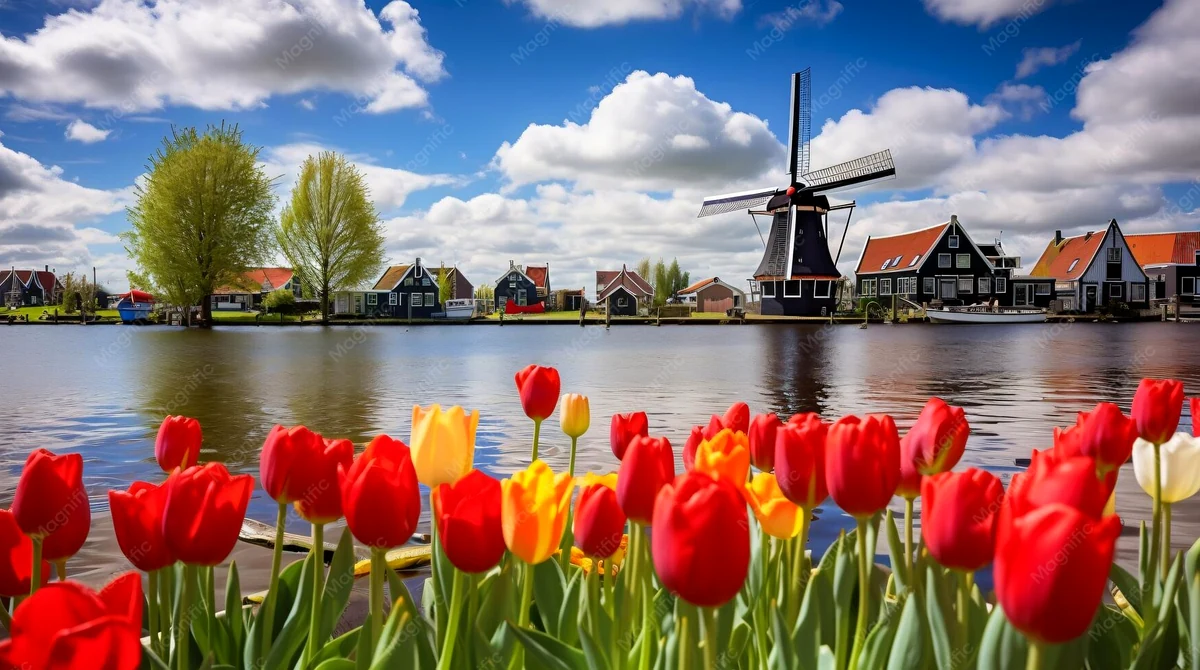
When it comes to visiting, Zaanse Schans has a distinctive feature: the village area is open freely 24/7 with no admission fee. This allows visitors to stroll leisurely and admire its unique Zaan architecture at any hour, even on quiet mornings or romantic evenings. However, to truly step inside the historic windmills, specialty museums, or traditional craft workshops, you will need the Zaanse Schans Card. Priced at around 23.5 EUR per adult, this bundled pass is the key to unlocking the most in-depth experiences. It includes admission to major working windmills such as De Kat or De Zoeker, the Zaans Museum, the Catharina Hoeve cheese workshop famous for more than 30 varieties of fine Gouda cheese, and the 18th-century Bakery Museum. These windmills and museums typically operate from 09:00 to 17:00 daily, and may stay open until 18:00 during peak season, so planning your schedule is essential to avoid missing any highlights.
As one of the destinations drawing huge international crowds—more than 2 million visitors each year—Zaanse Schans is not immune to minor security issues. Pickpocketing can happen discreetly in crowded spots, especially inside busy cheese shops or along narrow paths near the windmills. To ensure a safe, worry-free trip, we strongly recommend never wearing a backpack on your back; instead, keep personal items, wallets, and phones in front pockets or a secure zippered crossbody bag, and stay alert at all times.
Packing the right attire is also key to staying comfortable. Zaanse Schans sits on low-lying alluvial land along the river, where winds off the North Sea blow briskly and air humidity is frequently high. Because of this, the layering system is a must. Bring a windproof or waterproof jacket—even on sunny days—to stay ready for sudden weather shifts. At the same time, wearing non-slip sneakers or walking shoes is essential. Paths around the village are paved with cobblestones and wooden planks, which become quite slippery when damp or covered in morning mist. Comfortable, sturdy footwear will let you explore every corner with confidence without worrying about discomfort or slipping.
With these practical tips in hand, you are ready for a Zaanse Schans journey that is not only picture-perfect but also safe and fulfilling. Every small detail of preparation helps create a refined travel experience where you can fully immerse yourself in the history, culture, and natural scenery of this one-of-a-kind windmill village, bringing home lasting memories.
After exploring the towering windmills, classic green timber houses, and rich flavors of Gouda at Zaanse Schans, we have turned through the golden chapters of a resilient, inventive Netherlands. From the “world’s first industrial area” in the 17th and 18th centuries with more than 600 windmills working non-stop, to the remarkable “great relocation” from 1961 to 1974 to preserve heritage, Zaanse Schans is far more than an open-air museum—it is a living testament to human perseverance and adaptability. Here, every sweep of a windmill sail and every grain of dark green timber on a Zaan-style house tells a story of prosperity and sophisticated mechanical engineering that once drew even Russia’s Tsar Peter the Great to come and learn.
To turn these historical stories and timeless beauty into a truly deep, memorable travel experience, VDS Travel has positioned Zaanse Schans as a strategic anchor destination across our premium Western European tour collection. Whether it is a cultural discovery journey on our 11-day, 10-night All-Inclusive Tour Package across France, Belgium, the Netherlands, Switzerland, and Germany, or more focused itineraries such as “Belgium – Netherlands – Luxembourg” and “Rhine River & Dutch Canals Heritage Journey,” Zaanse Schans is always an essential highlight where travelers touch the heart of historic Dutch industry.
The added value we deliver goes beyond simply bringing you to Zaanse Schans; it also includes thoughtfully crafted, exclusive experiences. Imagine a private tour with a windmill engineer (Millwright), a privilege rarely available to general visitors. You will not only admire *De Kat*—the only remaining paint mill in the world—but also be guided inside to see and understand the intricate 17th-century mechanical drive system up close. Massive oak gear wheels, how they mesh, and how they convert wind power into energy for grinding pigment stones are all revealed through skilled craftsmen’s stories, offering a deep look at the ingenuity of old-world engineering.
To make reaching Zaanse Schans even more distinctive and relaxing, we also design a special connection: traveling by exclusive Zaan River cruise. Instead of jostling along busy roads, our guests glide smoothly over the water from Amsterdam straight to the edge of the village. This unique waterway perspective not only bypasses road traffic completely, but also opens up a breathtaking view where historic green wooden houses and windmills reflect on the calm Zaan River, evoking a bustling commercial hub of the Dutch Golden Age. It is an experience that is both convenient and deeply evocative, letting you feel the beauty and history of this land from a completely fresh angle.
Every detail of our journey is cared for to achieve excellence. From choosing the ideal time of year—April to May, when tulips are in full bloom and weather is mild—to keeping you safe with practical pickpocket precautions in crowded spots like the Catharina Hoeve cheese shop, we also pay close attention to culinary experiences. Tasting more than 30 varieties of cellar-aged traditional Gouda, enjoying warm caramel-filled stroopwafel waffles fresh from the oven at the historic bakery *De Tweekoppige Gans*, or sampling famous raw salted herring (*Hollandse Nieuwe*) from the North Sea all come together seamlessly to paint a full picture of Dutch culture and everyday life.
With us, a trip to Zaanse Schans is more than sightseeing—it is a cultural adventure and a meaningful connection with history and people. We are committed to delivering experiences that are luxurious and comfortable while rich in insight and emotion, helping you hold onto unforgettable memories. Let us be your trusted companion guiding you to discover what truly matters in the world. We invite you to visit our website and book today to begin your journey through charming, historic Netherlands with our All-Inclusive Tour Package, where every moment becomes a memorable story.