Emerging and fading amid drifting mist and the silhouette of Mount Fuji towering on the horizon, Lake Ashi (Ashinoko – 箱根芦之湖) resembles an untamed emerald jewel preserved across millennia of nature’s transformations. The geological genesis of this vast expanse of water began roughly three millennia ago, when the Hakone volcanic chain underwent a violent tectonic upheaval. During a massive eruption around Mount Futagoyama (“Twin Mountain”), colossal torrents of lava surged down into neighboring valleys, damming the natural course of the Hayakawa River. That geological blockade inadvertently formed a breathtaking natural caldera lake, stretching deep between silent volcanic cliffs and opening the first chapter of a mystical saga amid the mountains of Kanto.
As nature settled following its volcanic fury, Ashinoko entered the spiritual and cultural current of the Land of the Rising Sun through legends steeped in Esoteric Buddhism. During the Nara period, in the year 757 of the Tenpyō-hōji era, this rugged mountain realm remained a remote, perilous wilderness. According to ancient lore, lurking deep beneath the dark waters of Lake Ashi was a ferocious nine-headed water dragon known as Kuzuryū, which frequently whipped up violent storms, triggered floods, and spread terror among local villagers. Moved by the suffering of the people, the enlightened high priest Mankan Shōnin ascended the mountain, traversing primeval cypress forests to reach the sacred shoreline.
Through unwavering resolve and miraculous purification rituals along the lakeshore, Mankan Shōnin subdued the fearsome beast, transforming Kuzuryū into a benevolent guardian deity (Kuzuryū Myōjin) presiding over water resources, nurturing bountiful harvests, and bestowing blessings upon fishermen. In that very year of 757, the master founded Hakone Shrine (Hakone Jinja), nestled solemnly beneath towering ancient cedars along the lake’s southwestern shore. This milestone not only established a supreme spiritual anchor for Shinbutsu-shūgō (the syncretism of Shinto and Buddhism), but also turned the mirror-like waters of Lake Ashi into a reflection of enduring faith for nobles and commoners alike across centuries of upheaval.
Entering the Edo period (1603–1867), the quiet serenity of Lake Ashi shifted dramatically amid sweeping political change as the Tokugawa Shogunate consolidated power across Japan. Recognizing the strategic topography of the Hakone basin—commanding the vital Tōkaidō highway linking the ancient capital of Kyoto with the new seat of power in Edo (present-day Tokyo)—the shogunate ordered the establishment of the Hakone Checkpoint (Hakone Sekisho) directly along the lakeshore. This post immediately became a critical military chokepoint vital to the security of the feudal regime.
At the lakeside checkpoint, the notorious policy of “Iri-deppō ni de-onna” (“guns coming in, women going out”) was enforced with absolute rigor. Samurai guards inspected passing travelers day and night, fiercely preventing any illicit smuggling of matchlock firearms into Edo to incite rebellion, while strictly barring women—specifically the wives and concubines of feudal lords (daimyō) held as political hostages in the capital—from secretly escaping back to their home domains. Beneath the shade of ancient lakeside pines, the Sekisho post with its dark timber walls and heavily guarded gates stood as an uncompromising arbiter of human fate for over two centuries of Tokugawa peace. From a primordial realm of myth, the still waters of Lake Ashi became a historic frontier cradling the triumphs and trials of the samurai era in its silent depths.
Viewed across the topographic map of the Kanto region, Lake Ashi (箱根芦之湖) unfolds as an ink-wash masterpiece cradled inside the immense caldera of the celebrated Hakone volcanic complex. Sitting at an impressive elevation of 723 meters above sea level, this expansive mirror of water covers approximately 7.1 square kilometers along a winding shoreline measuring roughly 21 kilometers in perimeter. Its basin is the living legacy of cataclysmic eruptions tens of thousands of years ago, when collapsing magma chambers carved a deep valley trough fed by crystal-clear subterranean springs from surrounding peaks. With an average depth of 43.5 meters and a maximum depth reaching 44.8 meters, the lake holds an immense volume of water that maintains a deep jade-emerald hue and rare stillness year-round amid the mountains of Kanagawa Prefecture.
Through East Asian geomantic principles and classical landscape philosophy, Lake Ashi’s spatial structure embodies the finest qualities of a setting that shelters wind and gathers vital energy. The double volcanic crater rim encircling the lake acts as a formidable natural fortress, with interlocking saddles and peaks forming protective flanking arms that shield the water from harsh oceanic gales. Here, the Water element does not surge destructively, but gathers into a deep, serene basin symbolizing the accumulation of prosperity, peace, and enduring vitality. Abundant vital energy flowing down from sacred Mount Fuji along subterranean geological strata converges within the Hakone basin, transforming the tranquil lake into a sacred geomantic focal point harmonizing the surrounding landscape.
The most sublime and iconic visual marvel of Lake Ashi’s topography is the phenomenon of “Sakasa Fuji” (“Upside-Down Fuji” – 逆富士), a natural spectacle immortalized in Edo-period ukiyo-e woodblock prints. On crisp, cloudless mornings when valley breezes fall completely silent, the surface of Lake Ashi turns as smooth as polished glass, reflecting the snow-capped cone of Mount Fuji inverted cleanly in its depths. The 723-meter elevation combined with exceptionally pure mountain air creates an optical mirror of remarkable clarity, doubling the majesty of the sacred peak in an ethereal reflection. Beyond sheer visual beauty, local tradition reveres this moment—when the sacred volcano’s reflection touches the waters of an ancient crater lake—as a sacred union of fire and water, stillness and motion.
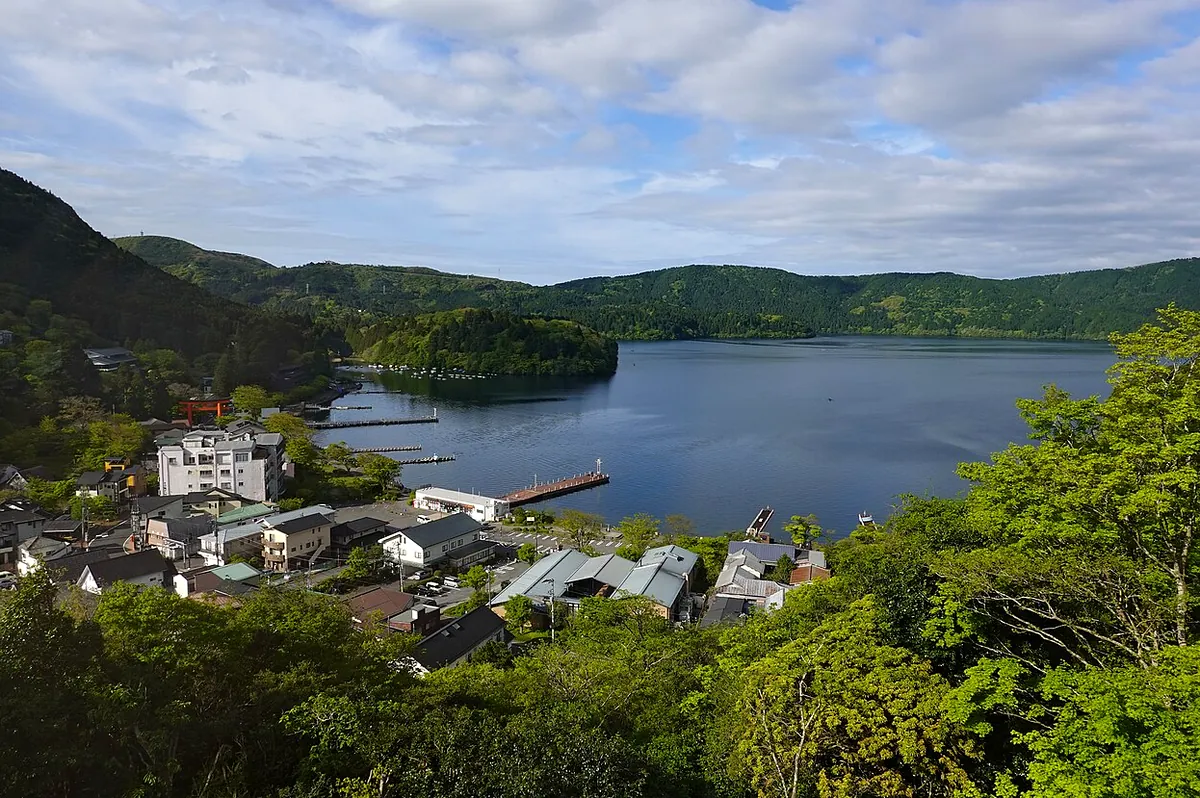
Its enclosed caldera basin and nearly fifty-meter depth endow Lake Ashi’s 21-kilometer shoreline with a crisp highland microclimate veiled in drifting mist year-round. Lakeside flora shifts rhythmically across a magnificent four-season canvas: pale pink cherry blossoms mirroring themselves in blue waters in spring, lush primeval forests cooling sultry summer days, fiery crimson momiji maples blanketing mountain slopes in autumn, and quiet snow-draped stillness in the depths of winter. This interplay between violent volcanic origins and absolute aquatic calm defines a landscape both expansive and contemplative, making Lake Ashi one of Japan’s most treasured natural wonders.
Lake Ashi’s scenic landscape seamlessly unites ancient religious spatial philosophy with modern transportation engineering perfected to remarkable precision. Presiding solemnly along the southeastern shore, the architectural complex of Hakone Shrine (箱根神社)—born from deep reverence for nature—is crowned by its iconic Heiwa no Torii (“Torii of Peace”). Rising directly out of the turquoise water, this Shinto gate glows in vibrant vermilion (shu-iro), marking the threshold between the mortal world and the sacred realm of the Kami deities. Built on massive timber pillars anchored deep into the lakebed, the gate aligns along a dramatic visual axis leading from the main sanctuary hidden amid centuries-old sugi cedars, across the mist-veiled waters of Ashinoko, straight toward Mount Fuji on the horizon.
Along the southern shore, the authority of the Tokugawa Shogunate lives on at the Hakone Checkpoint (箱根関所). This landmark historical reconstruction recreates with painstaking accuracy the formidable military border post guarding the strategic Tōkaidō route between Kyoto and old Edo. Every structure—including hillside watchtowers, patrol barracks, inspection gates, and interrogation rooms—was rebuilt using natural Hinoki cypress and traditional Japanese joinery without metal nails. Darkened wood grains and tightly shingled roofs evoke the strict discipline of feudal rule, where travel permits and travelers’ identities—especially enforcement of “weapons entering and women leaving Edo”—were scrutinized under absolute military authority.
Contrasting the quiet antiquity of historical monuments is an extraordinary integrated transit network encircling the lake, celebrated as the Hakone Golden Course. The journey begins aboard sleek Odakyu Romancecar limited express trains gliding across the Kanto Plain, handing travelers off to the mountain-climbing Hakone Tozan Railway (箱根登山鉄道). Tackling gradients as steep as 80 per mille, this specialized alpine railway executes three consecutive switchbacks to scale sheer mountain slopes before linking seamlessly with the steep Hakone Tozan Cable Car ascending to Sounzan Station.
From high along the volcanic ridge, the Hakone Ropeway (箱根空中索道) delivers an engineering marvel of aerial transit capable of carrying up to 2,400 passengers per hour. Panoramic glass gondolas glide smoothly above the steaming, sulfur-clouded geothermal valley of Owakudani before descending gently toward Togendai Pier right at Lake Ashi’s edge. There, the lake’s surface comes alive with grand sightseeing pirate ships modeled intricately after celebrated eighteenth-century European warships. Vibrant sails, sturdy oak decks, and ornate carved prows cleave across the waves linking three strategic ports—Togendai, Hakonemachi, and Motohakone—completing a captivating visual journey bridging heroic Western naval artistry with serene Eastern contemplation.

In stark contrast to bustling resort cities defined by bright artificial lights and loud concerts, dusk and nightfall at Lake Ashi unfold as a natural live performance where sky, water, and human consciousness merge in absolute stillness. Once the final sightseeing vessel docks and its horn echoes away into Hakone’s volcanic cliffs, this more than seven-square-kilometer expanse sheds its daytime bustle. The caldera basin born from Mount Kamiyama’s collapse over three millennia ago reclaims its primal serenity, staging a pure visual spectacle orchestrated by mist, clouds, and the enchanting twilight of Japan.
The visual centerpiece of this sunset performance is the vermilion Heiwa no Torii rising from the deep waters. As the sun sinks behind western ridges, fading light gilds gentle ripples, transforming the sacred gate into a mystical silhouette etched against skies shifting from burnt orange to deep indigo. On clear evenings, snow-crowned Mount Fuji emerges majestically in the distance, casting its proud reflection across water as smooth as liquid mercury. Along the stone-flagged path shaded by ancient cedars leading into Hakone Shrine, stone tōrō lanterns flicker to life, casting warm golden pools of light through drifting mist. That gentle glow not only guides travelers toward quiet reflection, but recalls the legend of High Priest Mankan during the Tenpyō-hōji era, who sat in meditation by the shore to pacify the nine-headed dragon Kuzuryū—turning ancient fear into enduring protection.
Nightlife along Lake Ashi belongs not to noisy bars or glaring neon signs, but to unhurried dining and restoration inside traditional ryokan inns. Clad in a simple yukata robe, guests step across rush-scented tatami mats while listening to mountain breezes stir the lake. An evening kaiseki banquet unveils a refined symphony of regional flavors—featuring Lake Ashi’s prized wakasagi pond smelt fried crisp in delicate tempura batter, paired with creamy handmade yuba tofu skin and wild sansai mountain vegetables foraged from Hakone’s slopes. As night deepens, artificial illumination yields completely to pristine darkness. Soaking in an outdoor mineral-rich onsen hot spring amid crisp mountain air beneath unpolluted skies scattered with thousands of stars delivers an unforgettable ritual of purification and renewal.
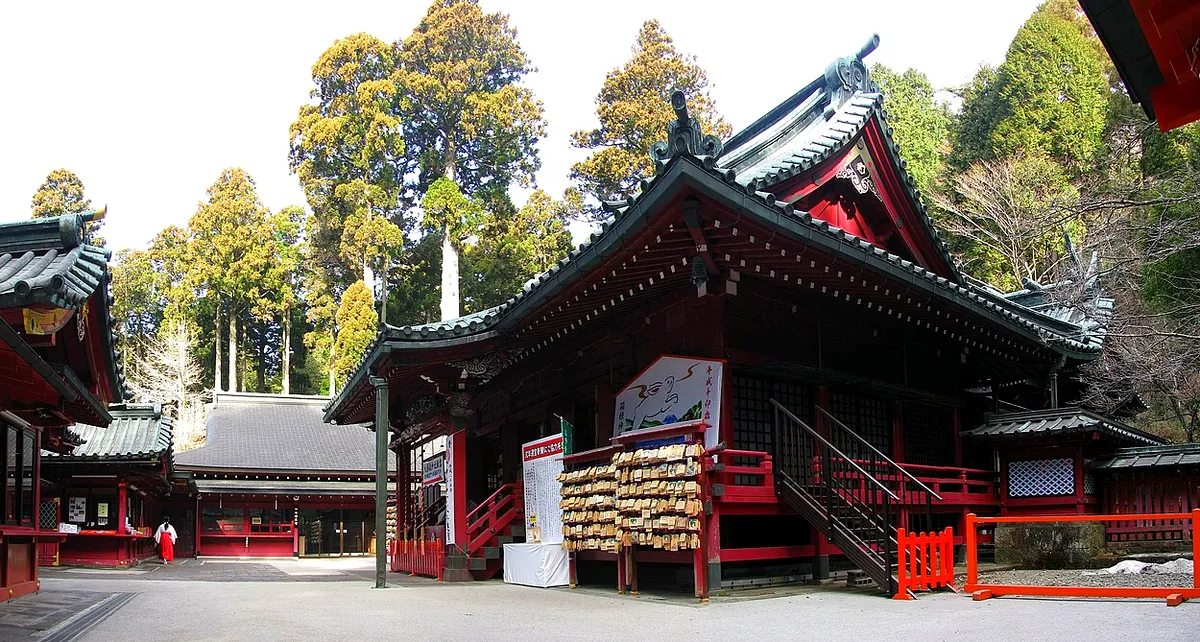
The epilogue of this interplay of light and shadow continues into early morning—especially during the golden window from 7:00 AM to 9:00 AM. At this hour, Lake Ashi drapes itself in a gossamer veil of mist drifting low across the water. As the first sunbeams pierce cedar boughs and awaken the tranquil surface, Sakasa Fuji—Mount Fuji’s flawless inverted reflection—appears as an incomparable natural masterpiece. This rhythmic harmony between stillness and motion, light and shadow, sacred Shinto vermilion and deep natural blue turns every dawn and dusk at Lake Ashi into an unforgettable aesthetic experience awakening the quiet beauty of wabi-sabi within every traveler.
The Ashi basin is a culinary crossroads forged over millennia where volcanic geothermal energy meets icy mountain spring waters. Rising more than seven hundred meters above sea level, Hakone’s unique geological ecosystem filters pure spring water through ancient basalt strata, infusing every traditional specialty in this mountain sanctuary with remarkable clarity and refinement.
Leading the roster of delicacies born from these sacred waters is handmade Hakone Soba buckwheat noodles. Unlike mass-produced noodles in busy cities, lakeside noodle-making families have preserved for generations the craft of kneading whole-grain buckwheat flour with mineral spring water drawn directly from volcanic rock aquifers. The resulting soba noodles achieve ideal springiness, subtle nutty grain aroma, and a distinctive ash-gray hue. Served chilled for dipping into savory dashi broth brewed from top-grade bonito flakes and aged kelp, they pair harmoniously with crisp tempura of wild highland vegetables bursting with clean herbal sweetness.
Diving deeper into flavors born directly from the lake’s waters, Wakasagidon (pond smelt rice bowl) represents a storied culinary tradition once presented as tribute to the Tokugawa Shogunate during the Edo period. Wakasagi smelt thrive exclusively in the cold, exceptionally clean depths of Lake Ashi, prized for tender, sweet flesh rich in calcium. Freshly netted by local fishermen at dawn, the delicate fish are lightly dusted in batter and flash-fried to a crisp golden hue. Chefs arrange the crispy smelt generously over steaming white rice and drizzle them with silky soft-set egg simmered in sweet-savory mirin soy glaze. The contrast between crisp golden scales, rich tender fish, and a subtle, refined bitterness from fresh roe and organs creates a multi-layered flavor profile unforgettable to discerning palates.
Ascending from the tranquil lakeshore by ropeway into the sulfur-scented geothermal valley of Owakudani brings travelers face-to-face with a legendary culinary icon: Kuro-tamago (black eggs). Far more than a novelty snack, these eggs represent a fascinating marriage of natural chemistry and folk belief. Fresh chicken eggs are lowered directly into natural hot spring pools rich in iron and sulfur at roughly 80°C, triggering a chemical reaction that turns the calcium shells a glossy, lacquer-black hue. Local folklore linked to the nearby Enmei Jizo Bodhisattva statue holds that eating a single black egg boiled in these sacred volcanic waters adds seven years to one’s life. Beneath the lava-blackened shell lies a pleasantly firm egg white and a rich, creamy yolk imbued with savory mineral depth far surpassing ordinary boiled eggs.
Lake Ashi’s culinary journey reaches regal heights at dusk with multi-course Kaiseki ryori banquets served in traditional ryokan inns. Each course unfolds in harmony with the philosophy of shun—honoring ingredients at their peak seasonal perfection—paired artfully with fine ceramics and serene natural presentation. Among these delicacies, prime Wagyu beef marbled with intricate shimofuri fat sizzles directly atop a red-hot volcanic lava stone, melting into rich, sweet juiciness that lingers memorably beside the gentle waves of Lake Ashi.
Reaching and exploring Lake Ashi smoothly requires thoughtful transit planning across complex volcanic terrain. From bustling Shinjuku Station in Tokyo, the most convenient and scenic approach is boarding the Odakyu Romancecar straight to Hakone-Yumoto Station before entering Hakone’s celebrated public transit network. The key to optimizing both cost and convenience is securing the Hakone Freepass issued by Odakyu Electric Railway. This all-in-one pass grants unlimited rides across eight signature regional transport modes forming a seamless loop: the switchback Hakone Tozan Railway, Hakone Tozan Cable Car, Hakone Ropeway gliding over steaming Owakudani crater, Hakone Sightseeing Cruise pirate ships crossing the emerald lake, and flexible Hakone Tozan Buses connecting every corner of the region.
Beyond transport logistics, timing your day well makes all the difference. The prime window to witness Mount Fuji reflected clearly in the sacred lake—the celebrated Sakasa Fuji phenomenon—typically occurs early in the morning between 7:00 AM and 9:00 AM. At this hour, Lake Ashi’s mirror surface at 724 meters elevation remains undisturbed by commercial boat wakes, and Hakone Shrine’s Peace Torii reflects serenely in crisp morning sunlight. By midday and afternoon, rising valley heat and humidity rapidly draw thick clouds into the caldera, obscuring distant visibility and veiling Mount Fuji in mist.
Travelers should also prepare for abrupt highland weather shifts unique to Hakone. Due to significant elevation above the Kanto Plain, temperatures around the lake frequently drop 5 to 7 degrees Celsius, accompanied by brisk afternoon winds even during warm summer months. During inclement weather, strong gusts across mountain saddles can temporarily halt Owakudani Ropeway operations for passenger safety. Packing layered warm clothing alongside an overland backup plan—such as catching Hakone Tozan Buses departing Motohakone or Hakonemachi piers—ensures a smooth, comfortable return.
Across the mainstream travel market, many budget group tours cut sightseeing time or insert mandatory commercial shopping stops to offset low prices, reducing Lake Ashi to a rushed snapshot at the pier. To truly absorb the soul of its scenery and millennia of heritage—from strolling beneath four-century-old cedars along the Tokaido Sugi Namiki avenue and inspecting Edo-era Hakone Sekisho checkpoint relics to savoring freshly fried Wakasagi smelt at leisure—plan for at least 3.5 to 4 uninterrupted hours inside the core scenic area. For travelers who value unhurried elegance and wish to experience Japan’s finest heritage without logistics stress, choosing an in-depth, high-quality all-inclusive Japan tour package with zero forced shopping stops unlocks an inspiring, culturally rich journey through Hakone.