Nestled at the foot of the western mountains of the ancient capital Heian-kyo, the lands of Arashiyama and Sagano have been cherished since the Heian period (794–1185) as an elegant retreat where court nobles and aristocrats built grand country estates and summer villas. Stepping away from the political intrigues of the inner imperial palace, members of the royal court journeyed to the Sagano valley to immerse themselves in unspoiled nature, where boundless groves of emerald bamboo swayed in the autumn breeze and drifted through wisps of early morning mist. That serene, otherworldly atmosphere soon found immortality in Lady Murasaki Shikibu’s world-renowned literary masterpiece, The Tale of Genji (Genji Monogatari). The radiant silhouette of Prince Genji still seems to linger along the shaded bamboo pathways—particularly during his poignant pilgrimage to the ancient Nonomiya Shrine to bid farewell to Lady Rokujo no Miyasudokoro before she accompanied her daughter from the capital to serve as the Saiō Imperial Priestess at Ise Grand Shrine. For over a millennium, the whisper of wind rustling through bamboo leaves and the gentle murmur of the Oi River have shaped a refined, melancholic identity and nurtured the wabi-sabi aesthetic woven deep into the soul of Japanese culture.
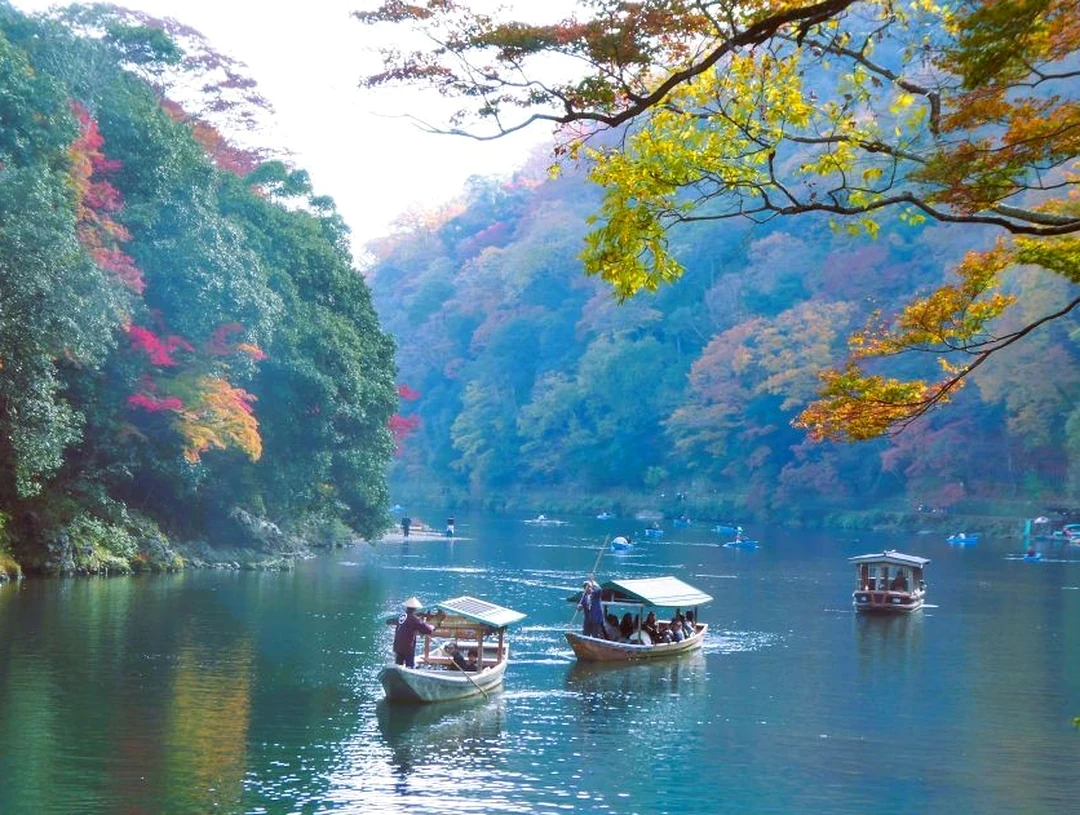
Entering the Muromachi period (1336–1573), Sagano underwent a profound transformation from an aristocratic pleasure retreat into a contemplative Zen Buddhist sanctuary under the powerful patronage of the Ashikaga Shogunate. This historical turning point followed the passing of Emperor Go-Daigo amid the fierce strife of the Northern and Southern Courts (Nanboku-chō). Seeking to pacify and pray for the spirit of the late sovereign—once a bitter adversary yet always a revered monarch—Shogun Ashikaga Takauji vowed to establish the grand temple of Tenryu-ji (“Temple of the Heavenly Dragon”) in 1339. Responsibility for designing and founding this supreme Zen head temple was entrusted to National Teacher Muso Soseki, a towering master of Japanese garden artistry. Guided by extraordinary spiritual insight, Muso Soseki boldly integrated Sagano’s natural bamboo forest directly into the Zen garden layout through the technique of shakkei (“borrowed scenery”). Towering bamboo stalks ceased to be mere wild mountain flora; instead, they became a living emerald screen—an invisible threshold separating the chaotic mundane world from the tranquil realm of Sogenchi Pond, eloquently expressing impermanence and absolute stillness at the heart of Zen philosophy.
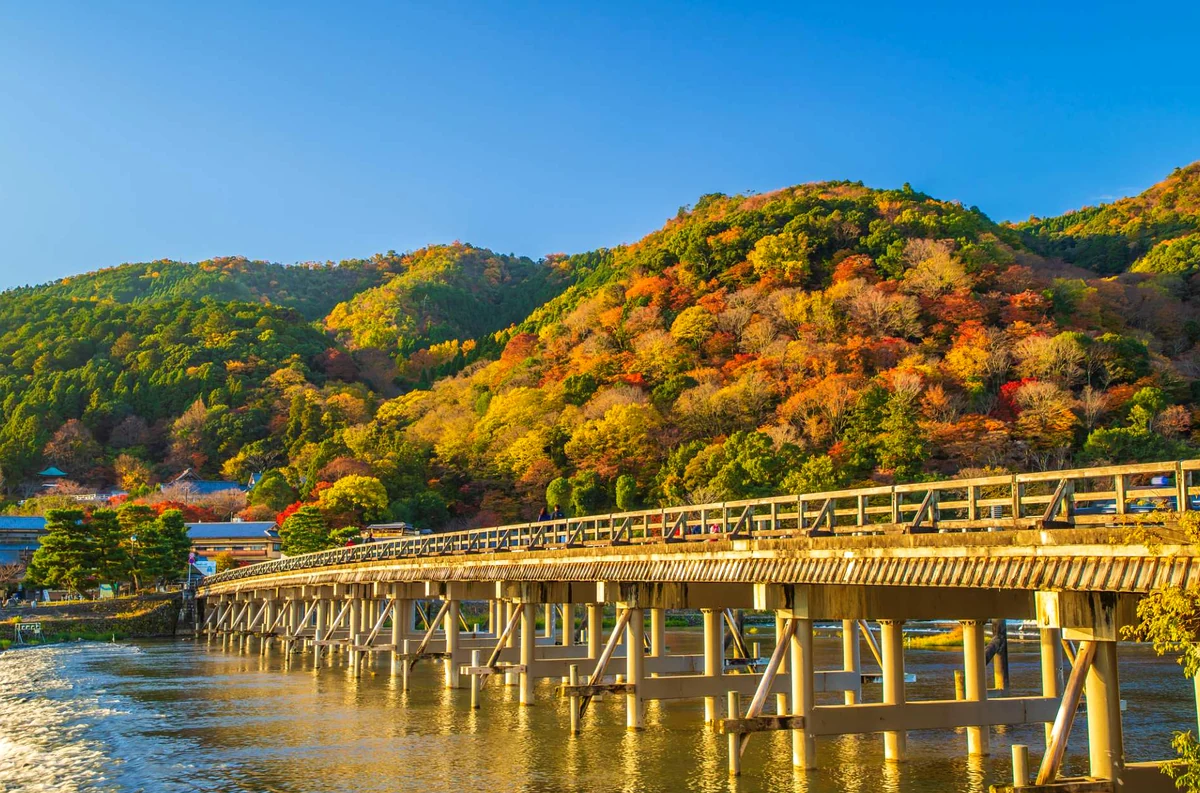
Having weathered the turbulent warfare of the Warring States period, Sagano and the entire Arashiyama landscape entered another golden era of cultural flourishing during the peaceful Edo period (1603–1867) under the Tokugawa Shogunate. Once a secluded monastic enclave, the area blossomed into one of Japan’s foremost scenic destinations, drawing poets, scholars, and travelers from every corner of the realm. The wooden Togetsukyo Bridge (“Moon Crossing Bridge”) spanning the Katsura River was sturdily restored, opening a vital thoroughfare leading aesthetes deep into the emerald sanctuary of Sagano. Its ethereal beauty became an endless wellspring of inspiration for celebrated ukiyo-e woodblock print masters such as Utagawa Hiroshige and Katsushika Hokusai. Rendered with delicate linework and expressive woodblock palettes, the Sagano Bamboo Forest—tens of thousands of ramrod-straight stalks soaring toward the blue sky, contrasting gracefully with the flowing sleeves of kimono-clad figures strolling across the bridge—was elevated into an eternal aesthetic icon of East Asian art.
From the refined footsteps of early Heian aristocrats and the monumental Zen vision of the Muromachi era—bound forever to Emperor Go-Daigo’s legacy and Muso Soseki’s wisdom—to the iconic ukiyo-e prints of the Edo period, every bamboo culm in Sagano carries centuries of layered history. Though the wheel of time has turned across epochs, the Sagano Bamboo Grove of Arashiyama still stands in quiet majesty as an immortal witness, continuing to play its resonant symphony between nature and the human spirit in the Land of the Rising Sun.
Positioned at the northwestern gateway of ancient Heian-kyo, Sagano nestles against the foothills of Mount Arashiyama in a location long revered as an auspicious feng shui focal point in classical Japanese capital planning. According to the Four Guardian Deities cosmology that governed Kyoto’s urban design from the 8th century onward, the West is the domain of the White Tiger, symbolizing tranquil strength, protection, and steadfast guidance. The topography of Arashiyama and Sagano fulfills every principle of this geomantic ideal: backed directly by the rugged Tamba mountain range, sloping gently into a sheltered basin, and embracing the millennial flow of the Hozugawa River—known poetically as the Oi River where it widens into the plain. This interplay between sheltering mountains and cool, clear waters creates a perpetually mild, humid microclimate where blue morning mist rises from the gorge at dawn, nurturing rich, loamy soil infused with mountain minerals.
This distinctive geological and hydrological synergy created the ideal cradle for Moso bamboo—scientifically known as Phyllostachys edulis—to thrive and define the landscape with extraordinary vitality. Introduced and cultivated over centuries, this giant timber bamboo reaches rare perfection in Sagano, averaging 15 to 20 meters in height with culm diameters of 10 to 15 centimeters. An intricate network of fibrous underground rhizomes anchors the ancient alluvial soil, forming a natural lattice that prevents erosion across the gentle hillside. Growing ramrod straight with evenly spaced nodes and branching only high overhead, thousands of culms interlace into a vast living canopy that filters harsh sunlight into dancing dapples of light and shadow on the forest floor—a poetic phenomenon the Japanese call komorebi.
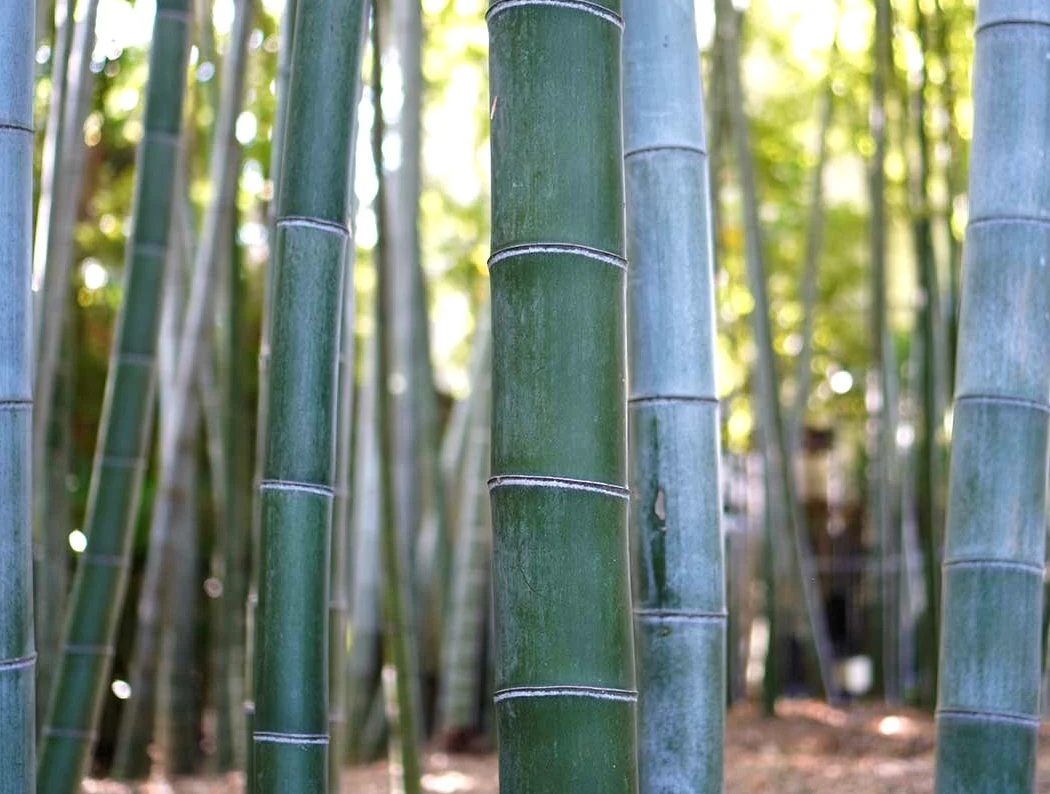
Behind this seemingly effortless, primeval beauty lies a meticulous tradition of silviculture and landscape stewardship practiced by Japanese artisans. To prevent overcrowding as vigorous new shoots emerge each spring, caretakers conduct scheduled selective thinning aligned with the growth cycles of mature culms. Spacing between groves is carefully calibrated to optimize photosynthesis and maintain smooth airflow sweeping in from the Hozugawa riverbank. Flanking the winding pathway through the heart of the grove, craftsmen weave traditional Arashiyama bamboo fences by hand—repurposing pruned slender branches into low borders that protect the delicate underground root system while guiding visitors gently along a contemplative spatial journey.
The remarkable terrain and hollow structure of Moso bamboo also turn the Sagano Bamboo Forest into a one-of-a-kind natural acoustic auditorium. When breezes sweep down from the Arashiyama hills through the valley, thousands of hollow stalks sway and brush against one another, producing a resonant chorus of low creaks and crisp rustling leaves like an endless woodland symphony. Far more than a physical phenomenon, this soundscape has been recognized as a cherished intangible cultural treasure: Japan’s Ministry of the Environment officially designated the rustling of the Sagano Bamboo Forest among the “100 Soundscapes of Japan” worthy of preservation. Wandering through this silvery-green sea of bamboo, travelers experience true shinrin-yoku (forest bathing), where the breath of nature awakens the quiet, refined aesthetic spirit of a thousand-year-old capital.
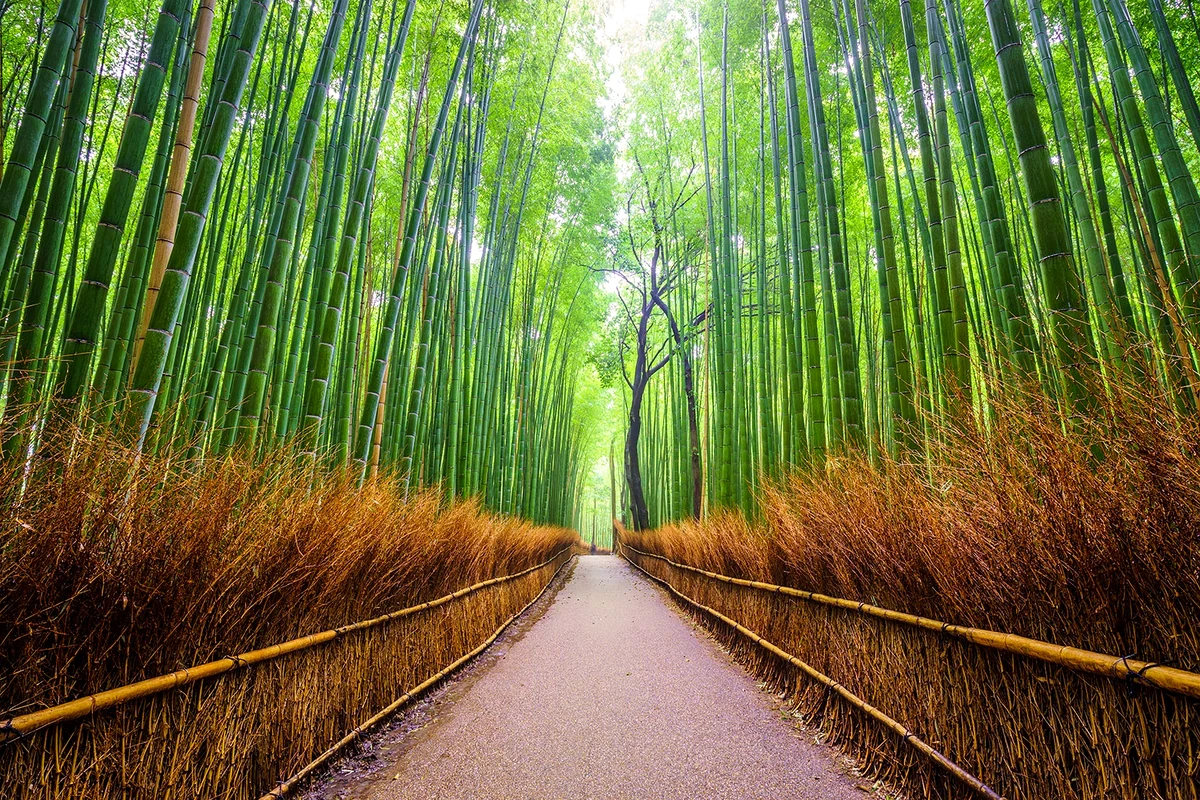
The ecological scale and spatial grandeur of the Sagano Bamboo Forest are shaped by Moso bamboo (Phyllostachys edulis), the largest and most majestic bamboo species in East Asia. Individual culms shoot straight toward the azure sky to impressive heights of 20 to 30 meters, with trunks measuring 10 to 20 centimeters across. The dense clustering of tens of thousands of stalks forms a soaring natural vault where direct sunlight never strikes abruptly; instead, rays filter softly through layered tiers of delicate leaves cascading from the upper canopy. This unique optical refraction produces an enchanting visual atmosphere known as “Green Light”—a soothing emerald glow that transforms the forest into an awe-inspiring natural cathedral while insulating visitors completely from the outside world.
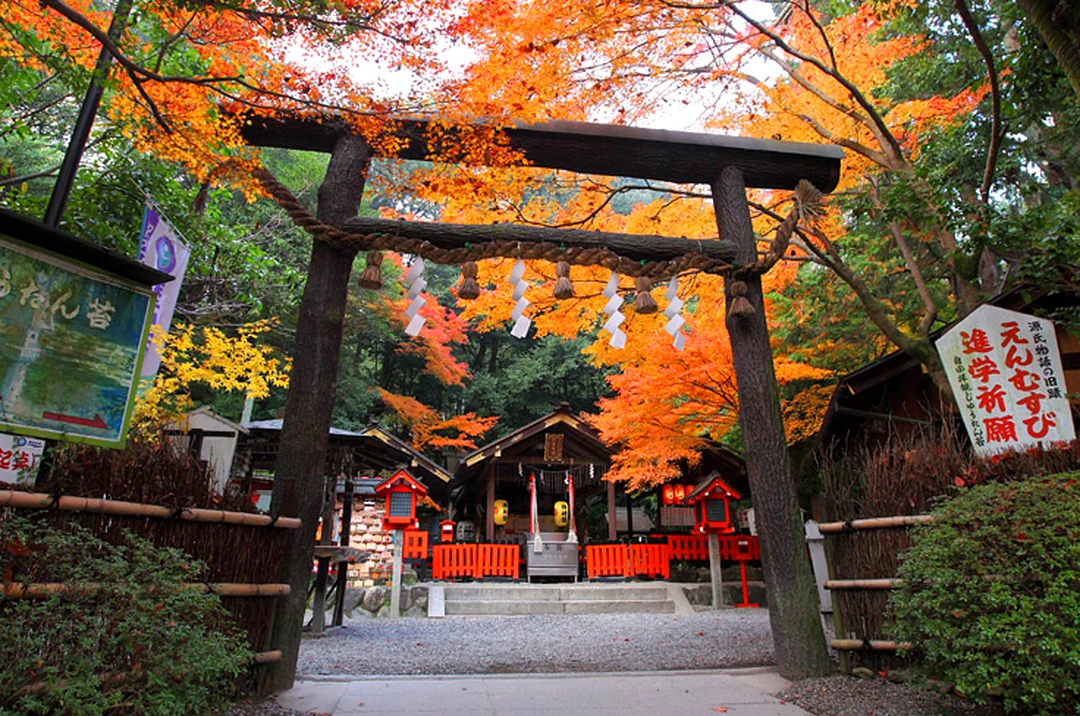
Tucked deep within this verdant botanical sanctuary stands Nonomiya Shrine, a sacred site steeped in the primal spiritual traditions of the Heian period. The shrine preserves one of the oldest surviving architectural relics of early Shinto craftsmanship: its iconic Kuroki Torii (“Black Wood Torii”), constructed from unpeeled oak logs with their natural bark intact. In stark contrast to the vermilion-lacquered torii gates commonly seen across urban shrines, Nonomiya’s Kuroki Torii retains its rugged, moss-kissed bark texture—standing as one of the rarest remaining examples of primordial Japanese shrine gate architecture. Historically, this serene precinct served as the purification sanctuary where unmarried imperial princesses chosen as Saiō underwent a strict year-long regimen of spiritual cleansing before journeying to represent the Imperial Household at Ise Grand Shrine.
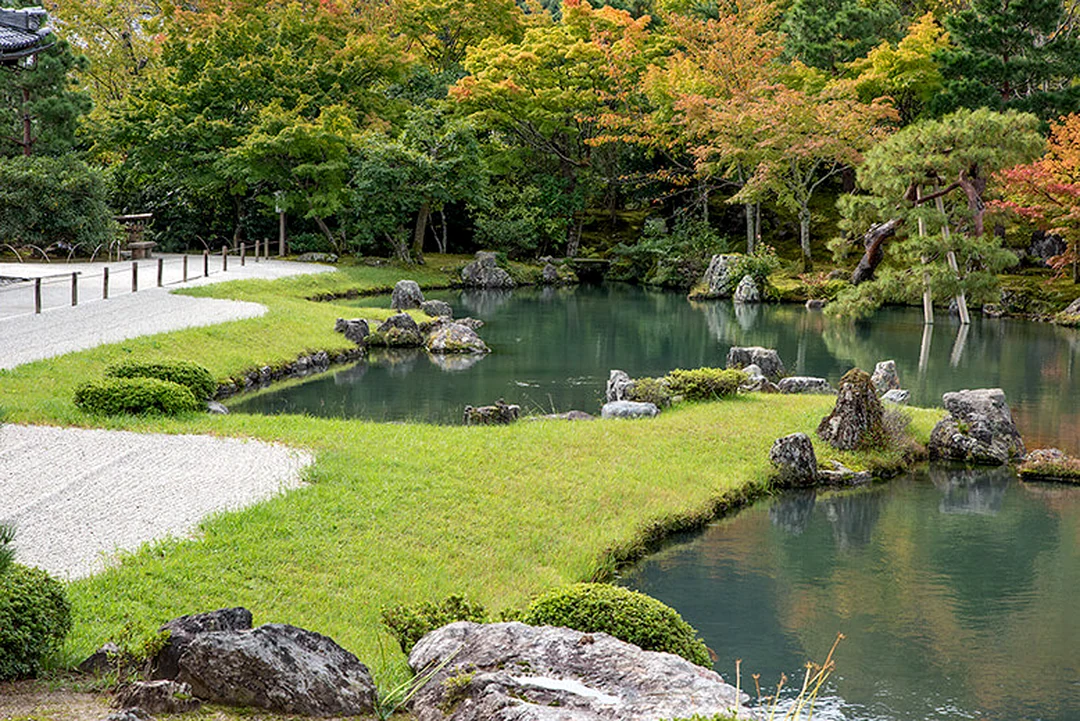
Sagano’s landscape artistry reaches supreme refinement where untamed nature meets the pinnacle of Zen garden philosophy at neighboring Tenryu-ji Temple. Designed by the renowned Zen master Muso Soseki in the 14th century, the temple grounds exemplify the chisen-kaiyūshiki (strolling pond garden) style, masterfully employing shakkei (“borrowed scenery”) to frame the towering bamboo groves and forested slopes of Arashiyama as a sweeping backdrop to tranquil Sogenchi Pond. Along the meandering stone paths, traditional artisanal craftsmanship shines through in classic Sagano-gaki and Komatsuji-gaki bamboo fences. Meticulously woven from dried bamboo twigs by local craftsmen, these low fences both delineate sacred boundaries and celebrate the understated elegance of wabi-sabi, elevating the quiet, transcendent beauty of a millennium-old heritage site.
As the sun dips behind Kyoto’s western hills, the Sagano Bamboo Forest sheds its daytime bustle and transforms into an ethereal stage of shadow and light. Unlike modern metropolises that measure nightlife in dazzling neon, Arashiyama preserves a refined nocturnal aesthetic rooted deeply in the medieval Japanese concept of yūgen—profound, mysterious grace. By day, komorebi sunlight filtering through interlocking bamboo canopies 10 to 20 meters overhead paints a shifting canvas of light and shadow reminiscent of ink-wash brushwork. Yet it is during the quiet threshold of dawn before 7:00 AM, and just after twilight settles behind Mount Ogura, that Sagano reveals the purest stillness in Japan.
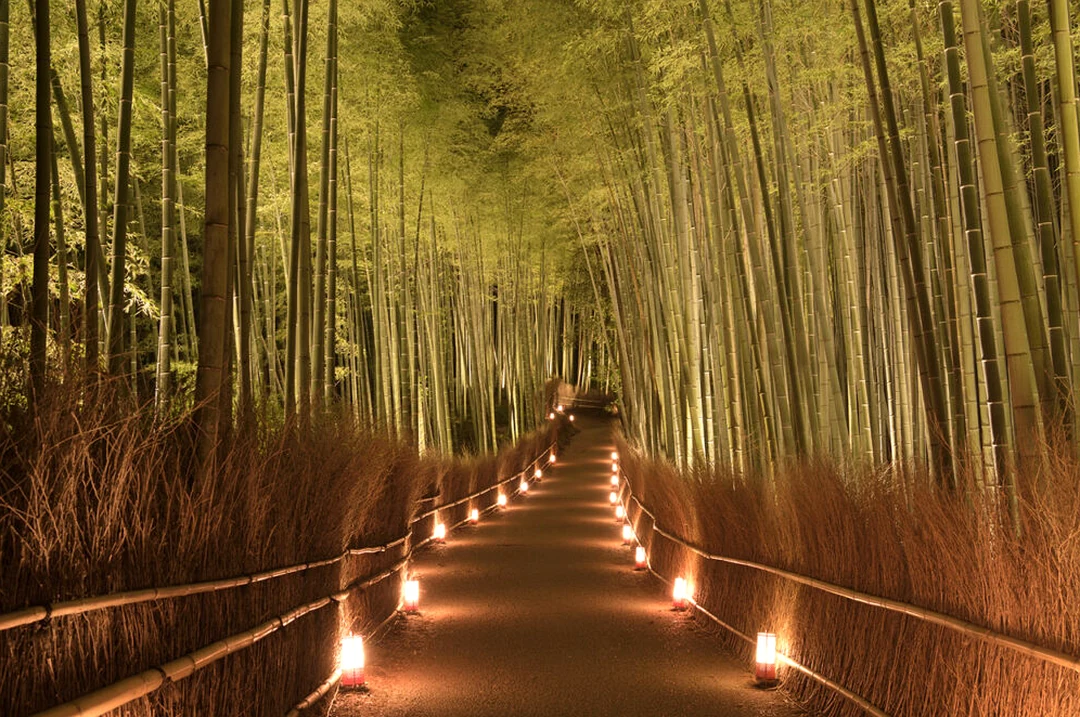
The most celebrated cultural expression of nocturnal illumination here is the iconic Arashiyama Hanatouro (“Flower and Light Path”), an enchanting evening lighting event that has captivated visitors for years. After dusk, more than two thousand handcrafted lanterns fashioned from woven Saga bamboo and traditional Kiyomizu-yaki pottery illuminate a winding five-kilometer route. The pathway through the emerald grove becomes a luminous sanctuary as concealed uplights nestled among bamboo roots cast a gentle glow upward along thousands of soaring stalks, turning the high canopy into a shimmering jade vault beneath the night sky.
This symphony of light extends beyond the bamboo grove across the banks of the Oi River, bathing the wooden Togetsukyo Bridge—an architectural landmark recalling the Kamakura-era Emperor Kameyama, who marveled at a cloudless full moon appearing to drift slowly across its span. At night, the glassy surface of the Katsura River mirrors the soft glow radiating from the Arashiyama hillsides, creating a majestic natural backdrop no artificial stagecraft could ever rival. Strolling through the quiet evening air, visitors hear every whisper of wind through high bamboo leaves mingling with water rippling over river stones, experiencing a profound communion between humanity and the spirit of the ancient capital.
Evenings in Sagano are brought to perfection by intimate culinary and tea traditions tucked behind weathered oak gates. Far removed from the lively bustle of Gion’s dining alleys, Arashiyama after dark invites guests into incense-scented tatami rooms to savor heirloom yudofu—delicate tofu simmered gently in a subtly sweet kombu kelp dashi brewed with Saga’s famed pure groundwater. Steaming earthenware pots of snow-white tofu set beside glowing charcoal braziers, accompanied by a warm porcelain flask of local sake, offer a deeply meditative sensory pleasure. Soft amber light from washi paper lanterns on the veranda casts swaying shadows of maple branches and bamboo stalks across shoji screens, turning dinner into a quiet communion with nature to close a memorable day in this timeless heritage realm.
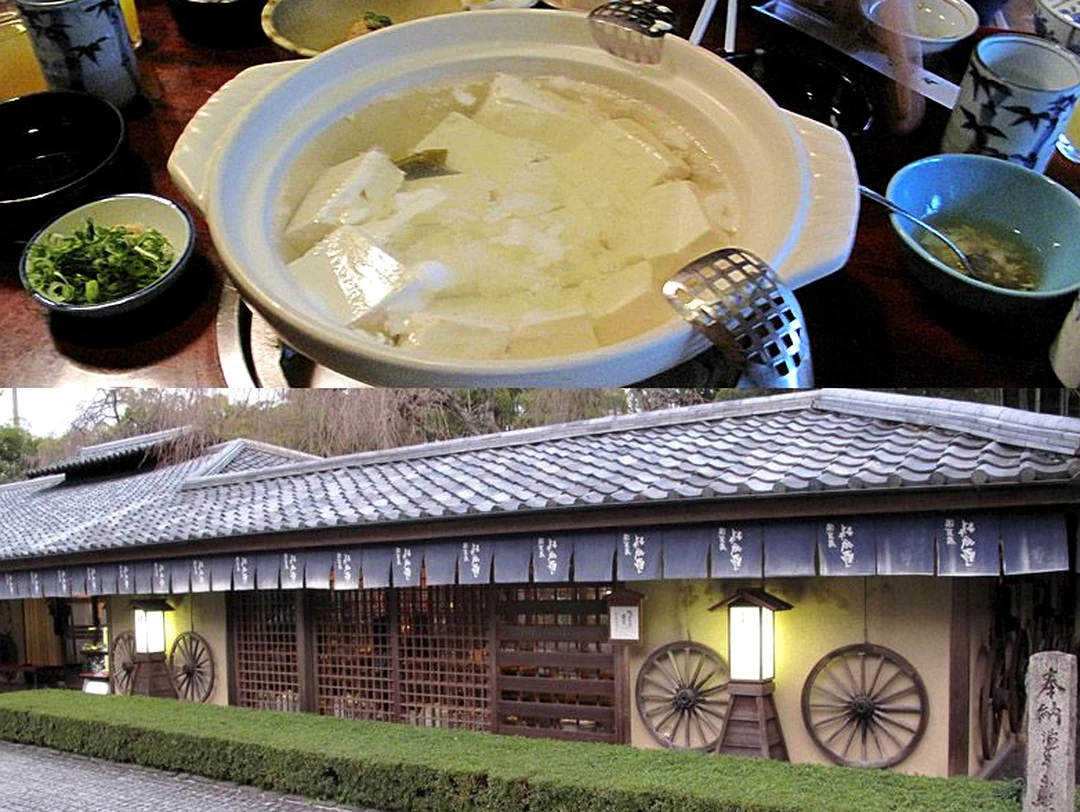
Any exploration of Sagano Arashiyama would be incomplete without discovering its local culinary heritage, where Zen philosophy and seasonal rhythms unite upon finely lacquered trays. The spiritual cornerstone of Kyoto gastronomy is shojin ryori—traditional Buddhist vegetarian cuisine preserved across centuries at Shigetsu, nestled peacefully within the UNESCO World Heritage grounds of Tenryu-ji Temple. The pinnacle of this meditative culinary art is epitomized in its celebrated yudofu (simmered tofu). Far removed from ornate metropolitan banquet fare, Shigetsu’s yudofu is a hymn to absolute simplicity: silky, snow-white blocks of tofu handcrafted with pristine Kyoto groundwater are simmered gently in a crystal-clear broth infused with premium kombu kelp until barely trembling. Once warmed through, each piece is lifted delicately and dipped into traditionally brewed soy sauce accented with freshly grated ginger and finely sliced scallions. Its pure, velvety richness melts effortlessly on the palate overlooking the expansive Sogenchi Zen Garden, elevating a simple meal into a ritual of physical and spiritual renewal.
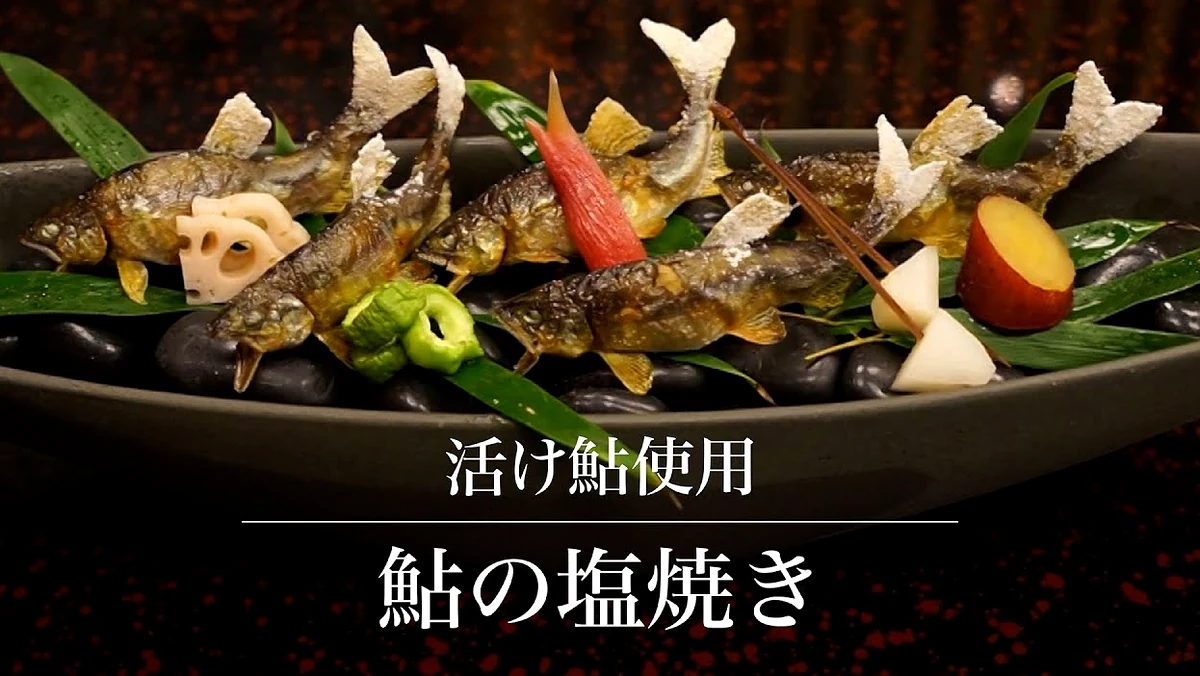
Stepping out from the quiet monastic sanctuary toward the banks of the lower Hozu River brings travelers face-to-face with another prized gift of the valley: salt-grilled sweetfish, or ayu no shioyaki. These slender freshwater fish thrive in the rushing mountain currents coursing down the gorges from Kameoka to Arashiyama, grazing on pristine river moss that imparts a delicate, unmistakable aroma reminiscent of fresh watermelon or young melon. Following local culinary tradition, freshly caught seasonal ayu are skewered lengthwise on sharpened bamboo sticks in a graceful S-curve that mimics a fish swimming upstream. Chefs apply a generous crust of coarse sea salt exclusively to the fins and tail to prevent charring, then stand the skewers upright around glowing binchotan white charcoal embers. Radiant heat crisps the shimmering silver skin while keeping the flesh moist, sweet, and richly flavorful, balanced by the sophisticated, pleasant bitterness of the innards—a delicacy prized by Heian-era aristocrats during summer river festivities.
Completing Arashiyama’s culinary portrait is a sublime marriage between Uji’s thousand-year-old tea heritage and contemporary dessert artistry, showcased in its celebrated Matcha Gelato and Parfaits. Crafted from shade-grown tencha tea leaves harvested in the rolling hills of Uji just south of Kyoto—and stone-ground slowly on granite mills to preserve vibrant chlorophyll and natural fragrance—this ceremonial-grade matcha boasts a deep emerald hue and velvety astringency with a lingering sweet finish. Graded matcha gelatos invite visitors to sample intensity levels ranging from light and floral to intensely rich and earthy. Meanwhile, a traditional matcha parfait orchestrates a symphony of textures and layers: chewy matcha kanten jelly cubes, sweet slow-simmered Tamba azuki red beans, pillowy white shiratama dango rice dumplings, whipped cream, and velvety matcha sauce. The noble bitterness of ceremonial green tea harmonizes seamlessly with the delicate sweetness of traditional wasanbon sugar, leaving an unforgettable finish that echoes the eternal whisper of Sagano’s bamboo groves.
The Sagano Bamboo Forest is unbounded by ticket booths or closing gates; belonging wholly to nature, its pathways remain open to visitors 24 hours a day. Even so, to experience the magic of tens of thousands of slender stalks interlacing in quiet harmony, the finest hour to visit is unquestionably at dawn before 7:00 AM. As the first golden rays of morning light crest the Arashiyama ridges, early dew still clings to emerald bamboo nodes and the whisper of wind through the grove remains undisturbed by footsteps—revealing Sagano at its purest, most otherworldly splendor. Arriving early not only rewards you with warm slanted sunlight pouring through the high canopy, but also offers rare tranquility for capturing unobstructed photographs.
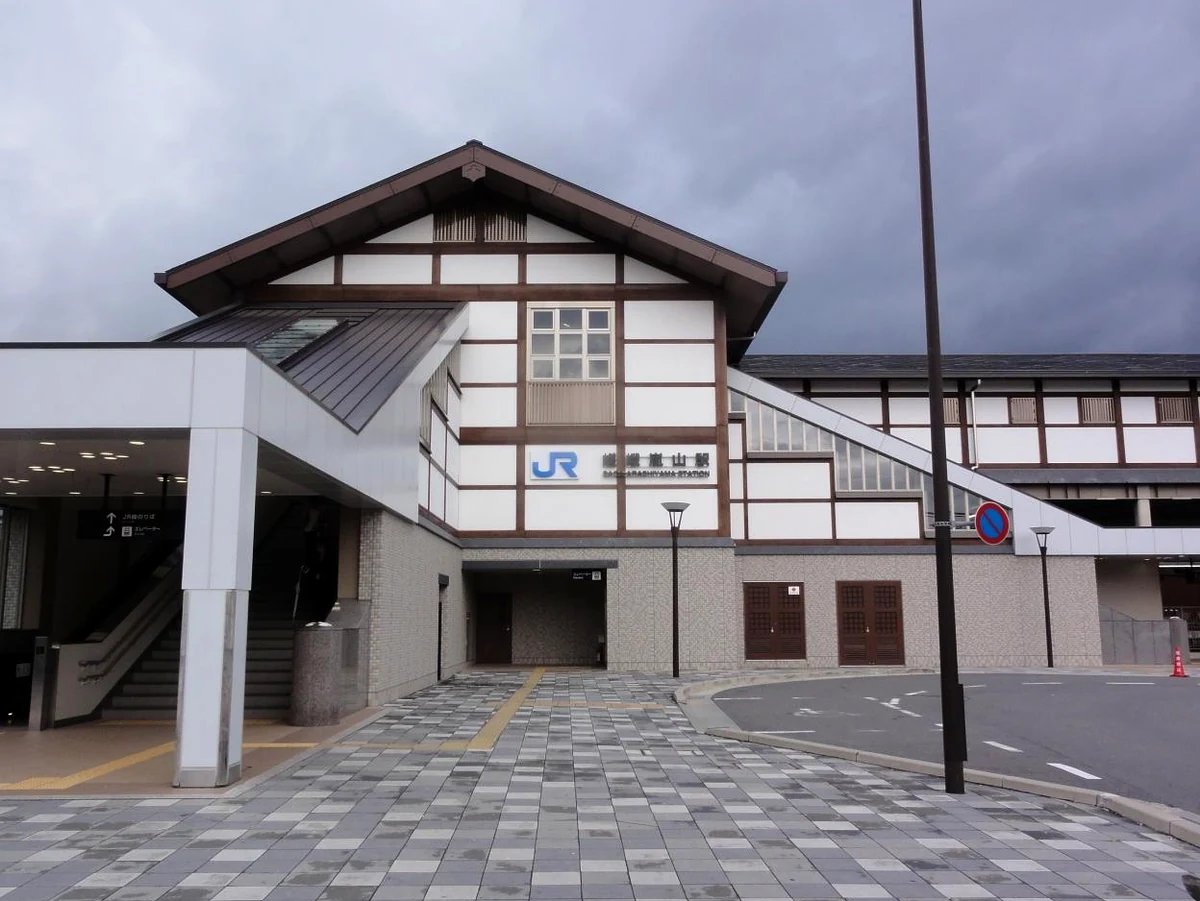
Reaching this serene sanctuary is remarkably effortless thanks to the Kansai region’s world-class public transit network. From central Kyoto Station, the fastest and most convenient option is the JR Sagano Line, which reaches Saga-Arashiyama Station in just 11 to 13 minutes, followed by a pleasant 10-minute stroll through quiet stone-paved lanes into the bamboo grove. Travelers departing from southern Kyoto or the Kawaramachi district can ride the nostalgic Keifuku Electric Railroad—affectionately known to locals as the Randen—whose charming purple trams pull right into Arashiyama Station steps from the entrance to Nonomiya Shrine. Meanwhile, visitors arriving from Osaka can take the Hankyu Line to Hankyu Arashiyama Station and enjoy a scenic walk across the historic wooden Togetsukyo Bridge spanning the Oi River.
To immerse yourself fully in the refined elegance of Heian-era culture, renting a handcrafted Kimono or Yukata dyed in the traditional Kyo-yuzen style is a wonderfully poetic touch. Alongside appreciation, however, comes a strict commitment to respecting both heritage and nature. The Japanese revere the Sagano Bamboo Forest as a living sacred space imbued with Shinto animist spirit; consequently, snapping young shoots or carving graffiti into Moso bamboo bark is strictly prohibited and carries stiff penalties from local authorities. Likewise, to preserve the meditative silence of neighboring historic temples such as Tenryu-ji and ensure public safety, operating aerial drones without special authorization from Japan’s aviation authorities is strictly forbidden.
While strolling along the main bamboo forest path is completely free of charge, setting aside a modest discretionary budget will enrich your visit considerably. Typical expenses include admission to National Teacher Muso Soseki’s celebrated Zen garden at Tenryu-ji Temple, traditional kimono rental, or indulging in iconic local specialties such as delicate yudofu in a canal-side teahouse or rich Uji matcha soft-serve ice cream. Travelers should also stay alert against suspiciously cheap, cut-rate tour packages that rush guests through the bamboo grove during peak midday crowds only to herd them into compulsory shopping stops, eroding the authentic cultural spirit of the journey.
Experiencing the full beauty of Arashiyama calls for thoughtful timing and sensitivity to the living history of Japan’s ancient capital. For travelers eager to savor every facet of Sagano without worrying about language barriers or complex transit connections, joining a carefully curated all-inclusive Japan tour package designed to honor authentic local experiences unlocks the gateway to timeless memories across the Land of the Rising Sun.