Victoria Peak—known in Chinese as Tai Ping Shan Ding (太平山頂) and recorded in early Western maritime charts as Austin Mount or Mount Gough—was once an untamed realm veiled in dense mist and lush subtropical forests during the Qing Dynasty long before becoming a proud emblem of Hong Kong’s prosperity. Throughout the Jiaqing and Daoguang reigns, its rugged topography and commanding views over the entire Pearl River estuary turned the summit into a strategic hideout for notorious maritime pirate fleets of Liangguang. Among them, legends of Ching Shih (Zheng Yi Sao)—the formidable pirate queen who commanded the Red Flag Fleet of hundreds of war junks that struck fear into both imperial Qing forces and Western merchantmen—still echo in local folklore telling of hidden treasures and secret lookouts tucked among precipitous cliffs.
The wheel of history turned violently in the early 1840s when the flames of the Opium Wars shook the traditional East Asian order. After British forces landed on the island in 1841 and formally established sovereignty under the Treaty of Nanking in 1842, the mountain’s destiny entered an entirely new chapter. During arduous topographical surveys, the colony’s first Governor, Sir Henry Pottinger, discovered an invaluable climatic advantage: temperatures atop the high rocky slopes of Victoria Peak remained consistently 4 to 5 degrees Celsius cooler than the stifling, humid coastal lowlands below. This pivotal discovery sparked an exodus of the colonial ruling class to higher altitudes to escape tropical epidemics raging at sea level.
Between the 1860s and 1880s, Victoria Peak rapidly transformed into an exclusive luxury residential enclave reserved for the British elite, banking magnates, and colonial aristocracy. To preserve a secluded Western enclave high above Asia, colonial authorities even enacted strict Peak Reservation ordinances barring local Chinese residents from settling on the mountain without special gubernatorial exemption. Grand mansions built in stately Victorian and Edwardian architectural styles rose one after another along the mountainside, completely insulated from the bustling working-class life below and forming an upper-crust world suspended in the clouds for decades.
At that time, transport between the central commercial district and the steep summit relied entirely on arduous human-borne sedan chairs. Recognizing the impracticality of such transport, Governor Sir George Bowen approved a groundbreaking infrastructure project for East Asia: the Peak Tram funicular railway. On May 30, 1888, Asia’s first steam-powered cable funicular officially commenced operations to widespread public astonishment. The railway not only conquered steep geography, but permanently reshaped Hong Kong’s urban fabric, turning a sheer vertical climb into a celebrated engineering triumph of the industrial age.
History left deeper scars across the mountain during World War II, from 1941 to 1945. When Hong Kong fell under Imperial Japanese occupation, Victoria Peak—with its commanding strategic sightlines over the entire harbor and neighboring straits—was commandeered and converted into a vital military communications post and artillery observation station. Concrete bunkers, command tunnels, and field radar installations sprouted amid the forest canopy, transforming a serene mountain retreat into a tense steel fortress until Allied forces liberated the territory.
Following decades of social evolution and particularly the historic 1997 handover of sovereignty, Victoria Peak shed every remnant of colonial exclusivity to emerge as a world-class public cultural and tourist landmark. Its contemporary silhouette was solidified when the architectural complex of The Peak Tower opened to visitors in 1993. Resembling a colossal vessel suspended effortlessly against the sky, the structure became a seamless bridge linking over a century of layered history with the vibrant commercial energy of a leading global metropolis.
In East Asian geomantic philosophy, Victoria Peak—standing sentinel over the southwestern portion of Hong Kong Island—is far more than a natural volcanic massif; it is regarded as the culmination of an auspicious dragon vein extending into the South China Sea. According to classical Lingnan feng shui tradition, undulating mountain ranges wind southward from the mainland through Kowloon, plunge beneath the harbor waters, and rise majestically here in a rare “returning dragon gazing back at its ancestor” formation. Gazing from the breezy summit across Victoria Harbour, generations of geomancers have revered this curved, wind-sheltered bay as an ideal “treasure-gathering basin,” where water—symbolizing wealth—flows gently, concentrating auspicious energy without dispersing it. Backed by the open ocean and facing the prosperous peninsula, Victoria Peak commands a regal vantage overlooking every transformation of East Asia’s wealthiest harbor.
The mountain’s spatial dominance is underscored by its dramatic elevation above the fast-paced streets at sea level. Rising roughly 400 to 428 meters above the administrative and financial hub of Central, the peak establishes a distinct microclimatic boundary separate from the coastal lowlands. While the dense concrete and steel canyons below experience intense urban heat island effects, Victoria Peak enjoys cool, refreshing air year-round. Moisture-laden sea breezes sweeping off the South China Sea condense along upper slopes into drifting veils of mist, transforming the summit into a lush ecological sanctuary where dense subtropical flora blankets ancient volcanic rock.
Harmonizing with this dramatic terrain is a thoughtfully engineered network of scenic trails hugging natural contours. Foremost among them is the 3.5-kilometer Peak Circle Walk, looping effortlessly around the upper ridge at an elevation of 400 meters to create one of Asia’s premier panoramic promenades. The loop seamlessly joins Lugard Road and Harlech Road. Lugard Road in particular stands as an engineering marvel carved directly into sheer cliff faces, featuring cantilevered walkways suspended in midair beneath sprawling banyan trees draped with aerial roots, giant ferns, and tropical vines. Every bend along this 3.5-kilometer loop unveils shifting visual perspectives—alternating between dense forests of glittering skyscrapers mirrored in Victoria Harbour and tranquil ocean horizons dotted with outlying islands.
Complementing the summit loop is steep, 1.8-kilometer Old Peak Road, serving as the historic artery ascending from Mid-Levels straight toward the sky. Shaded beneath a thick canopy of secondary rainforest, this inclined path once served as the sole thoroughfare for sedan-chair bearers before motorized transport existed. The transition from elegant Mid-Levels hillside neighborhoods up steep gradients into the expansive open air of the summit reflects urban planning deeply respectful of natural contours. Together, auspicious geomancy, a refreshing highland microclimate, and winding scenic paths craft a Victoria Peak that feels both serenely immersed in nature and proudly crowned atop urban prosperity.
Positioned at the prime convergence point of Hong Kong’s geomantic energy, the architectural ensemble atop Victoria Peak unites cutting-edge Western structural engineering with profound Eastern symbolism. The undisputed centerpiece capturing every visitor’s gaze is The Peak Tower, a bold masterpiece designed by acclaimed British architect Terry Farrell. Anchored by daringly cantilevered structural steel trusses, the building’s distinctive crescent-bowl silhouette evokes multi-layered interpretations. To international admirers, it resembles a wind-filled sail or the prow of a ship gliding proudly through a sea of clouds; to local Cantonese residents, its sweeping upward curve recalls a traditional wok or an abundant dim sum basket. In traditional feng shui symbolism, this upturned vessel represents a colossal treasure basin designed to catch good fortune, gather vital energy, and safeguard prosperity across the harbor below.
Inside the multi-level interior of The Peak Tower, planners layered retail, entertainment, and dining experiences vertically to guide visitors straight upward to the open-air observation deck, Sky Terrace 428. Standing at precisely 428 meters above sea level, it is the highest 360-degree outdoor viewing platform in Hong Kong, offering an unobstructed panoramic vista. Standing upon this breezy sky deck, boundaries between land and water, history and modernity seem to vanish. The entire sweep of legendary Victoria Harbour, the tightly packed skyscrapers of Central, and distant emerald islands scattered across the South China Sea unfold before your eyes in a breathtaking visual tapestry.
Equally remarkable as the summit pavilion is the heritage engineering marvel carrying travelers up the steep mountainside. Following a comprehensive HK$799 million modernization program, the sixth-generation Peak Tram debuted to set a new benchmark in scenic transit. Clad in classic Peak Tram Green—paying nostalgic tribute to historic tramcars of the past century—the upgraded carriages feature lightweight aluminum bodies and expansive wraparound glass roofs maximizing upward views throughout climbs angled between 4 and 25.7 degrees. Each tram now carries up to 210 passengers per trip—an increase of nearly seventy percent in capacity—boosting daily throughput to 12,000 riders while ensuring absolute mechanical safety via heavy-duty dual haul cables and automated Swiss traction control systems.
The seamless synergy between iconic The Peak Tower, expansive Sky Terrace 428, and the modernized Peak Tram forms a textbook example of integrated spatial planning. Crisp postmodern metallic geometry blends effortlessly with the emerald subtropical rainforest blanketing surrounding slopes, demonstrating how environmental stewardship can thrive alongside extraordinary urban dynamism. Far more than a mere scenic lookout, this summit complex stands as a living monument to technological ingenuity, strategic vision, and the cultural depth of one of the world’s foremost financial capitals.
As the clock approaches 4:30 PM, Victoria Peak enters its most glorious hour through nature’s daily twilight transition. Rising to 552 meters above sea level at its highest natural point, Tai Ping Shan once served as a maritime lookout guarding approaches to the Pearl River Delta. Bathing in golden-hour light from 4:30 PM to 5:00 PM, the shimmering waters of Victoria Harbour shift gradually from turquoise to warm amber and glowing vermilion. From the mountain’s upper slopes, visitors witness a dramatic contrast between lush primeval forest cloaking the northern ridges and towering steel-and-glass skyscrapers soaring skyward below. Late afternoon sunlight sweeps across tinted glass facades across Central, casting prismatic reflections that appear to gild every corner of East Asia’s busiest financial hub.
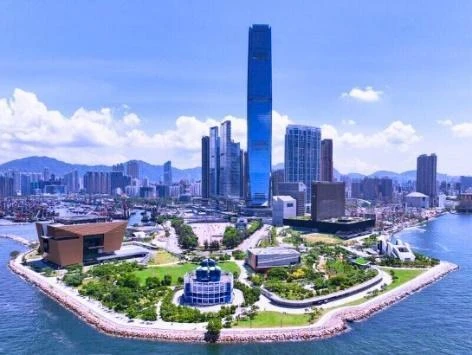
At precisely 6:00 PM, as the final glow of sunset dips behind distant Lantau Island peaks, a dazzling visual choreography begins—transforming quiet dusk into a panorama famously hailed as “a million stars on Earth.” Hundreds of skyscrapers stretching from Hong Kong Island across to the Kowloon Peninsula ignite high-powered architectural LED displays in unison. Architect I. M. Pei’s Bank of China Tower—composed of sharp triangular prisms—illuminates like growing bamboo shoots against the night sky, conversing visually with the 412-meter Two International Finance Centre (IFC) standing sentinel along the waterfront. Across the harbor, the 484-meter International Commerce Centre (ICC) in West Kowloon transforms into a colossal vertical light canvas. Victoria Harbour acts as a vast liquid-mercury mirror, reflecting millions of multicolored beams into a man-made Milky Way rivaled by few skylines on Earth.
At exactly 8:00 PM, the nocturnal spectacle reaches its crescendo as the multimedia light-and-sound show A Symphony of Lights commences. From Sky Terrace 428 crowning The Peak Tower at 428 meters above sea level, visitors command an unbroken 360-degree sweep of the illuminated metropolis. High-intensity laser beams and rooftop searchlights from more than forty landmark towers sweep rhythmically across low clouds in synchronization with an orchestral soundtrack. Travelers seeking quieter contemplation stroll along historic Lugard Road—opened in the early twentieth century under Governor Sir Frederick Lugard—where cliff-hugging stone paths offer barrier-free vistas accompanied by cool harbor breezes rustling through ancient maples and the deep horns of Star Ferry vessels echoing off the water below, evoking Hong Kong’s extraordinary transformation from quiet fishing village to glittering global metropolis.
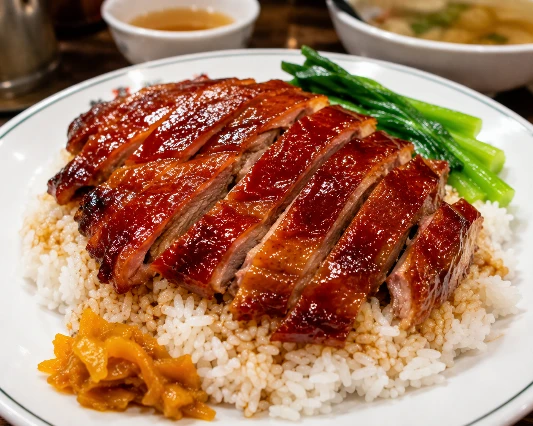
Late evening atop Victoria Peak also marks the hour when refined Cantonese dining reaches exquisite sophistication. Elegant dining rooms nestled against granite slopes serve time-honored culinary delicacies: fragrant steam rises from bamboo baskets holding translucent shrimp har gow dusted with edible gold leaf, paired with renowned roasted Sha Tin squab prized for lacquer-crisp mahogany skin infused with star anise and cassia bark. Sipping aged Pu-erh tea brewed with pure mountain spring water while gazing through floor-to-ceiling windows at tiny streams of headlights moving along distant avenues below reveals why this peak is cherished as the emerald crown of Hong Kong—guarding the magnificent soul of a city that never sleeps.
A journey to Victoria Peak remains incomplete without indulging in its elevated culinary scene, where leisurely Western aristocratic traditions meet centuries-old Cantonese gastronomic mastery. On a breezy ridge overlooking Kowloon and Victoria Harbour, the summit’s dining landscape mirrors Hong Kong’s own history—blending colonial nostalgia with vibrant contemporary city life.
Commanding a breezy bend along Peak Road, The Peak Lookout stands as a living testament to nineteenth- and early-twentieth-century architectural and culinary heritage. Housed inside a charming stone cottage built around 1901—originally constructed as a rest stop and shelter for Peak Tram engineers and sedan-chair bearers serving wealthy hillside families—the building is today a Grade II historic landmark. Stepping through its heavy wooden doors feels like entering an English countryside manor complete with classic fireplaces, rough-hewn stone walls, and glass doors opening onto a lush tropical garden facing the island’s southern coast. Renowned for refined East-meets-West cuisine, the restaurant pairs imported fresh oysters, traditional roasts, and aromatic Indian curries with proper English afternoon tea—where warm scones layered with clotted cream and strawberry jam on the breezy terrace recall leisurely Victorian afternoons.
Balancing Western heritage is the deep lineage of traditional Chinese gastronomy perfected at the Peak Galleria branch of Mak’s Noodle. A direct descendant of the legendary wonton noodle house founded in 1920s Guangzhou by culinary master Mak Woon-chi—famous for serving leading statesmen of his era—this family institution preserves strict traditional techniques in Hong Kong. Though served in modest bowls, every element reflects painstaking craft: duck-egg wheat noodles are kneaded and pressed repeatedly using traditional bamboo poles (Jook-sing noodles) to achieve an unmistakable snappy bite free of alkaline aftertaste. Gossamer-thin wonton wrappers encase plump, sweet deep-sea shrimp with zero pork filler to preserve pure natural crunch, floating in a crystal-clear amber broth simmered for hours from pork bones, dried flounder, dried shrimp, and coriander seeds.
Summit dining extends naturally into modern everyday flavors at familiar stops like Burger King and Starbucks inside Peak Galleria. Amid airy glass-walled modernity, travelers can enjoy international favorites or order a cup of authentic Hong Kong-style Yuenyeung—a bold fusion of strong local black tea, silky evaporated milk, and aromatic espresso that captures East-West cultural harmony in a single bittersweet sip before concluding their exploration high above the harbor.
Visiting Victoria Peak smoothly requires thoughtful preparation regarding entry formalities and mountain transit. For travelers holding Vietnamese passports, obtaining an electronic visa (e-Visa) via the Hong Kong Immigration Department’s online portal is an essential first step. Applications should be submitted carefully two to four weeks prior to departure, with the printed approval notification ready for presentation at Hong Kong International Airport. Handling immigration formalities smoothly ahead of time ensures peace of mind before ascending to the breezy heights of Hong Kong Island.
Multiple transit routes connect downtown to the summit, with the historic Peak Tram—operating daily from 7:30 AM to 11:00 PM—remaining the most nostalgic and dramatic option. Departing from the Garden Road Lower Terminus nestled amid Central’s skyscrapers, the deep-green tram climbs steep gradients reaching up to 25.7 degrees. During peak sunset hours, standby lines can stretch for over an hour; a smart insider tip is booking e-tickets in advance through authorized partners to access priority boarding lanes, saving 45 to 90 minutes of waiting in crowded queues.
To experience the steep hillside topography from a different angle, board double-decker Bus 15 from Central Pier 5, winding along Stubbs Road past secluded luxury hillside estates. Alternatively, green Minibus Route 1 from Hong Kong MTR Station offers a brisk, thrilling ride around tight mountain switchbacks, while iconic red urban taxis from Admiralty or Central provide private door-to-door comfort in roughly twenty-five scenic minutes.
To savor the magical transition from golden sunset to millions of glittering lights illuminating Victoria Harbour, allocate at least four unhurried hours atop the summit. This allows ample time to stroll shaded Lugard Road, enjoy creamy Hong Kong milk tea with warm, golden pineapple buns at traditional cafes, and take in crisp Pacific breezes sweeping through Lei Yue Mun Strait. Most importantly, preserve the integrity of your trip by avoiding cut-rate itineraries loaded with mandatory shopping stops that drain precious sightseeing hours.
Mastering local transit rhythms alongside thoughtful planning transforms a summit visit into an unforgettable highlight. For travelers seeking a seamless, stress-free journey from border formalities to unhurried sightseeing without logistical worries, booking a professionally curated all-inclusive tour package opens the door to experiencing the rich cultural and historical soul of the Pearl of the Orient.