Straddling a jagged stone spine across the majestic Yanshan Mountains, the Simatai Great Wall (司马台长城) rises like a dramatic epic carved straight into windswept mountain clouds. The origins of this celebrated military fortification trace back to the mid-6th century during the Northern Qi Dynasty (550–577 CE). To halt fierce raids by nomadic Turkic and Khitan tribes sweeping down from the northern steppes onto the Central Plains, the Northern Qi court mobilized hundreds of thousands of laborers and soldiers to erect frontier ramparts. Simatai’s earliest foundations consisted of rough rammed-earth embankments reinforced with unhewn fieldstones gathered from deep mountain ravines. Though rudimentary in technique, this initial defensive line hugged the razor-sharp limestone ridges with remarkable ingenuity, establishing a strategic stronghold vital to border security for centuries to come.
After weathering centuries of snow, wind, and neglect, the Northern Qi fortifications fell gradually into ruin until the Ming Dynasty launched a sweeping reconstruction of its northern defenses to hold back remnants of the Northern Yuan. The decisive turning point arrived in the 21st year of the Hongwu reign (1388), when Grand General He Ze personally surveyed the terrain and initiated the rebuilding of fortified passes. Recognizing the strategic value of heights capable of commanding entire mountain valleys, this pioneering commander transformed rugged mountain trails into formidable walls of fired brick and dressed stone, laying the groundwork for trade checkpoints and military garrisons along the ridge.
The breathtaking, singular grandeur of Simatai admired by travelers today reached its zenith during the Longqing and Wanli reigns (1567–1620). Behind this ancient military engineering triumph stood the masterly planning of celebrated general Qi Jiguang (戚继光)—Commander-in-Chief of the Jizhou Garrison—working closely with Supreme Commander Xiao Daheng (肖大亨). Guided by brilliant tactical insight, Qi Jiguang overhauled existing wall sections and introduced innovative “hollow watchtowers” (kongxin dilou)—multi-story fired-brick bastions serving simultaneously as self-contained fortresses storing grain, fresh water, and weapons, and as long-range observation posts. Monolithic bluestone blocks weighing hundreds of kilograms alongside dated kiln-fired bricks were hauled by hand up cliff faces inclined up to 70 degrees, turning this five-kilometer stretch into an impregnable defensive masterpiece.
On the geopolitical chessboard of imperial China, Simatai served as a vital throat guarding the capital of Beijing from the northeast, controlling the strategic corridor linking the fertile North China Plain with the vast Mongolian steppes. Every inch of stone and brick here is steeped in gunpowder smoke and echoes with warning horns from fiery nocturnal battles. By the Qing Dynasty, as imperial borders expanded well beyond the old frontier passes, Simatai shed its iron battle armor to become a prestigious imperial travel route. Emperors Kangxi and Qianlong regularly rode on horseback and in imperial carriages through this rugged pass during annual excursions from the Forbidden City to the Mulan Hunting Grounds, leaving behind imperial poems praising the dramatic, brooding pride of a military monument built to outlast time.
Located in Gubeikou Town within Beijing’s Miyun District, roughly 120 kilometers northeast of central Beijing, the Simatai section of the Great Wall occupies one of the most formidable geomantic and military positions in northern China. From antiquity, strategists viewed this pass as a life-or-death bottleneck controlling the vital artery connecting the North China Plain to the sweeping Mongolian grasslands. In classical Chinese geomancy (feng shui), the area channels the mighty dragon vein of the Yanshan range, where earth energy gathers into jagged peaks that form an impregnable natural shield protecting the northern flank of the imperial capital.
Few sections of the Great Wall possess a topography as severe and heart-stopping as Simatai. Rather than rolling across plains or gentle hills, this ancient fortification climbs razor-edged limestone ridges pitched at angles ranging from 45 degrees to a near-vertical 80 degrees. Sheer cliffs drop away like axe clefts in the clouds, creating an austere yet commanding defensive posture. Ancient layers of brick and stone cling tightly to knife-edge crests, framing a panorama where human courage meets untamed natural fury. This precipitous terrain makes Simatai the ultimate embodiment of ancient military doctrine—using treacherous geography to hold off ten thousand troops, letting mountain crags act as the most unyielding ramparts of all.
Balancing the fierce Yang energy of soaring peaks, Simatai’s landscape is harmonized by gentle Water energy, creating a rare geomantic configuration of “mountains embracing water.” Directly beneath the towering cliffs lies crystal-clear Mandarin Duck Lake (Yuanyang Lake), fed by pure natural mineral springs from the Miyun Reservoir watershed. Its mirror-still, deep waters reflect moss-draped watchtowers while dividing the wall into symmetrical eastern and western wings. In misty dawn light or twilight haze, wisps of vapor rising from the lake wrap around the mountain foothills, softening a harsh wartime fortress into a serene, Zen-like vista along the distant frontier.
The rich montane ecosystem enveloping the ancient masonry also breathes enduring vitality into Simatai across every season. From late September through November, the surrounding virgin forests enter their most dazzling display of the year. Steep mountain slopes ignite with crimson maple leaves and golden smoke-tree foliage interwoven with the deep evergreen of ancient pines and cypresses. Winding ribbons of weathered gray stone snake through blazing autumn woodland as crisp winds sweep down from the northern steppes—painting a heritage landscape steeped in epic history that leaves every visitor breathless.
Draped across the sharpest ridges of the Yanshan Mountains, Simatai has long been hailed by archaeologists and historians as a living open-air museum of Chinese military civilization. Unlike heavily restored sections such as Badaling or Mutianyu, Simatai retains over eighty percent of its original Ming Dynasty fabric, preserving weathered stone surfaces and authentic scars of battle. Planned under General Qi Jiguang during the Longqing era, the wall stands not merely as a defensive barrier, but as the pinnacle of terrain-adaptive engineering—turning sheer rock faces themselves into part of the wall’s invincible body.
Simatai’s remarkable endurance against centuries of harsh northern weather stems from breakthroughs in traditional building materials. Qi Jiguang ordered imperial kilns to fire bricks using iron-rich local clay, producing celebrated “crimson-hued” bricks with a distinctive deep red tint. At sunset, slanting rays piercing cool mountain mist bathe the entire wall in a solemn, heroic russet glow amid endless maple forests. To bind millions of heavy stone blocks and bricks across sheer cliffs, Ming military engineers used famous sticky-rice mortar—an ingenious blend of slaked lime and concentrated glutinous rice soup. Upon curing, this organic binder forms an exceptionally tough calcium carbonate matrix boasting superior mechanical strength and seismic resilience, sealing joints tightly against tree roots and winter frost for hundreds of years.
In spatial layout and defensive density, Simatai boasts an extraordinary concentration of watchtowers unmatched elsewhere along the northern frontier. Spaced an average of just 100 to 200 meters apart, sturdy bastions interlock into an overlapping field of fire with zero blind spots. Watchtower designs vary remarkably—from compact single-story outposts to massive two-story fortresses complete with vaulted shelters, broad observation decks, arrow slits, and perilous stone-dropping chutes aimed at attackers below. Most extraordinary of all is the Kuixing Tower—the sole hexagonal watchtower anywhere along the entire Great Wall. Unlike standard rectangular towers, its angled facets widen archers’ fields of fire across surrounding valleys while deflecting fierce gales sweeping across exposed mountain passes.
The ultimate test of grandeur and human nerve at Simatai is distilled into the “Heavenly Ladder” (Tianti)—a vertiginous staircase linking its highest watchtowers. Here, the wall narrows to a perilous flight of stone steps barely fifty centimeters wide, suspended between sheer abysses on both sides with no guardrails. Carefully dressed stone slabs driven deep into natural rock climb at a near-vertical pitch, compelling anyone who dares ascend to climb on hands and knees. Simatai’s architectural brilliance thus lies not only in its monumental stonework or ingenious towers, but in the audacity of ancient military minds who turned nature’s deadliest precipices into an eternal shield for the realm.
As fiery sunset fades behind the jagged limestone peaks of the Yanshan range, a breathtaking transformation unfolds atop the ancient pass. Unlike other sections of the Great Wall across China that lock their gates and fall silent at dusk, Simatai proudly dons a luminous nocturnal mantle. It is the only Ming Dynasty section of the Great Wall officially licensed for nighttime tours—transforming a grim medieval defensive line into a dazzling visual symphony beneath northern stars.
Simatai’s illumination was conceived with the restraint and precision of master landscape architects. Rather than harsh floodlights that flatten historic textures, tens of thousands of warm amber monochrome LEDs trace the wall’s base moldings, stone parapets, and watchtower embrasures. Once activated, the illuminated wall appears from afar like an immense golden dragon awakening from a thousand-year slumber, coiling gracefully along precipitous ridges deep into the night sky. Soft golden light honors the weathered texture of centuries-old fired brick while preserving the solemn, quiet majesty of the outer frontier.
The night tour transports visitors into a realm wholly removed from ordinary reality. A sleek cable car glides silently across the mist-shrouded valley, delivering travelers to a station near East Watchtowers 5 and 6—a section thoughtfully selected for evening walks where gradients remain safe yet open onto breathtaking panoramas. Carrying a glowing traditional paper lantern, every step across moss-worn stones carries the mind backward through time. Standing inside a windswept watchtower, listening to mountain gales whistle through arched embrasures while watching a ribbon of golden light snake across dark crags, visitors feel the full awe of human achievement set against untamed nature.
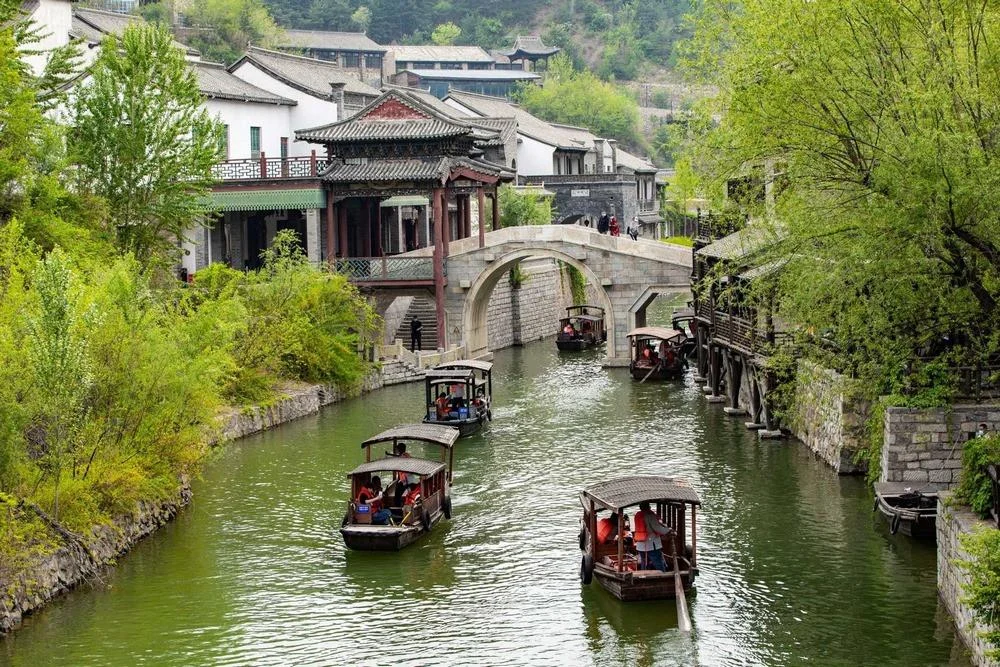
Gazing down from Watchtower 6 toward the foothills reveals a poetic contrast between quiet antiquity above and the shimmering charm of Gubei Water Town below. Mandarin Duck Lake acts like a giant mirror capturing both the illuminated Great Wall and crimson lanterns strung along the traditional tiled eaves of the water town. Down at Sun and Moon Island Square and nearby Wangjing Tower, multimedia water-fountain shows paired with 3D projection mapping and hundreds of drones mimicking sky lanterns fill the sky—creating a mesmerizing fusion of ancient heritage and modern spectacle.
Evenings conclude with unforgettable local flavors at rustic taverns nestled beneath the pass. In the crisp chill of mountain mist, nothing rivals sitting at a weathered wooden table sipping warm Sima Xiaoshao—traditional grain liquor distilled with mountain spring water—alongside a steaming bowl of herbal lamb soup and savory braised tofu skin. Nightlife at Simatai is never loud or hurried; instead, it distills into an elevated cultural retreat where a thousand years of history awaken through light, warmth, and modern wonder.
Nestled at the foot of rugged Simatai and the storied Gubeikou Pass, local cuisine here is a remarkable fusion of Ming–Qing garrison resilience and hearty, rustic northern Chinese cooking. Having endured centuries of biting winter snows sweeping off the Yanshan Mountains, locals developed a bold, high-energy culinary tradition rooted deeply in mountain forests and freshwater streams. After conquering Simatai’s steep stone stairways, gathering around a solid timber table beside a crackling hearth to savor steaming heirloom dishes is the ultimate ritual for connecting with the soul of the ancient frontier.
The undisputed centerpiece of any frontier feast at Simatai since early settlement days is Gubei Braised Pork Belly—also known as Simatai Braised Pork. Prime cuts of local pork belly with an ideal balance of lean meat and marbling are cut into neat cubes, pan-seared to render excess fat, and slow-braised in clay pots for hours with artisanal soy sauce, star anise, cassia bark, black cardamom, and crushed aged ginger. Finished to a glossy amber sheen, the skin melts like jelly while tender lean layers absorb deep savory-sweet aromatics without heaviness. Indispensable alongside the clay pot are golden pan-roasted cornmeal flatbreads (tieguo tiebing): finely ground coarse cornmeal mixed with spring water is pressed directly onto the scorching cast-iron rim of the wok, baking into a crisp, nutty crust underneath while remaining soft and fluffy on top—perfect for scooping up rich, velvety braising sauce.
While braised pork embodies the hearty warmth of the land, steamed Miyun Reservoir snakehead fish in soy sauce represents the pure gift of fertile local waters. Raised in the clean, deep freshwater basin of Miyun Reservoir, wild snakehead develops thick, firm fillets completely free of muddy aftertaste. Local chefs steam the fish with split-second precision to preserve its natural sweetness, scoring deep cuts across the fillets and blanketing them with julienned scallions, young ginger, and aromatic Sichuan peppercorns that leave a gentle citrusy tingle on the tongue. Just as the fish finishes steaming, a ladle of smoking-hot oil is poured over the top, unleashing an intoxicating burst of scallion, peppercorn, and premium soy aroma that feels at once light and unforgettable.
The untamed spirit of the mountain ramparts also shines through in humble wild-mountain-herb steamed buns. Depending on the season, villagers climb the foothills along Simatai’s base to forage tender wild greens such as shepherd’s purse, dandelion, purslane, and young rose shoots. Blanched briefly to lock in emerald color, squeezed dry, and finely chopped, the greens are tossed with diced pork shoulder, fragrant sesame oil, and family seasonings. Wrapped in thick hand-rolled naturally leavened wheat dough and steamed in bamboo baskets, hot buns release an earthy herbal aroma mingled with savory pork richness and a subtle, refreshing bitterness that cleanses the palate after a long mountain trek.
No frontier meal would be complete without a cup of Gubeikou’s famed Xiaozi liquor—artisanal grain spirit distilled according to centuries-old methods in family-run mountain distilleries. On freezing winter nights when temperatures plunge, rough stoneware flasks of Xiaozi are warmed gently in simmering water until pleasantly hot. A sip opens with a crisp, fiery kick before softening into a deep, sweet finish that sends warmth coursing through the body—vividly evoking borderland soldiers raising cups in camaraderie beneath the shadow of the Great Wall.
To experience Simatai’s untamed majesty at its finest, timing your visit is essential for shaping both visual impact and atmosphere. Autumn, from September through November, is celebrated by historians and seasoned travelers alike as the golden window to visit this Ming Dynasty treasure. Crisp northern air brings crystal-clear skies as virgin forests blanketing the Yanshan range erupt into color—weaving crimson maples and golden birches around weathered gray stonework. Moreover, Simatai is the only Great Wall section in China offering regularly scheduled night tours. Strolling thousand-year-old stone steps beneath the warm glow of traditional lanterns while gazing down at Gubei Water Town’s twinkling lights reflected across Mandarin Duck Lake creates a heritage memory of rare grandeur.
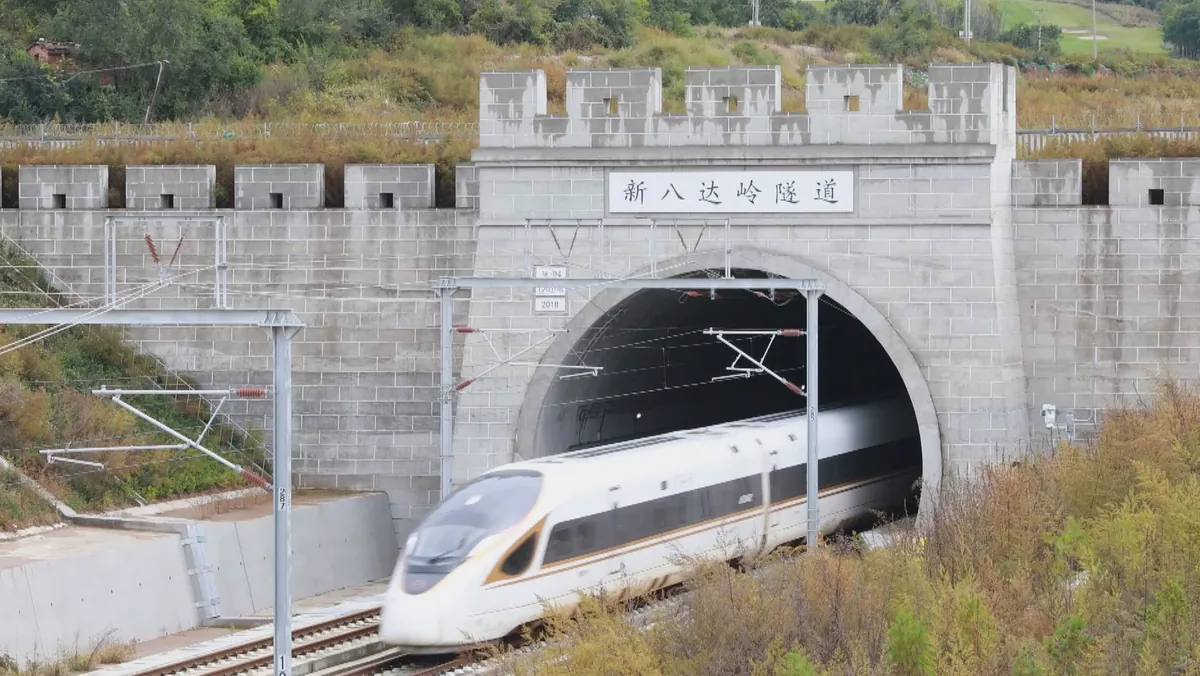
Reaching this dramatic mountain wall from central Beijing is straightforward and flexible thanks to modern transport infrastructure. Travelers can ride the Beijing–Zhangjiakou high-speed railway to transfer stations such as Miyun or Huairou before continuing by dedicated shuttle to the base of the wall. By road, the G45 Daqing–Guangzhou Expressway cuts through scenic mountain valleys, allowing private cars or chartered vans to arrive smoothly in roughly two hours. Direct daily tourist buses departing from Dongzhimen transport hub also carry visitors straight to the Simatai reception center, offering an economical, punctual, and well-organized option.
To balance sustainable tourism with preserving the integrity of a Hongwu-era military fortress, site authorities enforce strict visitor caps and crowd management protocols. Daily capacity is strictly capped at 10,000 visitors to prevent structural strain on weathered watchtowers and ramparts. All visits require advance real-name reservations registered with a valid international passport. Identity checks and biometric verification at entry gates are thorough and transparent, so international travelers must carry their original passport and book well ahead to avoid sold-out quotas.
Unlike Badaling or Mutianyu—which underwent extensive modern reconstruction with concrete and newly cut stone—Simatai preserves steep, unmodified stone inclines with steps worn smooth or chipped by centuries of frost and wind. Sturdy hiking footwear with superior traction is mandatory for gripping ancient bluestone and fired brick safely. Adventurers tackling the long ridge hike linking Simatai to Jinshanling Pass should carry trekking poles and plenty of electrolyte hydration; this rugged terrain leaves no room for smooth-soled fashion shoes.
Alongside physical preparation, travelers should stay vigilant against commercial traps sometimes encountered around Beijing’s transit hubs. Unlicensed touts or suspiciously cheap “zero-dollar” tours frequently funnel visitors into compulsory stops at overpriced jade workshops or unverified herbal pharmacies, eating away at precious time on the wall. Opting for reputable, culturally focused itineraries committed to a strict no-shopping policy ensures your hours go entirely toward experiencing history firsthand. If you wish to stand atop Simatai’s watchtowers overlooking the ancient frontier without worrying about permits, transfers, or logistics, consider booking a professionally curated all-inclusive tour package crafted to deliver a seamless, authentic journey.