Located just north of central Kunming, Yuantong Mountain stands like a silent witness to the passage of time, spanning layered historical sediments stretching back more than twelve hundred years. Originating between the eighth and tenth centuries, during the flourishing eras of the Nanzhao Kingdom and the Dali Kingdom, this limestone hill once bore the ancient name Pituo Mountain. In those days, its rugged terrain of sheer cliffs and natural karst caverns made it both a strategic military outpost near Dianchi Lake and a secluded sanctuary reserved for esoteric Tantric rituals practiced by indigenous Yi and Bai monks. The interplay between the martial spirit of the highlands and the mystical philosophy of Acarya Tantric Buddhism laid the earliest spiritual cornerstones upon every vein of stone on this ancient peak.
History reached a decisive turning point in 1272, during the reign of Kublai Khan of the Great Yuan Dynasty. Having pacified the Southwest and formally established Yunnan Province, the northern imperial court embarked on restructuring regional power and urban design. Under the direction of Governor Sayyid Ajall Shams al-Din Omar alongside native chieftain Duan Shizhu, the master plan for historic Zhongqing City was launched. Within that grand civic blueprint, the mountain was officially named Yuantong Mountain, accompanied by the magnificent construction of Yuantong Temple right at the foot of its cliffs. From an enclosed military bastion, the grounds transformed dramatically into a major cultural and religious center—symbolizing ethnic reconciliation and the establishment of central imperial order along the southwestern frontier.
During the Ming Dynasty, Yuantong Mountain’s prestige grew immensely under the patronage of founding general Mu Ying, Prince of Qianning. Recognizing the auspicious spirit converging upon this scenic landmark, the illustrious Mu clan—hereditary guardians of Yunnan for generations—repeatedly endowed lands and mobilized master artisans to restore and expand the entire complex. This era witnessed a profound ideological shift as Central Plains Chan (Zen) Buddhism took center stage, gradually supplanting the site’s original Tantric traditions. Under the stewardship of the Dukes of Mu, Yuantong Mountain became not only a tranquil Zen realm, but also a grand classical garden estate where nobles and literati gathered for poetry salons and scenic contemplation inside a serene oasis set apart from urban bustle.
The imprint of time continued to etch itself into the mountain’s stone through the dynastic upheavals of the seventeenth century. During the turbulent Ming–Qing transition, Yuantong Mountain came under the sway of Wu Sangui, Prince Who Pacifies the West, when he established his separatist stronghold in Kunming. Entering the Kangxi reign—specifically in 1686—successive Viceroys of Yun-Gui spearheaded major restorations, commissioning numerous cliff inscriptions and stone steles celebrating the mountain’s tranquil beauty and shaping the symmetrical landscape garden design whose character endures intact today.
Crossing into the twentieth century, this sacred, aristocratic retreat shed its feudal mantle to embrace modern civic life. In 1919, Yuantong Mountain was converted into the very first public park in Kunming, opening its gates to citizens of every walk of life for leisurely strolls, flower viewing, and moonlit contemplation. During these decades, the mountain’s blend of ancient poise and untamed nature captivated the famed Western explorer and botanist Joseph Rock, who devoted vivid journal passages and invaluable photographs to introducing Yuantong Mountain’s architectural ensemble and extraordinary flora to the world.
Standing prominently at No. 30 Yuantong Street in Wuhua District—the historic and cultural heart of Kunming—Yuantong Mountain has long been regarded as Yunnan’s premier urban landscape axis. As Kunming maintains its strategic role as China’s gateway to Southeast Asia, this celebrated mountain enjoys effortless accessibility via modern, integrated transport infrastructure. From the southern border, the cross-border high-speed railway links Hekou North Station to Kunming South Station in a relaxed 1.5 to 2 hours, complemented by the broad G80 Expressway network and bustling air links through Kunming Changshui International Airport. Within the city, visitors simply ride Metro Line 2 to Yuantong Temple Station or Chuanxingulou Station and stroll 400 to 600 meters to step straight into the cool, tranquil atmosphere at the foot of the mountain.
Judged by traditional East Asian geomancy (feng shui), Yuantong Mountain commands an extraordinary “backed by mountains, overlooking water” posture, acting like a jade jewel anchoring the prosperous energy of the Dianchi plain. The mountain slopes gently into a form resembling a crouching divine tortoise or an undulating silk ribbon, gathering pure vital energy flowing from distant mountain ranges encircling the Kunming basin. Over successive dynasties, landscape architects worked harmoniously with these natural contours to craft a model multi-tiered ecological park. The artful interplay of steep hillsides, moss-draped limestone crags, and low-lying hollows enabled the creation of crystal-clear artificial ponds, transforming the grounds into a poetic waterscape embodying the classical ideal of “a temple within the mountain, a pond within the temple.”
Beyond its distinctive topography, Yuantong Mountain’s natural scenery is a masterpiece nurtured by the year-round temperate microclimate of the “Spring City.” Celebrated as Kunming’s foremost floral capital, the park leaves an unforgettable impression through its lush botanical collection featuring over 5,000 Japanese cherry trees alongside thousands of centuries-old Yunnan crabapple trees. Every March, the slopes of Yuantong awaken in splendor, draped in a dazzling tapestry of blush-pink cherry blossoms mingled with deep crimson crabapple blooms—creating the famous visual spectacle known as “Yuantong’s Tide of Blossoms” surging across the hills.
Tier upon tier of blossoms drift like rosy sunset clouds suspended mid-air, casting reflections onto still pond waters and blanketing winding green granite pathways. Gentle spring breezes carry millions of delicate petals fluttering through the air onto visitors’ shoulders, accompanied by the rustle of century-old trees and bright forest birdsong. The layout achieves a rare equilibrium: on one side lies the lively ecological energy of the zoological park and rich subtropical monsoon flora; on the other rests the meditative stillness of moss-rimmed emerald-glazed temple roofs—forming an urban sanctuary at once grand, airy, and deeply contemplative.
Leaning gracefully against Kunming’s gentle Twelve Peaks ridge, the spatial layout of the Yuantong Mountain complex stands as a landscape masterpiece that strictly honors classical feng shui while showcasing bold, singular architectural ingenuity. Breaking entirely from the conventional “ascend high to worship the Buddha” formula seen at most famous Chinese temples—where sanctuaries perch atop mountain peaks forcing pilgrims to gaze upward—Yuantong Temple nestles peacefully inside a deep natural basin, creating a magical “temple hidden within a sunken hill” setting. After passing through the Triple Gate and imposing mountain gatehouse on the upper slope, visitors do not climb steep stone staircases; instead, they descend slowly along a gently sloping pathway leading down into the heart of the limestone hollow. This “inverted elevation” layout not only harnesses natural karst topography, but also conveys profound spiritual symbolism: walking downward represents letting go of ego and washing away worldly pride to approach the Zen sanctuary with a humble heart.
Venturing deeper into the heart of the complex, sacred architecture reaches the pinnacle of Ming and Qing water-pavilion artistry in the Octagonal Pavilion (Ba Jiao Dian). Crowned with gracefully upturned eight-sided eaves clad in gleaming imperial yellow glazed tiles, the pavilion rises like a jade lotus blooming in the center of a crystal-clear artificial pond. This life-release pond mirrors the sky and the shade of ancient weeping willows, deftly balancing yin and yang energies across the sunken courtyard. Connecting the pond banks to the central shrine are two winding stone bridges carved with intricate relief motifs echoing Ming court artistry. The eight corners of the Octagonal Pavilion and its radiating corridors symbolize the Noble Eightfold Path of early Buddhism, guiding pilgrims’ minds toward absolute stillness. Anchoring the rear against sheer Chaoyang Cliff stands the majestic Mahavira Hall, housing Yuan-dynasty bronze Buddha statues and expressive Arhat figures that form an unbroken spiritual lineage spanning over a millennium.
Far more than a purely Buddhist sanctuary, Yuantong Mountain’s spatial arrangement composes a remarkable symphony of the “Three Teachings in Harmony.” Dignified, symmetrical Confucian lines in the front courtyards blend with ethereal Taoist water pavilions, rockeries, and immortal-isle pond scenery, united with the boundless compassion of Mahayana Buddhism—turning every square meter into a living architectural museum. Vermilion walls, gilded ironwood columns, and blue-stone walkways faithfully preserve the craftsmanship of grand restorations carried out during the Kangxi reign of the Qing Dynasty, keeping ancient elegance intact amid a growing metropolis.
Seamlessly adjoining the tranquil temple grounds is the expansive ecological layout of Yuantongshan Zoo—one of the oldest and most comprehensive zoological conservation centers in southwestern China. Taking advantage of dozens of hectares of undulating natural hillside, animal habitats are designed as semi-wild ecological enclosures that minimize harsh concrete barriers. Natural rock cliffs, mature subtropical forest canopies, and babbling streams act as soft natural boundaries, providing ideal habitats for rare Asian elephants from Xishuangbanna and endemic red pandas native to the Hengduan Mountains. This fluid integration of blooming gardens, wildlife conservation, and sacred monuments makes Yuantong Mountain a classic model of heritage stewardship where ancient culture and modern ecology thrive together.
When dawn first touches the gentle slopes of Yuantong Mountain, this historic sanctuary awakens in an enchanting natural choreography of light. The hours between 7:30 AM and 9:30 AM are widely considered the golden window to witness the landmark at its purest and most transcendent. Morning mist lingering over the Yuantong Temple pond melts gradually beneath warm golden sunbeams slanting across moss-draped boulders and shimmering off the stately Octagonal Pavilion. Winding stone corridors encircling the water pavilion—bridging the mortal world with the serene Zen realm—appear like a tranquil ink-wash painting. When spring arrives from late February through April, Yuantong Mountain transforms into a breathtaking sea of blossoms as over 5,000 Yunnan cherry and crabapple trees burst into bloom simultaneously. Thick canopies weave endless blush-pink floral tunnels beneath deep azure skies, drawing tens of thousands of admirers to capture unforgettable photographs in the heart of the Spring City.
Yet Yuantong Mountain offers far more than morning delicacy—it reveals an equally captivating persona as dusk yields to night. As twilight settles over the summit, gilding glazed roof tiles and ancient stone pagodas in deep amber, the rhythm around this historic hill undergoes a subtle transformation. Rather than relying on flashy mechanical stage effects or noisy commercial spectacles, the mountain itself and its thousand-year-old architecture serve as an enduring living stage. Lighting design at Yuantong Mountain is exercised with refined restraint to honor every ancient carving: warm uplights concealed discreetly beneath stone plinths illuminate vertical cliff faces and trace the graceful curves of Tang- and Yuan-style upturned eaves, bringing out the solemn majesty of the millennial monastery.
Artificial glow and natural night hues merge across the glassy surface of the crescent pond, turning the Octagonal Pavilion into a luminous lotus floating in space. Arched stone bridges, Ming and Qing steles, and centuries-old pines and cypresses cast quiet reflections into the deep water, creating an ethereal interplay of reality and illusion. From higher vantage points along the hillside, visitors gaze out over Kunming’s vibrant nightlife pulsing just below the mountain’s foot. The striking contrast between Yuantong Mountain’s hushed, cloistered stillness and the sparkling lights of the modern city beyond creates a multi-layered spatial depth where past and present breathe together in unhurried harmony.
As night deepens, strollers descend toward quiet corners at the foot of Yuantong Slope and around nearby Green Lake (Cuihu) to savor Yunnan’s nocturnal charm. In the crisp highland breeze, the sweet fragrance of freshly baked rose flower cakes mingles with the mellow aroma of aged Pu-erh tea brewing in traditional teahouses. Leisurely walkers can also stop by steaming family-run stalls for a piping-hot bowl of Crossing-the-Bridge Rice Noodles—rich chicken broth kept scalding beneath a clear golden layer of chicken oil, paired with paper-thin pork slices, crisp greens, and silky rice noodles. From time to time, the temple bell of Yuantong chimes softly through the night air, blending with rustling leaves and unhurried footsteps to close an evening of quiet refinement in China’s magnificent Southwest.
Stepping down from the blossom-filled slopes and ancient pines of Yuantong Mountain leads straight into Kunming’s rich, welcoming culinary scene. The neighborhood at the mountain’s foot has long served as a gathering place for southern Yunnan gastronomy, preserving heirloom recipes that reflect the fertile land and daily traditions of generations of locals. Flavor discovery here invariably begins with the sizzling aroma of Crossing-the-Bridge Rice Noodles, a celebrated dish steeped in scholarly refinement. At the time-honored Lao Henghe eatery tucked along an old lane leading up the hill, noodles arrive like a culinary ceremony in a thick heat-retaining stoneware bowl filled with rich broth simmered for over twelve hours from free-range mountain chicken and plump duck. A shimmering layer of golden chicken fat traps intense heat below, allowing diners to poach gossamer-thin slices of snakehead fish, fresh pork tenderloin, quail eggs, and emerald chives before sliding in glossy, springy white rice noodles.
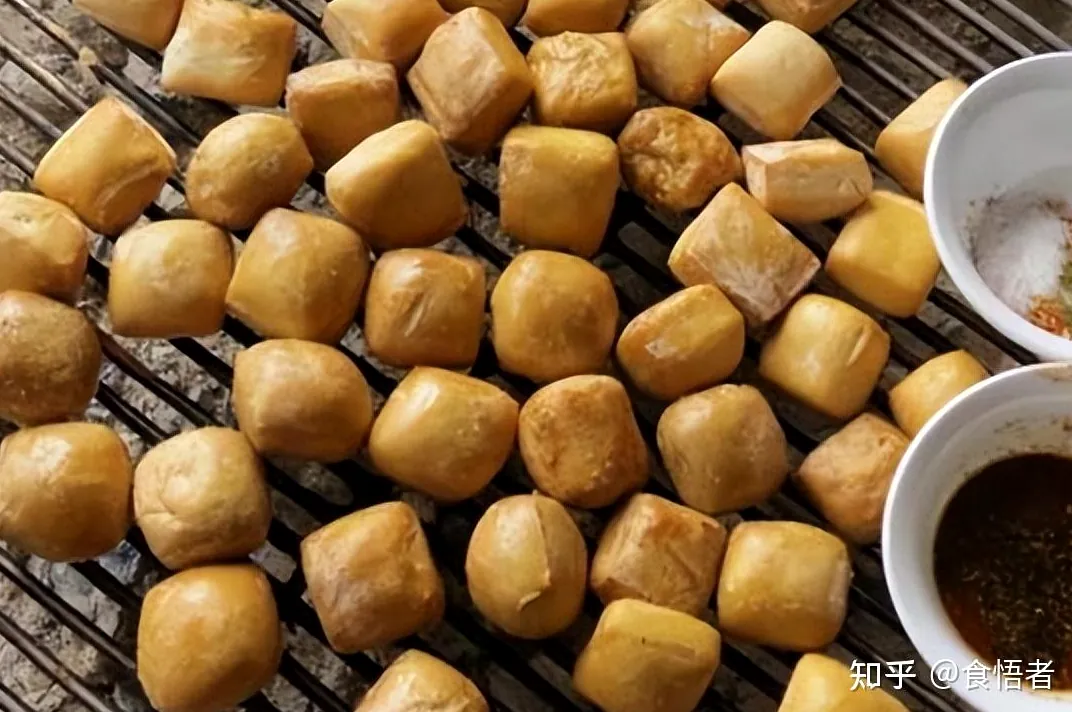
As afternoon shadows lengthen across Yuantong’s slopes, glowing charcoal braziers along the surrounding lanes send up clouds of savory smoke from Kunming Grilled Tofu (Shao Doufu). Matchbox-sized cubes of tofu—naturally fermented using ancestral starter cultures to achieve a mild tang and distinctive aroma—are arranged neatly on iron grates over live embers. Turned deftly by seasoned vendors, each cube puffs into a plump pillow with a crisp golden crust and a velvety, molten interior. The soul of this beloved street snack lies in its signature dipping spice blend: fiery chili powder, numbing Sichuan peppercorns, and roasted, hand-pounded wild highland mountain pepper (huajiao / shanhujiao), sparking an irresistible burst of flavor in the cool plateau air.
Nature’s greatest gift to Yunnan is its extraordinary kingdom of wild mushrooms, and Yuantong Mountain offers an ideal base for savoring authentic Wild Mushroom Hotpot (Yeshengjun Huoguo). Local chefs meticulously select earthy porcini (niuganjun), sweet-crisp chicken-of-the-woods (jizong), and prized termite mushrooms foraged from deep forest floors. These woodland treasures are simmered gently in a sweet, nourishing broth brewed from free-range black-boned chicken and mild tonic herbs. The unwritten rule of this hotpot is the small hourglass placed beside the table: diners wait patiently for a full twenty minutes until the mushrooms cook thoroughly, neutralizing any natural compounds and infusing the golden broth with pure, woodsy umami before lifting the lid to inhale clouds of primal forest aroma.
Rounding out the culinary journey around this ancient hill are dairy specialties rooted in the pastoral traditions of central Yunnan’s ethnic minorities. Traditional Rubing—artisanal fresh goat’s milk cheese crafted by the Yi people—is sliced thick and pan-seared in local lard until both sides turn crisp and golden-brown. Served sizzling hot and richly creamy, each slice is dipped lightly into wild mountain bauhinia honey or dusted with fragrant spiced salt, striking an exquisite balance of savory richness, gentle salinity, and floral sweetness. Together, the dishes surrounding Yuantong Mountain form a living chronicle of Kunming’s fertile earth, cultural heritage, and warm hospitality.
To witness Yuantong Mountain at its most enchanting, the ideal season runs from late February through April. As early spring breezes sweep across the Kunming basin, thousands of Japanese cherry trees and Xifu crabapples awaken from winter dormancy to create the legendary “Yuantong Flower Tide,” blanketing the hillsides in drifting clouds of pink blossoms. The golden hours for strolling beneath blooming canopies are between 7:30 AM and 9:30 AM, when soft morning sunlight filters through mountain mist onto ancient glazed roof tiles ahead of daytime crowds—offering tranquil air and pure natural light for memorable photography.
Situated squarely in central Wuhua District, reaching this historic hill is convenient via Kunming’s well-developed urban transit network. Visitors can take municipal buses stopping right outside Yuantong Mountain’s main gate or ride the metro and enjoy a short walk down ginkgo-lined streets. Because the grounds follow the undulating slopes of Luofeng Ridge, exploring the park involves steady walking along stone footpaths and gentle stairways; wearing cushioned, soft-soled walking shoes with reliable grip is essential for staying comfortable over several hours of exploration.
The seamless blend of spring blossoms and active Buddhist worship inside Yuantong Temple calls for respectful attire and mindful conduct. When entering a sacred precinct with over twelve centuries of history dating back to the Nanzhao Kingdom, dress modestly in neat clothing covering shoulders and knees, avoiding overly revealing cuts or loud colors. Inside sacred halls such as Yuantong Treasure Hall and the Mahavira Hall complex, observe traditional courtesy by stepping over wooden thresholds rather than treading on them, refraining from photographing statues directly, and keeping voices soft to preserve the sanctuary’s meditative calm.
Because cashless digital payments dominate urban life across China, preparing mobile payment tools before departure is essential. From park ticket booths and refreshment kiosks to traditional souvenir stalls at the mountain’s base, transactions rely almost entirely on QR codes and rarely accept paper bills or coins. International travelers should download and verify Alipay or WeChat Pay ahead of time and link an international Visa or Mastercard, while securing reliable mobile data via an eSIM or roaming plan to ensure smooth payments, digital declarations, and real-time navigation.
To preserve every pure moment before this millennial heritage site, experienced travelers steer clear of suspiciously cheap tour offers that mask mandatory shopping detours at jade centers, silk factories, or herbal pharmacies—cutting into real sightseeing time and dampening the journey. Choosing transparent, pure-sightseeing itineraries free of compulsory shopping guarantees financial clarity and unhurried cultural appreciation. For a serene, well-organized getaway packed with authentic depth, exploring an all-inclusive China tour package opens the door effortlessly to the timeless beauty of Kunming.