Celebrated as the “Number One Commercial Street in China,” Nanjing Road Pedestrian Street (南京路步行街) is far more than Shanghai’s busiest retail thoroughfare—it is a quiet witness that has lived through every chapter of modern and contemporary Chinese history. Its origins trace back to 1845 during the Daoguang reign of the Qing dynasty, when Shanghai was opened to international trade under treaty port agreements. At the outset, it was merely a narrow gravel footpath leading straight to a foreign racecourse, christened “Park Lane” by British residents. Over more than a century and a half of sweeping historical change, evolving from a colonial perimeter lane into a grand commercial boulevard, Nanjing Road grew into the cradle of modern Chinese commercial civilization along the eastern coast.
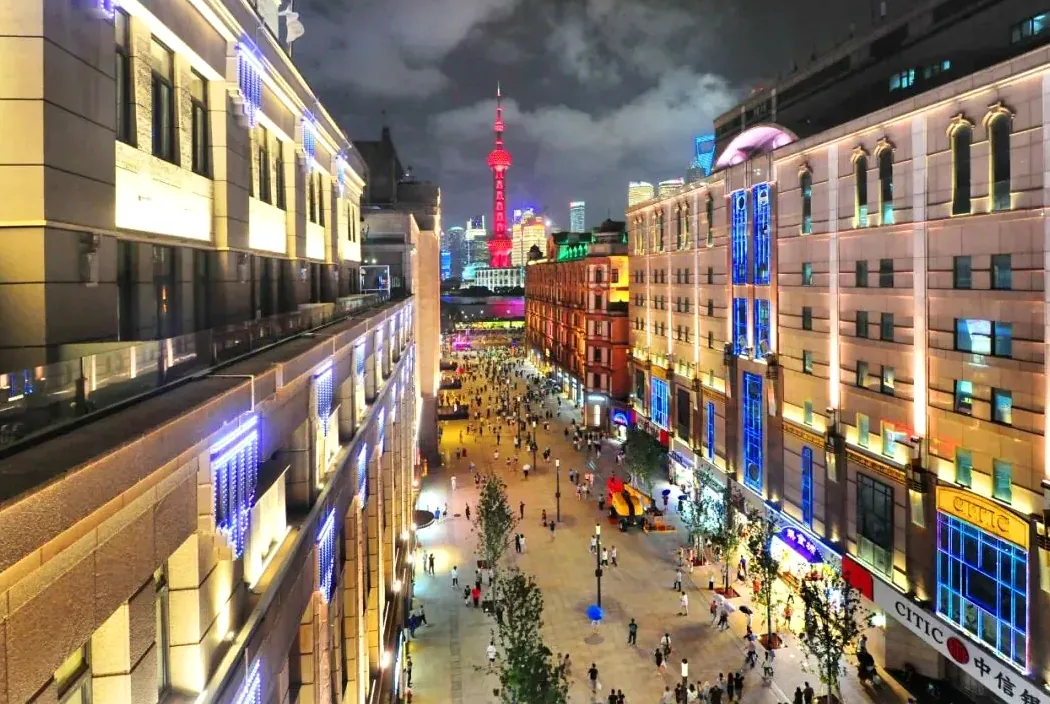
Viewed from above once night falls, Nanjing Road Pedestrian Street stretches like a luminous Milky Way winding through the heart of a thriving metropolis. Polished granite paving stones reflect kaleidoscopic bursts of light from futuristic digital billboards alongside stately Neoclassical and Art Deco heritage facades outlined in warm golden illumination. An endless river of pedestrians draws the gaze straight toward the eastern horizon across the Huangpu River, where the Oriental Pearl TV Tower rises proudly with glowing spheres—composing a grand panorama uniting century-old heritage with futuristic energy.
Turning back the clock to 1865, the Shanghai Municipal Council formally renamed the thoroughfare Nanjing Road in reference to the Treaty of Nanking and launched systematic street-widening upgrades. In 1908, a revolutionary milestone arrived with the inauguration of Shanghai’s first electric tramway line, linking Jing’an Temple along Nanjing Road all the way to the Bund. The rhythmic clanging of tram bells not only signaled the modernization of urban transit, but also sparked a wave of commercial investment that turned the avenue into an unprecedented economic stage.
The Republican era witnessed Nanjing Road’s dazzling golden boom with the rise of the legendary “Four Great Department Stores”: Sincere, Wing On, Sun Sun, and The Sun. Founded by visionary Cantonese overseas Chinese entrepreneurs, these monumental emporiums pioneered automatic elevators, air conditioning, and multi-purpose entertainment complexes combining retail shopping, ballrooms, and luxury hotels within urban Shanghai. This opulent, neon-drenched world gave birth to Shanghai’s famed moniker as the “Magic City,” where Western modernity merged seamlessly with Eastern tradition.
In 1999, marking the fiftieth anniversary of the founding of the People’s Republic of China, municipal authorities executed a landmark urban transformation by converting the 1.2-kilometer stretch between Henan Middle Road and Xizang Middle Road into a dedicated pedestrian mall. Banishing motorized traffic returned generous space to strollers, turning the avenue into a living open-air architectural museum where modern retail energy beats in harmony with layers of historical memory.
Viewed through urban geomancy and spatial geography, Nanjing Road Pedestrian Street sits directly along Shanghai’s premier commercial axis running cleanly from east to west. Its eastern threshold meets the historic Bund, drawing vibrant energy from the sweeping curve of the Huangpu River, while its western terminus anchors at People’s Square—the city’s administrative and cultural heart. In classical urban feng shui, this embodies a textbook “bright hall gathering water” configuration: opening ahead toward expansive river waters to attract wealth while backed behind by civic stability, sustaining a continuous current of prosperity across generations.
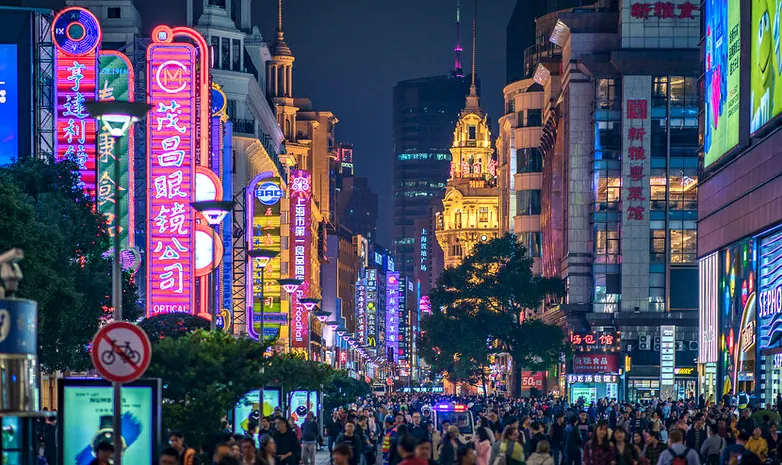
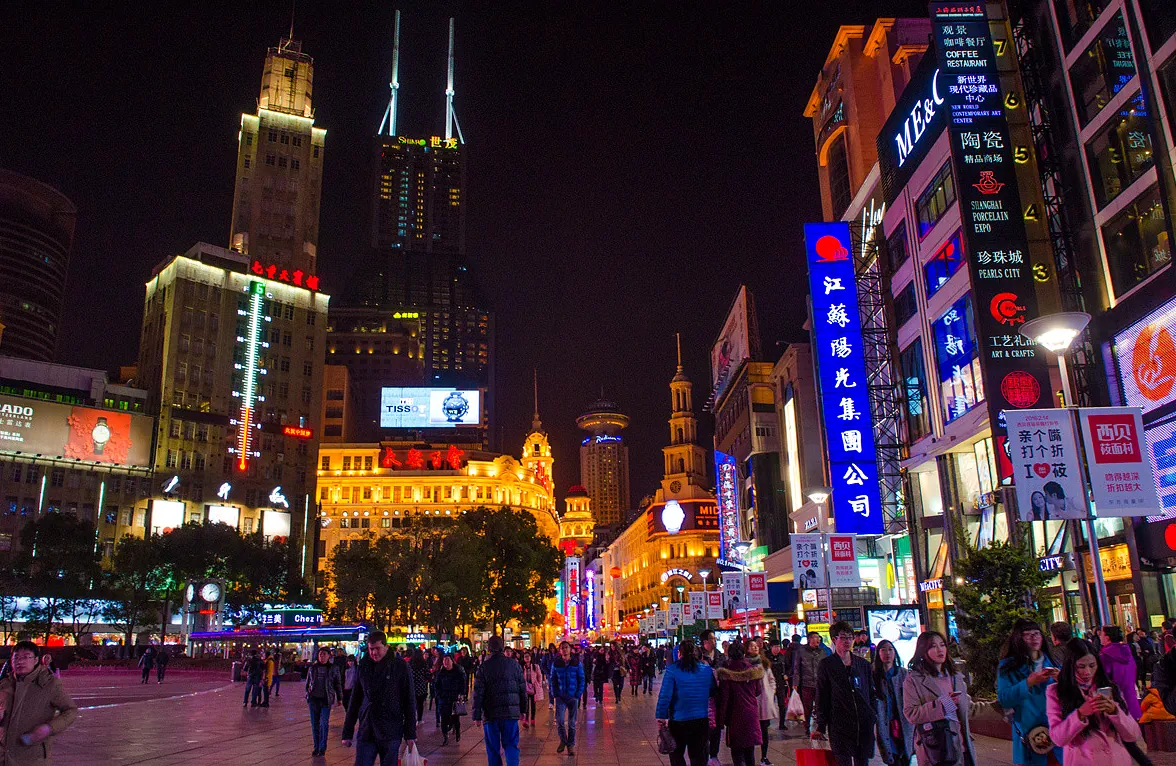
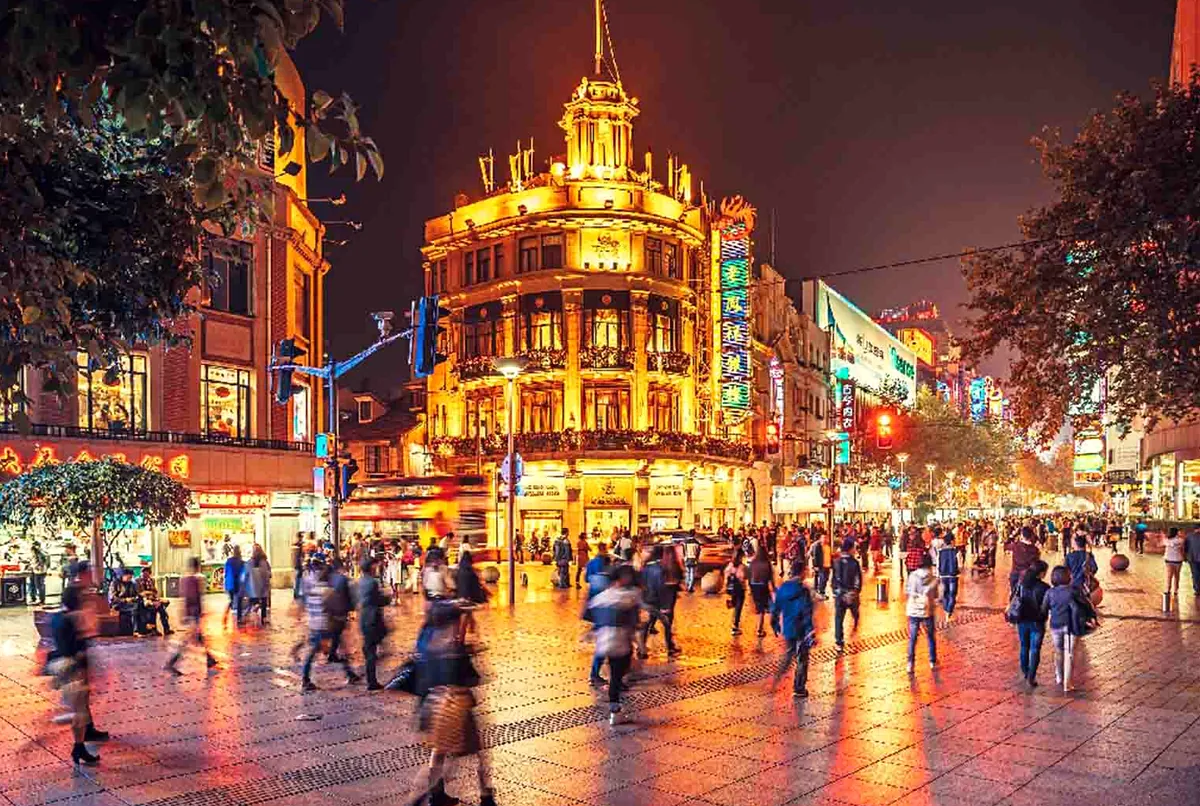
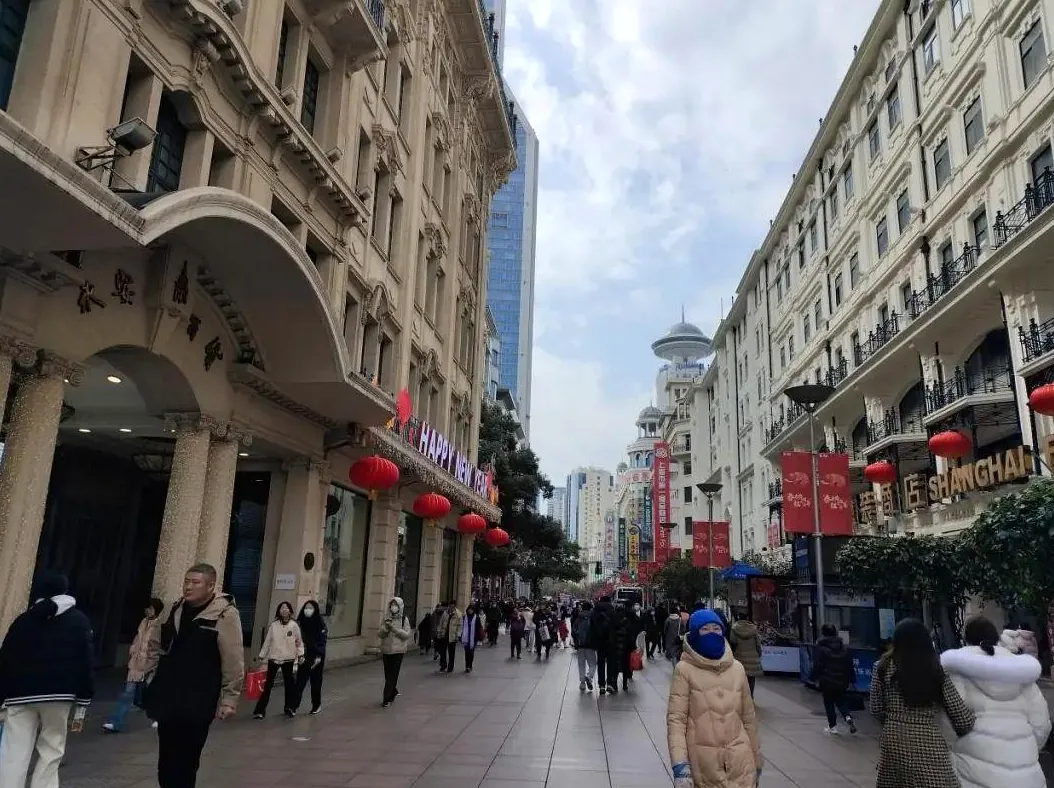
As dusk settles, the avenue’s architectural tapestry reveals its full splendor through layered facades blending stately Neoclassical landmarks with sleek modern high-rises. Hundreds of monumental illuminated signs and continuous ribbons of neon ignite along the promenade while steady streams of visitors stroll across wide, spotless stone paving—enjoying shopping, sightseeing, and cultural encounters well into the night in one of the world’s great commercial capitals.
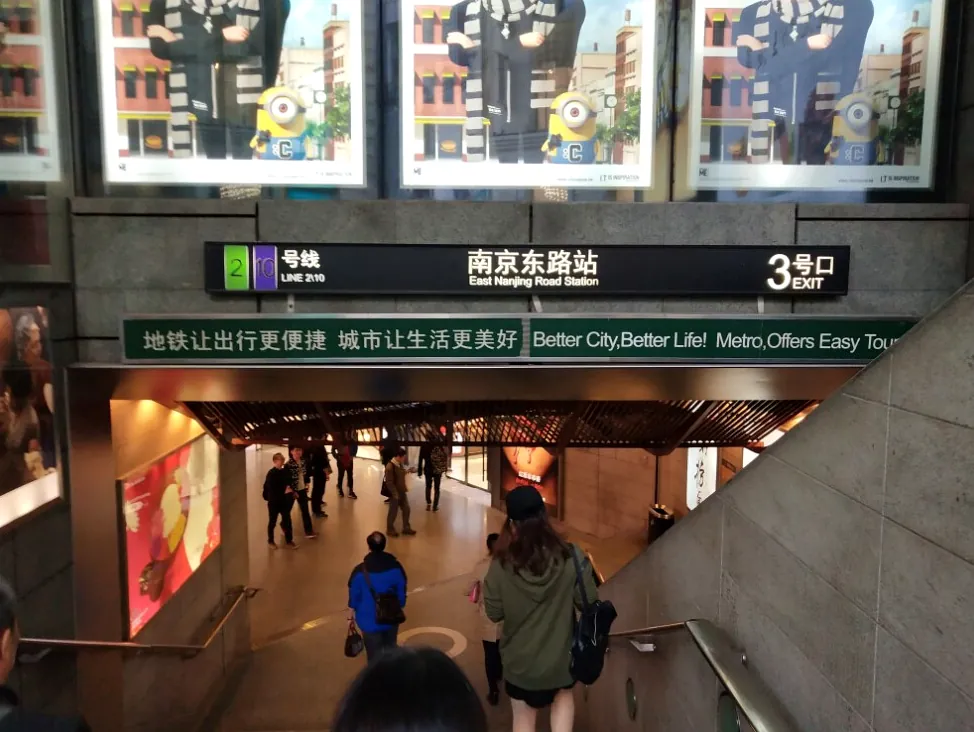
Beyond its commanding ground-level axis, Nanjing Road serves as the beating heart of Shanghai’s subterranean transit network. Beneath the boulevard lies a major underground interchange uniting Metro Line 2 and Line 10, creating a direct east–west transit spine connecting Hongqiao International Airport and High-Speed Railway Station in the west straight through to Pudong International Airport in the east—effortlessly linking historic Puxi in Huangpu District with futuristic Pudong across the river.
In terms of microclimate and streetscape design, this kilometer-plus open corridor—measuring twenty to twenty-two meters across—acts as a natural wind channel drawing refreshing river breezes from the Huangpu deep into the urban core to ease the urban heat island effect. Paved entirely in natural granite inlaid with flowing wave patterns symbolizing water bringing prosperity to storefronts, the promenade is punctuated by seasonal floral planters, marble seating benches, and slender streetlights sculpted after white magnolia petals—Shanghai’s proud municipal flower.
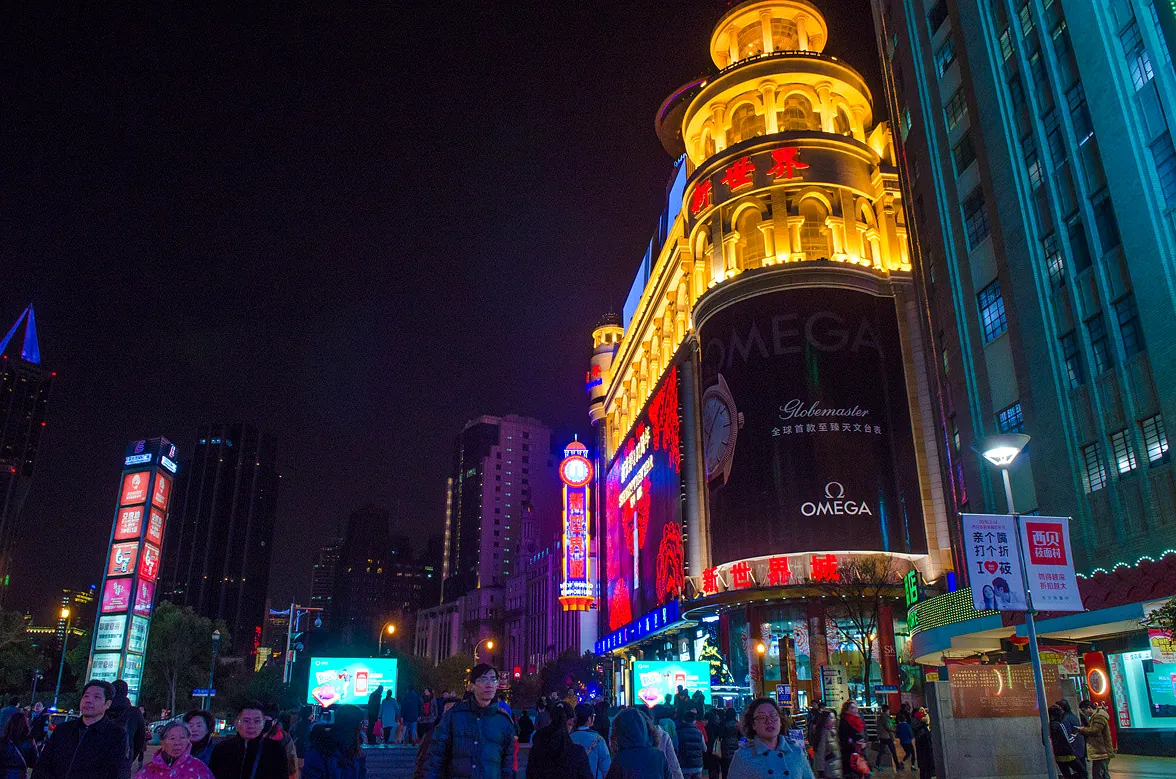
Once the clock strikes 7:00 PM, Nanjing Road sheds its composed daytime elegance to embody Shanghai’s legendary reputation as a “Sleepless City.” Rooted in the glamorous Jazz Age of the 1920s, this nocturnal spirit comes alive on a grand scale: from the Xizang Middle Road intersection all the way toward the Bund, hundreds of historic facades glow under tens of thousands of warm amber bulbs mingled with vibrant digital displays, turning the boulevard into a flowing river of light.
At the bustling central square, New World City rises like a grand Neoclassical palace against the night sky, its cornices, Western columns, and domed rotunda crisply outlined in golden light. Beneath its graceful arches, glowing luxury displays shine down over crowds crossing polished granite plazas—capturing the timeless commercial glamour of this historic crossroads.
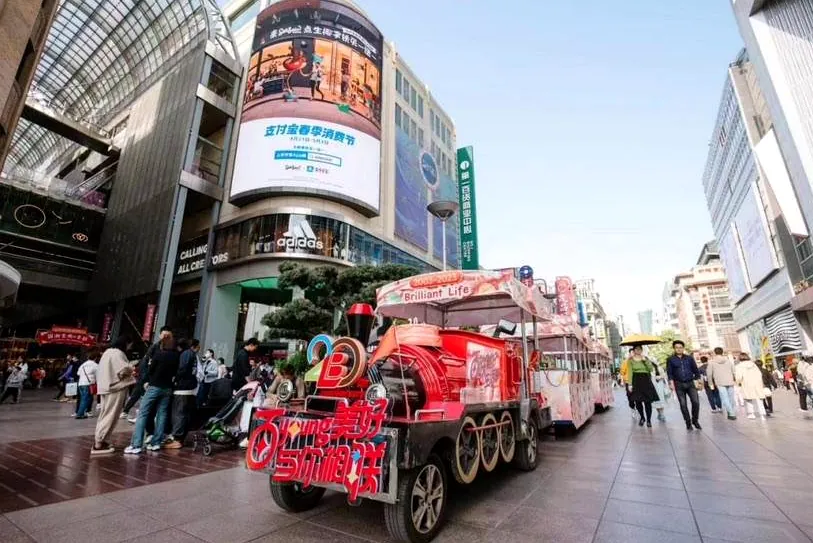
Architectural lighting along Nanjing Road goes far beyond utilitarian illumination, turning the street into an open-air museum showcase. Precision facade lighting grazes the granite walls of the historic “Four Great Companies”—Sincere, Wing On, Sun Sun, and The Sun—bringing Art Deco reliefs, wrought-iron balconies, and classical moldings into dramatic three-dimensional relief alongside vivid contemporary LED media walls.
Amid the lively crowds, the most charming way to take in Nanjing Road after dark is aboard the nostalgic Dangdang sightseeing tram. Recreating Shanghai’s early twentieth-century electric streetcars, these clean-energy trams glide smoothly along the granite promenade at a leisurely ten kilometers per hour, chiming their signature brass bell (“dang-dang”) as they part the crowds. Seated beside polished wooden window frames watching futuristic neon shimmer across rain-slicked stones, travelers feel the unmistakable pulse of a port city shaped by East and West.
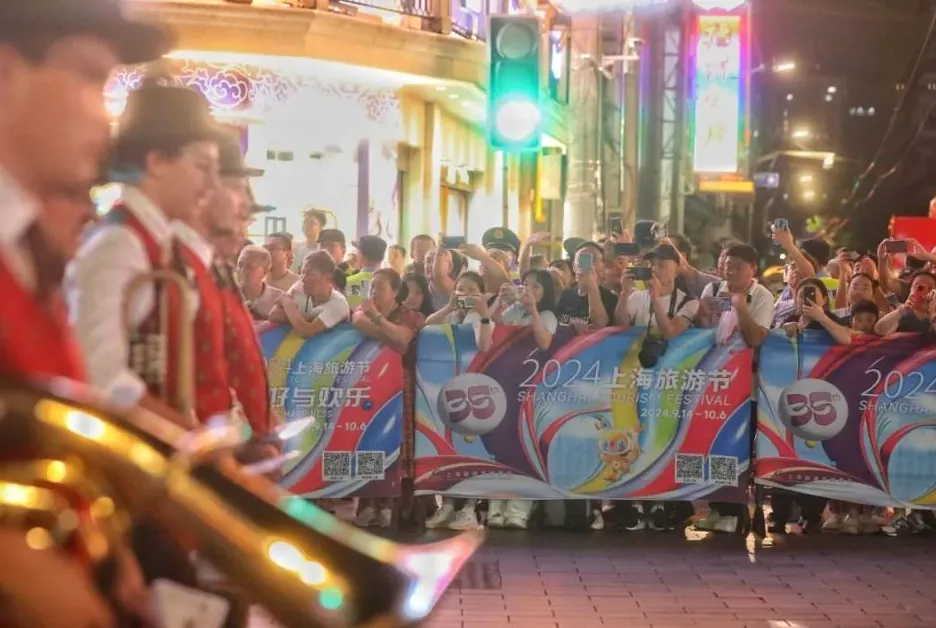
Evening entertainment here has no fixed stage or final curtain—it unfolds organically through the energy of the street itself, from impromptu sidewalk piano recitals and the sweet aroma of roasted milk tea and candied pear pastries to travelers marveling beneath glowing glass canopies, affirming Nanjing Road as the eternal heart of glamorous Shanghai.
Beyond luxury fashion and grand colonial landmarks, Nanjing Road Pedestrian Street is a living museum of Shanghai’s signature Haipai cuisine—a culinary tradition blending refined Jiangnan delicacy with cosmopolitan urban flair. Beneath Neoclassical arcades, patient queues line up outside century-old heritage bakeries where the rich aroma of rendered lard, toasted sesame, and freshly baked pastries drifts on the Huangpu breeze, evoking nostalgic memories of old Shanghai.
Indispensable to local culinary memory is Lao Da Fang, a storied bakery tracing its roots back to the Tongzhi reign of the Qing dynasty. Its timeless signature creation is pan-baked Fresh Pork Mooncake (Xianrou Yuebing). Unlike molded Cantonese mooncakes, Lao Da Fang’s savory pastry draws on Suzhou flaky-dough mastery: wheat flour and lard are laminated into dozens of paper-thin, crisp layers encasing freshly minced pork seasoned with aged Shaoxing wine, dark soy sauce, and scallions. Biting through the shatteringly crisp crust releases a burst of piping-hot, savory meat juices—making the sight of locals queuing for fresh batches straight off iron griddles an iconic Nanjing Road ritual year-round.
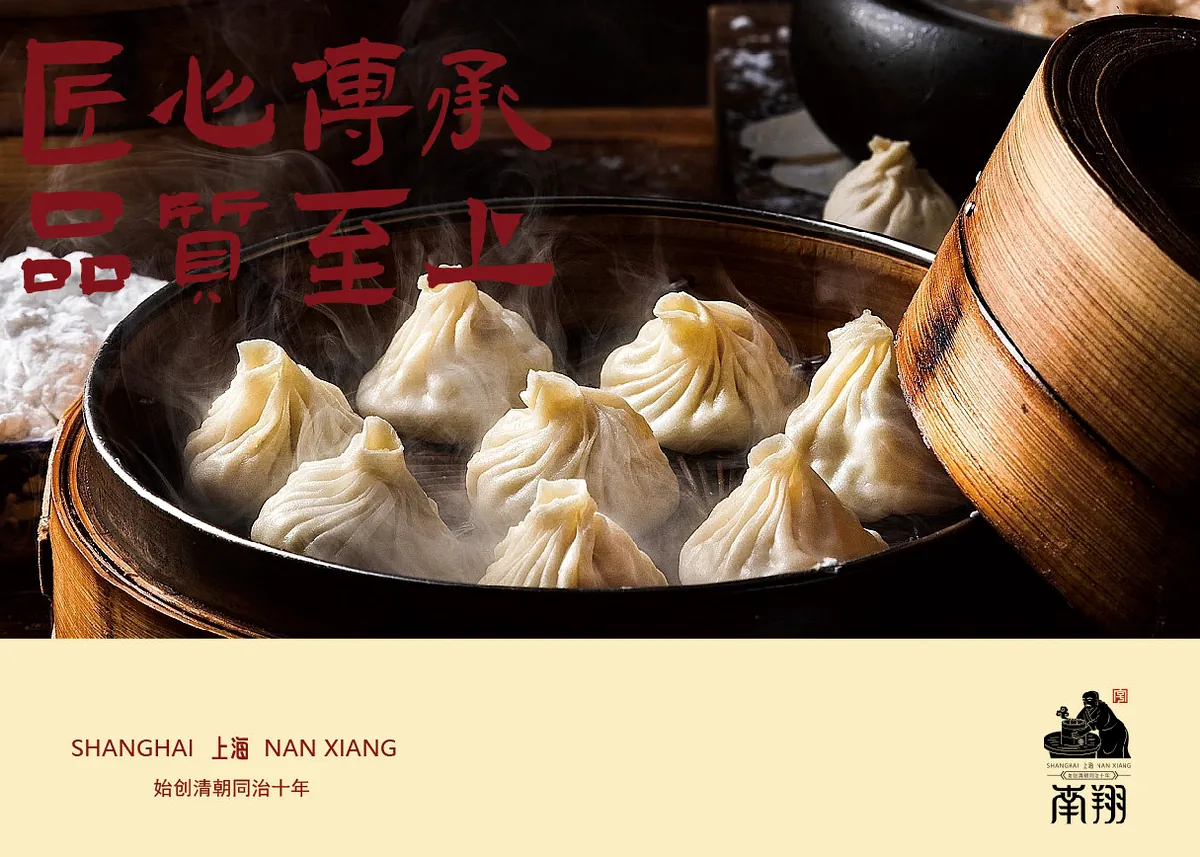
Sharing the spotlight is supreme dim sum artistry at Nanxiang Steamed Bun Restaurant, founded in historic Nanxiang Town during the Guangxu era. Its classic xiaolongbao soup dumplings feature translucent wrappers rolled paper-thin and pleated with exactly eighteen delicate folds enclosing seasoned pork and rich gelatinized bone stock. When bamboo steamers open in clouds of fragrant steam, seasoned diners follow the time-honored ritual: lift gently with chopsticks onto a porcelain spoon, nibble a small opening to release steam and sip the sweet-savory broth, then dip the dumpling into Zhenjiang black vinegar topped with julienned fresh ginger.
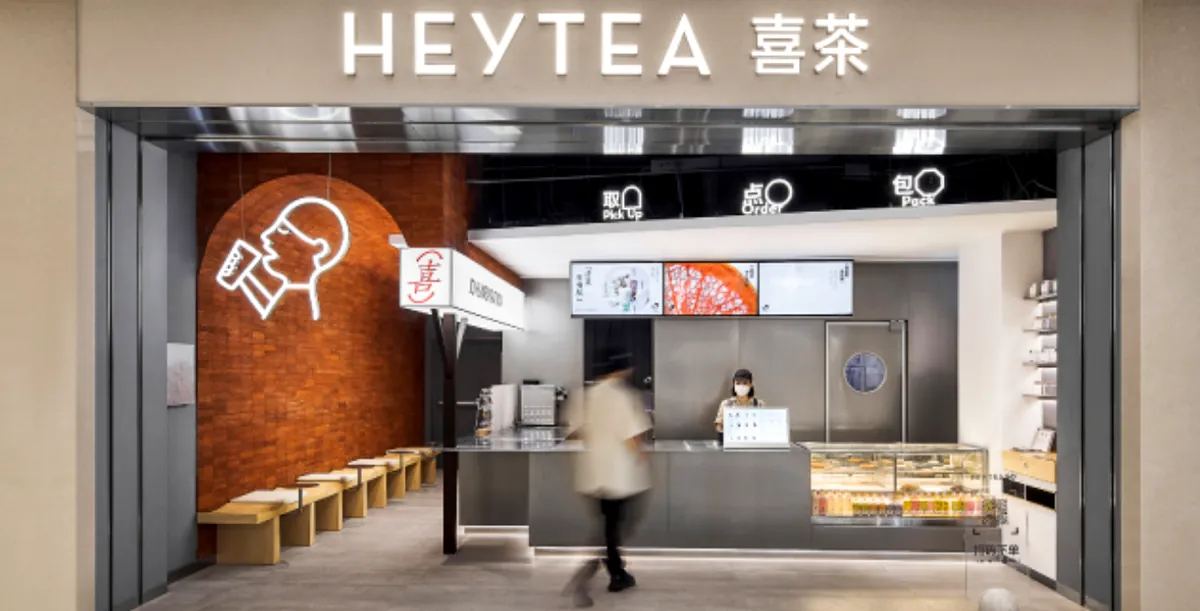
Alongside century-old culinary institutions, Nanjing Road’s foodscape pulses with contemporary youth tea culture led by flagship boutiques of HeyTea and Nayuki right along the main promenade. Providing a lively contrast to traditional pastry shops, these sleek minimalist tea salons glow under neon lights as strollers sip chilled oolong teas crowned with creamy cheese foam and fresh berry infusions—proving how Shanghai continually reinvents itself while honoring its culinary roots.
While the open-air pedestrian boulevard itself never closes, retail life follows a crisp daily schedule: major department stores and flagship emporiums—from historic Wing On and New World City to the First Foodhall—open daily at 10:00 AM and close at 10:00 PM. The most enchanting hour to visit begins around 6:00 PM, when dusk settles over the Huangpu River and multicolor neon illuminates Art Deco and Neoclassical facades. For a nostalgic perspective amid lively crowds, hop aboard the vintage-style Dangdang sightseeing tram gliding along the granite promenade between Xizang Middle Road and the Bund.
Positioned in the heart of Puxi, Nanjing Road is effortlessly accessible via Shanghai’s world-class metro network. The most direct route is Metro Line 2—linking Hongqiao and Pudong airports—or Metro Line 10 to East Nanjing Road Station; stepping out of Exits 1, 2, or 4 places you directly onto the pedestrian boulevard. Alternatively, alighting at People’s Square Station at the western end offers an enjoyable stroll past heritage snack shops like Shen Dacheng before entering the bustling central shopping stretch.
Although well-patrolled and safe, a thoroughfare welcoming over a million visitors daily warrants vigilance against common tourist scams. Foremost is the infamous “tea scam” (chatuo), in which friendly English-speaking strangers posing as art students or fellow tourists invite visitors to a “traditional tea ceremony,” only to present exorbitant bills reaching thousands of yuan. Similarly, decline unsolicited street offers for cheap foot massages. Embracing modern, independent travel—using smartphone AR guides and strictly avoiding forced-shopping tour traps—ensures a rewarding experience.
For shorter stopovers, Shanghai’s 144-hour visa-free transit policy at international entry ports provides an ideal opportunity for deep cultural exploration without complex visa paperwork. Be sure to set up mobile payment wallets (Alipay or WeChat Pay) linked to an international credit card prior to arrival, as physical cash sees limited acceptance. To enjoy a completely seamless, stress-free vacation free from hidden shopping detours and backed by quality service, consider booking a trusted all-inclusive Shanghai tour package to experience the full splendor of the city.