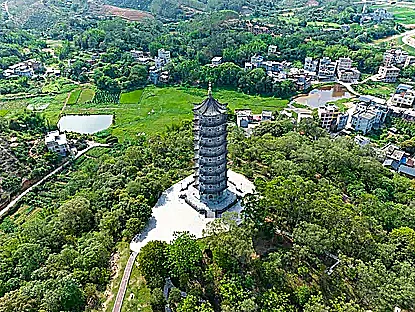
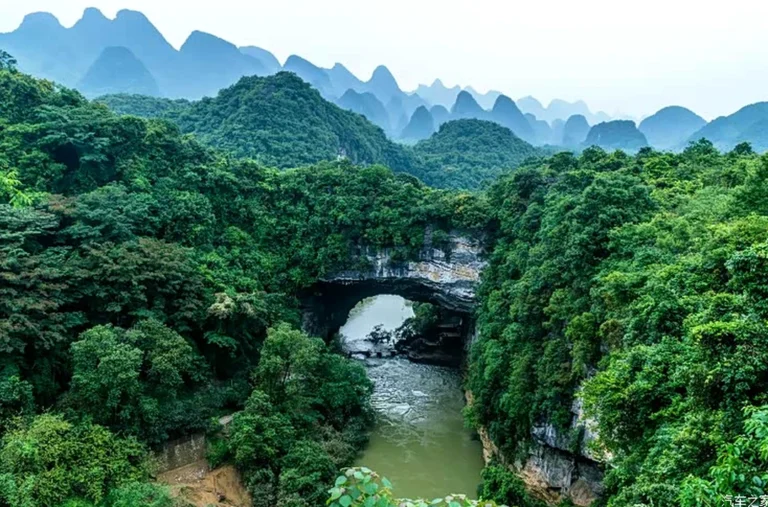
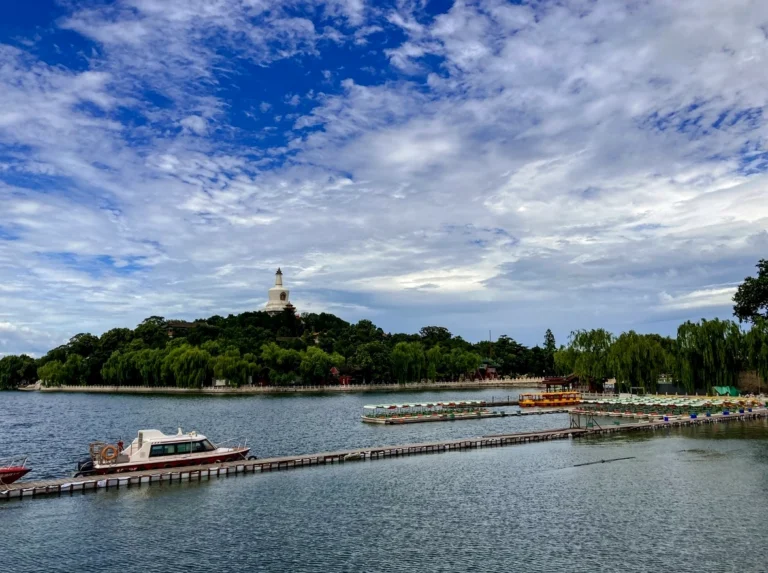
Curving gracefully along the emerald-green Liu River, which flows like a ribbon of jade, the land of Liuzhou boasts a rich history spanning over 2,100 years. It first appeared on administrative maps in 111 BC during the reign of Emperor Wu of the Western Han Dynasty, originally known as Tanzhong County. Through millennia of historical shifts, this ancient city underwent several name changes, from Mabing to Longcheng, before officially being named Liuzhou during the Tang Dynasty. It gradually evolved into a vital military stronghold, a hub for trade, and a crucial cultural center of the vast Lingnan region.
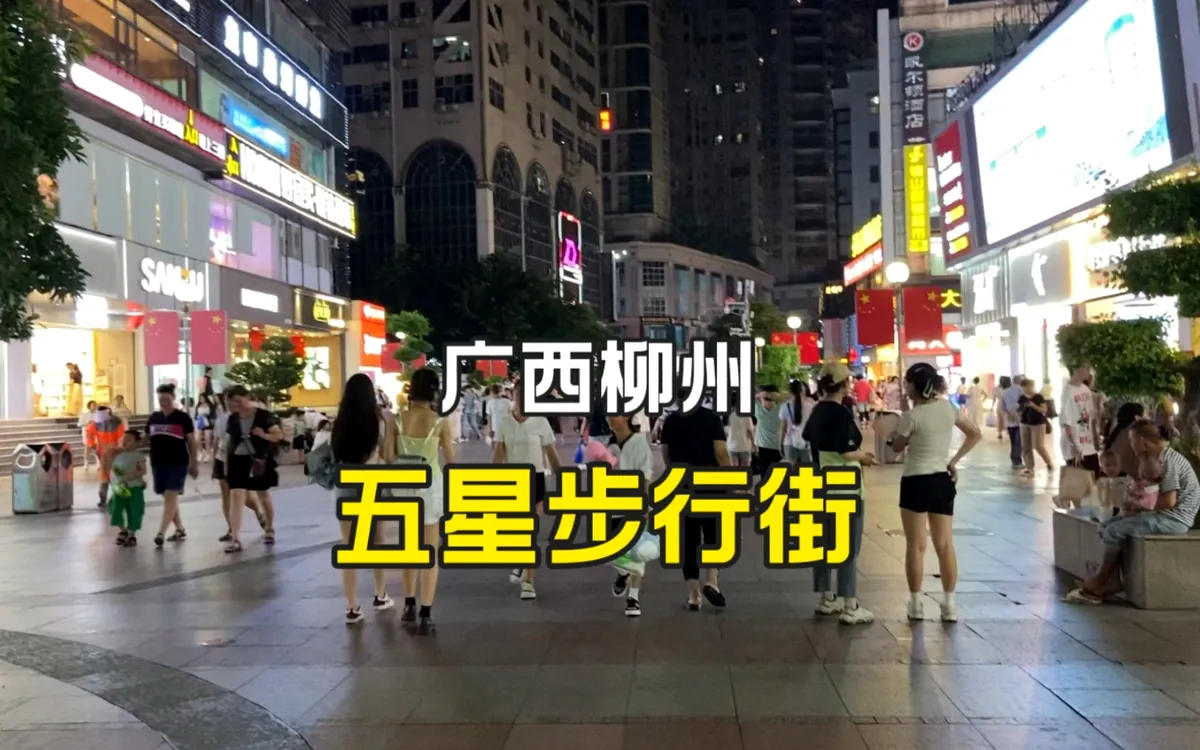
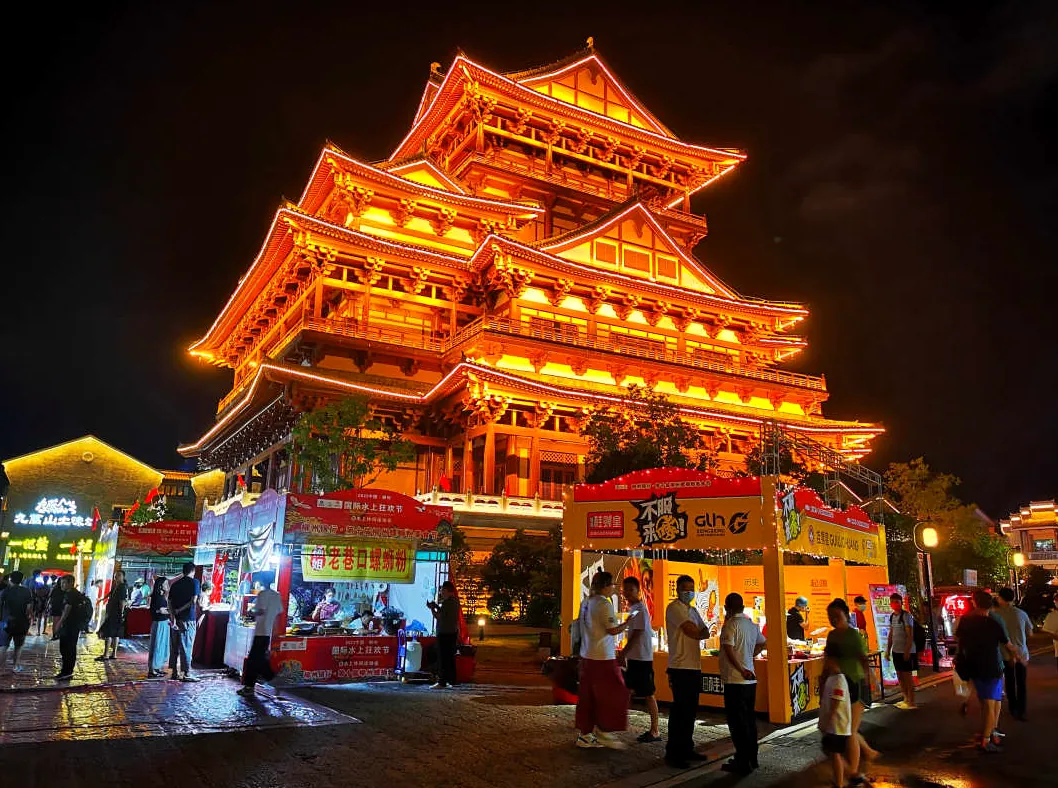
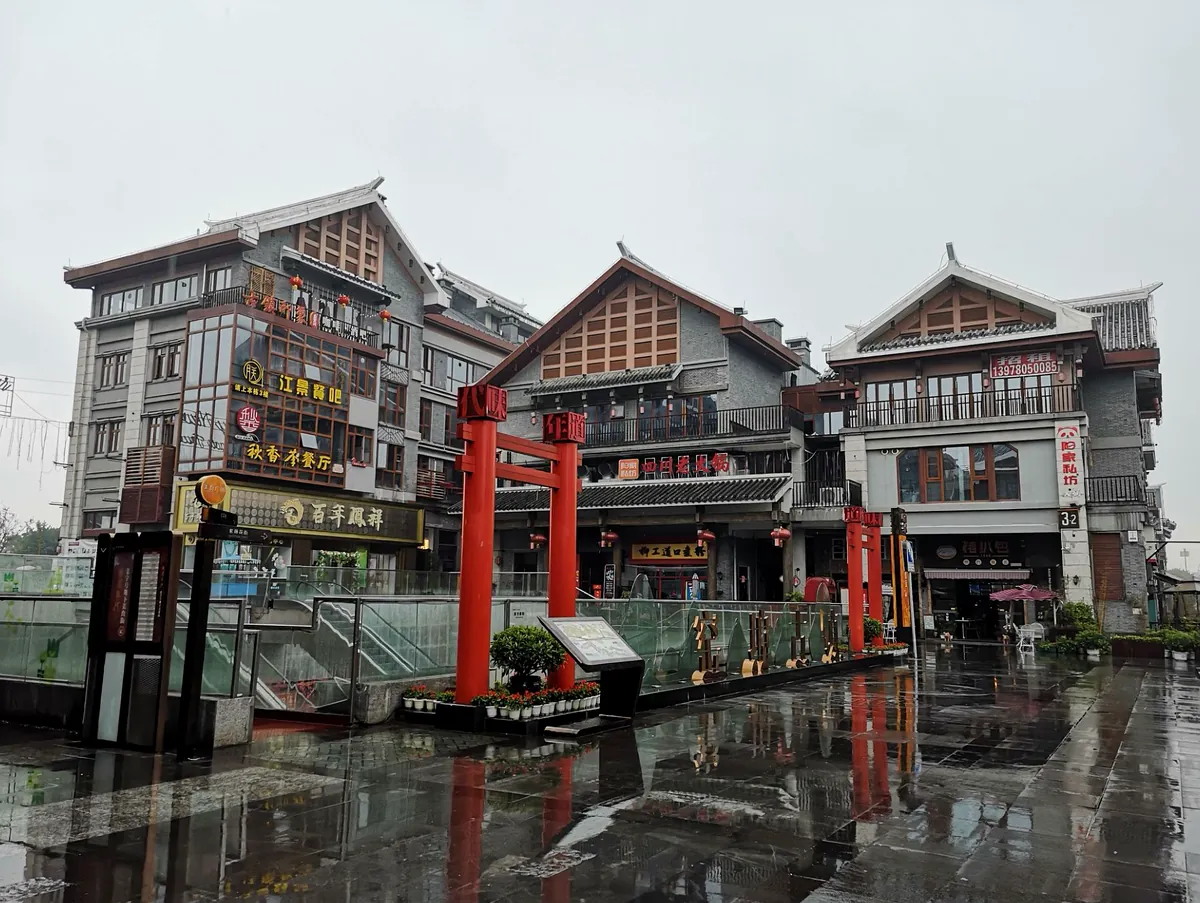
The contemporary pulse of this ancient city shines brightly through the vibrant Wuxing Pedestrian Street as night falls. Along the wide avenue, multi-story commercial buildings glow with thousands of brilliant lights, showcasing colorful signs for modern fashion, dining, and retail brands. Streams of locals and tourists stroll leisurely under the cool night sky, creating a scene of urban life that is both lively and joyful, clearly capturing the vibrant energy of an economic center transforming within the heart of a thousand-year-old heritage.
The deepest cultural imprint that defines the soul of Liuzhou is tied to the name of Liu Zongyuan, one of the illustrious “Eight Great Prose Masters of the Tang and Song Dynasties.” In the tenth year of the Yuanhe era (815 AD), he was demoted by the imperial court and exiled to serve as the Prefect of Liuzhou. During his four short years of governing this remote frontier until his passing, this brilliant scholar implemented humanitarian reforms ahead of his time: he redeemed poor slaves who had mortgaged their bodies, abolished superstitious customs, dug freshwater wells to save the people from drought, and opened schools to improve literacy. With his talented pen and deep love for the natural landscape, Liu Zongyuan defined and celebrated the “Eight Views of Liuzhou,” transforming a wild, malaria-ridden land into a cultural symbol of poetry that has shone for generations.
Through the Song, Yuan, Ming, and Qing dynasties, Liuzhou continuously strengthened its position as a strategic fortress protecting the southwestern frontier, while developing into a vital transit point connecting trade between Guangxi, Guizhou, and Hunan via the bustling wharves on the Liu River. The sturdy city walls, thickened over time, the busy merchant guild halls, and the river port system created a space of diverse cultural intersection, harmonizing the indigenous flavors of the Zhuang, Miao, and Yao peoples with traditional Han culture.
Entering the modern era, from the 1950s onwards, the city reached a historical turning point when it was chosen as a key cradle for heavy industry, defined by large-scale metallurgy, mechanical engineering, and automotive manufacturing plants. Not content with the image of a smoggy industrial city, modern-day Liuzhou has persistently carried out a miraculous ecological revolution, shifting strongly toward a green industrial model, restoring the Liu River to its pristine beauty, and covering every street with tens of thousands of bauhinia trees that bloom brilliantly every spring.
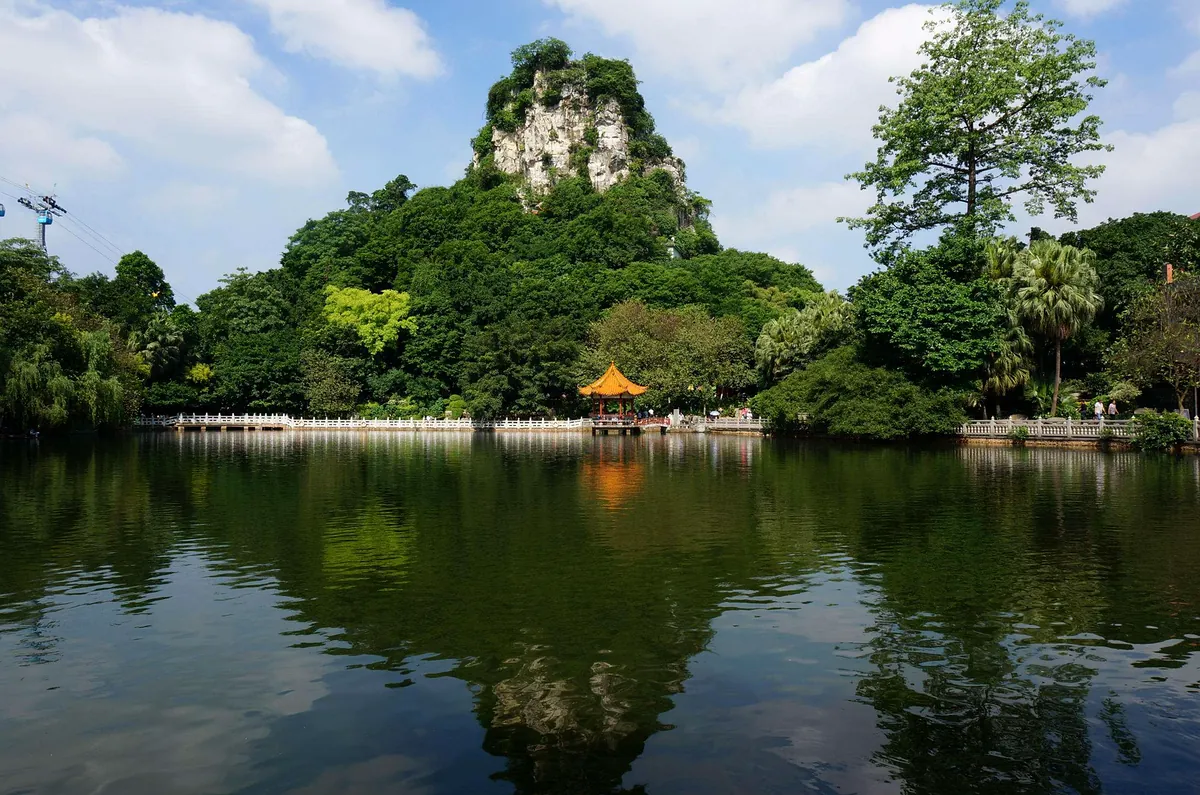
Located in the north-central part of the Guangxi Zhuang Autonomous Region, Liuzhou was generously sculpted by nature from the vast karst topography of Southern China, opening up a geographical space that is both majestic and elegant. The ancients once praised the scenery here with eight superlative characters: “green mountains, clear water, magical caves, and beautiful stones,” perfectly describing the harmony between verdant peaks, clear waters, mystical caves, and uniquely shaped rocks. From the perspective of traditional Feng Shui, Liuzhou possesses a perfect “four-symbol” configuration, where millions-of-years-old limestone mountains rise majestically from the fertile alluvial valley like pillars supporting the sky, creating a solid protective screen. The land formation gathers both the Azure Dragon and the White Tiger, bringing a rare balance of Yin and Yang between stillness and motion, between the solemn, silent limestone masses and the thriving life of the fertile plains stretching along the banks.
The backbone that defines the entire soul and urban landscape is the crystal-clear Liu River, which originates from the Guizhou plateau and winds like a blue silk ribbon, embracing the central peninsula of the city. This magnificent bend curves softly in a perfect U-shape, creating a horseshoe form or a giant jade vessel capturing the essence of heaven and earth. Feng Shui geographers call this unique formation the “jade belt wrapping the waist,” signifying the gathering of energy and the preservation of lasting prosperity for generations of residents. Inside the winding arc of the Liu River, ancient streets and modern architectural works reflect on the calm, year-round waters, establishing a unique urban planning structure of “city within river, river within city,” unparalleled in the Lingnan basin.
Dotting this magnificent and charming natural landscape is a system of independent karst peaks that rise proudly in the heart of the city, most notably Ma’anshan and Yufengshan. Ma’anshan resembles the majestic saddle of a feudal general, where from its breezy summit, visitors can take in a panoramic view of the emerald Liujiang River and the bustling city life below. Right next to it, Yufengshan is tied to the folklore of the Tang Dynasty song fairy Liu Sanjie, who is said to have ascended to the celestial realm, leaving behind the rustic Zhuang folk songs that still echo from magnificent caves like Xiaolong and Bailian. When the great writer Liu Zongyuan was demoted to Governor of Liuzhou during the reign of Emperor Xianzong of Tang, the picturesque landscape of green mountains and clear waters became the source of inspiration for his brilliant literary works and noble philosophical thoughts, integrating this wild southern land into the cultural and poetic flow of the glorious Chinese civilization.
From the perspective of geopolitics and inter-regional transport planning, Liuzhou has long held the strategic position of a gateway controlling the vital trade routes connecting the rugged Southwest with the southern coastal plains. Located at the critical intersection of major transport corridors, the city serves as a key transit hub for the Guiyang – Guangzhou railway, linking the misty highlands with the Greater Bay Area, while also intersecting directly with the Hunan – Guangxi railway that runs from the Central Plains down to the South. More importantly, from Liuzhou down to the capital Nanning, transport arteries lead directly to the Youyiguan international border gate adjacent to Vietnam, establishing an inseparable cross-border trade axis. The harmonious blend of rugged natural karst terrain and modern trade infrastructure has transformed Liuzhou into a model ecological city, where magnificent nature does not divide human life but instead serves as a deep green backdrop, safeguarding sustainable prosperity through the ups and downs of the ages.
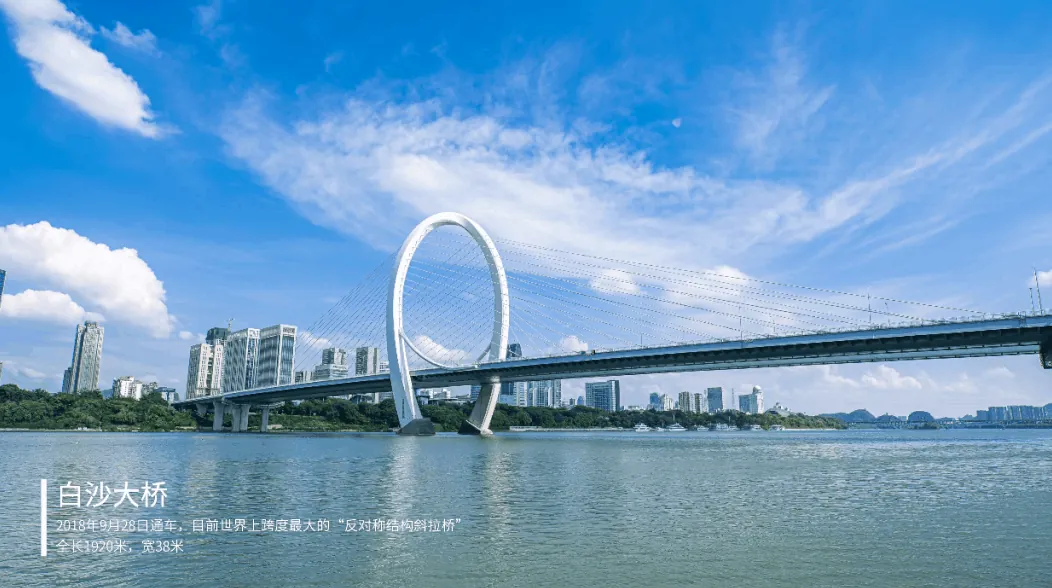
The urban space of Liuzhou appears like a grand architectural blueprint, where the Liujiang River winds softly like a blue silk ribbon, embracing the central peninsula and creating a perfect Feng Shui landscape among the towering limestone karst peaks. Refusing to be confined to pure industrial urban planning models, Liuzhou has turned its complex geographical features into a stage for infrastructure art. A system of over twenty modern bridges spanning the Liujiang River not only solves the vital traffic problem but also transforms the entire cityscape into one of the most massive open-air “bridge museums” in southern Lingnan. Each bridge span is a distinct design statement, showcasing the full power of mechanical engineering and avant-garde spatial thinking.
Viewed from the summit of Ma’anshan, the river-crossing transport network displays an extreme richness in structural load-bearing and architectural morphology. From the Wenchang and Wenhui bridges with their elegant curved steel arches, to the Baisha Bridge—a wonder of an asymmetric cable-stayed bridge with a twisted, teardrop-shaped pylon rising proudly to pierce the clouds. At night, the computerized artistic lighting system casts shimmering reflections onto the Liujiang River, mirroring the large-span prestressed concrete girders intertwined with crisscrossing cable stays, painting a vibrant skyline that breathes the spirit of a premier industrial and manufacturing hub in the Southwest.
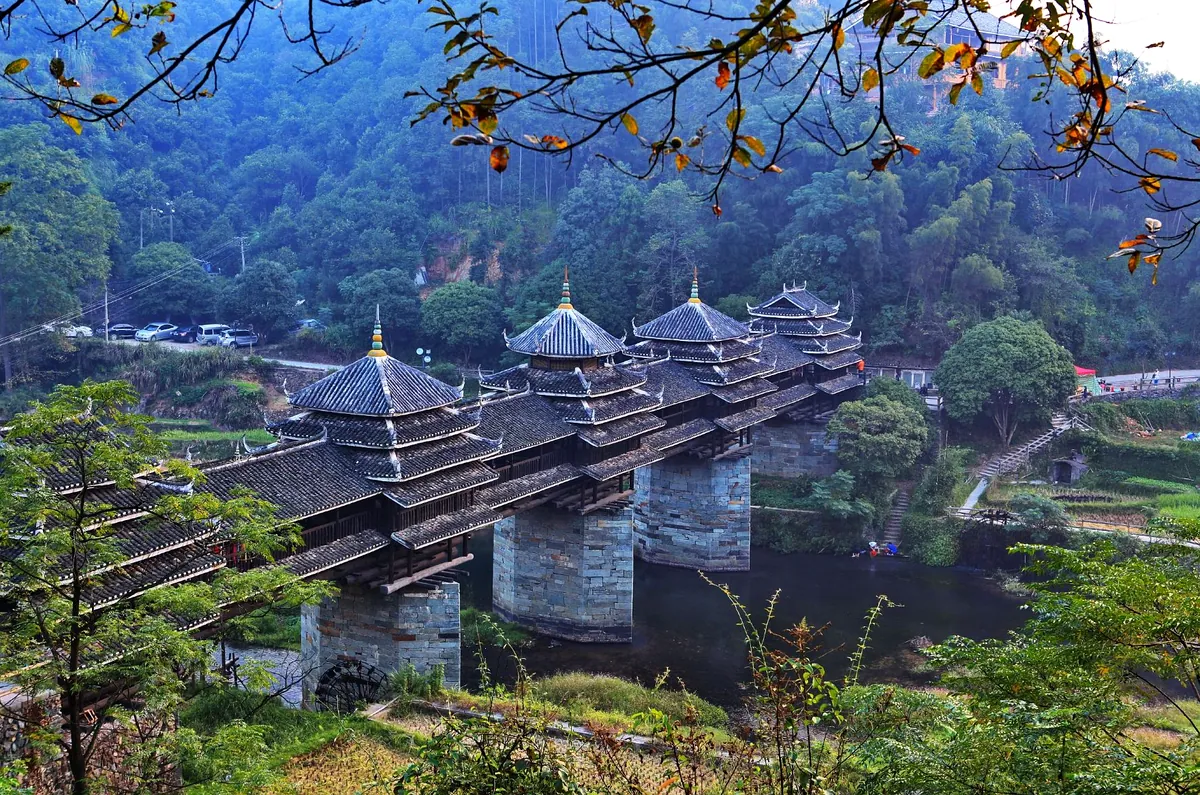
However, the spatial beauty of Liuzhou would be incomplete without the profound traditional wooden architecture in the periphery, where the Sanjiang Dong Autonomous County showcases the essence of village building preserved for hundreds of years. In stark contrast to the steel and reinforced concrete of the urban core, the architectural world of the Dong people in Sanjiang is a joyful hymn to native Chinese fir wood. Two peak symbols reigning in the ancient villages of Ma’an or Pingzhai are the Drum Tower and the Wind and Rain Bridge. The Chengyang Wind and Rain Bridge, a representative heritage site built centuries ago, spans the Linxi River with a length of nearly seventy meters, skillfully combining a sturdy stone pillar structure under the river with a magnificent five-story tiled roof corridor above, serving as both a transport link and a community space to shelter travelers from sun and storms.
What amazes global architectural researchers is the supreme carpentry of the Dong craftsmen: the entire Wind and Rain Bridge structure, as well as the dozens-of-meters-high Sanjiang Drum Towers with their thousands of beams, rafters, and columns, are joined entirely by traditional mortise-and-tenon techniques, without using a single iron nail or metal bracket. Straight logs are chiseled with millimeter precision, locked together through through-tenons, dovetail joints, and multi-layered dougong brackets that curve upward like the wings of a phoenix. The multi-layered yin-yang tiled roof structure creates absolute ventilation, perfectly resisting the hot, humid climate and harsh storms of the subtropics. The spectacular symbiosis between the contemporary steel load-bearing systems of the inner city and the pure wooden philosophy of the mountains has created a multi-layered Liuzhou, one that possesses the stature of a high-tech metropolis while fully preserving the thousand-year-old wooden soul of the great forests.
As twilight descends over the rolling limestone mountains, Liuzhou sheds its somber industrial capital persona to don a magnificent golden robe woven from millions of light beams. The Liu River, winding in a U-shape around the central peninsula like a jade belt, reflects a multi-layered smart urban lighting system. Renowned as the “bridge museum” of Southern China with over twenty major bridges spanning the river, Liuzhou at night transforms its stark steel structures into mesmerizing light sculptures. From the graceful arches of the Wenhui Bridge and the futuristic lines of the Shuangyong Bridge to the majestic, ancient aura of the Liuzhou Bridge, each structure is programmed with light sequences that pulse rhythmically to the music, creating a brilliant visual corridor reflected on the dark, deep waters.
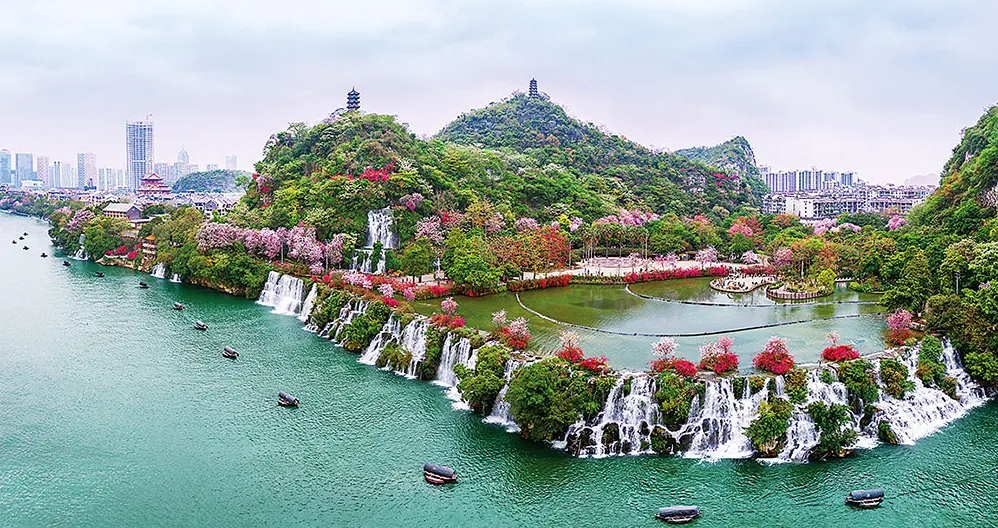
A night cruise on the Liu River offers a panoramic view of one of the region’s most spectacular light shows. Drifting along the water from the Wenmiao pier, visitors will encounter the Banlong Mountain artificial waterfall complex, cascading down from a sheer cliff for hundreds of meters, illuminated by an embedded LED system that resembles a galaxy flowing through the heart of the city. Not far away, a large-scale musical fountain in the middle of the river performs heroic melodies, synchronized with water jets soaring a hundred meters high. The riverbanks offer a sophisticated blend of modern high-rises operating on smart city models and thousand-year-old historical sites, where ancient structures like the Wenxang Pagoda or the pavilions atop Mount Ma’an are honored with warm, golden lighting, creating a cultural depth that transcends mere glitz.
The nightlife of this ancient land is also deeply intertwined with the legend of the singing fairy Liu Sanjie and the rich spiritual life of the Zhuang, Miao, Yao, and Dong ethnic groups. At the foot of Yufeng Mountain—the mountain associated with the ancient tale of Sanjie riding a carp that turned into a dragon to fly to heaven after her singing defeated local bullies—live performances and folk singing exchanges still take place naturally every evening. The rustic, melodic Zhuang folk songs, the sound of the Miao Lusheng flute blending with traditional flower-dance movements under the shade of ancient trees, not only recreate an endless epic of love and freedom but also connect the local community with visitors from afar through every beat and the echoing sound of bronze drums.
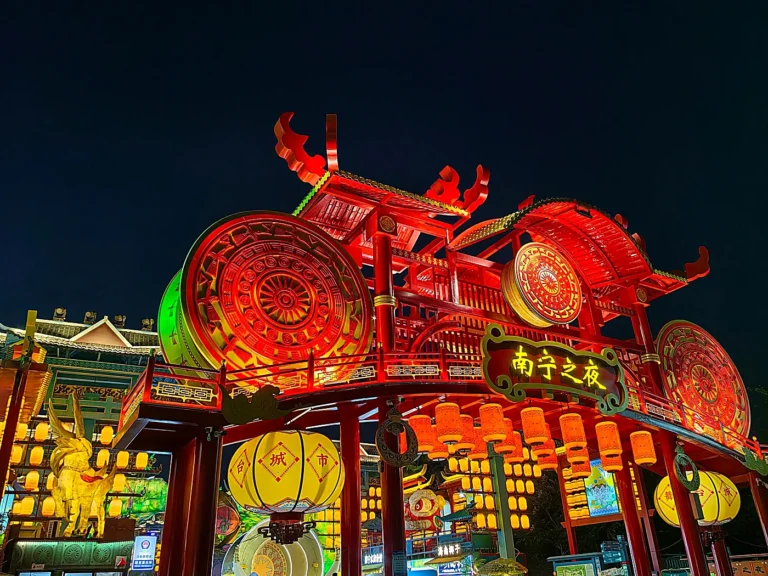
Along the eastern bank of the river, Yaofu Ancient Town has become a focal point for contemporary urban culture. Recreating the atmosphere of piers and towns from the Ming and Qing dynasties over dozens of hectares, this complex of gray-tiled roofs and brick walls transforms into a shimmering film set at night. Under the red lanterns hanging high along the curved eaves, groups of young women in traditional brocade costumes gracefully stroll through the blue-stone paved alleys, creating a vivid, nostalgic picture. This is also where the culinary pulse of Liuzhou reaches its most intense peak. The characteristic, pungent aroma of traditional Liuzhou river snail rice noodles wafts enticingly from taverns and riverside stalls. The broth, simmered from fresh river snails, pork bones, cloves, cardamom, cinnamon, and amomum, bubbles through the night, blending with the traditional sour bamboo shoots, vibrant red chili oil, and crispy fried tofu skin, warming the souls of travelers amidst the crisp night breeze of the Liu River.
As dusk settles over the banks of the Liu River, Wuxing Pedestrian Street lights up under vibrant neon strips, becoming the hub for urban life and Liuzhou’s night food culture. Towering commercial buildings stand interspersed with colorful shop signs, casting a warm glow onto the bustling, spacious stone-paved streets. Crowds of people stroll leisurely past busy stalls, their chatter blending with the lively city sounds to create a vibrant urban scene that perfectly reflects the unique flavors and culture of this land of picturesque mountains and waters.
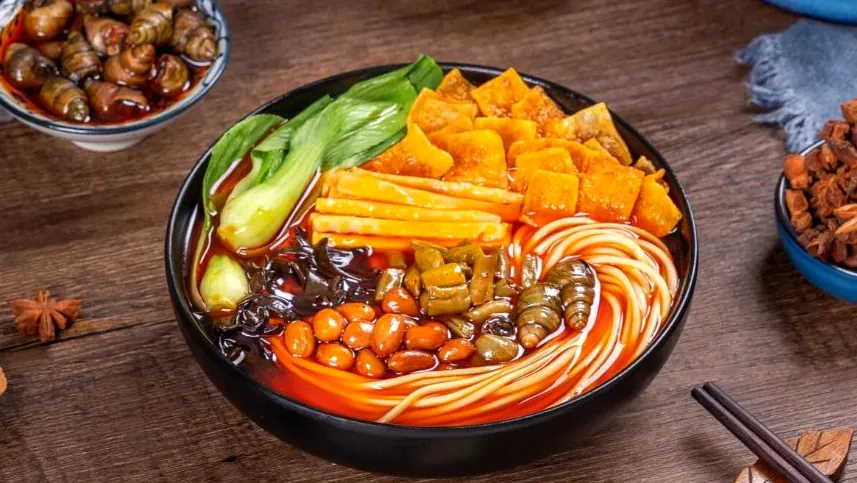
When it comes to the culinary map of Liuzhou, the first dish that established this region’s reputation on the global food stage is snail rice noodles, also known as Luosifen. Emerging in the late 1970s and early 1980s at riverside night markets, the dish has evolved into a national intangible cultural heritage with global reach. The soul that creates the intense olfactory and gustatory stimulation of a bowl of snail noodles lies in the local sour bamboo shoots, fermented in traditional earthenware jars for months, combined with a broth meticulously simmered from fresh Liu River snails, pork marrow bones, and over eighteen types of herbs such as star anise, cinnamon, amomum, cloves, and spicy dried chili. When the vibrant red chili oil broth is poured over the chewy, round rice noodles, the bowl is topped with crispy fried tofu skin, golden roasted peanuts, shredded wood ear mushrooms, crunchy pickled radish, and fresh water spinach, creating a symphony of five flavors—sour, spicy, salty, sweet, and savory—that leaves diners with an unforgettable memory.
Alongside the illustrious reputation of snail rice noodles, Liuzhou rice rolls offer a delicate, rustic flavor deeply ingrained in the breakfast habits and snacking culture of generations of locals. Freshly harvested long-grain rice is soaked until soft, manually wet-ground, and spread into a paper-thin layer on a fabric mold stretched over a pot of boiling water. As the steam cooks the translucent, chewy rice sheet, the artisan quickly rolls it with a filling of minced pork stir-fried with shiitake mushrooms, crunchy wood ear mushrooms, and fragrant scallions. The core element that sets this local dish apart is the secret, thick sauce—meticulously crafted from fermented soybean paste, rich bone broth, wild peppercorns, and aromatic chili oil—drizzled generously over each roll to create a savory, indulgent finish that never feels heavy.
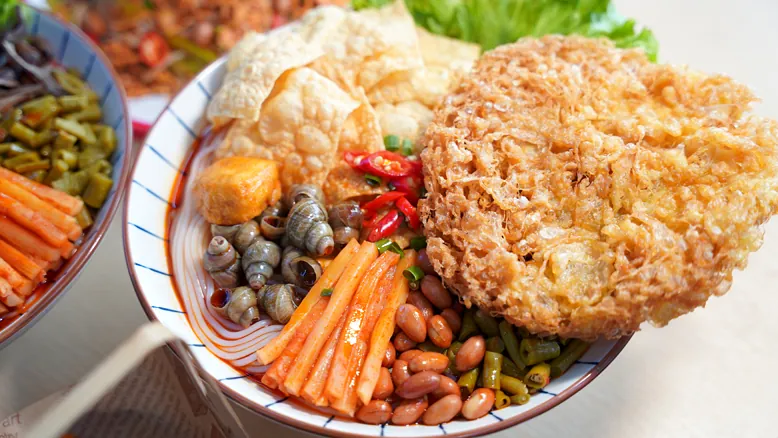
Beyond merely enjoying flavors at traditional eateries, modern-day Liuzhou is pioneering engaging, hands-on tourism models. Travelers visiting this culinary cradle can participate in community workshops at traditional craft villages, observe the process of selecting deep-river stone snails, manually ferment young bamboo shoots using ancient methods, or stand by a charcoal stove to try their hand at steaming rice rolls and blending spices for a perfect bowl of snail noodles under the guidance of veteran artisans. Such authentic interactive experiences not only satisfy the traveler’s palate but also provide a deeper understanding of cultural intersection, transforming gastronomy from a simple pleasure into a sturdy bridge between the past and the present.
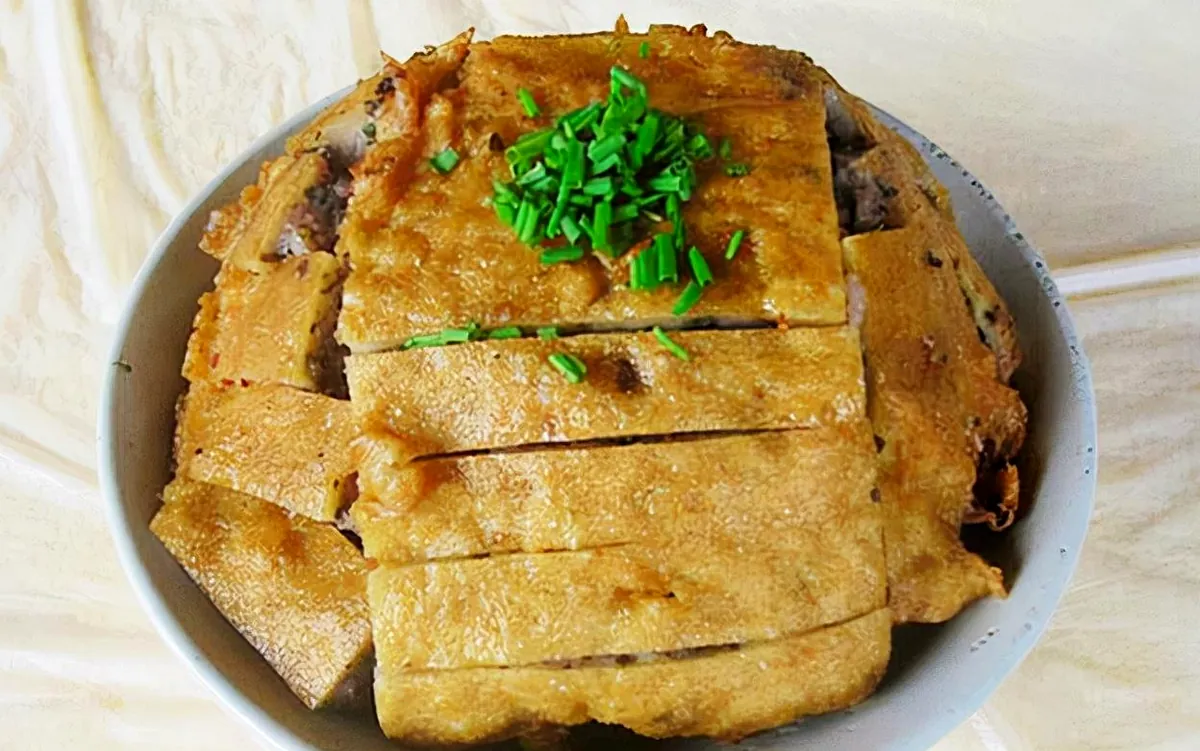
Exploring Liuzhou’s culinary culture goes beyond famous snail noodles, opening up a world of rustic, refined dishes crafted by hand over generations. A bowl of golden-fried stuffed tofu, cut into uniform rectangular blocks and neatly layered in a rich sauce, is a clear testament to the rustic culinary techniques of the Lingnan region. Each piece of golden tofu glows with a rich brown hue after being pan-seared, with the crispy outer layer sealing in the juicy minced meat filling, accented by finely chopped green scallions that balance the visual appeal while releasing a warm, herbal aroma that chases away the chill of the misty season.
To fully enjoy the daily rhythm from traditional food alleys to the modern boulevards along the Liu River, mastering digital payment skills is essential for your journey. Currently, most street food stalls at Qingyun Market, classic tea houses, and public electric bike rental stations operate within a cashless ecosystem. International travelers simply need to link their international bank cards to Alipay or WeChat Pay before departure to scan QR codes for instant payment in seconds. While Chinese Yuan cash is still accepted by law, using digital apps will help you integrate instantly with local consumption habits, avoiding the hassle of exchanging small change or language barriers at automated payment counters.
Regarding the route to this industrial and ecological city, the high-speed rail network is the perfect choice for both time efficiency and visual experience. After completing customs procedures at border crossings or landing at the capital, Nanning, travelers can catch modern CRH high-speed trains departing frequently throughout the day from Nanning East Station. The railway line cuts through the magnificent karst mountain region, connecting the two cities in just 1 hour and 10 minutes. Regarding entry and exit procedures, Vietnamese citizens can proactively apply for a traditional visa at the visa center, use an e-visa, or join a convenient border group visa program sponsored by travel agencies with streamlined approval processes.
When scheduling visits to iconic landmarks such as Liu Hou Park, the Bailiandong Cave Museum, or the Ma’anshan Scenic Area, travelers should note that opening hours typically start at 8:00 AM and end around 5:00 PM daily. To fully admire the magical light show on the Ma’anshan cliffs and the musical fountain cluster on the Liu River, the evening hours from 7:00 PM to 9:00 PM are ideal. To avoid falling into the trap of deceptive low-cost tours with itineraries packed with forced shopping stops that waste your vacation time, proactively researching and choosing a comprehensive tour package with a no-shopping standard will ensure you are fully immersed in the history, culture, and authentic natural flavors of the land of the Bauhinia flower.